DD
MM
YYYY

PAGES

DD
MM
YYYY

spot_img

PAGES

Home Blog Page 588

Execution Wins in Business

0

In the intricate dance of market systems, a compelling business idea is but the opening note. The true symphony, the one that captivates and endures, is composed in the disciplined and relentless art of execution. As a core theme within Tekedia Institute Mini-MBA, the discourse on business execution transcends mere operational efficiency; it is an economic imperative, the bridge between entrepreneurial vision and tangible value. Without a robust execution framework, even the most revolutionary concepts remain theoretical constructs, unfulfilled promises in a competitive landscape.

Execution, in this context, is not a simple checklist of tasks. It is a strategic discipline that demands clarity of purpose, unwavering commitment, and a deep understanding of market dynamics. It begins with the translation of grand strategy into actionable tactics. This requires leaders to move beyond high-level pronouncements and instead, meticulously define the ‘how’ and ‘when’ of their vision. In Africa and broad emerging markets, where infrastructure challenges and market volatility are common, this granularity becomes even more critical.

The a priori assumption of stable conditions is a luxury few can afford. Instead, successful firms anticipate friction, build resilience into their models, and empower their teams to navigate inevitable obstacles with agility. Ultimately, the call to business execution is a clarion call to realism. It is the recognition that markets do not reward intention, but rather, performance. It is a philosophy that values iteration over perfection, and celebrates the small, consistent wins that accumulate into monumental success.

For entrepreneurs and executives across Africa, the path to building enduring institutions will not be paved by disruptive ideas alone, but by the disciplined, relentless, and often unglamorous work of making those ideas a reality. In a world saturated with ideas, the true competitive advantage lies in the capacity to execute them with precision.

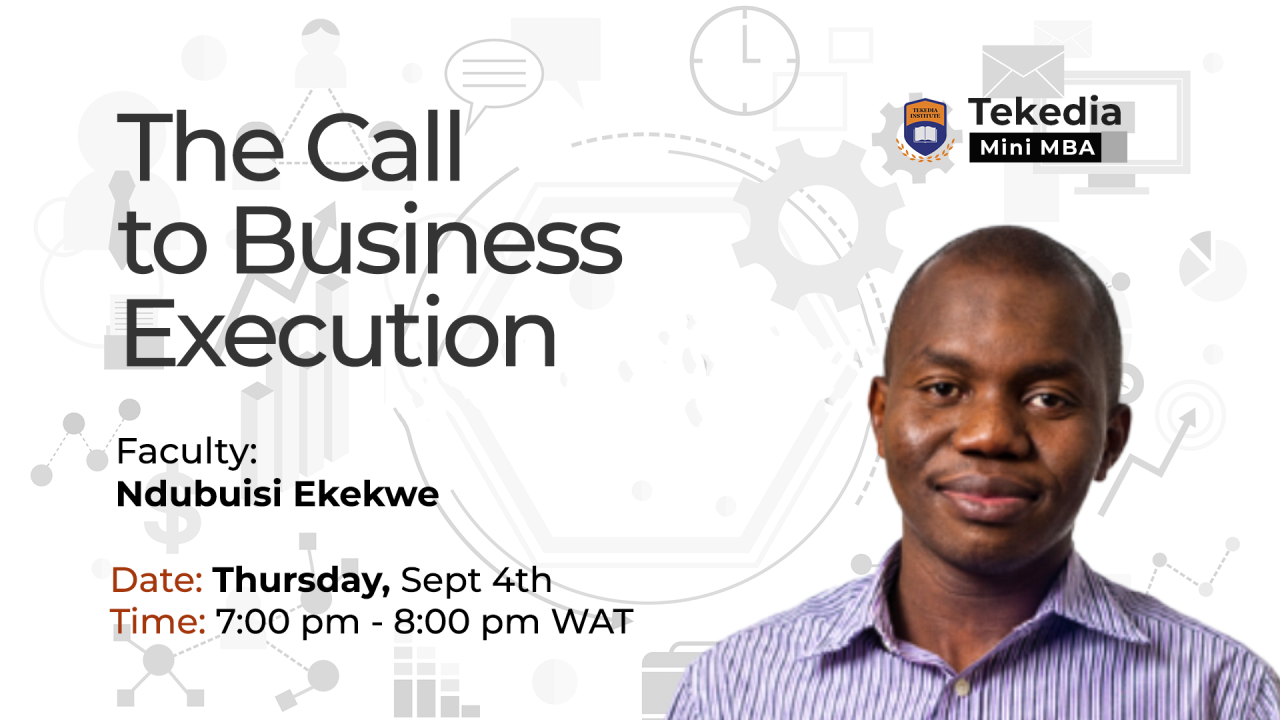
We’re Tekedia and our product is knowledge. Join me today as I teach on The Call to Business Execution. Please register for the next edition of Tekedia Mini-MBA which begins in 2 weeks.

Thur, Sept 4 | 7pm – 8pm WAT | The Call to Business Execution – Ndubuisi Ekekwe | Zoom Link

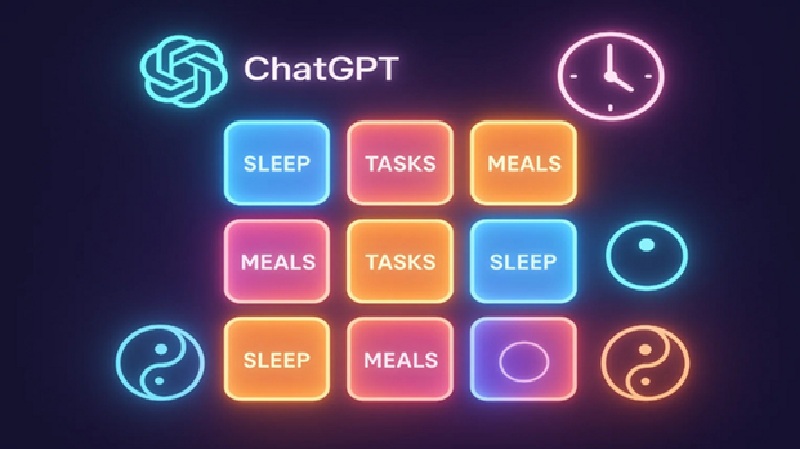
ChatGPT and Claude Structured My Sleep, Meals, and Tasks – I Finally Stopped Procrastinating

0

How ChatGPT and Claude Became My Daily System

For most people, ChatGPT is a tool for drafting emails or debugging code. For Lena, a 27-year-old marketer in Austin, it became something bigger: a system to structure her entire day. When she paired ChatGPT with Claude’s Language Model, Gemini ChatBot for validation, and insights from Perplexity and DeepSeek, she finally broke the cycle of late nights, skipped meals, and missed deadlines. It wasn’t about Artificial Intelligence replacing willpower – it was about removing friction from daily decisions.

The Spiral of Disorganization

Lena’s problem wasn’t laziness. She juggled freelance projects, gym goals, and evening classes, but without a system she defaulted to chaos. Meals became snacks, sleep was random, and procrastination thrived.

One night she drafted her first structured prompt:

Context: My daily routine – 5 tasks, gym, meals, 7 hrs sleep.

Task: Build a schedule with blocks for deep work, breaks, and meals.

Format: Table (Time, Task, Notes).

Claude: Rewrite into clear action steps.

Gemini: Validate time conflicts.   

Within minutes she had a realistic plan – and for the first time, she followed it.

Prompts That Became Habits

The key was repetition. By tagging her most useful prompts and saving favorites, Lena built a mini-library: Morning Setup, Weekly Review, Sleep Reset. Every day, she reused them without overthinking.

  • ChatGPT created schedules.
  • Claude simplified tasks into motivating steps.
  • Gemini ensured deadlines weren’t missed.
  • Perplexity added quick links for meal prep.
  • DeepSeek benchmarked sleep cycles against science.

What used to feel like procrastination was reframed as execution.

Old vs New Routine

Routine Step Before AI With ChatGPT + Claude + Gemini
Sleep schedule Random, inconsistent Stable 11pm–6am routine
Meals Skipped or fast food 3 planned meals, grocery list
Task planning Endless sticky notes Daily table, 10 min setup
Study time Pushed to midnight 1 hr deep work, evenings free
Result Procrastination loop Consistent output, less stress

Chatronix: The Multi-Model Shortcut

Lena eventually moved her workflow into Chatronix.ai

Here’s what changed:

  • 6 best models in one chat: ChatGPT, Claude, Gemini, Grok, Perplexity AI, DeepSeek.
  • 10 free queries to test prompts daily.
  • Turbo mode with One Perfect Answer: merges all outputs into one clean plan.
  • Tagging and favorites to save her “Morning Routine” and “Weekly Reset” prompts.
  • Side-by-side comparisons of different task plans before choosing the best.

And with the Back2School campaign running in September, the first month cost only $12.5 instead of $25 – less than she used to spend on late-night takeout.

Prompt Library Inside Chatronix

The built-in Prompt Library gave her ready-made stacks: business, education, health, SMM. She adapted “Wellness Planner” to structure meals and “Focus Session” to block distractions. Users say this library saves the most time, because prompts are tested and categorized. Tagging and favorites to save prompts for later without rewriting. People say it saves more time than any other tool — especially with tagging and favorites that let you keep the best prompts on hand without rewriting them.

Bonus Prompt for Beating Procrastination

Context: Freelancer managing 3 projects + fitness + night class.

Task: Generate a weekly schedule balancing sleep, meals, deep work, and rest.

Format: Table (Day, Time, Activity, Notes).

ChatGPT: Draft structure.

Claude: Rewrite tasks into action steps.

Gemini: Validate deadlines.

Perplexity: Add resources for meal prep.

DeepSeek: Optimize sleep and work balance.

When Procrastination Finally Lost Its Grip

What Lena noticed after three weeks wasn’t just better sleep or healthier meals — it was the absence of guilt. Before, she spent hours scrolling, promising herself she’d “start after lunch” or “just one more episode.” With ChatGPT and Claude structuring her day, those decision points disappeared.

She used one favorite prompt every morning:

Context: Today’s 6 tasks + 2 personal goals.

Task: Prioritize into blocks with realistic time estimates.

Format: Table (Task, Start, Duration, Priority).

Claude: Rewrite into motivating checklist.

Gemini: Validate workload balance.

Instead of a blank to-do list, she had a roadmap that felt achievable. Meals were slotted in, downtime was scheduled, and study time wasn’t pushed past midnight.

By tagging this as Morning Reset in her Chatronix workspace, Lena could launch it in seconds. The combination of automation and structure didn’t make her superhuman — it simply removed excuses. That was enough to turn “I’ll do it later” into “I already started.”

For the first time in years, procrastination wasn’t a personality trait. It was just a habit she’d outgrown.

Final Takeaway

For Lena, procrastination wasn’t about motivation – it was about systems. ChatGPT structured the day, Claude simplified the steps, and Gemini ensured no deadline slipped.

? The insight: with prompts saved, tagged, and reused, even chaotic schedules can become consistent routines. It really works.

BRC2.0 Upgrade Positions Bitcoin As A Stronger Contender in the Smart Contract Space

0

The BRC-20 token protocol, a standard for issuing fungible tokens on the Bitcoin blockchain via the Ordinals protocol, has upgraded to BRC2.0, integrating Ethereum Virtual Machine (EVM) compatibility at Bitcoin block height 912,690 on September 1, 2025.

This upgrade, developed by Best In Slot in collaboration with BRC-20’s pseudonymous creator Domo and the Layer 1 Foundation, embeds EVM functionality into the BRC-20 indexer, transforming it from a simple “calculator-style” system into a Turing-complete environment capable of executing complex smart contracts.

This enables developers to deploy Ethereum-style smart contracts and decentralized applications (dApps) directly on Bitcoin’s Layer 1, leveraging Bitcoin’s security and decentralization without requiring bridges or wrapped assets. BRC2.0 allows Bitcoin-native tokens, like ORDI and SATS, to become programmable, supporting use cases such as decentralized finance (DeFi), lending, trading, and tokenized real-world assets.

The upgrade also ensures compatibility with Ethereum’s development tools, such as Solidity, facilitating easier migration of existing EVM-based projects. Phase 1, completed in September 2025, introduced 6-character token namespaces for new programmable tokens, while Phase 2, expected around September 17, 2025, at block height 914,888, will make existing BRC-20 tokens programmable via a permissionless deposit process.

Since its 2023 launch, BRC-20 has seen over $3 billion in asset volume, primarily from meme coins, but BRC2.0 aims to shift focus toward robust DeFi ecosystems. UniSat Wallet has already integrated BRC2.0 support, signaling early adoption. However, scalability and security challenges remain, given Bitcoin’s limited transaction throughput, which could impact widespread adoption.

BRC2.0 transforms Bitcoin’s Layer 1 into a platform for complex smart contracts and dApps, moving beyond its traditional role as a store of value. This enables Bitcoin-native DeFi, tokenized assets, and programmable tokens without intermediaries like bridges or wrapped assets, leveraging Bitcoin’s unmatched security and decentralization.

By supporting Ethereum’s development tools (e.g., Solidity), BRC2.0 lowers the barrier for Ethereum developers to build on Bitcoin. This could attract a wave of dApps and developers, fostering innovation and expanding Bitcoin’s utility in Web3 ecosystems.

EVM compatibility allows seamless integration of Ethereum-based projects into Bitcoin’s network, potentially increasing the total value locked (TVL) in Bitcoin DeFi. The $3 billion in BRC-20 asset volume since 2023 could grow significantly as programmable tokens enable sophisticated use cases like lending, trading, and yield farming.

Bitcoin’s limited transaction throughput (7–10 transactions per second) and high fees during network congestion could hinder BRC2.0’s scalability for high-frequency dApps, potentially limiting adoption compared to faster chains like Ethereum or Solana.

Introducing Turing-complete smart contracts on Bitcoin’s Layer 1 could expose the network to new vulnerabilities, such as smart contract bugs, which have historically plagued EVM-based chains. Bitcoin’s conservative design prioritizes security, so community acceptance may hinge on rigorous auditing and testing.

Programmable BRC-20 tokens (e.g., ORDI, SATS) could see increased demand, driving price volatility and trading activity. The shift from meme-driven assets to DeFi-focused applications may attract institutional interest, but speculative fervor could dominate in the short term.

Early support from UniSat Wallet signals ecosystem readiness, but broader adoption depends on exchanges, wallets, and indexers integrating BRC2.0. The phased rollout (Phase 2 expected by September 17, 2025) ensures gradual implementation, minimizing disruption but delaying full ecosystem impact.

BRC2.0’s Layer 1 approach competes with Bitcoin Layer 2 solutions like Lightning Network or Stacks, which also aim to enable smart contracts. Its success will depend on whether developers prioritize Bitcoin’s base-layer security over Layer 2 scalability.

BlockDAG’s Community Engine: Ambassador Program Fuels 25.9B Coins Sold

0

When people talk about crypto, they usually focus on numbers. The money raised, the coin price, or the future returns. BlockDAG (BDAG) has plenty of results to show. It has collected over $396 million, passed 25.9 billion coins sold, delivered a 2900% ROI since Batch 1, and now trades at $0.03 in Batch 30.

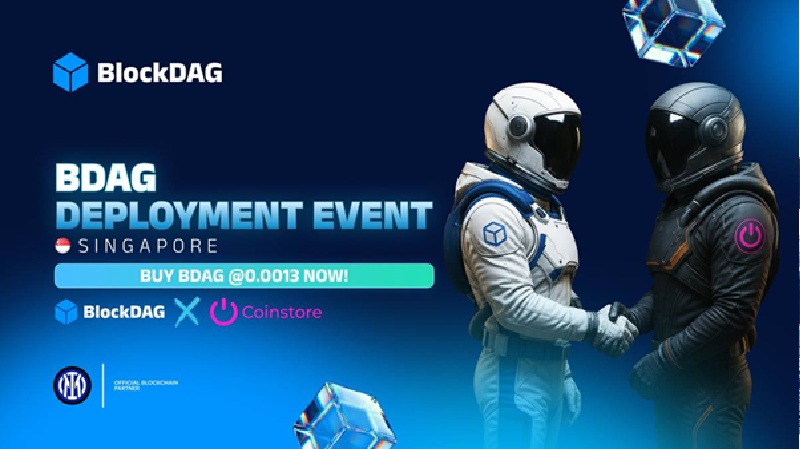
BlockDAG is offering a special presale price of $0.0013 per BDAG for a limited time, marking the last chance to buy before the official launch.

BlockDAG’s Ambassador Program is more than a side project. It powers growth, spreads knowledge, and connects communities worldwide. While charts display coin growth, this people-powered system creates lasting impact.

Turning Vision Into Reality

BlockDAG’s progress is not just about advanced technology or claims of high-speed transactions. While the technical side matters, the bigger story is how that technology becomes useful and understandable to people across the world. Ambassadors are the ones who make the complex easy to grasp. They simplify the mining process, explain features, and give new users confidence to take part.

The program goes beyond simple referrals or promotional posts. Ambassadors create guides, lead conversations, and help answer technical questions from those just starting. They support newcomers with dashboard walkthroughs and show them how to use the X1 mining app. By doing so, they bring clarity to what could otherwise feel overwhelming.

This role is powerful because it is based on shared experience. The people guiding others are also participants themselves. They use the tools, join the events, and learn alongside the community. That makes their voice trusted.

Rewards with Real Impact

The Ambassador Program has been designed with care to support those who contribute actively. Instead of offering just surface-level rewards, the program provides genuine access and recognition. Members receive perks such as exclusive content, merchandise, and early previews of what is coming next. These benefits motivate them, but they are not the whole story.

The real strength comes from the opportunities the program creates. Ambassadors are welcomed into private spaces where they can share ideas, get updates directly from the team, and feel part of the core progress. Some take on regional leadership roles, guiding groups in their own areas and adapting the project’s message to local audiences. Others have been chosen to take part in official events, representing the project with pride and confidence.

This approach creates leaders who spread the message in authentic ways. It also allows the program to grow stronger through the voices of its own members.

Building Before Mainnet

Many projects in crypto only begin to build a community after launch, but BlockDAG has already built one long before. With over $396 million raised in the presale and more than 25.9 billion coins sold, the growth has been nothing short of remarkable. The Ambassador Program plays a central role in keeping energy and excitement alive every day. People use the app, join challenges, and share experiences while waiting for the coin to go live.

This means that adoption is not something far away. It is already happening in real time. Instead of being a passive group waiting for updates, the community is active, learning, and building together. That distinction is important. It sets the stage for long-term growth and creates trust among people who take part.

With support tools like the X1 crypto mining app and features such as daily battles, members stay engaged and connected. This daily involvement ensures that interest remains steady. Even before official trading, the project has a strong ecosystem of real participants.

A Project Powered by People

Agencies or paid influencers do not lead BlockDAG’s growth story. Instead, it is carried forward by people who give their time and effort to guide others. The Ambassador Program equips these members with tools that allow them to step into roles as teachers, mentors, and local leaders. They build bridges between the project and everyday users, making sure the message is clear and easy to understand.

As the presale moves closer to its final stages, this people-driven system grows stronger every day. With the coin priced at $0.03 in Batch 30, a 2900% ROI since the start, and 20 exchange listings already confirmed, the foundation is ready.

But, for a short time, BlockDAG’s presale price of $0.0013 per BDAG is available for a limited time ahead of launch. Yet the real strength lies in the community itself. These ambassadors explain updates, translate content, and assist newcomers. BlockDAG is not just creating a coin. It is shaping a movement, one leader at a time.

Presale: https://purchase.blockdag.network

Website: https://blockdag.network

Telegram: https://t.me/blockDAGnetworkOfficial

Discord: https://discord.gg/Q7BxghMVyu

Population Trends in Eastern and Western Germany Since Reunification

0

The statement “East German population slumps 16% since reunification as West booms” in Germany following the 1990 reunification.

Based on official statistics and analyses, this figure aligns closely with data up to around 2023–2024, reflecting a sustained decline in the population of the former East German states (the “new Länder”: Brandenburg, Mecklenburg-Vorpommern, Saxony, Saxony-Anhalt, Thuringia, and including Berlin) due to net out-migration and low birth rates, contrasted with growth in the former West German states (the “old Länder”).

The population of the former East German territories (excluding Berlin initially, but including it in later aggregates) was approximately 16.4–16.6 million. This includes the five new states plus East Berlin, which merged with West Berlin to form the unified city-state.

The population of these eastern regions stands at about 13.8–14 million, representing a decline of roughly 15–16%. For instance: From 16.4 million in 1989 (pre-reunification peak) to around 13.8 million in recent estimates, that’s a 15.9% drop.

Official data from Germany’s Federal Statistical Office (Destatis) shows the eastern states’ population fell from 16.1 million in 1991 to 12.5 million by 2013 (a 22% drop at that point), but stabilized somewhat with minor inflows; by 2023, it was around 14 million, adjusting for Berlin’s growth.

The former West German population grew from about 62.7 million in 1989 to over 70 million by 2024, a boom of around 12–15%. This expansion was driven by immigration, higher birth rates in some areas, and economic pull factors. Overall, unified Germany’s population reached 84.7 million in 2024, but the east-west divide persists, with the east now comprising only about 16% of the total.

This disparity has led to an aging eastern population: In 2023, over 24% of eastern residents were 65+, compared to 20% in the west, exacerbating labor shortages. The trends stem from economic, social, and structural factors post-reunification.

Since 1990, an estimated 3.7 million people have left the east for the west, compared to 2.5 million moving eastward—a net loss of over 1 million. This “Ostflucht” (flight from the east) continues, with young, skilled workers (especially ages 18–30) seeking better opportunities.

In the early 1990s, unemployment in the east soared to 20% due to the collapse of state-owned industries and privatization, while the west enjoyed a post-Cold War boom. Even today, eastern unemployment averages 6–7%, versus 4–5% in the west.

Recent data shows annual net migration losses of 20,000–50,000 from the east, though cities like Berlin and Leipzig have seen inflows. Eastern fertility rates dropped sharply post-reunification (from 1.6 children per woman in 1989 to below 1.0 in the early 1990s) due to economic uncertainty and the “double burden” on women (job loss plus childcare).

Rates have recovered to about 1.4–1.5 but remain below replacement level (2.1). The west benefited from stable economies and immigration, with fertility around 1.5–1.6. Non-German immigrants (now 19% of the population) have driven much of the western growth, contributing higher birth rates.

Eastern GDP per capita is about 75% of the west’s (€32,000 vs. €43,000 in 2018 figures; similar in 2024). Productivity lags due to fewer headquarters of major companies and ongoing deindustrialization in rural areas. The west’s boom was amplified by EU integration, attracting migrants from Turkey, Eastern Europe, and during the 2015 refugee crisis.

Government efforts like the “Solidarity Surcharge” tax (Soli) transferred €2 trillion from west to east since 1990, funding infrastructure, but haven’t fully reversed migration trends. The Soli was phased out for most taxpayers by 2021.

Cities like Leipzig (fastest-growing in Germany) and Dresden have bucked the trend, gaining population through tech hubs and universities. Berlin’s population hit 3.7 million in 2024, up 10% since 2011, due to its status as a creative and startup capital.

Rural eastern areas face “demographic collapse,” with some regions losing 20–30% of residents since 1990. A 2023 study noted the east’s population has reverted to early 20th-century levels in density. Health impacts persist: Eastern women show higher mental health issues from the 1990s crisis, and life expectancy gaps remain (men: 1 year behind the west).

The divide fuels political tensions, with higher support for the far-right AfD in the east (24% vs. 12% in the west). Surveys show 57% of easterners feel like “second-class citizens,” though 89% view reunification positively overall. With Germany’s total population projected to dip below 84 million due to aging, eastern decline may slow if remote work and green energy investments attract returnees.

However, without addressing wage gaps (eastern incomes at 86% of western levels), the 16% slump could deepen to 20% by 2030. This east-west imbalance is a legacy of 40 years of division, but progress in health (e.g., eastern life expectancy rose 5–6 years post-1990) and infrastructure shows solidarity’s impact.