DD
MM
YYYY

PAGES

DD
MM
YYYY

spot_img

PAGES

Home Blog Page 5882

The Elon Musk’s Mistake, Bitcoin and Janet Yellen

1

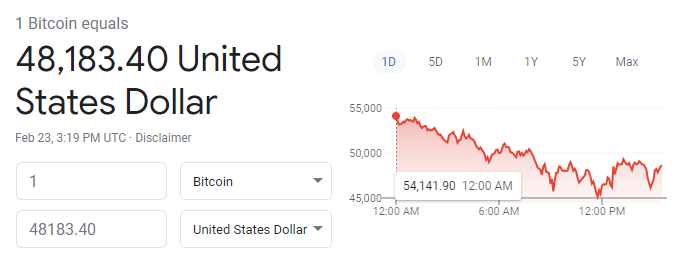
The price of bitcoin dipped, hitting below $46,000 after rising close to $55,000 in the last few days. Elon Musk, the guy who recently invested $billions in the “wealth product”, said the product was overvalued. That tweet rattled some people – and they panicked, and sold their coins. 

Within the freedom of academic analysis, this village boy can freely write that Elon Musk has made a mistake, and scored an own goal (as in football) [I know, who’s that guy saying that Musk made a mistake!]. What Elon did not remember is this: if your $billions are tied to bitcoin, and if you shoot it down, your company valuation will follow. So, when he made that tweet, I said “really, he wants to attack his company since some investors may not be comfortable seeing billions of Tesla assets disappear”. 

Updated after this post, I saw this quote from Wedbush Analyst, Dani Ives. He provided this reason  as the cause of the recent Tesla plunge in the stock markets. This recent plunge has pushed its total loss since the Bitcoin investment to 25%

Shares of Tesla at one point plunged more than 10% Tuesday morning, pushing their losses since February 8—when the firm first disclosed its $1.5 billion bitcoin investment—to more than 25%.

That crippling blow to Tesla stock has erased about $215 billion in the firm’s market capitalization, which stands at about $620 billion, since the investment, at which time the firm’s market cap was near a high of $844 billion.

The recent plunge comes as bitcoin prices tank about 7% after Tesla’s billionaire chief, Elon Musk, said over the weekend that the cryptocurrency’s prices looked “a little high,” Oanda Senior Market Analyst Craig Erlam said Tuesday morning.

In a note to clients Tuesday, Wedbush analyst Dan Ives said that “for both good and bad,” Tesla shares are now “heavily tied” to bitcoin prices—a development that’s driving a selloff among cautious investors.

Yes, those coins he loaded are now part of Tesla’s balance sheet and whenever there is a fluctuation on BTC, investors care! That is the biggest risk for any company which wants to hold assets in BTC, and trading publicly.

Simply, these two factors explain why Tesla is falling with BTC experiencing some shocks:

  1. US Treasury Secretary Janet Yellen warned that bitcoin  “I don’t think that bitcoin … is widely used as a transaction mechanism, …It’s an extremely inefficient way of conducting transactions”. That woman is the most powerful voice in the world of finance and people are reading her mind!
  2. Elon Musk by loading Tesla’s assets on bitcoin magically connects his balance sheets to bitcoin. So, if BTC sneezes, expect turbulence on Tesla stocks. Why? While Tesla’s earnings calls happen quarterly, BTC changes hourly, meaning that Tesla has no hiding place.

Add both, Tesla was off 22% but is expected to recover as BTC recovers! But momentarily, due to this paralysis for Tesla, Jeff Bezos is back as the richest guy in the world.

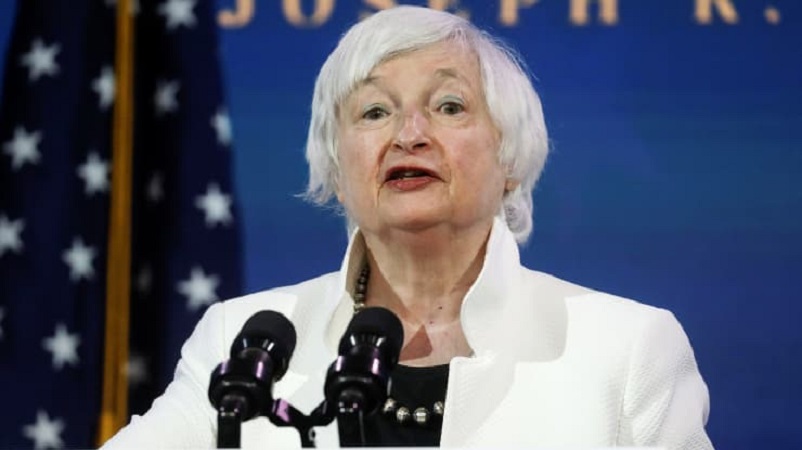
Treasury Secretary Janet Yellen issued a warning Monday about the dangers that bitcoin poses both to investors and the public.

Despite a sharp slide in price to start the week, the cryptocurrency continues to trade above $53,000 as it has received boosts from various sources. Elon Musk’s Tesla recently made a substantial purchase and has said it will accept bitcoin for transactions.

However, Yellen said there remain important questions about legitimacy and stability.

“I don’t think that bitcoin … is widely used as a transaction mechanism,” she told CNBC’s Andrew Ross Sorkin at a New York Times DealBook conference. “To the extent it is used I fear it’s often for illicit finance. It’s an extremely inefficient way of conducting transactions, and the amount of energy that’s consumed in processing those transactions is staggering.”
Spotify is Expanding to 80 New Markets Around the World

0
London, UK - August 01, 2018: The buttons of Spotify, Podcasts, Netflix, WhatsApp and Music on the screen of an iPhone.

Spotify Technology SA is introducing its audio service in 80 markets across Asia, Africa and the Caribbean in coming days, expanding the company’s potential market by some 1 billion people, Bloomberg reported.

The steps announced Monday will nearly double Spotify’s geographic footprint and add regions where streaming music is in its infancy. The company already operates in 93 countries or territories.

Spotify is seeking to build on its head start as the leading audio service in the West to become the dominant player globally. While the company already has more than 345 million users, fewer than 20% come from Asia, Africa and the Middle East, where most of the world’s people live.

The new Spotify countries will have the ability to sign up for free and paid Premium plans; in select markets, Spotify will offer Individual, Family, Duo and Student Plan options too. It will be available on mobile and with its desktop web player, with some exceptions. The company will work with partners to introduce Spotify on more platforms, including TVs, speakers, wearables and cars in the coming months.

Listeners will be able to select and search from Spotify’s worldwide catalog — one that may be limited by licensing rights, but Spotify said it “will continuously work with local rights holders and partners to expand its catalog to include more local offerings.” In the majority of these markets, Spotify will launch with its full podcast catalog, with some exceptions. For the others, the company said it will work with local partners to introduce more podcasts.

The Stockholm-based company has been slower to expand globally than Netflix Inc. or Google’s YouTube, partly because of the complexity of securing music rights. But its timing coincides with growing potential in markets across Africa and Asia. Where the music industry was once U.S.-centric, many of the most popular acts in the world right now hail from India, Nigeria, South Korea and Latin America.

“For the first time ever we have the technology to connect the world through audio,” Chief Executive Officer Daniel Ek said at an investor event.

Stream On

Ek spoke at an event called #StreamOn, a presentation of Spotify’s growing ambitions in all manner of audio. The company began the event by talking about its original business, music. Spotify is the largest paid music service in the world, and has become the single biggest source of revenue for the recording industry. The company predicts global music sales will reach a new peak by 2025.

Investors liked what they heard, boosting the shares by more than 6% to $387.44 in New York. Spotify has gained almost 160% over the past year, raising its market value to more than $70 billion.

Pop stars J Balvin, Billie Eilish and Justin Bieber all made appearances during the event, which Spotify used to discuss ways the company is supporting artists, including a new subscription offering for higher-quality audio.

Yet Spotify is also shifting its focus from being a music service to an audio service with a wider product offering, prioritizing growth in podcasts and audiobooks. Spotify already hosts more than 2 million podcasts, and has bet they can become a multibillion dollar business. The company generated 7.88 billion euros ($9.6 billion) in sales last year, the majority from subscriptions, and is now looking to increase advertising revenue.

Podcast Potential

Few podcasts make money, and those that do generate most of their revenue from advertising. The Swedish audio service announced on Monday new tools to change that, including an ad network for podcasts and tools for podcasters to sell subscriptions to listeners.

The company also announced dozens of new original series, including global sports shows from “The Ringer,” a slate with DC Comics, and a new show pairing former President Barack Obama with rock star Bruce Springsteen.

Investors have cheered Spotify’s investment in podcasts, betting the company can find ways to make money from more than 100 million people who listen every month and stem years of net losses from its money-losing music service.

On Monday, Spotify said that its expansion into new local markets would work to make the service available as quickly as possible in as many places as possible, so some markets will launch with a core library of content and features that will evolve over time.

Spotify’s new markets will be Angola, Antigua and Barbuda, Armenia, Azerbaijan, Bahamas, Bangladesh, Barbados, Belize, Benin, Bhutan, Botswana, Brunei Darussalam, Burkina Faso, Burundi, Cabo Verde, Cambodia, Cameroon, Chad, Comoros, Côte d’Ivoire, Curaçao, Djibouti, Dominica, Equatorial Guinea, Eswatini, Fiji, Gabon, Gambia, Georgia, Ghana, Grenada, Guinea, Guinea-Bissau, Guyana, Haiti, Jamaica, Kenya, Kiribati, Kyrgyzstan, Lao People’s Democratic Republic, Lesotho, Liberia, Macau, Madagascar, Malawi, Maldives, Mali, Marshall Islands, Mauritania, Mauritius, Micronesia, Mongolia, Mozambique, Namibia, Nauru, Nepal, Niger, Nigeria, Pakistan, Palau, Papua New Guinea, Rwanda, Samoa, San Marino, Sao Tome and Principe, Senegal, Seychelles, Sierra Leone, Solomon Islands, Sri Lanka, St. Kitts and Nevis, St. Lucia, St. Vincent and the Grenadines, Suriname, Tanzania, Timor-Leste, Togo, Tonga, Trinidad and Tobago, Tuvalu, Uganda, Uzbekistan, Vanuatu, Zambia and Zimbabwe.

How to Embrace Change

0

Change is one aspect of life that is ever present. It can never be stopped once it begins to roll. It is something everyone must experience in his lifetime. But then, people are afraid of change. In fact, it is always resisted. Many people do whatever they can to prevent change from taking place. But their efforts are futile because change can be delayed but never stopped.

It is actually natural for humans to resist change. Scientists have discovered that a part of the human brain, known as amygdala, interprets changes as threats. Hence, when there is any attempt to bring changes, the human body sees that as dangerous and hence releases hormones that fight, oppose, or run away from it. So, when you see yourself being uncomfortable because something new is about to be introduced, try to understand that it is your body doing its job to protect you from harm.

There are different excuses your body and mind will give to push you into resisting change. For instance, they will make you believe that you can’t fit in if the change happens. You might also notice that you are afraid that things will turn worse if they change. How about fear of the unknown? Here, you are more comfortable with the devil you know than the angel you know not. Some people also resist change because they felt they lack the competency required to manage it and so will become redundant if it happens. There are so many other ways this could happen but always remember that they are natural and so should not discourage you.

Change, as scary as it seems, is very important. A child cannot grow if he doesn’t change in his physical as well as mental features. Hence, a person cannot grow or see reasons to grow if change does not happen. New things are discovered and made because changes are demanded for them. Change makes life more exciting because it breaks the monotony humans would have been plunged into in the name of conservatism. Indeed, change has brought about growth and development in humans and the society at large.

This brings up the question of how one can embrace change despite how threatening it might seem. To help yourself to embrace change, you need to do the following:

  1. Accept that you need change: This is the most difficult part of embracing change. If you don’t believe that it is time for things to change, you will find it difficult to accept anything new. One of the tricks for achieving this feat is to objectively evaluate the current situation of things around you. Ask yourself how satisfied you are with your current position. If you are satisfied and comfortable with what you have and are, then it is impossible for you not to fight change. But if you are unsatisfied with what is happening around you or with your current position, know it that you are one step ahead of seeking and accepting change.
  2. Visualise positive effects of the change: Not all changes are good but you can’t tell if a change is good or not until it happens. Hence, after accepting that you need to make some changes or that there is a need for things to change, you have to visualise a brighter future with that change. You need to dream of that future and believe it will happen. Once you have any atom of doubt about it, you are most likely going to resist it when it comes.
  3. Make effort to actualise the change: This is where you take necessary steps towards welcoming and/or actualising the change. You have to prepare yourself for the future. To do this, get yourself equipped with information and acquire necessary skills that will be required to adapt to the new environment. This way, you won’t feel threatened when things finally change.

As mentioned earlier, change is a constant thing, which can never be stopped. If change decides to happen, nothing can stand in its way. It can be delayed quite alright, but it will definitely find its way around obstacles. Hence, instead of fighting change, embrace it and make it work for you. However, you should use your discretion when embracing change because some of them affect people negatively.

The Igbo Apprenticeship System Article

7

The Igbo Apprenticeship System work has passed the first phase of editorial work at Harvard. We have more phases to go, but everything is looking fine. Due to the nature of the topic, it is taking time.

I have also defined the IAS thus: “The Igbo Apprenticeship System is a business philosophy of shared prosperity where participants co-opetitively participate to attain organic economic equilibrium where accumulated market leverageable factors are constantly weighted and calibrated out, via dilution and surrendering of market share, enabling social resilience and formation of livable clusters, engineered by major participants funding their competitors, with success measured on quantifiable support to stakeholders, and not by absolute market dominance.”

My postulation is that everything the world is looking for, to reduce inequality, the Igbo Apprenticeship System has frameworks which could be adapted, for the rise of all.

Learn about IAS here.

How Not to Be a Parasite Blogger in Nigerian Media Industry

1

From the Lagos-Ibadan axis to Abuja-Kano axis of the media location in Nigeria, a number of online news websites are competing with the conventional ones such as The Punch, The Guardian, The Nigerian Tribune, Daily Trust and Blueprint among others. Traditional newspapers have online and offline presence [in the form of printed copies of their daily content].

Between 2000 and 2020, a significant number of online newspapers, especially bloggers evolved and competed, and still competing the traditional ones. During this period and now, the trend within the context of producing and publishing news by the bloggers turned online newspapers has been aggregation of the traditional newspapers’ content with or without additions.

In most cases the bloggers turned online newspapers do not acknowledge the efforts of the traditional ones in terms of attributing the aggregated content to them by citing their brands [names]. They only aggregate, edit and publish. This tradition is common among the online publishers who do not have academic and practical journalism training.

It is instructive to note that aggregating news or content is not new in the field of journalism. What is strange in the Nigerian context is the use of the model as the primary driver of value proposition by the bloggers that turned to online newspapers. This has been the trend since 2015, according to our analysis.

In advanced markets such as the United Kingdom, the United States of America, Russia, Canada among others, traditional newspapers are paying to have their news aggregated and distributed more widely among larger websites. We have also seen how syndication works in these markets. Instead of aggregating The Punch and The Guardian’s news content without adequate acknowledgement bloggers should follow syndication path. “Syndication is a particularly popular news aggregator business model because it helps publishers remove the hard work of negotiating and securing distribution.”

Parasites versus Partners

Naija Dailies, OgaVendor.com, Headlines Africa, Zoomheader.com, OgbodoSolution and Parrot Nigeria are some of the real news aggregators that could survive the current competition in the Nigerian media industry. These brands use aggregation and syndication models. They help traditional newspapers in the area of distribution. Every day, news stories in the conventional newspapers are selected and published on their websites for wide audience reach.

While these brands have models that could ensure sustainable value creation, delivery and capturing, this cannot be said of the bloggers that have taken solace in aggregating content from the traditional newspapers without additional value. This approach shows that the bloggers lack resources for the gathering of firsthand evidences or information that could be turned into news products. Telling secondhand stories means that they are parasites not partners in value creation and delivery as the brands explained earlier exemplify.