DD
MM
YYYY

PAGES

DD
MM
YYYY

spot_img

PAGES

Home Blog Page 5895

Welcome Kenya’s Buymore to Tekedia Mini-MBA

0

Good People, join me to welcome Kenya’s Buymore to Tekedia Mini-MBA. Buymore specialises in providing nextgen solutions that make the retail supply and distribution chains in Africa more efficient. The customers range from retail outlets, distributors, manufacturers, development partners, banks,  and financial companies. Businesses that use our products are better informed and as a result are able to cut costs, increase revenue and margins as well as generate insights and market intelligence that enables them to scale their business to the next level. 

From the land of Harambee Stars and the home of global mobile innovation (Nairobi), Buymore is serving the world. Tekedia Institute welcomes you to the best school.

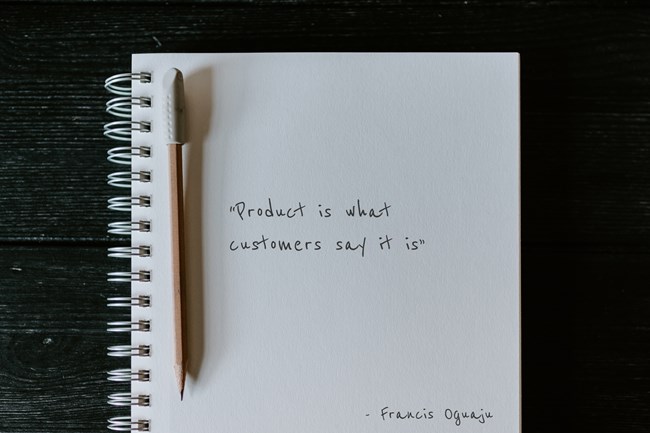
“Product is what customers say it is”

0

You have created toothpicks for cleaning teeth, but some customers are buying them for eating suya (seasoned, skewered and grilled strips of meat) . That the toothpicks are now used for eating suya must not diminish your playbook. Rather, your business antenna must signal that your product has a new use case. Winning in markets requires awareness and observation – shine your eyes because a product is whatever customers say it is, notes Francis Oguaju.

Comment on LinkedIn Feed

Comment #1: It makes sense: “product is what customer say it is”. Customers defining what your product is sounds great, the producer though must be intentional in solving real needs to allow customers define your product and market it for you at no cost.

My response to #1: Absolutely. The toothpicks have not seized to be used for the teeth. The point here is having awareness to see emerging opportunities and go after them. As I noted in our this week’s class, Instagram was not originally created for its current use. Twitter was not created for its current use. The message is clear: observe and use data to understand what matters!

Comment #2: I think this line came in one analysis on iPhone, couple of years ago. Why do people use iPhone? Different reasons, to some, it’s just the cameras, so to this set of customers, iPhone is a camera. Some use it because of security, and to this set of customers, iPhone means security. To some, it’s just a class thing, to this group, holding one in the hand is all that matters, not battery life nor functionality. This list goes on and on.

It is only through awareness, being the manufacturer, you realise that you are serving different people, the same product, but different jobs or end goals for users.

That small quote is deep, it’s never about what you think your product does, but what users actually use it for, and what it means to them.

A Testimonial on Tekedia Mini-MBA

0

Good People, we receive many testimonials every day on Tekedia Mini-MBA. I am very happy to share this one from a business leader Mr. Pankaj Badola. He wrote, “ Mr Ndubuisi – I’m grateful for the content you created for Tekedia. I’ve joined this year Feb session and found your content quite helpful.”

This edition of Tekedia Mini-MBA has professionals from 36 countries. We just completed Week 1, and started Week 2 today. Imagine when we will get to Week 12. That is why a sample of the last edition returned a 98% Satisfaction rate.

Thank you Mr Badola for choosing Tekedia Institute.


The Nigeria’s “Ban” Policy – And Problems for the Future

0

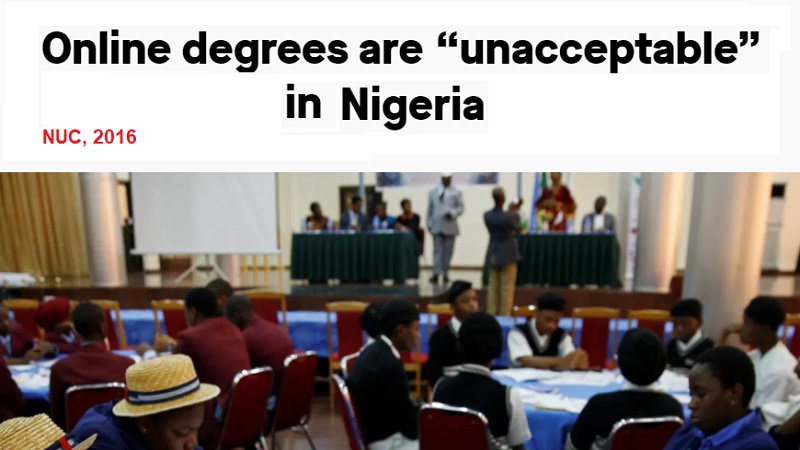
In 2016, Nigeria’s National University Commission made it clear that online degrees from foreign universities were “unacceptable” in the country. People, tell me a story, now that most schools are online or hybrid, including schools like MIT, Stanford and Harvard, are their degrees at risk in Nigeria? Of course, there was no Covid-19 pandemic when the call was made – and that explains the issues with the policy: blanket ban is ineffective, most times, because you end us missing the root cause.

Yes, that is where I am going here – using ban, instead of making  efforts to get to the root issues, causes harms. Suddenly, with Covid-19, we just noticed that the problem was not “online”, rather quality from the programs. MIT went online during the peak of the pandemic. Certainly, I do not expect NUC to ban degrees from MIT.

NUC was trying to communicate thus: we will not accept degrees from schools that were unaccredited or had low quality. That does not necessarily mean that an “online” channel should disqualify a school. Some top ranked schools in the US will finish a semester or even a year with no physical contacts. Certainly, NUC will not ban their degrees.

This is largely banned in Nigeria at scale

It comes down to putting efforts to look at issues comprehensively over easy in, easy out approach. People are doing money laundering with a digital currency. Instead of arresting the criminals, you banned the sector. We banned drones in Nigeria because some people could use it to cause problems [that ban is technical when you consider the regulatory requirements]. Yet, if you check, Kenya takes a more nuanced approach, isolating issues from the haze, and at the end, the nation is making progress while Nigeria stifles everything.

How do you invent a future when you are so afraid of trying new things in a nation?

Securing the Prosperity of the Future Generation: Policy Reflections for Nigeria

1

In the development field, it is widely believed that social and economic characteristics can be transferred within communities and households from one generation to another generation. This intergenerational transfer can be negative or positive. For instance, research evidence has shown that educated parents are more likely to educate their children. The logic is quite simple, educated parents are expected to have known and enjoyed the returns to education which includes high income and a better standard of living and will like their children to enjoy this benefit as well. Uneducated parents may have less value for education and as such may not be very keen to have their children educated. As such educated parents are more likely to transfer education to their children than uneducated parents.

Going in-depth, the argument for intergenerational transfers extends to some surrounding characteristics that keep parents and children born to them in a perpetual state of backwardness or a state of continued prosperity. Take for instance poverty. Can poverty be transferred from parents to Children? The answer is obvious- poverty can be transferred from one generation to another especially in the midst of certain conditions such as; the lack of education, poor access to healthcare, unemployment. Amid the mentioned conditions that surround poor people, it is expected that children born in such situations will also grow into poverty except there is an intervention to change the narrative.

A brief look at the health, education, and unemployment statistics in Nigeria. A 2020 report by Statista- a global data company- found that there are 3.8 doctors for every 10,000 Nigerians. This is grossly inadequate to cater to the health needs of the population. UNICEF report reveals that 10.5 million children in Nigerian aged 5-14 years are not in school and only 35.6% of children aged 35-59 months have access to early childhood education. While the Nigerian Bureau of Statistics reports that the unemployment rate has increased year on year from 10.4% in 2014 to 23.1% in 2018.

It is therefore not surprising that with poor access to health and education and rising unemployment the country has also witnessed a growth in the number of people living in poverty. Considering poverty figures, between 1980 and 2010 the number of poor Nigerians increased from 39.2 million to 112.47 million – exhibiting a growth rate of 153.6 % within the time frame (Nigerian Bureau of Statistics). Also, the World Poverty clock reveals that the number of Nigerians living in extreme poverty rose from an estimated 70 million in 2016 to 90 million in 2021. These statistics picture the transfer of poverty from generation to generation in the country and until drastic policy actions are taken the situation will be worse.

Deliberate policy intervention

A deliberate policy intervention could come from the Nigerian government and or international organisations. At the moment, the Nigerian government is committed to the home-grown school feeding programs meant to encourage school attendance, thus improving educational attainment in the future. The government must also improve the provision of healthcare infrastructure in the country by increasing health expenditure. The government must also take the lead in job creation by creating enabling environments for increased investment in economic activities. For Nigeria, the provision of stable electricity is key in this regard.

The international community has been very benevolent to the country. Some international NGOs such as the United Nations Development Programme, Danish Council, OXFAM, are leading education projects in communities with high numbers of out-of-school children in Nigeria. Another project by the Foreign and Common Wealth and Development Office is supporting the establishment of businesses in North East Nigeria in an effort to boost employment.

In conclusion, the government must take the lead in the fight against poverty especially to ensure that the future generation attain a better standard of living. On the other hand, partnership from the private sector and the international community will be also highly beneficial to the anti-poverty effort.