Our “Facebook for Innovators” is live hub.tekedia.com. It enables our members to co-share and co-learn more effectively. You can download the Android app here (coming).
The goal is simple: connect innovators and growth makers , and open the door for them to make great things happen. The video below explains “How To Use Tekedia Hub”. Join us.
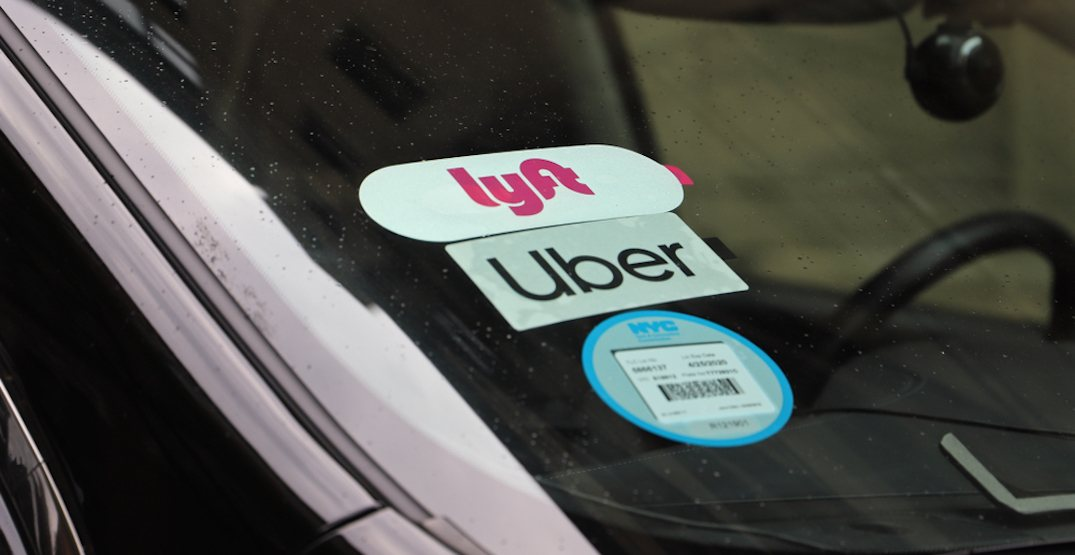
Uber’s Q4 2020 report filed on Wednesday showed the company made $3.2 billion in revenue, down 16% year-on-year to put its loss at $6.8 billion. However, the loss is good news. The ridesharing company recorded $0.54 per a share loss, beating Wall Street’s expectations of $0.55, after a troubling 2020 that plummeted its revenue.
The California-based company was severely hit by COVID-19 pandemic which crippled economic activities with movement-restricting safety measures. Compared to the $8.5 billion loss in 2019, it saw a significant revenue growth amidst the strains.
Uber’s Q3 report showed it lost $968 million, including $236 million in stock-based compensation expenses. But the figures indicate slight revenue growth compared to the nearly $1.1 billion loss in the same period last year.
Uber focused on food delivery to minimize the impact of the pandemic on its business. UberEats thrived, beating the ride-hailing division in revenue generation for the third straight quarter as online food orders increased during the lockdowns. The food delivery revenue increased 224% to $1.4 billion in the fourth quarter compared to the same period in 2019, while ride revenue was $1.5 billion, down 52% from a year earlier.
It also worked to cut costs: shutting down service in China where it’s becoming expensive to operate, cutting staff andselling off its driverless and flying car startups. Uber CEO Dara Khosrowshahi said the company will henceforth focus on “profitable growth”, which means cutting costs as low as possible and focusing on the division that brings in more revenue.
Uber cut about 25% of its workforce in the first half of last year as the pandemic’s grip tightened.
Winning the prop.22 against the state of California, to classify its drivers as independent contractors, lent credence to Uber’s quest to cut cost. Experts said the win will help the company to cut labor costs by as much 30%, as it shields the company from being governed by California’s labor laws that ensure minimum wage, health plan and other entitlements for workers.
Uber recorded 144.3 million trips, 24% decline year-on-year, a record that its betterment in 2021 depends mainly on vaccine roll out. Lyft, Uber’s US competitor is also counting on the vaccine distribution to scale up in the second quarter.
Lyft, which also suffered a heavy decline due to the pandemic, is hoping for a rebound when people return to pre-pandemic normality. The company said it has set ahead-of-target cost cuts that will help it achieve a profit on an adjusted basis of earnings before interest, taxes, depreciation and amortization.
“Based on the improvements we’ve made, there is a chance we can achieve profitability in Q3. Obviously, pulling in profitability would require a strong summer rebound,” Lyft Chief Financial Officer Brian Roberts said.
The company said it shaved off more costs than originally anticipated; including head-count reductions and lower costs for software hosting services, payment processing and insurance, and it spurred the lower-than-expected loss it incurred in the last quarter of 2020.
The company’s Q4 report shows nearly $570 million revenue, a 44% drop year-on-year but 14% growth compared to Q3 revenue. Just like Uber’s, the result beat analysts projection, which in this case, was put at $562 million. There was an adjusted EBITDA loss of $150 million in the fourth quarter, lower than the $185 million loss predicted by analysts.
Lyft’s ride volume dipped 52% in December and 51% in January compared to the previous year. The company said it is expecting to see a lower volume in the first quarter of the year compared to the last quarter of 2020.
While Uber is focusing on Eats and alcohol delivery, Lyft said its plan is to cut an additional $35 million in costs in the first quarter of 2021.
John Zimmer, the company’s president told Reuters: “As riders increase … those lower costs will also help drive higher contribution margins.”
The company said its number of active riders in the fourth quarter decreased by more than 45% on a yearly basis to 12,552, but revenue per active rider rose by $1 to $45.40 – a record number.
Lyft said they will focus on moving people not goods for now, although the company announced late last year it’s working on a white-label or non-Lyft-branded platform to allow deliveries between different businesses for groceries, food and packages.
Unlike Uber that is focusing fully on delivery, Zimmer told Reuters that the Lyft delivery platform is still early in the process and that the business would just be additive, with the company hoping to announce partners at the middle of this year.
PayPal has a big plan: become the central bank of digital currencies just as commercial banks are to physical fiat currencies. The company boss, Dan Schulman, laid out this vision during the company’s investor day. Simply, PayPal could become avehicle to help nations manage and distribute digital money. That seems scary because we have American Google search, American Facebook social, and now loading American PayPal quasi central bank. Call it absolute dominance of the digital age (outside China) if that becomes a reality.
“You think about how many [digital wallets] we’re going to have in the next two, three or five years, and we’re a perfect complement to central banks and governments to distribute those digitized forms of currency,” Schulman said.
Schulman also revealed that PayPal is looking into smart contracts and tokenizations of other non-crypto assets.
“This is a once in a multi-decade opportunity where the fundamental rails of the system are going to be redefined and we have a chance to help shape that,” Schulman said.
Meanwhile, integration of crypto has brought growth to PayPal: “PayPal customers that use its crypto services have a 12% increase in weekly transactions on the platform. This is in part because more than 40% of the U.S. PayPal customers who use crypto return to complete more than two additional transactions, the company said”.
With all these redesigns, it is looking increasingly strange on Nigeria’s playbook to ban Bitcoin and cryptocurrency. Which world do we want to exist in right there in Nigeria? CBN needs to reverse this decision before our young people become mere spectators in the future of commerce.
Yes, allow them to take risks – and rise or fail, and learn from the process, while doing your job to mute any paralysis, making sure mistakes do not become an economic avalanche and shock. This outright ban of crypto will hurt Nigeria’s competitiveness in future commerce. Period.
Nigeria and cattle are on a collision. I cannot understand why we cannot manage this paralysis. Cattle could put this nation on a regrettable path. This is becoming “a savage custom, barbaric, outdated, rejected, denounced, accursed, excommunicated, archaic, degrading, humiliating, unspeakable, redundant, retrogressive, remarkable, unpalatable.”
You could have noticed that I quoted Wole Soyinka’s Lakunle, in The Lion and the Jewel, as the teacher spoke to Sidi. Yours truly acted as Lakunle in the secondary school’s drama society where memorizing drama, Shakespeare, etc was part of life. And most of those lines have refused to go! Sure, they helped those days Ifeoma was doing shakara. Lol
People, cattle must NOT destroy Nigeria. It is high time Mr. President shows leadership on this. We need to be living to eat meat in Nigeria. This is simply no more a distraction, it is a problem now. Yes, when the police lie to protect cattle, you will agree that Nigeria is on a bad path.
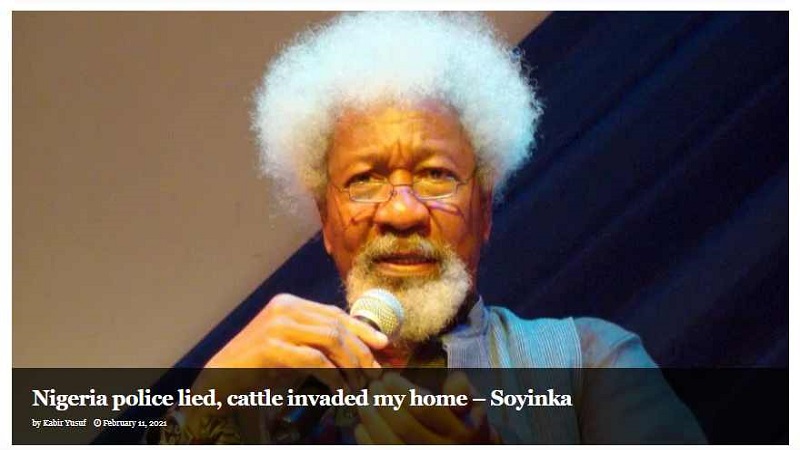
Wole Soyinka is a sage and one of the most respected academics in the world. In some societies, he would be a national symbol. But here,… very unfortunate. Mr. President, you need to lead on this cattle thing.
Mr Soyinka, in a statement sent to PREMIUM TIMES, narrated how the cattle invaded his home, how they were removed and how the police took time to arrive the scene after they were invited.
The police in Ogun had claimed in a statement Tuesday that only one cow stayed into Mr Soyinka’s compound.
“The entire place was inspected by the DPO and it was established that it was just a case of stray cow as nothing was damaged or tampered with,” the police said.
Mr Soyinka has now said that the narrative of the police is false.
“I thoroughly resent the police version which suggests that the cows never invaded my home: home is not just a building; it includes its grounds. And it was not a stray cow, or two or three. It was a herd – we have photos, so why the lie? It is so unnecessary, unprofessional and suspiciously compromised,” Mr Soyinka wrote.
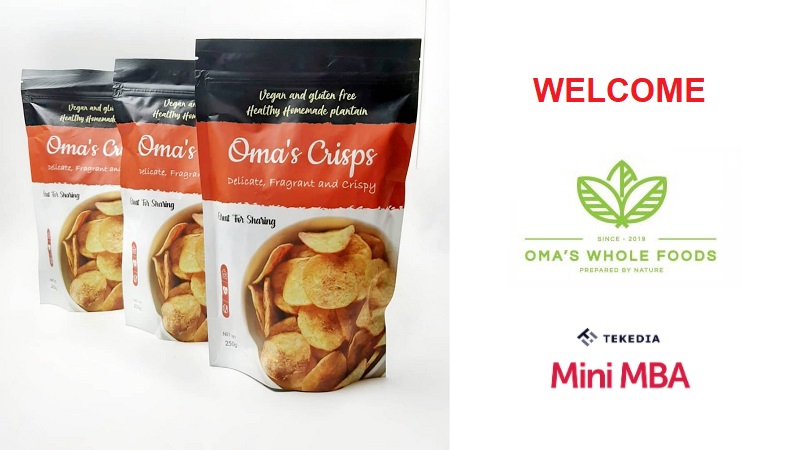
Tekedia Institute is excited to welcome Oma’s Whole Foods to Tekedia Mini-MBA. Led by the Managing Director, Chinweokwu Shen, Oma’s Whole Foods products are free from artificial colours, flavours, sweeteners and preservatives. I look forward to an engaging class, especially during the Sustainability module of our program. We will co-share, co-learn, and advance.
We began a new edition this week; registration continues here.