DD
MM
YYYY

PAGES

DD
MM
YYYY

spot_img

PAGES

Home Blog Page 5915

Exxon Mobil’s $22.4B Loss, Pfizer’s $15B Projected Vaccine Sales, And Why Africa Needs To Build Resilience Now

0

Case 1: “Oil giant Exxon Mobil suffered its first annual loss in decades last year as the pandemic prompted energy use to plunge. The firm lost $22.4bn as energy prices dropped – at one point falling below zero. The downturn forced the company to make drastic cuts to its workforce and investment plans”.

The pandemic has taken a massive toll on Big Oil as demand has all but dried up, with global travel still largely restricted and swaths of ex-commuters working from home. Energy, according to The Wall Street Journal, was the worst-performing sector in the S&P 500 last year. Exxon and BP both reported annual losses of $22 billion and $18.1 billion, respectively, and for Exxon it was the fourth consecutive loss for the first time in modern history.  Exxon Mobil is investing $3 billion over the next five years in efforts to lower emissions. The CEOs of Exxon Mobil and Chevron spoke last year about combining into one oil giant, reports The Wall Street Journal, citing anonymous sources. The market value of a combined Exxon/ Chevron could surpass $350 billion. (Innews)

Read further for Case 2 on the same site: “Drugs giant Pfizer has said it expects $15bn of sales this year of the coronavirus vaccine it developed with German firm BioNTech. The vaccine was one of the first to be authorised for use by countries including the UK and the US. The vaccine sales represent a quarter of its expected revenue for this year.”

Two companies, two sectors and two different scenarios. The Covid-19 pandemic may provide a thesis on what portfolio managers may have to do when balancing risks. This world is becoming stochastic and that state may be the steady state if the climate change worst case model comes to pass.

That health insurance companies declared massive profit is an irony in a time when the world experienced one of the most challenging healthcare issues in decades. Why did they make money? Lockdowns and restrictions froze hospital visits and with limited hospitalizations, those elective surgeries which cost so much were waived, pushing insurers to keep their premiums. Those premiums give you the massive profits.

 When you look at the different outcomes from Exxon and Pfizer, you will understand the challenge ahead if the projected climate change paralysis happens. Yes, there could be structural redesigns which can change the economic architectures of nations. WIth no resilience, humans will suffer. Africa needs to invest to acquire and deepen its resilience to such shocks. They could be existential. 

Jeff Bezos, Amazon Founder & CEO, To Step Down; Andy Jassy Takes Over

1

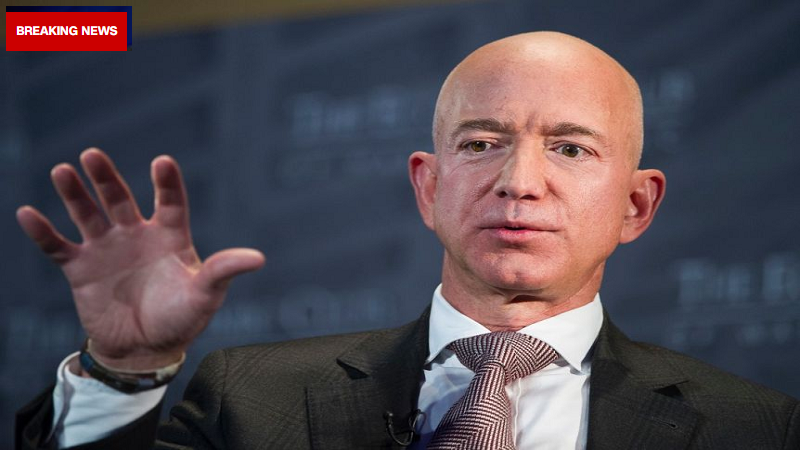
One of his generation’s finest operators with capability to combine amalgam of empires with ease, is stepping down. Yes, Amazon CEO, Jeff Bezos, will step down as CEO. He will move into the Executive Chairman position. Andy Jassy will replace him as CEO. 

If you look carefully, Jeff has determined the future of Amazon by appointing the executive who currently runs the cloud computing unit, Amazon Web Services, the most profitable unit of the digital conglomerate, as Amazon CEO. Through AWS, Amazon taxes the world of commerce and is certainly the future of the empire.

Amazon founder Jeff Bezos will step down from his role as chief executive later this year and transition to the role of executive chair, the company said Tuesday. He will be replaced by Andy Jassy.

Bezos has been Amazon’s CEO since its founding in 1995. He oversaw its growth from an online bookseller into a $1.7 trillion global retail and logistics behemoth, which has also made Bezos into one of the world’s richest people. Jassy has worked for Amazon since 1997 and currently serves as CEO of the company’s cloud business, Amazon Web Services, which is its biggest profit driver. (CNN)
Mr Bezos letter to his staff below.

Fellow Amazonians:

I’m excited to announce that this Q3 I’ll transition to Executive Chair of the Amazon Board and Andy Jassy will become CEO. In the Exec Chair role, I intend to focus my energies and attention on new products and early initiatives. Andy is well known inside the company and has been at Amazon almost as long as I have. He will be an outstanding leader, and he has my full confidence.

This journey began some 27 years ago. Amazon was only an idea, and it had no name. The question I was asked most frequently at that time was, “What’s the internet?” Blessedly, I haven’t had to explain that in a long while.

Today, we employ 1.3 million talented, dedicated people, serve hundreds of millions of customers and businesses, and are widely recognized as one of the most successful companies in the world.

How did that happen? Invention. Invention is the root of our success. We’ve done crazy things together, and then made them normal. We pioneered customer reviews, 1-Click, personalized recommendations, Prime’s insanely-fast shipping, Just Walk Out shopping, the Climate Pledge, Kindle, Alexa, marketplace, infrastructure cloud computing, Career Choice, and much more. If you get it right, a few years after a surprising invention, the new thing has become normal. People yawn. And that yawn is the greatest compliment an inventor can receive.

I don’t know of another company with an invention track record as good as Amazon’s, and I believe we are at our most inventive right now. I hope you are as proud of our inventiveness as I am. I think you should be.

As Amazon became large, we decided to use our scale and scope to lead on important social issues. Two high-impact examples: our $15 minimum wage and the Climate Pledge. In both cases, we staked out leadership positions and then asked others to come along with us. In both cases, it’s working. Other large companies are coming our way. I hope you’re proud of that as well.

Andy Jassy, boss of AWS

I find my work meaningful and fun. I get to work with the smartest, most talented, most ingenious teammates. When times have been good, you’ve been humble. When times have been tough, you’ve been strong and supportive, and we’ve made each other laugh. It is a joy to work on this team.

As much as I still tap dance into the office, I’m excited about this transition. Millions of customers depend on us for our services, and more than a million employees depend on us for their livelihoods. Being the CEO of Amazon is a deep responsibility, and it’s consuming. When you have a responsibility like that, it’s hard to put attention on anything else. As Exec Chair I will stay engaged in important Amazon initiatives but also have the time and energy I need to focus on the Day 1 Fund, the Bezos Earth Fund, Blue Origin, The Washington Post, and my other passions. I’ve never had more energy, and this isn’t about retiring. I’m super passionate about the impact I think these organizations can have.

Amazon couldn’t be better positioned for the future. We are firing on all cylinders, just as the world needs us to. We have things in the pipeline that will continue to astonish. We serve individuals and enterprises, and we’ve pioneered two complete industries and a whole new class of devices. We are leaders in areas as varied as machine learning and logistics, and if an Amazonian’s idea requires yet another new institutional skill, we’re flexible enough and patient enough to learn it.

Keep inventing, and don’t despair when at first the idea looks crazy. Remember to wander. Let curiosity be your compass. It remains Day 1.

Jeff

That BBC Documentary And Evolving Covid-19 Discrimination

3

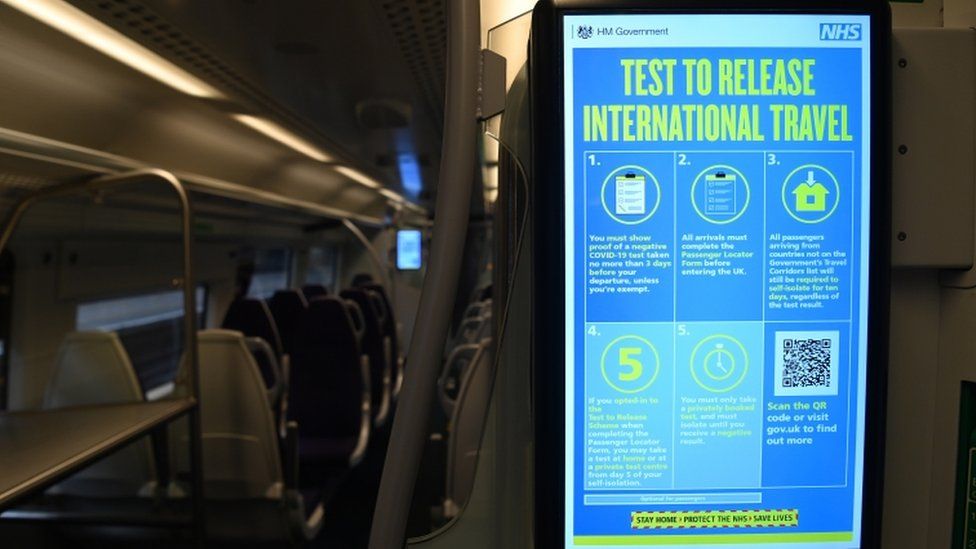
The Covid-19 vaccine passport and the Covid-19 test certificate would become another level of legendary discrimination against Africa and the developing world. Already, the BBC has made it clear:  that negative test certificates from Nigeria could be fake. That documentary is pure wickedness because BBC does not have enough data to single out a country that way.  Watch out as the world requests re-testing and re-issuing of documents with Africa hitting a double whammy: you do not have money, yet you have to do more tests to prove you are clean, from a disease which to a large extent you have “overcome” relatively better.

I call on the African Union to mount a ferocious defense from this Covid-19 discrimination against Africa. I like what Nigeria is working on: ban our airlines, we will ban you. Stop us from flying in, we stop you from flying out. We are a people of 1.3 billion people and we matter.

Covid-19 is not ebola virus and we cannot be pushed to suffer the “after-effects” with global discrimination which entities like BBC are already seeding with the documentary on fake travel documents. 

Sure, this is not to endorse people who peddle fake documents. But the point is this: we need to fight this pandemic without bringing the old codes. While it is easier to throw nations like Nigeria under the bus, I am yet to see these media entities do the same to China.

In Future, Tekedia Mini-MBA Through A Partner Will Offer Interest-Free Loans

0

$140 is a lot of money in our continent, we just noticed. We receive not less than 15 requests daily for scholarships at Tekedia Institute to attend Tekedia Mini-MBA. A young man saved for six months to afford 50% after the team gave him a partial scholarship. So, with our data, I quickly noticed that we have a real challenge: if you cannot find a way to make it even easier, you cannot impact lives.

I am happy that we will unveil an Interest-Free Loan scheme which will make it possible for anyone to attend our program and pay over 3-6 months. A financial institution is structuring that and we will be announcing it in the coming days. The company manages it and using the volume, we will “pay” the interest through discounting.

We continue to receive registration for the edition beginning on Monday, Feb 8. Register to get your login.

Tekedia Institute offers an innovation management 12-week program, optimized for business execution and growth, with digital operational overlay. It runs 100% online. The theme is Innovation, Growth & Digital Execution – Techniques for Building Category-King Companies. All contents are self-paced, recorded and archived which means participants do not have to be at any scheduled time to consume contents.

(This loan service will not be available for the edition starting next week as we will not be ready with the partner)

Again, Internet Searches Remain Impotent on Nigerian Stock Turnover Volume

0
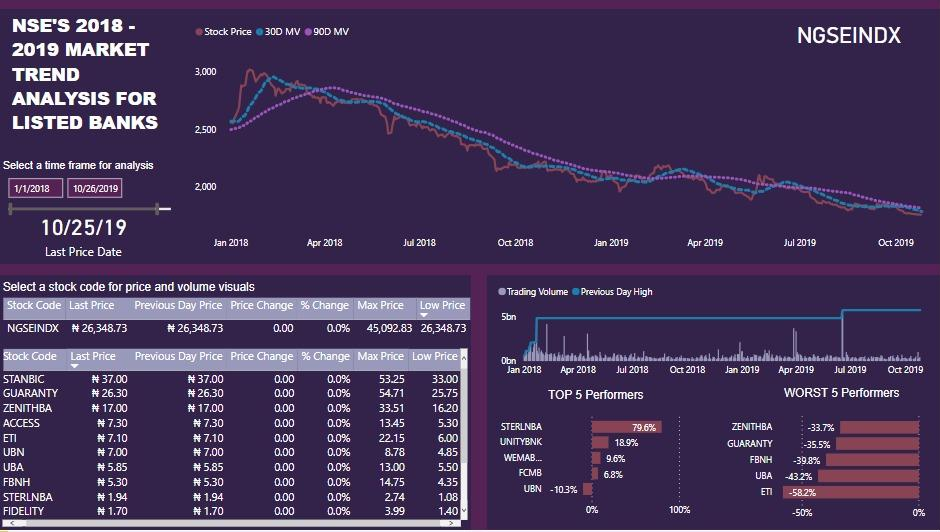
Nigeria stock exchange data (Source; Godbold, LinkedIn)

In many parts of the developed world, investors and public searches on the Internet have been discovered to have profound impacts on the performance of the brands listed on stock exchange commissions. Researches conducted in this world have shown the extent to which the volume of searching specific information about a brand, issue or need affected stocks of the company. While this occurred in the developed world, a number of studies in the developing world have revealed that this is not tenable absolutely.

In a recent study, it was found that “Google searches neither explain the contemporaneous nor predict stock return, trading volume and volatility dynamics in Nigeria.” The study further hints that “trading volume and volatility dynamics have no relationship with changes in the numbers of Wikipedia pages view related to stock activities.” These results are advanced by our analyst with the use of the four weeks trading activities of the Nigerian Stock Exchange in January, 2021.

According to the Stock Exchange Commission at the end of first week of the month [January 8, 2021], “a total turnover of 3.394 billion shares worth N19.867 billion in 26,808 deals were traded. The Consumer Goods Industry (measured by volume) led the activity chart with 2.026 billion shares valued at N7.503 billion traded in 4,031 deals; thus contributing 59.70% and 37.77% to the total equity turnover volume and value respectively. The Financial Services Industry followed with 939.288 million shares worth N7.820 billion in 14,020 deals. The third place was Conglomerates Industry, with a turnover of 139.882 million shares worth N182.151 million in 885 deals.”

Second Week [January 15, 2021]

A total turnover of 3.447 billion shares worth N32.725 billion in 30,327 deals were traded this week by investors on the floor of the Exchange, in contrast to a total of 3.394 billion shares valued at N19.867 billion that exchanged hands last week in 26,808 deals. The Financial Services Industry (measured by volume) led the activity chart with 1.714 billion shares valued at N13.352 billion traded in 15,102 deals; thus contributing 49.74% and 40.80% to the total equity turnover volume and value respectively. The Construction/Real Estate Industry followed with 768.131 million shares worth N4.203 billion in 430 deals. The third place was Conglomerates Industry, with a turnover of 279.799 million shares worth N578.694 million in 1,199 deals. Trading in the top three equities namely UPDC Real Estate Investment Trust, Mutual Benefits Assurance Plc and Transnational Corporation of Nigeria Plc (measured by volume) accounted for 1.224 billion shares worth N4.459 billion in 929 deals, contributing 35.52% and 13.63% to the total equity turnover volume and value respectively.

Third Week [January 29, 2021]

A total turnover of 2.570 billion shares worth N27.884 billion in 31,466 deals were traded this week by investors on the floor of the Exchange, in contrast to a total of 4.288 billion shares valued at N25.989 billion that exchanged hands last week in 32,849 deals. The Financial Services Industry (measured by volume) led the activity chart with 1.497 billion shares valued at N12.695 billion traded in 14,324 deals; thus contributing 58.22% and 45.53% to the total equity turnover volume and value respectively. The Conglomerates Industry followed with 363.263 million shares worth N821.428 million in 1,722 deals. The third place was Consumer Goods Industry, with a turnover of 220.759 million shares worth N3.953 billion in 5,952 deals. Trading in the top three equities namely Transnational Corporation of Nigeria, Union Bank of Nigeria Plc and Zenith Bank Plc (measured by volume) accounted for 633.261 million shares worth N5.634 billion in 3,947 deals, contributing 24.64% and 20.20% to the total equity turnover volume and value respectively.

Fourth Week [January 22, 2021]

A total turnover of 4.288 billion shares worth N25.989 billion in 32,849 deals were traded this week by investors on the floor of the Exchange, in contrast to a total of 3.447 billion shares valued at N32.725 billion that exchanged hands last week in 30,327 deals. The Financial Services Industry (measured by volume) led the activity chart with 2.607 billion shares valued at N12.454 billion traded in 15,128 deals; thus contributing 60.81% and 47.92% to the total equity turnover volume and value respectively. The Conglomerates Industry followed with 813.813 million shares worth N1.561 billion in 2,417 deals. The third place was Oil and Gas Industry, with a turnover of 212.126 million shares worth N821.978 million in 2,726 deals. Trading in the top three equities namely Transnational Corporation of Nigeria, Living Trust Mortgage Bank Plc and Japaul Gold and Ventures Plc (measured by volume) accounted for 1.582 billion shares worth N1.564 billion in 2,726 deals, contributing 36.9% and 6.02% to the total equity turnover volume and value respectively.

In our analysis of the turnover volume extracted from the above submission by the Commission, our analyst discovers that 649,019,968 was the minimum turnover volume that occurred due to the Internet search activities [related to the companies listed on the Exchange and social indices] out of 13,698,947,479 volume recorded during the 20 days trading activities when more than 3.9 million Internet search volume was achieved. Over 708,000 was found as the maximum turnover volume. Analysis further reveals that strong connection does not exist between the search and turnover volume, emphasizing previous results of researchers in the academic community. The duo only connected by 3.6% and the search volume had 0.1% capacity of influencing the turnover volume.

Our analyst notes that the results are not surprising because attention was paid on seeking information about sports, life and style more than business, health, education, crime and politics. Information categories the public sought, according to our analyst, do not have an absolute direct link with the products and services of the companies listed on the Exchange Commission. Our analyst also notes that the results can also be understood within the context of the lack of robust search of products or services being offered by the companies. This can be linked with the low marketing activities of the companies during the trading period.