It is really painful that Silicon Valley is introducing this one: an audio social network. Yes, an app called Clubhouse hasraisedaround $100 million led by existing investor Andreessen Horowitz at a $1 billion post-money valuation. What this means is this: Instagram, TikTok and the peers have another competitor. This competitor focuses on audio!
But I must note here that audio social network apps have been trialed in Africa, but none picked any up because a full play social media business is usually hard to execute, when you do not have the financial war chest which typically comes from Silicon Valley and China. So, those ideas just flamed!
Clubhouse is having a really good month. The San Francisco-based audio social network has raised around $100 million, according to Axios, putting its post-money valuation at $1 billion. In addition, the startup, which launched less than a year ago, boasted 2 million weekly active users. So what is Clubhouse? In its own words, it “allows people everywhere to talk, tell stories, develop ideas…” and for now, it’s invitation only.
So, just like that, the natural communication system for Africans – talking, we do not read/write enough, with most parts of the continent failing to invent indigenous ways of writing for centuries, until the colonial warlords arrived – has been invented, socially, in California. Possibly, in a few months, post invitation-only phase, they will open it and we will begin to yarn. Why must California be creating these things for us?
When I remember that South Africa had a chat service like WhatsApp before we decided that WhatsApp is the operating system for African social communication system, Clubhouse could relax that it will pick traction in the continent since we typically like Silicon Valley products.
Yet, I do not think that Clubhouse is the real deal: there is something amazing about written things. It gives you confidence to sleep because it is there and you can revert and pick where you stopped. Just talking may not do it for many. So, this is what I expect: if this does well, WhatsApp or Instagram will clone the feature and with that most will stay where they are.
You do not need many apps on your phone – you just need one that can do many things, even decent enough.
Good People, I wrote a post here on the Abuja-Kaduna railway concession. My words were really hard because from what we have on the press, I was offended. But I have received more details from the government and the company. At the end, after looking at the data, what the press is writing is not what happened.
With that information, I have deleted the post. Let me thank NRC and SecureID for reaching out to explain. To both entities, my apologies. But next time, I think we need to spend more time on putting press releases which inform the citizens. The reason why Nigerians are unhappy is this: the press confused everyone.
To Oluwole Dada (DipM MCIM), NRC, and SecureID, go ahead and continue to serve. It would still be a good idea if what I personally received is made public in a blog post to avoid the confusion in the land. The President, the Minister and his team actually served here – and we need to commend them instead of the opposite.
To our readers, my apologies. Relying on public info, I got it wrong. But with the data I have received, my post was not fair. For that, I write – my apologies!
In case you missed our first (open) webinar, here is the recording. It is about 90 minutes comprising presentation and Q/As.
“The 2021 Outlook: Growth After A Redesign” session was well received. In the next few hours, members will receive an email for Tekedia Institute’s first meeting of 2021. We will begin with a pre-Tekedia Mini-MBA edition zoom session titled “The 2021 Winning Playbook”.
As a community of innovators and growth champions, this will be a knowledge excursion into the year. For us here, 2021 will be a year of accelerated growth because the construct of digitization which has advanced due to the dislocation from Covid-19 will improve productivity.
What would be the winning playbook? I will share perspectives and together we will co-share and co-learn. To our members, Happy New Year.
The outlook is here, we will then discuss how to win in the new year.
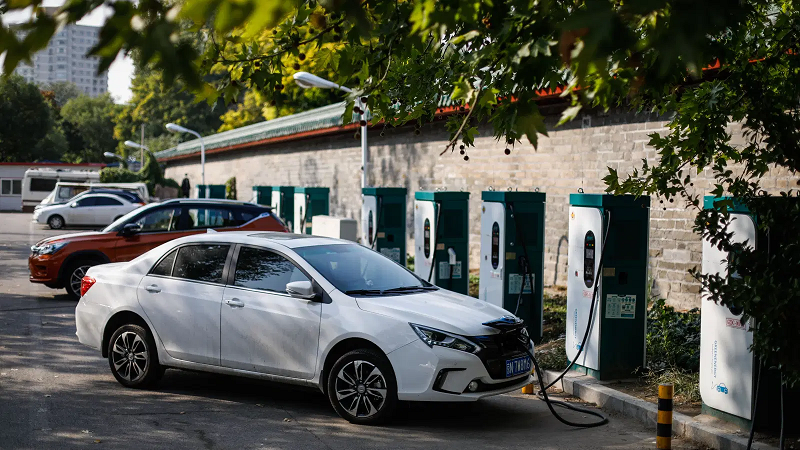
As the world increasingly turns away from fossil fuel, the search for cleaner energy is widening in scope and thus leaves the conventional energy industry with a dire future to reckon with. The evolution of electric cars that is gradually becoming a global race kicked off a movement that supports the campaign of environmentalists pushing to implement the Paris climate Accord.
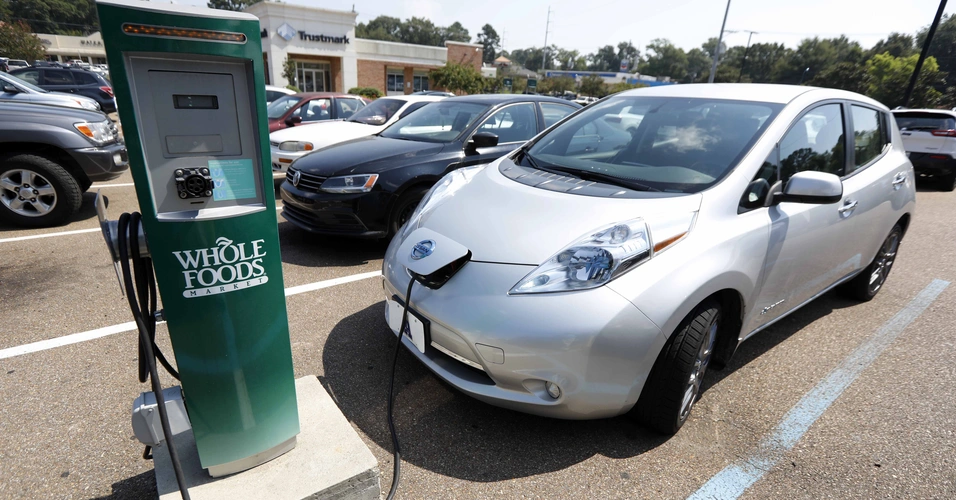
Every day, reports of companies joining the trend of electric vehicle (EV) production hit the news. Also, off-grid electricity generating companies are creating emerging markets globally, all with the goal of eliminating greenhouse-gas emissions.
The goal has given birth to “climate tech”, a broad set of sectors which tackle the challenge of decarbonizing the global economy, with the aim of reaching net zero emissions before 2050. PwC noted in its State of Climate Tech 2020 report that the scope is getting broader.
“It now encompasses low-to-negative carbon approaches to cut key sectoral sources of emissions across energy, built environment, mobility, heavy industry, and food and land use; plus cross-cutting areas, such as carbon capture and storage, or enabling better carbon management,” the report said.
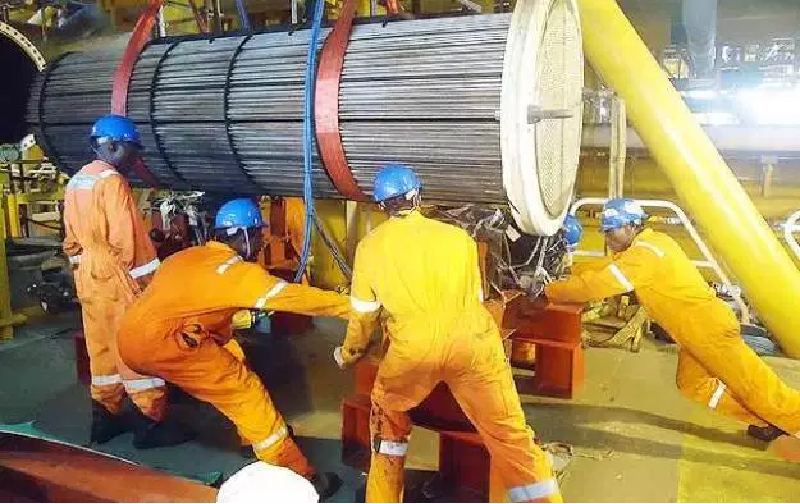
Oil workers
Each success they score marks a significant shift from the old energy system to cleaner energy, and it is good news to the cleaner energy industry as much as it is bad news for the oil industry.
Tesla, a leader in the EV market saw its shares surge after Democrats, who are pro cleaner energy, won the Georgia senatorial election which gives them the majority to control the US Congress.
As the US rejoins the Paris Accord following Joe Biden’s presidential election win, there has been an upsurge in environmental friendly energy emotionalism. Biden backed up his executive order that returned the US to the climate agreement with an order that stops companies from drilling oil and gas on federal lands, halts construction of the Keystone XL pipeline, and directs agencies to review and reverse more than 100 Trump actions on the environment.
Recently, the electric vehicle and solar energy industries have witnessed a surge in investment interest, while the oil industry, immobilized by the outbreak of COVID-19 which crippled travel and industrial activities, saw a decline that reduce global emissions to about 34 billion tonnes a year. Encouraged by this development, investors who are concerned about environment are now pumping money into clean energy startups and companies, with the goal of widening the progress.
Breakthrough Energy Ventures (BEV), the clean-tech fund backed by billionaires including Bill Gates, Jeff Bezos and Michael Bloomberg, raised $1 billion to help start-ups capable of cutting global emissions. BEV had earlier raised $1 billion that it used to back 45 emerging companies. Now the venture capital fund intends to support between 40 and 50 new energy businesses.
BEV used its first $1 billion to support companies working on complex technologies such as clean cobalt and lithium mining, electric aviation, hydropower turbines and emissions-free steel.
The result of these investments has underscored partly, the push behind the interest of investors in cleaner energy. For instance, QuantumScape, maker of next-generation lithium-ion batteries, listed on the New York Stock Exchange in September has leaped in growth. Although its batteries won’t be available before 2025, its market capitalization is currently close to $20 billion, up from $3 billion.
But it is just one among many new energy startups that have emerged from the intimidating shadow of traditional energy to challenge the status quo, and now are disrupting the energy industry.
PwC’s report noted that investment in cleaner energy has soared over the past two years. It said that capital money flowing into start-ups that can help cut emissions hit $16 billion in 2019, up from $400 million in 2013.
While these gains cut across all cleaner energy sectors, electric vehicles and solar energy stand out. The electric vehicle market is projected to hit $802.81 billion by 2027, while solar energy is expected to reach $223.3 billion in 2026.
International Energy Agency (IEA)’s 2020 report indicates that the increase in emerging markets for solar electricity has made it 20-50% cheaper than it estimated in its 2019 outlook. The report said the cost capital for solar is much lower at 2.6-5.0% in Europe and the US, 4,4-5.5% in China and 8.8-10.0% in India.
As many countries join the trend and make policies that enable infrastructure that will foster solar growth, the cost is seen to be winding down below that of grid electricity. The IEA said that the new utility-scale solar projects now cost $30-60/MWh in Europe and the US and just $20-40/MWh in China and India, where revenue support mechanisms such as guaranteed prices are in place. The report projected electricity generation from non-hydro renewables in 2040, reaching 12,872 terawatt hours (TWh), up from 2,873TWh last year.
The AMR said Asia-pacific and Europe had a combined 78% share in 2019, with the former accounting for 52.3% share. North America and Asia are expected to see improved Compound Annual Growth Rates (CAGRs) of 27.5% and 25.3% respectively. The cumulative of these segments was 40.1% in 2019, and it is expected to reach 51.0% in 2027.
Although there is threatening progress in the cleaner energy industry, the gap between the old and new energies is still wide, and it will take years before it could be bridged. But the time left isn’t for the oil industry to bounce back; it’s more like giving the companies therein the opportunity to switch to cleaner energy.
As the oil industry foresees a bleak future through the evolution, many of its companies are beginning to create exit routes.
Shell is exploring ways to reduce spending on oil and gas production by 30% to 40% for its upstream sector, its largest division. For the downstream sector, the company is cutting 45,000 service stations, the biggest in the world, from its network. This means limiting its oil production to a few key places that include Nigeria, Gulf of Mexico and the North Sea.
British Petroleum (BP), Chevron and Eni had already taken similar steps, cutting jobs and shutting down operations to build new low-carbon businesses in the next decade in preparation for the era of cleaner energy.
Saudi Aramco is also focusing on pumping cleaner fuel. Analysts and sources said the company is working on cutting greenhouse gas emissions to have a better chance to compete as environmental concerns push governments to tighten carbon regulations.
With pro-cleaner energy lawmakers and president in control of the Congress and White House, the United States only needs a legislative backing to seal the fate of the oil industry.
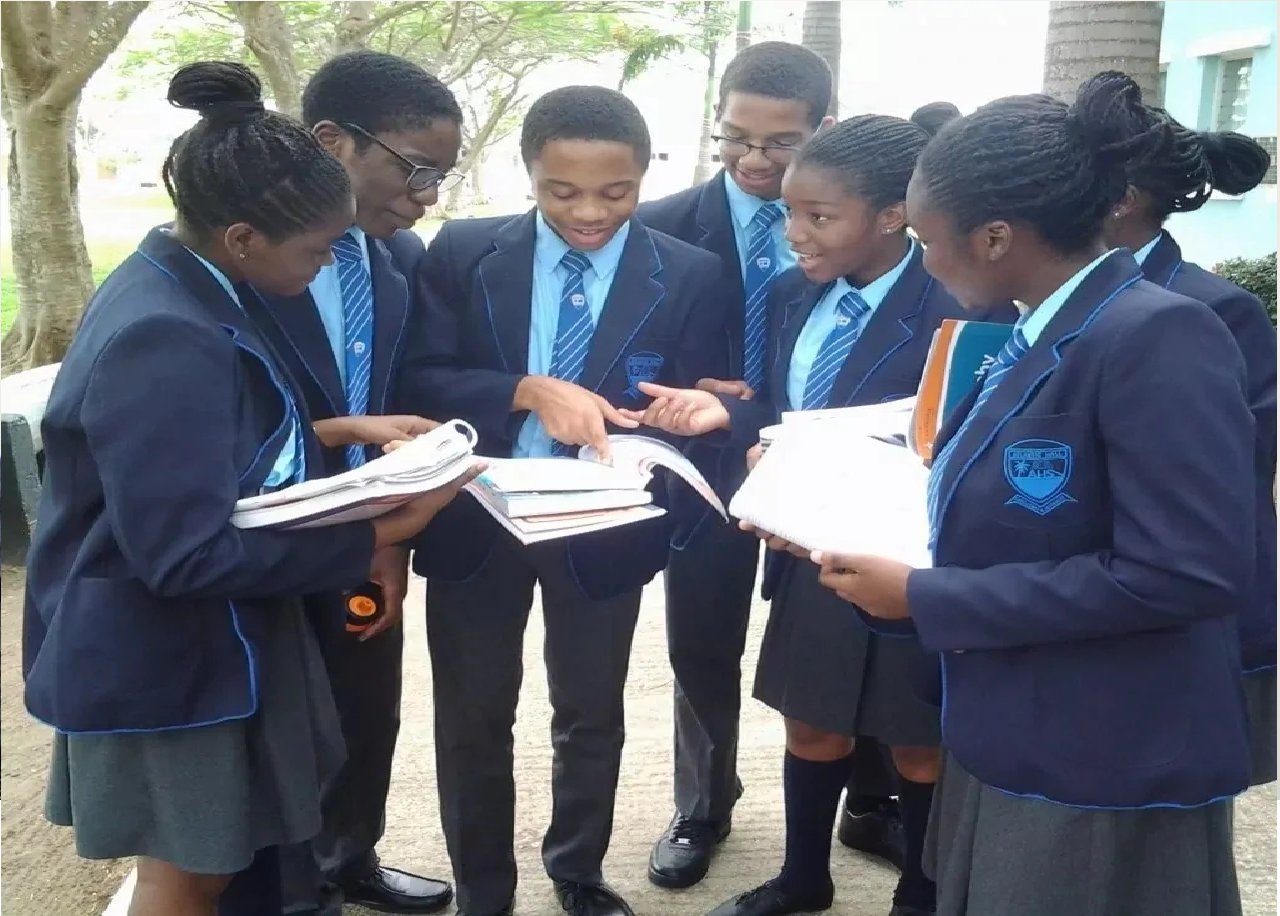
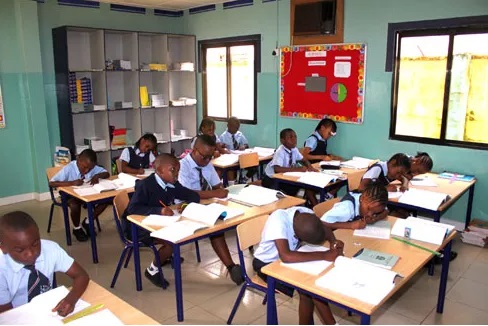
No child is a dullard. This is one aspect of learning many people fail to acknowledge. That a student encounters challenges with learning does not mean he cannot learn under the right condition. These students are branded as weak because they do not pick up as fast as their peers. However, if they are placed in the right environment, they will excel like their peers, who are branded as “brilliant” or “intelligent”. The problem these students face in countries such as Nigeria is that the environment is unfavourable for them.
Researchers have discovered that children learn things differently. Some of them prefer learning new things by seeing and observing them (visual learners). Some prefer learning by listening (auditory learners) while others learn easily by practicing (kinaesthetic learners). In Nigeria, the first two types of learners are favoured by the education system. They are the types that are seen as brilliant and intelligent. Unfortunately, the third type of learners is left to fend for themselves because the system has little or no provision for them. Or rather, the provisions for them only exist in books.
Challenges of Kinaesthetic Learners in Nigeria
As stated above, the problems encountered by students that prefer learning through touching and moving things are caused by the neglect of the system. These children have been abandoned to face their problems by themselves. Those lucky enough to have wealthy educated parents are sent to schools that have facilities, which accommodate their learning preferences. Nevertheless, many of them are dumped in schools, where they float through without achieving much academically.
Well, the following are the challenges faced by learners that fall under this category:
Stigma: These learners have already been called weak, challenged, underachievers, and other derogatory names. In Nigeria, people are quick to call them “olodo” and “iti” as if it was their fault they couldn’t meet up to expectations. These learners begin, at a very young age, to see themselves as unintelligent without understanding why they were not like others. Some may become aggressive while others shy away from the public. They struggle and make efforts to follow class lessons just to show they are not abnormal but they end up at the bottom of the class grading. This discourages them and causes them to hate school. This can explain why we have school dropouts, especially among males.
Unsuitable Curriculum: Nigerian school curriculum favours visual and auditory learners more than it does kinaesthetic learners. The curriculum comprises fewer academic activities that require practical when compared to those that entail seeing pictures and listening to teachers. Of course, since things taught in schools are supposed to be materials within the society, students are expected to see them around their environments. Nevertheless, there are many abstract topics as a result of the unavailability of the concepts within the community or the students’ reach. Since kinaesthetic learners can only understand what their teachers taught and be able to store them in their memories by seeing, touching, and using objects, they will find it difficult to learn if teachers fail to provide those objects for practical use.
Unsuitable Teaching Methods: To be honest, it is uneasy for teachers with a class of about twenty or more students to use different teaching methods for a lesson to meet the diversity of their students. Teachers with kinaesthetic students face challenges because they need to keep them engaged and still meet the academic needs of other students. Kinaesthetic learners are usually restless and find it difficult to sit still throughout a lesson. Their interest spans are so short that if the teacher fails to hold their attention, they disrupt the class. This means the teacher has to devise means of keeping students like this busy while lessons go on. However, many teachers are not willing to do so. They continue with the teaching methods that favour the visual and auditory learners and punish kinaesthetic learners for “making noise”, “leaving the class often”, “pinching his neighbour”, “tearing books”, “failing simple question”, and other reasons that show the students want to “do something”. This can explain why students that are branded “stubborn”, “reckless”, “noisy”, “boisterous”, “destructive”, and so on are said to be intelligent yet they perform poorly academically.
Exam Anxiety: It might seem as if kinaesthetic learners are unafraid of anything. Their boisterous nature gives them the aura of the brave. But what people don’t know is that they are afraid of examinations. Unknown to many, these learners fear the grades they will make by the end of their exams. They believe they are not intelligent and so can never pass well. If they can have their ways, exams will be abolished. Note that these children are not afraid of the tasks in the tests; they fear they don’t know how to go about those tasks. They have either forgotten what they were taught or did not even know when they were taught. So, when they stare at their question papers and cannot come up with good answers, they supply the examiner with whatever their minds tell them and run out of the class. Of course, the Nigerian system of examination, even for primary school pupils, favours only visual and auditory learners.
There are so many kinaesthetic learners in Nigeria but they have been forced to study like the visual and the auditory learners. These children are suffering. They are passing through a lot of trauma, especially because they are regarded as failures. These children are the future innovators and inventors Nigeria has but our schools are frustrating them. All these children need are schools that will create rooms for them to bring out their skills. Special schools can be established for students with this learning preference so they can become the next Elon Musk and Mark Zuckerberg.