Join us for an academic festival of invention, innovation, and business growth. The empires of the future, across all markets and industrial sectors, will have one thing in common: creating a new basis of competition through innovation, flavoured with perception demand, is absolutely necessary.
From Feb 8, in Tekedia Institute, the best Faculty from some of the finest global and local firms, will lead this festival. These are business luminaries and rainmakers in markets. Yes, experts and thought-leaders in their fields.
Register today for Tekedia Mini-MBA (Feb 8 – May 3, 2021). It is online, self-paced, and costs $140 (or N50,000 naira). Hear the sound – The Nature of Invention. Begin here today
Nigeria’s inflation rate leaped to 15.75% in December to reach its highest level since 2017, marking the 16th month of consecutive increases, according to data published by Nigeria Bureau of Statistics (NBS) on Friday.
The NBS data reported that the composite food index rose by 19.56% in December from 18.30% in November due to high cost of some food items.
“This rise in the food index was caused by increases in prices of bread and cereals, potatoes, yam, and other tubers, meat, fruits, vegetable, fish and oils, and fats,” NBS said.
The increase in inflation rate has been expected due to the land borders that were closed since August 2019. In December, the federal government reopened the borders to honor its AfCFTA agreement, but the culminated harm caused by the closure has become an inflation propeller Nigeria’s economy will have to battle with into the near future.
Experts also pointed to other factors that have contributed to the high rise in inflation. Analysts at the Financial Derivatives Company Limited, last week described the inflation, which it predicted would rise by 0.51% to 15.4% in December, as “a hydra-headed monster that has eroded the disposable and discretionary income of consumers.”
The analysts explained that factors like hike in petrol price, electricity tariff, general reductions in subsidies, and improved tax mobilization has affected consumers’ disposable income negatively.
“The continued rise in the general price level is driven largely by forex rationing, output and productivity constraints, higher logistics and distribution costs,” they added.
NBS said the highest increases were recorded in prices of passenger transport by air, medical services, hospital services, shoes and other footwear, and passenger transport by road, among others.
Another factor which has been fingered is insecurity. Economic experts said continued insecurity in northern parts of the country where foods come from is responsible for the increase in prices of food items.
“We must recognize that the disruption we have had in the northern part of the country in terms of food production has a direct impact on food inflation,” said CEO of Cowry Asset Management Limited, Johnson Chukwu.
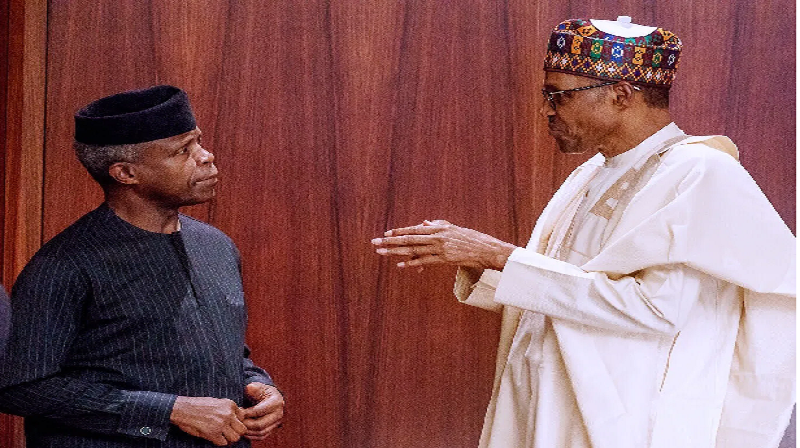
Nigerian president and vice president
“We should expect these pressures to continue in the next couple of months. We should expect that the price of diesel will further increase because crude oil price has moved up and exchange rate has also deteriorated,” he added.
A host of other issues, including rural-urban migration has also been blamed.
But with the border reopened, there is optimism that the inflation will record a significant drop if the government lifts import restrictions on some food items to fill the gap created by insecurity in food producing states in northern Nigeria.
Additionally, a shift goes to winning the war on terrorism and banditry in the north. Economists say sustainable agricultural activities will increase food supply and minimize the rising cost of food items.
However, with the current situation of farmers’ vulnerability, food security is an aim not so close. In November, BBC Hausa reported that farmers in Kaduna, Katsina and Zamfara States pay periodic taxes to have access to their farms. The taxes, which range from N800,000 to N3 million have become another obstacle, in addition to the risk of being kidnapped in the farm, that farmers have to contend with.
“In my village, we pay N800,000 as tax and N900,000 as harvest fees,” a resident of Dankurmi Village in Maru Local Government Area of Zamfara State said. “Even if you pay, they will come to your farm and abduct you.”
With the current security situation in the north and the food import ban, the newly reopened border would only do a little to quell the upsurge of inflation.
At Tekedia Institute, we admire those doing amazing things. Joshua Chukwu is a teacher in Ogun State, Nigeria, where he works to educate the next generation of our continent. Joshua received a full scholarship from the Institute, and is sharing a capstone, a critical part of his learning, with the public. His work is titled “The Impact of Covid-19 On Rural Education in Nigeria: The Role of Private Sectors”. You can download it here.
CONCLUSION:
The covid’19 pandemic has revealed the dearth in Nigeria’s education system, most especially rural education. Children in rural education account for over 60% of the school children in Nigeria. If education at the grass root is not given maximum attention it becomes difficult for any developmental strides to be recorded. The role of private sectors in making up for the lapse of government and ensuring that children in low-income communities continue to learn cannot be overemphasized. The private sectors through various NGOs continue to do so much for rural education in Nigeria. More private sectors need to come on board and join in providing support for children in low-income communities to continue to learn.
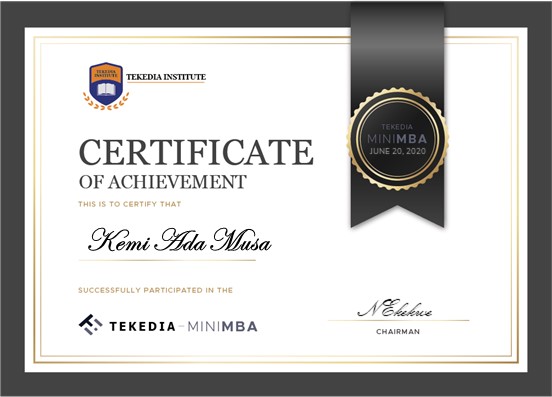
Capstones are like university themed final year projects’ within Tekedia Mini-MBA but delivered via our Certificate program. Most times, members work on company related assignments with guidance from our Faculty.
Many companies including Symplifix have turned their capstones into ventures, raising millions of naira in the process. One is an assistant to the governor of Anambra state. It is a powerful tool: you take time, think over the business, and design a framework based on all that you have learnt, to advance the company. Then send it to your boss; promotions follow, most times!
Congrats Joshua, and thanks for approving for it to be shared publicly. Teachers always share!
Good People, just a note that Tekedia Institute General Scholarship Fund continues to do well. At the moment, we are directing general scholarships to professionals working in orphanages, NGOs serving those with physical challenges and teachers (pre-K, primary and secondary) in rural parts of sub-Saharan Africa. Just ask your principal or head of the NGO to write our team. Our team will do some verifications.
(For private scholarships, they are directed based on donors’ instructions.)
I want to thank the donors including the person who wired N400,000 this morning with instruction “anonymous”. We copied loud and clear. Take this as our Thank You since we cannot even write to you.
Meanwhile, registration continues for Tekedia Mini-MBA (Feb 8 – May 3, 2021): online, self-paced, $140 (or N50,000 naira). Click and register by tomorrow for early benefits.
War is evil and do not pray for it for your enemy. As I continue reading New York Times archives to understand Nigeria in the 1960s, I see pictures that push me to ask “What happened to Nigeria? How did we miss it as a nation?” You read of bravery and uncommon creativity. Stories of the palm oil, rubber, etc yield-improving innovations.
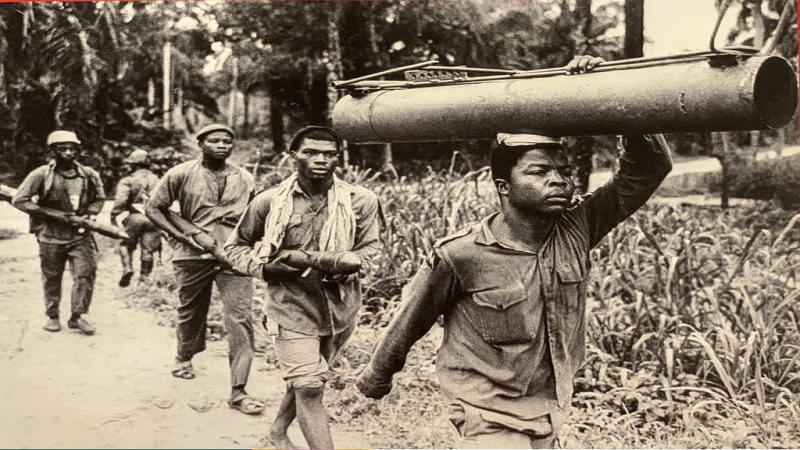
On Biafra war, the story of how a recruiter would go to workshops, recruit young men and put them in weapons development programs, and within months those men will create extremely sophisticated tools for warfare will put a chill. In most cases, none of the men had entered a secondary school as it was a luxury then.
They used pencils and created maps with young people, usually below 23, leading ambushes, carrying the mortar, trekking miles from the factory to installation! The women used local herbs to make food last longer before spoiling!
They innovated on silos, irrigation, etc, building better ways to preserve groundnuts. The kola nuts and cocoa flourished. They created local vaccines, etc. Practically, Nigeria was like the America we admire today.
What happened? Where are the children of these Nigerians? Did crude oil take our brains?
Comment #1: We stopped thinking Prof Ndubuisi. We wanted ready made resources. We switched to plan B and deprived plan A of our resources, energy and thinking cap. The young started sleeping and lazying away as that generation aged away. May we not wait for problems (war) to bring out the innovative spirit in us.
My Response: “May we not wait for problems (war) to bring out the innovative spirit in us.” – amen






Comment #1: We stopped thinking Prof Ndubuisi. We wanted ready made resources. We switched to plan B and deprived plan A of our resources, energy and thinking cap. The young started sleeping and lazying away as that generation aged away. May we not wait for problems (war) to bring out the innovative spirit in us.