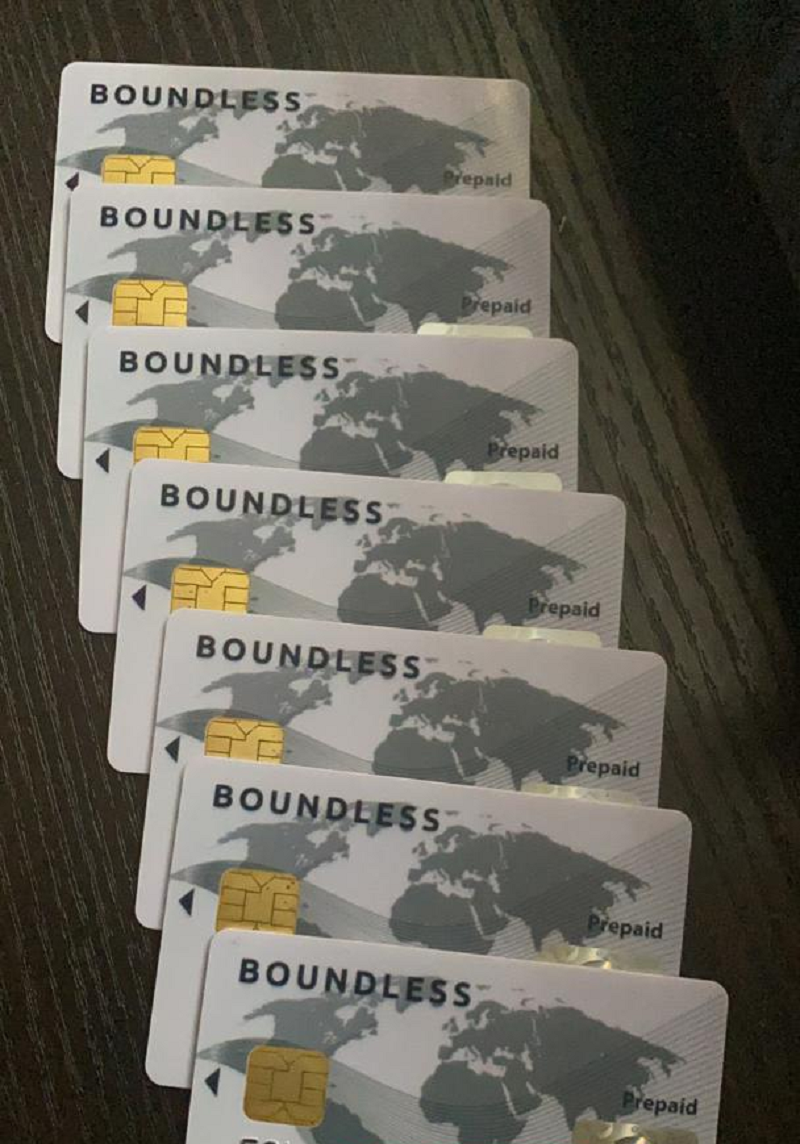
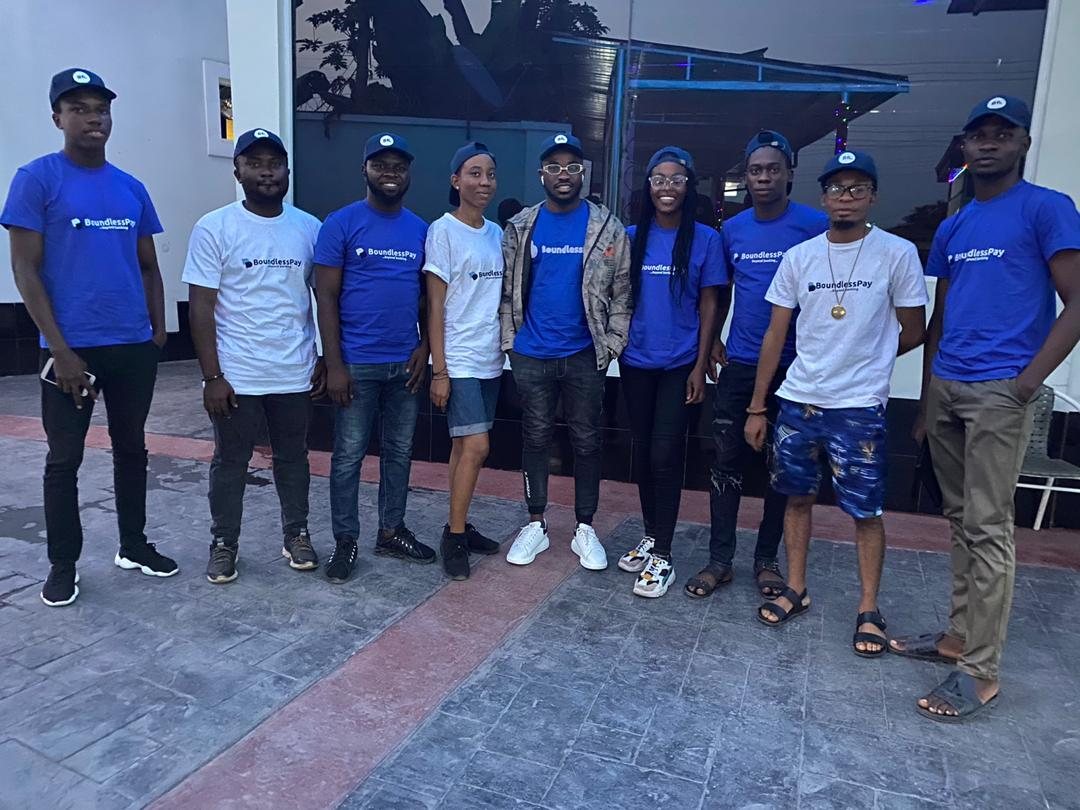
To make sure people could use their BoundlessPay debit cards, turning their cryptos like Bitcoins into Naira, and then pay for basic things in Nigeria, our team at BoundlessPay has been working 24/7. I want to thank the team for all the efforts. I also send a Big Thank you to Bitfxt Exchange team which powers the cryptocurrency ecosystem; they have been working and some are sleeping in office. Because of their efforts, services have been delivered to users, optimally.
I continue to challenge everyone to focus on the positives. Those days in Diamond Bank, I worked for 3 years with no vacation and served on all Christmas and New Year days. In short, I lobbied for them, because that was the life then. Sure, the bank remains the greatest company ever created on transforming young people.
Well done Franklin Peters, continue to inspire, motivate and advance the mission. I want to ring a bell; they said the New York one sounds better. But I know that a new one has been ordered by Oscar Onyema, the boss of Nigerian Stock Exchange, in Lagos!
I expect our team to continue to execute as the trajectory is superb in Nigeria: “According to a recent study seen by Nairametrics, data retrieved from Usefultulips (a Bitcoin analytic data provider) revealed that the use of Bitcoin for peer to peer lending in Nigeria ended on a record high. Nigeria led the pack with about $352 million in P2P trading, while the closest rival, Kenya, had a transactional value of just $90.5 million during the last 365 days. South Africa came in third with a transactional value of $85 million”
I thought, on LinkedIn I would be different and rather than send a New Year Message, forward a message done by someone else. This is a good example of a New Year post for this platform (with qualities that could actually be relevant any time of year)
I didn’t pick this post because it’s author is a global personality, or because he is well known to me; there is no prevailing agenda. It is just one of about ten random posts in my feed at one snapshot of time on January 1, 2021. It’s not my candidate for post of the year 2020 award.
I didn’t pick it because I thought it would help me get a load of reactions or comments or get noticed, So why did I pick it from this random sample?
When we look at the profile of Emmanuel Abara Benson it says he is a Business Journalist/Senior Editor working for ‘ Business Elites Africa’ based in Nigeria. Nothing in the post suggests this is his employers product.
This post ‘Nigerian CEOs and business moguls I admired in 2020’ has 100% alignment with his profession(s), sector/product(s) and market(s) on LinkedIn, which is a ‘professional network’ – no brainer and not rocket science.
Do I agree with all his choices? No. Do I agree with all his reasons? No. But he has gone to the second level of ‘great relevant content’ which is he has invested individual effort as a narrative. It’s not necessary to be a journalist to achieve this easily. It can be done by bringing individual understanding to bear on a third party article, or it can be done by drawing a collective conclusion or highlighting contrasts on multiple third party articles. Too often posts appear copying the title, or a few summary lines lifted directly from the attached third party article, with no investment from the post author.
Don’t be fearful of criticism of your own literary investment in the post. In terms of traction with the wider community, a comment of any kind, even adversarial, is worth approx. 50x a reaction. ‘Comments are the gold standard of engagement on LinkedIn’ John Espirian – dedicated LinkedIn ‘Guru’
If your feed isn’t serving you well, please don’t blame LinkedIn. At the very core product, LinkedIn is like a service janitor in a business that rents corporate meeting spaces. The janitor ensures the room is clean, that it is accessible on time, that refreshments are made available, and that reception/usher services guide arrivals to the meeting space. But it is your job to select your board members, it is your job to set the meeting agenda and it is your job to chair the meeting. Feed is an output of the meeting discourse, and if you have pulled in random passers-by off the street until you’ve got a mob like the Colosseum of Ancient Rome, it’s not LinkedIn’s fault the meeting is in chaos and for the most part you have useless feed.
>> As far as possible, post, share, react or comment with 100% alignment with your profession(s), sector/product(s) and market(s) on LinkedIn,
>> Add value by investing your own narrative and departures from any third party content.
>> Service responses to your posts – failing to do this is like not replying to a sales enquiry left message, with the WHOLE WORLD watching. Perception: Lazy at sales = 100 times more useless product/service delivery and after-sales < Business Killer.
>> Demonstrate a mutually beneficial approach by sometimes engaging with professionally relevant content you didn’t author – shows you have positive human qualities and are not a self-obsessed narcissist!
Caveat : I acknowledge some CEOs, product, brand and media engagement managers can be restricted by corporate protocols but encourage them to use the full flexibility of engagement that is possible within corporate confines.
In 2021 my resolution for the LinkedIn platform is to wage a war on my feed so that it announces relevant opportunities, heralds new advancements, opens me to deep technical understanding, or engages in debate on key critical issues directly related to me professionally. I invite you to join in the battle and lets win the war together!
Wishing you all both a productive Tekedia and LinkedIn experience for 2021!
Since the crude oil boom in the 1970s and influx of petrodollar to the Nigerian economy, things have never remained the same. We abandoned a model of building a strong and solid base economy through agriculture, mining and development of our solid minerals, manufacturing, and service industry for a rentier economy, depending largely on ‘free’ money from crude oil export. We began to live in illusion, not only believing that the fossil fuel which is a wasting asset would last forever but also that the economic boom hinged on it would continue in perpetuity.
We completely forget or deliberately ignored the lessons from the rise and fall of the steam engine and coal era economies. We became fixated on easy money. Sadly, while other oil-rich countries were developing their countries through massive infrastructural and human capital developments for economic diversification from proceeds from sales of crude oil, our leaders were focused on white elephant projects that will enable them to loot and stash funds abroad. Today, the chickens have come home to roost!
We now have a very weak and fragile economy, broken education and health systems, poor or nonexistent infrastructure, and worsening security challenges occasioned by a ready army of uneducated, unemployed, ill-informed and hungry youths. Data from the Central Bank of Nigeria (CBN) put inflation at 14.89% as at November 2020, and 27% unemployment rate.
Also, as at December 26, 2020, a whopping 87.94 million people, representing 43% of the population, live in extreme poverty, according to the World Poverty Clock. From all the economic and social indicators available, our leaders only paid and are still paying lip services to the growth and development of Nigeria. Is there yet hope for real economic and social prosperity in Nigeria? Can the most populous black nation on earth retrace her steps? Is she beyond redemption? For me, the hope of Nigeria lies in getting GENUINE LEADERS and mobilizing PATRIOTIC CITIZENS.
That said, there is an urgent need to kick start and reposition our economy. We need to come out of recession and rapidly grow our Gross Domestic Product (GDP) per capita. To achieve this, jobs need to be created especially in the Micro, Small and Medium Enterprises (MSME) space; and to get these businesses going, there should be seamless access to credit facilities by both small businesses and households. There comes another challenge, lack of actionable data and/or lack of congruence between data (where they are available) and government’s policy thrust. This has been a major hindrance to granting of consumer credits and small businesses loans by deposit money banks. This has also hampered Nigeria’s economic prosperity in no small measure.
The Challenges
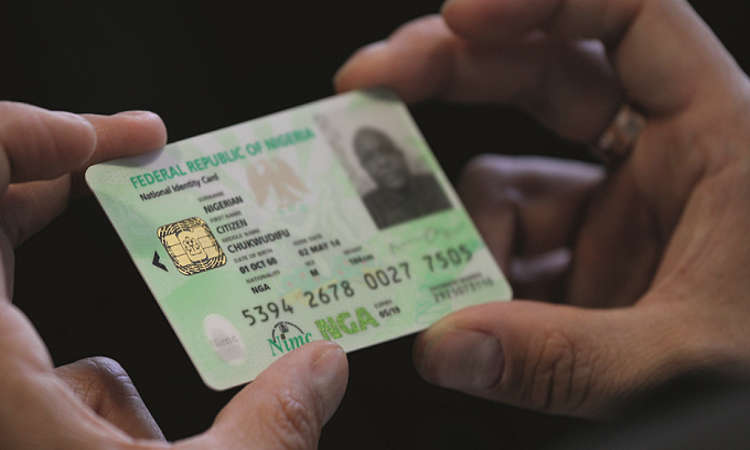
Lack of actionable data: In today’s world of Big Data and Artificial Intelligence, access to quality and reliable data in a timely manner has become a great differentiating factor between successful organization and struggling ones. Unfortunately, in the course of putting this piece together, I tried to lay my hands on up-to-date data on the percentage of total loans by commercial banks to individuals and MSMEs, and the nonperforming loans portion attributable to these categories of borrowers, to no avail. Apart from the asymmetrical and incomplete nature of the available data, the majority of them cannot be obtained real time. This is a real problem for banks to take lending decisions. Why can’t we have proper house numbering, at least in cities and towns? Why can’t biometric data be synchronized such that an individual can’t be having varying information for driver’s licence, voters’ card, national ID card, among others. It is pleasing to note however that some banks now insist on alignment of information such as date of birth and name arrangements, including spellings, before establishing or continuing a banking relationship with them.
National ID Card, Nigeria
However, because there is no central data storage system that is online real time, dubious individuals can always make multiple age declarations and/or name changes in attempts to cheat the system. Other data such as credit history and social/behavioural profiling will continue to hamper the growth of the much-needed loans in the economy. Though some credit scoring firms and credit bureaus are already in place, much more need to be done. We need to get our acts together and develop a culture of deliberately collecting, analyzing, storing and continuously updating data about anything and everything that affects our existence as a people.
Government policies: No doubts, government’s policy direction has direct implications for credit extension to individuals and businesses. In this regard, I would like to commend the government who through the Central Bank of Nigeria has come up with Bank Verification Number (BVN), Loan to Deposit Ratio (LDR), and Global Standing Instruction (GSI). These three tools, especially the GSI- which allows the credit balances of a bank customer to be applied in settlement of the same customer’s bad loan in another bank has restored some level of confidence in lending. The full implementation of this would see a spike in consumers credits. Nevertheless, the government still has to do a lot in the areas of data collection and storage centrally. Government agencies like the National Bureau of Statistics should be strengthened in terms of manpower and infrastructure to be able to produce quality and reliable data, real time.
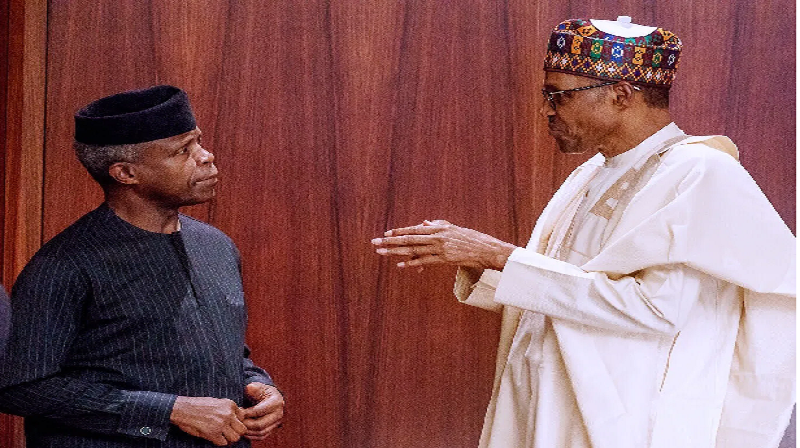
Nigerian president and vice president
With the percentages of total loans by deposit money banks to consumers/microbusinesses in Nigeria, Brazil and South Africa put at about 10%, 33% and 40% respectively, one would not be surprised to know that the Gross Domestic Product (GDP) per capita for 2019 stood at $2,229.9; $8,717.2 and $6,001.4 respectively, according to World Bank data. Several studies and reports have established a direct link between access to credit when needed, and in a cost-effective manner by small businesses and consumers, to GDP growth. It goes without saying therefore, that for Nigeria to achieve quick economic recovery and be on a consistent growth path, access to loans by the critical segment of the economy must increase in volume and value. To achieve this:
There should be adequate and continuous data collection, synchronization and storage in a central system, for individuals and organizations, to aid credit decisions in a timely manner.
Government policies must consciously be data driven, and should be reviewed periodically.
Citizens must be patriotic enough to repay their loans instead of trying to be ‘smart’.
We will launch officially on April 12, 2021 with a web page for Tekedia Capital. Any question, please contact capital@fasmicro.com.
Happy New Year again. In 2021, I want to set up Tekedia Capital – a very early stage venture ecosystem. I have seen a trajectory and the validation is there: the new species of companies called startups are bringing an economic-Cambrian moment like never before, in Africa’s markets. Our goal is to become a feeder, and a pipeline, for the world of investing and venture business. We have done well, and I hope to institutionalize what we have learnt so far, at the next level.
I am confident that many would like to join this party with us. I think we have a real chance of co-creating a model that would deliver great results. It comes down to technology, and how it could remove information asymmetry, and improve the efficiency on the utilization of factors of production. Yes, through Tekedia, we “hear” the sounds of the new Africa, and we think we can respond, effectively.
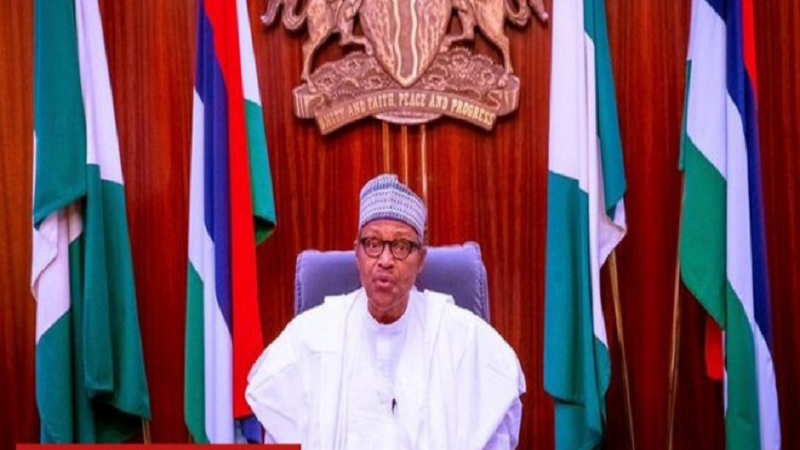
NEW YEAR SPEECH BY HIS EXCELLENCY, MUHAMMADU BUHARI, PRESIDENT OF THE FEDERAL REPUBLIC OF NIGERIA
1ST JANUARY 2021
My fellow countrymen and women,
First, I would like to thank and praise the Almighty who saw us through the year 2020 and has given us the opportunity to witness the start of another new year. We especially thank God because the year 2020 was one of the most trying years since our existence as a Nation.
This can also be said about all other nations around the world, due to the challenges posed on our collective humanity by the novel COVID-19 pandemic.
While acknowledging that 2020 was a very tough year, we saw this year put to test our national resilience and ability to survive these tough times and also gave renewed hope that we will again brave any storms that lay ahead in 2021 and beyond.
As we celebrate the opportunity before us in this New Year 2021, we must also acknowledge the passing away of our brothers and sisters who didn’t make it into this New Year. May their souls rest in perfect peace.
We must remember that we also celebrated the historic occasion of our sixty years as an independent and sovereign country on October 1st 2020. In the spirit of hope and gratitude, I would like to remind us again that as a country on the difficult journey to nationhood and greatness, we have confounded the many pundits at home and around the world who never gave the newly-born country that emerged unto the world stage on 1st October 1960 a chance of surviving much longer than a few years.
Yet, here we are, 61 years by the next anniversary in October, and not only are we here, we are standing tall in the comity of nations as one country united under the will of God and also actively growing that indivisible Nigerian spirit that has enabled us, year after year, decade after decade, to weather all stormy waters and emerge stronger and better where others have fallen and disintegrated. This nation, this Nigeria will survive and thrive.
In this journey to nationhood, we have experienced the highs and lows. 2020 indeed came with a lot of challenges ranging from security and economic issues across the regions to understandable protests that were mainly led by our youths and served notice to the demand for police reforms and accountability. This government heard, this government listened and this government is committed to fulfilling the five demands of our youths, fully understanding that we all wish well for Nigeria.
In the midst of all these challenges, I had initially pledged that as your elected President and Commander-in-Chief, I would ensure that these ongoing challenges will be faced head-on with renewed determination and with all the appropriateness and urgency required. Your voices have been heard and we would continue to listen to you, and all the key stakeholders who are committed to the unity of Nigeria to ensure that every region of this nation is safe for us all, while guaranteeing that the future is also secure for the coming generation.
I wish to also use this occasion of New Year to reaffirm my commitment to the people of Nigeria, especially the youth who need our collective encouragement and support. In securing this nation we need to secure the future of our youth.
Our young people are our most valuable natural resource, at home and abroad. Their ingenuity, creativity, innovation and entrepreneurial spirit is evident to all. Many of our young people are excelling in various spheres of life including sports, entertainment, information and communication technology, commerce and are globally recognized as achievers.
As a Government we are committed to actively engaging with the creative energies of our young people. In this regard, we will partner with the legislature to develop an enabling environment to turn their passions into ideas that can be supported, groomed and scaled across regions. This will create vast opportunities in fintech, agriculture, business process startups and in the entertainment industry.
The year 2021 will indeed be a year where we will work to reinforce the hopes of fellow Nigerians in the vision of a united and progressive Nigeria. This administration would continue focusing on delivering key strategic priorities under our “SEA” – (Security, Economy and Anti-Corruption) Agenda. Some of the key priority areas we would direct our attention and strengths to include:
ON THE SECURITY:
Re-energizing and reorganizing the security apparatus and personnel of the armed forces and the police with a view to enhance their capacity to engage, push back and dismantle the operations of both internal and external extremist and criminal groups waging war against our communities in some parts of the country.
In line with the current security challenges, we are facing as a Nation, I would like to reiterate the promise I made recently when over 300 of our boys abducted from Government Science Secondary School, Kankara were successfully rescued by our security operatives.
The professionalism shown by our Security Forces and the collaboration from all stakeholders across both State and Federal Governments that led to the successful rescue of the boys is proof that Nigeria has the internal capacity to decisively deal with terror attacks on our citizens.
However, we recognize that we rapidly have to move to a more proactive and preemptive posture to ensure that these sorts of traumatic incidents do not become a norm. Our administration is fully aware of the responsibility we have to protect the lives and property of all Nigerians, and we will not relent in learning and adapting to changing threats to our national security and civic wellbeing.
ON THE ECONOMY:
Our focus is on revamping the economy through the national economic diversification agenda that supports the primary goal of national food self-sufficiency. This has helped reduce the growing food related inflationary figures and have in considerable measure positively impacted our food security status during the long months of the pandemic lock down.
We are also currently rebuilding our national infrastructure base and, in the process, introducing transformation through the rehabilitation, modernization, and expansion of the railway system, national roads and bridges both in rural and urban centres, alongside the airports and seaports.
The reforms we have put in place in the power sector would guarantee increased efficiency in our drive to significantly expand the generation and distribution of electricity for use in homes and factories.
As an administration we are currently undertaking a series of special interventions designed to boost job creation and support the entrepreneurial drive of our youths.
With the recent opening of our borders, we expect that the pent-up demand of legitimate cross-border and international trade will boost the fortunes of the many small businesses and agricultural enterprises that depend on Nigeria’s trade and commerce.
The message to our West African neighbours is that Nigeria is once again fully open for those willing to conduct business in a fair and equitable way.
ANTI-CORRUPTION:
On the anti-corruption drive of our administration, we have recorded substantial gains so far and this year, we are committed to continuing along the path of eradicating corruption, through collaboration with all the arms of Government to effectively prosecute this fight.
While we would be working with the Legislature to enact laws that would strengthen this fight, we would also be looking at reviewing some of our laws which would ensure that this fight is more effective. On the part of the executive, we would ensure the diligent and timely prosecution of corruption cases, while appealing to the judiciary to ensure that corruption cases are dispensed with expeditiously.
The persistence of various forms of violence has meant that in the most affected parts of the country, the fabric of inter-communal harmony woven through years of investment of effort at building trust, mutual respect, and harmony has been threatened.
Insecurity as a challenge has direct repercussions on our national economic stability, growth, and development, setting us back at critical points through the destruction of public and private investments.
In parts of the country where chronic poverty, social exclusion, and disillusionment among sections of the youth were already a problem, the cycles of violence that have been unleashed by mindless groups like Boko Haram and others have thwarted the efforts of government to undertake the social policy and associated investments that could make a huge difference in the quality of life of our citizens.
I am aware that for some of our compatriots, the progress we have registered since the inception of this administration is not nearly as fast or as sufficient as they would wish. I do not begrudge them their views in so far as they signify a wish, in which we all share, for only the very best for our country.
Nevertheless, I call upon all Nigerians to carefully recall the circumstances of our coming to office, the facts on the ground and the resources at our disposal since 2015 with the accomplishments of this administration.
As a people, we have shown admirable resilience in the face of every adversity, an unmatched capacity to recover speedily from every setback, an unparalleled generosity of spirit when we resolve our differences, and a constant readiness to invest faith and hope in the destiny we share as a united country built on the diversity of its peoples.
It is these attributes that underpin the Nigerian spirit of “can do, will do” that gives me hope that we shall yet get to destination and fulfill our calling together, especially with the solid resolutions we are setting in this new year.
Keeping our country on a forward march is a duty which we all have and share. In this regard, keeping our country safe from a resurgent cycle of COVID-19 as this administration finalizes its plans to procure and efficiently and effectively distribute the COVID-19 vaccines, I urge you all fellow citizens to observe strict COVID-19 prevention protocols.
As your elected President, my pledge to you is the same as it has always been; I will play my part fully and without fear or favour. I invite all of us to do the same. It is what we owe to the founding generation of our beloved country and also to the coming generation. It is what we desire for national prosperity for all demands.
Long Live the Nigerian spirit of oneness, togetherness, and unity. Long Live the Federal Republic of Nigeria. I wish you a Happy and prosperous New Year.