DD
MM
YYYY

PAGES

DD
MM
YYYY

spot_img

PAGES

Home Blog Page 5979

Is Xmas Christmas?

1

One of the arguments that heat up during the Yuletide is the Xmas vs Christmas controversy. There is always a debate on whether Christmas should be abbreviated as Xmas or not. According to many people, the ‘X’ in “Xmas” is not of Christian origin. These people hold that the replacement of “Christ” with an “X” is a deliberate attempt by secularists to shift attention from Jesus, who is the sole reason for the celebration. In fact, some people see this abbreviation as meaning “Cancelling Christ”, hereby insinuating the “X” is Anti-Christ. Someone also insisted Xmas was deliberately inserted on the day Christmas is celebrated to replace Christ’s birthday with that of Malcolm X. But the question you should ask yourself is, is Xmas and Christmas one and same thing? Are they both referring to the annual feast Christians celebrate on 25 December? But before you arrive at a conclusion, let’s first trace the etymology of the term, “Xmas”.

The Etymology of ‘Xmas

In the Greek language, the 22nd letter of the alphabet is ‘chi’, which is represented by ’X/?’ (just the way alpha is represented by A/?) and is pronounced /kh/. Further, the term for “anointed one” is spelt as “X??o???”, which is transliterated as ‘Christos’ and has been shortened today to ‘Christ’. Also, the Greek abbreviations for ‘Christ’ (X??o???) are X, Xt, and Xp. It should, therefore, not be a surprise that X is used to replace ‘Christ’ in Christmas to form ‘Xmas’.

Why the Recent Rejection of the Term

It is uncertain why the term is suddenly drawing negative attentions despite existing in writing since 1100. Initially, the word, Christmas (which is a compound formed by combining Christ + Mass) was spelt Xres Mæsse during the 12th century. By the 16th century, its spelling has changed to Xtemas. This has metamorphosed to Xmas, as is seen today. Some etymologists have, however, claimed that Xmas is an abbreviation of Christmas that came into existence in the 16th century; a claim that will soon be disproved of.

Was the Term Initially Spelt as “Christmas”?

Answering this question will require that you find scripts written during the time Christmas came into existence. But then, the history of Christmas itself is shrouded in controversy. However, the Roman Sun God origin sounds more logical and will, hence, be used for this essay. Anyway, since we don’t have access to scripts written in the 2nd or 3rd century, where Christmas was mentioned, we have to apply another option here – logic.

To start with, Jesus Christ was a Jew and so his name wasn’t even Jesus to start with (his Jewish name was Yehoshua). ‘Jesus’ is a corrupt version of his Greek name “Iesous” just the way “Christos” and later “Christ” is a corruption of Greek “X??o???”. Also, the “anointed one” in Hebrew is transliterated into today’s “Messiah”. This is just to drive it home that “Christ” is Greek, not Hebrew.

In Greek, the alphabet ‘chi’ is represented with x and not ‘chi’ (remember omega is ? in Greek and zed is z in English). So, you don’t spell a corresponding word with ‘chi’ but with ‘x’. Furthermore, the time Christmas originated, the English were not among the world civilisations to reckon with; the Roman and the Greek were considered the elites of the time. It will, therefore, be a fallacy to claim that the feast was given an English name (Christmas) during inception. It should also be considered that while the feast originated from a Roman pagan tradition, it must have been given a Roman name (unverified by the writer for now) and, later, a Greek name (the civilisations of the period). Whatever this Greek name would have been, it will be closer to Xmas than to Christmas (because of the Greek orthographic style). Hence, Xmas (or its earlier versions), and not Christmas, must have been the proper name for the feast. And no matter the name, it is time to also have vintage canvas wall art photos prints.

Conclusion

There is no need insinuating that Xmas is created by secularists to remove Christ from the centre of the celebration. Maybe those saying this have not bothered to trace the etymology of the term. Today, I believe the world knows why 25th December is earmarked for celebration and that is all that matters. However, if the problem is that Xmas is pronounced as [eksm?s] instead of [kr?sm?s], as many Nigerians do, it should be understood that borrowed words usually adopt the grammatical conventions of the new language. Nevertheless, it should be noted that both Xmas and Christmas have the same pronunciation [kr?sm?s] “krismas”; only their spellings are different.

Sources

  • “Greek”. Omniglot, https://www.omniglot.com/writing/greek/htm.
  • Hillerbrand, Hans J. “Christmas Holiday.” Britannica, 16 Dec 2020, https://www.britannica.com/topic/Christmas.
  • “Xmas.” Online Etymology Dictionary, https://www.etymonline.com/word/xmas.
  • “Why is ‘Christmas’ Abbreviated as ‘Xmas’?” Dictionary.com, https://www.dictionary.com/e/xmas-christogram/.

 

Have A GREAT 2021 – The Year of Accelerated Growth

0

Greetings – Merry Christmas, Happy Holidays and a Great New Year ahead!

I write to thank you for an amazing 2020 in Tekedia Institute despite the unprecedented paralysis from coronavirus. We hit great milestones, training thousands of professionals from more than 30 countries. From India to Singapore, Nigeria to Brazil, Canada to the United States, and beyond, we served innovators and growth champions, providing them with capabilities to innovate, grow and advance firms, and the wealth of nations. In our vision to “discover and make scholars, noble, bright, and useful”, we impacted the career trajectories of many, and positively the course of many firms.

Tekedia Institute aspires to become the best management and leadership development institution in Africa. We now have more than 85 faculty members, from great companies like Shell, Microsoft, Flutterwave, Infoprive, Nigerian Breweries, MTN, King’s College, Coca Cola, Access Bank, African Export–Import Bank, and other category-kings. The testimonials have been superb, and firms have been transformed. 

If you are joining or re-joining Tekedia Mini-MBA which begins Feb 8, 2021, our books – Africa’s Sankofa Innovation, and The Dangote System: Techniques for Building Conglomerates – should keep you busy.

More so, from the feedback we received from members, we are adding Session Labs to practicalize some courses; the following will be delivered along with about 36 Live webinar sessions in edition 4. Full curriculum is here.

  • Remote Work Administration: Krozu (Florida, USA)
  • Blockchain, Cryptocurrency and Decentralized Finance: Bitfxt (Nigeria)
  • Cybersecurity and Digital Forensics: Infoprive (Australia & Nigeria)

At the Institute, we are honoured for the opportunity to serve in this capacity. And as the dawn of 2021 arrives, I write to note that we have expanded our program, and deepened the quality. Register for Tekedia Mini-MBA here and Tekedia Advanced Diploma programs hereTekedia Mini-MBA runs for 12 weeks; it is 100% online, and covers most courses in a typical management program. Those courses are taught by business leaders from great companies. It costs $140 or equivalent in local currency.

Sincerely,  

Prof Ndubuisi Ekekwe

Lead Faculty, Tekedia Institute, Boston USA

Alibaba Joins The Fray As China Opens Antitrust Probes

0
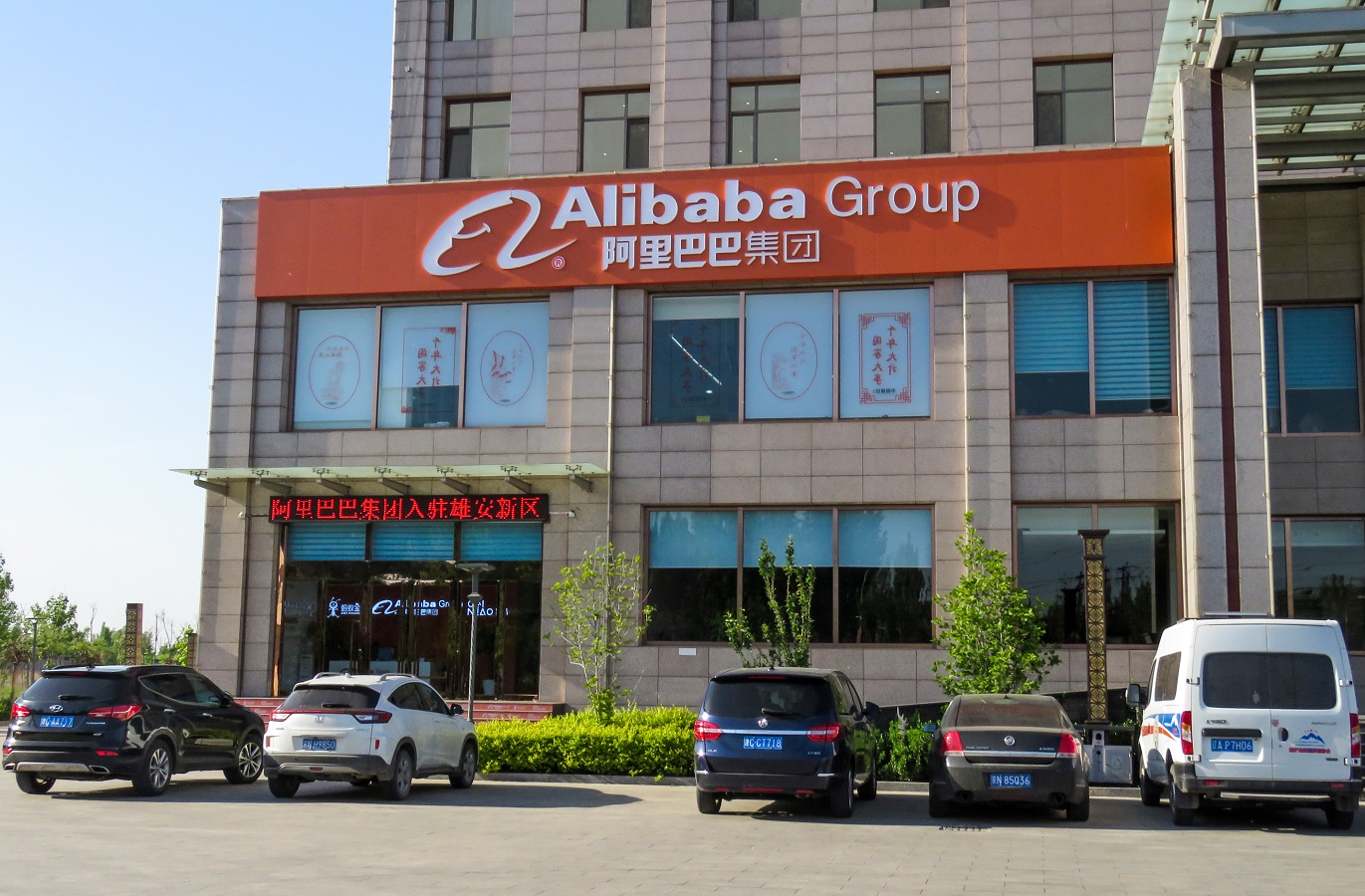
Alibaba office

China is not happy with Alibaba, and has opened an antitrust investigation on the retail platform. Last month, due to government moves, the IPO of Ant Group, an affiliate of Alibaba, was cancelled.

China kicked off an investigation into alleged monopolistic practices at Alibaba Group Holding Ltd. and summoned affiliate Ant Group Co. to a high-level meeting over financial regulations, escalating scrutiny over the twin pillars of billionaire Jack Ma’s internet empire.

The probe announced Thursday marks the formal start of the Communist Party’s crackdown on the crown jewel of Ma’s sprawling dominion, spanning everything from e-commerce to logistics and social media. The pressure on Ma is central to a broader effort to rein in an increasingly influential internet sphere: Draft anti-monopoly rules released November gave the government wide latitude to restrain entrepreneurs who until recently enjoyed unusual freedom to expand their realms.

China is looking for order, but I do think that Chinese leaders are not comfortable that Jack Ma is the face of modern China to the world. Yes, if you visit China, and they ask you who you would like to meet, many would surely prefer to meet the founder of Alibaba over the communist party men. I still think that may be, partly, the reason why Jack Ma had to leave the company he started, prematurely.

The world is watching to see how the antitrust sphere will play out in China. Possibly, some countries can use that against some Chinese companies which have become extremely dominant in some developing countries. Yet, curtailing platforms may not be easy, but in China, it could come via a fiat mandate, and that is why BABA shareholders should be worried in New York. Google will have an independent court to make its case, on its antitrust probes, but BABA may not be that lucky in China.

Simply, China can destroy massive value for Chinese firms listed in New York. If you are invested in them, shine your eyes.

The countdown to the United States’ Department of Justice’s decision to file a lawsuit against Google, over anti-competition practices was followed by a series of antitrust investigations involving US big tech companies.

Google, Facebook, Apple, Microsoft and Amazon are all in the list. As the investigations uncover evidence of antitrust and anti-competition practices, the US regulatory agencies wield a sledgehammer toward the bottom-line of the inquiries – a possible breakup of the big techs.

U.S. SEC’s Charge Against Blockchain Company, Ripples, Stokes Crypto Debate

0

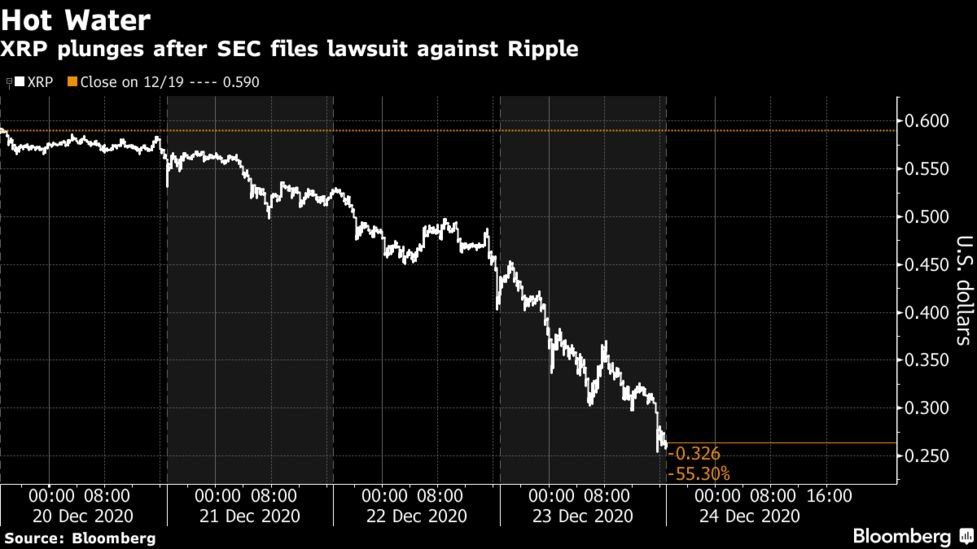
Ripple has been caught in the web of the U.S. Securities and Exchange Commission (SEC), in a controversial debate over the former’s right to make security offerings. On Tuesday, SEC charged Ripple, the blockchain payments associated with the cryptocurrency XRP, with conducting a $1.3 billion unregistered securities offering.

Two executives of Ripple were also charged by the Commission for benefiting from the offering.

The development thus exposed further loopholes in cryptocurrency regulation that has become a global fight to finish.

In a statement issued by Ripple lawyers, the world’s third cryptocurrency said that XRP is a currency and thus does not need to be registered as an investment contract.

“The SEC is completely wrong on the facts and law we are confident we will ultimately prevail before a neutral fact-finder. XRP, the third largest virtual currency with billions of dollars in trading every day, is a currency like the SEC has deemed Bitcoin and Ether, and is not an investment contract,” Andrew Ceresney, Debevoise & Plimpton said. “This case bears no resemblance to the initial coin offering cases the SEC has previously brought and stretches the Howey standard beyond recognition.”

In June, the SEC ruled that Bitcoin and Ether are not securities and will not be regulated as such. The surprising thing that has drawn a lingering debate is the exemption of Ripple from the mid-year ruling of the regulator.

The argument went beyond the decision of SEC back in June to the ruling by the US Financial Crimes Enforcement Network (FinCEN), in 2015. The five year old ruling is believed to supersede the Commission’s stand on XRP lately.

“FinCEN already signed an agreement with Ripple Inc. allowing them to continue their XRP sales. If XRP is an unlicensed security then FinCEN now has to explain why they signed an agreement allowing the sale of said unlicensed securities. Never going to happen, XRP isn’t a security,” Richard Holland tweeted in support of Ripple.

Bitcoinist, a cryptocurrency analyst blog noted a major factor in the controversy. In 2015, civil enforcement by FinCEN, Ripple Labs was accused of violating the Bank Secrecy Act (BSA) by acting as a money services business (MSB) and selling XRP without registering with FinCEN. It also failed to implement and maintain an adequate anti-money laundering (AML) program.

The issue resulted in criminal charges against Ripple, which was resolved with $450,000 settlement. The fine means that XRP was permitted to trade.

The settlement was believed to have set a precedent for the digital currency industry. Ripple Lab was asked to make enhancements to the Ripple Protocol to monitor future transactions. Then U.S. Attorney Melinda Haag, said she hoped the settlement set an “industry standard” in the digital currency space.

Holland and others believe that the settlement serves as an agreement that XRP is a currency.

“These are the agreed facts of the settlement where FinCEN agrees with prejudice that XRP is a currency and therefore not a security. This debate is over,” he tweeted.

The debate is not only questioning the supposed precedent set by finCEN ruling, it also set U.S. regulatory institutions into conflict.

“This complaint is wrong as a matter of law. Other major branches of the U.S. government, including the Justice Department and the Treasury Department’s FinCEN, have already determined that XRP is a currency. Transactions in XRP thus fall outside the scope of the federal securities laws. This is not the first time SEC has tried to go beyond its statutory authority. The courts have corrected it before and will do so again,” Ripple’s lawyers said in a statement.

Some Ripplers believe that SEC is making this move based on their illogical claim that XRP is somehow the functional equivalent of a share of stock.

Nevertheless, the conflict is as a result of lack of regulatory clarity for the U.S. crypto market, and the way forward is likely going to be determined by court. However, whatever decision the court makes may set the ball rolling for a holistic regulatory rule for the United States’ crypto industry.

Nigeria’s Big Risk And Why The Banks Underperform on SMEs & Startups Lending

3
Central Bank Governor, Nigeria

Here are comments on this LinkedIn feed and I will explain my point below.

Comment: Just one simple question for me. Why is there no value for these banks in the NSE? Even with announcements such as these. Do Nigerian banks create value or they hide the value they create. Truly baffling.

My Response: I do not think the problem is with the banks. The issue is that Nigeria is a relatively poor country. Banks cannot create value where there is no value. Your national budget is about $35 billion for 200 million; South Africa spends more than $123 billion for 60 million people. That delta on budget makes its markets better because that is money pumped into the economy.

Another member’s comment: Prof Ndubuisi Ekekwe, for the first time I disagree with your view, which numerous of goods and services we import from developed countries, Nigeria Banks can be a string board that can triple Nigeria GDP if only they are innovative and willing to support more SMEs, to reduce the country poverty index. We have seen a lot of deficits in Nigeria trades with many countries: how can banks partners with private companies to turn things around. We can multiple this to housing/mortgage, transport, industry target towards exportable goods.

Now my main response:

Comment:Nigeria Banks can be a string board that can triple Nigeria GDP if only they are innovative and willing to support more SMEs,”

See it this way: the Central Bank of Nigeria (CBN) lends at close to 11% to banks and NDIC, the deposit insurance regulator, asks banks to insure (put another 2%). If you add banking operations costs and need to make small money, no bank can lend below 17% annually in Nigeria. 

But some nations lend to their banks at 0.25%: “In December 2020, the Federal Reserve maintained its target for the federal funds rate at a range of 0% to 0.25%.” This cheap money makes it possible for U.S. banks to give cheap loans to their SMEs. Yes, you can get a business loan at 6% or even lower.

But in Nigeria, starting at 11% made it impossible for banks to match that.  Because they have to move above 17%, it creates a vicious circle which makes things harder. See it this way – at that 17%, most SMEs cannot return whatever banks have given them, setting the banks up for losses. Simply, there are few businesses in Nigeria where you can make profits when your cost of capital is 17% before taxes to repay your loans.

Without scaring people, most banks have paid hard penalties for being generous on lending. Yes, many collapsed due to failed loans. So, what do  banks do in Nigeria? They trim lending because the rates are tough for most SMEs to handle, and the fault is not necessarily coming from the banks.

Sure, banks can do more. But the big issue is not addressed and that is where I bring Nigeria’s relative poverty. Give the banks money at 1%, and you will see they will lend at 6%, and most SMEs can handle that percentage.

Of course, CBN has hit them hard to lend from their deposits. Yes, that makes sense until you realize that deposits are not “free” money. In other words, they still have to protect that deposit so that when the owner comes, he/she gets the money back. For most, they prefer the CBN to fine them say N100 million instead of taking risk on that N2 billion because losing N100 million is a better outcome than N2 billion. That is why even as CBN keeps debiting them for not meeting the lending deposit ratio, most do not care since statistically, the fine from CBN is well below what they will lose if they follow the ordinance as stipulated by the apex bank.

See the CBN fine as cost of business! If they hit you N5 per say N1 million, you can find another cost on your non-loan customers or increase the cost on the few you are lending to! Simply, all the debits would be recovered from the customers, indirectly.

Yet, before we begin to criticize CBN, it has to manage inflation and because of that, it cannot lend to banks at 1% which you can get in the U.S. as Nigeria’s economy is not structurally similar to the U.S. That paradox is the risk element in Nigeria. The rates we need to unlock entrepreneurial capitalism cannot easily happen without taking inflation to a level that would destroy the economy.