DD
MM
YYYY

PAGES

DD
MM
YYYY

spot_img

PAGES

Home Blog Page 5994

China Fines Alibaba and Tencent in a New Move to Regulate Its Internet Industry

0
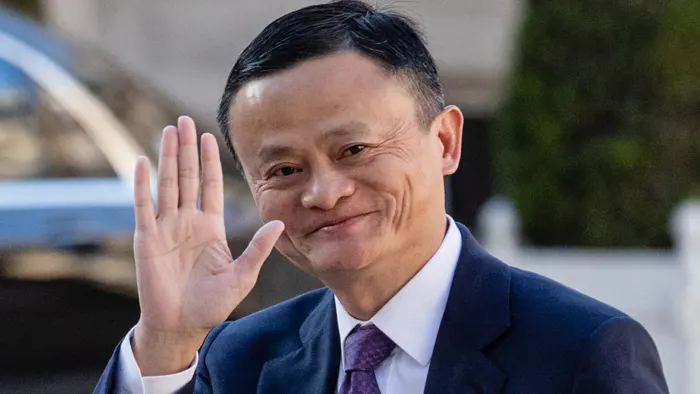
Founder of Alibaba

China announced on Monday that it has handed fines to Alibaba Group and Tencent Holdings. The announcement came after Chinese authorities disclosed that they are probing a deal involving the two companies.

Reuters reported that the State Administrator of Market Regulation (SAMR) said it would slam Alibaba and Tencent-backed China Literature and Shenzhen Hive Box 500,000 yuan ($76,464) each, maximum under a 2008 anti-monopoly law, for not reporting past deals properly for antitrust review.

The development underlines a new dawn between the Chinese regulator and internet-based businesses.

The SAMR outlined a number of deals it would investigate, including a merger between game livestreaming firms Huya Inc and DouYu International backed by Tencent, which was announced earlier in October.

The regulator also said it’s going to review and investigate other deals based on tip-offs that some firms had cornered a lot of operating power in certain sectors. The investigation is expected to be lengthy and involved many companies.

China has witnessed a booming internet market that has birthed conglomerates, which have had little to worry about when it comes to regulatory oversight. The SAMR said the era of such freedom has gone as China’s anti-monopoly laws do not exempt internet-based companies.

“The fines of the three cases are a signal to society that anti-monopoly supervision in the Internet field will be strengthened.

“The internet industry is not outside the oversight of anti-monopoly law,” the SAMR said, acknowledging that fines handed to both Tencent and Alibaba are small.

China Literature was fined for failing to report its 2018 New Classic Media acquisition, Shenzhen Hive Box, backed by logistics giant S.F. Holding Co, who also got into query for its acquisition of China Smart Logistics, the report said.

The company said it had received SAMR’s notice and would carry out relevant compliance work. Alibaba and Tencent’s shares fell 2.6% and 2.9% respectively at the Hong Kong Stock Exchange following the news.

SAMR’s move to fine Alibaba and Tencent marks the first time China is enforcing the 2008 anti-monopoly law, over companies’ failure to report deals for antitrust vetting.

The regulator warned that Chinese companies should not adopt a “wait-and-see” attitude before reporting deals, that it has been the pattern of Chinese firms, resulting in no or under-reporting of deals.

Last month, Beijing clamped down on Ant’s Group intended IPO, in a first-of-its-kind antitrust regulatory move. That came after a series of new regulatory rules were made to curb online commerce activities and the country’s digital market.

Ever since then, Beijing has stepped up in its responsibility to look into the activities of online companies. Reuters reported that a politburo meeting chaired by President Xi Jinping said last Friday that Beijing would step up its antitrust efforts.

Part of the deals the SAMR fined on Monday include Alibaba’s $692 million investment in Intime in 2014 and the e-commerce giant’s 42.6 billion bid in 2017 to privatize Intime.

The regulator said, although it’s empowered by the 2008 monopoly laws to break up the three deals under scrutiny, it has decided not to because they did not eliminate or restrict competition.

Liu Xu, a researcher at National Strategy Institute of Tsinghua University said the freedom China’s internet industry has enjoyed over the past decade has resulted in prosperity and chaos.
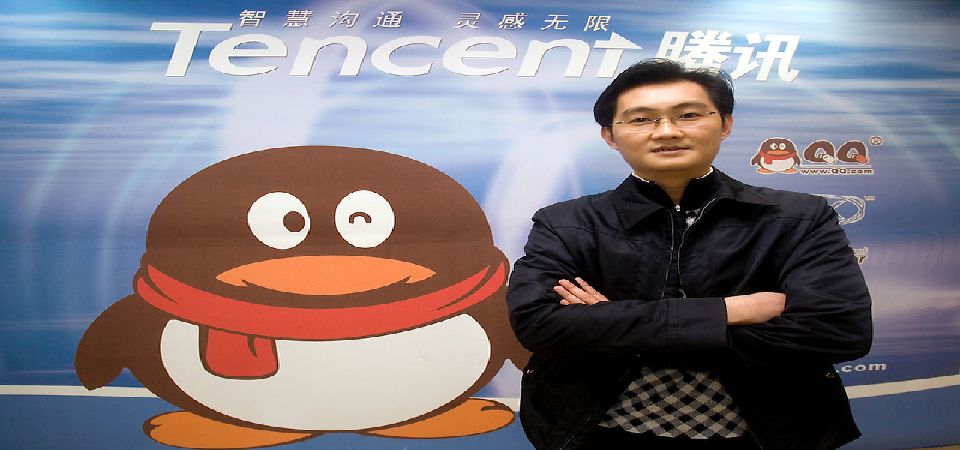
“The internet was left out of antitrust reviews in the past 12 years, leading to prosperity… as well as chaos due to unregulated mergers and expansions.

“To start with the simplest, least controversial cases is the quickest way to send a signal that… the antitrust law enforcement bodies are ready to take action,” he said.

In a decade, Chinese tech companies have completed 8,702 deals worth $507 billion, according to data from Renfitiv. The deals were mostly carried out without the interference of the authorities.

The developing SAMR’s fines and probes are a warning to China’s internet industry that the years of uninterrupted freedom have gone.
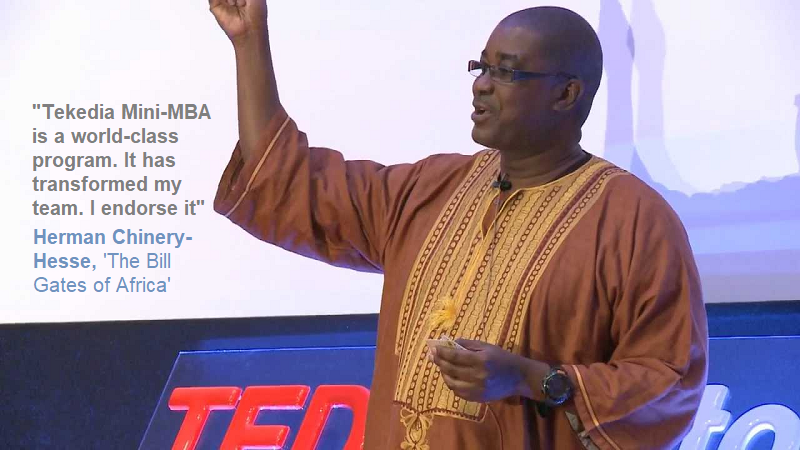

Tech Legend, Herman Chinery-Hesse, Endorses Tekedia MinI-MBA for African Youth [Video]

0

He was among the legends who pioneered modern ICT in Africa. They have called him the “Bill Gates of Africa”. Herman Chinery-Hesse is a technology icon and has served Africa in the technology space. When he heard about Tekedia Mini-MBA from the beautiful Ghana, he sent his staff and associates, becoming one of the early companies that supported our mission. Today, he has taped a message to African youth: the best school right now is Tekedia Institute.  Yes, the legend has endorsed for everyone, techies and non-techies, to attend Tekedia Mini-MBA and Tekedia Advanced Diploma programs.

Tekedia Institute offers an innovation management 12-week program, optimized for business execution and growth, with digital operational overlay. It runs 100% online. The theme is Innovation, Growth & Digital Execution – Techniques for Building Category-King Companies. All contents are self-paced, recorded and archived which means participants do not have to be at any scheduled time to consume contents.

It is a sector- and firm-agnostic management program comprising videos, flash cases, challenge assignments, labs, written materials, webinars, etc by a global faculty coordinated by Prof Ndubuisi Ekekwe.

For Ghana, Kenya and Cameroon, please contact AMZILL MANAGEMENT CONSULTING: contact@amzill.com

For other countries, click here.


Tekedia Mini-MBA Edition 4

Get The Early Registration Benefits – Register Now for Tekedia Mini-MBA

0

Invent, innovate and drive organizational transformation, performance, and growth. Capture emerging opportunities in changing markets while optimizing innovation and profitability. Digitally evolve your business or functional area, turning digital disruption into a competitive capability and advantage. Master the concepts of building category-king companies, and thrive.

Registration for 4th edition of Tekedia Mini-MBA (Feb 8 – May 3, 2021) continues. Tekedia Mini-MBA, from Tekedia Institute, is an innovation management 12-week program, optimized for business execution and growth, with digital operational overlay. It runs 100% online. The theme is Innovation, Growth & Digital Execution – Techniques for Building Category-King Companies. All contents are self-paced, recorded and archived which means participants do not have to be at any scheduled time to consume contents.

Get the early registration benefits by registering before our early bird deadline.

Tekedia Mini-MBA Edition 4

The Best Banks of The Future

0

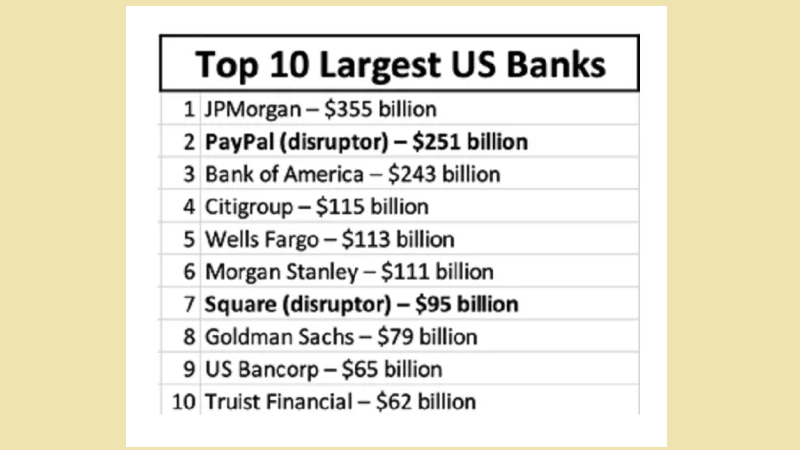
The world has changed: Square is a better business than Goldman Sachs, investors think! And investors believe on Paypal over Bank of America. It is the same way IBM remains a $111 billion business when Microsoft is well above $1.6 trillion. In The 2021 Outlook, I did explain that where you operate in the smiling curve is more important than even how good you execute. Marginal cost works for Paypal unlike Goldman Sachs. Square plays at the edges unlike US Bancorp. Watch that video if you have not.

The Kenya’s Decentralized Renewable Energy Paradox And The Trap In Nigeria

1

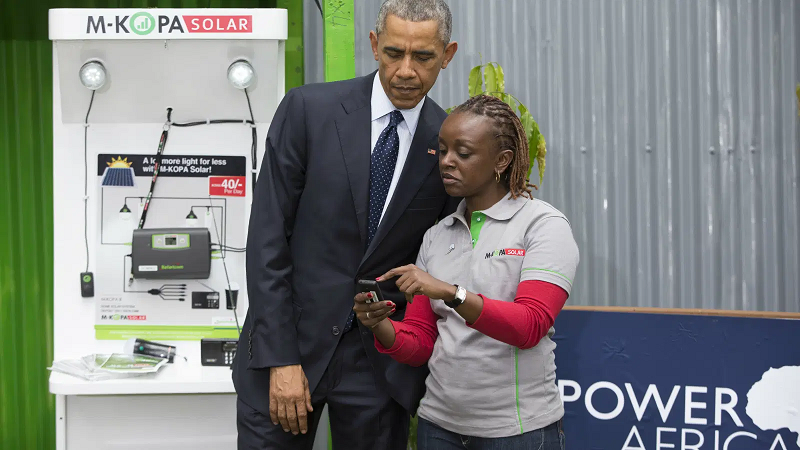
One of the biggest challenges which has bedeviled General Electric, for years now, was the acquisition of Alstom’s power and grid business. I called that move a very bad one considering that GE Capital was also evolving at the same time. Large scale grid electricity was passing through a redesign and any company betting on its sustained viability was clearly out-of-phase with reality. Indeed, across all metrics, electricity supply will become increasingly decentralized in communities and industrial regions. Yes, grid power will lose to pockets of small energy suppliers.

That is what is happening in Kenya.  Kenya Power, the national electricity company, is not happy as the national grid is losing some of its best customers to decentralized electricity providers. Yes, customers have moved on and the government cannot sell its products: “Dampened demand growth is further compounded with the increased threats of grid defection by the industrial category as decentralized renewable energy options are becoming more available and cheaper”.

But M-Kopa, which was just four years old at the time, has grown rapidly in that time, reflecting the broader progress in the sector as renewable energy solutions are increasingly adopted as viable workarounds to plug the wide gaps in electrification in Kenya and across the continent. Yet, a half decade later, there are fears that looming regulation in the East African country is signaling a possible shift in the government’s outlook on the sector.

Those fears come in light of the latest annual report by Kenya Power, the national electricity company, which showed local demand growth for electricity lagged below the projected level of 5%. Even more crucial is the reason presented as a suspected cause of stunted demand. “Dampened demand growth is further compounded with the increased threats of grid defection by the industrial category as decentralized renewable energy options are becoming more available and cheaper,” the report stated.

It is what it is: the national grid will get to a state where it cannot find people to buy its products, in most parts of Africa, since the customers are not waiting for them to fix their problems. Companies like Unilever and Dangote Group generate their own power, and those are lost good customers to the national grid. What happens here is unfortunate: we expect the national grid to invest but the reality is that some of their best potential customers have found alternatives, leaving them to service largely not-very-profitable customers. Yes, they serve communities which are not likely to pay them, even as the industrial and commercial customers have moved on. I have made this point here as the biggest challenge in the electricity sector in places like Nigeria. Call it  the Nigerian trap.

Besides, it is very clear in Nigeria that the best electricity customers are already out of the national grid. So, who do you expect (grid) electricity investors to finance production for? Simply, electricity is a special product in a developing nation like Nigeria. That is why a distribution company (DISCO) will choose to provide services to 2,000 homes even though one factory nearby can absorb all the energy and pay higher premium on top. Technically, you cannot serve your “best” customer [someone who is ready to pay highest fee] based on pure monetary revenue due to regulation which also gives you quasi exclusivity in the region. It is far logistically easier for DISCOs to send all the power generated in Lagos to top 30 firms in Lagos instead of working to serve hundreds of thousands of households. But they cannot because electricity is not an ordinary product!

The Revolt of Nigeria’s Electricity DISCOs on Smart Meter Disintermediation