DD
MM
YYYY

PAGES

DD
MM
YYYY

spot_img

PAGES

Home Blog Page 6

Building an Innovation Culture: How Companies Can Reward Creativity and New Ideas

0

Cultivating appreciation for creativity is one of the most effective ways to build a culture of innovation, and it works far more quickly than most leaders realize. The realization that their ideas will be heard inspires employees to share their opinions and experiment with them, thereby organically evolving the company.

This article walks you through how organizations encourage inventive thinking, why recognition programs inspire continuous improvement, and what practical steps help teams feel supported when trying something new. You’ll see how a simple adjustment to your thanks can make an immense difference in the creative nature of your workplace.

Why Recognition Ignites Creativity

Businesses rewarding creativity will have more of it. Being aware that their efforts are appreciated, employees will be more willing to question how things are done and come up with something new. Such a first level of trust generates innovation, which is based on an assumption that nothing will go wrong.

For innovations to happen, companies need strong backing from their management. Employees need to feel secure and not be afraid of any adverse consequences from coming up with new things. Accepting the reasoning behind the ideas suggests that innovating thinking comes naturally to such an organization.

Before looking at how awards come into play, here are a few ways recognition shapes behavior.

  • Encourages employees to think beyond their job roles
  • Strengthens confidence in sharing new ideas
  • Builds momentum for ongoing improvements

Innovation Awards That Make a Difference

Innovation can occur anywhere in an organization, but structured recognition is a powerful way to show that. Innovation awards internally offer the chance to reward both the concept and the work that goes into the process. Recognition from employees’ peers emphasizes that innovation is appreciated at all levels.

Many organizations choose to present custom recognition awards to mark these moments. Some turn to polished award styles available through Awards.com to make innovative achievements feel truly memorable. A well-crafted award serves as a tangible reminder that creative thinking drives progress within teams and across departments.

Innovation awards do more than honor success. They stimulate friendly competition, inspire participation in future challenges, and give leaders a public way to support unconventional thinking.

Creating an Environment Where Ideas Can Blossom

Even if the award is the best possible, without an environment where innovation can thrive day to day, nothing will ever happen. Openness among employees to ask questions, experiment with their ideas, and discuss problems to solve contributes to an innovative culture. Leaders’ willingness to experiment serves as an example.

Teams flourish when their activity is guided, and they have freedom. Clear goals help people aim their creativity where it matters most, while freedom lets them explore without feeling limited by strict rules. When this balance is in place, ideas flow naturally.

Here are some simple habits that help teams generate better ideas.

  • Set aside time for brainstorming
  • Encourage cross-team collaboration
  • Celebrate ideas at every stage

Making Recognition Meaningful

Meaningful recognition doesn’t need to be extravagant. It only needs to reflect genuine appreciation. Thoughtful programs highlight effort, creativity, and the willingness to improve processes, even if the idea is small or still evolving.

Managers can make recognition personal by noting what they found impressive. This type of feedback strengthens relationships and helps employees feel that their work is being seen clearly and fairly. Eventually, this builds a dependable foundation for trust, which is essential for any innovation culture.

The Importance of Leadership in Creating an Innovation Culture

Leadership plays a crucial role in determining whether innovation is going to become a regular activity or a one-time thing. When leaders discuss their experiences of learning and failure, employees will not hesitate to do the same, which means there will be less stress and employees will be encouraged to come up with innovations.

One more way to create an innovation culture involves running a small experiment and letting people try something innovative. This means implementing a number of short-term experiments that give people the opportunity to get feedback and refine their ideas. When a leader appreciates the knowledge gained through pilots, employees understand that the value lies in the process, not in the result.

Keeping Creativity Alive Through Peer Support

Innovation can thrive more easily when workers are motivated not just by their bosses but also by their fellow workers. Motivation from fellow employees helps create an environment of collective responsibility that makes teams more innovative than when a task is assigned to one person.

This can be achieved through partnering members of a team to critique ideas of one another, holding group discussions or forums where people can exchange their ideas. It does wonders for developing employees’ mindsets and keeping them inspired to generate new ideas.

Turning Innovation Into a Habit

For innovation to become routine, consistency and true recognition are key. Innovation is achieved when employees’ ideas are recognized and appreciated, thereby becoming part of daily operations. Awards and praise serve as tools to reinforce the perception that success is driven by curiosity and collaboration.

A high level of innovation can be achieved by nurturing innovation teams and encouraging them to think outside the box. One fantastic way of encouraging that approach is to enhance the recognition strategy. Thoughtfully designed awards can help your organization maintain momentum and celebrate the ideas that move it forward.

Building Modern Property Admin Infrastructure In Nigeria; Unveiling $1M State Fund

0

Economist Hernando de Soto has been clear, and history has validated his thesis: there is a powerful correlation between property rights and economic development. One of the fundamental differences between countries such as the United Kingdom and Nigeria is that, in developed economies, nearly every piece of land and real estate is formally recorded, searchable, and easily used as collateral, traded, or financed.

In Nigeria, however, a significant portion of our lands and properties exists outside formal records. They are not properly represented on the balance sheets of banks, nor are they fully captured in the general ledgers of local and state governments. As a result, enormous amounts of wealth remain trapped as dead capital.

Without addressing this challenge, it will be difficult to achieve broad-based economic development. More than two thousand years of economic history demonstrate a strong relationship between secure property rights and sustained economic growth.

Rather than merely discussing this problem, we want to become partners with state governments in implementing practical solutions. Tekedia Capital is prepared to invest up to $1 million per state to support the modernization of property administration systems across Nigeria. We bring world-class technology, regulatory expertise, and implementation capabilities.

Our destination is clear: Modernize property administration. Unlock prosperity for citizens.

To advance this conversation, we are organizing an open webinar:

Title: Building Modern Property Administration Infrastructure in Nigeria: Unveiling the $1 Million per State Real Estate Innovation Fund

Speaker: Prof. Ndubuisi Ekekwe
Chairman, Tekedia Capital

Date: Saturday, July 11, 2026

Time: 2:00 PM – 3:30 PM WAT

Venue: Zoom link here

Join us as we discuss how modern property infrastructure can unlock investment, deepen financial markets, increase internally generated revenue, and accelerate economic growth across Nigeria’s states. And how those can unlock opportunities for all.


Tekedia Capital Wants to Invest $1M In Nigerian States To Modernize State Real Estate Infrastructure


The Mystery of Capital and Nigeria’s Missing Opportunity and How To Fix it

Tokenization Is Enabling a Smarter, Faster, and More Inclusive Financial System

0

For years, tokenization has been promoted as one of the defining innovations of blockchain technology. Financial institutions, technology companies, and crypto-native projects have invested billions of dollars into bringing traditional assets onto blockchains.

From stocks and bonds to real estate, commodities, and money market funds, the conversation has often centered on the rapid growth of tokenized assets. Yet focusing solely on tokenization risks missing the larger picture. The goal was never tokenization itself.

The real objective has always been to unlock entirely new financial capabilities that were impossible or highly inefficient in traditional systems.

Tokenization is best understood as infrastructure rather than the final destination. It transforms ownership rights into programmable digital assets that can move across blockchain networks with speed and transparency.

However, simply representing an asset as a token does not create meaningful value. The value emerges when those tokens become programmable, composable, and globally accessible. One of the greatest advantages tokenization enables is continuous market access.

Traditional financial markets operate within fixed trading hours and rely on multiple intermediaries to settle transactions. Blockchain networks, by contrast, function around the clock, allowing assets to be transferred and settled within minutes rather than days.

This dramatically reduces settlement risk while improving capital efficiency for investors and institutions alike.

Programmability is another transformative feature. Smart contracts allow tokenized assets to perform actions automatically based on predefined conditions. Dividend distributions, interest payments, collateral management, compliance checks, and corporate actions can all be executed without extensive manual intervention.

This automation lowers operational costs while reducing errors associated with traditional financial processes. Perhaps even more significant is composability. In decentralized finance (DeFi), tokenized assets are not isolated instruments.

They can interact seamlessly with lending protocols, decentralized exchanges, derivatives platforms, prediction markets, and automated portfolio strategies. A tokenized Treasury fund, for example, can simultaneously generate yield, serve as collateral for borrowing, and provide liquidity across multiple decentralized applications.

Such flexibility is difficult to replicate within conventional financial infrastructure. Tokenization also expands market accessibility. Historically, many investment opportunities were restricted by geography, high minimum investment requirements, or institutional barriers.

Fractional ownership allows investors to purchase small portions of expensive assets such as commercial real estate, private equity, or fine art. Combined with global blockchain infrastructure, this creates broader participation in markets that were once accessible only to large institutions or wealthy individuals.

Institutions increasingly recognize that blockchain’s greatest value lies in modernizing financial infrastructure rather than replacing finance altogether.

Banks, asset managers, and payment companies are exploring tokenized deposits, digital securities, and on-chain settlement because these technologies improve efficiency, transparency, and interoperability. The emphasis is shifting from speculative digital assets toward practical financial applications that deliver measurable benefits to businesses and consumers.

Challenges remain. Regulatory clarity, identity verification, cybersecurity, privacy, and interoperability between blockchain networks continue to require significant development. Trust will depend not only on technological innovation but also on robust governance and legal frameworks that protect investors while encouraging innovation.

Tokenization should be viewed as the foundation of a much larger transformation. The true breakthrough is not that assets can exist as blockchain tokens, but that they become programmable building blocks for an open, interconnected financial ecosystem.

When assets can move instantly, interact autonomously, and integrate seamlessly across applications, entirely new business models and financial services become possible. In the end, tokenization is merely the tool.

The destination is a financial system that is faster, more efficient, more inclusive, and fundamentally more programmable than anything the traditional world could previously achieve. That has always been the real vision behind tokenization.

Trump Ends Iran MoU: Bitcoin Plunges Below $62,000 as Geopolitical Tensions Return

0

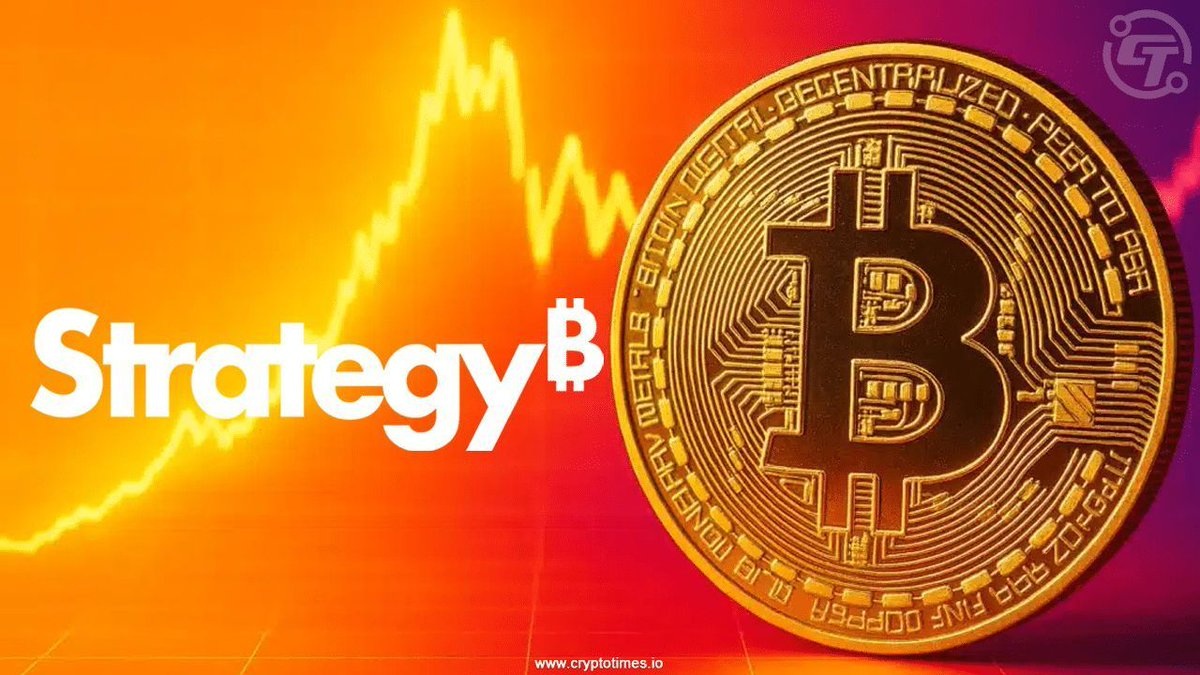
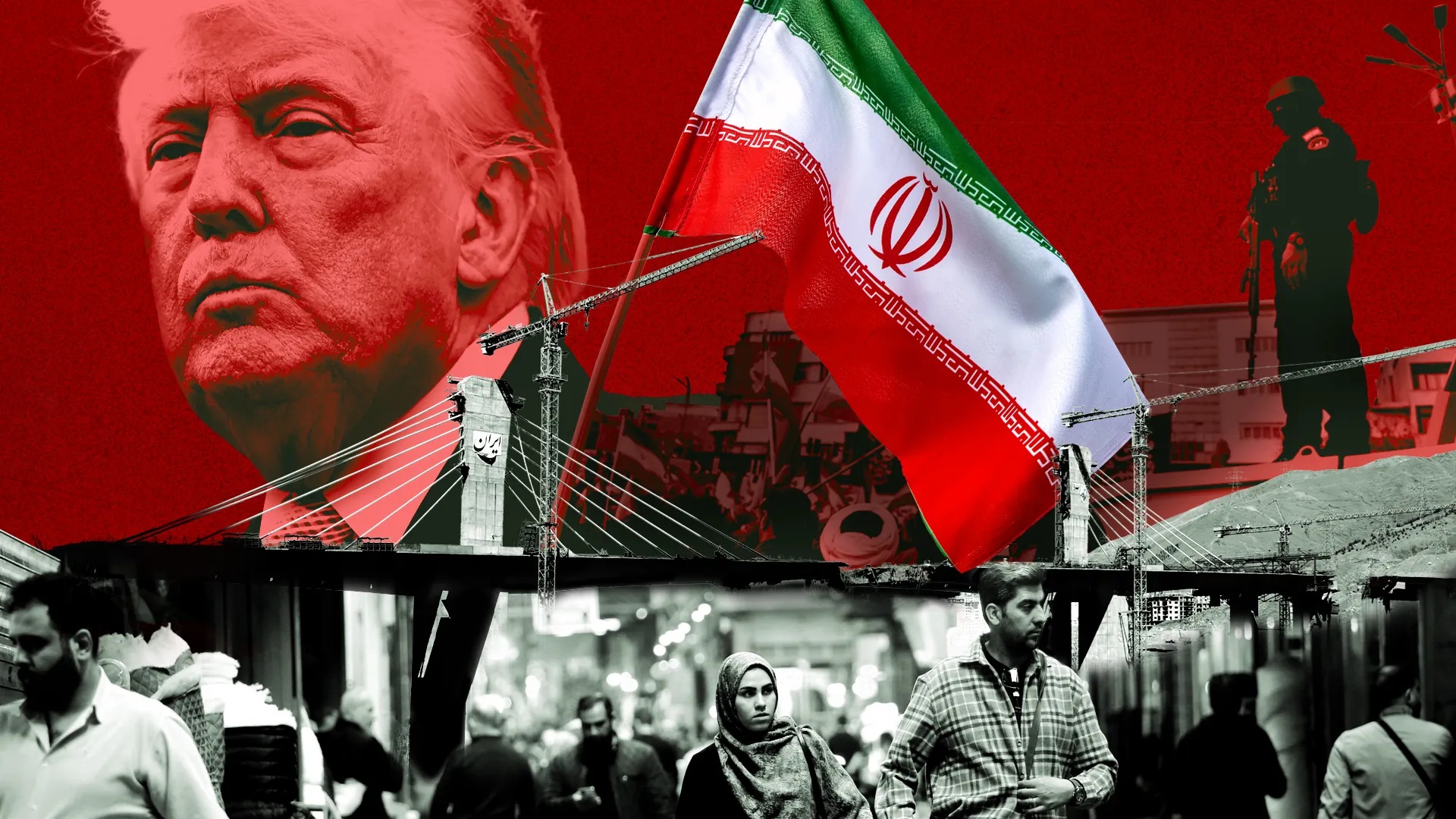
Bitcoin experienced a sharp sell-off on Wednesday, briefly dropping below the $62,000 level after President Donald Trump announced that the U.S.-Iran Memorandum of Understanding (MoU) is over.

The move erased recent gains and triggered nearly $450 million in cryptocurrency liquidations across the market.

According to real-time data from Binance, Bitcoin fell from around $62,941 to as low as $61,926 within a short window following the news. The decline represented a roughly 1.5-2% drop in minutes, highlighting the market’s continued sensitivity to U.S. foreign policy statements.

The MoU, signed in mid-June 2026, marked a significant diplomatic effort mediated with support from countries including Pakistan, Qatar, Saudi Arabia, and Turkey.

Key elements reportedly included reopening the Strait of Hormuz to maritime traffic and extending a ceasefire, which helped ease oil supply concerns and boosted risk assets at the time.

Bitcoin and broader crypto markets had rallied on the initial peace signals, with BTC climbing above $66,000 in the weeks following the announcement.

Long-term holders continued accumulating, while technical traders pointed to the breach of short-term resistance levels and successful defense of key support zones.

Some market participants highlighted the move as a classic “fakeout” trap for shorts, with prices rebounding strongly after an initial Monday dip.

The Strait of Hormuz is a critical chokepoint for global oil shipments. Any disruption or renewed tensions there can spike energy prices, increase inflation fears, and prompt investors to reduce exposure to risk assets like stocks and cryptocurrencies.

Crypto traders have noted that Bitcoin often moves in tandem with equities and commodities during major geopolitical events rather than acting purely as a “digital gold” safe haven.

Following the recent decline in the price of Bitcoin, the crypto community reacted with a mix of frustration. Many users on X, pointed to repeated instances where Trump’s statements have coincided with market volatility. “Geopolitics is the new technical analysis,” one trader remarked.

Others expressed fatigue with comments like “Sad to see this starting all over again.” Some dismissed the move as short-term noise, predicting a quick recovery if tensions do not escalate further.

Larger accounts warned of continued liquidations if risk-off sentiment persists, while a few viewed the dip as a potential buying opportunity.

ING technical Analyst Roelof-Jan van Den Akker says Bitcoin recent rebound could prove limited and temporary. ING expects a resumption of Bitcoin’s previous downtrend with a break below the July 1 low in the near-term and towards $47,705.

He further warns investors to be mindful of implications of a weekly close below the crucial horizontal support level at $54,450.

However, despite forecasts of deeper corrections, Bitcoin’s ability to reclaim $64,000 has shifted sentiment, with several analysts now discussing targets in the $65,000–$70,000 range if momentum holds.

The sell-off extended beyond Bitcoin. Ethereum, Solana, XRP, and other major tokens also posted losses. Traditional markets showed similar caution, with oil prices ticking higher on renewed uncertainty.

This event comes amid ongoing discussions about U.S. fiscal policy, Federal Reserve actions, and institutional crypto adoption.

The coming hours and days will be critical. Traders are watching for any follow-up statements from the White House or Iranian officials. A full breakdown of the MoU could lead to higher volatility, while de-escalation signals might support a rebound.

As always in crypto, external macro and geopolitical forces remain dominant drivers. Investors are advised to manage risk carefully and stay informed on both on-chain data and global headlines.

Vercel Acquires Tekedia Capital Portfolio, Better Auth

0

Good People, it is with great excitement that I announce the acquisition of one of our portfolio companies, Better Auth, by the industry-leading decacorn, Vercel. Founded by a self-taught tech prodigy from Ethiopia, Better Auth has ascended to become a preeminent force in open-source authentication.

Tekedia Capital congratulates the Better Auth team and looks forward to Vercel’s stewardship of this innovative platform. You can read the full details here: https://vercel.com/blog/vercel-acquires-better-auth.

This acquisition follows the recent purchase of another portfolio company by OpenAI last month, with a public announcement to follow shortly. May the harvest season be bigger for Tekedia Capital community.