DD
MM
YYYY

PAGES

DD
MM
YYYY

spot_img

PAGES

Home Blog Page 6

China’s Foreign Investment Falls Further in 2025 as Tariff War With U.S. Weighs on Growth Outlook

0

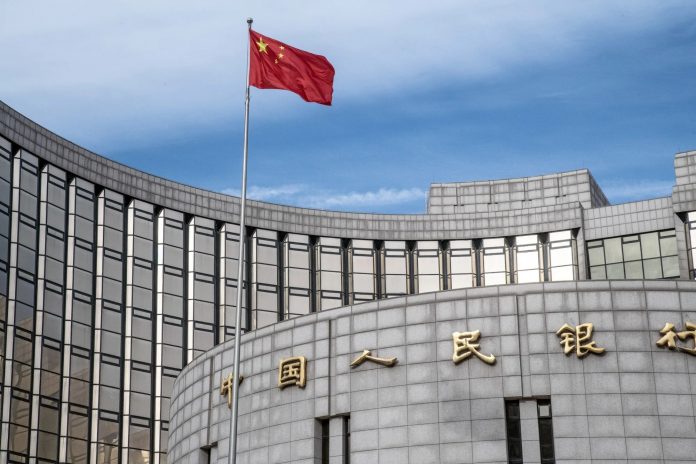
Foreign direct investment into China continued to weaken in 2025, offering another signal of how the country’s economic trajectory is being reshaped by slowing growth, fragile confidence, and an intensifying tariff war with the United States.

Data released on Friday by China’s Ministry of Commerce showed that foreign direct investment totaled 693.2 billion yuan ($98.46 billion) between January and November, a 7.5% decline from the same period last year. The drop adds to mounting evidence that global capital remains cautious about China, even as Beijing pushes to stabilize growth and reassure overseas investors.

The headline number masks sharp divergences beneath the surface. Investment from Switzerland surged 67% during the period, while inflows from the United Arab Emirates jumped 47.6%. British investment rose 19.3% year-on-year. For November alone, FDI inflows were up 26.1% from a year earlier, suggesting that some investors are selectively increasing exposure, rather than exiting China altogether.

Still, economists say these gains are narrow and do little to offset broader headwinds facing the Chinese economy in 2025.

China entered the year under renewed pressure from trade tensions with the United States after President Donald Trump expanded and reintroduced sweeping tariffs on Chinese exports, targeting sectors ranging from electric vehicles and batteries to steel, solar equipment, and consumer electronics. The higher duties have added to uncertainty for exporters and manufacturers, many of whom were already grappling with weak global demand and thinner margins.

Export growth has slowed as a result, undercutting one of the few remaining engines of China’s post-pandemic recovery. Manufacturers have responded by shifting parts of their supply chains to Southeast Asia, Mexico, and South Asia, reducing new foreign investment commitments inside China even as existing operations continue to run.

At home, the economy has struggled to gain momentum. Consumer spending remains subdued, youth unemployment is elevated, and the property sector continues to drag on growth, with developers facing tight financing conditions and falling home sales. Local governments, heavily reliant on land sales, are under fiscal strain, limiting their ability to stimulate activity through infrastructure spending.

Against this backdrop, Beijing has leaned more heavily on industrial policy and state-led investment to support growth, prioritizing advanced manufacturing, semiconductors, green energy, and electric vehicles. Some of the stronger FDI inflows from Switzerland, the UAE, and Britain are widely seen as tied to these strategic sectors, where China still offers scale, technical capacity, and government backing.

Even so, foreign companies remain wary. Multinationals have cited rising geopolitical risk, export controls, data security rules, and concerns about market access as factors shaping investment decisions. The tariff conflict with Washington has reinforced those concerns, increasing the likelihood of further trade barriers and retaliatory measures.

Chinese authorities have stepped up efforts to project stability. Officials have promised equal treatment for foreign firms, stronger intellectual property protection, and measures to ease profit repatriation. Policymakers have also sought to frame China as a long-term investment destination at a time when global growth is slowing, and capital is more risk-averse.

The November rebound in FDI may offer some encouragement, but analysts say it is too early to draw firm conclusions. Much will depend on how the U.S.-China trade dispute evolves in 2026, whether Beijing can restore confidence in the property market, and if domestic demand shows clearer signs of recovery.

Currently, the latest investment data underline a central challenge for China in 2025. The world’s second-largest economy is navigating a more hostile external environment while trying to reset its growth model at home, all as foreign investors become more selective about where and how they deploy capital.

Forward Industry Becomes First Company to Allow Borrowing Against their Tokenized Shares

0

Forward Industries, Inc. NASDAQ: FWDI, formerly traded as FORD before a apparent ticker change or rebranding has become the first Nasdaq-listed public company to tokenize its SEC-registered shares on the Solana blockchain via Superstate’s Opening Bell platform.

This milestone enables eligible primarily ex-US shareholders to use their tokenized FWDI shares directly as collateral in decentralized finance (DeFi) protocols, such as Kamino. Shareholders can now borrow stablecoins (e.g., USDC) against their equity holdings while retaining exposure to the underlying stock— a feature not easily achievable in traditional finance without intermediaries, delays, or derivatives.

The tokenized shares are fully compliant, SEC-registered Class A common stock not synthetics, managed by Superstate as a regulated transfer agent. Integration with Solana DeFi allows real-time pricing via Pyth oracles and lending/borrowing functionality.

Forward Industries, a major SOL holder with billions in treasury assets, positions this as a bridge between traditional markets and on-chain finance. This development is widely reported as a landmark for real-world asset (RWA) tokenization, marking the first native use of regulated public equity in live DeFi markets.

No prior Nasdaq-listed company has achieved this level of direct DeFi collateral integration for tokenized shares. Eligible primarily ex-US holders can now borrow stablecoins like USDC against their tokenized FWDI shares without selling the underlying equity.

This allows retaining upside exposure to the stock while accessing liquidity—something difficult, costly, or slow in traditional margin lending which often involves brokers, high fees, and forced sales.

Tokenized shares remain legally equivalent to off-chain shares, with real-time updates to the shareholder register. Features like preserved voting rights facilitated by Superstate and reversibility convert back to brokerage shares add utility.

On-chain shares enable instant transfers and potential future integrations like yield strategies, appealing to crypto-native investors. Unlike prior tokenized stocks often synthetics or wrappers, this is direct SEC-registered equity usable as collateral.

It introduces a new high-quality asset class to DeFi lending markets, potentially increasing total value locked (TVL) on Solana protocols like Kamino. Broadens DeFi beyond crypto-native assets like SOL, BTC to include public equities, enhancing risk diversification and borrowing capacity.

Demonstrates compliant tokenization at scale, accelerating the projected multi-trillion-dollar RWA market by showing real equity can “function natively within DeFi” as stated by Forward’s Chairman Kyle Samani.

With FWDI holding ~6.8-6.9 million SOL, the largest public treasury choosing Solana, it cements the chain’s role in regulated tokenization. High throughput, low costs, and integrations like Pyth oracles for real-time pricing make it ideal over competitors like Ethereum.

More public companies may follow prior examples like Galaxy Digital’s GLXY, driving demand for SOL and boosting DeFi activity. It’s creates a “tangible bridge” per Samani and Superstate CEO Robert Leshner where public equities gain on-chain programmability, liquidity, and composability without losing regulatory compliance.

Likely encourages more Nasdaq-listed firms to tokenize, extending stock utility “beyond traditional exchanges” into always-on digital markets. This could normalize tokenized equities as a complement to legacy listings.

As a fully compliant, SEC-registered transfer agent model, it reduces perceived risks, potentially attracting institutional capital wary of unregulated synthetics. Limited initially to ex-US holders due to U.S. securities laws; volatility in stock price could lead to liquidations in DeFi; broader adoption depends on regulatory evolution.

This development is hailed as the next evolution of tokenized markets and unlocking the full potential of DeFi for real public equity. While still early, FWDI is the first, it sets a blueprint that could transform how public equities are held, traded, and leveraged in the digital economy.

Implications of the PayPal and USD.AI Partnership

0

PayPal announced a partnership with the USD.AI Foundation often stylized as USDAI or USD.AI, a blockchain-based stablecoin protocol focused on AI infrastructure financing to integrate PayPal’s stablecoin PYUSD as a key settlement asset.

PYUSD will be used to fund on-chain loans for AI companies, particularly for building data centers, GPUs, and other AI-related infrastructure. Borrowers can receive loan proceeds directly into their PayPal accounts, blending traditional payment systems with blockchain settlements.

To boost adoption, PayPal and USD.AI are launching a one-year customer incentive program starting in early January 2026, offering a 4.5% yield on up to $1 billion in customer deposits denominated in USD.AI or related assets.

This move expands PYUSD’s utility amid surging demand for AI computing resources. This partnership integrates PayPal’s PYUSD stablecoin as the primary settlement asset for USD.AI’s on-chain loans to AI companies.

It bridges traditional fintech with decentralized finance (DeFi) and AI infrastructure financing, with a one-year incentives program offering 4.5% yield on up to $1 billion in deposits starting January 2026. PYUSD, launched in 2023, has grown steadily but trails leaders like USDT and USDC.

This deal positions PYUSD for real-world use in capital-intensive sectors: loans for GPUs, data centers, and AI hardware are denominated in PYUSD, with borrowers receiving funds directly into PayPal accounts.

The 4.5% yield incentive competitive amid high interest rates could attract significant deposits, potentially scaling PYUSD supply and liquidity rapidly. Accelerates mainstream stablecoin adoption, especially for programmable payments in long-term financing and agent-driven transactions.

AI compute demand is exploding: Estimates suggest $360 billion in capex this year, potentially reaching $6.7 trillion globally by 2029 per Morgan Stanley and UBS. USD.AI already manages over $650 million in tokenized GPU-backed assets, providing faster credit to emerging AI firms not just giants like OpenAI.

Using PYUSD enables transparent, on-chain settlements while leveraging PayPal’s familiar workflows. Democratizes funding for smaller AI companies, reduces reliance on traditional banks/VCs, and turns physical hardware (GPUs) into efficient collateral via tokenization.

Aligns with PayPal’s broader AI push e.g., partnerships with OpenAI for in-chat payments, Google for agentic commerce. Expands PYUSD beyond payments into DeFi yield and enterprise financing, potentially increasing transaction volume and fees.

Blends CeFi i.e PayPal accounts with DeFi— on-chain loans, appealing to both retail and institutional users. It strengthens PayPal’s position in the “AI economy,” diversifies revenue, and could positively impact PYPL stock by showcasing innovation amid growth challenges.

Demonstrates stablecoins’ utility in real-world assets (RWAs) and DePIN (decentralized physical infrastructure). Highlights convergence of AI, blockchain, and traditional finance. The incentive program could draw liquidity from other yield sources, boosting DeFi TVL.

Its sets a precedent for more corporate-blockchain integrations, potentially pressuring competitors like Circle’s USDC to pursue similar enterprise use cases. Stablecoins in large-scale lending could attract attention, though PYUSD is already regulated via Paxos.

Yield incentives are temporary (one year); sustained adoption depends on underlying loan performance. Concentration ties PYUSD growth to AI sector volatility. High upside if AI boom continues, but execution risks remain.

Overall, this partnership marks a significant step toward integrating stablecoins into high-growth sectors like AI, potentially accelerating the shift from speculative crypto to practical, yield-generating financial tools. It positions both PayPal and USD.AI as leaders in financing the next wave of AI development.

Coinbase Files Lawsuits in Multiple States Challenging Regulations of Prediction Markets

0

Coinbase has filed lawsuits against regulators in three U.S. states—Connecticut, Illinois, and Michigan— challenging their attempts to regulate prediction markets as gambling.

The crypto exchange argues that prediction markets event contracts on outcomes like elections, economic data, or sports fall under the exclusive jurisdiction of the federal Commodity Futures Trading Commission (CFTC) as derivatives, not state gambling laws.

This preemptive legal action follows Coinbase’s announcement of a partnership with CFTC-regulated platform Kalshi to launch prediction market trading for U.S. customers starting January 2026.States have recently issued cease-and-desist orders or threats against platforms like Kalshi, classifying certain event contracts as unlicensed gambling.

Coinbase’s Chief Legal Officer Paul Grewal stated that the lawsuits seek to “confirm what is clear: prediction markets fall squarely under the jurisdiction of the CFTC, not any individual state gaming regulator.”

The cases highlight a broader jurisdictional clash: federal preemption via the Commodity Exchange Act versus state authority over gambling. Outcomes could determine whether prediction markets operate nationwide under uniform federal rules or face a fragmented patchwork of state restrictions, potentially stifling innovation.

This builds on similar ongoing disputes involving Kalshi and other platforms. Coinbase’s preemptive lawsuits filed against regulators in Connecticut, Illinois, and Michigan seek declaratory judgments affirming that CFTC-regulated prediction markets fall under exclusive federal jurisdiction via the Commodity Exchange Act (CEA), preempting state gambling laws.

Establishes strong precedent that the CFTC has sole authority over these derivatives. This would override state gambling classifications, enabling uniform nationwide access under one federal framework. Platforms like Coinbase via its Kalshi partnership could launch in January 2026 without navigating 50 separate state regimes.

If states win: Prediction markets could face a fragmented landscape, requiring state-specific gambling licenses or bans in restrictive jurisdictions. This would limit availability, similar to online sports betting post-2018 PASPA repeal.

It will resolve ongoing jurisdictional clashes building on Kalshi’s mixed court outcomes in states like Nevada vs. New Jersey. Reinforces CEA’s broad “commodity” definition excluding only items like onions or movie receipts, treating event contracts as financial tools for price discovery and hedging, not “house-edged” gambling.

Victory for Coinbase/Kalshi would accelerate mainstream adoption, integrating prediction markets into apps like Coinbase, Robinhood, and others. This could boost trading volumes already billions in 2025 via Kalshi/Polymarket and spur innovation in DeFi, tokenized assets, and information markets.

Loss could stifle U.S. growth, pushing development offshore  to decentralized platforms and harming competitiveness. Coinbase argues state interference causes “immediate and irreparable harm” by blocking federally approved products.

Cears path for Coinbase’s “universal exchange” strategy: Expanding beyond crypto spot trading into derivatives and event contracts. Benefits partners like Kalshi, CFTC-regulated since 2020 and the Coalition for Prediction Markets including Robinhood.

Distinguishes neutral, market-making platforms indifferent to outcomes from traditional sportsbooks which profit from losses. Its highlights tensions in U.S. federalism: Prevents the “most restrictive state” from effectively setting national policy.

Potential precedent for other emerging fintech/crypto products blurring finance and “wagering” lines. Timing aligns with new pro-innovation CFTC leadership like Chairman Michael Selig confirmed December 2025.

These cases are a pivotal stress test for regulating novel financial instruments. Outcomes could shape prediction markets’ trajectory for years, either fostering a vibrant U.S. ecosystem or creating barriers that slow progress. Developments are recent, so appeals or consolidated rulings may follow.

OpenAI Weighs $100bn Fundraise at Valuation Up to $830 Billion as Sky-High Valuation Fuels Revenue and Sustainability Concerns

0

OpenAI is in talks to raise as much as $100 billion in a new funding round that could value the ChatGPT maker at up to $830 billion, according to a Wall Street Journal report on Thursday.

But the sheer scale of the valuation is also sharpening unease across financial markets, as OpenAI’s revenue generation still lags far behind the level of spending implied by such a price tag.

According to the Wall Street Journal, the ChatGPT maker is seeking to complete the funding round by the end of the first calendar quarter next year and is expected to approach sovereign wealth funds, a sign the company is looking for investors with deep pockets and long-term horizons. The Information earlier reported the talks, placing the potential valuation at about $750 billion, still an eye-watering figure for a private company with limited operating history at this scale.

For supporters, the fundraising effort is a powerful vote of confidence. It suggests that large investors believe OpenAI will sit at the center of the AI economy, capturing value across consumer products, enterprise software, developer tools, and foundational infrastructure. OpenAI’s rapid adoption, particularly of ChatGPT, and its growing influence in setting the pace of model development have made it a de facto bellwether for the sector. In that sense, the willingness to commit tens of billions more reflects a belief that AI will reshape productivity, labor, and entire industries, even if profits are still some distance away.

However, the size of the valuation is also raising red flags. At a potential $830 billion, OpenAI would be valued well above many established, profitable technology giants, despite generating a fraction of their revenue and still burning vast amounts of cash. People familiar with the company’s finances say OpenAI is currently generating about $20 billion in annual run-rate revenue, largely from subscriptions, enterprise contracts, and API usage. While that figure is impressive for a relatively young company, it remains small compared with its spending trajectory.

OpenAI’s costs are dominated by compute. Training frontier models and, increasingly, running them at scale for millions of users requires enormous investment in data centers, chips, and energy. The company has signaled plans that could ultimately involve trillions of dollars in infrastructure spending. Inferencing, the cost of serving models to users in real time, is emerging as a particularly heavy burden. Unlike model training, which has often been offset by cloud credits from partners, inferencing appears to be funded largely in cash, meaning operating expenses rise directly with usage.

This imbalance between revenue and expenditure is at the heart of investor concern. Even assuming strong growth, OpenAI’s current revenue base does not yet justify a valuation approaching $1 trillion by traditional metrics. That gap forces investors to price in years, if not decades, of rapid expansion, rising margins, and eventual dominance of multiple AI markets. Any slowdown in adoption, pricing pressure from competitors, or regulatory intervention could challenge those assumptions.

The timing of the fundraising talks also matters. Broader sentiment around AI has cooled as investors also question whether the debt-fueled investment cycle driving the sector can be sustained. Companies such as Amazon, Microsoft, and Oracle have poured tens of billions into AI infrastructure, often ahead of clear near-term returns. At the same time, constraints in the supply of advanced chips, particularly high-bandwidth memory, threaten to push costs higher and slow deployment, adding another layer of risk.

Competition is also intensifying. Rivals, including Anthropic and Google, are accelerating model releases and expanding their ecosystems, forcing OpenAI to spend aggressively to maintain its lead. That pressure has narrowed the margin for error: OpenAI must continue innovating while simultaneously proving it can convert scale into durable, high-margin revenue.

OpenAI has been rumored to be exploring an initial public offering as another way to raise capital, and there has also been talk of courting Amazon for a roughly $10 billion strategic investment tied to access to its in-house AI chips. According to PitchBook, the company already has more than $64 billion in cash and was most recently valued at about $500 billion in a secondary transaction, meaning any new round would represent a sharp step up in expectations.

In the end, the reported fundraising captures the paradox of the AI boom. Investor appetite remains strong, and confidence in the long-term impact of AI is clearly intact. But as valuations soar far ahead of revenues, OpenAI is becoming a focal point for a deeper question confronting markets: how quickly, and how convincingly, can AI’s promise be translated into profits that justify the scale of capital now being committed?