DD
MM
YYYY

PAGES

DD
MM
YYYY

spot_img

PAGES

Home Blog Page 6

Microsoft Fourth Quarter Results Beat Estimates As Azure Growth Accelerates, AI Business Tops $100bn

0

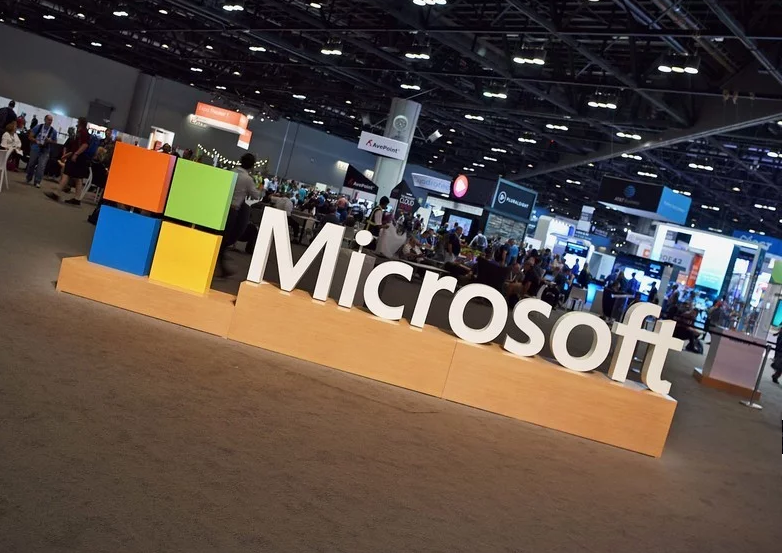
Microsoft delivered stronger-than-expected fiscal fourth-quarter results on Wednesday, driven by accelerating growth in its Azure cloud business and continued demand for artificial intelligence services.

The results sent the software giant’s shares higher in after-hours trading and bolstered investor confidence that its massive AI investments are beginning to generate meaningful returns. Shares of Microsoft rose about 3% in extended trading after the company reported earnings and revenue that exceeded Wall Street expectations.

The results come at a critical time for Microsoft, whose stock has fallen about 19% this year, significantly underperforming the S&P 500’s roughly 7% gain, as investors questioned whether the company’s heavy AI spending and close relationship with OpenAI would translate into sustained earnings growth.

For the fiscal fourth quarter ended June 30, Microsoft reported adjusted earnings per share of $4.74, above analysts’ expectations of $4.24, according to LSEG.

Revenue rose to $90.01 billion, exceeding analysts’ forecast of $87.62 billion and representing 18% year-over-year growth.

Net income climbed to $35.77 billion, or $4.81 per share, from $27.23 billion, or $3.65 per share, a year earlier.

The company said earnings benefited from a $3.2 billion gain related to its investment in AI startup Anthropic as well as lower-than-expected costs associated with Microsoft’s first voluntary retirement program.

Those gains were partially offset by an impairment charge within the Xbox gaming business.

The standout performer was Microsoft’s Intelligent Cloud division. Revenue from the segment reached $39.31 billion, up 31.6% from a year earlier and above analysts’ expectations of $38.16 billion.

Azure, Microsoft’s flagship cloud platform, accelerated its growth to 43%, surpassing analyst forecasts of roughly 40% and improving from 40% growth recorded in the previous quarter. The company also disclosed that Azure generated more than $100 billion in revenue during fiscal 2026, growing 41% over the previous year.

The milestone highlights Azure’s emergence as one of Microsoft’s largest businesses, although it remains smaller than Amazon Web Services while maintaining a larger market position than Google Cloud.

Chief Financial Officer Amy Hood forecast Azure growth of 45% at constant currency in the current quarter, comfortably above analysts’ expectations of 41.4%, suggesting AI-related cloud demand remains exceptionally strong.

Microsoft reported continued growth across its AI-powered productivity products.

The Productivity and Business Processes division, which includes Microsoft 365, LinkedIn and Dynamics, generated $37.85 billion in revenue, up 14.3% year over year and ahead of market expectations.

The company said Microsoft 365 Copilot now has more than 30 million paid seats, up from more than 20 million reported in July, reflecting accelerating enterprise adoption of AI-powered workplace tools.

Chief Executive Officer Satya Nadella said hundreds of enterprise customers have purchased millions of licenses for Microsoft’s premium E7 productivity bundles, which integrate AI capabilities more deeply into enterprise workflows.

He also revealed that GitHub Copilot, Microsoft’s AI coding assistant, has reached 50 million users, highlighting the growing adoption of AI among software developers.

The rapid expansion of Microsoft’s AI products supports the company’s strategy of embedding generative AI across its software ecosystem rather than relying solely on cloud infrastructure revenue.

Massive AI Investment Continues

Microsoft continues to spend aggressively to expand AI infrastructure. Capital expenditures and finance leases surged 69% to $41 billion during the quarter as the company invested heavily in data centers, servers and AI chips.

Despite those investments, Microsoft reaffirmed its capital spending plans for fiscal 2026. The company also announced accounting changes that will reduce reported capital expenditures over time.

Office buildings and data centers will now be depreciated over 25 years instead of 15 years, while more future data center leases will be treated as operating leases rather than finance leases.

Those changes are expected to account for approximately $175 billion in future capital expenditures. The heavy spending continued to weigh on cash generation. Free cash flow fell 23% to $19.64 billion, reflecting the enormous investments required to build AI infrastructure.

Hood said Microsoft expects to return to positive free cash flow growth during fiscal 2027 as those investments begin generating stronger returns.

Enterprise Demand Remains Robust

Microsoft’s commercial backlog also continued to expand. Commercial remaining performance obligations, a measure of contracted future revenue, increased 8% sequentially to $678 billion.

The company said the increase was driven primarily by commitments from enterprise customers outside the AI model development industry, suggesting demand for Microsoft’s cloud and productivity services remains broad-based rather than concentrated among AI developers.

That may help ease investor concerns over Microsoft’s dependence on OpenAI. Earlier this month, analysts at Deutsche Bank warned that Microsoft’s partnership with OpenAI presents a degree of concentration risk as open-source AI models become increasingly competitive.

Microsoft disclosed in January that roughly 45% of its $625 billion in commercial remaining performance obligations were tied to OpenAI.

While Microsoft’s enterprise operations continued to expand rapidly, its consumer-focused businesses remained weaker.

Revenue in the More Personal Computing division, which includes Windows, Surface, Bing and Xbox, declined 4.4% to $12.85 billion, though the figure still exceeded analyst expectations. Sales of Windows licenses and Surface devices fell 7%, reflecting continued weakness in the global personal computer market.

Technology research firm Gartner estimated worldwide PC shipments declined 4.2% during the period. Xbox revenue also fell 10% following restructuring efforts that included job cuts and organizational changes announced earlier this month.

However, the latest results suggest Microsoft’s multibillion-dollar investment in artificial intelligence is increasingly translating into financial performance.

Azure’s accelerating growth, rising adoption of Copilot products and expanding enterprise contracts indicate that businesses continue to increase spending on AI-powered cloud services despite broader concerns about the sustainability of AI investment.

The results also contrast with recent investor anxiety surrounding the AI sector, where several semiconductor companies have experienced sharp share-price declines amid questions about valuations and capital expenditure.

Morgan Stanley Launches Solana ETP as Hyperliquid’s SK Hynix Perpetual Contract Overtakes Bitcoin in Trading Volume

0

Digital asset markets continue to evolve at an extraordinary pace, with institutional finance and decentralized trading platforms reaching new milestones.

Two recent developments underscore this transformation: Morgan Stanley’s launch of a Solana Exchange-Traded Product (ETP) and the emergence of SK Hynix perpetual futures as the most actively traded contract on Hyperliquid, surpassing Bitcoin in 24-hour trading volume.

These events demonstrate how blockchain-based financial products are expanding beyond cryptocurrencies into broader capital markets while attracting both institutional and retail participants.

Morgan Stanley’s introduction of a Solana ETP represents another major endorsement of blockchain technology by a global financial institution. Solana has established itself as one of the leading smart contract networks, recognized for its high transaction throughput, low fees, and growing ecosystem of decentralized finance, payments, gaming, and tokenized real-world assets.

By offering investors exposure through an ETP, Morgan Stanley lowers the barriers for traditional investors who seek regulated access to Solana without directly managing wallets, private keys, or blockchain infrastructure.

The launch reflects the increasing institutional appetite for digital assets beyond Bitcoin and Ethereum. Investors are becoming more comfortable diversifying into alternative blockchain ecosystems that demonstrate strong developer activity and real-world adoption.

Solana’s expanding role in tokenization, stablecoin settlements, and consumer applications makes it an attractive asset for institutions looking to participate in the next phase of blockchain innovation.

Decentralized derivatives markets continue to redefine how global assets are traded.

Hyperliquid, one of the fastest-growing decentralized perpetual futures exchanges, recently recorded a remarkable milestone as its SK Hynix perpetual contract overtook Bitcoin to become the platform’s highest-volume contract over a 24-hour period.

This shift illustrates the growing demand for tokenized exposure to traditional equities through decentralized infrastructure. SK Hynix, one of the world’s largest semiconductor manufacturers, has become a focal point for traders due to its critical role in supplying memory chips used in artificial intelligence hardware.

The ability to trade SK Hynix perpetual contracts around the clock on Hyperliquid provides market participants with continuous exposure to one of the most influential companies in the AI supply chain, unrestricted by traditional stock exchange hours.

The rise of equity-based perpetual contracts also highlights the convergence between conventional finance and decentralized markets. Decentralized exchanges primarily offered cryptocurrency trading.

Today, traders increasingly seek exposure to tokenized stocks, commodities, indices, and other real-world assets using blockchain-native platforms. This evolution broadens the utility of decentralized finance while creating new opportunities for global investors.

These parallel developments demonstrate that digital asset markets are entering a more mature stage. Traditional financial institutions are embracing blockchain products to meet client demand.

While decentralized exchanges are expanding beyond crypto-native assets into mainstream financial instruments. The distinction between traditional finance and decentralized finance is gradually becoming less pronounced as both sectors adopt technologies and products inspired by one another.

Morgan Stanley’s Solana ETP and Hyperliquid’s record-breaking SK Hynix trading volume may serve as indicators of where financial markets are headed. Institutional adoption, tokenization, and 24/7 global trading are increasingly shaping the future of investing.

As blockchain infrastructure continues to improve and regulatory clarity expands across major jurisdictions, the integration of traditional assets with decentralized financial systems is likely to accelerate, creating a more interconnected, efficient, and accessible global financial ecosystem.

Wall Street Tumbles as Fed Split, Rising Treasury Yields and Oil Surge Rattle Investors

0

U.S. stocks suffered their sharpest selloff in weeks on Wednesday as a hawkish Federal Reserve decision, surging Treasury yields, rising oil prices and renewed concerns over the artificial intelligence trade combined to trigger broad-based risk aversion across financial markets.

The Federal Reserve kept its benchmark interest rate unchanged at 3.5% to 3.75%, but investors focused on an unusually divided policy vote, with three members of the Federal Open Market Committee (FOMC) dissenting in favor of an immediate rate increase. The split reinforced concerns that policymakers remain prepared to tighten monetary policy further if inflation, particularly energy-driven inflation, proves persistent.

The hawkish tone sent long-dated Treasury yields higher and weighed heavily on equities.

The Dow Jones Industrial Average plunged more than 1,100 points, or 2.2%, while the S&P 500 lost 1.5%. The Nasdaq Composite fell 1.7%, with semiconductor stocks extending a sharp selloff that has erased part of this year’s AI-driven gains.

The decline reflected multiple headwinds hitting investors simultaneously: higher borrowing costs, renewed geopolitical tensions, a spike in oil prices and growing questions about whether the AI investment boom is entering a more challenging phase.

Fed Signals Inflation Fight Is Not Over

Although the Fed left interest rates unchanged as widely expected, the three dissents in favor of a rate hike underscored policymakers’ concern that inflation remains well above the central bank’s 2% target. The division also suggested the threshold for additional tightening may be lower than investors had anticipated, especially if rising energy prices begin feeding back into broader inflation.

Markets had increasingly expected the Fed to remain on hold before potentially raising rates later this year, but the unusually hawkish vote raised the prospect that policymakers could move sooner if inflationary pressures intensify.

Higher Treasury yields reflected that shift in expectations. The benchmark 10-year Treasury yield climbed to around 4.61%, while the 30-year Treasury yield hovered near 5.1%, increasing borrowing costs across the economy and reducing the relative attractiveness of richly valued growth stocks, particularly technology companies whose earnings are expected further into the future.

Oil Rally Compounds Inflation Fears

Investor sentiment deteriorated further after crude prices surged following renewed military confrontation between the United States and Iran. According to U.S. Central Command (CENTCOM), Iran launched what it described as an attempted surprise ballistic missile attack against American forces in the Middle East. Although the missiles were intercepted, the incident marked a renewed escalation after a brief pause in hostilities.

The geopolitical tensions sent Brent crude back above $90 per barrel, raising concerns that higher energy costs could complicate the Federal Reserve’s inflation battle and delay any eventual shift toward easier monetary policy.

Higher oil prices also pose risks to consumer spending and corporate profit margins, particularly for transportation, manufacturing and other energy-intensive industries.

AI Trade Faces Another Reality Check

Technology stocks remained under pressure as investors continued rotating away from the AI infrastructure companies that have dominated market gains over the past two years.

The latest catalyst came after SK Hynix reported second-quarter earnings that, while strong, fell short of Wall Street’s elevated expectations. The results bolstered concerns that the extraordinary earnings growth priced into semiconductor stocks may become increasingly difficult to sustain after a prolonged rally driven by AI optimism.

The selloff extended across the chip sector as investors questioned whether spending on AI infrastructure can continue expanding at the pace implied by current valuations.

Market attention has also shifted toward the next phase of the AI investment cycle. Rather than rewarding companies simply for building AI infrastructure, investors are now demanding evidence that the hundreds of billions of dollars being invested in data centers, advanced chips and cloud infrastructure will translate into durable earnings growth.

Recent guidance from Alphabet, which unsettled markets after highlighting continued heavy capital spending, has intensified concerns over whether returns on AI investments will materialize quickly enough to justify record expenditures.

History Suggests Markets Often Recover

Although the Dow’s decline exceeded 1,000 points, historical data indicate that such sharp selloffs have not necessarily signaled prolonged market weakness. Over the past five years, the Dow has recorded nine sessions with losses exceeding 1,000 points. Historically, the index has often remained under pressure in the following week, posting a median decline of about 1.1%.

Longer-term performance, however, has generally been more constructive.

On a median basis, the Dow has gained nearly 2% one month after similar declines and approximately 9% three months later, suggesting investors have frequently viewed large market pullbacks as buying opportunities once immediate macroeconomic concerns begin to ease.

Several of those previous declines occurred during major episodes of market stress, including the inflation-driven bear market of 2022, the tariff-related selloff following President Donald Trump’s “Liberation Day” trade measures in 2025, and periods of heightened concern over the labor market and monetary policy in 2024.

Markets are now confronting multiple risks simultaneously.

Unlike many previous pullbacks that were driven by a single catalyst, Wednesday’s decline reflected the convergence of several significant risks.

The Federal Reserve remains concerned about inflation. Oil prices are rising again because of escalating geopolitical tensions. Treasury yields continue climbing as investors price in the possibility of tighter monetary policy. At the same time, semiconductor stocks are undergoing a reassessment as investors demand clearer evidence that massive AI investments will generate sufficient returns.

That combination has made markets increasingly sensitive to incoming economic data, corporate earnings and geopolitical developments.

22% Below CoinMarketCap: BlockDAG’s $0.00000019 Price Draws Market Attention While DOGE & XRP Prices Stabilize

0

Recent charts for the Dogecoin price prediction show upside potential as key indicators keep showing buy signals. Meanwhile, the XRP price is showing signs of moving back toward $1.50 as several market signals suggest further growth.

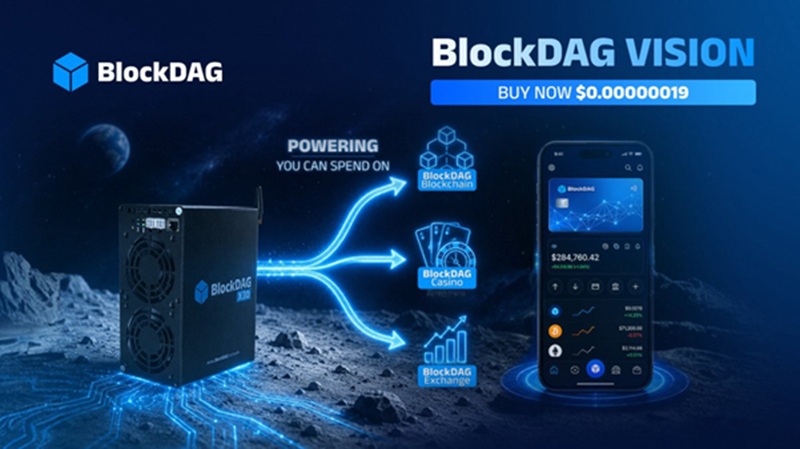
However, BlockDAG (BDAG) is dominating the list of top crypto gainers by introducing a limited-time opportunity to stay ahead of the market. Participants following the latest BlockDAG updates can access BDAG at a limited-time price of $0.00000019.

Claims for Batches 1–6 and staking are scheduled to go live during this period, introducing new functionality across the network. Alongside these developments, the Live Swap remains active at 22% below the CoinMarketCap price, adding further attention to the latest phase of BDAG’s growth.

Dogecoin Price Prediction Points Toward $0.0785 Target

Recent technical charts show that the Dogecoin price prediction is pointing toward potential short-term recovery as buying pressure builds. DOGE recently climbed 1.25% to reach $0.0736, helped by institutional Bitcoin ETF inflows boosting broader crypto sentiment. Large holders accumulated roughly 200 million DOGE, and technical indicators like the MACD have turned positive. Support appears solid between $0.0720 and $0.0725. If momentum holds, the token could test resistance at $0.0755 and potentially move toward $0.0785.

However, the coin still faces notable challenges. It remains capped by its 50-day moving average, and failure to hold the $0.0725 support zone could quickly trigger a drop back down toward $0.0700 or lower

XRP Price Holds Support Near $1.00 Mark

The XRP price continues to hold steady near the crucial $1.00 level. A long-term technical pattern known as a triple-bottom has formed between $0.90 and $1.00, suggesting that long-term support is actively defending this price zone.

Adding to this stability, exchange inflows from large whale addresses dropped significantly from over 580 million tokens down to 25.3 million, signaling that sell-side pressure from major holders is slowing down considerably. If buying interest increases, key resistance levels sit at $1.13 and $1.22, with room for a potential move toward $1.50.

On the flip side, lower exchange selling alone does not guarantee a price surge. Without strong, sustained market demand stepping in, the price could easily stagnate or break below key support levels.

BlockDAG Builds Momentum Ahead of Claims and Staking Launch

BlockDAG is entering a key stage as the ecosystem prepares for a major hour window featuring claims for Batches 1–6 and the launch of staking. The upcoming rollout introduces new functionality for BDAG holders while adding another layer of utility to the growing network.

Alongside these developments, BDAG is available at a limited-time price of $0.00000019, while the Live Swap remains active at 22% below the CoinMarketCap price. The timing of these updates has increased attention around BlockDAG as the project moves toward broader ecosystem participation and continued expansion.

The momentum behind BlockDAG is also reflected in its growing community and infrastructure. The network has surpassed 312,000+ holders, with more than 1,000 new users joining daily. The X1 mining app has attracted over 4 million users, while more than 20,000 physical miners are being shipped worldwide, demonstrating strong interest in the project’s mining ecosystem.

On the technology side, BlockDAG continues strengthening its infrastructure through upgrades designed to improve performance. The latest RPC upgrade successfully handled 100,000 transactions within 24 hours, highlighting the network’s focus on scalability and efficiency.

With claims, staking, community growth, mining adoption, and technical improvements developing together, BlockDAG is building momentum around a broader blockchain ecosystem designed for long-term utility and expansion.

Final Call

While the Dogecoin price prediction hints at slow momentum as technicals stabilize and the steady XRP price benefits from dropping whale sell pressure, both market coins face capped upside in the short term. Neither asset offers immediate explosive perks right now.

BlockDAG stands out among top crypto gainers by offering access at $0.00000019 alongside a Live Swap running 22% below CoinMarketCap pricing. With claims for Batches 1–6 and staking going live within a crucial few-hour window, BlockDAG builds solid utility for its 312,000 holders, 4 million X1 miners, and 20,000 physical units shipped. Pure technical stability rarely beats real operational utility when market interest shifts toward genuine networks.

Ultimate Sale: https://purchase.blockdag.network

Website: https://blockdag.network

Telegram: https://t.me/blockDAGnetworkOfficial

Discord: https://discord.gg/Q7BxghMVyu


22% Savings on Live Swap! BlockDAG’s Biggest Ecosystem Shift Arrives in Hours, While Ondo Eyes $0.48 & XRP Price Struggles

0

The Ondo crypto price is aiming for $0.48 after a strong chart breakout and new trading upgrades. Meanwhile, the XRP price is stuck at a key level that could break its downward trend.

Standing out from the competition, BlockDAG (BDAG) is entering a major growth phase with claims for Batches 1–6 and staking scheduled to go live within hours. Alongside this rollout, BDAG is available at a limited-time price of $0.00000019, while Live Swap remains active at 22% below the CoinMarketCap price.

With new ecosystem developments and increasing network activity, BlockDAG is gaining attention among investors searching for the next crypto to explode.

Ondo Crypto Price Targets Breakout Following Perps Launch

The Ondo crypto price recently crossed $0.39 following a chart breakout from a descending wedge pattern. Ondo Finance expanded its system by adding tokenized stocks as collateral on its perpetual futures platform. This feature allows people to trade with up to 20x leverage without turning their holdings into stablecoins. Total volume on the platform has now passed $3.8 billion.

While these new tools have helped boost buyer interest, the coin still faces challenges. Analysts point to a key resistance zone near $0.48 that could slow down growth. Additionally, holders do not get a cut of the platform’s revenue, which makes some investors cautious about holding the token over a long period.

XRP Price Struggles to Clear Resistance Levels

The XRP price recently climbed to $1.16 before pulling back to sit around $1.14. Technical charts show the coin is in a delicate position. To clear its current bearish chart setup, it needs to break above the $1.20 resistance level.

If it fails to cross that line, prices could slide back down toward lower support levels at $0.93 and $0.87. On the positive side, large wallet holders have been accumulating more coins recently, while smaller accounts have been selling off.

Still, chart indicators show momentum is slowing down. Until it cleanly clears $1.20, the risk of a market drop remains a real concern for traders watching the chart.

BlockDAG’s Hour Claims and Staking Launch Brings New Utility

BlockDAG is moving into its next stage as claims for Batches 1–6 and staking prepare to go live within hours. The update introduces new functionality for BDAG holders while expanding the role of the token across the growing ecosystem.

Adding further attention, BDAG is currently available at $0.00000019 for a limited period, while Live Swap continues at 22% below the CoinMarketCap price. This combination of new features and limited-time pricing has placed BlockDAG in focus as market participants look beyond traditional price movements and toward projects building wider utility.

The ecosystem continues developing across multiple areas, including the Casino & Sportsbook, BlockDAG Exchange, Super App, and upcoming Tier 1 exchange listings. These additions strengthen BlockDAG’s broader infrastructure and support its goal of creating a connected blockchain ecosystem.

With claims, staking, and platform expansion happening together, BlockDAG is creating a new level of engagement around BDAG while positioning itself among projects gaining attention in the search for the next crypto to explode.

In a Nutshell

While the Ondo crypto price pushes toward $0.48 and the XRP price fights to clear critical chart levels, neither offers the explosive upside early buyers are looking for right now. Both altcoins face real hurdles, making their immediate recovery uncertain.

BlockDAG is taking a different route by focusing on ecosystem development, new functionality, and network expansion. With claims for Batches 1–6 and staking arriving within hours, along with a $0.00000019 BDAG price and a 22% Live Swap discount, the project is entering a highly anticipated period.

For those tracking the next crypto to explode, BlockDAG’s combination of growing infrastructure, expanding ecosystem products, and upcoming network updates makes it one of the projects attracting increasing attention.

Ultimate Sale: https://purchase.blockdag.network

Website: https://blockdag.network

Telegram: https://t.me/blockDAGnetworkOfficial

Discord: https://discord.gg/Q7BxghMVyu