DD
MM
YYYY

PAGES

DD
MM
YYYY

spot_img

PAGES

Home Blog Page 6

100-Day Space Isolation Test Reveals Challenges of Future Mars Missions

0

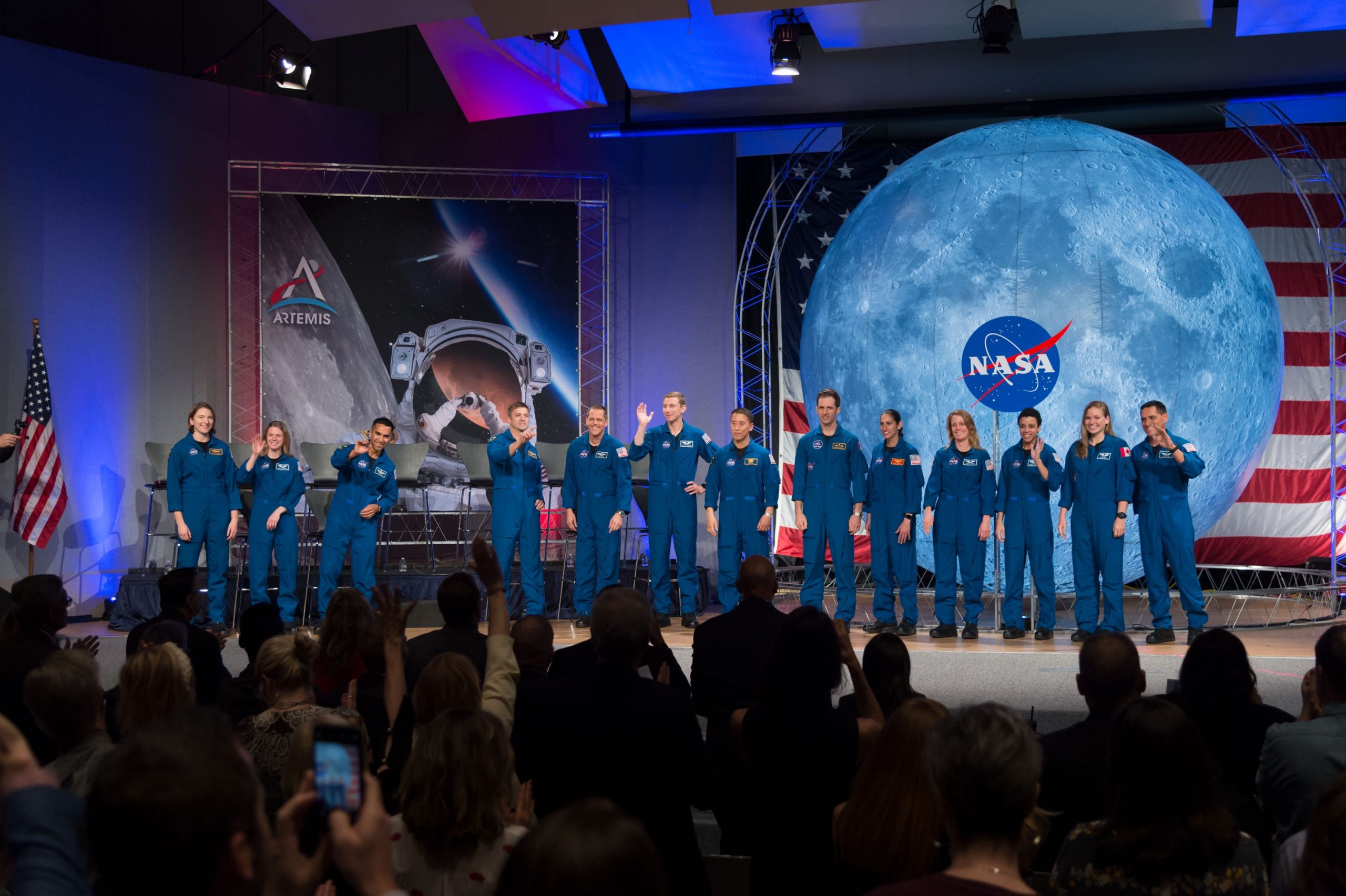
Six men and women from six different countries have completed a remarkable 100-day isolation experiment designed to prepare humanity for the psychological and operational challenges of future space exploration.

Confined to a cramped, artificially lit environment, the participants experienced conditions intended to simulate some of the pressures astronauts could face during extended missions to the Moon, Mars and potentially destinations beyond.

The experiment highlights a growing reality in space exploration: reaching another world is not simply an engineering challenge.

Rockets, spacecraft, life-support systems and navigation technologies may determine whether astronauts can travel safely, but human endurance could ultimately determine whether they can successfully complete the mission.

A journey to Mars, for example, would expose astronauts to months of confinement, limited privacy, repetitive routines and communication delays with Earth. Unlike astronauts aboard the International Space Station, crews traveling to Mars would be unable to rely on rapid assistance from mission control.

A medical emergency, psychological crisis or technical failure could require the crew to solve problems largely on their own. The 100-day isolation study therefore provides researchers with an opportunity to examine how people respond when normal environmental and social conditions are removed.

Artificial lighting, restricted living space and prolonged separation from the outside world can affect sleep patterns, mood, concentration and interpersonal relationships. Understanding these effects is critical for designing spacecraft and habitats capable of supporting healthy and productive crews.

The multinational composition of the group reflects the increasingly international character of space exploration. Future lunar and Martian missions are likely to involve astronauts from multiple countries, bringing together different languages, cultures, personalities and professional backgrounds.

Cooperation will be essential, but so will the ability to manage disagreements in environments where there is little opportunity to escape from one another.

Isolation research can also help scientists determine which personality traits and coping mechanisms are most valuable during long-duration missions. Some individuals may thrive under structured routines, while others could struggle with monotony or confinement.

Researchers can study how participants communicate, make decisions, manage stress and maintain motivation over time. NASA, international space agencies and private space companies are developing plans for sustained lunar operations, including habitats and research facilities that could eventually support a permanent human presence.

The Moon could become an important testing ground for technologies and procedures needed for deeper exploration. Mars, represents a much greater psychological and logistical challenge. A crew could spend years traveling, working and living within an extremely limited environment.

There would be no immediate return home and no possibility of replacing crew members quickly. Every individual would therefore become an essential component of the mission. The completion of the 100-day study demonstrates why preparation for the next era of exploration must include the human mind as seriously as spacecraft hardware.

Future astronauts will need more than physical fitness and technical expertise. They will require resilience, adaptability, communication skills and the ability to function effectively under prolonged uncertainty. Humanity’s ambitions are expanding beyond low Earth orbit.

As missions move toward the Moon and eventually Mars, experiments such as this one provide a valuable reminder that the greatest frontier may not only be millions of kilometers away. It may also exist inside the confined spaces where astronauts must live, work and depend on one another for survival.

Financial Freedom Is Built on Boring Decisions

0

Financial freedom is often presented as a glamorous destination. People see the comfortable home, flexible schedule, successful investments, travel, and freedom from financial anxiety.

What they rarely see is the long series of ordinary decisions that made those outcomes possible. Behind most sustainable financial freedom are thousands of choices that appeared insignificant when they were made.

The person who enjoys financial freedom tomorrow is often the person who made disciplined choices yesterday. They did not necessarily become wealthy overnight. Instead, they consistently chose long-term stability over short-term gratification.

Financial progress frequently begins with decisions that attract little attention. It can mean spending less than you earn, tracking expenses, avoiding unnecessary debt, building an emergency fund, investing regularly, and resisting the temptation to increase spending every time income rises.

None of these actions looks particularly exciting. Yet their power comes from repetition. Compounding is one of the clearest examples of why boring decisions matter.

A small amount invested consistently may not appear transformative in the beginning. There may be no dramatic change after the first month or even the first year. But over time, investment returns can generate additional returns, allowing disciplined savings to grow into meaningful wealth.

The important decision is not always finding the perfect investment. Often, it is simply remaining consistent. The same principle applies to debt. Choosing not to finance every desire can feel restrictive in the present, but it can create enormous flexibility later.

High-interest debt can consume future income before it is earned. Avoiding unnecessary debt means keeping more of tomorrow’s money available for investing, building businesses, pursuing opportunities, or simply enjoying life.

Financial freedom requires understanding the difference between looking wealthy and being financially secure. Expensive possessions can create the appearance of success without creating financial independence.

Someone may drive an impressive car while carrying significant debt, while another person may live modestly while quietly building substantial investments. One is visible; the other is durable. This is why financial freedom often looks boring while it is being built.

Wealth-building requires patience in a culture designed to encourage immediate consumption. Advertising constantly tells people that they need something new. Social media can make other people’s lifestyles appear normal and achievable overnight. Financial discipline requires the ability to recognize that someone else’s spending does not have to become your financial responsibility.

Money is a tool, and financial freedom should create the ability to use that tool intentionally. The goal is not deprivation. It is control. When people build savings, investments, and manageable expenses, they gain the freedom to make choices based on their priorities rather than financial pressure.

The most powerful financial decisions are therefore often invisible. Nobody applauds someone for automatically transferring money into an investment account. Nobody celebrates a person for declining an unnecessary purchase. Nobody sees the years of patience behind a growing portfolio.

But eventually, the results become visible. Financial freedom is rarely created by one extraordinary decision. It is usually the accumulated result of ordinary decisions made consistently over a long period. The quiet habits of yesterday become the opportunities of tomorrow.

That is the real lesson: financial freedom is not primarily about doing something spectacular. It is about repeatedly doing what makes sense, even when nobody is watching. The boring decisions may never make headlines, but they can eventually buy something far more valuable than status—the freedom to decide how to live your life.

OpenAI Expands ChatGPT Advertising to Latin America

0

OpenAI is expanding the commercial reach of ChatGPT by bringing advertisements to Brazil and Mexico while simultaneously introducing a new wave of features designed to make the artificial intelligence platform more useful and engaging.

The move represents another significant step in OpenAI’s effort to build a sustainable business around ChatGPT as millions of people increasingly rely on the service for work, education, research, creativity and everyday tasks.

The introduction of advertisements in Brazil and Mexico is particularly significant because both countries represent large and growing technology markets.

ChatGPT has gained substantial popularity across Latin America, where consumers, students, businesses and developers are increasingly adopting generative AI. By expanding its advertising model into these markets, OpenAI can potentially unlock a new source of revenue while continuing to make its AI services accessible to a broader audience.

Advertising, introduces an important new dimension to the ChatGPT experience. Users may become more conscious of how commercial messages are presented alongside AI-generated responses. The challenge for OpenAI will be maintaining a clear distinction between advertising and answers generated by the model.

Transparency will therefore be critical if the company wants users to remain confident that commercial interests do not influence the information they receive. The expansion comes as OpenAI continues adding capabilities to ChatGPT.

Rather than positioning the platform simply as a chatbot, the company is increasingly developing it into a broader AI assistant capable of handling complex tasks. New features are intended to improve productivity, research, communication, creativity and the overall interaction between users and artificial intelligence.

This strategy reflects the rapidly changing competitive landscape in the AI industry. Companies are racing to transform conversational AI from experimental technology into an everyday digital utility.

The most successful platforms are likely to be those that can combine powerful models with useful tools, intuitive interfaces and sustainable business models.

Advertising could become particularly important as the cost of operating sophisticated AI systems remains substantial. Training and running advanced models requires enormous computing infrastructure, including specialized chips, data centers and electricity.

Revenue from subscriptions, enterprise services and advertising can help finance that infrastructure while allowing OpenAI to continue investing in increasingly capable models. Brazil and Mexico could provide valuable testing grounds for OpenAI’s commercial strategy.

Advertising preferences, consumer behavior and regulatory expectations can differ considerably across markets. The company’s performance in Latin America may therefore offer lessons for future expansion into additional regions.

The arrival of ads raises broader questions about the future economics of AI assistants. Traditional search engines have relied heavily on advertising for decades, but conversational AI creates a different environment. Users interact directly with an AI system rather than browsing a page filled with conventional search results.

Determining how advertising fits naturally into that experience without damaging trust will be one of OpenAI’s most important challenges. OpenAI’s expansion into Brazil and Mexico signals that ChatGPT is moving beyond its identity as a groundbreaking AI experiment and becoming a mature consumer technology platform.

The combination of advertising, new features and continued model development suggests that OpenAI is building an ecosystem designed to support both mass adoption and long-term commercial growth.

As ChatGPT becomes increasingly integrated into daily life, the balance between innovation, accessibility, monetization and user trust will become more important than ever.

OpenAI’s latest expansion demonstrates that the future of AI will not only be determined by how intelligent models become, but also by how effectively companies build sustainable businesses around them.

XRP, Bitcoin and Ethereum: Signals of a Bear Market’s Final Stage

0

Cryptocurrency markets often reveal their deepest shifts not through dramatic price movements, but through subtle changes in liquidity, positioning and investor behavior.

Recent data surrounding XRP, Bitcoin and Ethereum suggests that the market may be approaching a critical transition point. While prices remain under pressure, several indicators resemble the conditions historically associated with the later stages of a crypto bear market.

XRP provides one of the most interesting examples. The token has fallen sharply from around $2.40 toward the $1.00–$1.20 range, representing a substantial decline from its previous levels.

Yet whale order sizes have remained firmly within what can be described as “big whale” territory. This means that large market participants have not disappeared despite the deterioration in price. The behavior does not necessarily indicate aggressive accumulation.

XRP’s 90-day taker Cumulative Volume Delta, or CVD, remains broadly neutral. CVD measures the difference between aggressive buying and selling activity, making it useful for identifying whether market participants are consistently lifting offers or hitting bids. A neutral reading suggests neither side has established clear dominance.

That creates a more complicated picture. Instead of aggressive buyers rushing to accumulate XRP, the market appears to be experiencing quiet absorption. Large orders remain present, but demand is not strong enough to produce an obvious upside trend.

This type of behavior can occur when investors are gradually positioning themselves while waiting for stronger confirmation that the broader market has reached a bottom. Bitcoin offers another important reference point.

BTC is currently trading approximately 17% above its realized price, a metric representing the aggregate cost basis of coins based on the price at which they last moved on-chain. Trading above realized price generally indicates that the market as a whole remains in a state of unrealized profit rather than widespread capitulation.

XRP, meanwhile, is converging toward its realized price from above. This narrowing gap suggests that the asset is moving closer to the aggregate cost basis of its holders.

Ethereum presents an even more defensive picture, already trading below its cost basis. The contrast between the three major assets illustrates different stages of the same market cycle. Bear-market bottoms often develop through this kind of gradual deterioration rather than one single dramatic event.

Bitcoin can remain above realized price while weaker assets fall closer to, or below, their cost bases. Investor enthusiasm fades, trading activity becomes quieter and large participants begin positioning without immediately forcing prices higher.

Still, these signals should not be interpreted as proof that a bottom has already formed. Realized-price metrics and whale activity are contextual indicators, not timing mechanisms. XRP could continue falling despite large orders, while Bitcoin could lose its premium to realized price if selling pressure intensifies.

Likewise, Ethereum trading below cost basis can persist before a meaningful recovery begins. The more important message is that the market appears increasingly mature in its downtrend. Speculative excess has been reduced, aggressive positioning has cooled and major assets are moving closer to important cost-basis levels.

If history provides a useful framework, these conditions can represent the final and most psychologically difficult phase of a bear market. The challenge for investors is distinguishing genuine accumulation from temporary stabilization. In crypto, that distinction is often visible only in hindsight.

For now, XRP’s whale activity, Bitcoin’s realized-price premium and Ethereum’s position below cost basis collectively point toward a market undergoing deep structural consolidation. Whether this becomes the foundation for the next cycle or another leg lower will depend on liquidity, demand and the behavior of large holders in the weeks ahead.

Lionel Messi’s Father Jorge Dies At 68 After Illness

0

Longtime agent played central role in Messi’s journey from Rosario to global football stardom; his health struggles cast a shadow over Argentina’s World Cup campaign

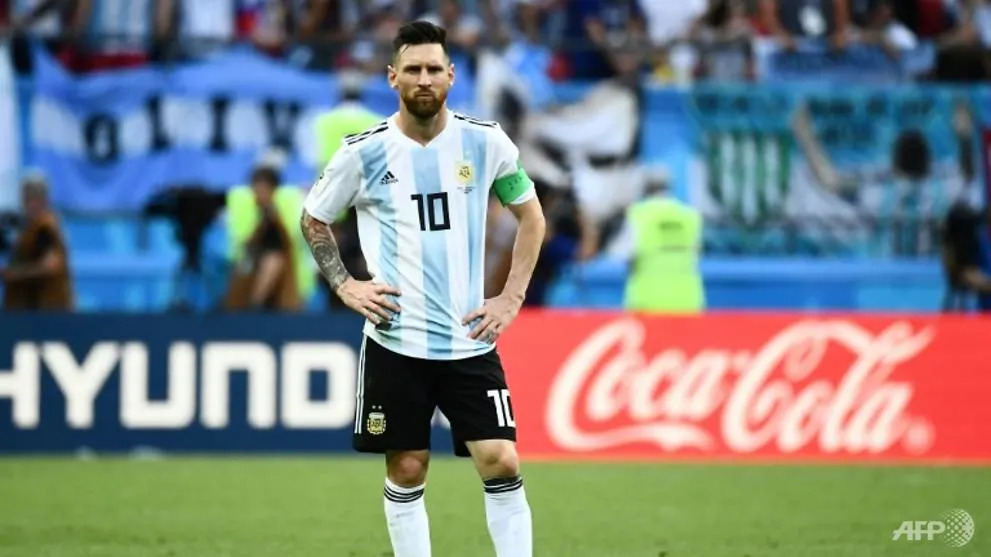
Jorge Messi, the father and longtime agent of Argentina captain and football star Lionel Messi, died Saturday at a hospital in the central Argentine city of Rosario. He was 68.

Club Atlético Newell’s Old Boys, the Rosario club where Jorge Messi once played in the youth ranks and where Lionel began his football journey, announced his death in a social media post. The club said Jorge had undergone treatment in recent months for an unspecified illness.

Newell’s described him as “the pillar and the person who, with vision, rigor and affection, supported the career of the best player of all time, alongside his wife, Celia Cuccittini.”

The South American Football Confederation, CONMEBOL, also offered its condolences to Lionel Messi and his family, expressing sympathy “with respect and affection for Lionel.”

Jorge Messi’s death comes weeks after his son’s emotional appearance at the 2026 World Cup, where Argentina reached the final before losing 1-0 to Spain after extra time.

Messi’s family ordeal had already become a major personal backdrop to Argentina’s campaign.

In Argentina’s opening match against Algeria, Messi was visibly emotional after scoring the first of his three goals in the tournament. He later acknowledged that his reaction was linked to difficulties away from football.

“I went through some difficult, complicated days,” he said. “I am grateful to the delegation, to all my teammates, because they were always by my side wishing me strength so that I would be OK.”

Reports about Jorge Messi’s condition subsequently generated intense media attention. The Messi family confirmed that he was experiencing a health problem but declined to disclose details of his condition.

“A person’s health and the peace of mind of their loved ones should not be the subject of speculation or irresponsible media interest,” the family said at the time, expressing “discomfort at the lack of sensitivity, respect and scruples with which some people have treated a strictly private and family matter.”

The emotional burden surrounding Messi’s father’s illness was subsequently cited in discussion of Argentina’s performance in the final against Spain. Former England striker and television analyst Gary Lineker pointed to the circumstances surrounding Messi’s tournament when describing the difficulty of playing a World Cup final while dealing with a seriously ill parent.

“Imagine walking onto a World Cup pitch knowing your father is seriously ill. Imagine carrying that fear in your heart while millions watch you, judge you, abuse you, and even send you death threats,” Lineker said.

“Lionel Messi still played. He still carried Argentina. He still gave everything.

“And now, after all of that, he has lost his father.”

The Father Behind Messi’s Career

Jorge Messi played a fundamental role in turning his son’s extraordinary talent into a professional career. He was a chemical technician and worked as a steelworker. He also played football as a midfielder and reached the youth ranks of Newell’s Old Boys before abandoning the sport to complete mandatory military service in Argentina.

When Lionel Messi was still a teenager, Jorge travelled with him from Rosario to Barcelona for the trial that eventually opened the doors to La Masia, Barcelona’s famed youth academy.

That decision became the starting point for one of football’s greatest careers.

Lionel Messi made his professional debut for Barcelona in 2005 and went on to win eight Ballon d’Or awards. He later played for Paris Saint-Germain and joined Inter Miami, while also becoming Argentina’s most decorated modern-era football figure.

Jorge remained at the center of his son’s professional life, serving as his agent and managing his business affairs.

He negotiated contracts with Barcelona and later handled Lionel’s transfers to Paris Saint-Germain and Inter Miami. He also managed the use of his son’s image rights and investments spanning real estate, hotels and restaurants.

Lionel Messi has previously described the emotional role his father played during the family’s difficult transition from Argentina to Spain.

“My dad was always by my side,” Messi said in a 2007 interview with Radio del Plata. “Sometimes I would lock myself in my room to cry when we arrived in Barcelona, or my dad would do the same without me seeing him, or thinking I didn’t see him. We pretended we were both OK, but we weren’t.”

“My dad even asked me what I wanted to do when we were feeling down, if I wanted to stay or go back, and I wanted to stay, and he stayed with me,” Messi added.

Jorge Messi’s role as his son’s business manager also brought legal scrutiny.

In 2013, Spanish prosecutors accused Lionel and Jorge Messi of attempting to conceal income from the footballer’s image rights. Jorge Messi subsequently paid more than 5 million euros in August to cover alleged back taxes and interest.

The dispute became one of the few major legal controversies to surround the business side of Messi’s career, but Jorge continued to manage his son’s commercial affairs.

In Rosario, the family’s business interests also extend into hospitality. A sign at VIP Rosario, one of the Messi family’s restaurant ventures, indicated that the establishment was closed on Saturday.

The Argentine Football Association president, Claudio Tapia, issued a lengthy tribute to Jorge Messi following his death. Tapia recognized him “for having raised a person of values: humble, respectful, and deeply committed to others.”

The Argentine football authorities ordered a moment of silence at matches across all categories of Argentine football and instructed players, referees and coaching staff to wear black armbands.

The tributes underline Jorge Messi’s importance not only as the father of Argentina’s greatest football star but also as the person who helped guide Messi through the earliest and most uncertain stages of his career.

His influence began long before the trophies, record-breaking contracts and global fame. It was Jorge who helped his son navigate the move from Rosario to Barcelona, supported him through the difficult adjustment to life in Spain and later built a career structure around one of the most valuable athletes in world sport.

A Final World Cup Overshadowed By Family Concerns

For Lionel Messi, the 2026 World Cup carried an unusual personal weight. Argentina entered the tournament as defending champions, while Messi, at 39, became the oldest outfield player to appear in a World Cup final. Spain ultimately won the title after Torres’ extra-time goal.

The tournament had already exposed the personal strain Messi was carrying. His emotional reaction after scoring against Algeria and his comments about difficult days outside football came shortly before his family confirmed that Jorge was dealing with a health problem.

Argentina’s eventual defeat by Spain was subsequently viewed by some commentators through the lens of Messi’s family situation.

Jorge Messi therefore leaves behind a legacy closely intertwined with his son’s extraordinary career. From the youth fields of Rosario to Barcelona’s La Masia and eventually the World Cup stage, he remained one of the most important figures in Lionel Messi’s life and career.