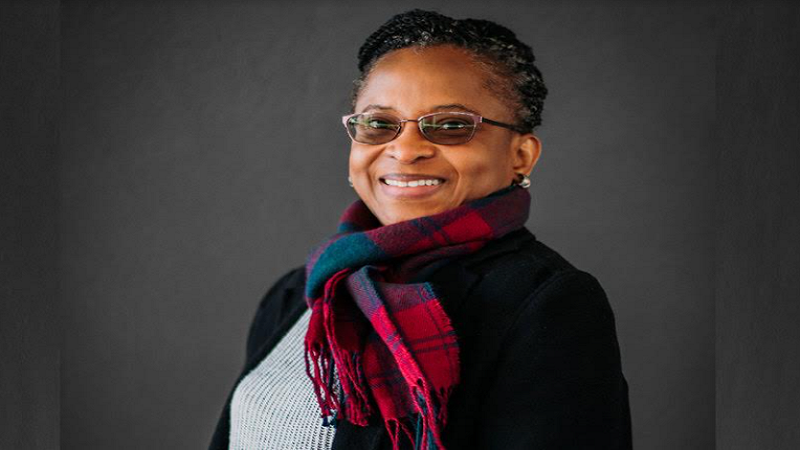
A Nigerian woman, Abimbola Windapo has emerged as the first woman professor in Construction Management in South Africa and Nigeria. Windapo was announced as professor in the recently concluded Ad Hominem Promotions in the University of Cape Town, South Africa. According to a release signed by Ridovhona Mbulaheni from the Communication and Marketing Department of the university, the Ad Hominem promotion to professorship, which becomes effective from January, 2021, is in recognition of Windapo’s “research, teaching, social responsiveness and administrative abilities”.
In giving further details of the reasons behind her recent elevation, the release stated that “Windapo has made numerous important contributions, including research into sustainable contractor development and serving as the chairperson of the Faculty of Engineering & the Built Environment’s (EBE) Transformation Committee from 2015 to 2017, a period of student protests across UCT’s campuses.” The release noted that “further contributions and recognition included her graduating five PhD researchers, and receiving the 2020 National Science and Technology Forum-South32 Award in the Engineering Research Capacity Development category.”
Being the first in the room is not strange to Prof. Windapo as she was the first woman to get a degree in Building from University of Ife ( now Obafemi Awolowo University, Ile Ife) in 1987. She then proceeded to the University of Lagos, Nigeria for her Master’s Degree where She graduated with a Distinction in Construction Management in 1990. For her PhD degree, Windapo also attended University of Lagos for a doctorate degree in Building which she obtained in 2005.
Windapo has extensive professional and teaching experience in Nigeria and South Africa. She first joined the teaching faculty of the Lagos State Polytechnic, Isolo in 1994. She was in the Building Department of the polytechnic for four years leaving the institution in 1998. She then moved to the Department of Building of the University of Lagos where she was for nine years (1998-2009) before she joined the teaching faculty at the Department of Construction Economics and Management, University of Cape Town, South Africa. She rose from her Senior Lecturer position to Associate Professorship cadre in 2016 before she was elevated to full professorship in the 2020 Ad Hominem Promotions.
In the course of her career, Windapo has served as visiting lecturer to a number of universities both in Nigeria and South Africa which include Caleb University, Nigeria; Nelson Mandela Metropolitan University, South Africa as well as Stellenbosch University, South Africa. She has also served as consultant to many organizations in Nigeria and South Africa. She is also a member of many professional bodies in her native country and her country of residence. She is a Fellow of the Nigerian Institute of Building; Registered Builder, Council of Registered Builders of Nigeria; a certified Construction Mentor and Professional Construction Project Manager of the South African Council for the Project and Construction Management Profession (SAPCMP).
To Windapo, the recent elevation confirms her as “a role model for women, especially those from disadvantaged backgrounds, to give them hope that nothing is impossible”.
Like other economies, the human resource consulting sector is growing in Nigeria. Over the last few years, the growth has been linked to the emergence of new businesses and existing ones’ interest in strengthening their operational performance with qualified talents. From recruitment to payroll management, players in the Nigerian human resource consulting sector are making significant contributions to the growth of other sectors and industries, despite the negative impact of population growth rate on human resource utilization.
From Lagos to Abuja and Port-Harcourt to Kano, there are a number of HR consulting companies with a special bias for outsourcing services. In one of our previous analyses, we noted that players in the sector need to devise new ways of advertising positions for their clients to the public. In this piece, our analyst examines how players can source and manage clients towards sustainable value co-creation and capturing using recent research outcomes.
According to the practitioners in the sector, online and offline are the main strategies being used for sourcing clients. Online strategy largely focuses on the use of professional networking sites such as LinkedIn. While using this strategy, we discovered that representatives of HR consulting companies connect with and engage potential buyers of their services on the platform. Before connecting, systemic profiling of the buyers is usually carried out. This is necessary based on the fact that potential buyer demographics and in some cases, psychographics must fit with their companies’ [representatives] core values, mission and vision statements.
Offline strategy is being employed when the representatives have opportunity of meeting prospective buyers in physical settings such as conferences, trade shows and exhibitions. From our data, we learnt that the use of one of the strategies or both at the same time depends on the proper understanding of the demographics and psychographics of the buyers.
Bidding for Jobs
When clients advertise bid, HR companies, like others in the management consulting industry, compete through technical and commercial proposal presentation. According to our data, HR companies express interest in bids when it is obvious that they have the required services, and abilities and capabilities to deliver. In the course of making the proposals available to the designated committee of the clients, strategic engagement is a must. The relationship started with the asking of questions for clarification on the grey areas and continue until the two proposals are submitted.
Managing Clients
Having clients through the strategies are not enough, they must be managed effectively towards continuous patronage and interest. To the Nigerian players, relational, strategic, human and structural capital are significant to this. They believe that subsidiaries and other companies, which we called third party outsourced companies, are key to effective management of clients.
Since profiling of the buyers is essential, companies do consider understanding of the clients’ corporate culture and see how it aligns with theirs. Culture alignment is not sufficient. Services must be tailored to their needs with high level of professionalism. This is what we found as strategic capital. Creating and delivering value, according to our experts in the sector, is a matter of having internal employees with the right knowledge and skill-sets. When it is clear that this is lacking, external consultants become handy. This is human capital, according to our analysis. In some cases, both the clients and employees collectively developed tools for recruitment and payroll management. Our analyst considers this as strategic capital and a way of making the created and delivered value sustainable.
This viewpoint wascredited to Jason Njoku, the CEO of iROKOtv: “I think we’re pretty far away from the IPO. For that to happen, we need to be taking in between $8 and $10 million in revenue.” Possibly, he could be referring to a London or New York exchange. In the Nigerian Stock Exchange (NSE), it does not have to be that high. Of course, not many tech companies may be open to IPO in Nigeria when you look at the records of the firms which followed that path.
I think we’re pretty far away from the IPO. For that to happen, we need to be taking in between $8 and $10 million in revenue. Pre-pandemic, we had a clear path to doing that; now, it’s become much more challenging. But with that said, our goal hasn’t changed. This year, we just need to survive. We’ve taken all the costs we can out of the business, and now we need to start building on revenue. My sense is that we’re delaying for a year or so.
Yet, we need these companies to find paths of exit and NSE remains an option. I just think NSE should offer clarity via a document. Yes, it is very possible that these startups are thinking that they need to do more when in a way some of them could be largely ready for a local IPO.
If your startup generates above $4 million annually, consistently over three years in Nigeria, via subscription or multi-payer payments, not just lump-sum contracting, I do think Nigerian Stock Exchange should make space for you, even in a smaller board.
The year 2020 most Innovative Real Estate Brands Africa Awards was organized to celebrate innovation, leadership and Growth of the Real Estate and property industry in the continent. The award has a philosophy to connect relevant stakeholders including prominent Real Estate personalities, Government officials, Bankers and Regulators in the industry.
The Award which held on Thursday, 3rd December 2020 at the Banquet Hall, Sheraton Hotel and Tower, Ikeja Lagos, Nigeria, recognized notable players and game changers who have contributed immensely to the development of the sector.
The Founder and CEO of FarmKonnect, Lieutenant Commander (Retd.), Azeez Oluwole Saheed was announced the most Innovative Agricultural Real Estate Entrepreneur.
Agricultural Real Estate (AgRE), which is fast becoming a widely accepted practice in modern smart-farming technology, was initiated by FarmKonnect to attract investments into large-scale collective farming. The idea was spurred out of the need to solve problems, such as lack of access to land, finance, technology and expertise among other challenges of Africa’s food and Agribusiness sector. While Real Estate in the traditional sense of it represents ownership, acquisition and management of landed property for housing or residential purposes, AgRE represents ownership and management of landed property for smart-agricultural practices.
Azeez Oluwole who left the military at a younger age to pursue a career in the Agribusiness sector believes that the greatest form of security to give to the people is food security; hence, the mission to eradicate hunger and alleviate poverty through sustainable agriculture is a noble course indeed. The entrepreneur expressed his excitement over the award and admonished stakeholders to promote collaboration rather than competition.
Meanwhile, the editor-in-chief of the African Brands Magazine, Desmond Esorougwe, had earlier noted that the most innovative Real Estate Brands Africa Awards 2020 Research represents the most comprehensive Real Estate Brands study in Africa as it is a consumer-led survey which establishes the best Real Estate preferences across the whole of Africa.
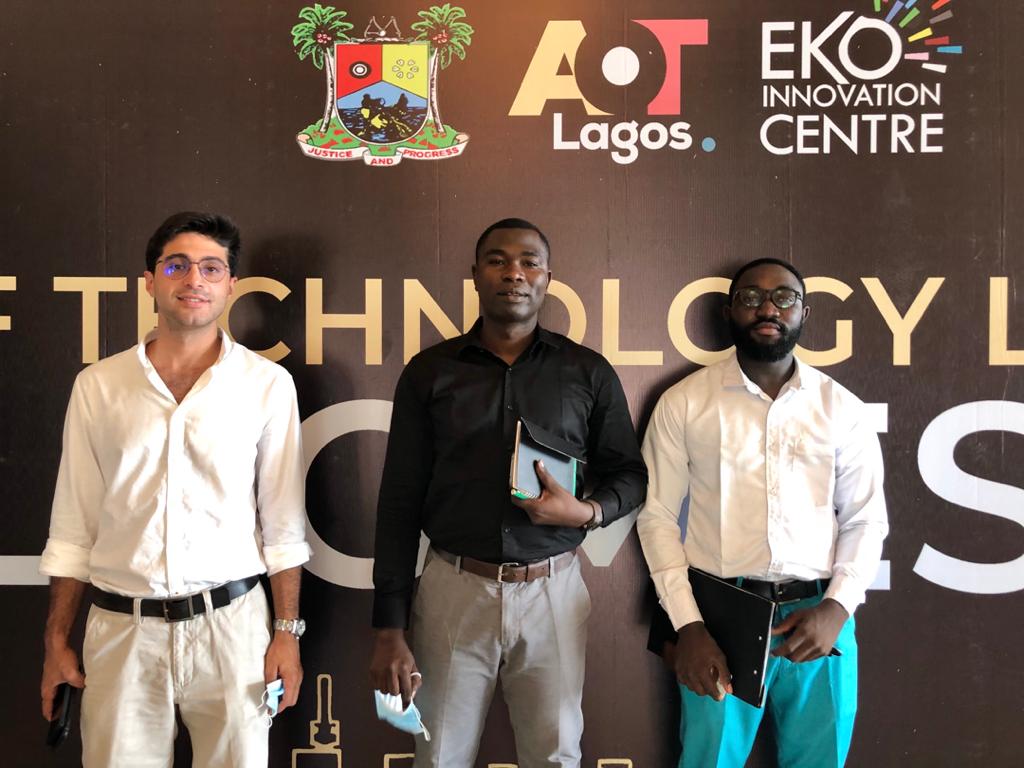
Ismail Tiamiyu is Research and Development officer at FarmKonnect.
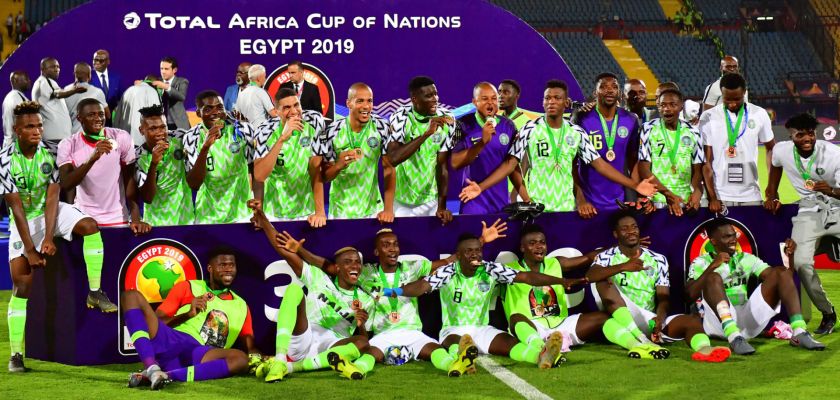
Sports is one of the industries that unites people throughout the world. During local, national, regional and international competitions, people of different races do come together to engage in physical activity that benefits everyone. Apart from the personal benefits to individuals, sporting activities have been found as part of activities that enhanced socioeconomic development and strengthen governmental relations. Out of the numerous sporting activities, people and countries participate in football than other games.
From club football to national football competitions, the king of sport [football] has greatly contributed to the national GDP of governments in Europe, North America and other continents, when a conducive atmosphere is provided. In its report on the growth and contribution of football to the UK’s, the Ernst & Young notes that “the League and its 20 member clubs contributed a gargantuan figure of £2.4 billion to the British economy in the 2013/14 season.”
In 2019, apart from the direct participants in the league, the British government also earns over £800 million in tax from Premier League players. In our checks, we have also seen how the economies of countries that hosted World Cup improved and suffered. For the countries that experienced positive economic growth, it emerged that the governments managed the preparation for the competition effectively, removed wastages and blocked corrupt system ahead and after the competition. For instance, in 2002, South Korea recorded a strong real GDP growth of 7%. After hosting the 1998 edition of the championship, France attained a higher GDP growth rate of 3,4% than what it had in 1997 [2.3%]. Spain, the United States of America and Italy also had higher GDP growth rates. In the history of hosting global fiestas, South Africa remains the only African country that has hosted the World Cup competition of national teams. The country hosted the competition in 2010. In its preparation for the championship, $3 billion [US] was spent on infrastructure [stadia, recreational centres, hotels among others].
Despite this, a number of citizens believed that a contribution of 0.1% to the GDP growth was insignificant. This view is not quite different from Nigeria after hosting several regional and global competitions such as junior World Cup. While on global competition, the Nigerian Football Federation [NFF] budgets substantial amount without bringing expected results. During the 2018 World Cup, the Federation spent N6.4 billion on its activities for the competition.
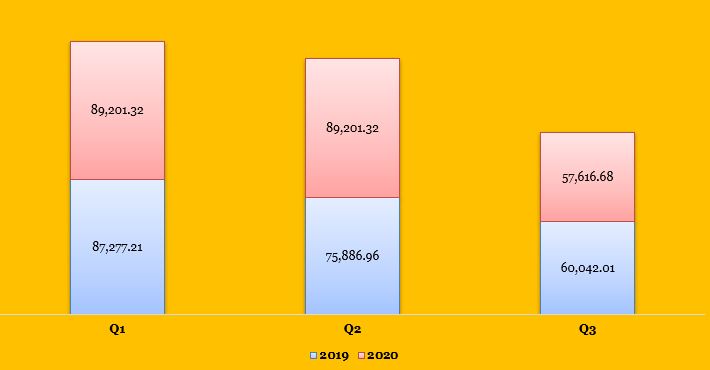
Beyond hosting and spending, Nigeria is one of the countries that is yet to consider a place for the measurement of sports in the Gross Domestic Product calculation. This affirms the fact that sporting activities remain insignificant economic activities to the Nigerian government. Over the years, sporting activities have been measured within the arts, entertainment and recreation sector.
Exhibit: Arts, Entertainment and Recreation in Gross Domestic Product at Current Basic Prices (=N=Million)
Source: NBS, 2020; Infoprations Analysis, 2020
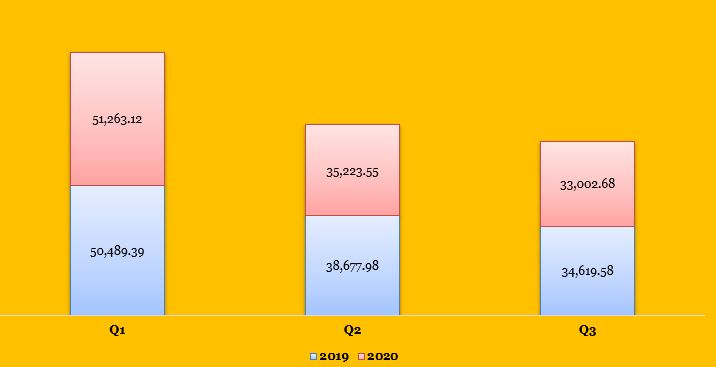
Exhibit 2: Arts, Entertainment and Recreation in Gross Domestic Product At 2010 Constant Basic Prices (=N=Million)
Source: NBS, 2020; Infoprations Analysis, 2020
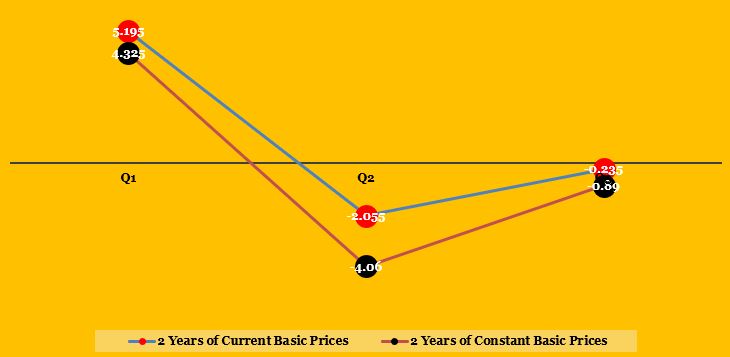
Exhibit 3: Arts, Entertainment and Recreation’s Average Contribution to the GDP growth in Current and Constant Prices [%] 2019-2020
Source: NBS, 2020; Infoprations Analysis, 2020
In this piece, our analyst notes that Nigeria needs to consider football as part of ‘objects’ that would increase its economy. This is necessary considering the citizens’ love for the game and the country’s place in it globally.
Our Data and Measures
Five hundred and sixty-one matches played between 1960 and 2019 [with the exception of 1964] and the country’s Gross Domestic Product growth rates during the period were our data. In 2019, report has it that Nigeria’s GDP in purchasing power parity was $1.2 trillion. Our period of analysis is 58 years. During the period, the national team’s friendly, qualifications and the main competition games were analysed along with the GDP growth rates.
In our measurement, we follow gravity model framework, which proposes that playing home and away matches [during friendly, qualifications and competitions] have the tendency of attracting socioeconomic opportunities to the teams’ countries. We also examine the extent to which Nigerian team played away games when the GDP growth rate contracted in a year. Before using the GDP growth rate data, we categorised it into positive and negative. When the rate had 0 and – as starting number and symbol, we classified it as negative GDP growth. Rates with 1 and more than 1 were categorised as positive GDP growth.
Emerging Insights
Looking at our insights, it is clear that Nigeria can benefit from playing and hosting football competitions. Our first analysis shows that a strong association exists between the GDP growth rates [positive and negative] from 1960 to 2019 and the years of playing the matches. In spite of this, our analysis did not establish a strong association between the rates and outcomes of the matches. By outcomes, we looked at the number of matches won, draw and lost by the national team. In our analysis, we discovered that 0.4% of outcomes of the matches could be determined from the GDP growth rates. However, the outcomes influenced the GDP growth rates more than 1.3 times during the period.
A total of 137 matches were played when GDP growth rates were negative. During the negativities, 58.4% of the matches were played by the Nigerian team as an away team and 41.6% as a home team. Being an away and a home team cuts across the categories of competitions participated in. Four hundred and twenty-four matches were played when the GDP growth rates were positive. Out of these matches, the Nigerian team was an away team in 51.9% and played as a home team in 48.1% of the matches. When the GDP growth rates were negative, the national team was more than 2 times, losing and almost 3 times winning their matches. Also, when the rates were negative, the national team was more than 1 times draw their matches.
Examination of the matches by tournaments indicates that 48.2% of the 561 matches were friendly matches and played when the GDP growth rates were negative. More than 15% of the matches were played during the African Cup of Nations. When the GDP growth rate was positive, friendly matches [39.6%] were played more than African Cup of Nations [21.2 %] and FIFA World Cup qualification [20.0%] matches. When GDP growth rates were negative and positive, they played away matches 2.1 times than home matches.
In our analysis, we found a clear differentiation between playing away and home matches during economy dwindling. One of the surprising insights that emerged from our analysis is that home and away scores when the economy was dwindling were the same. When the growth rates were negative, the highest home score was 1 followed by 0. This is not quite different from when the team played during the negative economic situation. The highest score was 1 followed by 2. During positive and negative economic situations, the team’s highest score was 0 followed by 1.
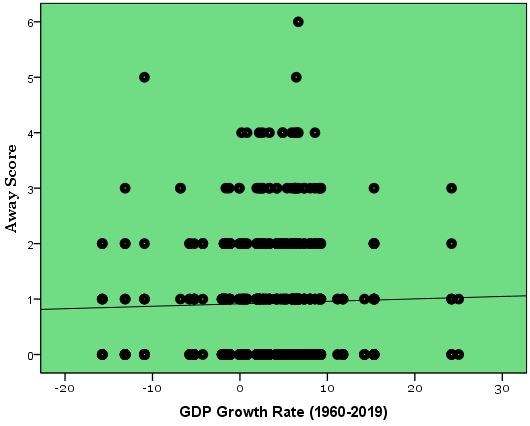
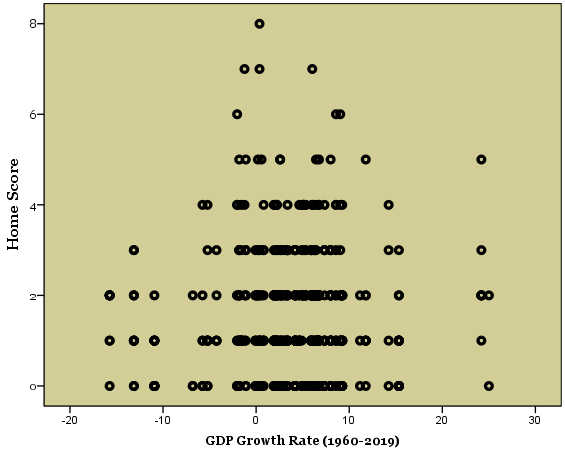
What does play away and home matches mean to the GDP growth rates in 58 years? In our analysis, we found that home matches impacted the growth more than the away matches. On average, away matches contributed 3.35% to the GDP growth rate, while home matches made a 3.88% contribution. In 58 years, both the away and home matches made a 3.59% contribution, on average, to the GDP growth rates. Analysis further shows that playing away matches and having a score indicated 2.7% increase in the GDP growth rates, whereas home matches increased the rates by 2.2% when the team scored one goal.
Exhibit 1: GDP Growth Rate Versus Away Score
Source: FIFA, 2020; CAF, 2020; World Bank, 2020; Infoprations Analysis, 2020
Exhibit 1: GDP Growth Rate Versus Home Score
Source: FIFA, 2020; CAF, 2020; World Bank, 2020; Infoprations Analysis, 2020
The Way Forward
These insights have indicated that the Nigerian government needs to take football serious if truly it intends to improve its economy and diversified from the oil industry. Sports, especially football, need to be treated as a business before substantial contribution to the GDP could be realised from it.
“In the football league, we can count about 28 sub businesses across associated value chain that can stimulate growth in the economy, drive employment and reduce youth delinquency in the society but we need to harness the potential of our football as a business to open these opportunities,” Shehu Dikko, Chairman of the League Management Company, said during a recent interview.