DD
MM
YYYY

PAGES

DD
MM
YYYY

spot_img

PAGES

Home Blog Page 6020

PROLOGUE: Building a Winning Team for Student Global Competition: What Universities Can Learn from University of Ibadan

0

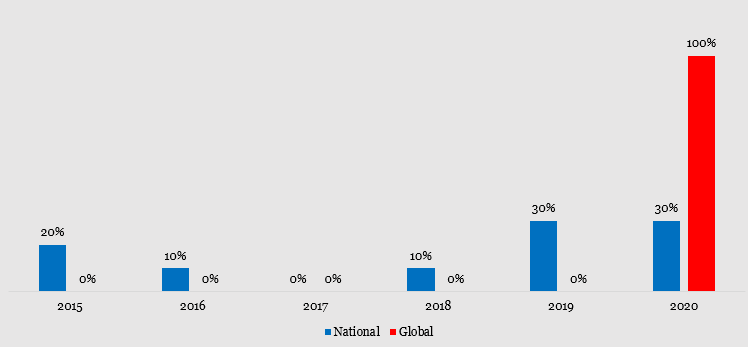
The Zain Africa Challenge won by the University of Ibadan Team in 2009 was one of the celebrated competitions of the University in its history of earning laurels.  The programme is a fast-paced televised quiz show involving universities from across countries from East, West and Southern Africa where the company has operation. Available information indicates that the students of the University have equally won different categories of competition between 2015 and 2020. In our data, we discovered that creative [advert], literary debate, law [Moot and Arbitration competition], medicine and pharmacy, entrepreneurship, technology-oriented and data science competitions have been won by the University Teams.

Eleven years after of the Zain Africa Challenge competition, another team from the Department of Electrical and Electronic Engineering after months emerged the winner of Huawei ICT competition at national and regional levels before doing it on the global stage in conjunction with other teams [comprising students from the University of Ibadan, Ahmadu Bello University, Zaria, and University of Port Harcourt].

Exhibit 1: Category of Competition Won Per Year

Source: Nigerian Newspapers, 2015-2020; University of Ibadan’s Website, 2020
Note: 10 national competitions and 1 global competition

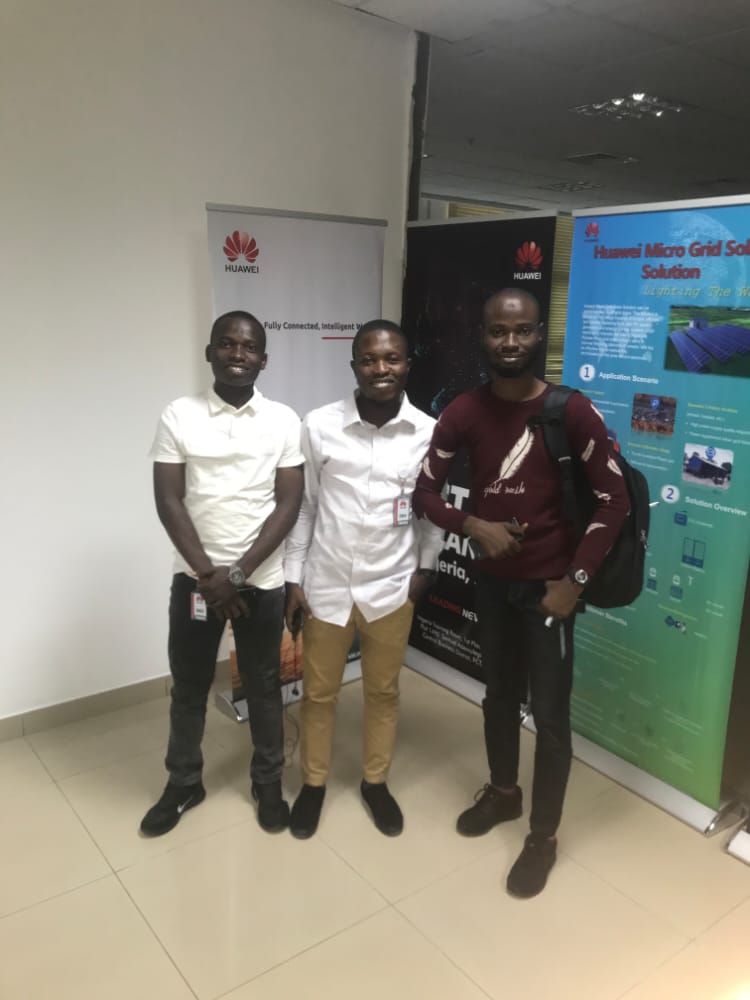
Anywhere in the world, Information Communication Technology (ICT) knows no colour, race, religion, linguistic competence or ethnic colouration; all what it requires is one’s competence, mastery and creativity. These were the conclusions of the University of Ibadan Team.  Badiru Toheeb Adeniyi, Abideen Bolaji Olaide and Olubiyi Sulaiman Damilare, who were part of the Nigerian Team in all the three stages of the competition, speak with our analyst. They are 500 level students of Electrical and Electronic Engineering, University of Ibadan.

UI Team at Huawei

According to the prize winners, their exposure to the competition was a rare opportunity to sharpen their creativity as they worked on Network Track. Although preparing for the competition was physically challenging, brain-taxing and time-consuming, their dedication, thorough planning and guidance of their trainers kept them going from beginning to end of the 3-stage competition.

Thanking the Acting Head of their department, Dr A.R. Zubair, the Dean of their Faculty of Technology, Professor O.A. Fakolujo, the Dean of Students, Professor Keye Abiona, alongside other lecturers who stood by them, the three prize winners allayed people’s fear about Information and Communication Technology, maintaining that with connectivity and essential gadgets, ICT can take one to places one never imagines.

In subsequent pieces, our analyst writes on the significance of the competition, lessons learnt by the students and what other universities can draw from the approach used by the University of Ibadan for building the team.

Corporate and Separate Legal Personality: What African Entrepreneurs Need to Know

0

Common Law is applied in African countries and based on English Law but Liberia is an exception with common law system based on United States. Every African Country has a constitution that governs their business and companies and example in Nigeria, which is governed and regulated by the Companies and Allied Matters Act (CAMA).

This piece focuses on the general principle of company law, basic concept of corporate and separate legal personality. The piece makes reference to celebrated judicial authorities, stating their principles and exceptions which now serve as precedents in new and similar cases. The authorities have also laid the foundation for judgments in courts today.

The fundamental principle of company law is that a company is a separate legal person liable for its actions. A company is a juristic entity; it can sue and can be sued and it carries out its functions through human mechanisms. The company is represented by human beings because it cannot speak itself and it has two organs that is management represented by the shareholders and general meeting represented by the board of directors.

Understanding Separate Legal Personality

When a company is incorporated (registered as a company in line with the CAMA for Nigeria or recognized law governing companies of another country) it becomes a separate legal personality. Here the company’s obligations and liabilities are its own and not that of individuals, shareholders or members of the company. Shareholders are not liable to death and liabilities.

Separate personality could be a company, limited liability, partnership or any other entity recognized by law as having its own separate legal entity. Basically, an incorporated entity, that is a registered company which has become incorporated is a separate legal entity, which signifies a separate legal existence to its founders: the natural person that caused it to be formed, directors: those that control the company and the shareholders i.e. those that own shares in the company.

Why do we need to have a separate legal entity? The company insulates individual participating in business from personal liability which may arise as a result of doing business. The company generates revenue owned by the company, incurs expenses payable by the company, attracts legal liability to pay taxes to taxation authorities and typically pays tax at lower rates than individuals. Business owners and directors are protected from liabilities other than in limited circumstances.

Understanding Corporate Personality

This is when a company is recognized as a legal entity (a company with legal rights and obligations) distinct from its members, shareholders, directors and officers and it is also known as the veil of incorporation. Corporate personality has perpetual succession i.e. continuation of an organization despite the death, change of ownership, death or any other reason, proprietary interest [the ability of a company to own property, land or building].

The company is at law a different person from the subscribers to the Memorandum (shareholders). Under corporate personality, the company is the only one that has the right to sue and be sued. This implies that members in the company cannot bring an action against someone or another company unless the company does that itself.

Under corporate personality which was embodied in case of Salomon v Salomon. The principle is basically saying only company can sue and be sued and there are exceptions i.e. instances in which court has allowed members or shareholders in certain instances to sue or bring an action against a wrong doer and this exception is majorly fraud. What this means is that, where there is fraud, not only the company itself can sue but members or shareholders.

By the rule in Foss v Habottle, the company itself suing means board of directors taking legal action on behalf of the company. Where there are instances in which the directors are the ones committing the fraud, they definitely would not want to bring an action against themselves, so the court has provided that in instances where there is fraud, the corporate veil i.e. that allows only the company to sue and be sued is pierced and gives room for members to bring action against wrong doer.

The principle of separate and corporate legal personality in Salomon v Salomon has laid the foundation and serves as precedent in the courts today. The exception to the principle as in Foss v Harbottle has been followed by African Courts in similar cases like the South African case of Zeman v Quikelberge and Another where the court pierced the corporate veil i.e. disregard the dichotomy between the company and the natural person behind it and attributing the liability to that person when he has abused or misused the corporate personality. The Court exercise its discretion. Also, in Mezuy v CB, the Supreme Court restated fraud as an exception to the long-standing company law principle of corporate personality. The court also pierced the corporate veil in the Kenya case of Caneland Limited v Dolphin. The decision of house of lord in the case of Salomon v Salomon takes the beginning of judicial acceptance of company as separate legal entity.

The Failure of Understanding the Duo

It is essential to know the doctrine of corporate personality alongside with rules and exceptions to avoid being held responsible, accountable or liable for debts or any or liabilities with the believe that one is under a corporate shield. Fraud is however not the only exception to the rule, but of course the major exception.

Other exceptions include illegal or ultra vires act, doing an act which company purports is done by special resolution and then doing it by ordinary resolution and many more. It is crucial to also note that the exercise of piercing the veil is at the court’s discretion. As governments continue having different laws towards enhancement of corporate governance practice, African business owners need to seek for knowledge about the difference between corporate and separate legal personality. Knowing the disparity at the early stage of business will go in a long way of protecting shares and equities from drowning, our analyst notes.

Additional reports by Semiyat Olawuwo

Amazon Getting Closer to Walmart on Number of Employees

0

Amazon could even overcome Walmart in that huge record: the world’s largest employer of labour as it ramps up employee headcounts over the next two years. Largely, as Amazon builds up its logistics, we are learning quickly that ecommerce can indeed power a new labour force. This could be a good outcome as many had postulated that the rise of ecommerce could bring doom in the labour force.

As the pandemic accelerates the push to online shopping, Amazon is now employing more than 1.2 million people around the world, The New York Times reports. The figure reflects a jump of 50% from a year ago, after the e-commerce giant added some 427,300 staff in the first 10 months of 2020 — and an average of 2,800 new workers a day since July. Most are warehouse workers, with contractors who work as delivery drivers not included in the figures. If this rate continues, it’s on course to surpass Walmart as the world’s biggest private employer within two years, notes the Times.

But as that happens, we are learning that working from home means more work for employees as they log in more hours per day. Also, it is not just workers which are affected, some companies will see a redesign once the world goes through the pandemic phase, and hopefully many things return back to the old stable state. Companies like Zoom and Peloton which have benefitted from the lockdowns or WFH would have to retest the old world and examine how they could fit.

Peloton and Zoom have become household brand names during the pandemic, but vaccine developments are slowing down their growth and raising questions about the companies’ long-term future. CNBC reports both “could still have room to run,” since they quickly became compelling brands that people have been able to rely on during the crisis. The Motley Fool contributor Matt Frankel is particularly confident about Peloton’s future, saying the fitness bike company’s subscription model acts as a “safety net” after the pandemic.

Top 10 Crypto Market Leaders in Nigeria; BoundlessPay Card Arrives Next Week

0

Two messages:

From Monday, Nigeria, BoundlessPay cards would be available from the Bitfxt team. Our team built the crypto exchange in Lagos, and also created a decentralized finance element (BitDEFi) which is available at CoinMarketCap becoming the first indigenous company in Africa with a card, local exchange and DEFi. He is called the Blockchain Oracle; I am happy to be supporting his vision. Well done Franklin Peters.

Meanwhile, Congratulations to Franklin Peters, the CEO of portfolio Bitfxt for inclusion as one of the Top 10 CEOs in the Nigerian Cryptocurrency Market. Also, I congratulate our team for next week’s planned unveiling of BoundlessPay. With a BoundlessPay card, you can spend your crypto in naira.


Partner With KreekAfrica And Refer Friends and Associates

0

KreekAfrica which our platform has a strong partnership presents a smart way of doing business by putting Freelancers and Clients in Africa on a platform to connect and collaborate.

“We prioritize trust in the way our platform is used for secure and transparent transactions. We respect professionals and businesses from across all fields and encourage collaboration and tolerance to solve individual needs. We also value accountability in how the platform encourages all parties involved to take responsibility for all actions taken” KreekAfrica Team

We understand that the traditional way of hiring can be costly for businesses and a barrier to creative expression for Freelancers. Also, with the growing popularity of remote work on the continent, it makes financial sense, especially during a crisis. We seek to break the limitations of the standard 9-5 work structure to add some flexibility and freedom to your work life.

We have this partnership presented in the image below.

Source: updated from KreekAfrica.com


Ndubuisi Ekekwe Invests in KreekAfrica To Deepen Value In Tekedia Mini-MBA