DD
MM
YYYY

PAGES

DD
MM
YYYY

spot_img

PAGES

Home Blog Page 6022

“In October, OPay processed a gross transaction value of $1.4 billion on its platform” in Nigeria

1

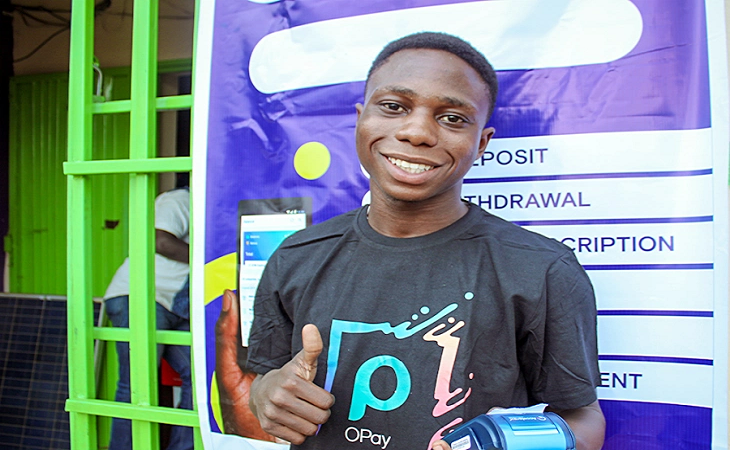
OPay is Nigeria’s biggest mobile payment solutions and you can call it the fastest growing customer brand in any sector in Nigeria. From Opera Q3 2020 earnings call; Opera holds 13.1% of OPay: “In October, OPay processed a gross transaction value of $1.4 billion on its platform more than three times the level in January.” 

OPay continues to grow and scale its payment offerings. In October, OPay processed a gross transaction value of $1.4 billion on its platform more than three times the level in January. Further, we expect that OPay will be expanding beyond Nigeria soon, and believe it can continue to grow its payments platform at elevated growth rates. StarMaker continues to scale as well growing users roughly 80% year-to-date, and more than doubling revenue year-to-date to an annual run rate of over $100 million.

The OPay’s Invisible Layer Strategy is working at scale.

People, marginal cost of zero has come to the paytech sub-sector of Nigeria’s fintech sector. Yes, OPay is running what I call the Invisible Layer Strategy. The Invisible Layer Strategy is a strategy where a company builds a product utilizing critical infrastructure of another competing company, in the same product line, but finds a way to under-cut that company on cost of services to end users. Today, OPay offers zero fee to customers who use it to pay for DStv services in Nigeria. It utilizes and relies on Nigeria’s banking infrastructure. But if the same customers use banks, directly, they would be charged fees, by banks. Largely, OPay has invented an invisible layer which makes it possible to handle those payments at zero cost that even the banks themselves cannot do. It is important to note that OPay is not absorbing any cost to acquire customers; there is no cost whatsoever in the value chain, and that means even in the long-run, it can process payments in Nigeria at absolute zero fee.

OPay is now well positioned to even battle telcos if they decide to come into the mobile money domain at scale. This company has provided a textbook case study on how to win  consumers in Nigeria: pile losses and keep making losses and keep running losses. One day, everyone will come to your party. Of course, you need reserves, tons of reserves I must note, to run that playbook. Hey, China Unlimited makes everything look easy.

Nigeria is now an OPay nation! By operating at the edges of the smiling curve, they have a promise to capture huge value.
The Central Bank of Nigeria (CBN) Revalues Naira – N390 per US$1

4
Nigeria Naira US Dollar

“Please be advised that the applicable exchange rate for the disbursement of proceeds of IMTOs, for the period Monday, November 30th to Friday, December 14, 2020, is as follows.

  • IMTSOs to banks – N388/1USD
  • Banks to CBN –  N399/1USD
  • CBN to BDCs – N390/1USD
  • BDCs to end-users Not more than N392/1USD 
  • Volumes of sale for each market is USD10,000.00 per BDC”, from a Central Bank of Nigeria (CBN) circular.

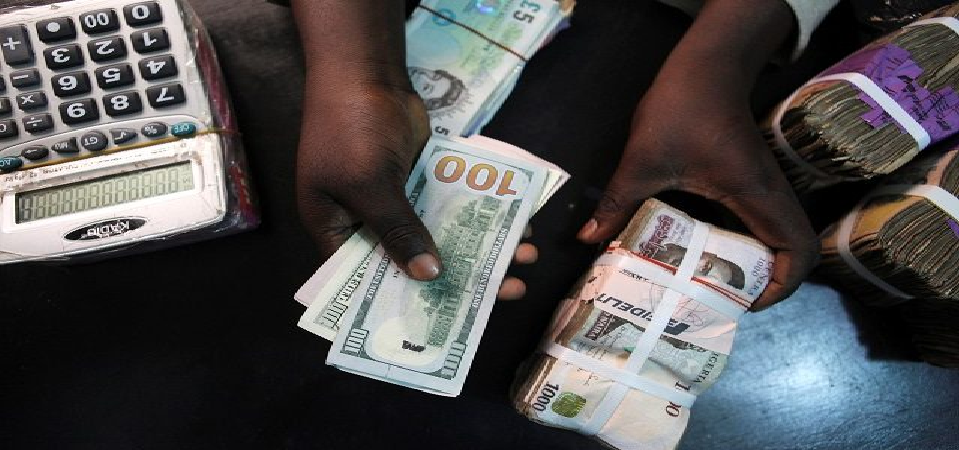
Yes, the CBN has revalued the Naira; now, it is N390 per 1USD officially. In the black market, it is hitting N500 per 1USD. It is becoming exceedingly challenging for companies which do not have something they can do to earn forex to bring in necessary raw materials from outside the country.

My understanding is that some building materials importers are now funding Nollywood movies exclusively for YouTube adverts which pay in US dollars. I am not sure how durable that strategy would be since Nollywood channels in YouTube are growing daily with no specific differentiation and leverageable moats. Yet, you cannot blame anyone for trying. I do hope we find a solution fast.

Nollywood Goes YouTube To Earn in US Dollars

*IMTSO stands for International Money Transfer Service Operators

EU and Britain Make New Rules to Curtail the Power of American Tech Giants in Europe

0

The European Union is making a new set of rules that will guide the use of data in Europe. The EU commissioners said the move stems from the need to make Europe “No. 1 data continent”, and to check the excesses of American tech giants, Google and Facebook.

The use of personal data and online privacy have been a bone of contention between EU regulators and American tech companies; and now, the bloc wants stricter rules to curb abusive use of private data and anti-competitive practices.

EU Internal Market Commissioner Thierry Breton and the bloc’s executive Vice President Margrethe Vestager, have outlined plans on how Europe’s individuals, businesses and governing bodies could better handle data, according to DW.

But the aim of this move is more about making Europe the “No.1 data continent” that will square it up with China and the United States, than it is about curtailing American tech giants’ monopolistic practices.

The new regulatory rules will operate outside the 2016 EU data privacy laws, though it doesn’t replace the old rules which would be consulted for data sharing when there is need. In a sense, it will serve as alternative model.

Breton and Vestager shed light on how the new model will function. The bloc will create “European data spaces” where businesses, governments and researchers could store and access “protected” information.

That concept anchored in an EU Digital Governance Act would be followed by a Digital Services Act (DSA) and a Digital Market Act (DMA).

Vestager wants the DSA to use designated platforms to report hate speech and counterfeit produce to European regulators and remove it. He said the framework will offer an alternative model to those operated by big tech platforms, adding that the giants would be required to disclose their algorithms used to recommend online content.

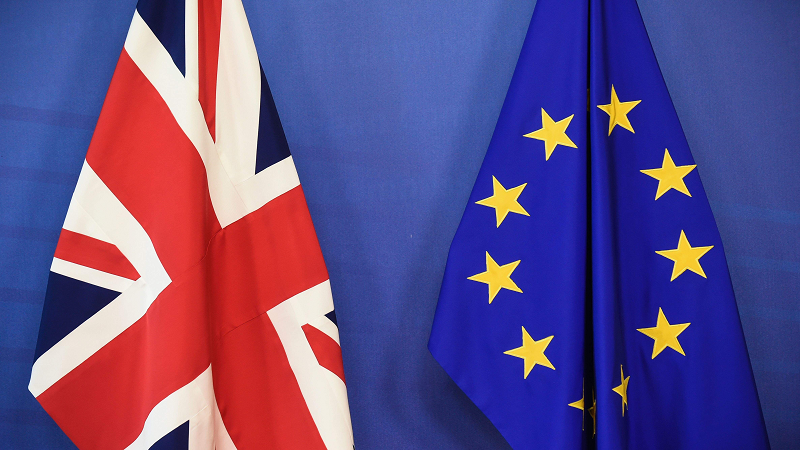
EU and UK flags

Breton said the Europe’s novel Digital Market Act would via quantitative and qualitative rules seek to curb unfair behavior by internet giants, and many small and middle sized companies will benefit.

While the new rules will significantly change existing protocols, Breton said the EU would comply with the rules of the World Trade Organization (WTO), though there is going to be strict measures of enforcement.

“To ensure that data can circulate, we need to have rules, which will build trust and confidence,” he said. Adding that there will be sanctions, but forcing offenders into “structural separation” will be a last resort.

As part of the new rules, big tech companies seeking acquisition might also be required to inform the European Commission of their intentions, said Breton.

The EU Commission estimates that the new internet rules, if implemented, could increase the annual economic value of Europe’s data sharing from €7 billion ($8.3 billion) to about €11 billion by 2028. But the Commission admits that it could take up to two years to implement as it requires negotiations with individual EU states and the European Parliament.

Outside the EU, Britain is walking the same terrain to create new rules that will ensure competitiveness in the tech industry. The new regime, which will ensure that the monopolistic practices of Facebook and Google are curtailed, will kick off next year from a unit within the existing Competition and Markets Authority (CMA).

Britain’s Digital Secretary Oliver Dowden said there was a growing consensus that the concentration of power in a small number of companies was curtailing growth, reducing innovation and having negative impacts on the people and businesses that rely on them. He added that “it’s time to address that and unleash a new age of tech growth”.

Reuters reported that the newly created Digital Markets Unit, which is expected to start work in April, could be given powers to suspend, block and reverse decisions made by technology firms and to impose financial penalties for non-compliance.

The government said under the new unit, companies will have to be more transparent about how they use consumer data and restrictions that make it hard to use rival platforms will be banned. It added that the rules will also support the news industry, rebalancing the relationship between publishers and platforms.

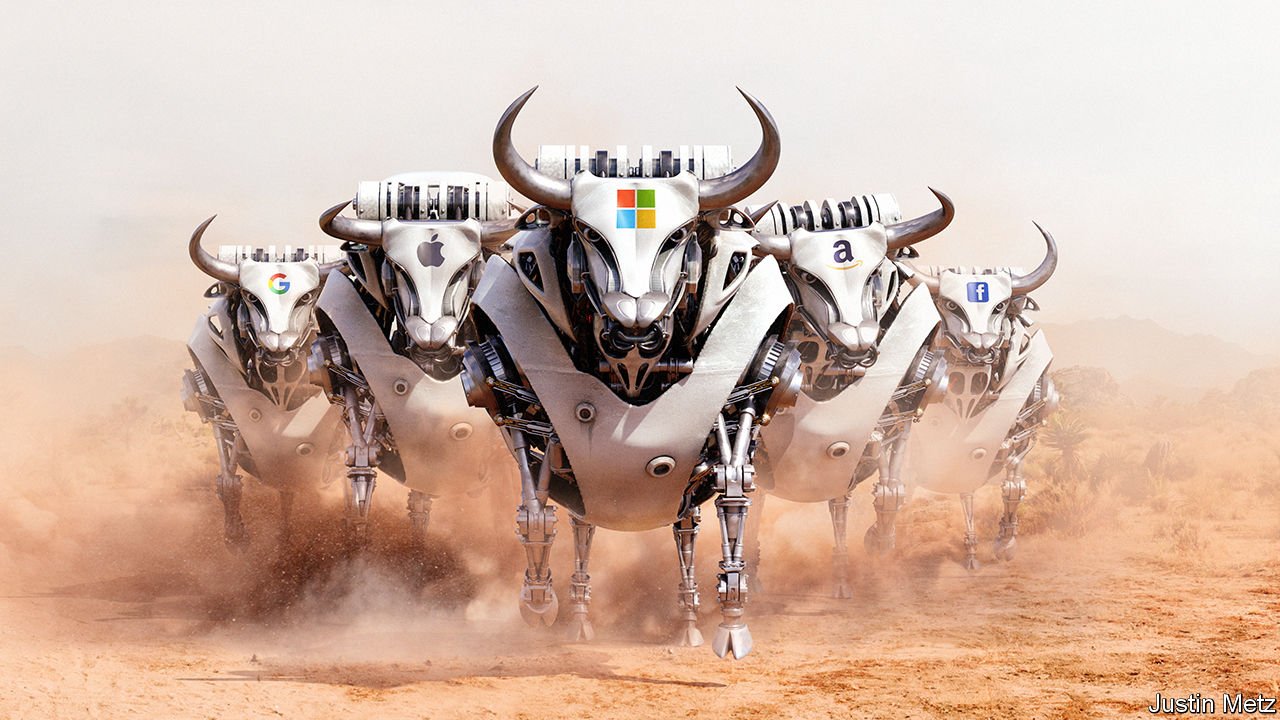
Google, Facebook, Apple and Amazon have been on and off with governments in Europe, over antitrust concerns. Google and Facebook have been particularly caught in the web of government’s attention, as the push to get ahead in digital advertising is spurring the companies to breach private data rules.

The CMA said Google and Facebook dominate digital advertising, accounting for around 80% of 14 billion pounds spent in Britain in 2019.

But the companies said they are ready to work with the British government and digital regulators on advertising, to give users more control of their data and the ads they are served.

5G and Mobile Internet – Tekedia Institute

0

It would be the best 5G and mobile internet course you will take for a very long time. Three industry experts are developing a course on “5G and Mobile Internet” for Tekedia Institute.

If you are not learning at the Tekedia Institute, you are missing a lot. Tekedia Institute: “to discover and make scholars, noble, bright and useful, in markets and governments”.

Register here and join us.

Alpha Mead Business Case – Tekedia Institute

0

It is ready – Alpha Mead Group business case at the Tekedia Institute. Alpha Mead Group is a real estate solutions company established to provide robust business support services to real estate investors or owners with interests in facilities management, real estate development and advisory, etc. Mutiu Iyanda, mMBA, ASM has a lot of experiences in this industry, and has written a brilliant business case on Alpha Mead. I edited it.

From our next edition, Tekedia is adding CaseWorks as part of empirical deepening of our training. Share your business cases for our learners and members; we’re documenting great companies in Africa via cases (inmail me)

Visit Tekedia Institute:  http://school.tekedia.com/