DD
MM
YYYY

PAGES

DD
MM
YYYY

spot_img

PAGES

Home Blog Page 6039

ASUU Strike: Nigerian Federal Government Needs to Divest from Tertiary Education- Elda Kehinde Samuel

1

Elda Kehinde Samuel is a Resident Policy Fellow at the Nigerian Global Affairs Council  (NIGAC). He shares his opinion on how the frictions in the Nigerian education such as its inability to produce employable graduates, infrastructural deficit, funding and incessant industrial conflicts in the sector. Here are his thoughts….

An Economics Undergraduate studying in a University in New York pays about between 4.8 – 6.5 Million Naira when converted to our Local Currency per annum as School Fees. In a private University in Nigeria, an Economics Undergraduate pays between 800k – 1 Million Naira as School Fees per annum. Bring that down to an Undergraduate in a Federal University who pays an average of 30k per annum as School Fees as a returning Undergraduate. If you attend a State University, you might probably pay between 70 – 100k per annum as school fees. Now, looking at the difference, can we see why Nigerian Universities can never ever compete with their counterparts across the globe or even in Africa?

To make matters worse, ASUU has taken on an Industrial Action (Since March 2020) with no end in sight, our Undergraduates in Nigeria have effectively spent one full year at home doing and achieving nothing – even with the forced lockdown of our Universities, Nigeria was and has never been equipped to deliver learning to our undergraduate community using virtual tools or platforms. What’s the way forward for Nigeria? The Federal Government needs to divert from our Tertiary Educational System and set up a quasi Public/Private Partnership System where it owns a 30% Stake in our Universities then OPEN up the Industry for Private Sector Players to establish private Universities through the length and breadth of this Nation.

I believe that our Universities should charge a minimum of 1 Million Naira per annum, Government 30% ownership stake should strictly focus on providing for Research and Innovation through an Innovation Fund managed by an Independent Board. The Federal Government of Nigeria through the Central Bank of Nigeria will then set-up a single-digit interest percentage Education Fund that enables prospective Undergraduates to access Student Loans whilst studying – part of the package these school fees covers is a brand new laptop, smartphone, and unlimited access to Internet whilst on campus. Students will also be given accommodation with two students per room and this room comes furnished with mattresses, microwave, and small fridge. The School Fees also comes with daily nutritious feeding (Breakfast, Lunch, and Dinner) – Enabling these basics will reduce the incidence of student-led prostitution or cheating, I didn’t say stop but reduce drastically as everyone will be able to focus primarily on why they were admitted in the first place.

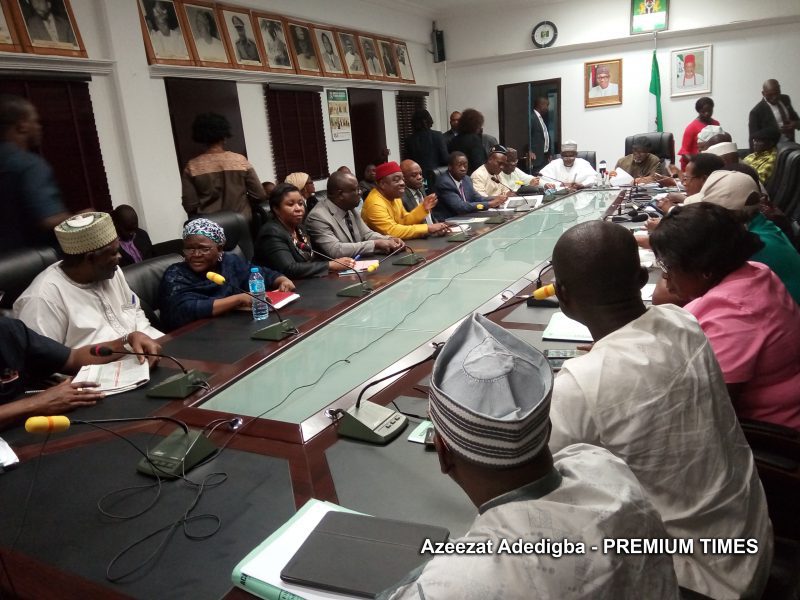
Members of ASUU

The loan package should also provide for a minimum monthly allowance for those whose parents can’t afford it – these monies will go a long in ensuring that Nigerians can have a stable academic life, yes, it is a loan, they pay back upon graduation and the single-digit interest rate will begin to count immediately they graduate, they also get to enjoy a 3 years moratorium before they begin to pay back the loan (this is to ensure that those without a job immediately can afford to stabilize whilst the moratorium also covers folks who want to further their education with a Masters or Ph.D., they can do so immediately and still access further student loans.

An average of 1.9 Million Students wrote the University Entrance Exam in 2019, less than 650,000 earned admission not because the other failed but because the system can only take such numbers in – imagine, if our Universities are quasi-privatized and quasi-owned by the private and public sector, it means an average state can have up to 10 Universities or more dependent on the attraction put in place by the State Government.

Let’s talk about the economic advantage of running a quasi-system of Ownership. At a minimum of 1 million Naira as school fees, our Universities will become centers of innovation as they have the funds to go through the entire life-cycle needed for Innovation to strive (Research, Build (Develop), Prototype, Test, Pilot, and Scale)- imagine the ideas and solutions our Undergraduates will churn out because the system has the tools and wherewithal to support their innovations. Companies both nationally and globally will begin to pay more attention.

Our Academics will better compensated as Professors and Senior Academics can negotiate their terms of service based on their perceived VALUE, they can also shift their services to other tertiary institutions, the system can also allow for an Academic with years of built-up expertise to teach in a maximum of 3 schools thereby earning extra income for years of experience, number of innovation and likely patents attached to their names.

We will never ever see an Industrial Action again although the system will encourage Unionism and active engagement in an organized format with the stakeholders so that issues are resolved quickly and efficiently.

Imagine the number of vendors that would be engaged and the number of folks they will employ (Cleaners, Gardeners, Security, Caterers, Electricians, Plumbers, Mechanics etc) – all these folks will be guaranteed a job and money gets to flow in the economy because people are engaged and paid regularly.

Even our undergraduates will begin to think from an entrepreneurial point of view because the system has been tweaked in that regards – we can not continue to operate an educational system that is taking the nation backward moreover freeing up billions of Naira on salaries and operational cost will enable our Federal Government concentrate on funding Innovation through its Independent Fund Board.

The Federal Government needs to also think of the benefits by way of tax that this model will bring to its purse – we are also convinced that a University system tweaked to work as a Private Entity will create jobs and opportunities for our teeming graduates but more importantly, it will create Innovators cum Entrepreneurs who also create jobs and employ people.

Whilst the very thought of a student loan might seem scary, the truth is that our tertiary educational system is at a precipice at the moment and we have to advocate for deep-rooted reforms that starts with our Federal Government divesting in a major way from the running of our University Education.

Along the line of these thoughts, our Federal Government can begin to sell and convert of its Polytechnics and Colleges of Education to these private entities, anyone seeking for specialized education as a Teacher or Technical Person can easily assess the newly set-up education and technical centres across our quasi-owned private-public universities – the current model of polytechnic and college of education system we have has outlived its purpose and they are no longer centres of excellence.Lastly, let’s imagine the impact having almost 20 private/public Universities in Lagos with an average of 30,000 students will have on the economy of that town or local government – the economic benefit will be massive and lifelong.

Our Private Universities and the standards they have set should be an eye-opener that this can work – it will impact on the quality of graduates Nigeria churns out. Will our Government ever summon the political will to make this happen?


Amazon’s Jeff Bezos Co-invests $30 Million in Chipper Cash, Founded by Uganda’s Ham and Ghana’s Maijid

0

It is raining capital in African fintech. Chipper Cash, founded by Ugandan Ham Serunjogi and Ghanaian Maijid Moujaled has raised $30 million funding led by Ribbit Capital with participation of Bezos Expeditions — the personal VC fund of Amazon CEO Jeff Bezos. Chipper Cash  was founded in San Francisco in 2018 and offers mobile-based, no fee, P2P payment services in seven countries: Ghana, Uganda, Nigeria, Tanzania, Rwanda, South Africa and Kenya, TechCrunch reports.

Parallel to its P2P app, the startup also runs Chipper Checkout — a merchant-focused, fee-based payment product that generates the revenue to support Chipper Cash’s free mobile-money business. The company has scaled to 3 million users on its platform and processes an average of 80,000 transactions daily. In June 2020, Chipper Cash reached a monthly payments value of $100 million, according to CEO Ham Serunjogi

[…]

“We’ll always be a P2P financial transfer platform at our core. But we’ve had demand from our users to offer other value services…like purchasing cryptocurrency assets and making investments in stocks,” Serunjogi told TechCrunch on a call..

The African fintech space has been hot with global deals and investments. Recently, Paystack, a paytech in Nigeria, was sold to Stripe for more than $200 million.

This was my entry when Chipper Cash raised its last funding.

It began in London with Circle which was backed by Goldman Sachs. Yes, Circle had made it possible for people to wire money from U.S. to England at zero fee and without erosion on exchange rate. Circle symbolized my near-zero marginal cost redesign where transaction and distribution costs become ZERO. When that happens, products can be offered for free. Here, it was international remittance.

But while we were thinking, it seems Nigerians could begin to enjoy that also. U.S.-based Chipper Cash, a startup which offers instant cross-border mobile money transfers in Africa via text messaging, is coming to town, to make zero-free cross border payment in Nigeria possible.

Why Employees and Clients Won’t Recommend Your Company to New Clients

2

How do you deal with volatile employees and clients? In the last decade, this has been the question of managers and business development executives. From manufacturing industry to service industry, employees and clients are pushing for better value as businesses capture value too. As the agitation continues, businesses are also feeling the impact of macro and micro economic changes due to constant policy change of government and unexpected artificial and natural disruptions.

Employees want tasks and responsibilities that would give them opportunity to have sustainable work-life balance. Business owners and managers believe that as governments become more unpredictable in the area of policy and laws making there is a need for having employees that can multitask and deliver superior value. In our experience, to the employees, multitasking is not an issue. The issue lies with the fact that career progression is slowing in addition to poor remuneration and condition of working.

Clearly, there is a tug of war going on in the corporate world.

In this piece, our analyst examines how the issues raised by employees impacted their expected role of being marketers, by recommending products and services to prospective clients and managing existing ones sustainably. We considered the issues within employees’ feelings and customers’ expressions.

Core Issues

From our data, we found that employees do not like constant change of directors of their units or departments. A number of them believe that this is contributing to poor group think as the new directors’ personal values and norms shape collective working culture. For example, understanding the leadership style of the new directors is always difficult.

Since business owners expect the managers to deliver what they promised at the beginning of every quarter, employees do not like the increase in workload considered by the directors as one of the ways of realising the stated goals by quarter. “…unrealistic expectations on timeline mean you are expected to work ridiculous hours. No such thing as work life balance at this place with a very ‘old school’ mentality of how a working environment operates. A very hard nose management approach from the top down, reluctant to change and drag itself to 2019!”

In this case, managers need to work out a template that would ensure attainment of productivity and profitability objectives. Such template should have appropriate social interaction, working relationship, flexible nature of work and supportive attitude elements. Positive physical and psychological work environment should also be at the heart of every manager, especially manager that leads a team with low sense of belonging.

Despite the negative feelings of the employees, some customers are still found to be contended with the kind of services they have received. They were satisfied with the behaviour of the employees and the quality of the homes they have bought. However, they decried the bad behaviour of some employees and customer service process.

These insights have reestablished the existing understanding that when employees are satisfied with their companies, the outcome would be high productivity and customer loyalty. However, when they are not happy with the systems, structure and processes, the turnover would be increased and business unit profitability would be dipped. Solutions to this problem include work-life balance and enhanced morale through proper remuneration and other benefits.

What is at Stake?

One percent of happiness of the employees decreases customers’ angriness by 15.2%. In spite of this result, one percent of the employees’ happiness reduces customers’ happiness by 26.4%. This could be explained within the context of the specific issues both the employees and customers experienced. It could also be understood in the context that level of happiness among the employees is low, below the expected average of 50%. Analysis also reveals that one percent of employees’ happiness increases customers’ sadness by 11%. Taking this from the perspective of employees’ sadness and customers’ happiness, analysis suggests a 13.6% increase. This could also be understood within the earlier position that the employees’ level of happiness is low. Analysis further establishes that the sadness of the employees reduces employees’ angriness by 6.5%, while the sadness of the two actors (employees and customers) resonated negatively (-9.4%), which also indicates a 9.4% reduction in customers’ sadness.

These insights indicate that managers need to work with the emotional intelligence of the employees because customers do give specific attention to the emotions of real estate agents or sales personnel. In addition to ensuring emotional intelligence, employees should be encouraged to share new customer engagement and relationship ideas in groups.

Recommending Brand

In our data, 88% of more than 100 customers did not recommend products and services of the company we studied to new customers, most importantly their colleagues and family members. This is hinged with the way employees managed them. The poor customer relationship management is an off-shoot of the poor treatment of employees by the business and functional managers. Our analysis suggests that employees with high commitment to the realisation of the company’s strategic goals and objectives felt disappointed and withdraw their loyalty when it was needed the most.

Strategic Options

The key solution to the issues is a resilient transformational-transactional leadership system. This is the appropriate system at a time employees and existing clients are grumbling due to internal and external factors. Addressing issues within job requirement, role expectations, and group and corporate’s norms should be the strategic work of every manager at the business and functional levels. At every stage of project execution or service delivery, employees and existing customers should be informed of shared value capturing.

Central Bank of Nigeria Asks Banks To Grant $5.2 Million Loans to Youth Agro-businesses

1

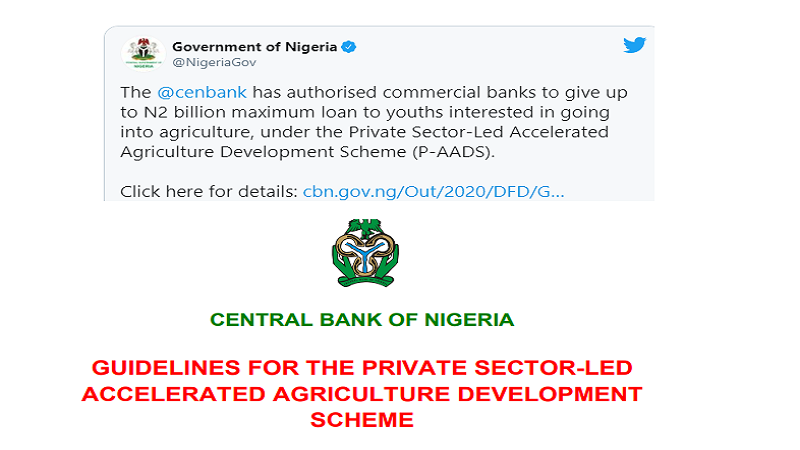
The Central Bank of Nigeria (CBN), in line with its developmental mandate, continues to develop and introduce development finance programmes and schemes to expand access to finance to critical sectors and segments of the economy to achieve food self-sufficiency as well as diversification. Accordingly, the apex bank has authorized commercial banks to give up to N2 billion (about $5.2 million) as loans to youths interested in going into agriculture, under the Private Sector-Led Accelerated Agriculture Development Scheme (P-AADS).

For more on this initiative, click here.

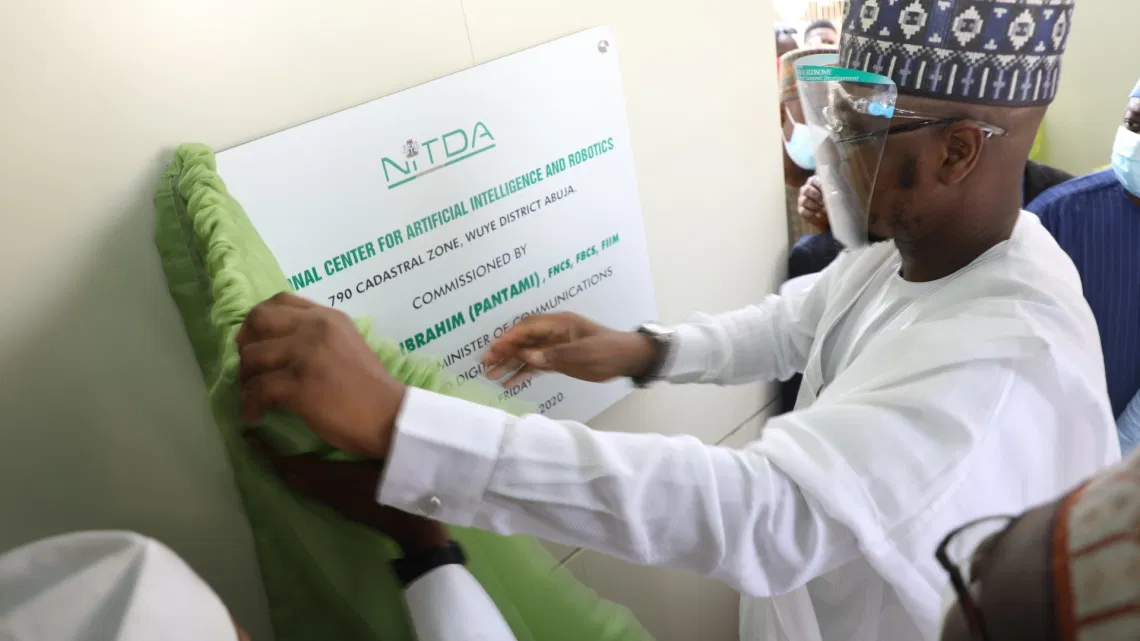
The Nigeria’s National Centre for Artificial Intelligence and Robotics

3

The Minister of Communications and Digital Economy, Dr Isa Pantami, has inaugurated a National Centre for Artificial Intelligence and Robotics. The plan is to anchor Nigeria’s Fourth Industrial Revolution participation through the center. As always, it comes down to Innovation = Invention + commercialization. We have been thinking, time for the market. Good luck, Nigeria.