DD
MM
YYYY

PAGES

DD
MM
YYYY

spot_img

PAGES

Home Blog Page 607

How To Avoid Prosecution By Trump’s DOJ – According to A Company that Escaped It

0

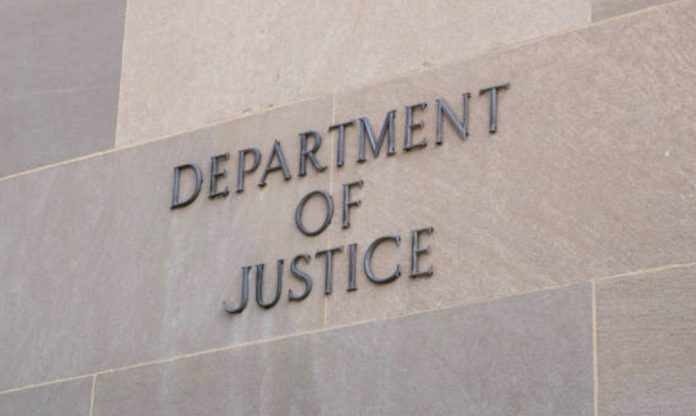
In Washington, the Justice Department has sent a strong signal that under the Trump administration, corporations, unlike individual executives, should not be the prime target of federal prosecutions. Officials have said so in speeches and written it into policy documents.

Yet despite the rhetoric, only a select few companies have received the prize every white-collar defense lawyer covets: a declination letter, according to a report by Business Insider.

These letters — formal notices that prosecutors will not bring charges — are as rare as they are valuable. They represent the cleanest outcome for a corporation caught in the crosshairs of federal investigators. And in recent years, just two companies have secured them.

One of them is the Universities Space Research Association (USRA), a NASA contractor that manages aviation and space research for a consortium of U.S. universities. The Justice Department, in April, declined to prosecute the nonprofit after one of its employees secretly sold sensitive U.S. Army aviation software to a Chinese university.

The letter — addressed to USRA’s attorney, Clark Kent Ervin of Squire Patton Boggs — lauded the organization for “exceptional and proactive cooperation.” It highlighted steps the nonprofit took: disclosing the misconduct, firing the employee responsible, tightening compliance systems, and fully sharing information with investigators.

For USRA, it was the difference between corporate ruin and a clean slate. For the Justice Department, it was a test case of how the new self-disclosure policy works.

The Secret Sale That Sparked the Case

The saga began in 2017, when Jonathan Soong, a USRA software sales manager, received an email that would alter his life.

Soong’s job was to handle sales of advanced flight software under a U.S. Army contract. The software, used by universities and defense contractors for aeronautical research, was tightly controlled. One institution on the government’s blacklist was Beihang University in Beijing, cited by U.S. officials for its rocket and drone development linked to Chinese military programs.

Soong initially flagged the risks, telling the Beihang representative he could not sell to them. But prosecutors said the Chinese university found a workaround: a proxy company, Beijing Rainbow Technical Development Ltd., that acted as a buyer on its behalf.

Soong approved the deal, and Beihang gained access to the sensitive software. For years, the transaction went unnoticed — until USRA administrators stumbled on it during a compliance review tied to a NASA contract.

An internal investigation followed. When pressed, Soong admitted to the scheme, confessed to pocketing proceeds from other improper sales, and was swiftly dismissed.

“We determined that he was a lone wolf, a rogue employee,” Ervin told BI. “The company itself was not involved in this.”

USRA refunded the government, improved its compliance systems, and disclosed everything to prosecutors. Soong, meanwhile, pleaded guilty to criminal charges, repaid $161,000, and in April 2023 was sentenced by a San Francisco judge to 20 months in prison.

Why USRA Was Spared

Ervin argued that transparency made the difference. “The USRA had nothing to hide,” he said. “The company took swift and proactive measures … and deserved the distinction.”

The Justice Department agreed, issuing the declination letter in tandem with a press release. It credited USRA for firing Soong, disclosing the misconduct voluntarily, and providing exhaustive cooperation during the 18-month internal review.

For white-collar lawyers, it was proof that the new DOJ playbook could work in practice. Companies that voluntarily self-report misconduct, investigate thoroughly, and implement reforms may walk away without prosecution.

Declination Letters: Rare and Precious

In the broader corporate legal world, declination letters are exceedingly rare. In 2024, the Justice Department issued just five, according to its own records — a tiny number considering the volume of corporate investigations.

The USRA was one of only two to receive such treatment under the current Trump administration. The other was Liberty Mutual, which last August disclosed that employees in India bribed public officials. The insurer agreed to disgorge $4.7 million in illicit profits, cooperated fully, and received its own declination.

“We welcome this conclusion,” the company said, calling the outcome a validation of its compliance culture.

The policy shift has been codified. In June, Matthew Galeotti, head of the DOJ’s criminal division, gave a speech unveiling a new chapter in the agency’s manual. The section includes a flowchart outlining exactly how corporations can qualify for declination. The formula: voluntary disclosure, internal remediation, and sustained cooperation.

“This policy also encourages companies to invest in compliance programs, which helps deter misconduct from happening in the first place,” Galeotti said, framing the approach as a public good.

Saving Your Company Prosecution

For corporations, the stakes of DOJ investigations remain high, as a prosecution can destroy a business. Even non-prosecution agreements carry reputational damage. Declination letters, by contrast, offer certainty that the government believes the company itself is clean.

The USRA case demonstrates both the risks of rogue employees and the potential rewards of transparency.

“What the company did next after we discovered this made all the difference in the government’s decision not to prosecute it,” Ervin said.

The lesson from Washington is thus that under Trump-era policy, when misconduct emerges, running to the Justice Department — not away from it — may be the only way out.


What Ambitious Startups Can Learn from the NFL’s International Growth Strategy

0

The new NFL season is about to get underway, and while most of the action and fandom are based in the United States, a significant portion of the NFL is now “international.” Seven games will be played in other countries across the 2025 season, including places like Spain and Ireland for the first time. They are almost guaranteed to be sold out (some already are).

While it might seem like a given that every sports fan in, say, Ireland will want a ticket for the game, it’s actually the culmination of a long, well-thought-out strategy that has taken years, decades, even to pull off. We’d argue that the NFL is light-years ahead of other leagues, including the NBA, in expanding its international footprint, and we believe that there are valuable lessons in its strategy that can be applied to any startup or established business seeking growth in new markets.

Patience Pays Off

One of the interesting characteristics of the NFL’s strategy was taking a long-term approach. People point to the sold-out stadia for the London Games (three per year in the fall) as the hottest ticket in town, but it took years of strategy to reach that point, partnering with broadcasters, doing deals with local stakeholders (two games are played at the Tottenham Hotspur Stadium), and building up a presence in other ways. As to the latter, NFL academies are springing up across many different countries. They won’t produce the next Tom Brady tomorrow, but they establish grassroots connections with local fans.

It’s Not Just About the Games

Hosting a game in London or Berlin a couple of times a year is only the focal point of a wider campaign to drive fan interest. After the Super Bowl, fans will be discussing NFL playoff odds for the new season, the Draft, potential trades, and other topics, but it’s about keeping them engaged via social media and other content, such as movies, previews, podcasts, and more. The NFL has done an excellent job of soft marketing in this way, often tailoring its content to resonate with local audiences.

Spheres of Influence

It is quite interesting to see that the NFL’s 32 teams have agreed to have specific target markets, with deals in place for broadcasting, among other things. For instance, the Rams have Australia, the Jaguars have London. Some territories will have multiple teams, whereas others will have just one. However, it appears that a gentleman’s agreement exists among rival teams, allowing them to focus on specific regions without interference from others. It all comes from a recognition that there is an enormous potential market out there, more than enough to go around.

The Power of Socials

The NFL does, of course, have a massive social media presence, but it’s not just about posting content from @NFL on X. The league maintains a network of social media accounts across various markets, posting content in multiple languages and adjusting it as needed to have a greater impact in specific markets. What’s more, it has partnered with local media to both curate and deliver its content.

Local Adjustments Count

Sometimes, it’s the small things that matter. If you visit the NFL’s website while in the UK, for instance, game times are listed in GMT. Content produced by the NFL is also often written in British English. While most fans would understand the US vernacular, the small touches matter; bringing in local references makes a difference with a target market, fostering a connection between the fans and the product.

Seeing the Bigger Picture

The NFL and other sports leagues used to zealously attempt to remove content from social media, viewing it as a means of losing revenue when the content is not behind a subscription paywall. Yet, now the reverse is true, and fans can get video content of in-game plays on social media minutes after they happen. This matters for international fans, some of whom might not have access to traditional television broadcasts for the games.

The Obi Cubana Locality Playbook in Business [video]

0

One of the most “craziest” CEOs in America in recent memory was the CEO of T-Mobile. John Legere was annoyingly funny. But check his numbers: he rebuilt T-Mobile and redesigned the US telecommunication market. The man will run crazy in front of hotels, attracting attention, just to get local TVs to cover his brand. He pioneered no-contract mobile plans, and did many things that changed how AT&T and Verizon, the industry leaders, engaged with customers.

In Nigeria, Obi Cubana deserves case studies in our business schools. There are many things about his marketing playbook that companies can adopt. His team  went to Scotland and wowed the company board to seal the exclusivity of products in Nigeria. They put on a show and the Scottish press recorded their presence; they brought the deal home.

As you watch this video, think how a company board in Scotland will feel about the readiness of a Nigerian company it wants to do business with. In Harvard Business Review, I wrote that the “The Best Global Leaders are Local Leaders” because every business is local. Yes, demonstrating that native-locality will open doors as you work to reduce inertia to close business deals.

Be more local in your strategy. Do not put a price on your website in USD when you are selling to Nigerians. And do not convert USD with whatever exchange rate they’re using in CBN. Why do we ask learners to pay N120k for Tekedia Mini-MBA when those paying in USD pay $170? Every business is local, and the more you localize, the higher your chance to capture value!

Airtable CEO Howie Liu urges employees to cancel meetings and ‘play’ with AI

0

Airtable CEO Howie Liu is making an unusual demand of his staff: take more time off work—at least from meetings—and dedicate it to playing with artificial intelligence.

In a recent episode of Lenny’s Podcast released Sunday and published by Business Insider, Liu, 36, said he has been actively encouraging Airtable employees to experiment with AI, not just as a tool for productivity, but as a way to reshape the company’s long-term strategy.

“If you want to cancel all your meetings for a day or for an entire week and just go play around with every AI product that you think could be relevant to Airtable, go do it. Period,” Liu said. “That’s the most important thing. Play. Experimentation.”

Liu made clear on the podcast that his approach is not rhetorical. He described himself as Airtable’s most dedicated and, in his words, “intentionally wasteful” user of Airtable AI, the company’s own service.

“I take pride in being the No. 1 most expensive in inference-cost user of Airtable AI,” Liu said. He noted that he was not just the top user within his own company, but “globally across all our customers.”

For Liu, that “waste” is part of the point. He admitted to spending hundreds of dollars at a time on inference costs—AI computations—just to analyze sales call transcripts. To him, the exercise is far from frivolous.

“Hundreds of dollars spent on this exercise is trivial compared to the potential strategic value of having better insights,” Liu explained. “That’s invaluable, right? You could pay a consulting firm literally millions of dollars to get that quality of work.”

The culture he is trying to instill at Airtable mirrors a broader movement among tech CEOs to normalize AI as a routine part of everyday work. Duolingo CEO Luis von Ahn recently revealed that the language learning app organizes weekly AI experiments, cheekily branded “f-r-A-I-days,” where teams spend every Friday morning testing new ways to use AI for efficiency.

The approach reflects a growing recognition in Silicon Valley that AI adoption requires more than occasional pilot projects. Instead, it demands immersion, experimentation, and sometimes deliberate inefficiency—an argument Liu appears determined to embody.

Liu’s commitment to AI exploration comes at a pivotal moment for Airtable itself. He cofounded the company in 2013, initially as a spreadsheet-style application, but in June, Airtable relaunched as what Liu calls a “vibe coding platform.” The company, which employs over 700 people and was valued at nearly $12 billion in December 2021 according to PitchBook, is betting its future on becoming an “AI-native app platform.”

In a statement at the time of the relaunch, Liu argued that AI chat interfaces like ChatGPT may be effective for small, one-off tasks, but scaling AI in organizations requires something more structured.

“This is the real unlock,” Liu said. “AI chat interactions are good for one-off requests, but you need an AI app to scale AI work.”

He pointed to the rise of companies like Lovable and Cursor as evidence that vibe coding—the ability to build apps and workflows through conversational AI—is emerging as the “killer application” of the technology. For Airtable, that shift represents both a threat and an opportunity.

Liu, by encouraging his workforce to experiment—free from the strictures of calendars and deadlines— appears to be betting that play may not just inspire innovation but also help Airtable stake its claim in an increasingly crowded AI-driven software market.

SEC Nigeria Unveils Redesigned Website Amid Crackdown on Fraudulent Schemes

0
SEC Nigeria

The Securities and Exchange Commission (SEC) Nigeria has officially launched its newly redesigned website, a development the regulator describes as a key step toward enhancing digital engagement, boosting regulatory transparency, and strengthening investor protection.

The announcement, made on Monday, underscored the Commission’s commitment to modernizing its operations at a time when Nigeria’s financial markets are grappling with rising cases of unregistered investment promoters exploiting the appetite of citizens for high returns.

According to the SEC, the upgraded platform introduces a sleek, mobile-responsive design, improved navigation, and consolidated resources tailored to investors, market operators, and the wider public. The redesign aims to streamline user experience while reinforcing the Commission’s watchdog role in Nigeria’s capital markets.

“This digital advancement is a significant step in building a more transparent and accessible Commission,” said SEC Director-General Emomotimi Agama. “It enhances our engagement with the capital market and the investing public, and reflects our dedication to continuous improvement in service delivery and communication.”

Key Features of the New Website

The revamped platform comes with:

  • Intuitive Navigation: A simplified menu structure for faster access to key information.
  • Consolidated Resources: Regulatory guidelines, publications, and investor alerts are logically grouped and easier to locate.
  • Mobile Optimization: A responsive design that ensures seamless access across desktop and mobile devices.

Samiya Usman, Executive Commissioner for Corporate Services, stressed that the redesign is not merely cosmetic.

“By simplifying access and logically organizing content, we have created a powerful platform that supports our mission to develop and regulate a fair, efficient, and transparent capital market,” she said.

The SEC has encouraged stakeholders to explore the new platform and utilize its features for accessing regulatory updates, market news, and investor services.

Website Launch Tied to Ponzi Crackdown

The website launch comes amid the Commission’s aggressive clampdown on fraudulent investment promoters exploiting Nigerians’ appetite for high returns.

In 2025 alone, the SEC has flagged multiple platforms for operating illegal schemes without proper registration or regulatory approval. Among the entities identified are:

  • GVEST Global: Recently labeled a Ponzi scheme by the SEC.
  • Pocket Option: Marketed as an online investment adviser/fund manager.
  • Forsman & Bodenfors LTD (F&B): Claims affiliation with a Swedish advertising firm.
  • Crypto Bridge Exchange (CBEX): Involved in massive investor losses.
  • Sapphire Scents Limited: Promotes unregistered investment schemes under the guise of fund management.

The SEC reiterated that these platforms are not authorized to solicit funds or offer investment services in Nigeria.

“Investors engaging with these entities do so at their own risk,” the Commission warned.

This crackdown aligns with the SEC’s broader strategy to enhance market integrity and protect investors, as outlined in the newly enacted Investments and Securities Act (ISA) 2025. The Act expands the Commission’s jurisdiction over Ponzi schemes and strengthens enforcement mechanisms to hold perpetrators accountable.

A History of Ponzi Schemes in Nigeria

Nigeria has a long and painful history with Ponzi schemes, which explains why the SEC is ramping up enforcement today. The most infamous case remains the MMM Nigeria scheme, which collapsed in late 2016 after attracting millions of Nigerians with promises of 30% monthly returns. The crash wiped out billions in savings and left a generation of investors devastated.

Before and after MMM, several other scams thrived. Platforms like Nospecto Oil & Gas, Wealth Solution, and MBA Forex and Capital Investment Limited lured Nigerians with unrealistic returns, only to collapse and leave victims stranded. These schemes preyed on widespread economic hardship, weak regulatory oversight, and the lure of quick profits, making ordinary citizens easy targets.

The SEC has increasingly leaned on digital communication to raise investor awareness, warning the public against unregistered schemes that continue to mushroom across the country.

Stronger Legal Backing Under ISA 2025

The crackdown aligns with the SEC’s broader strategy to safeguard market integrity and rebuild investor trust. Under the newly enacted Investments and Securities Act (ISA) 2025, the Commission’s jurisdiction has been expanded to cover Ponzi schemes and other unregulated investment channels.

The law also strengthens enforcement mechanisms, giving regulators more power to investigate, prosecute, and hold perpetrators accountable.

Some leaders believe that the redesigned website is more than just a facelift. It signals the SEC’s recognition that effective regulation in today’s digital economy requires modern tools—not only to communicate policy but also to track suspicious financial activity, engage with investors, and counter misleading narratives pushed by fraudulent operators.