DD
MM
YYYY

PAGES

DD
MM
YYYY

spot_img

PAGES

Home Blog Page 6078

Nigeria Needs A New Beat

2

One of the best gifts Diamond Bank gave me in the training school was a book titled “The Richest Man in Babylon” by George Clason. I had read Napoleon Hill’s “Think and Grow Rich” and the “Power of Positive Thinking” by Norman Peale while in college. And in secondary school, I read Pita Nwana’s “Omenuko”. Later while in the bank, I read “Acres of Diamonds” by Russell Conwell.

In all these books, I noticed one thing: police, guns and tough talks do not provide internal security in nations but ideas by the best who can find economic opportunities, and unlock them, for the wealth of nations. Take it to Nigeria, as the nation lies in ruins, with absolute breakdown of law and order, even the police have noticed that they cannot do anything.

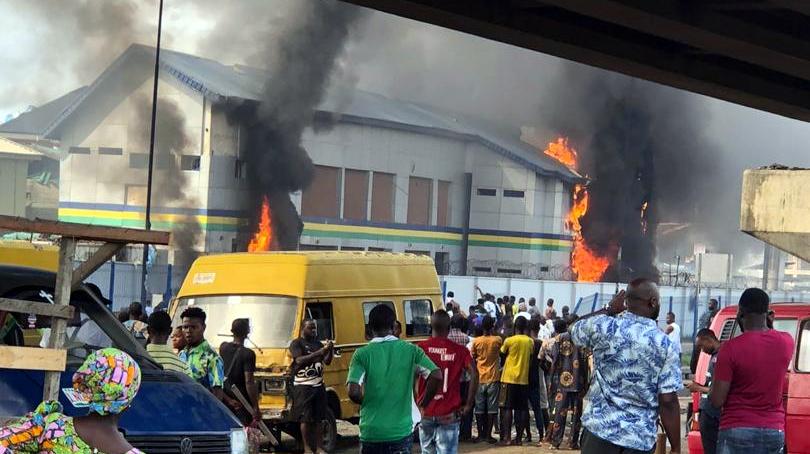
This is how Premium Times summed it: “The hoodlums, who carried out attacks in different parts of [Lagos], in the days following the #EndSARS protests seemed undisturbed by security agents, as they carried out arson, destruction of properties, and looting of valuables in the state. Within 48 hours, Tuesday and Wednesday, no fewer than 27 buildings, including police stations, media houses, government secretariats, and the court were attacked and left in ruins.”

The office of the Nigerian Ports Authority (NPA) in Lagos was also set ablaze by hoodlums on Wednesday. The dockyard at Apapa was attacked, valuable items were stolen by the hoodlums, and vehicles and other properties set ablaze. […]

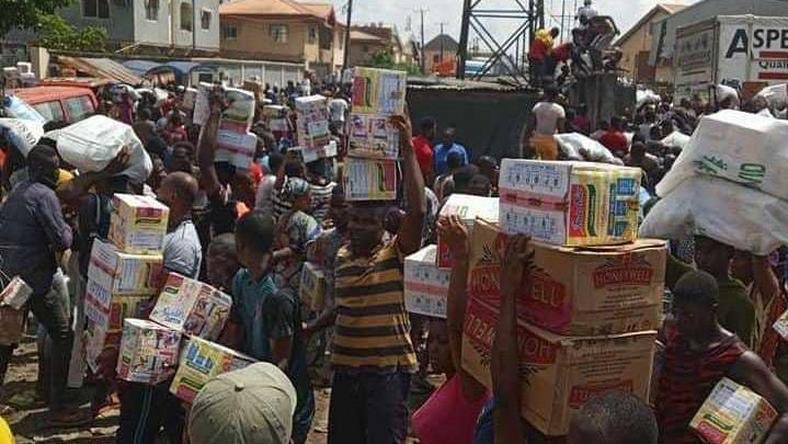
Popular malls and supermarkets in Lagos were also vandalised and looted by the hoodlums in operations which lasted till Thursday. Several shops were also broken into in many areas and goods carted away by the hoodlums.

Yes, the police were in siddon-look state because ideally the security from police is tangential, and we saw it in the last few days across Nigeria. You can secure against tens, but when thousands, the police fail. For the permanent security for that wealth in nations which Adam Smith postulated many decades ago, Nigeria needs to get back to build an economy that works for everyone.

The weakest ones among us define the strength of our nation. If we do not strengthen them, they will weaken any strength we think we have. Ask some senators how far? Those who used to bow to them, chased them into internal exiles from their homes!
Our leaders have work to do. We have tried many things, and I think it is time to examine if changing our economic architecture could advance the nation. Nigeria grew fairly well during the regional government structure when regions held power and were accountable to their people. But with the concentration of power in Abuja, regional comparative advantages froze and we became lazy. Is it time to return back to that old format which actually worked? Some have called it restructuring. For me, it is beyond that though!

Financially restructure Nigeria into 6 regional governments with only 6 governors: South South, South East, South West, North East, North Central, North West and the Federal Capital Territory. That means the South East will have one governor. All the present 5 states will collapse into one. From the SE State, there will be 5 senators representing it in Abuja. The House of Representatives will be 15, three from each of the present five states.

At the state level, for each of the present five states, the state house of assembly will present only nine representations in the state capital. In total, we will have 45 state house members. Phase out the political arm of the local government administration and move it into a ministry within the state. Through this, South East will save more than 40% on the present administrative costs. That money will go into developing the region. Those in other new states will do the same.

Our goal is to make sure that more resources translate into more development. That correlation can only happen if we have the right people in power. So, I want to see the states focus on manpower development and supreme accountability. By investing in attracting and retaining top minds in government, the states will make more progress.

How do we do that? We will begin from election. The regional state government under their own electoral umpire, different from INEC, must stipulate the maximum amount any politician can spend on primaries. At the main election, the state will also cap the spending. By making over-exceeding that limit a felony, money politics will dissolve to politics of ideas. We are already in the age of electronic banking; the state will track and ask the politicians to file paperwork.

And finally, no politician will give a gift to any voter that is more than N50. That will remove the bags of rice, vegetable oil, etc. Once we run these processes for two election cycles, you will see higher improvements in the quality of governance.

But without those core elements, restructuring will simply move corruption from Abuja to state capitals. Believe in Nigeria.

Uyo for Nigeria’s Texas on gas. Jos for Florida on tourism. Lagos for New York on banking. Yobe for Iowa on farming. Aba for Shenzhen on makers. And so forth.

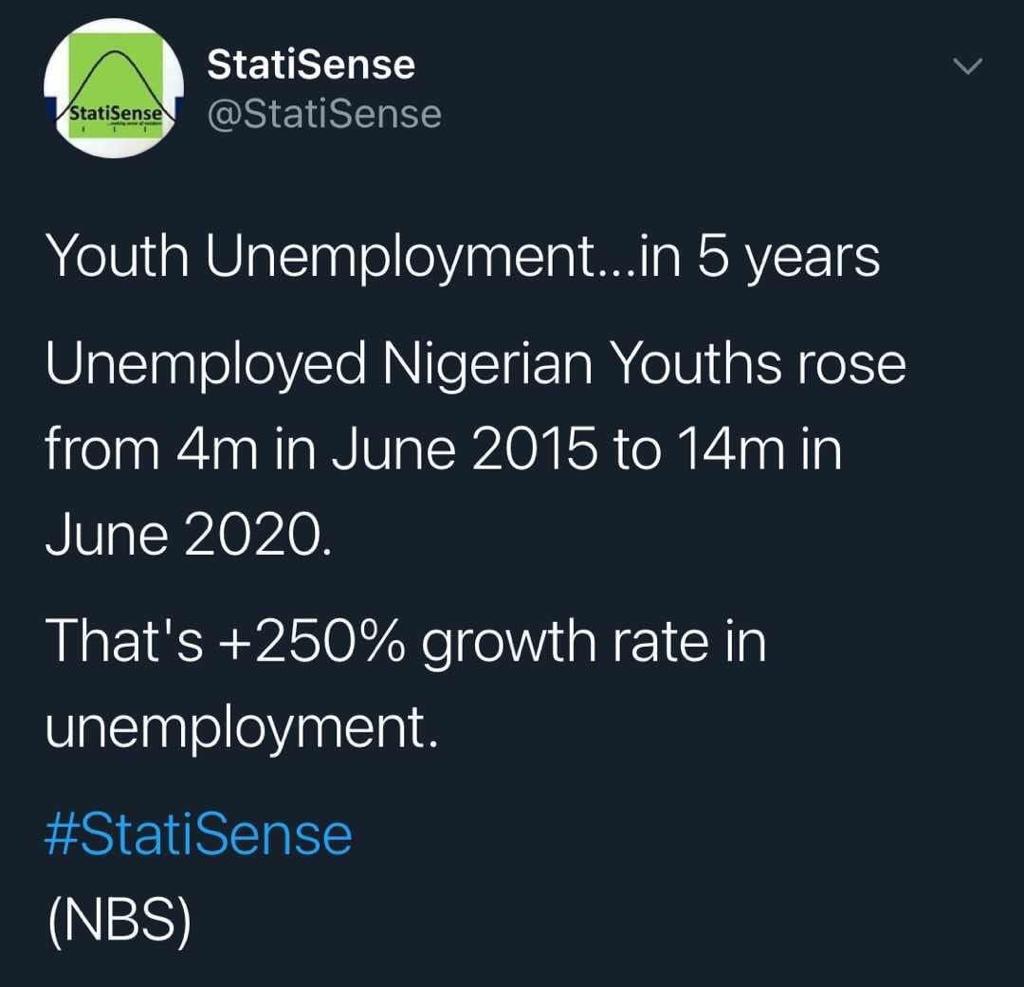
But today, what we have is Uyo, Jos, Lagos, Yobe, Aba, etc for Abuja. That has to change for Nigeria to rise. Yes, we need a new beat on how we do business in Nigeria if we want to unlock more opportunities across the nation, to get young people busy with productive endeavours.
Beyond Restructuring, How To Make Nigeria Great

The Buhari’s Covid-19 Palliatives and the Power of Food [Video]

2

Sudan’s fallen ruler, Omar al-Bashir, won many fights for three decades. He mastered the politics of the UN. He overcame America and South Sudan. He triumphed over the IMF and World Bank. He fought rebels, friends and enemies – and won. But at the end, he fell because of BREAD. Yes, bread – so simple and harmless – brought down one of the last surviving yoyo men of Africa.

During the peak of Covid-19, we were all here chronicling how money men and women were dropping money like bread labels to support the governments to feed some Nigerian citizens. And the government was also announcing tons of money to support Nigerians and small businesses. Typically, once in a while, I had asked here: who had benefited from those funds?

Except some political jobbers who wrote to me privately, claiming that they received some funds from the government, most small businesses did not receive anything or refused to acknowledge publicly. Yes, from all angles, the support did not reach the destinations.

But it does seem that I was right: the website for the N75 billion fund sharing just went up this month. And the distribution of the fund is yet to begin. Scale this experience across state capitals, you will get the idea why the citizens are frustrated: the goodies have not reached them even when the hunger in the land has grown at an exponential rate. Why should it take this long for free resources given to the government in March to reach citizens in October?

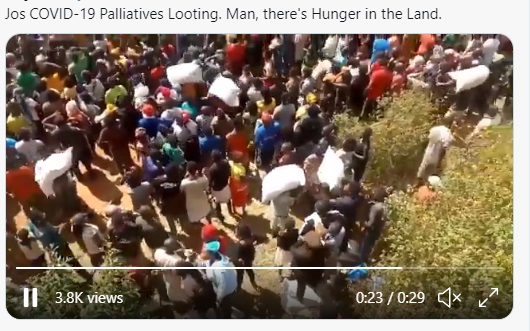
Mr. President, you have a real challenge before you: if you do not manage all those vapor promises well, your government could be in trouble. How can anyone justify allowing food items donated  by companies and well wishers to expire in warehouses when people are hungry? If EFCC does not see this as a moral economic crime, it has lost its usefulness. So, the politicians loot the treasury, and are now also looting garri, beans and rice? 

Yet, that does not mean our young people should be looting. They just need to channel this energy to extract the maximum value from the political leadership. That value must include free and fair elections. If we have free and fair elections, most of these characters would not be on the scenes.

The Question of Making Two Systems Work for Every Nigerian

0

Like other countries in the world, Nigeria has two systems that are germane to its inclusive growth and development in all ramifications. To attain the desired peaceful environment across the country, criminal justice system devoid of ethnic, religious biases and social discrimination is imperative. For inclusive socioeconomic development, distribution and redistribution of economic resources without tribalism and ethnicity is a must. This has been captured as a social justice system by scholars, social commentators and public affairs analysts over the years needed to ensure equal opportunity in society. When the social justice system is not designed and allow to functional in ways that ensure justice for everyone, criminal justice system becomes handy and governments are expected to deploy more resources to correct the wrongs.

For the 60 years of independence of the country, a number of policies and programmes have been initiated and executed for the two systems. Despite this, it appears, over the years, that the systems remain ineffective. In 2015, Nigerians went to polls and elected the current President Muhammadu Buhari with the hope of having better systems. Several reports, that compared his administration efforts on the criminal justice system, note that the fundamental flaws and defects of the past persist despite promising ‘change’ during electioneering campaigns. It is on this note that our analyst observes that citizens and leaders relationship is complicated and yielding negative results, which require strategic solutions. This piece, therefore, examines some of the issues of the past and looking at the future of the current systems.

Stakeholders in the Two Systems

From the traditional societies to the modern societies, police officers are expected to protect law abiding citizens and their property within the context of arresting and prosecuting the criminals. The arrest and prosecution when they are done according to the extant rules of service or engagement and laws, all stakeholders believed they gained and excepted the gains to continue.

However, when the arrest and prosecution were perceived as deadly and bias, they accused the police authorities. This situation permeates all the continents in the world. From the United States of America, a developed country, to Nigeria, an emerging country, citizens are agitating for the reformation of the law enforcement agencies and their personnel, most importantly the police officers.

The recent #EndSars protest has once again revealed issues in the Nigeria Police Force. From inadequate personnel to poor funding and financial mismanagement to lack of modern training for the available personnel, the Force is finding it difficult to prevent crimes and protect citizens and their property effectively. According to the National Bureau of Statistics, Nigeria has a total of 49, 026 inspectors, 62,681 sergeants, 128,656 corporals and 19,043 constables in 2017. A year before, 125, 790 people committed varied crimes [reported to the Police], while 134,614 involved in various crimes in 2017.

Our analysis reveals that police officers in each of the states and the Federal Capital Territory were not sufficient for the prevention of the reported crimes. This is highly reflected in Lagos, Akwa Ibom and Delta States [see Exhibit 1].

Exhibit 1: Police Officers’ Adequacy versus Combined Crimes by States and FCT in 2017

Source: NBS, 2017; Infoprations Analysis, 2020

Analysis only suggests 0.6% of the sufficiency of the officers in preventing crimes across the country during the year. Extrapolation analysis of 20 years of crime statistics before 2017 [see Exhibit 2] indicates that murder, armed robbery, felonious wounding, manslaughter, bribery and corruption, and burglary, store breaking and house breaking were committed more than others. With this, our analyst expects a significant increase in the number of personnel of the Force in 2017 and beyond.

Exhibit 2: Select Crimes and Murder in 20 Years (1993-2013)

Source: NBS, 2016; Infoprations Analysis, 2020

Available information reveals that during the period, frequent transfer of police officers stalled prosecution of criminal cases. When police officers were involved in violation of fundamental rights of the citizens, several reports also indicate lack of effective prosecution. These among other issues have been linked to the #Endsars protests across the country. Before the protests, some states took steps capable of enhancing criminal justice system. Lagos and Kano states considered the review of the prosecution of criminal cases at lower court and police respectively. The negative outcomes of the #Endsars protests in Lagos State have equally led to the public prosecution of Police Officers for offences related to violation of human rights.

Strategic Issues and Options

As good as these steps in the two states and recent actions of other state governments, less than 12 points of Nigerian legal rights system betterment would remain stumbling block for derivation of full benefits. From 2013 to 2019, on average, Nigeria was on 7 points out of 12 points of being considered as a country with the strongest legal rights system. From another report, between 2017 and 2018, Nigeria was ranked 8th as a country with better civil justice, while Ghana and South Africa were positioned as first and second out of 18 countries in Africa. In 2019, Nigeria dropped to 10th place out of 30 countries. Nigeria only better off in civil justice not criminal justice in 2020.

Exhibit 3: 2020 Nigeria’s Ranking in the Judicial System among Select African Countries (Out of 31 Countries in Africa)

Source: World Justice Project, 2020; Infoprations Analysis, 2020

Already, the results of the ineffective criminal justice system and social justice system are being felt. We have seen how thugs and hoodlums took advantage of #Endsars protests to loot public and private property in states such as Oyo, Cross River, Osun, Delta, Kwara, Ekiti, Ogun, Kaduna and Plateau. We have seen the reactions of the citizens regarding perceived hoarding of palliatives meant for them by the state governments.

In our experience, analysis indicates that poor ranking of the country within the select rule of law indicators [see Exhibit 3] used by the World Justice Project greatly linked to the ongoing looting of warehouses for palliative materials and other properties by 64.9%, while 42.1% of the indicators explicated the looting spree across the country.

With these insights, the country needs genuine reforms. This should not be left for the political leaders alone. Civil society organisations, non-governmental organisations, business leaders and individuals also have strategic roles to play. The youths, especially those being used for political thuggery, need to be reoriented. They need to be equipped with knowledge and skills capable of making them not be used for thuggery by politicians.

Exhibit 4: Public Interest in Looting, Hunger and Poverty (10/10/2020-25/10/2020)

Source: Google Trends, 2020; Infoprations Analysis, 2020

All The Caps Can FIT

1

Nigerian young people, you have been UNITED with no infusion of tribe, religion and those things which typically divide Nigeria on your mission for a better Nigeria. Please the new videos are not necessary: the Igbos in Lagos are not the problems. The Yorubas in PHC are not the problems. And even the Hausas in Umuahia are not the problems. Do not allow the politicians to divide you as they usually do, turning this into a tribal or religious thing. You cannot afford that. 

Stay focused as you demand Good Leadership and do not make this about Igbos, Hausas, Yorubas, Tivs, Christians, Moslems, etc. If you do that, the goodwill will go.

I took this picture in Sheraton Hotels in Abuja last year. They have put all the tribal caps on the Nigerian flag. Yes, you can see clearly that all the caps could fit in. Yes, despite the paralysis in Nigeria, under a great leader, Nigeria can turn our diversity into strength, and rise. You are pushing for that leadership to emerge. I urge you to stay focused on that, and do not bring tribalism into it. 

There is no Igbo shop in Lagos. There is no Hausa shop in Umuahia. There is no Yoruba shop in Kano. What you have is a Nigeria shop. It must be that way.

LinkedIn Comment on Feed

The easiest way to destroy a society is simply by denying the people good education, it works wonders. You won’t need to spend money buying weapons and building your military bases, ignorance will do the job for you.

With fantastic ignorance raging, any word you drop, the people would set about destroying themselves; it’s a very old tactics, but its efficacy remains peerless.

You cannot create conjectures and sell to wise and informed people, you will run out of luck; but ignorance is a readymade market for spin doctors and funny creatures, because every nonsense they utter, it surely resonates there.

Poverty knows no tribe, it hits you like rocket fire; illiteracy is colourless, it diminishes anyone on its track; misery knows no demarcations or geography, it dehumanizes you without respect. Those whose only aim is to destroy you will never educate you on these things, rather you will be told that you are poor simply because someone else is rich, and that your sufferings have their roots in your neighbours who don’t bear your name or worship where you do.

The only way to defeat falsehood is to unleash truth, same way it takes love to conquer hate; a fool can never be greater than a wise person; fight to be the latter.

Did Lagos State Lie About CACOVID Food Palliatives?

0

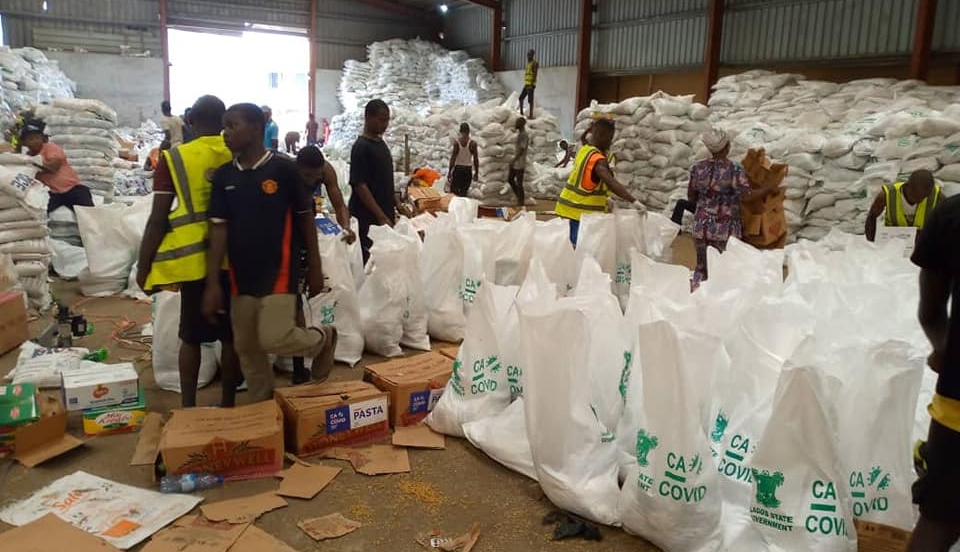
It started at the Oba Palace in Lagos Island, and almost spontaneously, escalated to other parts of the country. The discovery of warehouses filled with CACOVID palliatives has spurred hoodlums into ultimate search for where governments are hiding foods.

Since Wednesday, Nigerians have been seen on tape looting food items from many warehouses across the country. From the south to the north, it has become a looting movement extended to private properties.

In a country where 40 percent of over 200 million of its people live below the poverty line, many believe that hunger is behind the push. It therefore results in the question: Why did politicians hoard palliatives meant to be distributed during the COVID-19 lockdown?

As more videos of uncovered palliative-filled warehouses emerge, the governments and people in position have tried to answer the question.

The Lagos State Government said the palliatives were meant for distribution to the indigent. The statement signed on Thursday by Abisola Olusanya Acting Commissioner, Agriculture Lagos State, said the provision was meant for the South West, and Lagos had repackaged its share of the consignment and was distributing it before the protests halted activities in the State.

“The distribution was on-going but had to be halted due to protests, before the invasion of the warehouse today,” the statement said.

A member of Lagos State House of Assembly, representing Ikorodu Constituency, Sanai Agunbiade aka SOB, whose property was invaded by irate youths who discovered and looted the CACOVID palliatives, said he intended to distribute them on his birthday.

“For my birthday on 25th October 2020, I have sent out, through my Media Team, notice of my intention to give support to 50 widows who have already been nominated by different groups in a programme christened Widows Mite for Widows and also distribute to some vulnerable and indigent individuals across the three local councils of my constituency, some palliative materials donated by the state and federal governments, as well as myself,” he said.

While many others are yet to give reasons why they are hoarding the palliatives, Nigerians believe it’s nothing short of wickedness for those in position of authority to keep the provisions while people were starving during the lockdown.

“The pressure we were all put through this COVID-19 period. We all had to carry so much burden. Many families couldn’t feed and these beasts in human clothing decided to hide palliative for the poor. What the freaking hell!” activist Aisha Yesufu wrote on Twitter, after sharing an SOS message she received from a starving family during the lockdown.

In March, the Nigerian government announced coronavirus lockdown for the country’s key cities – Lagos and Abuja. And as part of measures to keep the people at home, the government announced a plan to distribute food provisions, as many Nigerians, especially in Lagos, live on their daily earnings.

Eventually, the period of the lockdown was extended, and to other cities in the country. And what followed were complaints of starvation, that many were caught defying the restrictions going on their various businesses. “Hunger virus is more dangerous than coronavirus” became a popular mantra as people break the lockdown rules to look for food.

In Lagos, there were attempts by the government to share food items for the people; a number of houses and residents were taken in many of the local government areas. However, what was distributed greatly fell short of the needs.

The Human & Environmental Development Agenda (HEDA) and other anti-corruption organizations that monitored the distribution of the palliatives said what was given to some estates was actually what was meant for an individual.

The CACOVID Donation

In late September, Private sector-led Coalition Against COVID-19 (CACOVID-19) supplied Lagos State with food items worth over N1.4 billion, as part of its plan to feed over 1.7 million households, especially the indigent and elderly, across 774 local governments in the country, to alleviate the effects of the pandemic.

It was up to states to distribute the food palliatives through Local Governments. Olusanya said then that 50,000 food supplies had been repackaged and would be distributed in a couple of days.

“Under the administration of Governor Babajide Sanwo-Olu, we have taken the pains to get bags marked, to print on them the Lagos State logo, the CACOVID logo and to put these items in each pack, such that we have transparency across board,” she said.

The coalition said the food provision would cover 107,564 households in Lagos State. But the distribution was yet to happen before the #EndSARS protest began. Following the crisis that ensued, the warehouses holding the palliatives were discovered and plundered by hoodlums.

While there is outrage that governments in Nigeria are hoarding food in time of starvation, the time frame shows that the food palliatives were received months after the lockdown was lifted. And the State governments appear to be fulfilling the wish of CACOVID, which is streamlined toward the most vulnerable in the states.