DD
MM
YYYY

PAGES

DD
MM
YYYY

spot_img

PAGES

Home Blog Page 6080

Appeal Court Upholds Judgment Ordering Uber to Reclassify Drivers as Employees

1

A California appeals court has dashed the hope of Uber and Lyft, upholding the earlier ruling of trial court, that the companies must reclassify their drivers as employees.

Associate Justice Jon Streeter of the Appellate court wrote in his decision Thursday that the injunction restraining Uber and Lyft from classifying their drivers as independent drivers is valid.

“It is broad in scope, no doubt, but so too is the scale of the alleged violations,” Streeter wrote.

The state of California had in May sued Uber and Lyft for violating its state law. The state’s new labor law (AB5), enacted in January mandated the ridesharing companies to give their drivers employment status. The law weighed in on a three-part standard to determine the status of an independent contractor. 1 They are free from company’s control; 2 they are doing work that isn’t central to the company’s business; and 3, they have an independent business in that industry.

The state had argued that by classifying their drivers as independent contractors, Uber and Lyft deny them employment benefits such as healthcare and government support in times of crisis.

“Uber and Lyft have used their muscle and clout to resist treating their drivers as workers entitled to those paycheck and benefit protections. It’s time for Uber and Lyft to play by rules,” Attorney General Xavier Becerra said in a statement after the ruling.

The ruling has put Uber and Lyft once again in a difficult situation. The companies may likely appeal the ruling or wait on the proposition 22. The change will not take effect immediately as the companies still have 30 days to comply with California’s law after the appeal’s processes. If the ruling is not challenged, the time starts counting after the appellate court transfers jurisdiction to the trial court.

The companies appear to be counting more on the prop. 22 as the trial and appellate court rulings have given the impression that the Supreme Court will side with state of California.

Uber, Lyft and delivery companies such as DoorDash, Instarcat and Uber-owned Postmates have been pumping millions into prop. 22, a California ballot initiative that may overrule the AB-5 law if the people vote in support of the ridesharing companies.
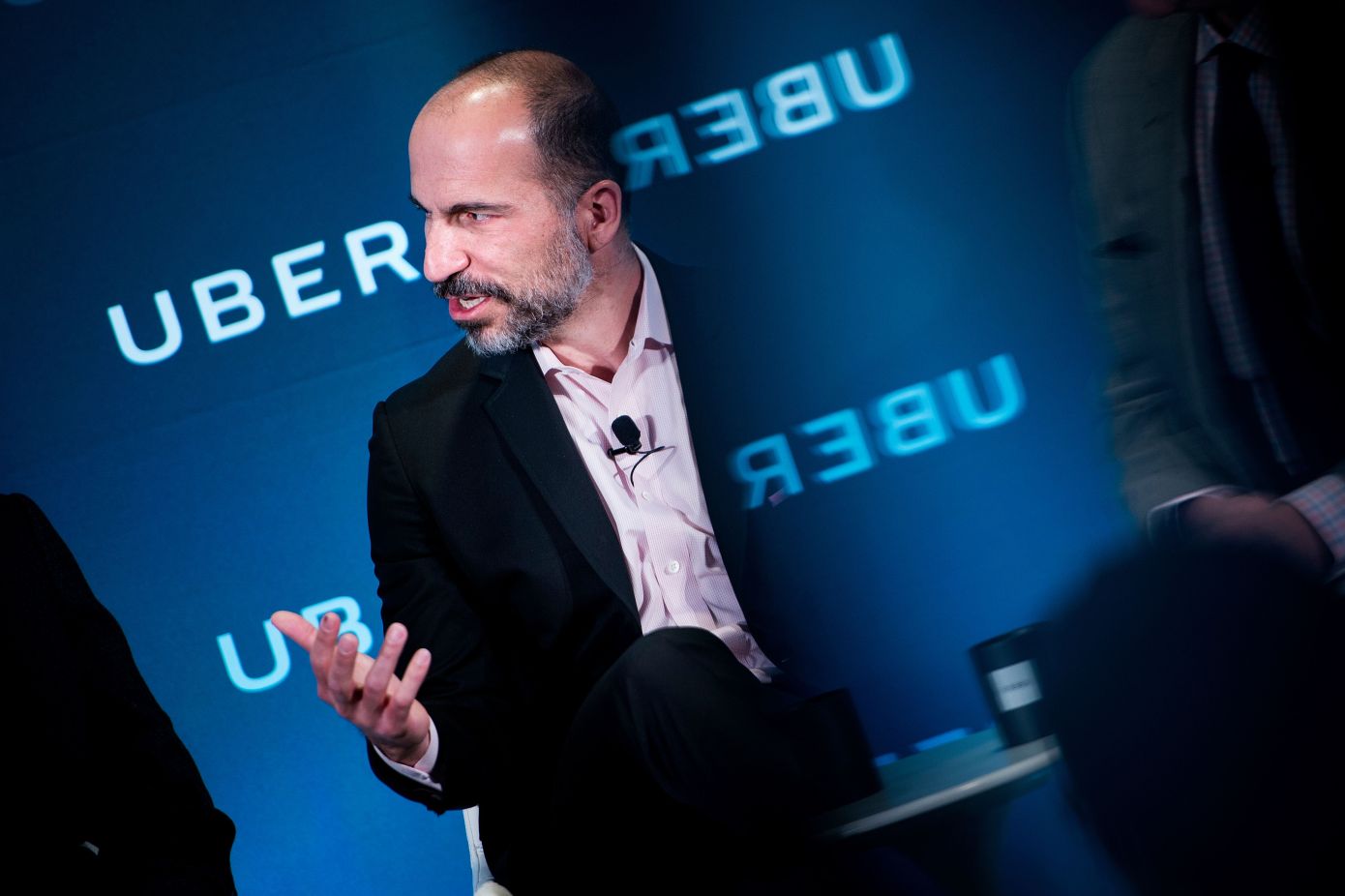
Uber CEO
Dara Khosrowshahi, CEO of Uber, speaks during an event at the Uber DC Green-light Hub April 11, 2018 in Washington, DC. / AFP PHOTO / Brendan Smialowski (Photo credit should read BRENDAN SMIALOWSKI/AFP/Getty Images)

So far, the companies have pumped $185 million into the ballot initiative, the most expensive proposition in the history of California. For the companies, it is a survival fight. Putting the ridesharing business off the gig model will mean that the companies will have to pay drivers according to the state’s minimum wage, and apply other rules that will spike running cost.

But if Prop. 22 passes, the ride-hailing companies will continue to treat their drivers as independent contractors, though there would be some concessions on benefits, which involves the minimum wage earnings guarantee based on “engaged time”, the time drivers spent on delivery or conveying a rider, not time spent waiting for gig.

Uber and Lyft have been aggressively campaigning for votes, telling riders that it means expensive rides if they don’t vote in support of prop. 22.

“This ruling makes it more urgent than ever for voters to stand with drivers and yes on prop. 22,” Lyft Spokesperson Julie Wood told CNN Business.

Although the companies said they will accept the state’s law if the prop. 22 fails, they have been appealing to drivers to support the initiative. Uber said in a statement that if the measure is not passed, “rideshare drivers will be prevented from continuing to work as independent contractors, putting hundreds of thousands of Californians out of work and likely shutting down ridesharing throughout much of the state.”

But the drivers seem to have had enough of the pressure from the companies forcing them to stand by the initiative. The drivers on Thursday sued Uber over in-app messages regarding the prop. 22, saying the pressure from the ride-hailing company violates California law protecting their political rights.

The in-app prompts urge drivers to show their support for the ballot measure, including asking them to submit video messages, and links to the Yes on prop. 22 campaign.

David Lowe, the attorney for the drivers said the prompts, in combination with Uber’s threat to leave California or reduce its driver base, leads drivers to believe that they might be punished if they do not follow the company’ line.

This development with drivers places Uber in yet another difficult position, as it minimizes its chances to win at the Nov. 3 election.
The Limitations of “A Luta” in Nigeria

0

Who doesn’t know what “a luta” means? Even from secondary school days, we always heard that university students were doing “a luta”, which was another word for protest or riot. When we got to our university days, we became accustomed to the mantra, “A luta continua; victoria é certa” (“the struggle continues; victory is certain”) and used it often. This expression was used whenever we faced challenges that have to do with your academics, finance or any other thing.

However, this expression is commonly associated with struggles that have to do with protests. It is associated with making demands, not from oneself, but from others. It is associated with calls for war. Yes, today, “a luta” is synonymous with “war”. This is why it has a lot of limitations.

Without wasting much time, I will table out the reasons “a luta” doesn’t work; why it is not the best option; why dialogue, negotiation and lobbying should be the options considered if people want to table out their grievances and make their demands heard.

a. Trigger
What triggers “a luta” is usually the genesis of its failure. Usually, its trigger starts as complaints concerning an unfavourable condition or unwanted concepts. These complaints gather momentum and graduate into mild suggestions for actions. The suggestions gradually become agitation, but it will only exist within the complaining group. At this stage, the tempo is already building up and if anything that is connected to the unfavourable condition happens, the group will be pushed into the street. The problem here is that the driving force for the protest is anger and not reason. This makes it difficult for the protesters to be logical with their demands and the method of demanding for them. Worst here is that their judgement is so clouded with negative emotions that they do not accept advices that go contrary to their “reasoning” at that point in time. This is why “a luta” usually gets violent and unfruitful.

b. Leadership
It will not become an “a luta” if there is an organised leadership. In “a luta” the protesters are leaderless. Because of how the struggle started, every aggrieved person is a leader. In some cases, members of the protesters that are more famous assume leadership because they have many followers. However, in most cases, these “leaders” have different agenda to push. This will lead to the protesters being sectioned into groups with varying agenda, depending on which “leader” they listen to. At this juncture, there is already a division in the group with different voices and no voice. With time, every protester will have his or her agenda, some of which are completely unrelated to the theme of the protest. This is also why many “a luta” do not achieve their goals because they pursue several confusing items at the same time.

c. Violence-Prone
Of course every “a luta” is triggered by anger. At the initial stage, the anger is not destructive. It only acts as a drive, the energy that pushes the group to move on with the protest. If this anger dissipates, the protest will die naturally. But if the anger is fanned by both internal and external forces, the protest can last as long as ever. The longer a protest lasts, the more agitated the protesters become. They begin to believe that they were not heard and so find ways to make the authority hear them by force. This is when they become more daring and start pushing the authority to the breaking point. And this is when the miscreants amongst them start testing waters. The problem here is that because the tempo is high, there is every possibility that the protesters will join the miscreants in vandalising, looting, lynching, maiming and destroying. If they don’t join the miscreants, they will be pushed into violence when the law enforcers begin to respond to the actions of the miscreants. The result of this is total chaos. This is where people start getting killed and arrested. By the end of the day, their demands may likely not be considered by the right authority.

There is no arguing the fact that protest makes the authority listen and act towards the demands of the protesters. Nobody is saying that. But most times it is not the best option. Of course it might give the aggrieved a sense of fulfilment but it will be short-lived. I have come to learn that the best things are not achieved through the use of force. Dialogue, negotiation and lobbying are there for a reason. Let the aggrieved choose them; they don’t show weakness or suggest corruption.

Nigeria, There Is A Promise; Lesson from China

4

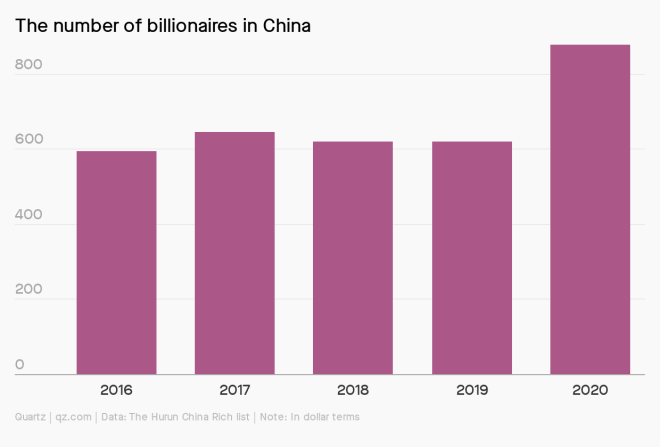
Nigerian young people, there is a promise. I am an optimist – tomorrow will always be better. I saw this data a few hours ago, and I am sharing it to draw a lesson for Nigeria. Today, China has more billionaires than any country in the world including the US. Though the U.S. has more heavy-hitters, the data does not lie: a new group of 257 billionaires (in US dollar terms) were added to the annually released Hurun China Rich List. In other words, China minted 257 billionaires  in the last 12 months! With that record, China has overtaken the US. China has more than 800 people in the club while the U.S. has less than 700!

Then, the big one: how long did it take China? I refer you to this I wrote in Harvard. It did not take that much time. China has a playbook and is executing that playbook. It takes it one by one, every 5 years while looking deep into the future.

The world is on pause (literally) as everyone waits for the details of China’s 14th five-year plan. With massive global dislocation triggered by Covid-19, China can exploit many comparative advantages to accelerate its ascension at a rate the world has not witnessed before. So, watch out how China begins to build an economy that does not need the world to thrive but would be indispensable for the world. As the world’s largest exporter, the world runs on China and this new five-year plan could push the equilibrium more to China’s favour.

That brings me to Nigeria. Our compatriots have died in the course of fighting for a better future for us. There is one way we will honour them: during the 2023 election, we MUST drop tribes, drop religion and those things which divide us, and vote for the most competent persons. This protest was united across age brackets, tribes, religions, etc because brutality and hunger do not respect those elements. 

I do hope during elections, none will see Kunle, Adamu, Effiong, Ada, etc but capabilities. If we do that, Nigeria will begin to change. We may not get to China’s level immediately, but any impact of good leadership compounds. I challenge us to remember Oct 2020 even as we wait for 2023 elections to come!

Tekedia Institute Support To Members

0

As we noted in our email, Tekedia Institute is offering support to our Nigerian members. If you feel depressed or distressed, we have professional counsellors who are on standby to speak with you. All you need is to text Help and they will call you. Reach out to Admin and they will connect you. We are monitoring the state of things, and will announce once we think our programs will resume.. The customer support continues to run 24/7 for those that have questions on their works. We want everyone to stay safe.

Lekki Massacre: Buhari’s Address, and the Speech that Was not Given

0

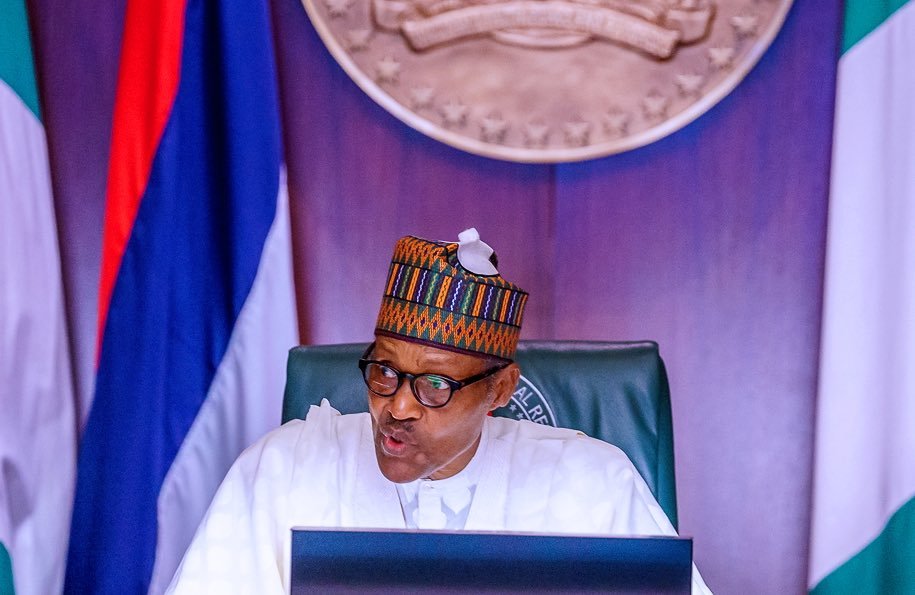
“Fellow Nigerians, it has become necessary for me to address you having heard from many concerned Nigerians and having concluded a meeting with all the Security Chiefs.”

So began the long awaited speech of Nigerian President Muhammadu Buhari, who had been criticized for his silence following the killing of protesters in Lekki Lagos.

On Tuesday evening, horrifying video clips of #EndSARS protesters being shot at by men in Nigerian Army uniforms at the Lekki Toll Gate surfaced online, drawing the condemnation of concerned Nigerians and the international community. It was described as “Lekki Massacre”, as the peaceful protesters were seen waving Nigerian flags, singing the national anthem, and being hit by bullets.

As empathy and outrage from world leaders trail the ugly incident, many questions beg for answers. Who are the killers? Who gave the order to kill unarmed protesters? Who will hold them accountable? The Lagos State Governor, Babajide Sanwo-Olu was at the receiving end of these serious questions.

In his attempt to answer, Sanwo-Olu said the gruesome act was executed by “forces beyond our direct control”, promising that the killings will be investigated.

In Nigeria, governors don’t have control over armed forces. Therefore, going by Sanwo-Olu’s statement, analysts believe he implied that the Nigerian Army, ordered by the federal government, were the “forces” who carried out the execution.

In his subsequent speeches in the wake of the incident, the Lagos State governor could not provide answers to the many questions that have trailed the killings, though he reiterated his promise of investigation and accountability. Upon this promise, lies the hope for justice, many thought.

Amidst the anguish, curiosity and hope for justice, the world was waiting for the commander in chief of Nigeria’s armed forces, Buhari, who Sanwo-Olu said he has not been able to reach, and who the world believes is in a better position to provide answers to the intriguing questions and ensure justice; not only because he is the commander in chief of armed forces, but because he swore an oath to protect Nigerians from harm.

So on the eve of Thursday, when the president’s media aide, Bashir Ahmad, tweeted that Buhari will address the nation by 7pm, there was emotional eagerness around the world to hear what the president has to say. After all, it has been nearly 48 hours of uncomfortable silence, which many described as a sign of insouciance and total disregard of the plights of Nigerian people.

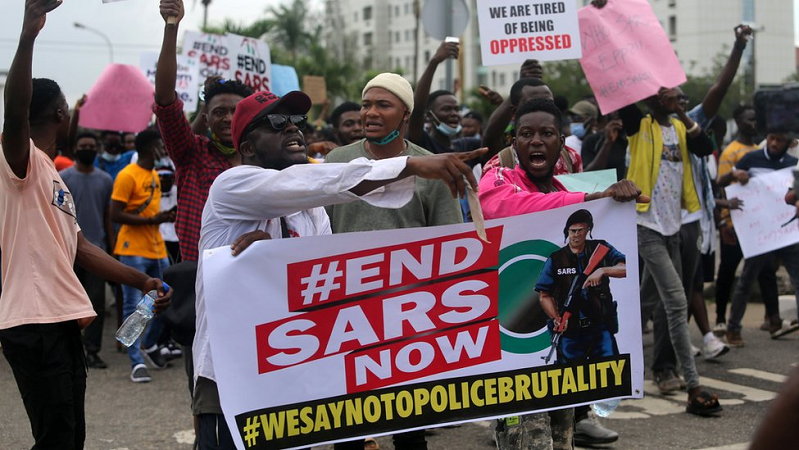
On the 12th of October, Nigerian youths had taken to the streets to demand the disbandment of a rogue police unit, robbing, maiming and killing people – the Special Anti-Robbery Squad (SARS). The protest, unprecedentedly, became an international movement that put the Nigerian government on the spotlight all over the world.

There was intense pressure from the Nigerian youths, the international community and Civil Society Organizations (CSOs), forcing the Nigerian government to shove its attempt to reform SARS and disband it. But disbandment of SARS was just one of the demands made by the protesting youths.

The 5 of 5 demands presented to the Nigerian government by the #EndSARS movements are; 1. The release of arrested protesters. 2. Justice & compensation for families of victims 3. Independent body to oversee prosecution of officers (within 10 days) 4. Psychological evaluation of disbanded officers before redeployment, and 5. Increase in police salaries.

While the government made promises to address the demands, the protesters refused to call the protest off, due to the wide gap of trust deficit. They said they don’t trust the government to keep its promise. So the campaign continued, amidst several attempts by the government to quell it, including the alleged hiring of thugs to attack protesters and killings by security forces.

In the wake of the violence that followed the involvement of thugs, some state governors introduced curfews. Lagos, which has been the epicenter of the campaign, imposed curfew on Tuesday while the protestors were in the streets. It unfortunately birthed the events that resulted in the gruesome Lekki killings, which have been begging for answers.

So as Buhari read through the paragraphs of his script, in what appeared to be a prerecorded video, people couldn’t wait to hear him talk about the Lekki killings, until he got paragraph seven.

“Sadly, the promptness with which we have acted seemed to have been misconstrued as a sign of weakness and twisted by some for their selfish unpatriotic interests,” he said.

Though many found it odd, that the president sees responding to the demands of his people promptly, as a sign of weakness, they waited patiently for more.

At the end of 13 minutes, Buhari had said a lot of things, including the efforts his administration is making to alleviate poverty through schemes such as tradermoni, N-power, farmermoni and so on.

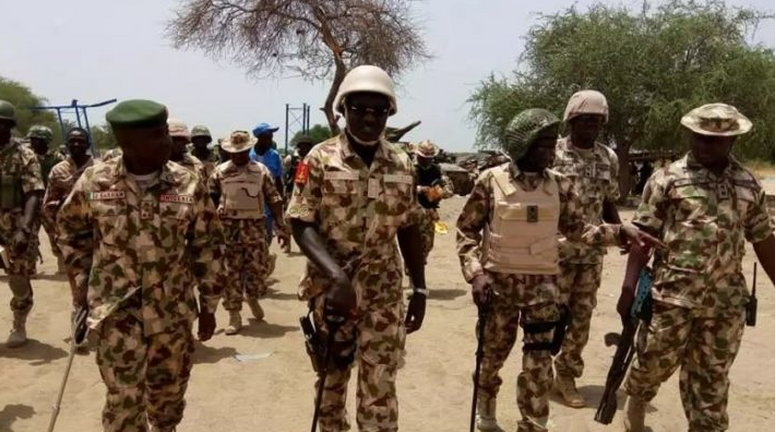
He praised security forces for their conduct during the protests, and eulogized those of them who lost their lives. Buhari made mention of the incident at the palace of Oba of Lagos, the monarch whose palace had been invaded by hoodlums who eventually discovered a sealed warehouse where COVID-19 palliatives were hoarded, and looted it all. “The sanctity of the palace of a Peace Maker, the Oba of Lagos has been violated,” he said. People said the president was not concerned that the Oba of Lagos hid the palliatives while Nigerians were dying of hunger during the COVID-19 lockdown.

Furthermore, Buhari asked neighboring countries and the international community, who have expressed concern over the Lekki killings to “seek to know all the facts available before taking a position or rushing to judgment and making hasty pronouncement.”

He said the National Salaries, Income and Wages Commission has been directed to expedite action on the finalization of the new salary structure of the Nigerian Police Force. Buhari asked the youths to discontinue the protest as it may result in chaos that will undermine national security, which will not be tolerated under no circumstances.

As the national anthem echoed to mark the end of his speech, many wondered if that was all. The president did not talk about the Lekki killings, the major reason he was addressing the nation.

“Is Buhari’s memory so short that he forgot about the Lekki shooting?” Social Entrepreneur Adam Bradford asked after Buhari’s speech.

Buhari’s omission of the incident has consequently been interpreted in so many ways. To many, it shows lack of empathy for the lives lost and indicates government’s complicity. To others, it is a plausible deniability which brings back memories of similar incidents in the past.

“Nothing tangible was said. No condolences to victim’s families. He did not address #LekkiMassacre or promise to bring perpetrators to book. He did not present a coherent plan on the way forward. He insulted #EndSARS. Took no responsibility. He should GO!” Reno Omokri, ex media aide of former president Goodluck Jonathan said.

In 1977, activist, Mrs. Funmilayo Ransome-Kuti was visiting her son, renowned musician Fela Kuti, when about 1,000 soldiers stormed and surrounded the property. They threw her off from the second floor’s window, and eventually she died a year later. The government didn’t take responsibility for the incident; in fact, the military denied sending soldiers her way.

In their response, the Nigerian military said the soldiers were unknown. It inspired the “unknown soldier’s” song by Fela.

Ever since then, there have been other cases where men in uniform have been accused of killing unarmed Nigerians, and there were either denial or justification for the killing.

In 2015 when over 350 members of Shiites were allegedly killed and buried in Zaria, Kaduna State, by the military, they denied killing anyone. It was a year later, in 2016, following an investigation, that the Kaduna State government acknowledged the killings.

Former president Olusegun Obasanjo said it is worrisome that the Army is denying the Lekki killings despite overwhelming visual evidence. The Nigerian Army spokesman, Major General Enenche said the shooting “videos were photoshopped”, a troubling response that has added embers to the burning fury.