DD
MM
YYYY

PAGES

DD
MM
YYYY

spot_img

PAGES

Home Blog Page 6119

Bolt Launches Tricycle (Keke) Service in Enugu

1

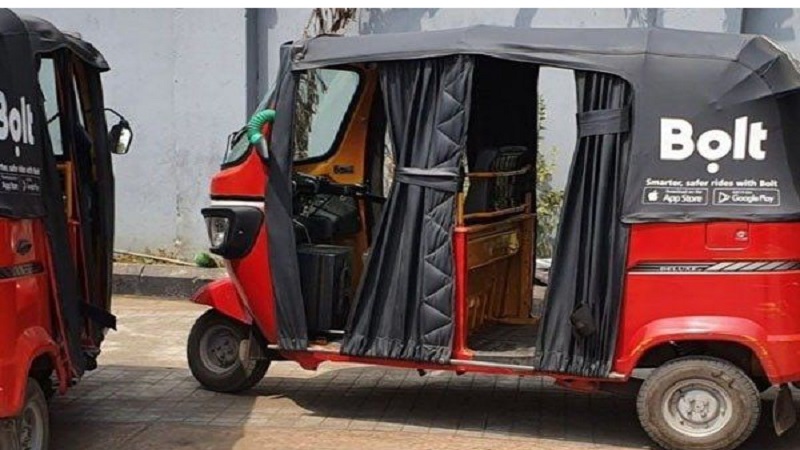
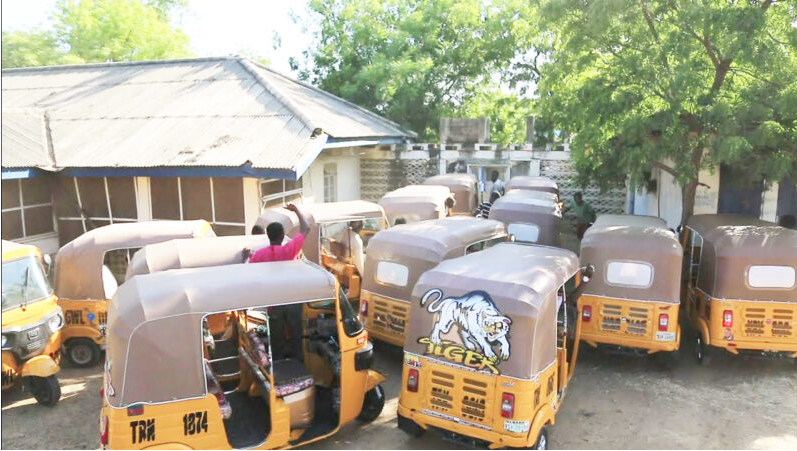
Bolt has launched a tricycle (Keke) operation in Enugu, months after it launched its first in Uyo, Akwa Ibom State. Bolt’s introduction of keke to its operation is part of its expansion strategy to other cities in Nigeria apart from Lagos, Benin and Abuja.

Keke is a popular means of transportation in Enugu, and Bolt, having learned the tricks with its pilot operation in Uyo, walked into the market with cheap ride offers that will endear riders.

Bolt offers a minimum fare of N150 for trips, alongside a launch discount designed to attract riders. The company said riders can use the first rider discount code, BOLTENUGUKEKE (NGN 500 off your first trip) to enjoy as much as 15% discount until a particular time.

The welfare of drivers has always been a bone of contention, especially their earnings, but the ride-hailing company told Tekedia that the drivers have bonus packages designed to increase their earnings.

“Drivers also stand a chance to take advantage of the estimated earnings of N18,000 per week. In addition, a bonus of N1,000 for the first five trips and 15% bonus per trip until a communicated time,” Bolt said.
The ride-hailing ecosystem took a hit following the outbreak of the coronavirus which restricted people’s movement around the world. The ride-hailing companies strategized to survive. Uber, DoorDash and Lyft focused more on food delivery, while in Nigeria; Bolt is using alternate means of transportation – tricycle and ride-fare slash.

The tricycle operation follows the app-based booking model that is functional in car-based rides. However, the keke model will face stiff competition as private keke operators offer cheaper ride rates, though they use the traditional model.

In 2019, the Opera group introduced OTrike, a keke-based ride-hailing transport in Enugu. The introduction of this service came with an enticement of N100 per a trip for two months from its launch, no matter where in the town a rider was going. There were other incentives too, but OTrike didn’t survive the competition and business environment, and consequently shut down in less than a year.

Bolt however, appears prepared to use its existing competitive framework. Moreover the success of Bolt’s Uyo pilot of the keke app-based rides evidenced a strong local market knowledge that will ensure the sustainability of its operation in Enugu. Bolt’s country manager, Femi Akin-Luguda said the company is becoming innovative in solving revenue discrepancies emanating from competition – and now COVID-19 by catering for local demand.

“At Bolt, we will continue to find innovative ways to cater to local demand for popular services,” he said at the launch of tricycle service in Uyo last year. We have already built the biggest ride-sharing platform in Nigeria for cars and the knowledge we have gained in that endeavor gives us a significant advantage in taking on the unique transportation challenges in all the cities where we operate.”
The Development Paradox When Everyone Is A Small Business Owner

2
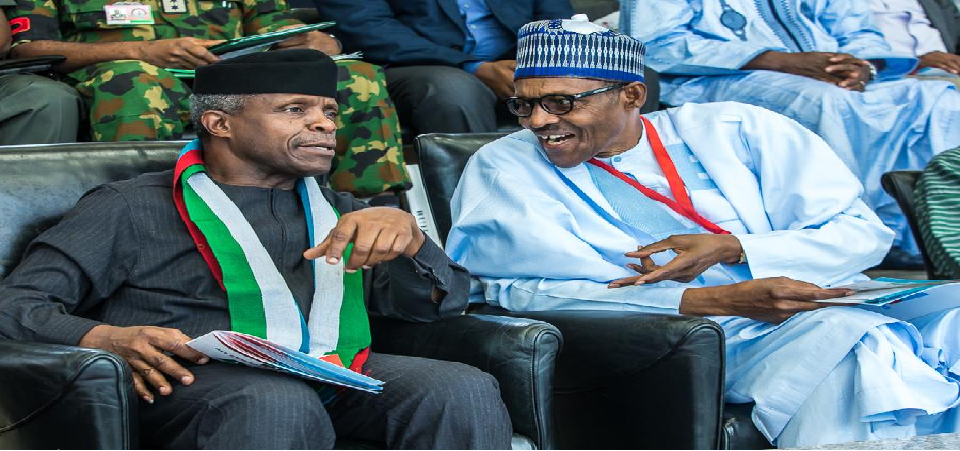
President and Vice President of Nigeria

Across many developing parts of the world, development experts like to push numbers on how these regions are more ‘entrepreneurial” than the advanced parts of the world. Of course, I do not see a roadside corn seller as an entrepreneur; you can go with a small business owner, as the distinction between the two is evident.

When everyone is a small business owner, it means a system is not working as productivity, and the capacity to utilize, and organize, the factors of production at scale are not optimized. Yes, you have many small business owners because no company is expanding to provide jobs for people. So, everyone goes into the game, for survival!

Nigeria has more than 60% of its working population employed in agriculture, producing mass hunger across the nation; the U.S. uses less than 5% and can technically feed the world. In the U.S., economies of scale work and productivity in agriculture is higher. But when that process begins to struggle, Americans do what Nigerians do: many join the small business owner wagon.

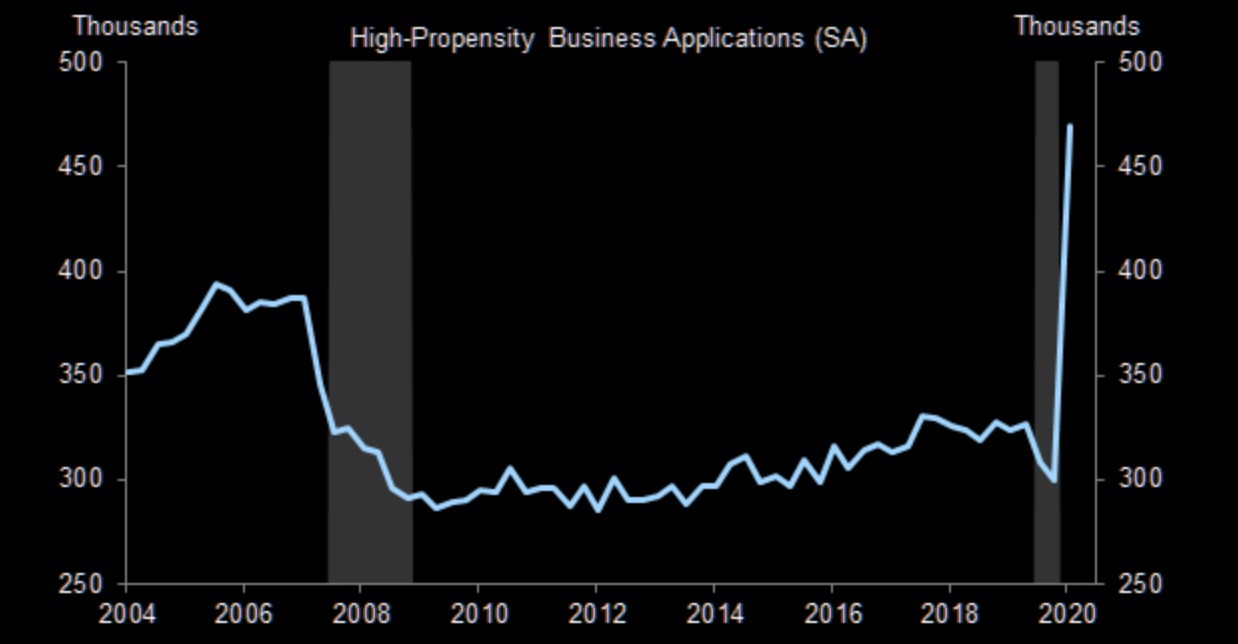
Chart: New Business Applications have surged in recent months in US

Yes, during this pandemic when many Americans lost their jobs, the number of new formed companies has risen. Not many of those firms were formed on the positions of strengths; many came largely for survival, just as many do in Nigeria. This shows us one thing: humans are the same.

The combination of necessity and opportunity during the pandemic has ignited a rush of new small businesses. The Wall Street Journal, citing U.S. Census Bureau data, reports that more than 3.2 million employer ID applications have been submitted so far this year, compared with 2.7 million a year ago, which includes gig-economy workers and other independent contractors taking the plunge after being laid off. An economist points out that more than half of these startups close within five years, but the crisis may speed up “creative destruction,” where new, innovative businesses displace older, less-efficient ones.

Nigeria needs ways to build large companies, and having many small business owners should not be seen as a good thing. Indeed, Nigeria needs to find a way to avoid celebrating what should not be celebrated – when you have many small business owners, your economy is not firing at all cylinders.

Why Nigeria Must Not Be Celebrating Having Millions of Business Owners

Nigerian Politicians Use Poverty As Asset As Governor Shares Money

1

There is a short video flying over Twitter that shows where a person, believed to be Gov. Rotimi Akeredolu of Ondo State, was spraying money from his SUV. The sender of this video captioned it, “Gov. Akeredolu sharing 200 naira notes in Akura”. Of course some of the governor’s diehard fans claimed he was not the one. But then, sirens were blaring in the background and the black SUV looked like what is being used for election campaigns. However, the man that threw the money up wore facemask and the car’s plate number was covered, so you can’t really tell who committed this public offence.

But that is by the way. The thing that actually caught people’s attention in the video is the way people scrambled for this money. Let’s forget about the CBN financial act that forbade the spray of naira notes, because our politicians don’t observe it, and focus our attention on why adults will fall over one another on a highway because of just two hundred naira.

People that don’t go to market these days won’t understand why I said “just two hundred naira”. Some may go as far as accusing me of not understanding the sufferings people are passing through. But those are actually the reasons behind calling two hundred naira a “just”.

Now I ask, what can two hundred naira do for a person in Nigeria today? I mean, a cup of local badly processed stone-filled rice today is even more than that amount. If you take fifty naira out of that money, you will buy a bag of pure water with the balance. If you decide to buy kerosene with that money, you will have to go back home, find another seventy naira or more, add it to the two hundred naira and then buy a litre of kerosene. But here we see men and women diving into the road to pick two hundred naira.

Please, don’t laugh at these people or get angry with them; they are victims of circumstances. We all are victims of circumstances. Trust me, I cannot honestly tell you that I won’t dive for my own two hundred naira if I happened to be at the scene of this drama. Maybe I will recollect myself later but the reflex of rushing for the money will definitely be there at that particular time. Now why would I or anyone else do that? It is simple – poverty.

Poverty isn’t just about not having money in your bank account or being afraid you might not be able to eat your next meal. Poverty also involves the desire to collect and store because you don’t know tomorrow. It is possible that those people that rushed for the sprayed two hundred naira notes obviously had something doing they needed more. They are unsure of their tomorrow. If not, they wouldn’t fall into gutters to pick money.

But then, what about the politician that sprayed that money? What was his intention? Of course we all should agree that he knows that the money will do nothing for the people there. If he really wanted to help them, he knows what to do. So why did he spray that money on the road? Was it to entertain himself as he watched men and women fall on each other as they reached for the money? Or did he want to see if people are still hungry? Or was he hoping to win more votes from that?

Some people assumed that what he did was diabolically motivated but I wouldn’t stand for that. If you ask me, I will say that whoever devised that strategy wanted to test waters. He obviously wanted to see if poverty can still be used as an asset towards securing or manipulating votes in the upcoming election. The person knows that our politicians have been deliberately starving us and that we should be ripe for harvest. He wanted to know if we can dance to whatever music politicians beat so long as they promise us a slice of dry crusted weevil-infested bread. And did he get the answer he wanted? Oh yeah. His experiment rang positive.

It is a pity. Poverty is both an asset and a weapon constructed by our politicians to utilize whenever they need to. But it is left for Nigerians to beat their chests and say, “Enough is enough.” We don’t need politicians’ money to feed, clothe or find shelters. We shouldn’t let poverty turn us into morons.

Applause as Azeez Quadri, Adeyemi Planche Get elevation, Recognition in the United States

0

Nigeria came to the front burner last week again as two of her Diasporans get recognized and elevated in their chosen careers in the United States.

First, Azeez Quadri, a Nigerian legal expert based in America, has just been called to the Bar in the US. This was made known in his LinkedIn update where he announced his virtual swearing in to the Bar by Hon. Justice Michael C Lynch as Attorney and Counsellor at Law New York State. Quadri is a lawyer with experience in regulatory compliance, privacy compliance (medical, financial, technological, educational). He is skilled in the interpretation of Health Insurance Portability and Accountability Act (HIPPA), Medicare and Medicaid regulations as well as the Fair Credit Reporting Act (FCRA), Anti-Money Laundering Laws and Family Educational Rights and Privacy Act (FERPA). Azeez holds a Bachelor of Laws (LL.B) from the University of Ilorin, Ilorin Nigeria before he proceeded to the Nigerian Law School where he obtained a BL in the Second Class Upper Division category. He furthered his law education with a Master’s Degree in Law at the Moritz College of Law of the Ohio State University in the United States of America. Accolades had been pouring in on this feat by the friends of the newly sworn in attorney.

Picture: Azeez Quadri being remotely sworn in the US

Source: Azeez Quadri LinkedIn Page

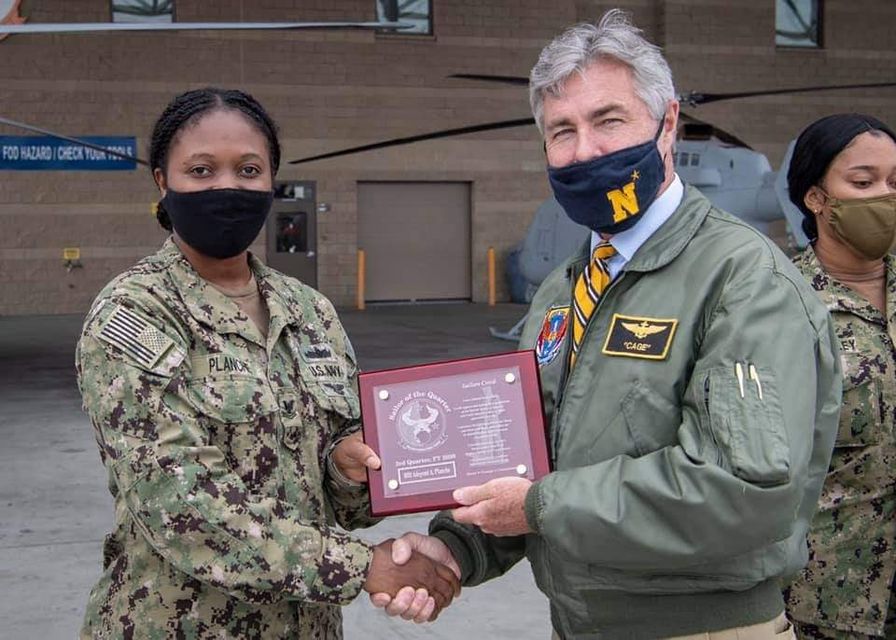
Adeyemi Planche, a lady sailor with the United States Navy got recognized as the Sailor of the Quarter for the Fiscal Year 2020. This recognition came as a result of her dedication and commitment to naval  duties. Adeyemi was presented the plaque of recognition by the Secretary of Navy, Hon. Kenneth J. Braithwaite, the number three person in the US military. Planche holds a BSc. degree in Computer Engineering from Olabisi Onabanjo University, Ago Iwoye, Ogun State, Southwest Nigeria. She also possessed an MBA from Ladoke Akintola University of Technology, Ogbomosho.  Adeyemi had earlier worked with MTN and Ericsson as an Optimization Engineer   in Nigeria before relocating to the United States of America where she combined two jobs after unsuccessful attempts to break into the telecommunications industry in the US.  She then completed a second Masters’ degree in Information Technology Management with Trident University International in California. She is still stationed at the Naval Air Station North Island working one of the Navy’s finest and most advanced Helicopters. She is also a Career Counsellor with Helicopter Sea Combat Squadron.

Picture: Adeyemi Planche receiving the Plaque from the Secretary of Navy

Source: Adey Yemi Facebook Page

How Interoperability Works in 5G networks

0

5G networks represent the next generation cellular networks posed to replace 4G networks. The network represents a shift from consumer technologies to industrial technologies and promises to usher in an era of exponential connectivity, low latency, ultra high reliability, seamless connection of high dense machines or sensors spread over geographic locations.

In order to meet the exponential demand, it is anticipated that 5G networks would rely on a combination of technologies from Wi-Fi, LTE (Long Term Evolution), small cells, satellites, relays, various access technologies etc. For this to work, the 5G core has been virtualized and softwarised to allow these technologies work interoperably and seamlessly.

Here, I will look at one of the techniques introduced by the 3gpp (third generation partnership project) , in one of their releases, aimed at facilitating interoperability of these technologies.

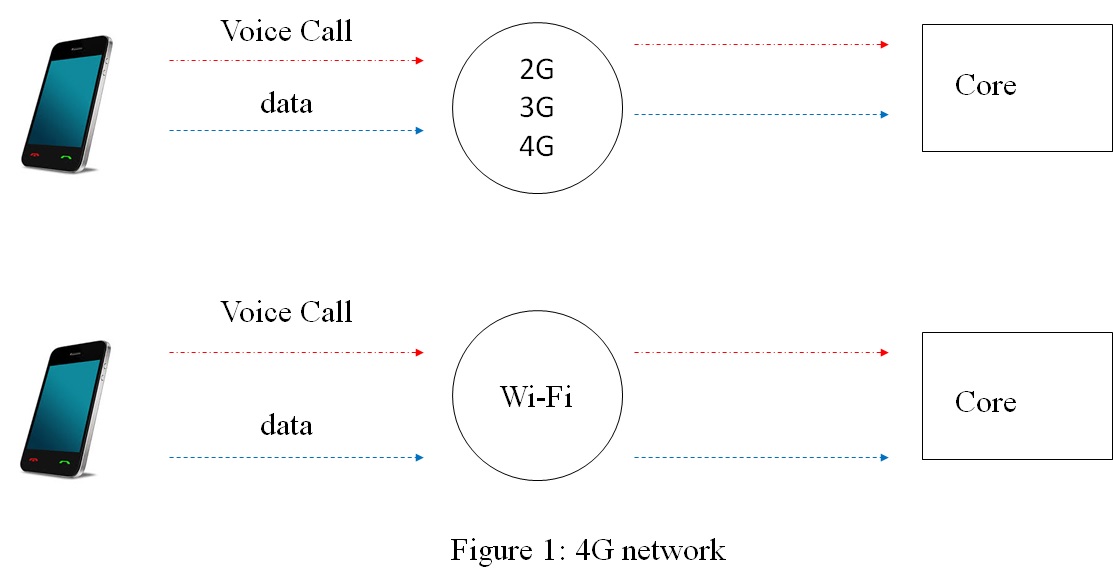
In the 4G network, when a user attempts to make a voice call or connect to the internet, both voice or data connections typically pass through the cellular network. Alternatively, the user could attempt to make the same voice call or connect to the internet using Wi-Fi, from a hot spot, for example, and thereby avoid incurring charges from the mobile operator. Both cases are depicted below in figure 1.

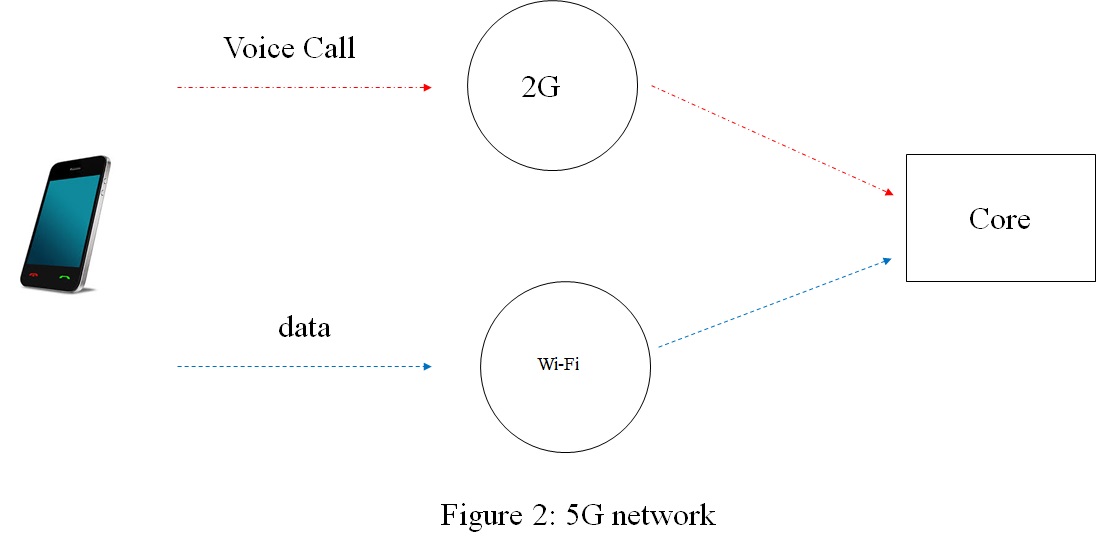
However, in a 5G network, the network could carefully combine the resources of the both cellular network (2G, 3G, 4G, 5G etc.) and Wi-Fi to offer a superior service to the user. As shown below, the voice and data traffic are split and passed over all networks, see figure 2.

The 5G network can perform any of the functions listed below

  1. Steer and select the best network: the 5G network is able to steer the traffic over either the cellular network or Wi-Fi, based on the best network for the user.
  2. Switch traffic: when a user is already using the resources of the cellular network, the 5G network is able to hand over the traffic to a wiFi network and vice-versa.
  3. Split traffic: the 5G network is also able to split the user’s traffic over all available networks e.g. it could direct voice traffic over a gsm network whereas it directs the data traffic over a Wi-Fi network.

These functions would be performed based on certain rules embedded within the network. The steering, Switching and splitting traffic over various access networks may sound trivial until one considers some of the anticipated use-cases of 5G. For instance, consider an autonomous car driving and it encounters a child crossing the road and it needs to make a quick decision on how to avoid the child, then one would appreciate the need for the network to be able to quickly switch network resources, when one access network suddenly becomes unavailable. The same applies to a robot performing surgical procedures, in the wake of a surge in the use of tele-medical applications, due to social distancing directives.