DD
MM
YYYY

PAGES

DD
MM
YYYY

spot_img

PAGES

Home Blog Page 6124

Eonsfleet Helps Businesses to Run More Efficiently Through Automation

0

This may be the only strategic plan and investment your business needs in order to stay afloat, and become profitable or cash flow positive in the year 2021.

It has become very obvious that the Covid-19 Pandemic had challenged and changed your business. It has made you sit up and become very strategic in the future planning of your business.

It has made you think in this line. How can my business be profitable post Covid-19, after staying at home for months?

Well, we discussed a lot on the importance of innovation in making a business profitable, because it helps to change the basis of competition.

We also talked about effective marketing, because it actually builds brand awareness and leads to sales.

But here is how things have been changed by the pandemic: innovation and marketing involves huge investment in order to implement their strategies in your business.

The reality is that you must find a way to survive and stay afloat in business in a cost effective way, while making profit in Post covid-19.

The best strategy to deploy is value creation, cost reduction or cost minimization strategy through AI and IoT technologies.

This is the mission of Eonsfleet. To make businesses profitable, efficient and stay afloat by providing them the technologies that will help them to reduce waste, cut unnecessary cost, become efficient, optimize decisions among others.

Eonsfleet is a managed service designed to allow distributors of bulk lubes and fluids, propane gas, and other liquids to remotely monitor tank fill levels (in moving trucks, depots, fuel stations, etc.), optimize distribution and ascertain compliance to desired destinations. Purpose-built to improve inventory management.

To extend its services beyond the fuel supply chain market, Eonsfleet offers IoT applications around the fleet, fuel and energy remote monitoring solutions which include the remote monitoring for diesel generator, fuel and grid for facility managers.

The Eonsfleet IoT Platform, a proven, highly scalable, customizable IoT Platform, powers Fleet Management Software, Smart metering solutions, E-logistics, Warehousing and Supply Chain Control Tower Software. (SaaS).

It brings a gamut of powerful capabilities in energy management, remote asset management, environment monitoring, location tracking, alerting, intelligent dashboards, reporting and analytics.

How Eonsfleet Value Propositions Will Solve Problems Associated With Business Equipment and Properties Management.    

Here are the real and measurable values that Eonsfleet solutions will have on your business operations, as it relates to asset, fuel, and equipment management.

  •  The Efficiency Value:

With our specialized solutions and products, such as Fleet Management Software, E-logistics software, Supply chain Control tower, Fuel Tanker Content Monitoring, Diesel Generator Monitoring Solution and Fuel Station Manager (Forecourt), the central goal is to use data to achieve efficiency for your business.

You will be able to cut waste and have real time information on your fleets, your diesel generators and other logistics through the data that will be provided by these technologies.

  • The Visibility Value.

We helped you to remove all the guesswork that is associated with your decision making process, by providing you real time data.

A great example is the fleet monitoring solution, we provide you with your diesel level, the quantity of fuel filled, how many litres are available etc. This can be monitored from anywhere, at anytime.

This makes your decision making to be supported by data. The same is applicable to your fleet or logistics operations.

  • The Security Value

When there is a protection of your fleets and your drivers are law compliant, it impacts the business performance. With the fleet monitoring solution, we ensure we have data to monitor the behavior of your drivers and other important data about your fleet.

This helps to ensure compliance and security of both the vehicles and drivers.
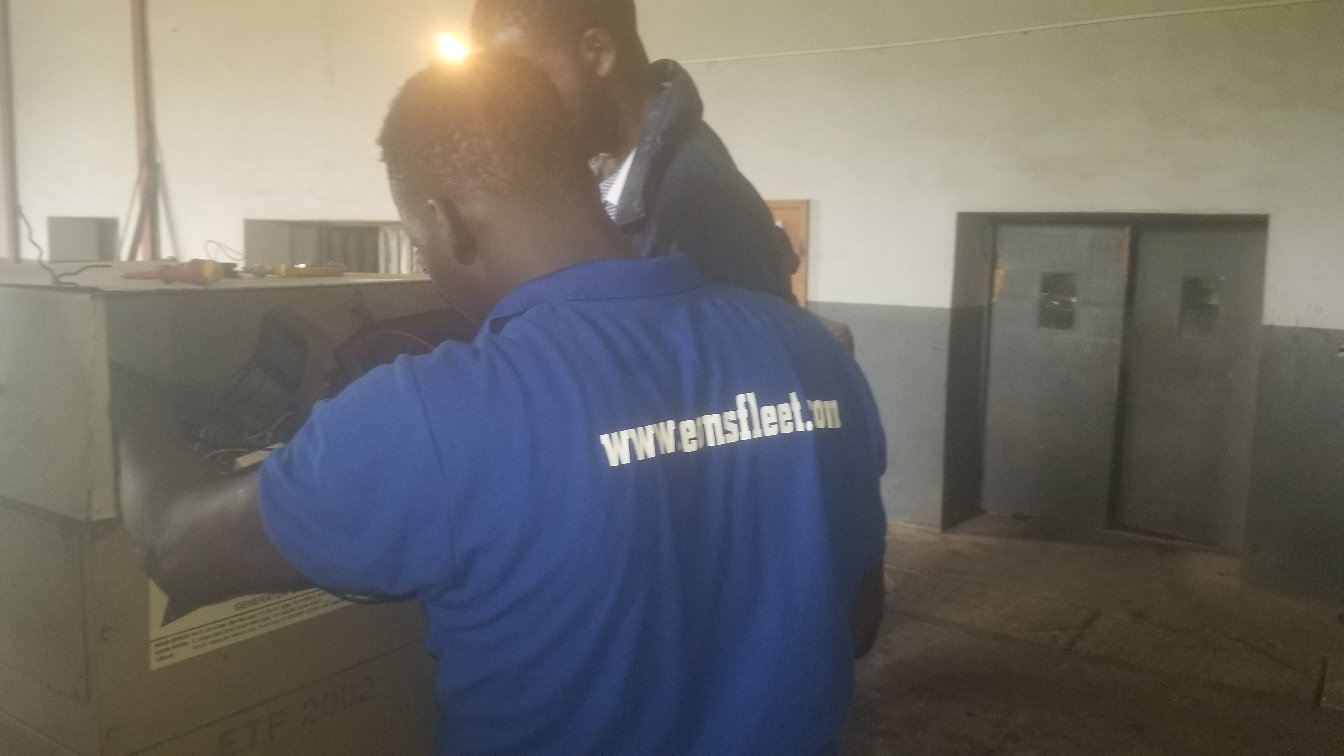
  • The Optimization Value.

We help to optimize your operation by using the data available from your fleet monitoring software to make strategic planning on what business decisions to make that will impact your bottom-line.

  • The Profitability Value.

The overall impact of this solution is profitability which is caused by the realization of efficiency, and optimization of your business operations.

At the end, you will invest less and derive massive values while reducing cost of operation strategically. This is what we want to help your business to achieve in post covid-19.

Businesses Are Already Making Strategic Deals and Partnership with Eonsfleet.

Some businesses with strategic foresight, who know the quantitative impacts of our solution to businesses in Africa are already deploying the solutions.

Moove Africa is a car rental service provider that provides customers cars to use on Uber, on a weekly basis.

This company has sealed a deal with Eonsfleet to provide a fleet monitoring solution that will ensure that the company has data to monitor the activities of its vehicle, in real time, and at all times.

This will help them to achieve many benefits such as, real time visibility of asset’s condition, set asset maintenance module, set some vital restrictions to ensure proper and standard asset usage and lot more!

Eonsfleet is here to serve.

Medcera Welcomes Thelma Ejiogu As CEO

0

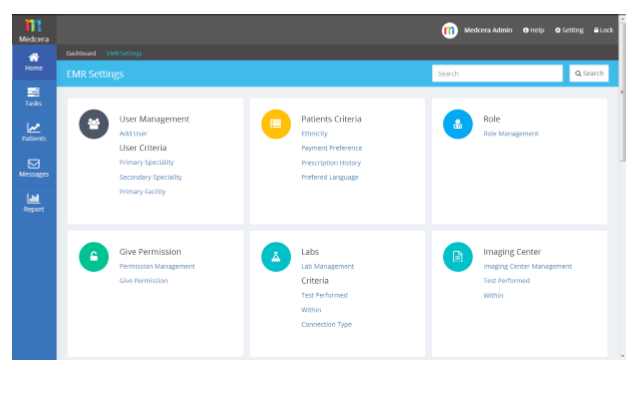
Good People, join me to welcome Thelma Ejiogu, as the CEO of Medcera, to the community. Medcera is a web-based EHR (electronic health record) system with patient portal. It provides physicians and medical professionals with technology along with personal health record for patients. It supports large and small medical institutions like clinics, labs, pharmacists, and imaging centers to move their operations into the digital ecosystems where they can increase productivity, lower costs on medical information management, improve quality of care and employee/patient safety.

Also, Medcera offers health insurance solution enabling integration of physician, billing, insurance, government receipts and other components of health insurance delivery in one system. All Medcera systems run on the cloud with no requirement for any hardware installation. It is supported with bank-level security.

Our motivation for starting Medcera is anchored on the fact that once a patient has a record with Medcera, every approved health professional will have access to that record irrespective of time and location. So, anywhere you are, provided the entity and you are in the Medcera Network, your records would be accessible, if you give approval. We think this will save lives.

Medcera patient card

Python for SANs

1

The judge who handled the Java case between Google and Oracle codes and understands Java programming. So, as the heavyweights were making their arguments, he understood everything, and using that first-hand knowledge, made his calls.

The argument centered on a function called rangeCheck. Of all the lines of code that Oracle had tested — 15 million in total — these were the only ones that were “literally” copied. Every keystroke, a perfect duplicate. It was in Oracle’s interest to play up the significance of rangeCheck as much as possible, and David Boies, Oracle’s lawyer, began to argue that Google had copied rangeCheck so that it could take Android to market more quickly. Judge Alsup was not buying it.

“I couldn’t have told you the first thing about Java before this trial,” said the judge. “But, I have done and still do a lot of programming myself in other languages. I have written blocks of code like rangeCheck a hundred times or more. I could do it. You could do it. It is so simple.”

That takes me to this piece on the legal practice in Nigeria by Mussa Ohomorihiomayi Alexandra.

“Conclusively, AI offers lawyers the opportunity to carve a niche and to focus on areas of ‘lawyering’ where they are indispensable and are irreplaceable by machines. A successful legal practice in the nearest future will be that which has adjusted itself to changes in AI as well as delivers the parts of legal services machines cannot provide. According to Deloitte, about 100,000 legal sector jobs are likely to be automated in the next twenty years and Global Institute estimates that 23% of a lawyer’s job could be automated. As such, its practitioners must develop skills in data analysis, become legal software experts, legal engineers and learn how to design and write algorithms, etc.”

Typically, I do not attempt to summarize lawyers’ writings as their “heavy” grammar is always intentional. The learned gentlemen of the bar always think ahead of us the commoners. So, typically, I copy and paste, and if you want more, you can click and read.

But that said, if technology could power the legal practice in Nigeria, would you start a coding class titled “Python for SANs” for the Senior Advocates of Nigeria. Python is a programming language though – do not send them snakes!

Uber Returns to London

0

Uber has won a legal battle to restore its operating license in London. A judge ruled on Monday the embattled California-based company is a fit and proper operator and should be allowed to operate in the UK capital.

The ride-sharing company’s license was taken away last year over “historical failings” that involved gross misconduct and breaking of the rules.

“I’m satisfied that they are doing what a reasonable business in their sector could be expected to do, perhaps even more,” Judge Tan Ikram said on Monday. “Despite their historical failings, I find them, now, to be a fit and proper person to hold a London… operator’s license.”

The ruling came as a reprieve for Uber, who has been taking hit from all angles this year. Uber is battling a lawsuit threatening to shut it down back home in California, its largest market. An opening such as the London ruling will shed some weight off its burden of financial losses. Uber’s shares rose 6% in pre-market US trading following the ruling.

Uber’s license was taken away in 2019 over safety concerns. The company failed to address complaints over safety that involves identification of its drivers to protect riders.

The ride-sharing company has apologized for its mistakes, including thousands of trips conducted where drivers other than advertised picked up passengers. The US cab giant said it has made notable efforts to address the concerns by improving insurance document verification systems and rolling out real-time identification, Reuters reported.

Jamie Heywood, Uber’s boss for Northern and Eastern Europe said the company’s commitment to safety has paid off.

“This decision is a recognition of Uber’s commitment to safety and we will continue to work constructively with TfL,” he said.

However, the Transport for London (TfL) said it will keep an eye on Uber. London Mayor Sadiq Khan, who is also the chairman of TfL said the transport must stick to its obligations.

“I can assure Londoners that TfL will continue to closely monitor Uber and will not hesitate to take swift action should they fail to meet the strict standards required to protect passengers,” Khan said in a statement.

However, following the announcement of the decision, protest erupted by London’s traditional cab drivers who believe the ruling is a threat to their means of livelihood.

“Uber has demonstrated time and time again that it simply can’t be trusted to put the safety of Londoners, its drivers and other road users above profit. By holding up their hands and finally accepting some responsibility, Uber has managed to pull the wool over the eyes of the court and create a false impression that it has changed for the better,” the Licensed Taxi Drivers’ Association said in a statement.

On the other side of its troubles lies competition. Estonian Bolt and Indian Ola have overtime occupied much of the ride-sharing space in the absence of Uber in London. This means the American company will need to double effort to get back on its feet again through the radar of watchdogs.

Creating a Sustainable Law Practice in Nigeria using Artificial Intelligence

0

The typical image of a lawyer in the 20th century brings up the image of a person sitting at a desk from 9am to 5pm surrounded by paper files, documents to be faxed, dictating correspondence, and recording time on paper sheets. This is far-flung from the modern day lawyer, plugged into their smartphones, using their laptop or phone for research, video conferencing with colleagues and clients all over the world, recording time on excel sheets all the while moving from one place to the other – some ease of technology on law practice.

The Nigerian law practice remains profoundly under digitized, tradition-bound and slow to adopt new technologies and tools, yet technological changes abound, more so, artificial intelligence.

The term Artificial Intelligence was coined by McCarthy in the mid-1950s and refers to the simulated intelligence in machines that enables them to replicate, mimic and act like humans. It is any device that can perceive its environment and take actions that maximize its chances of successfully achieving its goals. AI like humans has the ability to perceive and interpret information from its environment in the form of data and act on it.

The nature of AI systems is set to disrupt economies, and law practice and its practitioners are not exempted. It is capable of significantly transforming how the business of law is carried out and what it means to be a lawyer and it behooves law firms and lawyers to adopt AI into their practice or risk the consequences of competitiveness and a fall in the economy of law practice domestically and internationally.

Artificial intelligence plays a pivotal role in innovating legal services, ensuring the future competitiveness of the sector and the long-term sustainability of law practice. Its true benefit in the legal profession may be realized only once lawyers completely rethink the provision of legal services.

One of the most recognized benefits of AI in law practice is that it improves efficiency in the practice of law. As a result, clients expect speed in service delivery and response. AI can play a role in creating a sustainable legal practice, which is one that brings value to the clients it serves and profits to the law firms that provide the services in each case.

Artificial intelligence can help law practice to be more client-centric, data driven, and tech-enabled. It has been identified that creating true client loyalty is one of the most powerful and reliable ways to build a strategic, sustainable law practice and this can be done through improved business processes and technological solutions like the type AI offers. This means that AI plays a role in creating a law practice that remains competitive and financially lucrative.

In creating something sustainable, the Nigerian law practice must leverage on the opportunities that Artificial Intelligence has to offer, by adopting AI in these areas:

One, in reviewing documents and conducting due diligence, Nigerian lawyers can employ Artificial Intelligence to use specific search words and set parameters. The advantage of AI here is that it reduces the volume of irrelevant documents attorneys must wade through. As a result, lawyers spend less than 5% of their time on basic document review. It produces statistically valid results, improves performance, increases efficiency and reduces the time taken to perform previously labour-intensive activities. AI is expected to allow lawyers to do more in the same amount of time, thereby enabling them to broaden rather than narrow their areas of specialization. For example, LawGeex’s software validates contracts and the AI provides suggestions for editing and approval. It does this by combining machine learning, text analytics, statistical benchmarks and legal knowledge by lawyers according to the company.

Secondly, when analyzing contracts, which is a lawyers’ every day task, AI can be used in identifying risks in the contract, advising clients on such contracts and of course helping them to negotiate better terms. For example, an AI system called COIN has been used since June 2017 at JP Morgan to interpret commercial loan agreements; a task that previously took 360,000 lawyer-hours can now be done in seconds.

Also, because traditional billing systems are not able to ensure that invoices are compliant with calculation of professional fees under the rules, AI is able to solve this problem, flag anomalies and deal with rejected bills less frequently. For example, the Uniformed Task-Based Management System, UTBMS, is a legal billing methodology that uses codes to organize and classify legal work and any expenses. It is often used with the Legal Electronic Data Exchange Standard (LEDES). Here, invoices in the system provide an easy way to analyze legal bills using the UTBMS. Artificial Intelligence billing applications can drastically increase law firm’s profits, improve billing efficiency, accuracy and allow a practice to focus on core billable work.

The UTBMS billing codes allows for more extensive data analysis, providing attorneys, law firms, and clients with the ability to more precisely course-correct to improve efficiency and productivity. For clients, it provides a detailed account of exactly what they are paying.  It also allows them to seamlessly compare the billing efficiencies of one law firm to the next.

Thirdly, AI can hasten the pace of legal research. Nigeria’s Lawpavilion is setting the pace for AI and automated legal services in Africa in the aspect of legal research. The electronic law report and research software is used by judges, magistrates and lawyers. It makes conducting legal research easier and puts at your fingertips in seconds what might have otherwise taken days or weeks via traditional search. Also, the Lawpavilion product ‘TIMI’ an AI chatbot makes accessible civil procedures rules in most states, assists with precedent forms and agreement templates and provides a step by step guide on how to file Court processes. Similarly, Ross Intelligence was used to find a case in an instant what it took a lawyer to find in 10 hours. According to the company, lawyers can ask Ross questions in plain English such as “what is the Freedom of Information Act?” and the software will respond with references and citations.

Lastly, although lawyers often after years of experience become good at predicting the outcome of cases, there is a limit to the lawyers’ ability to do so.  AI can access and handle large pools of relevant data and predict the outcomes of legal disputes and proceedings. For example, an AI system trained and fed with all the records of the Court of Appeal in Nigeria and the Supreme Court can be better at predicting the outcomes of future disputes coming before these Courts. Ravel Law, an AI tool is said to be able to identify outcomes based on relevant case law, judge rulings and referenced language from more than 400 courts. The product’s Judge Dashboard feature contains cases, citations, circuits and decisions of a specific judge that is said to aid lawyers in understanding how a judge is likely to rule on a case.

Conclusively, AI offers lawyers the opportunity to carve a niche and to focus on areas of ‘lawyering’ where they are indispensable and are irreplaceable by machines. A successful legal practice in the nearest future will be that which has adjusted itself to changes in AI as well as delivers the parts of legal services machines cannot provide. According to Deloitte, about 100,000 legal sector jobs are likely to be automated in the next twenty years and Global Institute estimates that 23% of a lawyer’s job could be automated. As such, its practitioners must develop skills in data analysis, become legal software experts, legal engineers and learn how to design and write algorithms, etc.

In many ways, AI provides sustainable ways for law practice especially in the decision making process and can be beneficial and cost effective for growing law firms, improving transparency, efficiency in dispute resolution and improved access to justice.

These are competitive times ahead and a lawyer’s time will soon become a competitive business, aimed at saving client’s money and preventing risks as much as possible. More than ever, lawyers in Nigeria must prepare and support the use of AI for their client’s sake, to meet international standards and for overall sustainability.