DD
MM
YYYY

PAGES

DD
MM
YYYY

spot_img

PAGES

Home Blog Page 6130

The Promotion at Patmos

1

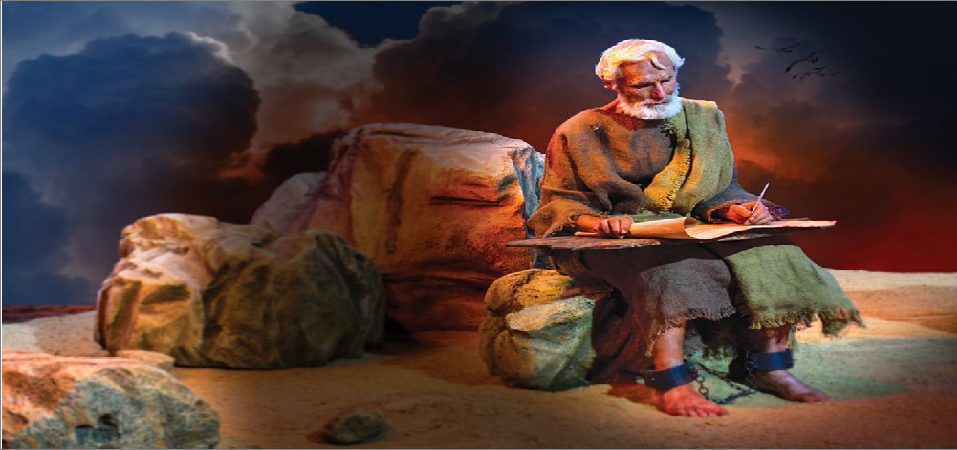
He was under the persecution of Roman emperor Domitian. They banished him to the Island of Patmos (Greece), a common punishment during the imperial era. When boiling oil could not touch John, every attendee in the Colosseum accepted John’s message. 

When I visited Kos Island, I was informed that Patmos was five hours away with a ferry, and Kos itself about an hour from Thessaloniki. John wrote the Revelation: revealing and totally ecclesiastical with stars, horns, trumpets and kingdoms.

From Rome, John has been sent to Patmos to be forgotten. The emperor did not want to risk another loss of subjects; he could not predict the next miracle. But it was in that Patmos that John did his most important work: writing the Revelation. In the Scripture Union in secondary school, I have called it the Book of the Future.

It happens in some companies: the most brilliant staff members have strong visions. Many people are threatened. So, to stop them, they would conspire to send them to far away branches where they would be forgotten.  

Interestingly, like John, those great workers, right in those branches would see great revelations of the companies. Yes, from the branches, they would understand the companies better. That is it – in the wilderness of those far away branches, we can see a future, unbounded by the noise of the headquarters. Like John who saw a big vision of the future more than anyone, we can do great things for where we work or in our sector. John who later served as Bishop of Edessa (Turkey) triumphed: the banishment promoted him to see a bigger world than Rome, and wrote the Revelation. 

Going to “Patmos” could be necessary in a globalizing world. When they send you out, do not be troubled. Your revelation to career ascension may come from it. Yes, when Patmos comes, it could be the path to the mountaintop.

LinkedIn Comment on Feed

The core lesson here is the responsibility to continue to work harder even when sent to that branch, and find a vehicle to ensure your work is visible. John was writing even in Patmos when there was none to preach; he adapted his playbook to account for his environment.

For you, even in that branch, you could still be producing strategy documents, sharing with colleagues. That you are warehoused in a rural branch should not stop that thought-leadership in this internet era. When I was in a Lagos Bank,  there was a manager in the Makurdi branch. Everyone knew he was brilliant with his reports on business. 

The key is this: there is no excuse whether in a village, branch or HQ to find a mechanism to make your talent continue to shine. They took out John’s voice, but he pivoted to his hands. You need to adapt when sent to that branch or rural area.

Yes, one thing is evident: being sent as part of future leadership preparation is different from “banishment”
The Need to Revamp The Nigerian Housing Sector

0

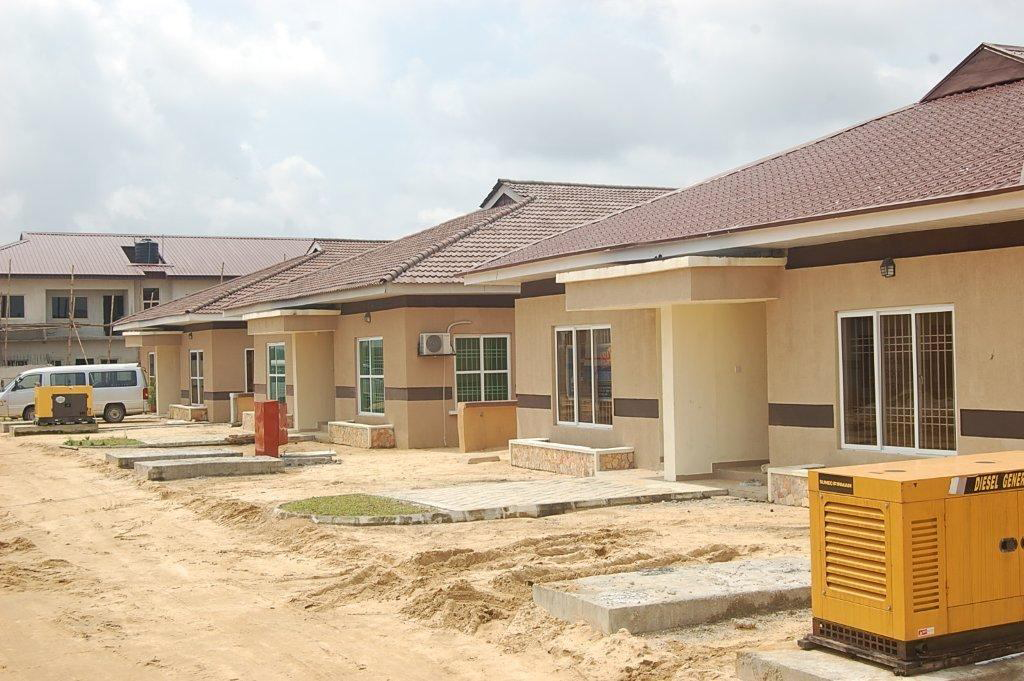
When I relocated down East and started looking for accommodation in Enugu, I faced a lot of challenges. It was hard finding an apartment that was conducive, safe and relatively affordable. People advised me to pick up any available house I see and settle down first before I can make out time to find something that suits my “taste”. It was made to look as if I was looking for something unattainable because, as they all said, I can never find an apartment that will meet all my specifications. But then, most of the apartments these agents showed me were quite unfit for humans to live in.

The way our people sit in their houses are both funny and unfortunate. One of the apartments I was shown was built at a point where floods from two different directions converge and then make their way together into a nearby river. The house was tastefully built, with all the fittings intact. But anybody that lives there will not be able to leave or enter his house anytime heavy rain falls. Each time I pass that street and look at the house, I can’t help but wonder what the people that live in the ground floor pass through during rainy seasons. Things will be made worse for them considering that there was no drainage constructed on that street.

Another apartment that was shown to me was also tastefully built, with wide rooms and high ceiling. And it was relatively cheap compared to the area it was located. But two things “killed” that house. The first one is that it is near a very busy road and it is sited at a sharp bend. The next problem is that high-tension wire passed through the compound – not over the roof anyway, but it was so close to the front balconies that somebody on the second floor can extend a pole and touch the wire. And people live in that compound.

There are so many other challenges I can’t even start mentioning here but I want to believe the message is already passed. The truth here is that Nigerians don’t consider their safety and that of their tenants when they build houses. The desire to live and operate in “good locations” must be the reason behind this. Today we are talking about flooding and pipeline explosions. We hear of people coming out of their houses late at night only to get electrocuted by high-tension wires that cut without their knowledge. We hear of trucks failing brake and ramming into nearby houses and shops. We hear of buildings collapsing. The list is endless. But who should we blame for this?

Some people will turn around immediately to remind us that the government approved the building of those houses; and they are right. No house is built in Nigeria today without the owner “settling” those in the Ministry of Works. But I am yet to see any erected structure that was pulled down by the Ministry because of the risk it poses to would-be occupants. But that is a story for another day.

If you ask me who to blame for what is happening today in the housing sector, I will point my finger at both the land owners and their tenants. From what I gathered, people buy land these days based on how much rent costs in the area and not based on the features of the piece of land. When they acquire this land, they erect structures on it as soon as they can and then sit back and wait for tenants to come begging at their doors. Tenants will fulfil these landlords’ dreams by packing into the buildings without considering their safety. But if the landlord was made to wait for a year or two before somebody approaches him with half the amount he pegged for the rent, he will think straight before acquiring another piece of land.

As I blame the government for approving the sale and erection of structures on unsafe areas, I also blame the tenants that patronise those “greedy” landlords. Nigerians should learn to get maximum values for their rents. They shouldn’t let these estate agents talk them into renting unsafe apartments. The ideology of “move in first and then find better apartment when you settle” should not lure anybody into taking what will endanger their lives. Let’s leave these landlords to live in their “death-trap” houses alone.

Congratulations Terhemen Agabo for Winning Chevening Scholarship

0

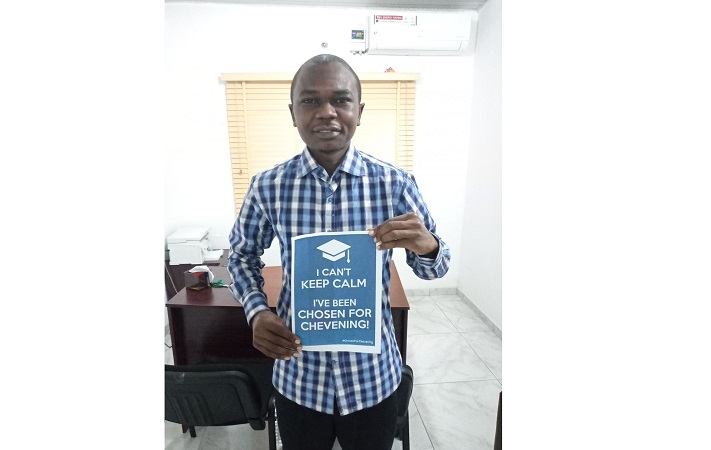
Congratulations Terhemen Agabo, a Tekedia Institute columnist, for being selected for Chevening scholarship. Terhemen will be studying MA Development Economics at the University of Sussex. From all of us at the Institute, we want to wish him an amazing future. Yes, he can crack the code for economic equality. He has written on “A Simple Model of Economic Prosperity for All” thus:

“According to economists, the distribution of wealth in society is determined by the ownership of factors of production namely Land, Labour, Capital and Entrepreneurship. So, people who own one or more of the factors use them as sources of income as they engage in economic activities. You pay me rent for using my land, wages for labour, interest for capital and profit goes to the entrepreneur. “

A Simple Model of Economic Prosperity for All

Banks of the Future Would be Platforms; UBA Unveils Radio Channel, RED Radio

1

A few hours ago, I wrote how Nike, the athletics wear brand leader, has improved its financials by working to control demand, over just focusing on the supply of the products. In the last few years, Nike began selling directly to customers, capturing more values over mere reliance on departmental stores like Macy’s. But the biggest element  of its redesign was its efforts to build a community around the brand. Yes, with Nike athletics club and training app, Nike has seeded a tribe, and in the process disintermediated many partners, improving margins along the way.

The success of Tekedia Mini-MBA is partly based on the fact that Tekedia has demand. Yes, we have users who come here to read us (Thanks). Without those users, the traction we have would not have been possible. At a larger scale, you can also say the same thing for Facebook which is doing many things (shopping, events, etc) simply because it has the users already. Indeed, if the users are already in-house, getting more from them becomes easier.

On that construct, leading firms are doing everything to bring those users into their ecosystems. Nigeria’s United Bank for Africa (UBA) is executing that playbook with its REDTV. Now, the pan-African bank has launched an online radio channel called RED Radio. You would expect RED Radio to help the bank bring new users and keep them within the UBA ecosystem. 

“Creativity and innovation are a powerful combination and every detail in an art piece is important and meaningful. This applies to growing businesses and budding entrepreneurs. You will encounter challenges, like I did, but each experience is a lesson that brings you closer to your goal. That is the beauty of creativity.”

Continuing, Elumelu remarked, “There are many ways to make something beautiful, to make a sound interesting or to bring a story to life. You can define your expression, and today, as UBA’s RED Radio launches, I wish Bola Atta and her enterprising team many successes through this beautiful medium of expression.” Group Chairman of UBA, Tony O. Elumelu


The Unemployment Rate in Nigeria – We Emailed NBS for The Report’s Raw Data

1

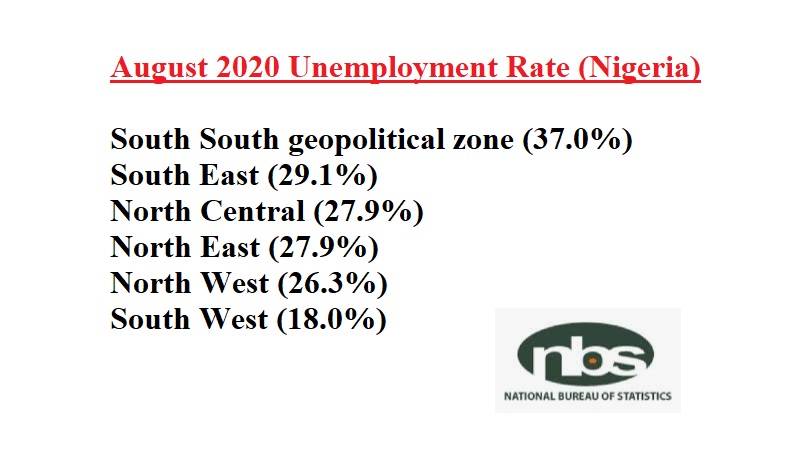
This data below is from the National Bureau of Statistics, Nigeria, according to Nairametrics. I am still trying to understand the possibility of this. How did Covid-19 affect South South more than most parts of the north to have triggered this level of unemployment.  With sustained pockets of insecurity in the Northeast, its unemployment was close to 10% better than the South South region. But as this report gets wider distribution, I want to see the raw numbers behind the percentages. So, Tekedia has asked NBS if it could share its raw numbers.

If we make progress, I will update the community here. But as it stands, I do not believe the usually reliable National Bureau of Statistics on this. That Rivers state has the second worst unemployment rate in Nigeria at 43.7%? That is a Nigeria’s tier-1 city in the same league as Lagos, Abuja and maybe Kano.

  • August 2020 Unemployment Rate (Nigeria)
  • South-South geopolitical zone (37.0%)
  • South East (29.1%),
  • North Central (27.9%),
  • Northeast (27.9%),
  • North West (26.3%),
  •  South West (18.0%).

Rivers State is ranked second place, with unemployment in the region at 43.7%, and underemployment at 19.8%. 1,714,189 residents were recorded as unemployed, with a total labour force of 3,921,860.

Yet, I am open to learn. So, if you can help, please help explain how these numbers could be possible under any scenario. I hope to read you.

Follow the conversations here on LinkedIn as people offer insights and perspectives.

Their was no total lockdown in the North and many South south had their business locked down , the North went back to the farms while people at the South south where at home with zero productivity . The NBS data is the most accurate data you can get in Nigeria .

My response: This seems to be a really good reason. I think you have a point here: no lockdown in the North while the South had lockdown. Yet, why the exception to SouthWest which I guess was also locked down?