Mr. Bean (Rowan Atkinson) checked into a hotel in one of his movies. While he was admiring his room, his car’s steering wheel was returned to him by a porter. But the young man did not leave immediately because he was expecting a tip from him. Unfortunately for him, Mr. Bean did not know the ethics of tipping workers, especially those in the hospitality industry. The young man decided to remind Mr. Bean that he was yet to give him “something” so he cleared his throat several times, drawing Mr. Bean’s attention. But then, Mr. Bean, in his usual manner, misunderstood or chose to misunderstand the young man and instead of giving him money, he gave him menthol sweets to help him clear his throat very well.
One thing about comedies, including Mr. Bean’s farce, is that they are performed to address and correct issues in the society. In this case of Mr. Bean and the porter, it is hard to say who should be corrected and which issue should be addressed. But, if you ask me, I will say that both Mr. Bean and the porter needed corrections. Mr. Bean should have known the usual ethics in the hospitality industry while the porter shouldn’t have asked for a tip. Tips come from the heart; it is not coerced. That’s the message behind this essay.
A few days ago, I received my regular news updates from Google and was shocked to see the case of a young man sacked by his employer because he received a tip ($100) from David Adedeji Adeleke, aka Davido. This young man called on Davido to come to his aid by telling his employer that he “did not beg” him for the money. The young man in question works in an airport and it was revealed that his employer banned them from receiving tips.
I don’t know why the young man’ employer and so many other Nigerian employers felt that tips should be criminalised in the country. Both the private and public sector in this country frown at it. Some people will tell you that tips will compromise your stand on certain issues, but I don’t see how a sign of gratitude, which was given after services have been rendered, can compromise decisions. Maybe the problem we have here is that we see tips and bribes as one and the same thing. This then calls for the need to differentiate the two.
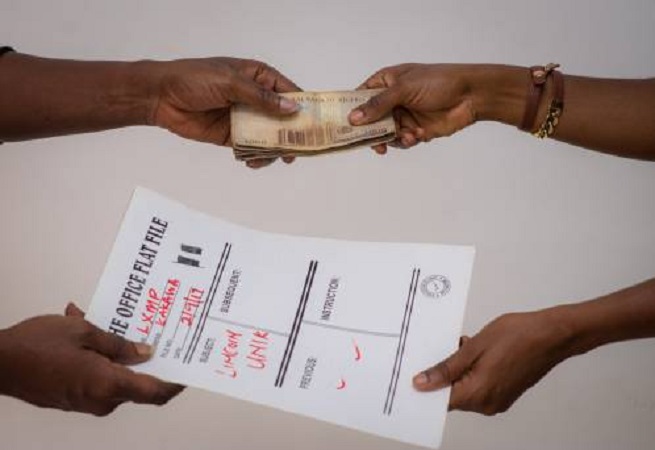
Bribery is wrong. The reason is that it makes people do what they shouldn’t have done. It tackles a person’s moral belief and conscience. In fact, my father never called it a bribe; to him, a bribe is “commit”. He will say something like, “he will commit the man to do the work”, “the man has been committed”. This simply means that bribery is an incentive given before a service is rendered so as to compromise the person’s decision. Hence, for it to be called a bribe, there must be an intention to “coerce” and it must be done “before” the service was rendered (even if it was a promise of “something”).
But when it comes to tips, the intention is to show gratitude and to encourage. Furthermore, tips are given after services have been rendered. A lot of us feel so much gratitude, or even admiration, for the way a person did his work. We know that person is going to be paid by his employer for the work he did but we want the person to realise how we felt about what he did. For those reasons, we sometimes dip our hands into our pockets and hand workers money or other forms of gifts. It is not coercion. You didn’t make the person serve you the way he did; but you will definitely make him do his works better, even to others.
But the question still remains, “Why do Nigerian employers criminalise tips?”