DD
MM
YYYY

PAGES

DD
MM
YYYY

spot_img

PAGES

Home Blog Page 615

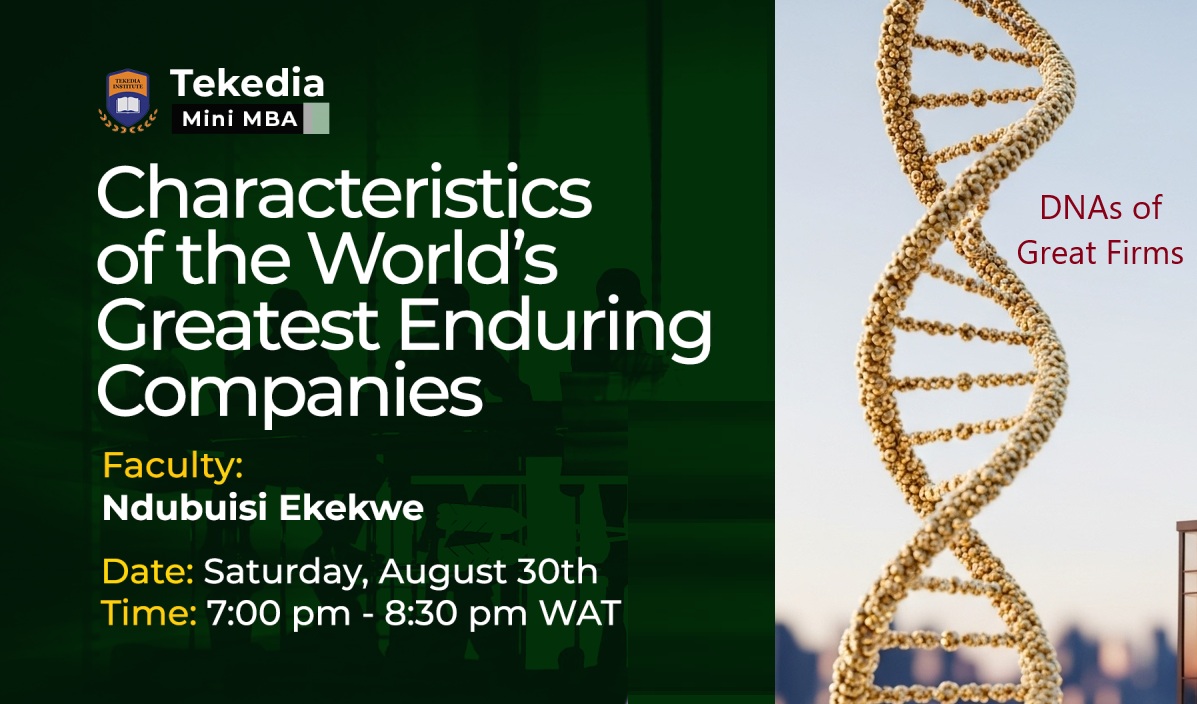
Characteristics of the World’s Greatest Enduring Companies

0

The pursuit of corporate endurance is not merely a game of market capitalization but a deep exercise in engineering a company’s very DNA. The world’s greatest enduring firms, from technology giants to industrial leaders, are defined not by their fleeting profits but by their ability to navigate and shape market systems. They understand that winning is not about simply competing within an existing ecosystem; it is about establishing a new architecture of commerce that others must follow. This foundation of systemic control creates an unassailable moat against competitors and provides the bedrock for long-term survival.

This longevity is powered by a relentless, dual-pronged focus on innovation and execution. Enduring companies are perceptively innovative, constantly pushing for new solutions to unmet needs, yet they are also ruthlessly pragmatic in their application. Their business model is a simple playbook: they solve market frictions by building platforms and services that their customers cannot imagine living without. This customer obsession is not a slogan but an operational truth, driving every strategic decision and ensuring that the company’s value proposition remains fresh and indispensable.

Ultimately, the blueprint for an enduring company is built on a simple premise: a great company is the sum of its awesome products and superior execution. Vision is translated into a clear mission, and that mission is executed with discipline and tenacity. It is this combination of forward-looking vision and flawless, on-the-ground delivery that transforms a mere business into a category-king, securing not just a place in the market but also a place in the annals of business history.

Today, at Tekedia Institute Mini-MBA, I will explain four things which define greatness in companies and how those firms become category-kings in markets. Register for the next edition of Tekedia Mini-MBA which begins next month here.

Sat, Aug 30 | 7pm-8.30pm WAT | Characteristics of the World’s Greatest Enduring Companies – Ndubuisi Ekekwe

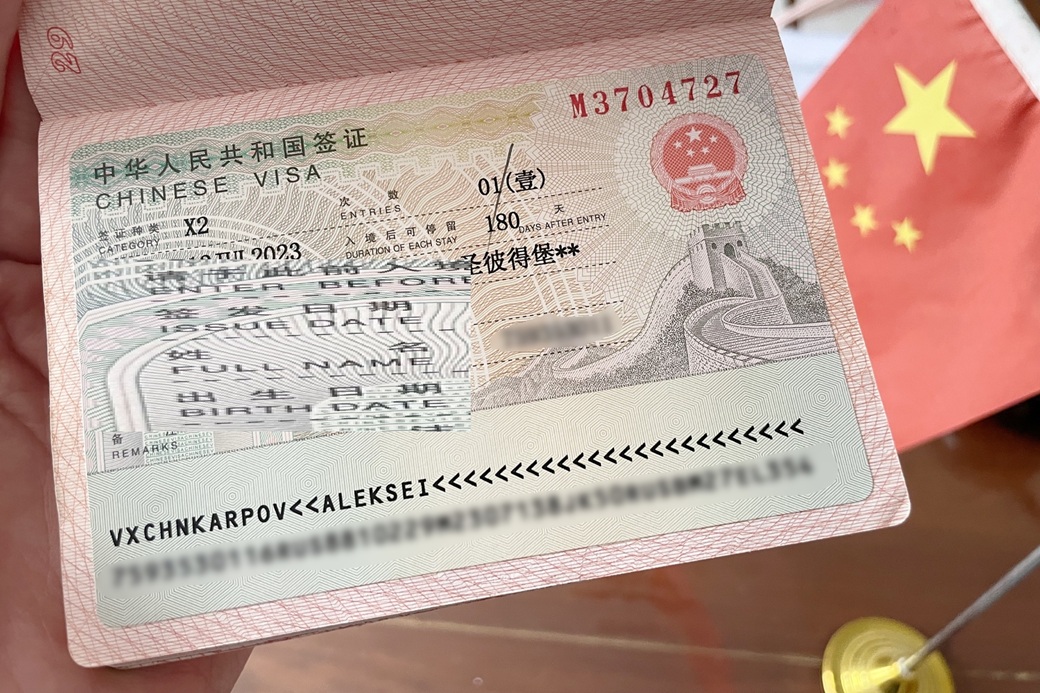
China to Launch New K Visa on October 1, Targeting Young Global Tech and Science Talent

2

China is set to introduce its new K Visa on October 1, 2025, in a move widely seen as part of its strategy to open its economy further and compete for global talent.

The visa is designed to attract young professionals in science, technology, and entrepreneurship, marking a shift towards policies similar to talent visa schemes in the U.S., Europe, and Singapore, which have long been magnets for skilled migrants.

Unlike traditional Chinese work visas, the K Visa removes the hurdle of employer sponsorship. Applicants will not need a job offer or invitation from a local employer before applying, making it easier for independent researchers, entrepreneurs, and innovators to gain entry. Holders will also enjoy multiple entries, longer validity, and extended stays, enabling participation in research collaborations, academic exchanges, cultural projects, and business ventures.

The eligibility criteria highlight China’s focus on the next generation of innovators. The scheme primarily targets individuals under 45 years old, with advanced degrees from top global universities or work experience in high-level research labs and leadership roles in science or technology sectors.

This mirrors international practices, where countries like the U.S. offer O-1 visas for individuals with extraordinary ability, the EU promotes Blue Cards for skilled professionals, and Singapore markets its Tech.Pass to attract top global tech talent.

China’s approach reflects a growing recognition that access to global knowledge and human capital is as critical as domestic investment in innovation. Beijing aims to position itself as a global hub for science, technology, and entrepreneurship, in line with its ambition to rival Western economies in critical sectors such as artificial intelligence, renewable energy, biotech, and advanced manufacturing.

The visa’s introduction is also part of a broader liberalization effort. By July 2025, China will have signed visa-free or mutual exemption agreements with 75 countries, complementing the new program. At the same time, inbound travel is surging: 38.05 million international trips were recorded in the first half of 2025, up 30.2% year-on-year, signaling revived foreign interest in China’s economy and opportunities.

For young professionals worldwide, the K Visa opens a new frontier. Just as the U.S., Europe, and Singapore have used talent visas to draw some of the brightest minds into their economies, China is now competing on the same playing field, offering international innovators a pathway into its expanding technology and research ecosystem.

Key Features of the K Visa

Multiple Entries: One of the standout aspects of the new program is its flexibility. Visa holders will be able to enter and exit China multiple times over the visa’s validity period, encouraging ongoing international collaboration and cross-border innovation.

Longer Validity and Extended Stays: The K Visa grants extended validity periods, allowing foreign professionals to remain in China for longer durations without frequent renewals. This makes it ideal for long-term projects, joint research initiatives, and entrepreneurial ventures.

Ease of Access: Unlike other visa types, the K Visa does not require applicants to secure a job offer or invitation from a Chinese employer. This opens the door for independent talent, recent graduates from top universities, and early-career innovators seeking opportunities in China’s growing technology ecosystem.

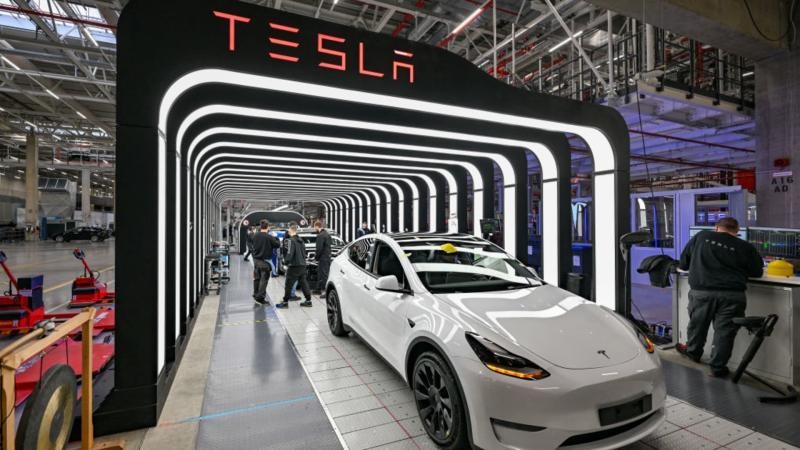
Crashes, Lawsuits, and Lagging Tech: Tesla’s Struggle to Save Its “Full Self-Driving” (FSD) Reputation

0

On a humid night in 2019, a Tesla Model S sedan sped through a Key Largo intersection at over 60 miles per hour. Behind the wheel was George McGee, who admitted he had dropped his phone while driving and thought Tesla’s Enhanced Autopilot system would stop the car if an obstacle appeared. It didn’t. The vehicle slammed into a parked car and the couple standing beside it, killing 22-year-old Naibel Benavides and gravely injuring her boyfriend, Dillon Angulo.

Earlier this month, a Miami federal jury ruled that Tesla bore partial responsibility for the crash and ordered the company to pay $242.5 million in damages. For Elon Musk’s automaker, the verdict is more than a financial blow—it strikes at the heart of Tesla’s boldest bet: convincing the world that its self-driving technology, branded “Full Self-Driving” (FSD), is both safe and revolutionary.

Tesla has now filed a motion to appeal, asking a Florida federal court to toss out the jury’s decision or order a new trial. In filings, its legal team from Gibson Dunn argues the Model S was not defective, that driver error caused the crash, and that damages should be slashed. Compensatory damages, they argue, should not exceed $69 million, which would lower Tesla’s liability to $23 million. Punitive damages, they say, should also be capped under Florida law.

For the plaintiffs, the verdict represented accountability. “This was not an indictment of autonomous vehicles, but of Tesla’s reckless and unsafe development and deployment of its Autopilot system,” said Brett Schreiber, lead trial counsel for the family.

The case is one of several courtroom battles casting a shadow over Tesla’s claims that FSD will one day eliminate road fatalities. And it arrives at a moment when consumer confidence in the brand—and its technology—is in decline.

The consumer backlash

Tesla has long marketed FSD as a breakthrough that would give drivers something close to a “personal chauffeur.” Owners can buy the system outright or subscribe for $99 a month, gaining access to automated lane changes, traffic-aware cruise control, and navigation on city streets. Yet manuals warn users to keep their hands on the wheel and eyes on the road, a contradiction that critics say shows Tesla overselling its system.

A new survey from Slingshot Strategies suggests that the marketing gap is catching up with the company. Out of 8,000 Americans polled, 35 percent said FSD makes them less likely to buy a Tesla, compared to just 14 percent who said it would increase their interest. Nearly half of the respondents said they believe such technology should be outright illegal. Among active EV shoppers, the numbers were scarcely better: only 20 percent said FSD made them more likely to buy a Tesla.

Evan Roth Smith, who led the research, said the findings point to a disconnect between Tesla’s bold claims and consumer perceptions.

“The company has the worst reputation of any EV maker in the U.S.,” he said.

That reputational slide comes at a vulnerable time. Tesla’s European sales plunged 40 percent in July, marking a seventh consecutive monthly decline, while competition from BYD in China and Hyundai-Kia in the U.S. is intensifying. Musk’s controversial political statements and open support for far-right groups in Germany have only deepened the brand’s headwinds in key markets.

The “self-driving” laggard

While Musk routinely calls FSD a “life-changing product” that can operate “in all conditions,” industry peers have steadily pulled ahead. Alphabet-owned Waymo, often treated as an underdog to Tesla, has quietly built a more reliable autonomous service. In Phoenix and San Francisco, Waymo operates fully driverless ride-hailing cars that carry paying passengers—without safety drivers in the front seat.

Baidu’s Apollo Go has launched robotaxis across several Chinese cities, likewise advancing to real-world deployments. Tesla, by contrast, is still testing supervised ride-hailing in Austin, Texas, and the San Francisco Bay Area. Vehicles there still require human operators, either as supervisors or behind the wheel.

For Musk, the stakes are existential. He has said Tesla’s future depends on delivering autonomous driving at scale. The automaker still relies almost entirely on EV sales for revenue, and its product lineup is aging. A new Model Y variant was recently launched in China, but Musk admitted it may “never” reach U.S. production given the company’s push toward self-driving.

Yet convincing consumers is proving harder than engineering software. Tesla executives have acknowledged that even among its own customer base, adoption of FSD is weak.

Musk said on a recent earnings call that the vast majority of people don’t know it exists. CFO Vaibhav Taneja added that many owners who could subscribe simply haven’t.

Tesla is now pushing harder. The company is promoting FSD through service appointments, targeted outreach, and financing offers that bundle the system into new purchases. Last week, Tesla advertised 0% APR on the Model 3—if buyers added FSD or transferred it from a previous car.

Still, regulators, juries, and consumers remain wary.

A fragile future

The Florida wrongful death verdict is not the first courtroom test Tesla has faced over Autopilot, and it won’t be the last. U.S. safety agencies continue to probe Tesla crashes, while lawmakers debate stricter advertising and safety rules for partially automated systems.

The irony is that the trial’s outcome was not framed as an attack on autonomy itself—plaintiffs emphasized that companies like Waymo show it can be done responsibly—but on Tesla’s approach. As Schreiber put it: “The jury heard the facts and decided this was a case of shared responsibility… That doesn’t erase the role Autopilot… played.”

Tesla’s bet on self-driving is a wager on timing: that consumers will embrace FSD before rivals like Waymo or Baidu lock in market dominance. But as lawsuits mount, sales soften, and surveys show distrust growing, Tesla faces a sobering reality. Its fiercest competition may not be the regulators in Washington or Brussels—but the perception, now hardening among buyers, that Elon Musk’s vision of autonomy is less about safety and more about selling hope.

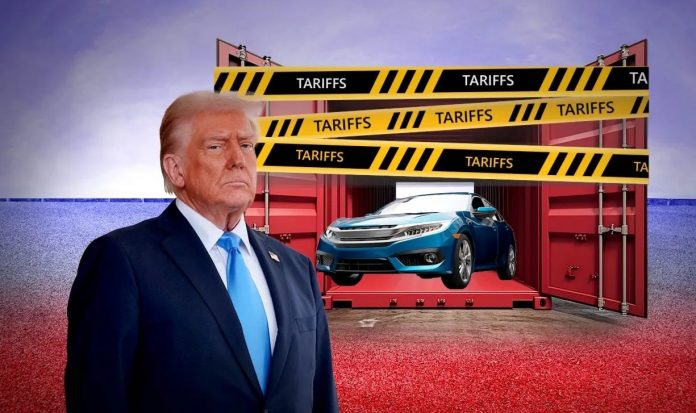
Federal Court Rules Trump’s Sweeping Tariffs Illegal, Setting Stage for Supreme Court Battle

0

A federal appeals court has delivered a major blow to President Donald Trump’s trade agenda, ruling that the sweeping tariffs he imposed on imports under emergency powers were unconstitutional.

The decision not only challenges the foundation of his “reciprocal” tariff regime but also casts doubt on the scope of presidential authority in setting U.S. trade policy.

In a 7-4 decision on Friday, as reported by CNBC, the U.S. Court of Appeals for the Federal Circuit ruled that Trump overstepped his authority under the International Emergency Economic Powers Act (IEEPA), the law he used to justify imposing wide-ranging tariffs on countries including Canada, Mexico, and China.

“The core Congressional power to impose taxes such as tariffs is vested exclusively in the legislative branch by the Constitution,” the court said in its majority opinion. “Tariffs are a core Congressional power.”

The ruling temporarily pauses enforcement until October 14, giving the Trump administration time to appeal to the U.S. Supreme Court, where the case could become a defining showdown over the limits of executive power in trade.

Trump responded swiftly, denouncing the Federal Circuit as “Highly Partisan” and vowing that the Supreme Court would vindicate him.

“If these Tariffs ever went away, it would be a total disaster for the Country,” he wrote on Truth Social. “If allowed to stand, this Decision would literally destroy the United States of America.”

White House spokesman Kush Desai reinforced that the tariffs remain in place for now, saying: “The President’s tariffs remain in effect, and we look forward to ultimate victory on this matter.”

The case against the tariffs

The ruling came in the consolidated case V.O.S. Selections v. Trump, which stemmed from lawsuits filed by more than a dozen states and several small businesses. The plaintiffs challenged Trump’s claim that IEEPA gave him virtually unlimited authority to impose tariffs on national security grounds.

“This decision protects American businesses and consumers from the uncertainty and harm caused by these unlawful tariffs,” said Jeffrey Schwab of the Liberty Justice Center, which represented small business plaintiffs.

His co-counsel, Neal Katyal, called the ruling a “powerful reaffirmation” of the Founders’ constitutional design. “Presidents must act within the rule of law,” Katyal said.

The Federal Circuit’s ruling followed an earlier decision in May by the U.S. Court of International Trade, which also struck down Trump’s tariffs as unlawful.

The appellate judges were highly critical of the breadth of Trump’s tariffs, which they said lacked any meaningful limits.

“Both the Trafficking Tariffs and the Reciprocal Tariffs are unbounded in scope, amount, and duration,” the court ruled. “These tariffs apply to nearly all articles imported into the United States, impose high rates which are ever-changing, and are not limited in duration.”

Trump’s administration had argued that IEEPA gave the president authority to impose tariffs to respond to emergencies such as fentanyl trafficking. That rationale was used to justify levies on imports from China, Mexico, and Canada.

But the judges rejected the administration’s claim, saying tariffs cannot be used as a blunt, unlimited tool under IEEPA.

A divided bench

Four judges dissented, arguing that the majority misinterpreted the law and that the plaintiffs failed to justify their request for summary judgment.

The case was heard by 11 of the Federal Circuit’s 12 judges. Judge Pauline Newman, 98, was absent, as she remains suspended amid a dispute over cognitive evaluations required by the court.

Political and economic stakes

The decision comes as the Trump administration continues to defend its tariffs as vital to U.S. economic and national security interests. Earlier Friday, Commerce Secretary Howard Lutnick filed a declaration warning that striking down the tariffs could cause “massive and irreparable harm” to U.S. strategic interests.

He argued the levies had reduced U.S. deficits and were critical to ongoing negotiations with foreign partners. “Such a ruling would threaten broader U.S. strategic interests at home and abroad, likely lead to retaliation, and derail critical ongoing negotiations with foreign-trading partners,” Lutnick said.

Trump has long pitched his tariffs as a cornerstone of his “America First” economic policy, arguing that they force trading partners to negotiate “fair” terms and protect U.S. manufacturers. But critics — including businesses, trade groups, and now federal courts — say the tariffs were sweeping, costly, and imposed without legal authority.

For now, Trump’s tariffs remain in effect while the administration readies its appeal to the Supreme Court. If the ruling stands, it would strip the president of a powerful trade tool he has relied on since his first term, and reassert congressional authority over tariff-setting.

The Supreme Court is expected to decide in the coming months whether it will take up the case. If it does, the decision could become a landmark ruling on presidential trade powers and reshape the balance between the White House and Congress in economic policymaking.

A U.S. appeals court ruled on Friday that most of the country’s sweeping new tariffs are illegal, setting up a potential Supreme Court showdown over the White House’s signature economic policy. The U.S. Court of Appeals for the Federal Circuit upheld a May ruling from a lower court, which said the administration overstepped its authority when it invoked the International Emergency Economic Powers Act to impose tariffs on trading partners. The decision keeps current tariffs in place until mid-October, however, to allow the White House to appeal.

TikTok Expands Direct Messaging Features with Voice Notes and Media Sharing

0

TikTok is giving users new ways to interact with others via direct messages (DMs), the company told TechCrunch on Friday. Users will now be able to send voice notes and share up to nine images or videos in one-to-one and group chats on the platform.

With these new features, TikTok is positioning itself as more than just an entertainment platform, aiming to become a place where users interact regularly beyond simply sending each other TikTok videos. Additionally, the new capabilities bring TikTok’s messaging experience more in line with that of other popular social apps and services.

With voice notes, users can record and send audio messages up to 60 seconds long. The launch of the feature comes as services like Instagram already offer the ability to send voice notes to others via DMs.

It makes sense for TikTok to add voice notes to its DMs, especially as a growing number of people, particularly Gen Z, are embracing the format for communication. The feature is rolling out over the next few weeks, TikTok says.

As for sharing photos and videos, users can either take a photo or video with their camera or select one from their camera roll to share it with others. They can also choose to edit the content before sending it.

For user safety, people can’t send an image or video as their initial message request. For example, if someone messages you for the first time, they can’t send a photo or video they have taken themselves; they can only share content already on TikTok. Additionally, when someone chooses to send a photo or video, TikTok will remind them to protect their privacy and be mindful of who they’re sending that content to.

While DMs on TikTok are unavailable to users under the age of 16, the company is adding protections for users between the ages of 16 and 18. For instance, TikTok has automated systems in place to detect and block images containing nudity. This means that the sender will be blocked from sending the nude image, and the receiver won’t see the image at all. Users above the age of 18 can choose to toggle this safety feature on in their app settings.

TikTok sees the new features as a way for users to express themselves and connect with others in ways that they’re already accustomed to. The move comes as TikTok has been working to build out its messaging product. Last year, the platform launched group chats, giving users the ability to chat with up to 32 people at once. TikTok also recently rolled out Creator Chat Rooms, a dedicated space for creators and their followers to connect and interact with each other.

TikTok’s Long Road to Becoming a “Social Platform”

TikTok’s DM expansion is the latest chapter in the app’s ongoing attempt to reposition itself from being viewed solely as a short-video entertainment hub to functioning as a full-fledged social platform. The company has experimented with this idea before. One notable effort was TikTok Now, a feature launched in 2022 that closely mirrored BeReal, the French social app that encouraged users to post real-time, unfiltered photos. The experiment was aimed at sparking more spontaneous social sharing, but it failed to gain significant traction and was quietly retired in many markets.

Beyond TikTok Now, the platform has also struggled to rival Instagram’s messaging ecosystem, where DMs are central to how users interact daily—sharing memes, posts, and short-form videos seamlessly. Instagram’s head start and Meta’s broader integration across WhatsApp and Messenger created an entrenched messaging network that TikTok has long sought to challenge but has yet to match in depth or adoption.

This history underscores why TikTok is doubling down on DMs today. The company is attempting to replicate the daily-use features that keep users locked into rival apps, while also leveraging its massive Gen Z audience already engaged with short-form video content.

Messaging Beyond Messaging Apps

TikTok is not alone in adding messaging capabilities as a way to expand beyond its core offering. Spotify, for instance, recently introduced its own in-app messaging tools, allowing users to share and discuss music directly inside the platform rather than relying on external apps. This signals a broader trend in the tech industry where platforms are trying to capture more of users’ social interactions within their ecosystems, reducing reliance on competitors like WhatsApp, iMessage, or Instagram.

The bigger aim for TikTok is to use the conversations that happen within its app to boost revenue. The more engaged users remain, the more opportunities the platform has to strengthen community bonds, surface content, and ultimately increase revenue through advertising and potential new features.