DD
MM
YYYY

PAGES

DD
MM
YYYY

spot_img

PAGES

Home Blog Page 6159

SPECIAL REPORT: The Green and Dark Sides of Times Higher Education’s Ranking of Nigerian Six Universities

1

It is no longer news that some of the Nigerian universities have been on global rankings in the last few years. It is not new that these Universities have never made it to top 10 in but to above 400th in the world. Like other educational institution ranking organisations in the world, the Times Higher Education Global University Rankings for 2021 establishes once again while Nigerians always like to see their higher institutions among the best in the world. The moment THE released the 2021 rankings both the current and past students including Vice Chancellors and faculty members celebrated the feat on social media and other platforms.

As these stakeholders continue celebrating the achievement, this piece examines the green and dark sides of the individual indicators used by the THE for overall rankings of the University of Ibadan, the Lagos State University, the University of Lagos, the Covenant University, the University of Nigeria and the Obafemi Awolowo University. This examination was not done in isolation, it considers counter and alternative narratives about the efficacy of global rankings in general and the place of Nigeria’s norms and values in particular.

The Dark Side of Global Rankings

The Academic Ranking of World Universities (ARWU), The Times Higher Education (THE) World University Rankings and QS World University Rankings are the prominent rankings in the last few years, based on their consistent evaluation of Universities across the world using informative and performative approaches. The methodologies of ranking being used by these organisations have been questioned severally by stakeholders in the education sector and public affairs analysts. Based on this, some indicators or measures being used have been reformulated, addressing inadequacies such as using same indicators to determine competitiveness of technical universities and universities with mixed courses pointed out by the stakeholders and experts.

Beyond the methodological issues, the narrative has been that rankings [of the identified organisations earlier presented] are producing imagined competition instead of intensified competition between universities. Imagined competition, according to the stakeholders who aligned with it, is being created with the evaluation of universities without considering differences in markets [countries]. For instance, this school of thought believes it is out of context to compare a university in a developing country that lacks the needed strategic resources to compete with a university in a developed country, where the resources are readily available. Therefore, when all the universities cannot have same strategic resources for playing the right strategic games needed for intensified competition, the idea of letting the public see one university as the best should not arise.

In our understanding of the recent rankings of the six Nigerian Universities, some of these issues emanate. From the comparative presentation of the Universities, it emerges the universities competed within citations indicator more than other indicators adopted by the Times Higher Education. It is also occurred that these Universities played strategic choice games within international outlook indicator at the expense of teaching and research indicators.

Our Data and Measures

The Times Higher Education University Rankings and scores associated with country’s norms and values constituted our data. According to the THE, the University of Ibadan, the Lagos State University, the University of Lagos, the Covenant University, the University of Nigeria and the Obafemi Awolowo University are the Nigerian best global universities within 401-500 Band, 501-600 Band, 601-800 Band, 801-1000 Band and 1001+ Band respectively.  Since these Universities are between 401 and 1001+ Band, we reclassified the Band using average analysis.

Our analysis establishes that these Universities could be placed within 001-101+ Band [the new classification]. This indicates that these Universities have demonstrated that they have collective ability and capability to place Nigeria within top 100 Universities in the World. We further explored the new classification by situating the Universities within THE’s 155 Band, which has the University of Cape Town [the most ranked University in South Africa]. This was done with the intent of knowing the place of scores of individual indicators of the Nigerian Universities in the context of those attained by the University of Cape Town, South Africa. How norms and values [see earlier notes] conformed with The Times Higher Education University Rankings were also measured by our analyst

Emerging Insights

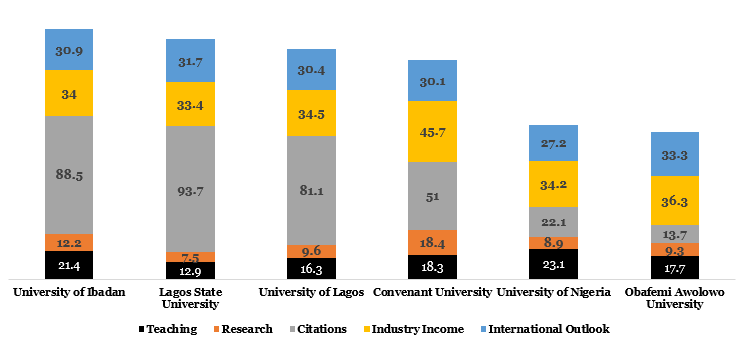
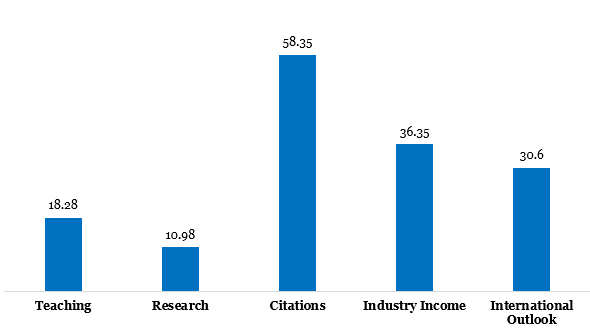
As pointed out earlier, the six Nigerian Universities’ performance in the THE’s rankings differ. While the University of Ibadan is the best in Nigeria [overall ranking], The Lagos State University is better in terms of Citations than the University of Ibadan. While the University of Ibadan is the best in the country, the Covenant University, the Obafemi Awolowo University, the University of Lagos, the University of Nigeria are better than the University of Ibadan in the area of transferring knowledge to industry [see Industry Income indicator on Exhibit 1]. Looking at the scores on Exhibit 1, it is also obvious that the Covenant University is better than the University of Ibadan in terms of research. Surprisingly, the University of Nigeria with its 5th position in Nigeria is the best Nigerian University in teaching than the University of Ibadan. Overall, the individual indicators show that all the six Universities are better in Citations followed by industry income, international outlook than in teaching and research.

With this, our analyst notes that there is a strategic issue that must be addressed by the stakeholders. The individual performance on the indicators, according to our analyst, indicates that faculty members [lecturers] are paying more attention to what would enhance their promotion. It also suggests that administrators of the Universities are amassing and concentrating their resources on the indicators they see as strategic to the methodologies of THE at the expense of those that have tendency of increasing their rankings within teaching and research.

Exhibit 1: Nigerian Top Universities for 2021
Source: Times Higher Education University Rankings 2021; Infoprations Analysis, 2020

Exhibit 2: Average Ranking Per Indicator
Source: Times Higher Education University Rankings 2021; Infoprations Analysis, 2020

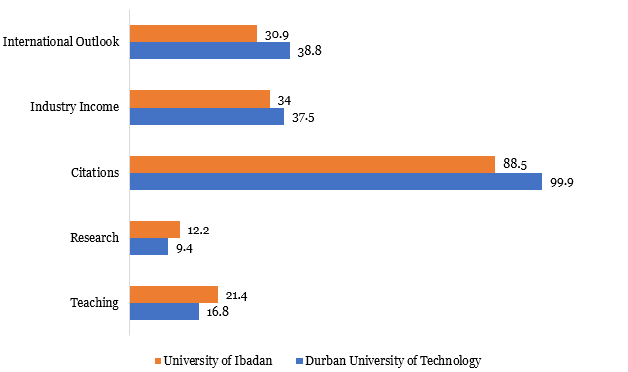
Exhibit 3: University of Ibadan and South African Universities within 401-500 Band
Source: Times Higher Education University Rankings 2021; Infoprations Analysis, 2020

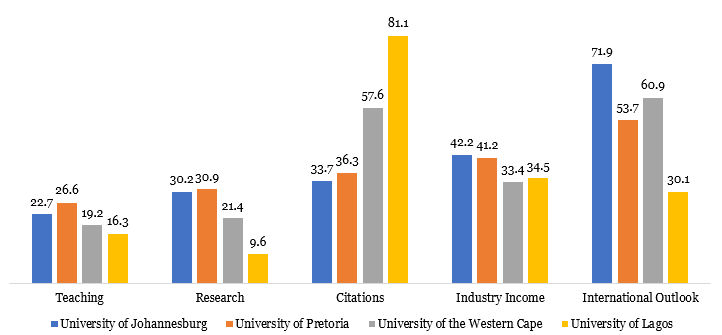
Exhibit 4: University of Lagos and South African Universities within 601-800 Band
Source: Times Higher Education University Rankings 2021; Infoprations Analysis, 2020

Exhibit 5: UNN, OAU and South African Universities within 1001+ Band
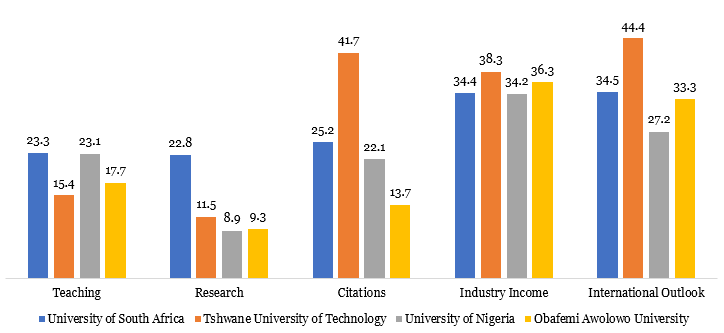
Source: Times Higher Education University Rankings 2021; Infoprations Analysis, 2020

Exhibit 6: Lagos State University and South African University within 501-600 Band
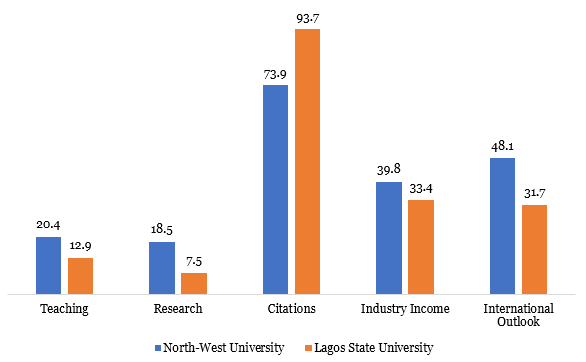
Source: Times Higher Education University Rankings 2021; Infoprations Analysis, 2020

The Place of Nigerian Universities in 001-101+ BAND

When we placed the University of Cape Town, which was ranked within 155 Band along with the Nigerian Universities [using our reclassified Band], analysis reveals that the Lagos State University is the only Nigerian University that has a citation score beyond what the University of Cape Town attained. The University of Cape Town is also better in other indicators than the Nigerian Universities [see Exhibit 7]. If Nigerian Universities want to be in top 101+ Band by 2022, our analyst notes that they need to work out modalities that would help playing the right strategic games before the year.

Exhibit 7: Nigerian Universities within Reclassified Band and the Best South African University within 155 Band
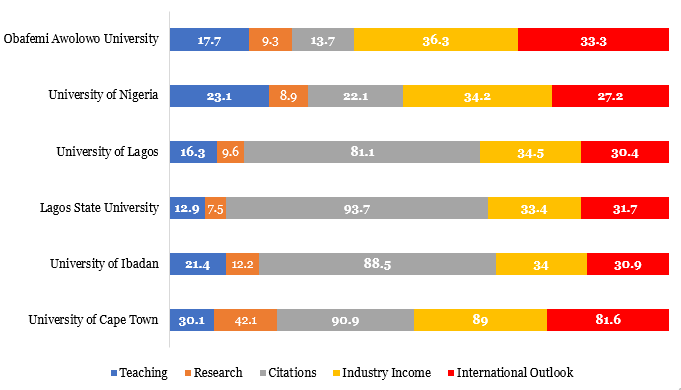
Source: Times Higher Education University Rankings 2021; Infoprations Analysis, 2020

The Green and Dark Sides of Country’s National Norms and Values on the Rankings

Since stakeholders in the six Universities are expected to interact among themselves and with those outside their Universities environment before making significant inputs that produced the outputs, which resulted in the rankings, our analyst examines the place of national norms and values on the rankings of the Universities. This was done with the intent of knowing the impact of the stakeholders’ behaviour in terms of expected relationship patterns and taking decisions on critical issues and needs.

Analysis suggests high percent of the collective norms and values on the University of Nigeria and the Obafemi Awolowo University’s rankings than other 4 Universities [see Exhibit 8]. Strategically, this signifies that the University of Ibadan, the Lagos State University, the University of Lagos and the Covenant University have appropriate mitigation strategies for overcoming the negativities associated with the norms and values.

Disaggregated analysis, however, shows that the negativities impacted the rankings of the University of Ibadan, the Lagos State University, the University of Lagos and the Covenant University. Analysis reveals positive impact of the staff and administrators’ abilities of the University of Ibadan, the Lagos State University and Covenant University in creating processes that helped in dealing with issues and needs that were likely to prevent them from being ranked better [see Uncertainty Avoidance]. Despite this, it emerged that the University of Ibadan and the Covenant University along with the Obafemi Awolowo University, the University of Nigeria and the University of Lagos had organisational structures and processes including people with high status. These prevented staff at the lower level from working fearlessly towards the realisation of better overall rankings [see Power Distance], analysis suggests.

The sixth position occupied by the Obafemi Awolowo University, according to our analysis, is better understood within the national value that stresses Nigerians’ degree of controlling their desires and impulses based on the way they were raised [see Indulgence]. This implies that the staff and other stakeholders at the vanguard of ensuring better ranking for the University played less significant roles towards it.

The leading position occupied by the University of Ibadan resonates with the country’s norm that Nigerians always maintain some links with their past while dealing with the challenges of the present and future [see Long Term Orientation]. This indicates that the University wants to prove its past glory and successes. This is also observed in the rankings of the Lagos State University, the University of Lagos and the Covenant University. These Universities have one time or the other being ranked best in Nigeria and globally [especially the Covenant University].

Like the LTO that encourages the staff and administrators at the University of Ibadan towards better ranking realisation, the strategic goal and objective that the University must be the best equally helped [see Masculinity]. In this regard, the Lagos State University, the University of Lagos and the Covenant University followed the country’s oldest University [University of Ibadan]. In spite of these positives, these Universities [UI, LASU, UNILAG and CU] appeared to have staff and administrators who showed less degree of interdependence while working towards the attainment of the rankings [see Individualism].

Exhibit 8: Low and High National Culture Manifestation in the Universities’ Rankings
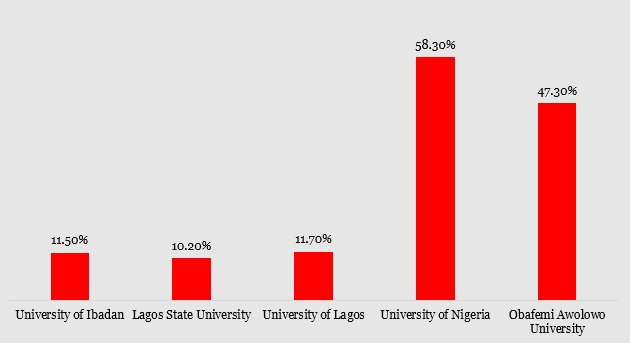
Source: Times Higher Education University Rankings 2021; Infoprations Analysis, 2020

Exhibit 9: National Culture Influence on the Universities’ Rankings
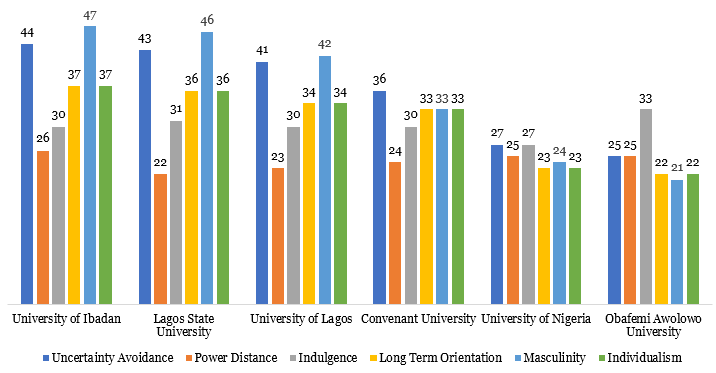
Source: Times Higher Education University Rankings 2021; Infoprations Analysis, 2020

How African Media could help address racism in the Western World – Interview with Tunde Alabi Hundeyin II

0

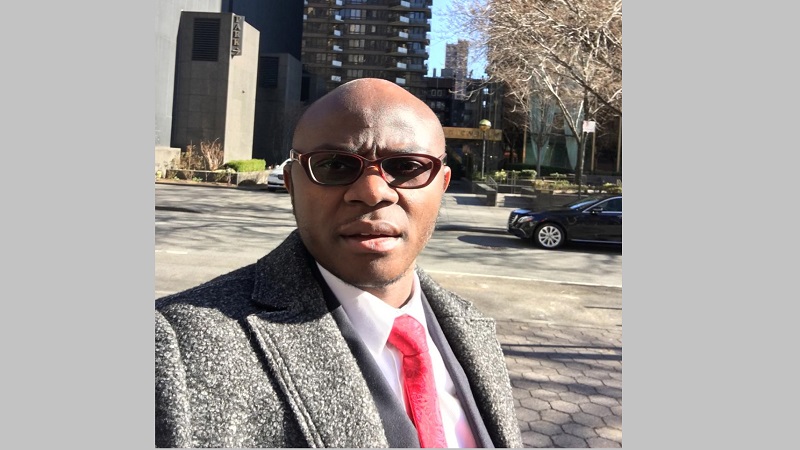
Tunde Alabi Hundeyin II, a Nigerian documentary photographer, is an alumnus of the Department of Communication & Language Arts, University of Ibadan,Nigeria. He is currently studying for a PhD in the UK at the University of Sussex. As a researcher interested in contesting a normalized stereotypical representation of African children in international media, he shared his experiences living, studying and raising a family in the UK in this chat with Rasheed Adebiyi,  Here are the excerpts.

Tekedia: Could you tell us about yourself?

Tunde Alabi Hundeyin II :  My name is Tunde Alabi-Hundeyin II. I had my first degree at the University of Ibadan where I  studied Communication and Language Arts. I graduated in 2004 and after then I worked in Globacom for nine years before I resigned in 2015 to move to the UK for my Masters Degree in Media Practice for Development and Social Change. So, within the time that I was in Nigeria working at GLO by the side I was working as a freelance filmmaker and documentary photographer.

Tekedia: What is the story behind your transiting to the UK?

Tunde Alabi Hundeyin II: So basically, the reason why I resigned from GLO was to transit to another career in media for development and that was why I resigned and moved to the UK to study. So, the plan was to finish studying after a year and then return to Nigeria to start a new career path, but then afterwards things changed. I got to the UK. I started studying Media Practice for Development and Social Change and  I realized that the University of Sussex is the best in the whole world for Development Studies  which is my wife’s area of expertise.  She has been working in the development sector in Nigeria  for several years. So,  I  just invited her to come to the UK to come  study at Sussex as well for her Masters in Development Studies at IDS (Institute of Development Studies). It’s the best place in the whole world for Development Studies while Harvard ranks second.

Tekedia: You earned your first degree in Nigeria. Now, you are doing a PhD in the UK. What are those things that are different between the two educational systems?

Tunde Alabi Hundeyin II: The differences between the educational systems in Nigeria and the UK are like the difference between the top of the mountain and the valley. So, first, the UK education focuses so much on reading for each module. When I say module what we call module here is what you call a course in Nigeria.  For each module or  elective that you do, you are required to read up to 15 or 20 articles. If you don’t read, you will be lost during intellectual discussions in class. So, the UK education system focuses a lot on personal study.  The scholarly articles are uploaded on student portal. Now, in each classroom, you would have people of varying degrees of experience. For instance, when I was studying for my master’s, it was a class of 30 and we had people from 15  countries. I had in class people of varying degrees of experience from Mexico, India, Britain, Germany, Sudan, South Africa, Kenya, Philippines, etc. From that class, you have people sharing their experience from different corners of the world. So, in the end you have a kind of robust and round education where you are not just taught theoretical principles but you also share experience and practical scenarios with your class mates. You share your own experience from Nigeria, they share their own experiences from Germany, America etcetera. So, it is a lot of different experiences, knowledge, situations and scenarios that are shared. Also, my course was a practice-based, we had a lot to do with cameras. We were always taking out camera working on documentaries, photography and film, photo and sound editing. We have adequate editing workshop studios and facilities you would not see even in commercial studios in Nigeria.

The library is also open 24/7 all year round. WIFI is all over the campus compared to Nigeria where you need to have your own mobile internet connectivity and all that. One other major thing I realized as difference between the UK and Nigeria education is the fact that in Nigeria you learn for reward.  You learn to earn a certificate. You learn to pass exams so the education is for the ultimate purpose of earning a certificate. It is for the purpose of moving to the next level and graduating and being a graduate but here in the UK, it’s a kind of transformational learning where you get theoretical and factual knowledge that creates real change.  You get information.  You get theoretical and practical knowledge that you can actually put to use. They also encourage reflective learning which is like a process that involves you asking yourself questions about the process that you have undertaken to learn a new thing. For instance, for my master’s dissertation,  I did a practice-based dissertation project with UNICEF in Nigeria. It was a photography project on one of the campaigns they were working on which was called Ending Violence Against Children. I had to take photographs of child victims of physical, emotional and sexual assault  to publicise their  campaign on social and print media. So, basically one of the things I did from that project was that by the time I got back to the UK, I submitted the pictures as my dissertation and I also wrote a 3500 word reflective essay which talked about the process by which I created that project for UNICEF. I captured the things that I did correctly and the things I did wrongly and what I did and how I helped myself to correct the process of the things that I did wrongly.

Another difference between these two systems of education is that lecturers are involved in your learning process. When you are given an assignment or essays (we do a lot of essays unlike in Nigeria where you are just asked to cough back what the lecturers taught you in class) the lecturers expect you to not just reflect on what you have read but to also bring your own positionality and position to what you are arguing about they just don’t want you to tell them 3+2 is 5 they want you to tell them why 3+2 is 5 and whether you agree or you don’t agree . so if you don’t agree present your own position let us know why you don’t agree and support it with some other sources that say not only 3+2 is 5 but 3+1+1 is also 5. They accept different perspectives. So like I was saying previously, lecturers are involved in that process of you doing your essays. While you are given an assignment, they expect you to book a session with your lecturer to discuss how far you have done that essay, what your arguments are what your methodology is , and your supervisor or your lecturer can still make some input while you are doing that assignment. So, they are involved in the process of you doing your assignment. It is not just a punitive style of education where you do an exam or a test or an essay and then the lecturer punishes you for getting something wrong. But here they get involved in your process of carrying out that work. Another thing is we address our lecturers by name, whether they are professors anything etc. that helps to relate with them on a very good level without fear or intimidation and a lot of African students struggle with this in the first few months.

Tekedia: You are a photographer who is trying to capture the stories of the downtrodden and displaced people. Tell us more about the motive behind this?

Tunde Alabi Hundeyin II: My PhD is in Creative and Critical Practice  in the School of Media Arts and Humanities, University of Sussex. So, it’s a practice-based research which contests the normalized stereotypes in the media representation of children from the Global South. How African children are presented as victims of poverty, how the black body is regarded as a toxic sight by the international media. So, my research challenges that visual culture where African children are presented in bad light. So for my research, what I’m doing is working with children who are displaced by Boko Haram in Nigeria. For my work, I have taken trips to displacement camps in northern Nigeria where I captured the children ethically. I have been doing participatory photography with these children aged between 10-15 teaching them how to capture photographs that tell narratives about their realities  which I have been presenting at exhibitions in Nigeria, in the UK and in America. so that’s what that project is all about. That project is actually a component part of my PhD methodology.

Tekedia: Recently, there was a wave of protests globally against racial discrimination in some countries like the US and parts of Europe. What is your experience like studying and raising a family in a predominantly white setting?

Tunde Alabi Hundeyin II: It has not been easy raising children in a racialized environment because like I said earlier black bodies in the western world are seen to be toxic and problematic. So, usually a lot of people, well not all white people, see black people in a negative light so it has not been easy because quite a number of times we’ve experienced racism.  A nurse at the University Health Centre once asked me  infront of my children if we had chocolate in Nigeria! I was just so taken aback by that question because I wouldn’t have imagined that someone would think that chocolates were such a luxury that we wouldn’t have them in Nigeria. Sometimes, some white people will ask you how you got to the UK probably imagining that you probably came in dingy boats across the Atlantic Ocean.  Or some would even ask you if it was true that you have lions as pets in Africa and things like that. So, some of them still have some perspectives that are questionable and it’s not really fair at all.  Last year, my son wanted to play basketball with some boys on the school playground during the break time. One of them told him he couldn’t join them to play and he was like why can’t I join you? The boy replied him that because you are Black you can’t join us. So, the school had to punish that boy for a week or so.  Every now and again, you get to hear some racist remarks from people.

But, one of the things we do as parents is that we speak a lot to our children about being black. We intellectually and emotionally empower them. There are some books that we’ve gotten-  Books on black excellence that talk about black heroes who have lived in America, Britain and all over the western world. They have another book on black inventors. We try to empower them with these books. We  read these books together every night before bed. Right now, my kids are 10 and 7 and they already know about Mandela, Martin Luther King, Malcom X, Rosa Parks, Maya Angelou and Beyonce. They know about many of these black heroes that have done positive things. So, they are so empowered about their blackness in a world that constantly questions their identities.  We try to just build their character and to let them know that anytime someone questions their identity, they should never respond negatively. I mean the day my son, Korede, was assaulted because of his colour, I was curious to know how he responded to the racist boy and the teacher told me that he didn’t retaliate or abuse the boy. He just remained silent and that was so encouraging for me. I felt so proud as a father.

Tekedia: How could the African media address these toxic narratives?

Tunde Alabi Hundeyin II: The African media should decolonise itself in its ideological thinking, content creation, and narratives. It’s quite disappointing when local media ape and regurgitate Western styles of representation. They should project the African culture, African excellence and promote untold narratives of Black resilience, ingenuity, and opportunities in the digital, agriculture, enterprise and entertainment industries. We need super-power media organisations to wrest the power of storytelling from the West.

Tekedia: Is there anything you miss about Nigeria? What is it?

Tunde Alabi Hundeyin II: Oh I miss a lot of things. Ever since I got here 5 years ago, I have always travelled to Nigeria every year, in fact, sometimes twice a year until last year when I didn’t travel at all. I have been feeling home sick for some time now. And this year too, I have not travelled to Nigeria so this will make it like the second year I have not travelled. So I miss quite a number of things. I miss Mama Put. Sometimes, when I see all those Mama Put pictures online, I always feel sad. I miss Gala and Fan Yoghurt that we used to eat and drink in traffic coming from work. I miss Lagos traffic. I miss the Lagos tension. You know the screams and the shouts across the streets. I miss that Lagos spirit. I just miss that environment.

Tekedia: As a Nigerian in Diaspora, is there a plan for some projects to help the Fatherland?

Tunde Alabi Hundeyin II: So earlier I mentioned the project I have been doing with children displaced by Boko Haram at the displacement camp. That’s one project I have been doing and I hope to continue to do even after my studies. The children have been empowered to take pictures of themselves, to know how to tell their own stories, create their own narratives rather than other people speaking for them. One of them said she would like to become a fashion photographer in future. So, I guess I have sown a positive seed in them. I have been able to attract some donations to that camp. A couple of friends have donated money and materials to them at the camp. I have also been able to draw the attention of some NGOs to that camp. I took UNICEF, Mercy Corp and Save the Children to that camp. Before then, the camp had no international NGO presence. Then, there was a Nigerian couple I met here in the UK at the  Canterbury  Arts Festival, one of those exhibitions that I held. They were so drawn to the story and they have pledged to work with the children regarding their trauma. They are psychologists and have pledged to work with the children to help them overcome the trauma that they have experienced through terrorism and displacement.  So, hopefully after the pandemic, we should set the ball rolling. I hope to do more and more for them and as I exhibit their pictures all over the world by getting more and more attention for them.

The La Liga’s Philip Osondu Clause on Lionel Messi

1

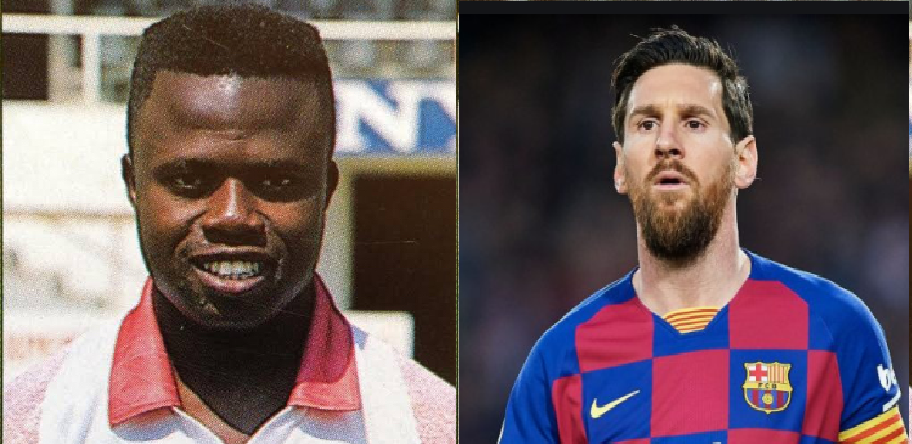
“Zanza is the captain, onye isi game” was a song we sang in the village as kids in primary school. My position was 9 ( I was bad on it!). But it was immaterial; every kid knew we could play like “Zanza”. Zanza was Philip Osondu, one of Nigeria’s most talented footballers. He was the captain and he was “onye isi game” [the leader of a football game]. Philip Osondu died a few months ago. He was a force in Canada’87 and Saudi ‘89 when the world thought a new Pele was born.

Philip Osondu – a Talent Unlocked

Though born in Aba,Abia state, a parent was from a neighboring village to Ovim, Ahaba Imenyi. Zanza was rising in the shadows of Kelechi Emeteole (the caterpillar for his defensive style). Emeteole who hailed from another neighboring village, Amiyi Obilohia, later became a successful coach. But Osondu was ruined – he signed bad contracts and “lost” Nigeria and his career. It was after his contract that the then-Nigeria Football Association set up a process to review foreign contracts offered to Nigerian players!

Zanza, buru ba – [score the goal by dribbling past players and goalkeeper] remains a song whenever a kid could accomplish that on a pitch.  But Zanza has another modern version: Lionel Messi, the GOAT (greatest of all time) who plays for Barcelona FC.

Yes, Messi cannot leave because Barcelona and La Liga had put a clause on him at €700 million. Of course, no one will pay that on an aging player! So, Messi has no option but to remain in Spain: “And this is the reason why I am going to continue in the club. Now I am going to continue in the club because the president told me that the only way to leave was to pay the €700 million (£624m/$823m) clause, and that is impossible….”, Messi noted.

Messi’s attempt to leave Barcelona created unprecedented panic in Spain. Both the club and the league were going to lose staggering amounts of money in TV rights and sponsorship deals, and the only way to avert that is to stop Messi from leaving. So they teamed up to pull the €700 million clause on him knowing that only the court can say otherwise.

Sure, I do acknowledge that Messi’s case is not as bad as Osondu’s since the main issue here is date.

LaLiga have been forced to issue a statement outlining their stance on the battle between Barcelona and Lionel Messi. The Argentine has made it clear that he wants to leave this summer and believes he can walk away for nothing. That is due to a clause in his contract which he believed would allow him to terminate his deal and leave on a free transfer….The league state that his current contract is valid until the end of 2020/21 and that the only way for him to exit will be if his release clause is met.

LinkedIn Comment on Feed

Comment: The two players had different situations, Osondu signed a bad contract while Messi had a very good contract. 700m euros was already on his contract and a clause was added to allow him leave for free at end of each season- what a luxury! He tried to use this but Barcelona interpreted it differently since a date of 31.05.2020 was stated on the contract as deadline for this clause. Thanks for the Info on Zanza

Response: It is a good contract because Messi made money. But if Barcelona forced Messi to pay after the end of the season because of Covid-19 and yet did not allow the release date to change, that was a bad work from his lawyers. You cannot shift playing days without changing the contract necessitating those games. Every club automatically adjusted to ensure season was completed. But this contract was frozen. Sure, Osondu and Messi are poles apart but they are united by one thing: bad lawyers. “Should Messi be forced to play after May 31 of every year, the validity of this contract is automatically extended at his discretion” would have done it, if inserted.

Lionel Messi Going Going … Stays

1
Stars like Messi are the attraction

“I’ll continue at Barcelona and my attitude won’t change, no matter how much I have wanted to go. I thought my time in Barcelona was over, sadly – I always wanted to finish my career here,” Messi told Goal.

With this statement, Lionel Messi calmed the avalanche of speculations that has surrounded his contract with FC Barcelona over the past weeks.

The saga began following the horror of the Champions League match against Bayern Munich – or so everyone thought, where the German side handed Barcelona 8-2 demolition, in its most humiliating campaign in the Champions League in recent times.

The next few days witnessed a series of changes that started with the sack of Barcelona coach, Quique Setien, sports director, Eric Abidal and announcement by the club’s president, Josep Bartomeu that many players are going to leave.

In the next few days, former Barcelona player, Ronald Koeman was announced as the club’s new coach. Days after, Koeman held a meeting with Messi in his zeal to commence a new era at the Catalan side. It was not clear what was said in the meeting, but the next day, Messi dropped the bombshell – he’s leaving Barcelona.

The news ignited a storm of anxiety in and outside the club. It was the most talked about development on the internet during that week, behind it was a 33 years old whose heart was broken by the club he loved so much.

The controversy dated back to events of the past seasons which made the Bayern match a horrifying sequel. The preceding seasons saw Barcelona losing semi-final matches 1-4 to AS Roma, after a 3-1 first leg lead, and 0-4 to Liverpool after a 3-0 lead, forcing Messi to break his promise of a Champions League trophy. The most devastating part of it all was how humiliating the losses were.

“But I looked further afield and I want to compete at the highest level, win titles, and compete in the Champions League. You can win or lose in it, because it is very difficult, but you have to compete. At least compete for it and let us not fall apart in Rome, Liverpool, Lisbon. All that led me to think about that decision that I wanted to carry out,” he told Goal.

The six-time Ballon D’or winner had pointed to poor management of the club as a reason for the consecutive woes. His agony was aggravated when Barcelona ended the season winning nothing. The club didn’t make it to Copa del Rey’s final, and complacently lost the domestic league to Spanish rival, Real Madrid.

“And the truth is that there has been no project or anything for a long time, they juggle and cover holes as things go by,” Messi said.

The failures have fueled fans’ campaigns, urging Bartomeu to resign. Many believe that the president’s resignation would have calmed the storm.

However, when Messi threw in the towel, Barcelona was not ready to quit. In response to his burofax requesting his transfer, the club said he has €700 million buyout clause, which must be paid before he is allowed to leave. That was the turning point of Messi’s desire to leave the club, and to cap it, La Liga supported Barcelona’s claim.

“I thought and was sure that I was free to leave, the president always said that at the end of the season I could decide if I stayed or not.

“Now they cling to the fact that I did not say it before June 10, when it turns out that on June 10 we were competing for La Liga in the middle of this awful coronavirus and this disease altered all the season,” he said.

Messi’s attempt to leave Barcelona created unprecedented panic in Spain. Both the club and the league were going to lose staggering amounts of money in TV rights and sponsorship deals, and the only way to avert that is to stop Messi from leaving. So they teamed up to pull the €700 million clause on him knowing that only the court can say otherwise.

“And this is the reason why I am going to continue in the club. Now I am going to continue in the club because the president told me that the only way to leave was to pay the €700 million (£624m/$823m) clause, and that is impossible.

“There was another way and it was to go to trial. I would never go to court against Barca because it is the club that I love, which gave me everything since I arrived. It is the club of my life; I have made my life here.

“Barca gave me everything and I gave it everything. I know that it never crossed my mind to take Barca to court,” he added.

Messi told Goal that another thing that played a big part in his decision to stay at Barcelona is his family.

“When I communicated my wish to leave to my wife and children, it was a brutal drama,” he said. “The whole family began crying, my children did not want to leave Barcelona, nor did they want to change schools.”

As La Liga and Barcelona celebrate Messi’s turnaround, many wonder if his heart toward the club will ever be the same, particularly under a new coach. The Argentine astro said his attempt to leave his beloved club will not change anything.

“I will continue at Barca and my attitude will not change no matter how much I have wanted to go. I will do my best. I always want to win, I’m competitive and I don’t like to lose anything. I always want the best for the club, for the dressing room and for myself,” Messi told Goal.

Ways to Reduce the Swindling of Job Seekers

2

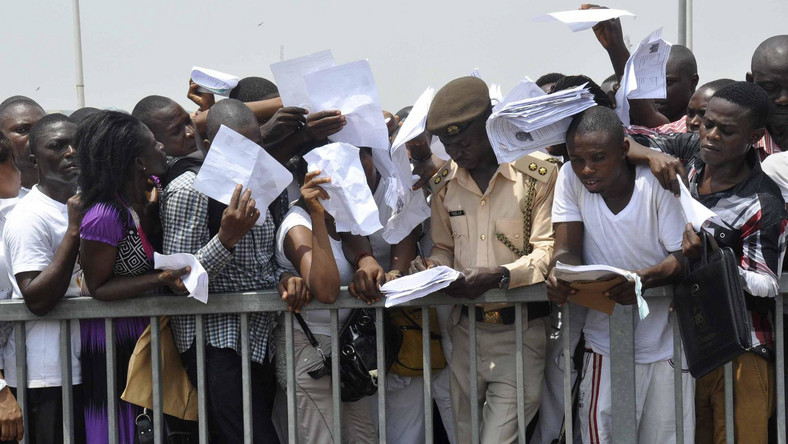
A few days ago, the news of a woman that was arrested by EFCC for defrauding a job seeker went viral. According to this account, the woman, Hajiya Hadiza Umar Abubakar, in 2019, promised her victim, Nuradeen Abubakar, an instant employment in EFCC. However, for this to happen, Nuradeen was asked to pay the sum of six million naira (N6,000,000) to her. Nuradeen paid three million naira in October 2019 and promised to balance up the remaining three million naira when he receives the appointment letter. It was said that Hajiya Hadiza promised him that the appointment letter will be out in two weeks time from the day of the payment. But that was nine months ago and Nuradeen is yet to see any letter.

The story of Nuradeen and Hajiya Hadiza is not new. We hear about people defrauding job seekers of money they don’t have. We also hear of fake recruiters that give phony appointment letters to their victims. Sometimes these people that defraud job seekers are workers in the said companies. Sometimes they are fraudsters that set up offices to take advantage of the bad condition of things in the country. Other times they are relatives of top officers in the concerned companies they performed phony recruitments for. Who they are or who they are not is not the issue right now. The fact remains that a lot of people are out there to rip off the unemployed among us.

But one question that is yet to be answered is, “Why do job seekers pay heavy amounts of money as bribes to secure jobs?”

I’ve asked this question several times and the answers I always received sound like, “Wait until you’re desperate for a job.” Anytime I receive an answer like this, it dawns on me that people are still ready to pay to land jobs. Can you imagine Nuradeen paying N6m for a job in a government agency? How much did they tell him EFCC officials are paid as salary? I mean, let’s look at this logically, if someone has N6m to spare for a job that may pay him about 100k or a little more than that in a month, don’t you think that it makes no sense at all? How did he raise that money? Why won’t that money be used as capital for a business? If you have N6m to spare, will you work for someone?

The more I consider the case of Nuradeen and Hajiya, the more I realise that our problem is complex. It is possible that Nuradeen wanted the EFCC job so badly because he has heard of “deals” they do there, which can fetch him several multiples of that money he will pay Hajiya. It is possible that he heard that he will receive a fat salary in EFCC even though he will not be going to work. It is possible that he has been made to believe that government paid jobs are the best sources of income. I don’t know what he has heard that pushed him into such a foolhardy act, but it is obvious that he has been misinformed.

The fact still remains that more and more people will face the same fate encountered by Nuradeen if something is not done. The problem we have here is that many Nigerians want to sit down in cosy offices and receive fat checks by the end of the month. These same people believe that when they get old, they will continue to receive fat checks as pension. How I wish they know better.

The only way to reduce this fraudulent act of creating phony jobs is by encouraging entrepreneurship among youths. It’s not that everybody should be an entrepreneur but at least many should delve into it. And the good thing is that the more entrepreneurs we have, the more jobs we can create. At least, this will reduce the rate by which jobseekers are swindled.

Of course I know that the government needs to provide an enabling environment for new businesses to flourish. But the non-enabling environment we have here has not been able to deter many business owners. So if some people can survive the harsh and unstable government policies in Nigeria, people like Nuradeen, who have money to throw about, should be encouraged to venture into businesses, that is, if they don’t have any.