DD
MM
YYYY

PAGES

DD
MM
YYYY

spot_img

PAGES

Home Blog Page 6183

The Humanitarian Crisis in Nigeria

0

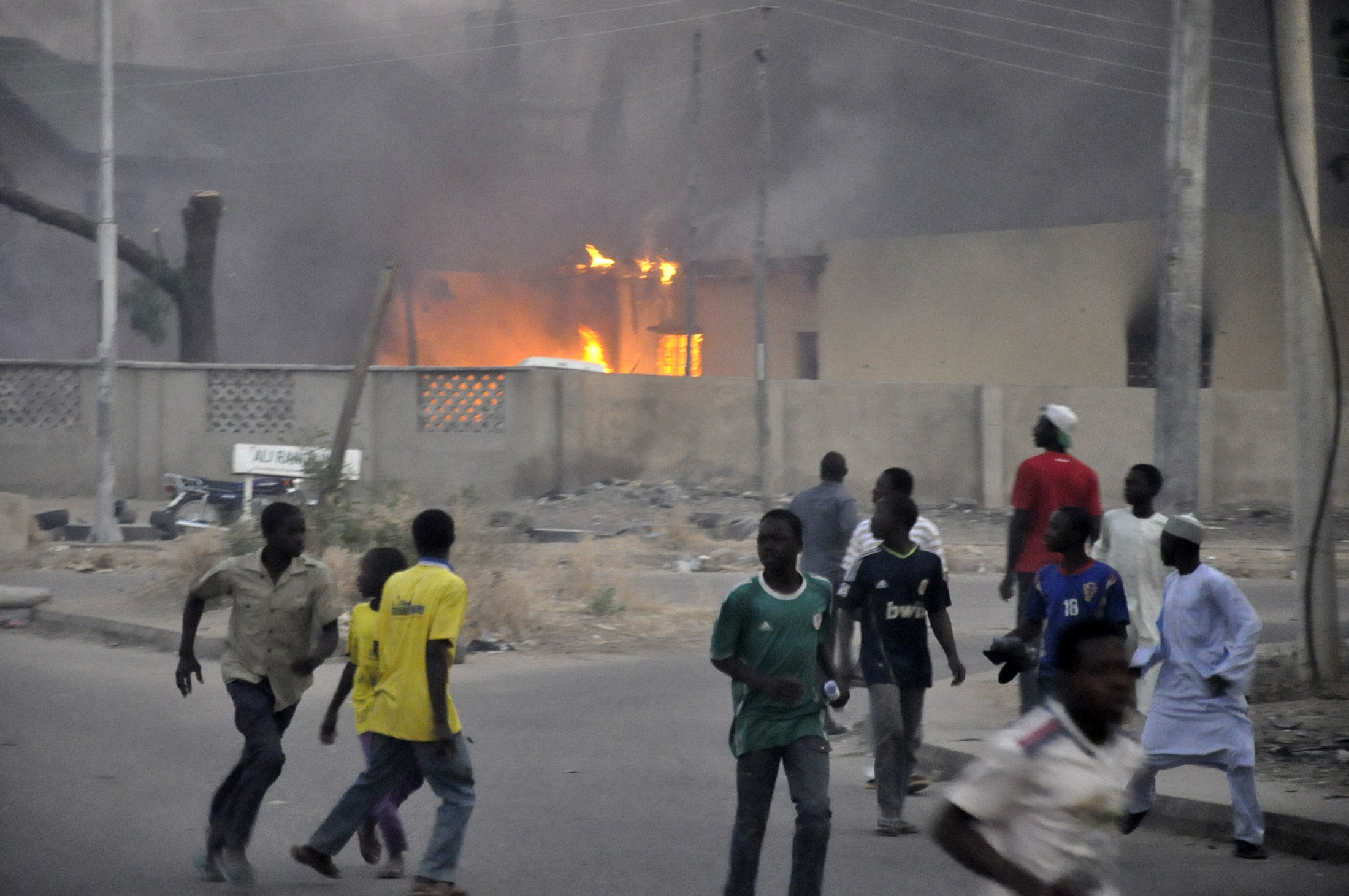
The state of humanitarian crisis in Nigeria has become alarming, especially in the Northern Eastern states of Borno, Adamawa and Yobe states, and has had a spill-over effect in neighbouring countries like Chad, and Cameroon. As reported by the United State Office for the Coordination of Humanitarian Affairs (UNOCHA), the  number of people in need of urgent assistance in north-east Nigeria rose from 7.9 million at the beginning of 2020 to 10.6 million since the onset of the COVID-19 pandemic.

According to Unicef, this conflict in north-eastern Nigeria has continued to devastate the lives of civilians, resulting in a humanitarian crisis affecting 7.7 million women, men and children who are all in acute need of help and protection. It reports that since the start of the conflict in 2009, more than 20,000 people have been killed, more than 4,000 people abducted and 1.7 million remain displaced, mostly in Borno State. According to UNHCR, there are over 2.7 million internally displaced persons in North-Eastern Nigeria, over 684,000 IDps in Cameroon, Chad and Niger, and 294000 refugees in the four countries.

Civilians are the major victims of the conflict, as many have been displaced. Thousands of women and girls have been abducted, and have been made to face different forms of violence. There has also been a rise in the number of underage terrorists , as many have been recruited by these armed groups to carry person-borne improvised explosive devices (PBIEDs).

According to UNOCHA, currently, 1.9 million people are still internally displaced, some living in dire conditions. Over 80 per cent of them are in Borno State – the epicentre of the crisis, as four out of five internally displaced people are women and children, and one in four are under the age of five. Also, it reports that an estimated number of up to 1.2 million people remain inaccessible to humanitarian actors, 81 per cent of whom are in Borno State.

The Farmer-Herder clashes are still occuring in the background, thus threatening food security and peaceful co-existence in the country. These clashes have been more devastating in the Middle Belt, in such  states as Kogi, Benue, Nasarawa, and Plateau. As a result, there have been calls to label the Herders/Nomads (Fulani Herdsmen) as terrorists, as the violence has spread to other regions in the East and South. From 2011-2019, the violence claimed an estimated 8,000 lives, based on a 2019 joint assessment by the United Nations High Commission for Refugees, Migrants, and Internally Displaced Persons. The report also indicated that a total of 210,354 persons have been displaced from 171 towns across the northwestern region.

There are also seasonal communal clashes, and regional conflicts in Kaduna and Jos. Most of these conflicts are ethnic conflicts , while others are religious based among Christians and Muslims. In modern times, the Kaduna South Crisis, and Jos Crisis have been a recurring incident, and  have continued to ravage families. Many have had to seek shelter in neighbouring states, as so many lives have been taken.

Banditry violence has also been on the increase in Nigeria, as it has affected people living in such states as Zamfara, Kaduna, Niger, Sokoto, Kebbi, and Katsina States in the NorthWest. According to the Assessment Capacities Project (ACAPS), about 21 million of those living in these states have been exposed to insecurity from the activities of these bandits. These activities which include cattle rustling, kidnapping, and sexual violence, have affected about 35 of the 92 local government areas in the four states. As at March 2020, ACAPS reported that about 210,000 persons have been internally displaced, and over 35000 have sought refuge in neighbouring countries such as Niger.

The government has continued to rally round for support from International agencies in the fight against terrorism, as it tries to manage the Boko Haram Terrorists in the North East, the rising Banditry violence in the North East, as well as the Herdsmen-Farmer Clashes in the North Central, South West , and South East. It has also tried to curb Youth restiveness/Niger Delta Militants attacks in the South South, as well as the rising secessionist movements in the South East. Not only this, with the fight against corruption by public officials, the government has been blamed for non-accountability of recovered funds, and showing bias in the appropriation of funds , fight against corruption , and appointment of public officials.
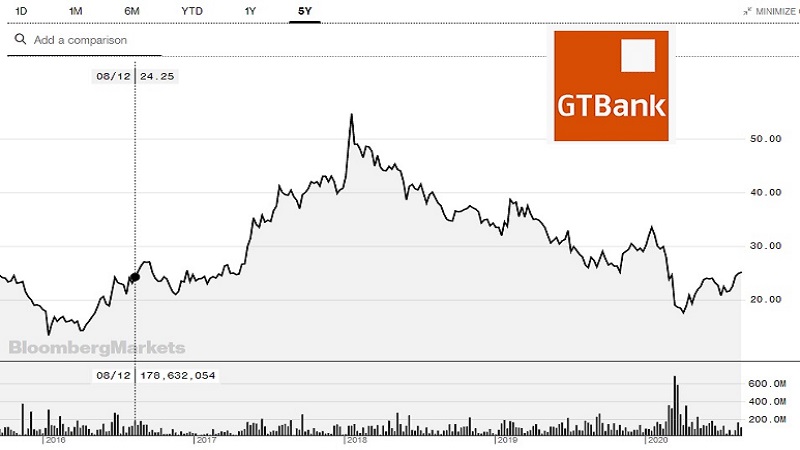
The Paradox of Bank Earnings in Nigeria [Video]

2

The Paradox of Bank Earnings in Nigeria states that the market performance of the banking sector is uncorrelated with improving revenue and profitability. Using GTBank as an example, the bank has seen erosion of market cap in a period where it has delivered sustained improvements on revenue and profitability.  What do Nigerian investors want? And what is the reason behind this market dislocation? I this video, I posit some reasons.

Potential areas:

  • Economic Growth
  • Extraction of fees
  • Confidence in markets
  • Relative Performance
  • Fintechs & Telcos
  • Inefficiency in markets

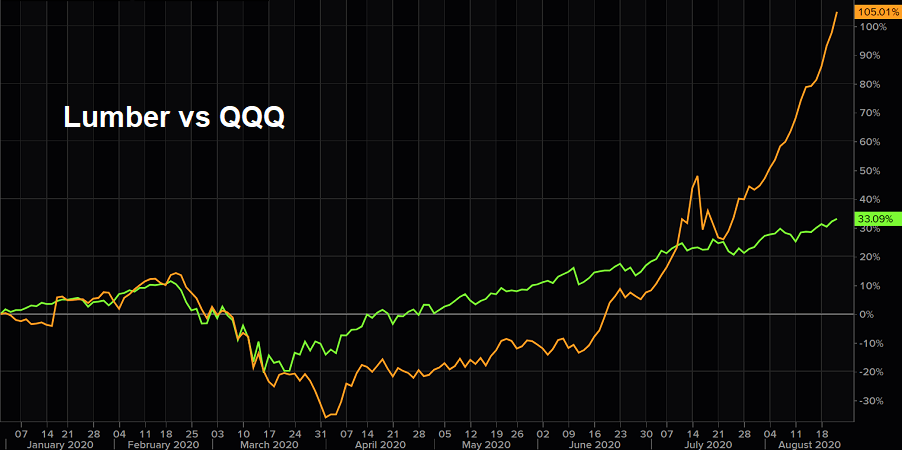
Lumber is Beating Tech – 70% YTD

1

We have one sector that is BEATING tech: lumber. It is ahead by 70% year to date (YTD). Yes, as families look for larger homes since homes are now extended offices, there is an emerging boom on the use of lumber. While I do not know how that is playing out in Lagos, one thing is evident: Work from Home (WFH) policy is not a bonanza from your company, it is evolving as a strategic business call which will help companies improve the efficiency of the utilization of factors of production. Imagine the “miracle” when rent payments disappear in financial statements!

Sure, I do think it is an illusion to expect some men to give up the fun of letting you know they are in charge, physically! The virus will pass, the clock-in will begin: Zoom makes everyone appear equal, not sure some men are paid to accept that! Yes, you must be reminded that this part of the canteen is for “senior staff” because hunger attacks them differently in Nigeria.

But right now, lumber is running the numbers.

As economies struggle to recover in the pandemic and U.S.-China tensions flare, investors piling into precious metals may be overlooking another potential haven: wood.

Lumber futures have doubled since early April and are level pegging with silver as the top-performing major commodity this year. Surprisingly, wood is even outshining gold — the go-to haven investment.

While lockdowns and stay-in-place restrictions were expected to curb demand for building materials, North Americans stuck inside decided to spend money and renovate their homes just as aggressive production cuts tightened supplies.

Ukeme Peters, Alpha Mead Group’s Head of PEMS: Mission, Vision Statements and the Views of Company’s Strategic Leader in a Challenging Time

0
Source: Ukeme Peters, 2020; Infoprations Analysis, 2020

Since the confirmation of the first case of Covid-19 in Nigeria on February 27, 2020, businesses, people and government officials have been working towards total containment of the disease. From the virtual sphere to the physical sphere, concerned stakeholders have expressed their views and still informing people on the need to follow recommended measures for possible contraction. During the first wave of the disease, our analyst spoke with Ukeme Peters, the Head of Planning, Enterprise and Management Systems of Alpha Mead Group, a total real estate solution company in Lagos.

He was asked to speak on the impact of the disease in the real estate industry and coping strategies being implemented by his company to ensure continued service delivery to the clients and what the future holds for the industry. In the current analysis, we leveraged his responses to understand how Alpha Mead Group’s strategic statements aligned with what he said. We also analysed his responses because we wanted to find out how the views of a strategic leader in a real estate company are beneficial to strategic discourse in the industry.

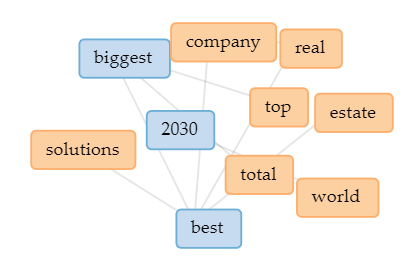
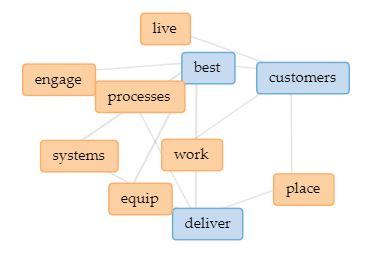
The vision of Alpha Mead Group is “to be among the Top 3 Biggest and the Best Total Real Estate Solutions Company in the World by the Year 2030”, while the mission is “to engage the Best People to equip them with the best Processes and systems to deliver the best Place for our customers to live, work and play.”  Looking at the vision, it is clear that the company is positioning itself as leader and best in terms of products and service offering to the stakeholders. Mission statement has clearly shown that the company prioritises human resources, standardisation and value for the actualization of its vision statement. The points in the vision statement have a direct link with the points in the mission statement and stresses that being a leader and offering the best solutions cannot happen without people, processes and being committed to the stakeholders.

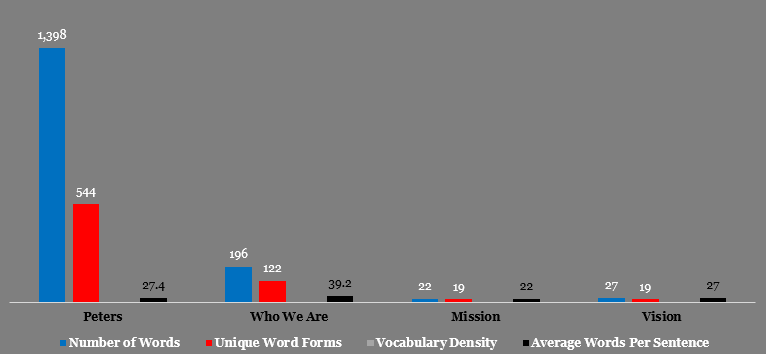
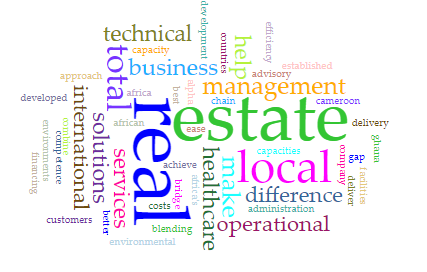
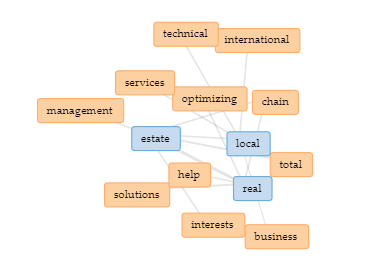
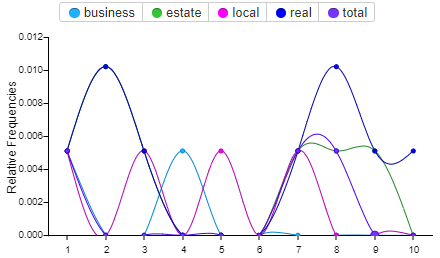
Analysis further establishes that Alpha Mead Group employed 196 words to construct its “Who We Are” to the public, especially potential clients and investors. We also discovered that 22 words are unique in the strategic positioning to the public. With 62.2% of the capacity to use vocabulary, our analysis suggests that it is possible that publics would not understand the message appropriately because the higher the complex word usage the lower the level of comprehending strategic statements. Analysis further shows that real (9 times), local (4 times), total (3 times) and business (2 times) are the most frequently used words in “Who We Are”.

Looking at the context of appropriating these words, our analysis reveals that Alpha Mead Group tends to establish its superiority within the total real estate solution. However, the dominance of ‘local’ suggests reason for doubting the strategic intent of being one of the best total real estate solution companies in the world by 2030. This position becomes clearer when one looks at absence of ‘world’ dominance in the vision and mission statements. Instead, best, biggest, company, estate, customers, deliver, engage and equip dominate the strategic intents space.

Meanwhile, it appears that what publics cannot get from the company’s strategic statements absolutely has been catered for by the responses of Ukeme Peters. In his responses to the questions asked by our analyst, Ukeme Peters employed 1,398 words. A total of 544 unique words was found. On like the mission and vision statements that have higher percent for vocabulary density, 38.9% achieved by Ukeme Peters indicates that his responses are most likely to be understood easily by the readers.

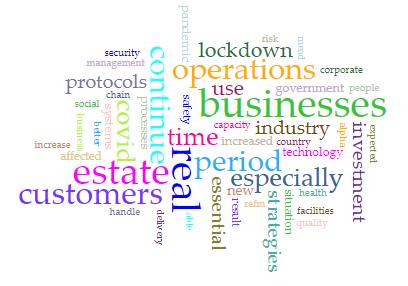
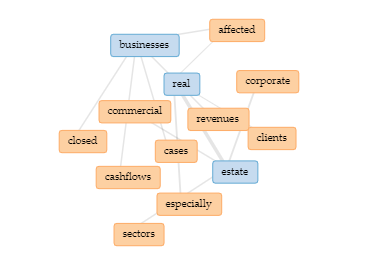
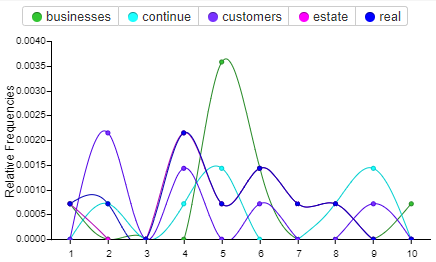
With this, our analyst notes that Ukeme Peters has strategically sold his company to the public by demystifying the issues and needs brought by the disease into the industry life. Analysis shows that Ukeme Peters adopted real (10 times), businesses (9 times), estate (9 times), continue (7 times) and customers (7 times) to frame his company’s competencies in a challenging time and what stakeholders and players can do to overcome storms.

Exhibit 1: Alpha Mead’s Strategic Statements

Source: Alpha Mead’s Website, 2020; Ukeme Peters, 2020; Infoprations Analysis, 2020

Exhibit 2: Dominant Words in His Response

Source: Ukeme Peters, 2020; Infoprations Analysis, 2020

Exhibit 3: Dominant Words in Who We Are

Source: Alpha Mead’s Website, 2020; Infoprations Analysis, 2020

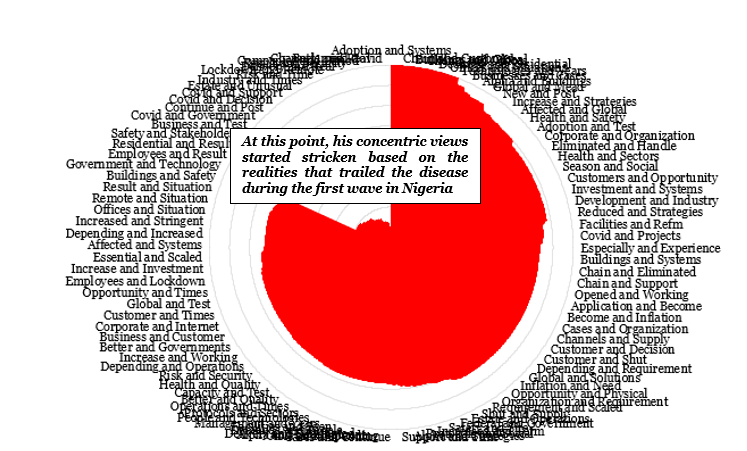
Exhibit 4: Link among the keywords in His Response

Source: Ukeme Peters, 2020; Infoprations Analysis, 2020

Exhibit 5: Link among the Keywords in Who We Are

Source: Alpha Mead’s Website, 2020; Infoprations Analysis, 2020

Exhibit 6: Link among the Keywords in Vision Statement

Source: Alpha Mead’s Website, 2020; Infoprations Analysis, 2020

Exhibit 7: Link among the Keywords in Mission Statement

Source: Alpha Mead’s Website, 2020; Infoprations Analysis, 2020

Exhibit 8: Trending of Keywords in His Response

Source: Ukeme Peters, 2020; Infoprations Analysis, 2020

Exhibit 9: Trending of Keywords in Who We Are

Source: Alpha Mead’s Website, 2020; Infoprations Analysis, 2020

His Positives and Negatives: Emerging Strategy

Corpus analysis of words employed by Ukeme Peters indicates he is truly a strategist, who understands the art of choosing words to explain complex issues and needs in a challenging time. Connection analysis of words shows that 161 terms were negative while 737 were positive. The connection ranges from 0 to 100 percent. The use of technological processes and equipping employees with knowledge of emerging technologies were found within the perfect positive use of word category [PPUSW].

Within the perfect negative use of word category [PNUS], we discovered corporate and period. These categories were used in different contexts. When PPUSW category was found, we discovered Ukeme Peters want technological processes and technology adoption to be strengthened as the crisis continues. Where we discovered PNUS, Ukeme Peters actually wants business owners, employees at corporate, business and functional levels to understand the challenging time and develop new ways of operating.

Exhibit 10: Link among His Positive and Positive Words about the Crisis

Source: Ukeme Peters, 2020; Infoprations Analysis, 2020

A Great Testimonial From Singapore On Tekedia Mini-MBA

0

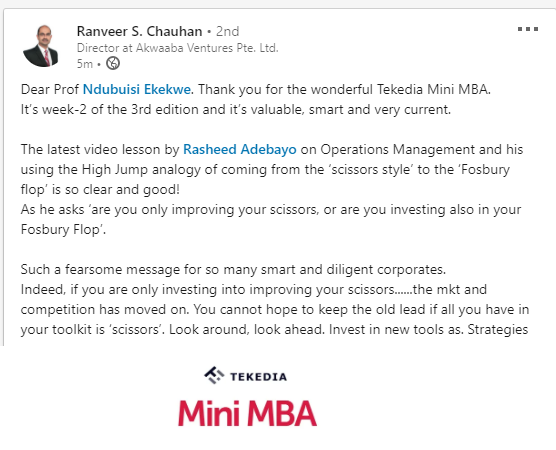
Permit me to share this nice testimonial from a top business executive who is co-learning with us at Tekedia Mini-MBA. Ranveer S. Chauhan, from Singapore, is a veteran of markets and a business leader. When a former Managing Director of Olam International Ltd says something nice about your program, you better celebrate. He wrote, “valuable, smart and very current” for Tekedia Mini-MBA.

At Tekedia Institute, we are co-learning with professionals from 30 countries. We have 7 professors as co-learners with many executives from around the world. They teach us and we teach them, and markets rise. JOIN today .

Tekedia Mini-MBA (Aug 10 – Dec 3, 2020)