DD
MM
YYYY

PAGES

DD
MM
YYYY

spot_img

PAGES

Home Blog Page 6205

Join Ndubuisi Ekekwe And Governors of Borno and Nasarawa States for NSE Presidential Lecture

1

Join me with the governors of Borno state (Engr Prof Babagan Zulum) and Nasarawa state (Engr Abdullahi Sule) along with the President of COREN (Engr A.A. Rabiu) for the 2020 President’s Annual Lecture of the Nigerian Society of Engineers (Engr Babagana Mohammed). Date is Wed, Aug 19, at 4pm Lagos time. I will deliver the Guest Lecture, titled The Infrastructures of Nations.


Plentywaka Raised $300,000 to Expand E-hailing Services, But Regulatory Policies Threaten Its Growth

0

Nigerian transport startup, PlentyWaka has raised $300,000 in pre-seed funding to extend its services to Abuja, Nigeria’s capital territory.

Launched in the second half of 2019, under CrowdyVest Holdings and Farmcrowdy, Plentywaka has recorded unprecedented growth even amidst the strains of coronavirus pandemic that restricted movement in the second half of the year. The startup has built a customer-base of over 40,000 clients, recording over 61% increase in app downloads, 34% increase in ride bookings, and 50% growth in the number of daily rides.

With its plan to go beyond Lagos, the company welcomed the pre-seed funding from EMFATO, Microtraction and Niche Capital.

The managing director and co-founder, Johnny Enagwolor said the rapid growth of Plentywaka has fascinated and lured the investors.

“Securing investment and expanding into Abuja within our first year, in the midst of a pandemic, speaks volumes of the demand for the service we provide. We are excited to have investment partners on board that see and believe in our vision.

“An efficient transport system is fundamental to the prosperity of any city and we believe safe, convenient and comfortable travel should not just be for the few, but for everyone. Plentywaka in Abuja brings us closer to transforming transport in Nigeria, one state at a time,” he said.

Plentywaka is using the e-hailing system to facilitate bus-based transportation, and has already recorded over 100,000 rides. The growth is believed to have been spurred by Lagos State’s motorcycle ban that has forced thousands of commuters to use alternate transportation. With the progress recorded so far, the startup is confident that its services will be expanded to other states in Nigeria, and hopes to secure more funding.

Dayo Kolewo, partner at Microtraction said Plentywaka has shown tremendous growth to make them proud partners.

“We are glad to be partnering with a very strong team that is passionate about providing convenience, safety, and comfort to everyday commuters. The distressful and uneasy experience by the majority of these commuters, especially in large cities is evident. We are backing the Plentywaka team to change that experience for commuters progressively by creating a transport system that is efficient,” he said.

In June, Plentywaka delved into logistics as part of its plan to widen its range of services.

The startup is looking for driver partners who will get their vehicles on board its platform through its Vehicle Partnership Scheme. Plentywaka is offering a week free ride to Abuja commuters.

However, while the startup has recorded significant growth in a short while due to the ban on motorbike ride-hailing services in Lagos, it is facing its own threat. The Lagos State government is reportedly planning to introduce regulations for the app-based transport sector that many fear would cripple startups like Plentywaka.

Part of the new regulation is the requirement of operational license purchase, at the cost of N25 million for companies with more than 1,000 registered vehicles.

Technext reported that e-hailing companies will subsequently be required to pay license renewal sums between N5 million and N10 million annually. Under the new regulation, the companies are required to remit 10% of every trip earned as service charge.

Part of the regulatory policy said the capacity of vehicles should not be less than 1.3cc and must be brand new or not less than three years old.

With the new regulations due to be implemented, e-hailing startups like Plentywaka will find it hard to cope. Already, regulatory policies by the Lagos State government have put many transport startups out of business, and pushed others to other states where the pasture is far from green. Those who dared to stay had to pivot to logistics, which is not a safe haven because the regulator, the Ministry of Communication and Digital Economy, also developed new regulatory policies that stakeholders said would cripple the sector.

Majority of the driver-partners on Plentywaka’s platform don’t have the spec of vehicles stipulated by the new rules. Therefore, Plentwaka’s survival play may lie in other states where there are more friendly policies.

Physical Retail (Sears, Shoprite) Has Speed, Digital Retail (Jumia, Amazon) Has Velocity Which Gives DIRECTION into the Future

5

Good People, this week’s class note on Tekedia Mini-MBA is on the Board. As I shared a few hours ago, we are focusing on Perception Demand Marketing (read here), working on how to use perception to turn consumers into customers, and into fans, by creating products and services which do not just meet Needs or Expectations of customers but serve at the level of Perception. I offered some flash cases: iPhone, Diamond Bank’s DIBS, 23andme, Airbnb, etc.

Here, as a very good Physics student in secondary school, I use Speed and Velocity (speed with direction) to explain the difference between Sears (a bankrupt physical superstore), and Amazon. You can add Shoprite for physical retail in  the Sears column and Jumia in the Amazon’s column of digital retail.

Sears used catalog which has only speed, Amazon uses search technology which provides velocity. That velocity gives a DIRECTION into the future. To create perception demand, you do not give customers catalog options, you empower them to discover the future in your ecosystems.

You move them from speed to velocity where while completing the distance of life, over time, they do so with a sense of direction. When you do that, you create a new basis of competition, and turn many customers into fans, creating leverageable moments in your business. JOIN the Board for the full class note.

From Tekedia Mini-MBA Class Note

Sears, a bankrupt American retail chain, was built on catalogue – a fangled technology of its time. It was typical of industrial age business model: send the customers options on what they might need with no certainty on what they actually want. The discovery process was weak, defining the retailer with no sense to get insights at scale, quickly.

Amazon is built on search – a modern technology which is unconstrained and unbounded, only limited by the imaginations of the consumers. Search provides a window into possibilities, making it even possible that Amazon can see patterns on things it does not have in stock, and quickly respond to add them.

Search has velocity, catalogue has only speed; no antenna for direction. Search enables Perception Demand which enables the acceleration of consumerism by rewiring the mindsets of users to a new domain which they might have never imagined. As customer tastes move, your business must adapt. You need the antenna to move in the right direction to make that happen. Yes, in the 21st century, you win with Perception Demand.

Yes, no matter what you do, you cannot catalogue your customers. You need to find a way to help them discover the future in your ecosystem!

Stimulating Perception Demand for New Markets and Customers

1

We think perception demand stimulation is more revolutionary than evolutionary. Data can take you to Expectation but getting to Perception does imply, most times, there is no absolute data driving it. Creating the iPhone was not backed by typical customer data as Steve Jobs did not believe in surveys and focus groups. He did believe that even customers could not understand what they needed. But you give them the “next big thing”, they would come along. 

My point is this: data has a limitation at the perception level. Verizon, a big telecom player in the U.S. is data-driven but still (initially) rejected Apple’s offer for it to carry the iPhone. (iPhone is a perception level product.) The second player behind it, AT&T, took a risk, as it had nothing to lose then. Simply, data cannot explain most things when you begin to operate at the perception level of market creation. 

The key thing here is Awareness and Observation as having data on something which does not exist is hard. More so, extrapolation fails since to have perception, you have to do something that is not typical. That means extrapolating today for that future makes no sense.

Largely, perception is highly orthogonal, not parallel to what many market players are doing. That is why perception level products are disruptive as they typically lead to a new basis of competition.

 In this introductory video, I discuss why organizations must focus on developing products and services that go beyond the needs of customers to their expectations and perceptions. Focusing on the needs of customers is a recipe for disaster. The whole desire must be to deliver products and services at the level of customer perception where they are offered products and services which they might not have even imagined would be possible. But the day they see the products they will say “wow”. This also explains the limitations of focus groups because focus groups are  tethered to what the customers think they need. Perception of customer level  service is offering something which could not have been requested during focus groups, because such products will not come into the imaginations of the people being studied.

There are other videos in Tekedia Mini-MBA Week 8 board, and a member asked this question: “Good day Prof, thanks for the lecture material on stimulating perception demand. It’s very insightful. Prof, could you please provide a real life example/use case of using O-data and X-data to stimulate perception demand, if such exists? Many thanks.” The above was my response.

Register and join Tekedia Mini-MBA which began this morning.

TikTok Plans to Sue Trump As Twitter Joins Microsoft in Bidding for Its Acquisition

0

The executive order by the US president Donald Trump to ban TikTok in 45 days if its Chinese parent company, ByteDance, doesn’t sell to an American company, has thrown the app into a race of survival.

TikTok has been in talks with Microsoft for acquisition, but it’s not sure if a deal will materialize as time ticks against the short video app.

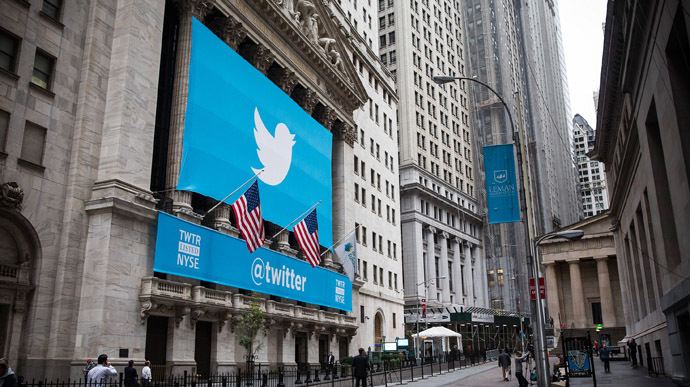
As the uncertainties unwind, Twitter has reportedly approached ByteDance for the acquisition of Tiktok’s US operations. People familiar with the matter have told Reuters. But analysts doubt if Twitter could outbid Microsoft with its $30 billion market capitalization, unless it has to raise more capital to fund the deal.

“Twitter will have a hard time putting together enough financing to acquire even the U.S. operations of TikTok. It doesn’t have enough borrowing capacity,” said Erik Gordon, a professor at the University of Michigan. “If it (Twitter) tries to put together an investor group, the terms will be tough. Twitter’s own shareholders might prefer that management focus on its existing business.”

TikTok’s US operations have been valued at $50 billion but it seems Microsoft is working on cutting the cost as it’s the only American company in talk with ByteDance before now.

Trump’s move to ban TikTok has been criticized, and analysts believe it will likely draw retaliation from China. Trump has said he would support Microsoft to acquire TikTok, but the deal will likely draw scrutiny from regulators.

Twitter believes it stands a chance at the acquisition because it will face less scrutiny from regulators than Microsoft. Moreover, the bird app is banned in China, which means it will not have to go through any pressure from the Chinese government.

Microsoft said it would conclude the deal mid-September. But Twitter’s interest has increased the pressure on the negotiation table, suggesting that more time may be needed to complete the deal. And if the deadline is not met, TikTok will have everything to lose. But it appears it won’t give in without a fight.

The video app is planning to sue the Trump administration on Tuesday, to challenge the ban. A source directly involved with the matter said the company will be arguing that Trump’s Executive Order is unconstitutional because it failed to give the company an opportunity to respond.

“It’s based on pure speculation and conjecture. The order has no findings of fact, just reiterates rhetoric about China that has been kicking around,” the source said.

The ban has been based on the concern that China will have access to the privacy of Americans using TikTok, or may harvest information from the company’s data centers outside the US.

The effect of the ban will mean that the app will not be able to send software updates, which will make it eventually, non-functional. It will also mean that Google and Apple will be forced to remove the TikTok from their app stores, and American advertisers will no longer buy ads on the platform.

TikTok has repeatedly denied any involvement with the Chinese government, and promised to protect the privacy of its users, but the US government couldn’t wait for it to keep the promise.

The company’s response to Trump’s order said it is shocking because it didn’t follow due process.

“We are shocked by the recent Executive Order, which was issued without any due process. The text of the decision makes it plain that there has been a reliance on unnamed reports with no citations, fears that the app may be used for misinformation campaigns with no substantiation of such fears, and concerns about the collection of data that is industry standard for thousands of mobile apps around the world,” statement from TikTok said.

Procedures for actions like this involve federal notification. If the federal government launches an investigation, it will inform the company with a subpoena or some other means, demanding its response to the allegations. However, TikTok’s legal team said no such notification was served by the US government, and it breaches the standing procedure.

The penalty for violating the Executive Order at the expiration of the 45 days is $300,000 fine per violat, and for willful violators of the order – criminal prosecution.

NPR reported that TikTok’s legal team may be counting on some exceptions in the emergency power used by Trump to issue the order, to argue their case. Part of it says that the power cannot be used to prohibit either “personal communications” or “sharing of film and other forms of media,” which TikTok may argue to be the primary function of its app.

The US Congress may intervene on behalf of TikTok, and overturn the ban, if it believes that Trump has abused the use of emergency economic powers.

But that is unlikely going to happen as the lawmakers have been on the same terrain with Trump on the use TikTok. On Thursday, the senate unanimously passed a bill banning the app on all government-issued devices.

Therefore, TikTok’s plan to sue Trump may have been to buy more time for its acquisition, especially as Twitter and Microsoft are now on the bidding floor.