Soft Skills, also known as People Skills, are non-technical skills that indicate one’s ability to interact with others in the workplace. They are important in relationship building, and are always sought during interview sessions to determine good fit of candidates.
With the unemployment challenge faced in different countries, so many candidates have lost the opportunity to secure their dream job due to the lack of these skills. It is a well known fact that a lot of graduates do not know how to craft a good CV/Resume. Many do not know how to communicate effectively, as well as imbibe good business etiquettes. Hence, it becomes an issue even in the workplace, as some employees who lack these skills, get a series of queries and even laid-off at their workplace.
Soft Skills are diverse and include such skills as Negotiation, Conflict Resolution, Effective Communication, Team Work, Problem-solving, etc. It has been validated that having technical skills alone is not enough. So many employers place emphasis on those who have both Soft Skills and Technical Skills. They want those with a good attitude, who are disciplined, and can manage time effectively.
An internal study conducted by Google in 2017 found that their best teams were not the ones full of top scientists, but interdisciplinary groups that had employees who brought strong soft skills to the collaborative process. Also, as reported in the LinkedIn Learning 2020 Workplace Learning Report – in which LinkedIn analyzed data from more than 660 million professionals and more than 20 million jobs to identify the 15 most in-demand skills, the top five Soft Skills identified were Creativity, Persuasion, Collaboration, Adaptability, and Emotional Intelligence.
How can one acquire Soft Skills?
There are different training for Soft Skills, in which candidates have to pay to learn them, and get certified for successfully completing them. In Nigeria, this burden has been lifted from jobseekers, as they no longer have to worry about the cost of training. With the Jobberman Soft Skills Training which is in place, job seekers would gain free access to the catalogue of Soft Skills courses. They are tutored by experts , supported on their career journey, as well as accessed. They are also given a certificate upon successful completion of the training. The goal is to improve their chances of securing great jobs, and to reduce the unemployment gap in the country.
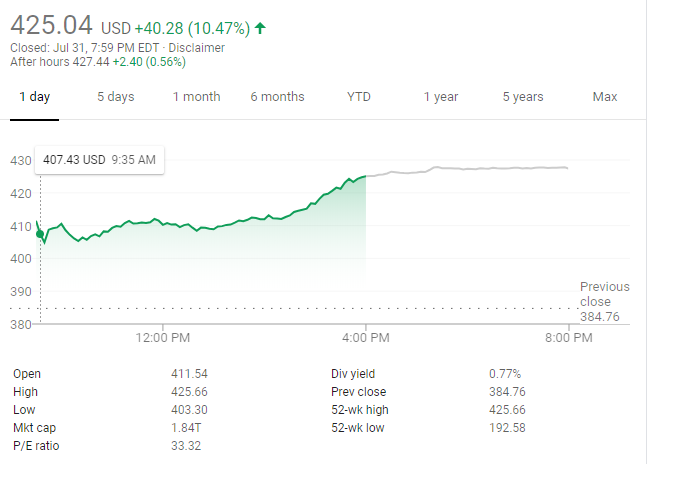
Apple now rules the world of business, after it broke many records this week. Today, Apple is worth $1.84 trillion. But that comes with a burden to the man – Tim Cook – who has taken Apple to the mountaintop. Mr Cook has cooked something so amazing that Wall Street is eating and loving it. Yes, he has prepared a special Apple, and they paid to eat, and are eating more. Today, Apple is the most expensive “apple” in the world, and the wonders of a nation called America.
Yet, Mr. Cook has to go back to the drawing board because this success is a burden across many metrics. The good news is that he knows that: “We’re conscious of the fact that these results stand in stark relief during a time of real economic adversity. We do not have a zero sum approach to prosperity and especially in times like this we’re focused on growing the pie, making sure our success isn’t just our success”.
Unbelievable in a time when the world is largely broken! Respect the brilliance of America. Next two more quarters, Apple could be hitting $2 trillion. Congrats Apple.
Apple has toppled Saudi Aramco as the world’s most valuable company after its stock hit a record high on Friday, smashing Wall Street’s expectations.
Apple stock went up $412.22 a share, to put its market capitalization at $1.762 trillion to trump Saudi Aramco’s record.
According to data from Refinitiv, Saudi Aramco has held the position of most valuable public company since last year, and had a market capitalization of $1.760 trillion as of its last close.
Analysts had expected revenue to drop 2% to $52.6 billion on average. And earnings per share of $2.58, up 18%, crushed the average forecast of $2.07. But Apple’s 11% growth put its earnings at $59.7 billion for the second quarter.
Apple along other big US tech companies has shown resilience in the face of the COVID-19 pandemic that has brought economies to staggering point, including many publicly listed companies
Update: We report that our team has selected a teacher in Ogun state. The recipient, Mr. Joshua, teaches and facilitates learning for pupils in an underserved community in Ogun State, Nigeria.
A donor wants to send a full-time teacher in primary or secondary school in any rural community in Nigeria to participate in Tekedia Mini-MBA (Aug 10 – Dec 3). The only requirement is that the recipient does a capstone that looks into the Impact of Covid-19 on education in rural Nigeria, and how the private sector (not government) could help.
There is no requirement that the recipient has to share or publish the work though. Nonetheless, the donor wants to hear the voice of teachers and what could be done before a generation is distorted academically. Interested or know a teacher? Email my team. By Aug 5, they will do a draw and select the recipient.
The first time I came across the phrase “business model”, the thought that came to my mind was modeling. I was taught a very important concept during my university days in econometrics class; it was about model and modelling.
The experts said the model is the representation of the real world situation in a design or equation form. We have models such as architectural plans, economic models, which are in the form of equations; we have other forms of models.
When it comes to business models, the meaning is very close to the above models. As Harvard Business Review and FourWeekMba have analysed the concept to mean how a business can unlock value.
At Tekedia, we have come to see the business model as the nervous system of a business; it is a design of how a business will solve market frictions in the market in order to unlock value.
Can you answer these questions? What is the use of an architectural building plan? To me, it is to serve as a guide in building the real house.
When well designed and executed, the builders end up building the expected house. That is what a business model does. When well designed and executed, it can build a billion dollar business.
Our interest today is to know the simplified template to develop a business model.
Simplifies Template for Designing a Business Model
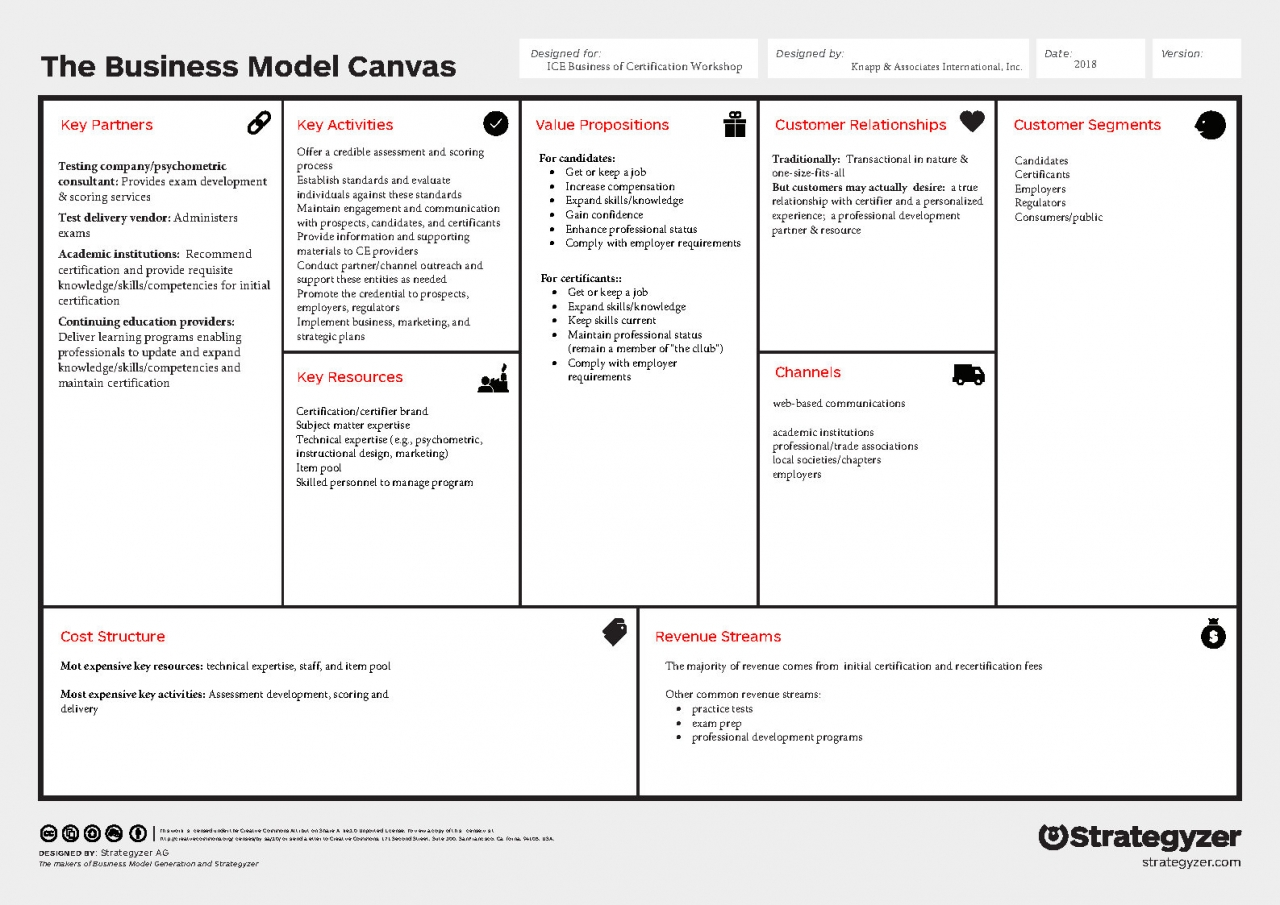
A sample of business model canvas
To gain mastery in doing anything, try to have a simplified template. Here are the dots that you need to connect in your business models. This serves as an upgrade to business model canvas.
Step 1: Market Friction
The term market friction is simply the problem you want to solve in the market. Business models are built on certain problems discovered in a market. Those problems serve as the foundation upon which other things will be built.
For example, in 1975, Bill Gates and Paul Allen discovered the need for software for microcomputers. They built Microsoft’s business model on that market friction.
Step 2: Value Chain
The value of a business is in its chain, that is why they call it value chain. The beauty of the value chain is that it divides the processes of a particular business into segments. It now allows entrepreneurs to focus on solving problems of individual segments.
Step 3: Value Proposition
Value proposition is the value that the target market will get from your solution. For example, Uber makes it convenient for people to order a ride. Pollstalker makes it easy to compare product prices across the globe.
Step 4: Products
The products should emanate from the value propositions and the ideas of solutions you imagined. It is always by you answering this question: how do we solve this problem in real terms? Bitcoin makes it possible to have a peer to peer transaction. This has eliminated the need for intermediaries.
Step 5: Target Market
Who are the people that need this solution? Business solutions or products are developed for markets. Your modelling should identify who needs the solutions.
Step 6: Key Activities
At this stage, we need to know what we are going to do in order to provide the solution to the market target in practical terms. Do we need to develop a digital platform? Do we need to build a team? Do we need to raise money? What are your key activities?
Step 7: Key Resources
As you model key activities, have it in mind that it works with key resources. You need key resources to execute key activities. For instance, you need developers (key resources) to develop digital platforms (key activity). You need funds to pay for what you use.
Step 8: Key Partnership
What are the things that you will need from others in order to be able to provide the solution? Partnership is taking what you don’t have from others and giving them what they don’t have. It is a win-win situation. Model this in your business model.
Step 9: Customer Services
Your solution is not complete if your customers are not happy. That means you need to model what you need to do in order for your customers to be happy using your solution.
Step10: Revenue Model
How will the business make money? How will the business unlock value? How will entrepreneurs and investors make money from solving this problem? This is called revenue modelling. For instance, Uber makes money from commission; Facebook and Google make money from ads, etc
Step 11: Cost Structure
What is the cost of providing the above solution? How much will it cost to provide that product and take it to the target market?
Consider Fixed Cost(FC) and Variable Cost(VC) when modelling this.
Step 12: Financing Model
How do you finance the business? What are the strategies you will adopt to raise money to launch your minimum viable product? We have equity financing, debt financing, crowd funding and creative financing.
When you follow the above steps, you will end up having a comprehensive business model that shows you a map or the nervous system of your business.
A good business model is the first success of a successful business.