DD
MM
YYYY

PAGES

DD
MM
YYYY

spot_img

PAGES

Home Blog Page 6229

The Raging Concerns That Forced Nigeria to Stop NIPOST From Increasing Logistics License Fees

0

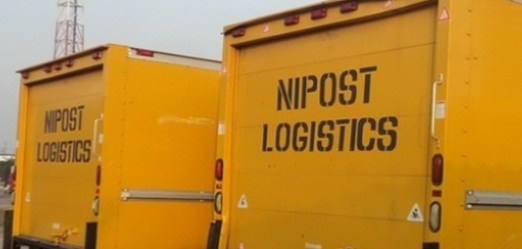
The decision of the Nigerian Postal Services (NIPOST) to introduce new licensing fees for logistics has been greeted with backlash. NIPOST had earlier in the week announced a new list of logistics categories and the cost of their respective licenses.

In a post entitled: Minister of Comm. Tech and Digital Economy approves the Reviewed Courier and Logistics Regulator, the courier service claimed that the Minister of Communications and Digital Economy approved the new licensing fees.

“The honourable Minister of Communications and Digital Economy Dr. Isa Ali Ibrahim Pantami, has approved a new Courier and Logistics Regulations in accordance with the powers conferred on him by Nipost Act. This is timely and coming on the heels of an upsurge of Small and Medium players in the Courier and Logistics ecosystem.

“Hitherto, courier business was for big players. Provision was not made for MSMEs. The approval of the reviewed Regulations has now accommodated all types of emerging enterprises in the logistics landscape and will provide a regulatory framework for licensing and the provision of effective and efficient services. The essence of regulating the sub sector is to sanitize the industry,” the statement said.

According to the new requirement, the application forms and regulatory guidelines costs N20,000 while the logistics licenses cost between N250,000 and N2 million.

The fee for international courier license is N20 million with renewal cost of N8 million, national license costs N10 million with renewal fee put at N4 million, regional N5 million with N2 million renewal fee. On the other hand, those applying for state license are required to pay N2 million and renew with N800, 000, while municipal and special SMEs are expected to pay N1 million and N250, 000, with renewal options of N250, 000 and N100, 000 respectively.

The move has been tagged insensitive and reckless because it is coming at a time when businesses are striving under the strains of coronavirus pandemic, and the decision appeared not approved by the regulator, the Ministry of Communication and Digital Economy.

As Nigerians took to Twitter to register their displeasure over the development, the communication minister, Dr. Isa Pantami’s attention was called to it.

“Good morning, Honourable Minister. Have you considered the effect of the NIPOST Courier License requirement on the digital economy, small business and self-employment?” Dr. Joe Abah asked on Twitter. “It appears to go against your vision. I would like to understand the logic please. Thanks.”

In response to this question, Dr Pantami said “the increase is under investigation by my office since yesterday. The Ministry and Minister were not involved,” and ordered NIPOST to put the implementation on hold.

“Please NIPOST, our attention has been drawn to an increase of license fee, which was not part of the regulation I earlier APPROVED for you. Your Chair and PMG were YESTERDAY contacted to put the implementation on hold and send a report to our ministry by Monday. Best wishes,” he wrote on Twitter.

Stating further, he reminded NIPOST that the power to effect such change lies with the Minister alone, and he is not considering exercising it now as it would impose further economic hardship on Nigerians.

“The power of regulation of NIPOST lies with the Minister. Any change of fee must be specific & be approved by him before implementation. I know the economic challenges of NIPOST. However, looking at the economic hardship of citizens, we need to suspend any move,” he said.

While the swift response of the Minister is being applauded, the development has drawn attention to the fact that NIPOST tried to play double; being a player in the courier sector and at the same time playing the regulator.

It is one of the reasons Nigerians stand against it, as it means putting many courier services, which have been deemed more efficient than NIPOST itself, out of business, and consequently make life difficult for SMEs who depend on the courier ecosystem to stay in business.

“Does NIPOST even know there’s a pandemic, and that the world has been shut down over that?” Gimba Kakanda asked. “Instead of announcing grants and subsidies to keep small businesses afloat in the fashion of responsible governments in countries with thinking leaders, they chose cruelty.

“The same country that grants big businesses tax waivers is here to kill courier and logistics firms, which are mostly new and owned by youths. For a country with unbelievably high unemployment rate, this is both insensitive and unwise. Nigerians deserve better.”

Many more condemnations followed under the hashtag #SayNoToNipostFee.

“I think the powers that be in the Nigerian government wake up every morning and think “how do we increase the level of poverty and suffering in the nation. This NIPOST dastardly attempt at cutting down entrepreneurs must not be allowed to fly,” Uchenna Daniel wrote on Twitter.

“How much does the average logistics business make per month with a bike or two? Dr. Nonso Egemba asked. “Yet you’re requesting them to pay one million naira for a license! How much does the online vendor make per day? You’ll stifle many businesses struggling to survive.”

The Nigerian Postal services had justified the move saying there is SMEs upsurge, when the subsector is actually riddled with unfavorable fiscal policies and infrastructural deficiencies that stymie business growth.

Earlier in the year, the Lagos State government announced the ban of motorbike ride-hailing operation, which is part of the transport sector that had hundreds of youth under its employ. Many of those who were laid off due to the ban switched to logistics. Gokada, ORide and Max had to sell their fleet of motorcycles, and those who bought them have only one objective – to start courier services as the law allows for that.

With over 30% youth unemployment rate, it is regarded as insensitive for the Nigerian government or its agencies to make rules that will deprive the youths their means of livelihood, especially in the wake of global health crisis bearing a venomous fangs on economies. Other countries have been waiving taxes and subsidizing utility bills to keep people and businesses afloat.

Ghanaian government has reportedly extended its free supply of electricity and water for its citizens for another three months, at the same time, the Nigerian government is introducing six percent stamp duty charge on rents.

Many including Dr. Pantami believe that it’s the wrong time to introduce levies and tariffs. He said: “Due to the pandemic and economic hardship. I believe it is the right time to reduce, not to increase any tax or tariff.”

Others have expressed concern that if left unchecked, the governments and its agencies will introduce laws that will drive people to suicide.

“NIPOST should not be allowed to charge these ridiculous fees. Thousands of young Nigerians have lost jobs in the last few months. Some turned to courier services. a friend who lost his job bought these (two motorcycles) from ORide. Please don’t let him commit suicide,” Dr. Dipo Awojide wrote.

Are You Learning With Us? Choose Tekedia Institute

0

We celebrated her this morning when she announced on a live Tekedia session that her company paid her N1,000,000 for proposing great solutions to the firm’s frictions. Last week, a member was promoted to a GM to lead an organizational transformation. And I also reported a member who was transferred from a branch office to Abuja HQ to help execute a playbook he has articulated. At Tekedia Mini-MBA, we are co-learning, co-sharing, and building a community of innovators and project champions? Are you learning with us?

If not, come onboard today.

Twitter Plans to Introduce Premium Features

1

Twitter is considering introducing a subscription model following decline in ad revenue since the first quarter of the year. The move was brought to limelight after the social media platform posted a job vacancy for a software engineer who would help develop the aspects for the platform.

The opening was advertised under the codename “Gryphon” which quickly drew a lot of media attention and was removed.

Twitter founder and CEO, Jack Dorsey said the new version will be tested this year, but there is no timeline as to when it will be implemented.

“There’s really a high bar for when we would ask consumers to pay for aspects of Twitter. We want to make sure any new line of revenue is complementary to our advertising business,” Dorsey said

He did not disclose the aspects of Twitter that will be paid for but said the most important thing is to make the features complementary to the app’s advertising principles.

“We do think there is a world where subscription is complementary, where commerce is complementary, where helping people manage paywalls… we think is complementary,” he added.

Twitter has recorded slow ad revenue in the first quarter of the year, and it is expected to experience further decline in the year. Thus, the move is seen as an attempt to boost its revenue generation as 87 percent of it comes from ads.

The app has struggled to maintain growth in ad revenue and recent happenings are threatening to make it worse. Its 2019 annual revenue was $3.46 billion, but it falls short of profit. The platform only reported profit for the first time in 2018.

Analysts estimate on average that the app’s ad sale will see a decline of 19.8%, in the second quarter year-over-year. It is expected to lose about $126 million, far higher than the $8 million loss it posted in the first quarter.

“Twitter’s ad business was hit hard by the coronavirus pandemic in March, and it’s likely that losses continued into at least part of Q2” said eMarketer analyst Jasmine Enberg

Last week, Twitter experienced an unprecedented attack that saw prominent accounts soliciting for Bitcoin, in an apparent scam that swayed many users. The accounts of Barack Obama, Jeff Bezos, Elon Musk, Bill Gates, Joe Biden and Kanye West, were all begging Twitter users to send Bitcoin to the wallet IDs they shared.

The development took a toll on the bird app, jeopardizing some of its future plan. Dorsey said they feel terrible about the security incident and would work to secure the systems.

“We feel terrible about the security incident. Security doesn’t have an end point. It’s a constant iteration… we will continue to go above and beyond here as we continue to secure our systems and as we continue to work with external firms and law enforcement,” he said.

However, the incident has put the social media platform on spotlight especially as the hackers claimed that they paid employees with access to internal systems.

“We used a rep that literally done all the work for us,” the hackers said.

This means that Twitter has to reconsider some of its revenue generation plans as it would pose security risks to the platform. Twitter was planning to introduce a new API that would expand how third-party services can use its data, but that has to be suspended due to the security breach.

APIs contribute about 15% to the company’s growth and it’s fast becoming a bigger source of revenue than ads. The hack has forced Twitter to suspend the launch citing timing which it said does “no longer make sense or felt right.”

But then it poses more challenge to find alternative means of revenue generation for Dorsey as his position as the CEO depends on meeting some revenue target.

Activist Investor Elliott Management had earlier in the year tried to oust Dorsey from his role in the company. But a deal to push Twitter’s growth to a certain target bought Dorsey some time. The development has centered on his ability to run two companies, as he doubles as the CEO of financial tech company Square.

Orange Launches Orange Bank Africa to Provide Financial Services in West Africa

0

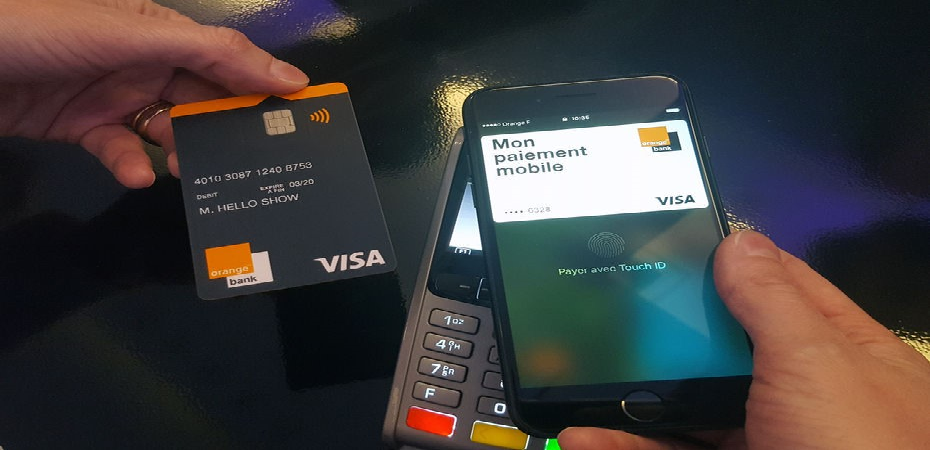
Orange, a major telecoms provider in Africa and the Middle East, and NSIA, a leader of bancassurance, have partnered to launch the Orange Bank Africa in Abidjan and Côte d’Ivoire.

Orange Bank Africa, headed by Jean-Louis Menann-Kouamé, will offer clients a range of simple savings and credit services available at all times via mobile phone.

Orange Bank Africa will address the needs of a large part of the population, often excluded from the world of conventional banking, allowing them to borrow and save small amounts that are nonetheless essential for their everyday lives. When it launches, Orange Bank Africa via its Orange Money service will offer a range of savings and micro credit services allowing customers to borrow as little as 5,000 CFA francs instantly using their mobile phone.

Orange’s mobile financial services strategy in Africa aims to offer solutions accessible to the broadest population regardless of their income or where they live. Orange Bank Africa intends to become a leader in ensuring financial inclusion in West Africa.

Orange Chairman and CEO, Stéphane Richard, explains that there is a huge gap in the African financial sector that needs to be filled and it falls in line with the company’s strategy.

“New technology is needed to strengthen financial inclusion and support economic development, as proven by mobile money over the past few years. Banking is a new area of business for Orange in Africa. It falls squarely in line with our strategy as a multi-service operator and our desire to drive the digital transformation forward in Africa. Based on our association with NSIA, also a leader on the market in Africa, we provide easy access to bank services for as many people as possible, with simple and essential services that benefit all our clients,” he said

Jean Kacou Diagou, CEO of NSIA said that they have years of experience in African financial sector that have birthed banks and insurance solutions. The combination of such human capital experience with Orange’s digital expertise has resulted in the creation of Orange Bank Africa.

“I am very pleased that the partnership between Orange and NSIA has resulted in the creation of Orange Bank Africa. For the past 25 years, NSIA Group has been developing bank and insurance solutions to address the needs of African people and make them available to as many people as possible. We know that electronic banking is vital for the financial inclusion of our customers. We are proud to have combined our expertise and human capital with that of Orange to create the fully digital Orange Bank Africa.”

Orange Bank Africa will expand into Senegal, Mali and Burkina Faso.

Having played an essential part in financial transactions for several years now, Orange Money and digital services became even more important and more rapidly adopted by users during the health crisis. With this in mind, Orange believes that mobile banking has an important role to play in Africa. It is the very essence of Orange’s purpose of providing everyone with the keys to a responsible digital world.

Orange had earlier in the year, announced its plan to expand telecom and banking services in Africa and the Middle East. Part of its strategy is to develop digital financial services that will serve the unbanked and underbanked.

African fintech has witnessed a tremendous growth that makes it attractive to investors, and there are few telecom operators doing business in the sector for now. Venture capital to Africa stood at $1.35 billion in 2019, according to WeeTracker.

Orange plans to extend its services to many African countries including Nigeria, which has a booming population that falls into its line of strategy, by partnering with existing financial institutions to establish digital credit services.

Part of the strategy is to offer health services which has been spurred by the outbreak of coronavirus pandemic.

A Telecom Giant Launches A Bank in Côte d’Ivoire

1

Telecoms giant Orange and insurance provider NSIA have launched Orange Bank Africa in Côte d’Ivoire to focus on the population largely excluded from conventional banking, by offering clients simple savings and credit services via mobile phone.  If not for the brands involved, this is another top-grade fintech. In Nigeria, if say Glo joins hands with AXA Mansard, an insurer, to create a new bank, Glo Axa Bank, expect our current banks to have real problems. 

Glo has the demand with millions of users in its networks. In this web economy, supply is unbounded but demand is scarce. So, any firm which controls demand has an upper hand. This differs from the old industrial economy where supply was scarce, and winners were those managing the gatekeeping process to supply. Think of your old newspaper publisher; he decided on news he would run those days. Today, the supply of news is largely infinite as people can use Twitter, Facebook, LinkedIn, etc to share content. What matters more now is the control of demand (the users) and that has made  platforms like Facebook and Google exceedingly powerful; the platforms have the demand.

This is the video on the Airbnb piece: If you want to win in the 21st century digital economy, you must control demand, not supply. In the industrial age, power went to gatekeepers of supply. Today, the empires are those that control demand. This is possible because digital supply is unbounded and unconstrained, making it largely not a factor. Digital utilities like Google, Facebook, and Airbnb which control demand become the new gatekeepers.

Our largest bank by market cap in Nigeria, GTBank, has lost more than 50% of its market cap despite hitting new profit records. GTBank has a market cap of N637.185 billion, well down from N1.3 trillion it commanded a few months ago. This paradox is from this demand-value shift. Of course GTBank is going Habari to fix it.

Press Release

 Orange, a major telecoms provider in Africa and the Middle East, and NSIA, a leader of bancassurance, are pleased to announce the launch of Orange Bank Africa in Abidjan and Côte d’Ivoire. Orange Bank Africa, headed by Jean-Louis Menann-Kouamé, will offer clients a range of simple savings and credit services available at all times via mobile phone.

Orange Bank Africa will address the needs of a large part of the population, often excluded from the world of conventional banking, allowing them to borrow and save small amounts that are nonetheless essential for their everyday lives. When it launches, Orange Bank Africa via its Orange Money service will offer a range of savings and micro credit services allowing customers to borrow as little as 5,000 CFA francs instantly using their mobile phone.

Orange’s mobile financial services strategy in Africa aims to offer solutions accessible to the broadest population regardless of their income or where they live. Orange Bank Africa intends to become a leader in ensuring financial inclusion in West Africa.

Having played an essential part in financial transactions for several years now, Orange Money and digital services became even more important and more rapidly adopted by users during the health crisis. With this in mind, Orange believes that mobile banking has an important role to play in Africa. It is the very essence of Orange’s purpose of providing everyone with the keys to a responsible digital world.