DD
MM
YYYY

PAGES

DD
MM
YYYY

spot_img

PAGES

Home Blog Page 6236

Google to Connect The US, UK and Spain in Undersea Cable Project

0
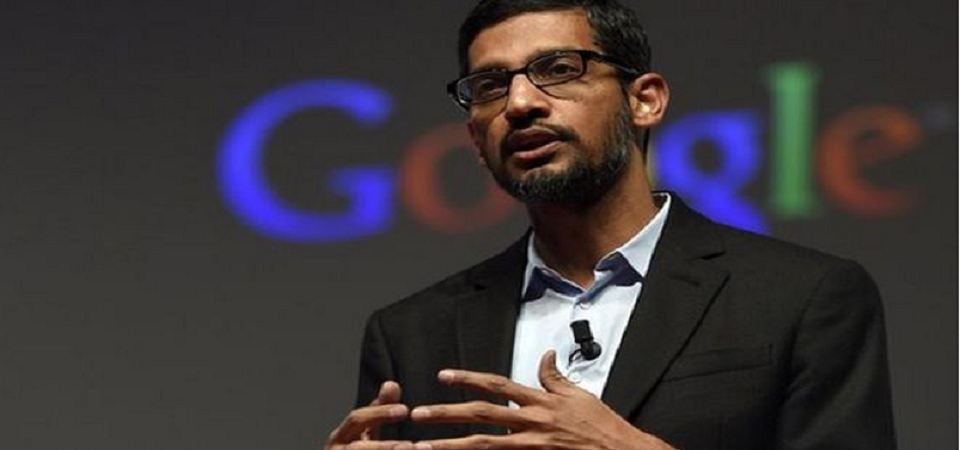
CEO of Google

Google has continued its push to provide global affordable internet. The internet giant announced Tuesday that it is setting up a new undersea fiber-optic cable between the US, the UK and Spain.

The company said the project, named Grace Hopper, after the American programming pioneer, will provide “better resilience for the network that underpins Google’s consumer and enterprise products,” as it will incorporate new technology into the cable, which has a significant upgrade compared with existing lines.

The existing lines have been laid from 1858 to 2003. Vice president of Google’s Global Network Bikash Koley said the new lines will renew the network connection between the US and the UK.

“Once commissioned, the Grace Hopper cable will be one of the first new cables to connect the US and UK since 2003, increasing capacity on this busy global crossroads and powering Google services like Meet, Gmail and Google Cloud.

“It also marks our first investment in a private subsea cable route to the UK, and our first-ever route to Spain. The Spanish landing point will more tightly integrate the upcoming Google Cloud region in Madrid into our global infrastructure,” Koley said.

The project is expected to be completed in 2022. Google said it will incorporate “novel optical fiber switching” that will help the movement of traffic around internet outages more completely. Koley said the new lines will have 16 fiber pairs (32 fibers), which is a significant upgrade to the internet infrastructure connecting the US and the UK.

The project will commence in the US, where the cable will be laid along the ocean floor from New York to the Cornish seaside resort town of Bude, Cornwall in the UK and Bilbao Spain. It is expected to run 6,300 km from the US to Spain.

Underwater cables have become so vital to global internet communication infrastructure. Google estimates that 98% of the world’s data will pass through undersea cables, which will make it possible to rapidly send and receive information around the world.

The cables, which are usually built by communication firms, are becoming a new way tech companies are using to fix the global internet friction. The Grace Hopper is Google’s fourth privately owned undersea cable.

The disruption caused by COVID-19 pandemic exposed the need for a stronger internet infrastructure, as it forces the world to go virtual and carry out many activities via the internet.

“The COVID-19 pandemic has put a spotlight on connectivity, highlighting how ingrained it is in our daily lives. These challenging times have taught us that a stable and reliable network is no longer a ‘nice to have’ but business critical,” said Tom Meyer, a general manager and group vice president at technology analyst firm IDC Europe.

“Naturally, investment into infrastructure is a major priority, particularly as connectivity becomes an ever-increasing necessity going forward,” Mersey added.

However, the undersea cable project has come at high cost as it does with advantages. John Delaney from telecoms analyst IDC said Google needs “an ever-increasing amount of transatlantic bandwidth” to keep the cable effective.

“Building its own cables helps them choose cable routes that are most optimal and near data centers,” said Delaney. “It also minimizes operational expenditure by reducing the need to pay telcos and other third-party cable owners for the use of their infrastructure.

The infrastructure comes also with a hefty maintenance responsibility to keep the cable effective and network reliable.

“It’s not enough to have a single cable because any element in the network can break from time to time, and if it’s 8,000 meters under the sea, it takes a while to repair,” said Jayne Stowell, who oversees construction of Google’s undersea cable projects.

On the other hand, Facebook announced in May it’s building an undersea cable to boost African network infrastructure. The project dubbed 2Africa, will cover 37,000 km (about 22,991 miles). Facebook said the cable will be “nearly equal to the circumference of the Earth.”

The project is expected to be completed by 2024, and provide faster internet for the 1.3 billion people in the continent. Africa is the least internet-enabled continent with only four in 10 people having access to the web.

With a boisterous median population and emerging markets, Africa needs a better internet infrastructure for future economic growth.

As poor infrastructure and unfriendly business policies keep stymieing the efforts of local telecom operators to provide reliable internet service, big tech companies are stepping into position to provide reliable internet through undersea cable network.

The BIG Risk

0

From the confusions we have in the world right now, do not be surprised that more countries would have biological weapons by 2023. In this race to find a cure to Covid-19, the world would be fooled to think that some countries doing accelerated vaccine research have Covid-19 as part of the core strategic goals. Yes, you waive all scrutiny, thinking you are doing a humanitarian gesture to find a cure to the virus, only to see bad things from 2023. Coronavirus is evil; we must not sleep while fighting it, that some regimes are allowed to acquire bio-weapons.

As COVID-19 cases continue to surge in the United States and abroad, researchers are racing to develop a vaccine at record-breaking speeds. In a June 23 hearing before the House Energy and Commerce Committee, Anthony Fauci, the director of the National Institute of Allergy and Infectious Diseases, reiterated that he is “cautiously optimistic” about the possibility of a coronavirus vaccine being ready by early 2021.

“The development of a vaccine for a new pathogen typically takes many years and sometimes decades,” says Dan Barouch, the director of the Center for Virology and Vaccine Research at the Beth Israel Deaconess Medical Center in Boston. “The attempt to develop COVID-19 vaccines in a year is truly unprecedented in the history of vaccinology.”

Facebook Sues EU Commission

0
Facebook CEO

In an unprecedented move, Facebook is suing the European Union over its investigation into its platform activities.

Facebook is being probed in two separate investigations involving competition law breaches in Europe, and the European Commission has demanded internal documents from Facebook, which include 2,500 specific key phrases.

The Silicon Valley giant said the demand means handing unrelated and highly sensitive data over to the Commission.

“We are cooperating with the commission and would expect to give them hundreds of thousands of documents.

“The exceptionally broad nature of the commission’s requests means we would be required to turn over predominantly irrelevant documents that have nothing to do with the commission’s investigations, including highly sensitive personal information such as employees’ medical information, personal financial documents, and private information about family members of employees,” said Tim Lamb, Facebook’s competition lawyer.

Facebook said it has been cooperating with the commission’s investigation by providing necessary information, but requests for documents involving the phrases “big question,” “shutdown” and “not good for us” could force the company to hand over confidential security assessments of its California headquarters to the commission.

It said it offered the commission investigators the opportunity to view sensitive but unrelated documents in a secure ‘eyes only’ viewing room, where no copies could be made, but the commission turned the offer down.

But the commission said it would defend the case and proceed with its anticompetitive investigation against Facebook.

Facebook has been under EU competition enforcer’s scrutiny since last year. The two separate investigations have been on its trove of data and its online marketplace, where users buy and sell things, and it’s available in over 70 countries with 800 million users since it was launched in 2016.

The California-based platform is also asking the General Court in Luxembourg, Europe’s second highest court, to stop the commission from making further data requests until the court makes a ruling on its application.

Facebook is due to testify before the United States congress on Wednesday alongside Apple, Amazon and Google over the dominance of small digital platforms and antitrust issues.

This is also coming at a time when the company is facing the greatest apathy of its existence. The “boycott Facebook” campaign is gaining momentum far across the Atlantic. The coalition of advocacy groups under the aegis of Stop Hate for Profit has taken their campaign to Europe, calling on companies to stop advertising on the platform.

The movement which started in June has drawn a lot of support from brands, including Coca-Cola, Unilever and Ford. The group had urged ad buyers to quit Facebook for the month of July in an attempt to force it to change its behavior toward hate and racial injustice being promoted on the platform.

However, Facebook said it wouldn’t bend to their yearning because it will set a precedent that will hunt the company in the future, where anyone can make demands and expect it to yield.

Now, the coalition coordinated in Europe by the Center for Countering Digital Hate (CCDH) is calling on British and other European companies to join the movement.

“98% of Facebook’s revenue comes from packaging up its users’ data and selling it to advertisers. By persuading more than 1,000 companies to stop advertising on Facebook, Stop Hate for Profit has shown it can materially disrupt their business model.

“We are appealing to UK and European advertisers to take a stand against racism and pause their advertising on Facebook until we see real change,” said Imran Ahmed, CCDH’s chief executive.

Facebook derives 98% of its $70.7 billion annual revenue from advertising, with a total of 8 million advertisers. But small businesses provide the majority of the income, so it’s not sure if the support of more multinationals for the campaign could get it to yield.

However, the suit against European Commission appears to be marking the company’s readiness to fight back, and it may set a trajectory for other big tech companies to challenge regulatory agencies in court.

The US big tech companies have been subjects of scrutiny in the United States and Europe, with antitrust and the use of private data being the primary concerns.

The Warning from China

1

As US Congress debates on the way forward for its IT utilities like Facebook and Google, there is a warning sign from China: Tencent has overtaken Facebook on market cap. This has a big implication – if you break Facebook, wounding it, and denying it  economies of scale, it would struggle globally, against Chinese firms like Tencent. Unlike the old industrial firms which were bounded by geography, and easily regulated, web firms are both local and global.

The unbounded and unconstrained web, anchoring near-zero marginal cost, rewards big firms through a positive continuum of network effects. WeChat failed in Africa because of WhatsApp; cripple Facebook, it would win. Europe is not in the midst as it has used law to cage its innovators, and the region is not expected to produce any global web challenger, leaving the prize for U.S. and China. The success of TikTok should remind leaders that users are driven by different things: fun and scale, even if the product was baked in China. Yes, do not think they will not join because the product was Chinese!

Do not score an own goal please!

  • Tencent’s market capitalization has surpassed Facebook’s following a huge rally in the Chinese firm’s shares this year.

  • The gaming and social media giant’s market cap stood at 5.15 trillion Hong Kong dollars ($664.50 billion) at around 3:07 p.m. Singapore time. Meanwhile, Facebook’s market cap totaled $656.15 billion as of Tuesday’s close.

  • Tencent shares have rallied around 43% year-to-date, compared to just over 12% for Facebook. That has added around 1.53 trillion Hong Kong dollars ($197.74 billion) onto Tencent’s value.

The ICT Utilities US Congress Convergence And the Challenge of Regulation

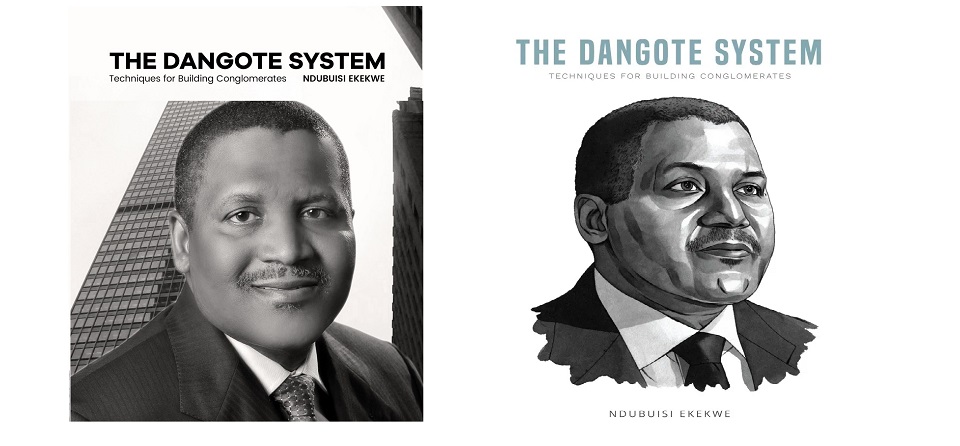
“The Dangote System: Techniques for Building Conglomerates” – My New Book, Out Tomorrow 12 noon Lagos

0

Since Adam Smith wrote his classic, in 1776, the Wealth of Nations, to upend the mercantilist system and set forward the basic foundations for modern classical economics, we have seen corporations come and go. The core pillars of productivity, and division of labour, have remained the tenets in the organization of firms which have succeeded in their missions of fixing market frictions. Across industrial sectors and market geographies, a free market system has provided the cement mortars for firms and nations.

Andrew Carnegie lived. John D. Rockefeller lived. Aliko Dangote is living. Bill Gates is living. Jeff Bezos is living.

These men are icons of their generations, pursuing the noble cause of entrepreneurial capitalism – aligning assets and knowledge to provide services where market fictions exist, between those that want products and those selling what they have. Corporations exist to simplify that interplay of demand and supply, and these entrepreneurs and others, thrived in providing solutions that eliminate frictions. They pursued different levels of innovations at scale, improving productivity, advancing specialization and deploying uncommon vision.

…from the book


This book is dedicated to Tekedia Mini-MBA co-learners, and is produced as an extended case study on our learning journey. So, it is exclusive to them. At 12 noon Lagos time tomorrow, a link will be active in the Board for the book. For edition 3 members, your Board is not ready yet; my team is  going to figure out a way for immediate access to the book.