DD
MM
YYYY

PAGES

DD
MM
YYYY

spot_img

PAGES

Home Blog Page 625

Business Model Egoras Case Study: Manufacturing, Blockchain and Financing [video]

0

The Egoras business model, championed by Ugoji Harry, presents a compelling case study on the convergence of manufacturing, blockchain, and financing. By leveraging Web3 principles, Egoras pioneers a new archetype of industrial capitalism, challenging established norms. This model isn’t just technology; it’s about re-imagining how to fund and operate tangible, manufacturing-based enterprises.

At its core, Egoras uses a decentralized ledger to connect capital with real-world manufacturing. The blockchain serves as a trust layer, enabling transparent and secure transactions. This decentralized finance (DeFi) approach allows for fractional ownership and new forms of collateral, creating a new financial system for a capital-intensive sector.

The significance of the Egoras model lies in its capacity to unlock dormant economic potential. By democratizing access to capital for manufacturing, it bypasses traditional financial gatekeepers and fosters a new generation of industrialists. This demonstrates Africa’s economic destiny can be built on first-principles innovation, blending physical production with cutting-edge digital infrastructure.


Podcast VideoSign-up at Blucera and check Tekedia Daily podcast category under Training module.

Shiba Inu (SHIB) and Dogecoin (DOGE) to Break ATHs Before a 2022-Style Crash, While Little Pepe (LILPEPE) Is Set to Explode 19377%

0

The cryptocurrency market is constantly growing and a new memecoin with great potential is beginning to emerge. Shiba Inu (SHIB) and Dogecoin (DOGE) are two of the most popular representatives of the meme coin market and are showing signs that they could soon break out and reach their all-time highs (ATHs). Despite potential returns there exists the danger of an abrupt plunge as was the case of the 2022 market correction. In the meantime, a new entrant into the race, Little Pepe (LILPEPE) is positioning itself to gain what some experts say is a mind-blowing 19,377% rise.

Shiba Inu (SHIB): An Awaited Breakout, Yet a Crash Potential Like in 2022

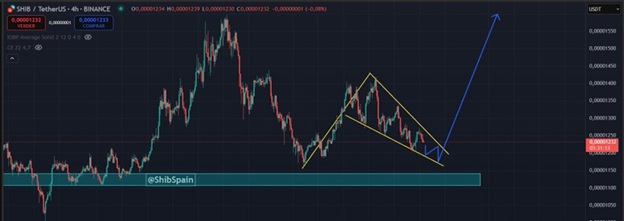
Shiba Inu (SHIB) is among the top meme coin tokens and demonstrates bull potential as it presents a bull flag on the chart, indicating that it might distribute after the period of consolidation. At the moment, the price of SHIB is at $0.00001230.

The levels of resistance affecting SHIB are at $0.00001450, where it has previously failed. If this was broken upward, it would help drive the price into an ATH of $0.00001500. It is supported at $0.00001200 – $0.00001250; a fallout below this supports a possible bearish change, up to the range of $0.00001000. The next upper resistance of SHIB is the price at $0.00001500, and another significant advance is possible, although one must remember the possibility of a correction in the market.

Dogecoin (DOGE): Positioned for a Breakout, but Could Face a Crash

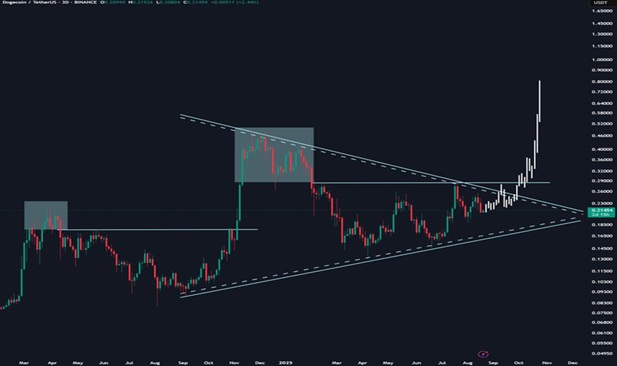
DOGE has been a popular meme coin within the crypto market. As of now, it is still inside a symmetrical triangle pattern indicating that it might be due either a breakout to the upside or downside. DOGE is at the moment trading at $0.21.

The resistance is at $0.29 and it is a critical resistance. As soon as DOGE pierces through, it might shoot up to the levels of its former heights, approximately to reach $0.49. Its support is at about $0.18 and a fall below this mark might trigger additional losses towards $0.12. Provided that DOGE exceeds the level of $0.29, the asset may hit the target as high as $0.35 and even more, up to $0.49. Nevertheless, in case of a failed moveout, DOGE could turn back to at least $0.18. There is still a chance of a 2022-style crash, as a DOGE rally coming too hastily risks provoking a market downturn, which could beget substantial losses.

Is Little Pepe (LILPEPE) the Coin of the Future?

Little Pepe (LILPEPE) may make it big in the meme coin market since it resembles SHIB and DOGE. As opposed to other meme coins, Little Pepe is developed on a Layer 2 network that is an Ethereum-compatible network that provides faster transactions, near-zero gas fees and scalability. This exclusive structure makes the difference between Little Pepe and the rest.

The major aspects of Little Pepe (LILPEPE) are the following:

  • Zero Tax Transactions: LILPEPE transactions do not attract tax and this is a major draw to other meme coins which attract substantial transaction tax.
  • Sniper-Bot Protection: The project has put in place superior sniper bot protection options to make sure that the distribution of its tokens is handled fairly during its launch.
  • Staking, DAO Governance and Meme Launchpad: Holders can earn passive income by staking their LILPEPE and can also have a say in the project by taking matters to voting as the project is DAO-based. Further, the imminent Meme Launchpad will enable creators to deploy their own tokens with ease.
  • Purpose-Built Layer-2 Blockchain: Little Pepe does not use the mainstream and generic blockchain like many of its meme coin counterparts; it is instead a platform built specifically to support meme-based applications. It is 20x faster than Ethereum mainnet, with 90% less fees, that could make it an attractive alternative to meme coin traders and developers.
  • Massive Potential Growth: The presale by Little Pepe has already brought in more than $22.6 million, and the token may grow up to 400% by the end of 2025. And with future NFT integrations and cross-chain and significant listings on exchanges, LILPEPE can easily become a significant force within the meme coin sector.

Little Pepe (LILPEPE) Price Forecasts

By End of 2025: Little Pepe has the potential to hit the $0.01 mark, which translates to a 400% rise in value as compared to its current presale price of $0.0021.

By the end of 2026: LILPEPE can reach the price level of 0.015 USD because the project is progressively developing its ecosystem. Market reprices might send it down to a level as low as the price of $0.0015 in the bear market.

At the end of 2030: LILPEPE may be enjoying the interest of the market and growing acceptance of its Layer 2 blockchain, with a price of up to $0.03, representing a viable investment over a long period of time to its holders.


For More Details About Little PEPE, Visit The Below Link:

Website: https://littlepepe.com

Trump Administration’s $11.1bn Intel Deal Sparks Fears of U.S. Overreach in Private Industry

0

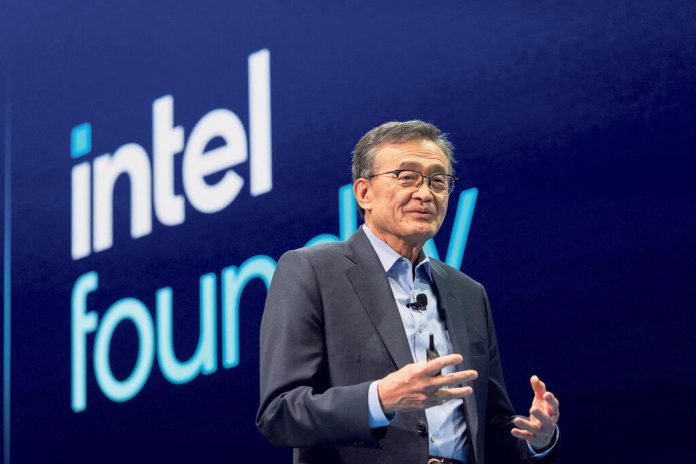
The U.S. government’s decision to take a 9.9% equity stake in Intel has rattled investors and raised concerns that President Donald Trump is ushering in a new era of direct government involvement in private corporations.

The deal, announced Friday, converts $11.1 billion in CHIPS Act grants and other government funding into stock ownership. Intel’s press release included endorsements from Microsoft, Dell, and other corporate partners praising the move as a boost for U.S. semiconductor competitiveness. But many on Wall Street said the transaction crossed a line, according to a Reuters report.

Trump himself tied the stake to pressure on Intel CEO Lip-Bu Tan, writing on social media that Tan wanted to keep his job and “ended up giving us $10 billion for the United States.”

“It sets a bad precedent if the president can just take 10% of a company by threatening the CEO,” said James McRitchie, a shareholder activist in California who owns Intel stock. “The message is: we love Trump, or we risk losing part of our company.”

Intel shares rose in the days between Trump’s public calls for Tan’s resignation and the deal announcement, jumping from $20.41 on August 6 to $24.56 on August 15. But the stock slipped 1% to close at $24.35 on Tuesday after investors began digesting the terms.

According to a securities filing, the U.S. Commerce Department will not gain board seats but can vote “as it wishes” on certain matters. It must back management’s nominees for directors and corporate proposals, but retains flexibility elsewhere. The arrangement, analysts say, could blunt activist investor campaigns but at the cost of diluting existing shareholders and reducing their voting power.

Fitch Ratings said the deal does little to improve Intel’s fundamentals, maintaining its BBB credit rating, just above junk. CEO Tan himself acknowledged Intel did not need the funding, noting that SoftBank had injected $2 billion just three days earlier.

The government’s intervention marks the third major corporate entanglement for Trump’s White House in recent months, following a “golden share” in U.S. Steel’s sale to Nippon Steel and a July stake in a mining company tied to military supply chains.

Commerce Secretary Howard Lutnick suggested defense contractors may be next.

The strategy mirrors approaches long seen abroad. Governments in Germany, Japan, South Korea, Taiwan, and Singapore all hold ownership stakes in national champions, particularly in autos. For example, the German state of Lower Saxony controls 20% of Volkswagen.

But in the U.S., critics believe, the move resembles creeping state capitalism. During the 2008–2009 financial crisis, Washington temporarily took equity in struggling firms, but Intel’s case is different—its finances remain stable.

“A government stake in an otherwise private entity potentially creates a conflict between what’s right for the company and what’s right for the country,” said Robert McCormick of the Council of Institutional Investors.

Kristin Hull, chief investment officer at Nia Impact Capital, called the development troubling: “I have more questions than confidence. The lines between where is the government and where is the private sector—we’re really blurring them here.”

Other investors warned that government stakes could distort corporate decision-making on sensitive issues such as plant locations, layoffs, or international expansion. Rich Weiss of American Century Investments said regulations would be needed to guard against insider trading and conflicts of interest.

Not all reactions were negative. One large institutional investor, speaking anonymously to Reuters, said a U.S. stake could shield Intel from activist campaigns that prioritize short-term returns. Still, the investor cautioned, “If this becomes a tool that’s more widespread, we’ll have to ask why capital markets aren’t providing financing and why government pressure is.”

Treasury Secretary Scott Bessent said Wednesday that a stake in Nvidia, the world’s most valuable semiconductor firm, is “not on the table,” but he left open the possibility of future investments in industries such as shipbuilding.

“Could there be other industries where that we’re reshaping, something like ship building? Sure, there could be things like that,” Bessent said.

Intel now finds itself at the center of an experiment without precedent in modern U.S. industrial policy: a healthy private company with the federal government as one of its largest shareholders, raising both the hopes of greater national semiconductor strength and the fears of blurred boundaries between the state and the market.

Nvidia reports $46.7bn Q2 Revenue, a 56% increase year-over-year, As AI Demand Soars

0

Nvidia, the world’s most valuable company, delivered another quarter of blistering growth, underscoring its unrivaled dominance in the artificial intelligence hardware market even as it confronts intensifying geopolitical headwinds in China.

The company reported $46.7 billion in revenue for the second quarter, a 56% increase year-over-year, driven primarily by its AI-dominated data center division. Net income also surged, climbing 59% to $26.4 billion, cementing Nvidia’s position as the most profitable semiconductor firm in history.

The heart of Nvidia’s earnings story lies in its data center business, which accounted for $41.1 billion of total revenue. Demand for graphics processing units (GPUs), indispensable for training and running large AI models, continues to accelerate across the globe.

Much of that strength was fueled by the company’s new Blackwell architecture, which alone generated $27 billion in sales during the quarter. Branded as the most powerful AI platform on the market, Blackwell has quickly become the chip of choice for tech firms racing to build and deploy generative AI systems.

“Blackwell is the AI platform the world has been waiting for,” declared CEO Jensen Huang in his earnings statement. “The AI race is on, and Blackwell is the platform at its center.”

Nvidia highlighted its role in supporting OpenAI’s gpt-oss models, unveiled earlier this month, pointing to a feat of computing muscle: processing 1.5 million tokens per second on a single Nvidia Blackwell GB200 NVL72 rack-scale system. That performance exemplifies the exponential leaps Nvidia has engineered, setting the pace in a market where rivals like AMD and Intel have struggled to keep up.

The China Dilemma

Nvidia has continued to face roadblocks in China, historically one of its most important growth markets, despite its triumphs in AI. The company disclosed that it sold no China-focused H20 chips to customers in the country during the quarter. Instead, it reported a $650 million sale of H20 units to a customer outside China.

The challenges stem from a complicated mix of U.S. export controls and China’s domestic policy push to reduce dependence on American hardware. While Washington under previous administrations had imposed sweeping restrictions on advanced chip sales to Beijing, the geopolitical terrain has shifted significantly under President Trump.

In a strikingly unconventional arrangement, Nvidia is now technically permitted to sell some downgraded GPUs to Chinese buyers under a new deal that requires the chipmaker to pay a 15% export tax to the U.S. Treasury.

Even with that opening, the company’s CFO, Colette Kress, noted in the earnings call that shipments remain on hold.

“While a select number of our China-based customers have received licenses over the past few weeks, we have not shipped any H20 devices based on those licenses,” Kress said.

The uncertainty stems from the fact that the tax arrangement has not been formalized in U.S. federal regulation, leaving firms in limbo.

Meanwhile, Beijing has discouraged its companies from using Nvidia chips altogether, pushing them instead toward local alternatives. Earlier this month, reports surfaced that Nvidia had halted production of the H20 chip, a development linked to mounting pressure from Chinese authorities.

The tug-of-war over Nvidia’s chips is a defining flashpoint in the broader U.S.-China tech rivalry. Washington sees GPUs as critical to AI supremacy and national security, while Beijing has accelerated its efforts to build domestic champions such as Huawei and Biren. Nvidia finds itself caught in the middle of a geopolitical contest that could reshape the global semiconductor supply chain.

Despite the cloud of uncertainty over China, Nvidia’s outlook for the next quarter remains bullish. The company forecast $54 billion in revenue for Q3, plus or minus 2%, excluding any potential H20 shipments to China. In other words, Nvidia is assuming the worst-case scenario in China and still projecting record-breaking sales.

For investors, Nvidia thriving amid uncertainties in one of its biggest markets guarantees its bullish future. Its GPUs are the backbone of the AI revolution, powering everything from ChatGPT-like models to autonomous driving platforms. But its international reach is constrained by political decisions beyond its control.

However, the company’s trajectory is believed to be a highlight of two realities. First, the AI boom is still in its early innings, and Nvidia sits squarely at the center. Second, the geopolitical fragmentation of the tech industry is real, and Nvidia’s future growth will depend as much on Washington and Beijing as on silicon innovation.

Effective Spend Management in SMEs – Tekedia Mini-MBA

0

In the evolving African business landscape, effective spend management for SMEs is not merely about fiscal austerity; it is a strategic crucible for survival and growth. Like a tree optimizing nutrient intake, a firm must channel its limited financial resources to fortify its core and expand its canopy.

Traditional approaches, which often view expenditure as a fixed liability, are insufficient for the demands of the modern knowledge economy. The most agile SMEs are those that leverage a robust digital ecosystem to gain real-time visibility into their cash flow.

The future of spend management lies in shifting the paradigm from cost-cutting to value creation. Instead of merely trying to reduce operational overhead, SMEs must ask a more fundamental question: which expenditures are building enduring capabilities and competitive advantage within our ecosystem?

This requires embracing data analytics to categorize spending, identifying opportunities for automation, and ensuring that every Naira contributes to the firm’s innovation engine. This is how resilient firms are built, not through fear of spending, but through the wisdom of investment.

Join us at Tekedia Mini-MBA as Nigeria’s leading spend management company educates on how enterprises can execute an effective spend management protocol.

Thur, Aug 28 | 7pm-8pm WAT | Effective Spend Management in SMEs – Yemi Olulana, CEO of Flex Finance | Zoom link https://school.tekedia.com/course/mmba18/