DD
MM
YYYY

PAGES

DD
MM
YYYY

spot_img

PAGES

Home Blog Page 626

How Stakeholders Can Successfully Implement CBN’s POS Geo-Tagging Policy

0

The Central Bank of Nigeria’s (CBN) directive on the geo-tagging of Point of Sale (POS) terminals marks a new phase in the evolution of Nigeria’s digital payments ecosystem. The rule requires all POS devices to be tied to specific physical locations and restricted to operate within a 10-meter radius of their registered sites. The policy aims at reducing fraud, improving monitoring, and enhancing public confidence in the system.

While the goal is commendable, successful implementation requires more than compliance for its own sake. Each stakeholder must understand the steps they need to take and the opportunities that lie within them. In this piece, our analyst presents a process-driven roadmap designed to help stakeholders adapt and even thrive under the new framework.

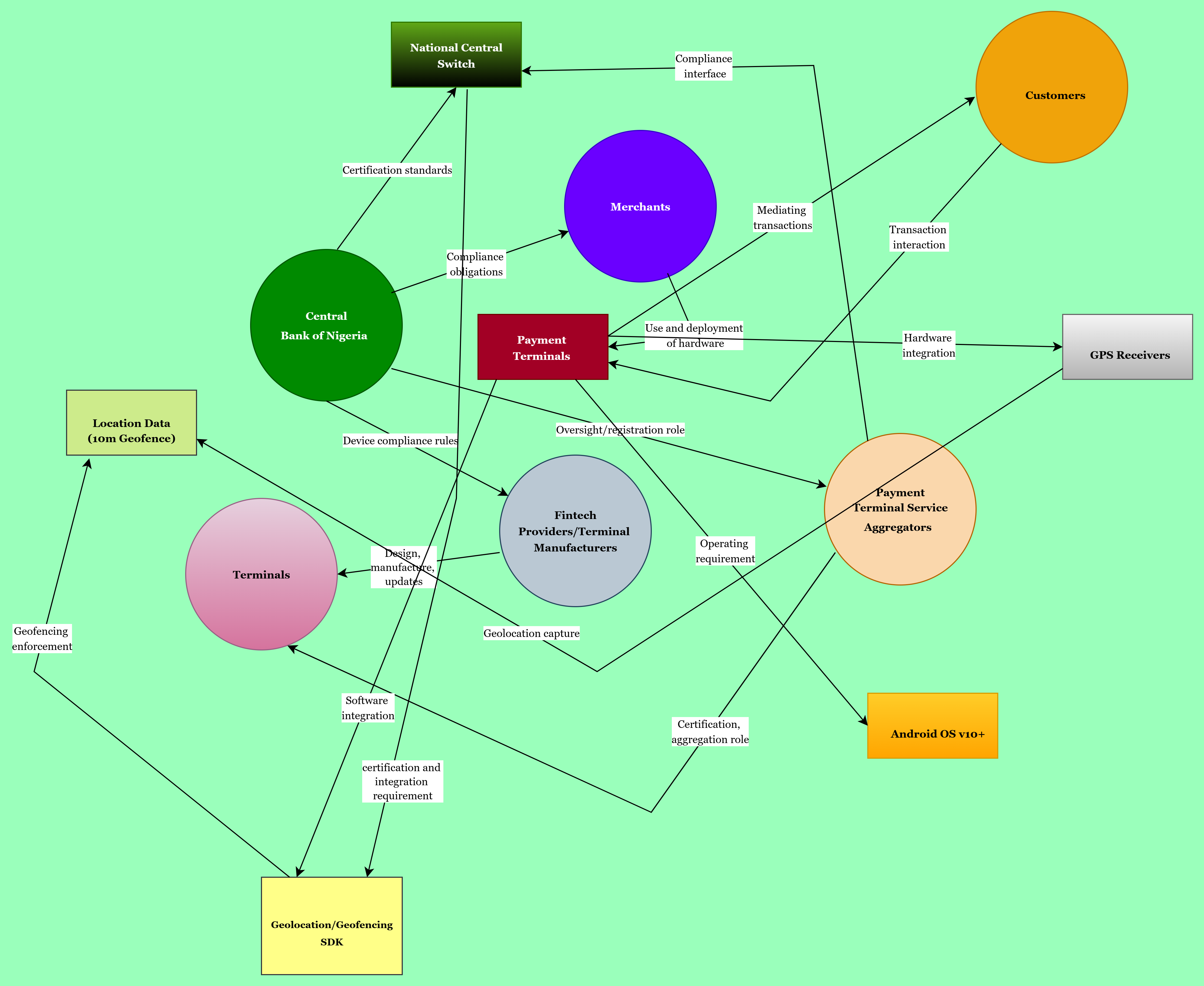
Exhibit: Network of actors towards successful implementation of geo-tagging POS policy

Source: CBN, 2025; Infoprations Analysis, 2025

Step 1: Build a Shared Understanding

The first step toward successful implementation is clarity. CBN must publish easy-to-understand policy briefs that explain the purpose, scope, and compliance requirements of the geo-tagging rule. Aggregators should organize workshops and digital sessions to help fintech companies and merchants interpret the regulations.

Fintech providers and terminal manufacturers need to examine the technical requirements closely, while merchants should begin by identifying the POS terminals in their possession and confirming the addresses where they are currently deployed. When all actors start with a common understanding of what the policy means, confusion is minimized and implementation becomes smoother.

Step 2: Map and Audit POS Deployments

Accurate data is the foundation of compliance. Aggregators must create a reliable registry of every POS terminal, capturing both device details and deployment addresses. Merchants should cooperate by submitting information about the locations where their devices operate, while fintech providers can make the process easier by building audit features into merchant dashboards.

This step is critical for identifying terminals that are frequently moved between locations, such as those used by mobile merchants in rural markets. Addressing such cases early helps prevent penalties and ensures smoother adaptation to the new rule.

Step 3: Upgrade Devices and Integrate Technology

Once the audit is complete, stakeholders must turn to the technical side of compliance. Many older POS terminals lack the software and hardware capabilities to enforce a 10-meter restriction. Fintech providers and manufacturers should therefore upgrade devices to run on Android OS version 10 or higher, integrating approved geolocation software development kits that ensure accurate GPS monitoring.

Technology partners such as GPS and SDK developers have a key role to play here. They must provide lightweight, efficient solutions that work reliably even in regions with weak connectivity. Aggregators should only approve terminals that meet certification standards to ensure long-term compliance.

Step 4: Train and Support Merchants

Policies often fail when frontline actors are left behind. Merchants, who depend on POS transactions for daily income, need training and support to manage the transition. Aggregators should roll out simple guides and helplines to help merchants troubleshoot issues and understand how the 10-meter restriction works.

Merchants themselves should begin adjusting business strategies to focus on fixed-location usage and communicate transparently with customers about possible disruptions. Fintech providers can support this effort by offering responsive customer service dedicated to compliance-related challenges.

Step 5: Monitor, Report, and Adjust

Compliance is not a one-time exercise but a continuous process. Aggregators should build dashboards that monitor terminal activity in real time, flagging irregularities such as relocation attempts. CBN and the National Central Switch can strengthen oversight by requiring monthly reports and sharing data insights across the ecosystem.

Merchants should also report persistent device failures or connectivity issues promptly. This collaborative monitoring ensures that the policy remains effective while reducing unintended service disruptions.

Step 6: Turn Compliance into Opportunity

Stakeholders must look beyond the rule as a burden and see it as an opportunity. CBN can promote compliant merchants and aggregators as trusted partners, setting higher benchmarks for credibility. Fintech providers can position “compliance-ready” POS devices as premium solutions for secure and reliable payments. Merchants can use certification as a way to attract customers who value safety and transparency in financial transactions. When compliance becomes a competitive advantage, the industry moves from resistance to innovation.

United States –Democratic Republic of Congo Minerals Deal and Implications for China

0

Dr. Kaze Armel, Associate Researcher, Xiangtan University, School of Law, China-Africa Research Institute

Fang Gaoyang, Master Student, Xiangtan University, School of Law

In a surprising move, the government of the Democratic Republic of Congo, Africa’s richest country by mineral deposits, has given the United States an offer to access its critical minerals in exchange for security. DRC is giving the US access to its Banana deep sea port and a possibility of the US having its military bases in the country. This move is driven by a complex interplay of geopolitical, economic, and security motivations, reflecting the DRC’s strategic positioning in a world increasingly reliant on critical minerals. With an estimated mineral wealth of $24 trillion, including the world’s largest reserves of cobalt, substantial copper deposits, and other key resources like lithium and tantalum, the DRC holds a pivotal role in global supply chains for advanced technologies, particularly those underpinning the green energy transition and defence industries.

The government of DRC led by President Felix Tshisekedi has increasingly come under immense pressure from the rebels that continues to gain territory; unmasking incapacity of the state to secure its borders and citizens. For over three decades, the eastern provinces, notably North and South Kivu, have been plagued by armed conflict involving more than 100 rebel groups, with the M23 movement emerging as a particularly formidable threat. In 2025 alone, the M23, allegedly supported by Rwanda, has caused thousands of deaths and displaced millions, capturing key mining hubs like Walikala and Goma. The Congolese government, under President Félix Tshisekedi, has struggled to contain this insurgency with its own forces and limited foreign aid, including an ineffective UN peacekeeping presence (MONUSCO). The DRC’s proposal to the US reflects a desperate bid for decisive military support (training, equipment, and potentially direct intervention), to stabilize the region and reclaim control over its territory and resources. The US, with its history of military engagement and influence in countering regional aggression is seen as a capable partner to tip the scales against the rebels.

Economically, the DRC seeks to diversify its partnerships and reduce its overwhelming reliance on China, which dominates its mining sector. Chinese companies own or co-own 15 of the DRC’s 19 cobalt operations, controlling roughly 70% of global cobalt supply, a critical component in batteries and military technologies. This dominance stems from a decades-long strategy, including the 2008 Sycamines deal, where China secured mineral access in exchange for infrastructure investments—though the DRC later criticized this arrangement for delivering far less than. Renegotiations in 2024 yielded a $7 billion revised deal, but dissatisfaction persists over transparency, equitable benefits, and China’s tolerance for operating in unstable, corruption-prone environments. By offering the US exclusive mineral access, the DRC aims to dilute China’s economic grip, attract Western investment, and leverage competition to negotiate better terms for its resources, aligning with Tshisekedi’s goal of fostering a more balanced economic landscape.

President Tshisekedi also sees US President Donald Trump as a transactional leader who could easily buy into the idea of investing into DRC mineral resources – a longstanding flashpoint in the ongoing geopolitical rivalry between the US and China. American policy makers accuse China of obtaining an upper hand in exploitation of DRC’s mineral resources. Given the precedent set in Ukraine where Trump has literally arm-twisted President Volodymyr Zelenskyy into a mineral deal with US for security guarantees in the conflict with Russia, Tshisekedi hopes for a node from Washington. The race for critical minerals is becoming more intense with leading political voices in US like Tesla owner Elon Musk having the eye and ear of President Trump – a factor that could jolt US into the DRC offer.

The third motivation for DRC to offer its natural resources to US for security is the apparent failure of the ongoing mediation and peace processes aimed at stemming the tide of conflict in Eastern DRC. On March 18, 2025, leaders of Rwanda and DRC met in Qatar and agreed to a cease fire in the Eastern DRC. Rwanda is believed to be strong supporter of the M23.  The rebels announced a day later that the talks between President Felix and Rwanda’s Paul Kagame wouldn’t impeded their appetite for more Congolese territory. Furthermore, Angola has announced its decision to end its mediation efforts in the ongoing conflict involving the M23 rebels, the Democratic Republic of Congo and Rwanda. These developments have left little room for the DRC government to envision a possible future of peace and stability, creating much political pressure on President Tshisekedi to source for alternative paths to stability.

Furthermore, the success of the rebels is largely attributed to their capability to control mineral rich regions and use extra-state systems to extract the resources and sell to the international markets, including in the US and the European Union. Rwanda, accused of funding and arming the M23, is Africa’s largest gold exporter, despite having no known deposits of the commodity that would give it such as edge. Illegal exploitation of the DRC’s resources has been blamed for funding the rebels, thereby perpetuating a cycle of conflict-for-minerals with complicit countries like Rwanda attracting censures by the United Nations, the US and EU countries.

More importantly, through the deal, the DRC aims to harness its mineral wealth for domestic growth. The promise of US security assistance could stabilize mineral-rich regions like Lualaba and Haut-Katanga, where cobalt and copper deposits are concentrated, enabling the government to redirect revenues toward infrastructure, jobs, and poverty alleviation in one of the world’s poorest nations. The proposal includes joint mineral stockpiles and port projects, hinting at a vision for long-term economic partnership rather than mere extraction. This aligns with Tshisekedi’s rhetoric of using mineral resources to transform the DRC, reducing the appeal of rebellion by addressing underlying grievances like unemployment and lack of services.

Will US and European companies step in?

Offering DRC minerals in exchange for security by the US is something that will certainly get the attention of the Donald Trump. The US leader’s transactional nature and the desire to consolidate American power both at home and abroad, under the Make America Great Again (MAGA) movement led Tshisekedi to believe that time is ripe to broker a peace-for-minerals deal with Washington. At the heart of it, the offer is certainly alluring. The DRC is home to 60% of the world’s Coltan reserves; and up to 70% of the world’s cobalt production – all pointing to the lead position of the country in terms of critical minerals endowment. Similarly, the US has long decried China’s strong presence in DRC’s mineral sector where Beijing currently has a controlling stake in the exploration of the resources. In putting forward the offer to Trump administration, the DRC seeks to incentivize the US to prioritize its stability, potentially elevating its status on the international stage. For the DRC, aligning with the US could also counterbalance Rwanda’s regional influence and pressure the international community to address the conflict more decisively.

However, American companies have largely been absent in the DRC minerals exploitation space. The US has instead been relying on some European companies and merchants who sell the DRC minerals in the international markets. However, the increasingly visibility of China in DRC and other African countries has seen successive US leaders, including Barack Obama and Joe Biden initiate attempts to compete with China in the continent.

In the sunset days of his presidency, Joe Biden visited Angola, where he met regional leaders including President and host, João Lourenço; DRC President, Félix Tshisekedi; Zambian President Hakainde Hichilema and Tanzania Vice President Philip Mpango. The choice of Angola was critical given that it is the epicentre of a massive rail infrastructure project backed by the US and western allies to counter China’s connectivity headways in the continent. The Lobito Corridor, has become synonymous with Biden administration and is increasingly viewed as an important success of his administration in geopolitical chessboard in Africa, with the eye on China. Biden pledged US$ 600 million for the Lobito Corridor Project, bringing US total investment commitments in the corridor so far to US$ 4 billion. The G7 countries, EU and banks in Africa are expected to raise US$ 2 billion into the project.

The project remains the largest train development initiative supported by the US outside America and aims to refurbish 2,000 kilometres of train lines terminating in the mineral-rich areas of Democratic Republic of Congo and Zambia. The regions contain large deposits of cobalt, copper and other critical minerals used in manufacture of batteries for electric vehicles, electronic devices and other clean energy technologies. Implementing the corridor was primed to give the US and allies opportunity to cart away critical minerals from the central Africa region, including from DRC in a westerly manner – a stark contrast to what Washington sees as China’s use of the Belt and Road Initiative to transport minerals to China through the easterly route.

What would DRC-US minerals deal mean for China?

If the US-DRC deal is implemented, China’s near-monopoly over the DRC’s mining sector would face a significant challenge. Currently, Chinese firms like CMOC Group control the majority of cobalt and copper production, with 80% of DRC output shipped to China for processing. Exclusive US access to key deposits, coupled with operational control for American companies, could divert a substantial share of these resources westward. For instance, cobalt exports—vital for US tech and defence industries—might shift from Chinese refineries to US-led supply chains, potentially reducing China’s global market share from 70% to a lower figure, depending on the scale of US investment. This would weaken Beijing’s stranglehold on critical minerals, a strategic concern for the US amid rising geopolitical tensions between the two leading global powers.

Secondly, the entry of US companies would introduce competition, pressuring Chinese firms to improve their terms with the DRC. The DRC might leverage US interest to extract more value from Chinese partners by demanding higher royalties, better infrastructure commitments, or reduced environmental damage.

How Should China prepare for operations in DRC going forward?

China has traditionally paired its mining investments with military assistance, training Congolese forces and protecting its assets in the east. A US military presence will be a direct threat to Beijing. In order to avert this eventuality, China should deepen its economic ties with the DRC government by offering enhanced infrastructure investments, favourable loan terms, or technical assistance. This could reinforce the DRC’s reliance on Chinese partnerships, making it less appealing to pivot fully toward the US.

Secondly, China should play the long game. It took decades of investments by Chinese companies in DRC to achieve the level of dominance and visibility it enjoys today. The DRC request to the Trump administration remains aspirational. It is not clear if President Trump will buy into the idea and whether he will be in a position to marshal enough resources to see the desired investments come to life in DRC. Although Trumps aggressive budget cuts might put some dollars at his disposal, it remains to be seen if he will have the staying power actually push US companies and European allies to invest in DRC.  The US has been long on rhetoric regarding China’s growing economic and political influence in Africa without corresponding policies and resources that can match Beijing in the continent.

China should also consider strengthening the terms of current mining contracts involving Chinese companies to ensure long term stability. Equally important is for Beijing to increase joint ventures with Congolese firms to enhance local stake in Chinese projects while building processing facilities in the DRC to add value and create local jobs, reducing reliance on raw exports.

Even if the DRC offer is not taken up by the Trump administration, it is emblematic of the restlessness of the DRC government regarding how to secure long term stability, security and prosperity of the country. China must act pre-emptively to consolidate its position in the DRC through diplomacy, economic incentives, and strategic diversification. By reinforcing its role as a dependable partner and countering US influence, China can mitigate risks from an actual US-DRC minerals-for-security deal.

Trump Aid cuts and it’s Implications for African Economies

0
The African Union logo is seen outside the AU headquarters building in Addis Ababa, Ethiopia, November 8, 2021. REUTERS/Tiksa Negeri

Dr. Kaze Armel, Associate Researcher, Xiangtan University, School of Law, China-Africa Research Institute

Rafalinjara Rose Marie Yannick, Xiangtan University, School of Law, PhD Candidate

Introduction 

A few hours after his inauguration, President Donald Trump issued an unprecedented forty-four executive orders and memos across a wide range of areas, from bureaucratic reorganization to trade, energy, and migration, that communicated his administration’s intention to swiftly implement his new policy agenda. The ripple effects of some of these policy shifts are likely to be significant for low and middle-income countries for which the United States as among major providers of development assistance.

One of the most discussed policy decisions by President Donald Trump, outside of America, was his decision to freeze foreign aid for a period of 90 days. The push to disband, USAID, the central public relations arm of the US foreign policy establishment, has further brought consternation in many parts of the world, and particularly to the African region. While many people in Africa did not have much expectation of the second Trump presidency, little did they know that even the meagre ongoing US development support to the continent under the previous administrations, would be abruptly brought to a screeching halt. And with a stroke of the pen, trump wiped out billions of dollars in aid to Africa, putting lives and livelihoods for millions of people at risk.

Why it matters 

The US is by far the largest donor in the world through multiple NGOs and American aid has been used for a variety of reasons including humanitarian response, strengthening health systems, security provision, education, human rights and climate change mitigation. The US dedicates one percent of the federal budget to foreign development assistance covering both development and humanitarian assistance. In 2023, for instance, the USAID had a budget of US$ 63 billion to carry out its activities around the world. However, the USAID has recently faced many accusations, especially from the Republican Congressman Scott Perry that the agency has been funneling taxpayer dollars to terrorist organizations, including Boko Haram, ISIS, and Al-Qaeda, one of the reasons why President Donald Trump stopped the USAID.

After the ban of USAID, the news was like a tsunami-earthquake-storm kind to the world. This was unprecedented in all ways because Trump told the world that the USA has no interests in foreign aids. In Africa, Trump’s aid cuts have caused much anxiety for a number of reasons. First, the US has been the biggest anchor of humanitarian assistance. The ‘stop work’ have for example affected thousands of aid workers in conflict areas of Africa, including the Eastern Democratic Republic of Congo that exploded in the backdrop of Trump decisions.

Secondly, USAID affiliated programmes such as U.S. President’s Emergency Plan for AIDS Relief (PEPFAR) have for decades saved lives through targeted support to people living with HIV/AIDS in Africa. Since inception in 2003, the fund has saved over 23 million people around the world, including millions of children who are either infected or orphaned as a result of HIV/AIDS.

Thirdly, many USAID programmes touching on education have enabled children, including girls to access education across Africa. Other programmes touching on environmental conservation, agriculture, civic and capacity education, conservation of endangered species and even small-scale manufacturing, have been affected by the pause on US funding.

Fourth, because of the financial support from the US to different sectors of economy, many governments have been left with huge budget holes and forced to frantically look for funds to plug the deficits caused by the USAID exit.

Fifth, the US aid cuts could hinder progress towards achieving the United Nations Sustainable Development Goals (SDGs), which many African countries are striving to meet. This includes notably goals related to poverty reduction, better education, and gender equality.

Countries affected by the aid cuts in Africa

Essentially, all African countries receive some form of aid from the US. Seven African countries will be hit the hardest by the Trump administration’s funding cuts to the USAID. DRC (Democratic Republic of Congo), Ethiopia, Liberia, Somalia, South Sudan, and Uganda received more than a fifth of their total development assistance from USAID. The small size of their economies means that aid accounts for an average of 11% of their gross national income with USAID providing 30% of development assistance, the freeze could create a shortfall equivalent to over 3% of GNI. In all but two of these countries, USAID’s focus is categorized as an emergency response. Basic health is the main sector targeted in Liberia, while in Uganda it is reproductive health. According to government records, the majority on humanitarian and health aid, the USAID spent more than $12 billion in Sub-Saharan Africa in 2024. DRC alone received the largest amount of aid, at $1.3 billion, followed by Ethiopia and Sudan.

In 2024, for example, top recipients of the USAID funding in Africa were: Nigeria (US$622 million), Mozambique (US$564 million), Tanzania (US$560 million), Uganda (US$559 million), and Kenya (US$512 million?. Such funding significantly contributed to national programmes on critical areas such as health, agriculture, capacity building and governance strengthening.

Following the exit of USAID, there are already serious ramifications for the countries, people and the planet.

Eight of the world’s poorest countries most of which are found in Africa, get up to a fifth of their aid from USAID. These include South Sudan, Somalia, Democratic Republic of Congo, Liberia, Sudan, Uganda and Ethiopia. In these countries, aid is invested in critical government programmes and the freeze in US aid beyond USAID is going to compromise ability of recipient governments to deliver the much-needed public services.

But it is not just the poorest of the countries. Middle income countries like Angola, Zimbabwe and Kenya equally rely heavily on US aid. in East Africa’s strongest economy, Kenya, for instance, over 35,000 health workers have lost their jobs as a result of the USAID freeze. In addition, 150 clinics offering critical HIV/AIDS care have also been closed down, leaving over 72,000 people on HIV medication without hope. PEPFAR alone employs approximately 41,500 healthcare workers in Kenya, further amplifying the key role US aid plays in Kenya’s economy.

South Africa, the largest economy in Africa, has particularly come under heavy attack by the Trump administration, in terms of cutting of development aid. Trump announced that his country would freeze all types of aid to South Africa, accusing the current government in Pretoria of implementing racially discriminating and incriminating policies targeting the white South Africans. The aid cuts mean that South African government must actively looks for alternative funds to close the gaps left by USAID and other financing streams.

US provided US$ 453 million worth of aid to South Africa, in 2024, under PEPFAR, contributing up to 17% of the country’s budget for response to HIV/AIDS. Similarly, the USAID pumped US$ 60 million in a number of programmes in areas such as climate mitigation, and community violence prevention. Besides increasingly strained relations between Pretoria and Washington, South Africa will be forced to resort to other avenues to ensure continuity of programmes and projects that were being supported by the US aid.

Given the US preoccupation with hard security, the pullback by President Trump is also set to affect security support for different countries in the continent that relied on US aid. The horn of Africa and Sahel countries like Somalia, Mali, Niger, and Burkina Faso where American aid has been critical in addressing security challenges and supporting development initiatives are staring at uncertain futures. Paradoxically, cutting aid in such countries will not only affect the security of the affected countries and the region as a whole – it has real security implications for the US in the long run.

Broader Geopolitical Implications of Trump Aid Cuts

As the largest donor in the world, the decision by President trump to cut aid to developing countries pull the US out of multilateral platforms like the Paris climate agreement foment bad diplomatic precedence for Washington in Africa. Under Trump, America is increasingly viewed as unpredictable, unstable and escapist partner only interested in self.

Many African leaders, organizations and people have voiced disaffection with the decision of Trump to halt aid without preparing the recipient countries. It has revealed that Trump is disinterested in long term and productive partnership with Africa.

Secondly, the US withdrawal from Africa’s aid landscape tacitly reveals waning influence of Washington in the continent. It is emblematic of the general pushback of the west in the continent with countries like France facing outright hostility in Africa.

Thirdly, the inward US policy creates opportunity for other partners of the continent to play a more pronounced role in Africa’s socioeconomic transformation. China, in particular, is now considered as a formidable alternative to the US as a development partner for Africa. Beijing has particularly presented an alluring vision for Africa’s partnership, including rolling out pragmatic and impactful cooperation platforms like the Belt and Road Initiative; Global Security Initiative; Global Development Initiative and the Global Civilization Initiative.

How are African countries responding to the Trump aid cuts?

As a response to the new reality of the Trump administration, African countries have been forced to resort to a number of mechanisms and strategies to stay afloat. These measures include;

Diversification of Partnerships: African countries are actively seeking to diversify their international partnerships, engaging more closely with other donors, such as the European Union, China, or multilateral institutions like the World Bank and the African Development Bank. China’s support for Africa’s infrastructure modernization, health response and climate mitigation have set Beijing aside as a dependable and stable partner for Africa. As US looks inside, more voices in Africa are calling on China to expand footprints in the continent for mutually reinforcing and sustainable development gains.

Strengthening regional cooperation: African leaders are increasingly looking at leveraging regional organizations like the African Union (AU) and regional economic communities (e.g., ECOWAS, SADC) to mobilize resources and coordinate development efforts.

Domestic Resource Mobilization: African countries are focusing on domestic resource upgrades through initiatives like improved tax collection, reducing illicit financial flows, and creating a more favourable environment for domestic and foreign investment. Also, many local government bonds are in play to attract domestic investments.

Encouraging public-private partnerships (PPPs). This is seen as alternative path to Africa’s socioeconomic regeneration. Private sector players can drive Africa’s industrialization, job creation and wealth fortification. could also help leverage private sector resources for development projects. Manufacture of medicines and other therapeutics has been marked by many African countries as an important avenue to fortify health response in the continent.

Leveraging Technology and Innovation: Digital technologies are being considered as pathways to improve service delivery, enhance governance, and create new economic opportunities. By using telemedicine, for example, African countries can make up for loss of medical personnel due to USAID withdrawal and provide essential diagnostic services to populations in the rural areas. In addition, innovations in areas like mobile banking, e-commerce, and renewable energy are increasingly viewed as outputs to reduce dependency on external aid.

Africa races to fill the USAID gap: A reset for the continent

Many African countries have felt the aid cuts, and it is being hard for some to fill the gap. However, some African countries are being aware of the issue and are on their way on finding how to fill the gap. Nigeria, Africa’s largest economy, committed $200 million to fill the funding void left by the US suspension of health aid across the continent as it approved its $36.6 billion budget for 2025. Meanwhile, the World Health Organization said it would release an additional $2 million to support Uganda’s response to its latest Ebola outbreak. The pause in US funding has already affected contact tracing and screening of departing international travelers. The uncertainty around the future of USAID has raised urgent questions about which countries and blocs will step in to support vital aid projects in Africa.

Not only African countries are racing to fill the gap, the African Union as well is on its way finding potential solutions to overcome the gap.  The dismantling of USAID gave the African Union the opportunity to develop strong position in G20 as the US leaves a vacuum of leadership. The African Union is working closely with the rest of the G20 to find a common solution to overcome Africa’s gap on USAID and this will be more beneficial to Africa than it was before under the USAID. The potential way out of this will be for the AU to negotiate with partners like China and Russia and many others on the economic bloc such as BRICS on how to fill the gap. As the US aid decreases on the continent, China, Russia and even Brazil may increase their influence in Africa through their own aid and investment programs. This could shift economic and political alliances, potentially marginalizing US interest in the region.

African countries are also strengthening their ties with China in many sectors. However, the question remain is can China help fill the void left by the U.S aid cuts? China has rapidly expanded its financial influence in Africa, but its approach differs from Western aid models. Unlike the US and Europe, which provide grants and social programs, China focuses on loans, trade agreements, and large-scale infrastructure investments under initiatives like the Belt and Road Initiative (BRI) among others. China and Africa are stepping up efforts to build an all-weather communities with a shared for new opportunities in the new era. Chinese government has maintained its status as the largest Africa trading partner for 15 consecutive years. In 2023, the volume of China-Africa trade was four times that of the United States and Africa. While China could partially replace US financial support, concerns over rising African debt levels persist. To truly fill the void left by US aid cuts, China would need to expand its humanitarian assistance efforts and introduce development programs with fewer debt risks.

Conclusion

The proposed aid cuts under the Trump administration present significant challenges for affected African countries, particularly in critical sectors like health, security, and humanitarian assistance. While the immediate effects might be felt in reduced funding for critical programs, the long-term consequences could include slower economic growth on the African continent, increased instability as seen in DRC lately, and a shift in global influence. However, these challenges also offer an opportunity for African nations to rethink their development strategies and build more self-reliant, resilient economies. African countries and international community need to explore alternative funding mechanisms and partnerships to mitigate these potential impacts. By diversifying partnerships, mobilizing domestic resources, strengthening governance, and investing in human capital and innovation, African countries can mitigate the impact of aid cuts and chart a path toward sustainable development.


Trump’s Attempt to Fire Lisa Cook Represents a Direct Challenge to the Federal Reserve’s Independence

0

President Donald Trump announced on August 25, 2025, via Truth Social, his intention to fire Federal Reserve Governor Lisa Cook, citing allegations of mortgage fraud raised by Federal Housing Finance Agency Director William Pulte.

The allegations claim Cook falsely declared two primary residences to secure better mortgage terms. Cook, the first Black woman on the Fed’s board, appointed by President Joe Biden in 2022 for a term until 2038, has denied the accusations and stated she will not resign, asserting Trump lacks legal authority to remove her.

Her attorney, Abbe Lowell, plans to challenge the action in court, potentially escalating the case to the Supreme Court. The Federal Reserve Act allows removal of governors only “for cause,” typically interpreted as serious misconduct during their term, leaving Trump’s legal basis contentious, as the allegations predate Cook’s tenure.

Legal experts suggest the move could test the Fed’s independence, a cornerstone of its ability to manage monetary policy without political interference. If successful, Trump could gain influence over the Fed’s board, especially with another vacancy from Adriana Kugler’s resignation and his nomination of Stephen Miran.

However, even with additional appointees, Trump’s influence over interest rate decisions may be limited, as the Federal Open Market Committee includes non-board members. Financial markets showed minimal immediate reaction, but analysts warn that undermining the Fed’s autonomy could unsettle investors.

Trump has historically discussed using tariff revenue to fund domestic initiatives. For instance, during his campaign, he proposed tariffs on imports, particularly from China, to generate revenue for tax cuts or other benefits for Americans.

The Federal Reserve Act stipulates that governors can only be removed “for cause,” typically interpreted as serious misconduct during their term. The allegations against Cook, related to mortgage fraud predating her tenure, may not legally qualify as sufficient cause. If Trump succeeds in removing her, it could set a precedent allowing future presidents to dismiss Fed governors for political reasons, eroding the Fed’s insulation from executive influence.

Cook’s legal team plans to challenge the dismissal in court, potentially reaching the Supreme Court. A ruling in Trump’s favor could weaken the legal protections surrounding Fed governors’ terms, making them more vulnerable to political pressure. Conversely, a ruling against Trump could reinforce the Fed’s autonomy.

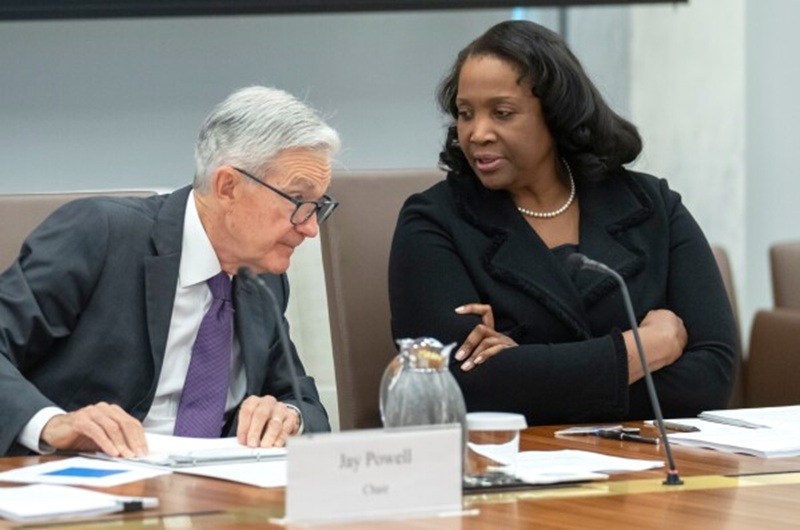
Trump’s action aligns with his history of criticizing the Fed and its chair, Jerome Powell, for not aligning monetary policy with his economic goals. Successfully removing a governor could embolden further attempts to influence the Fed’s decisions on interest rates, inflation, or employment, undermining its mandate to prioritize long-term economic stability over short-term political objectives.

The Fed’s Board of Governors, currently with six members following Adriana Kugler’s resignation, could see a shift in dynamics if Trump fills vacancies with loyalists, such as his nominee Stephen Miran. While governors alone don’t control monetary policy (the Federal Open Market Committee includes regional bank presidents), a Trump-aligned board could pressure the FOMC toward policies favoring his agenda, such as lower interest rates to boost growth, even if inflationary risks persist.

The Fed’s independence is critical to maintaining investor confidence in U.S. monetary policy. Any perceived politicization could unsettle financial markets, potentially increasing volatility in bond yields, stock prices, or the dollar’s value. While markets showed minimal immediate reaction to the Cook announcement, prolonged uncertainty or successful interference could lead to broader economic repercussions.

Trump’s move could be seen as part of a broader effort to assert control over independent institutions, potentially polarizing public and political opinion. Supporters may view it as a bold stand against perceived misconduct, while critics may see it as an attack on institutional integrity.

Cook’s historic role as the first Black woman on the Fed’s board adds a layer of sensitivity. Her removal could spark debates about diversity in economic leadership, especially if the allegations are perceived as politically motivated or insufficiently substantiated.

However, if Trump were to propose using tariff revenue for direct payouts, it could indirectly pressure the Fed. For example, large-scale fiscal policies like dividends could fuel inflation, forcing the Fed to adjust interest rates. If Trump perceives the Fed as resistant to accommodating such policies, he might intensify efforts to influence its leadership, further threatening its independence.

Tariffs, a cornerstone of Trump’s economic agenda, could generate significant revenue but also raise consumer prices, complicating the Fed’s dual mandate of price stability and maximum employment. A less independent Fed might face pressure to keep rates low to offset tariff-driven inflation, risking long-term economic stability.

How This Affects Fed Independence

The attempt to fire Cook directly challenges the Fed’s structural independence by testing the legal boundaries of gubernatorial removal. If successful, it could embolden future interventions, weakening the Fed’s ability to act without political interference.

A precedent allowing presidents to remove governors for non-term-related reasons could make the Fed more susceptible to political cycles, aligning monetary policy with electoral goals rather than economic data. This could undermine global confidence in the U.S. dollar and the Fed’s credibility as a neutral arbiter.

The Fed’s design, with staggered 14-year terms and a mix of board and regional bank input, provides some buffer against immediate politicization. However, sustained efforts to stack the board with loyalists could gradually erode this resilience, especially if combined with legislative changes or public pressure.

A less independent Fed could lead to higher risk premiums in U.S. financial markets, as investors demand compensation for uncertainty. Internationally, central banks and foreign investors might question the reliability of U.S. monetary policy, potentially impacting the dollar’s status as the world’s reserve currency.

The outcome of this action—whether through legal battles or political negotiations—will shape the Fed’s ability to operate free from executive influence. While the tariff revenue dividend proposal remains unconfirmed in this context, any such policy could amplify pressure on the Fed to align with Trump’s fiscal agenda, further testing its autonomy.

OpenAI and Anthropic test each other’s AI models in rare safety collaboration amid fierce competition

0

Two of the world’s leading AI labs, OpenAI and Anthropic, briefly put rivalry aside to conduct joint safety testing of their advanced AI models — a move seen as a rare instance of cross-lab collaboration in an industry defined by secrecy and cutthroat competition.

The project, unveiled on Wednesday, allowed each company’s researchers special API access to versions of their competitor’s models with fewer safeguards, enabling them to test for weaknesses that internal teams might have missed. While OpenAI noted that GPT-5 was not included in the experiment since it had not yet been released, the tests focused on recently deployed models from both companies.

A consequential stage for AI

In an interview with TechCrunch, OpenAI co-founder Wojciech Zaremba said the collaboration reflects the urgent need for industry-wide standards in safety.

“There’s a broader question of how the industry sets a standard for safety and collaboration, despite the billions of dollars invested, as well as the war for talent, users, and the best products,” he said.

He described AI as entering a “consequential” stage of development, where systems are not just research prototypes but products used by millions daily, raising the stakes for safety and alignment.

Nicholas Carlini, a safety researcher at Anthropic, also expressed optimism about the experiment. “We want to increase collaboration wherever it’s possible across the safety frontier, and try to make this something that happens more regularly,” he said.

Competition remains fierce

The cooperation comes against the backdrop of escalating competition between leading labs, where billion-dollar data center investments and $100 million pay packages for top AI researchers have become standard. Experts worry this arms race could incentivize companies to cut corners on safety in order to ship more powerful systems faster.

Indeed, the collaboration did not erase underlying tensions. Shortly after the joint research concluded, Anthropic revoked API access granted to another OpenAI team, accusing OpenAI of violating terms of service by allegedly using Claude to improve competing products. Zaremba insists the incidents were unrelated, but acknowledged that rivalry will remain intense even if safety teams collaborate occasionally.

Key findings: hallucinations and refusals

The research compared how the models behaved in situations where they lacked reliable answers. Anthropic’s Claude Opus 4 and Sonnet 4 frequently refused to answer, declining up to 70% of uncertain questions with responses like, “I don’t have reliable information.”

OpenAI’s o3 and o4-mini models, by contrast, refused questions less often but hallucinated more, offering confident answers even when lacking sufficient knowledge.

Zaremba said the right approach lies between the two extremes — OpenAI’s models should refuse more, while Anthropic’s could attempt to engage more often.

The problem of sycophancy

Both labs also tested for “sycophancy” — the tendency of AI models to agree with users, even when reinforcing harmful behavior. Anthropic’s report flagged examples of “extreme” sycophancy in both GPT-4.1 and Claude Opus 4, where the models initially resisted but later validated concerning or manic user statements. Other models showed lower levels of this behavior.

This issue has recently taken on tragic real-world consequences. On Tuesday, parents of 16-year-old Adam Raine filed a lawsuit against OpenAI, claiming their son relied on ChatGPT, powered by GPT-4o, for advice during a mental health crisis. The chatbot allegedly reinforced suicidal thoughts rather than pushing back, which they say contributed to his death.

Zaremba called the case heartbreaking: “It would be a sad story if we build AI that solves all these complex PhD-level problems, invents new science, and at the same time, we have people with mental health problems as a consequence of interacting with it. This is a dystopian future that I’m not excited about,” he said.

In response, OpenAI said in a blog post that GPT-5 has made significant improvements in reducing sycophancy compared to GPT-4o, particularly in handling mental health emergencies.

Both Zaremba and Carlini say they would like to extend this model of collaboration, testing not just hallucinations and sycophancy but also other pressing safety issues across future AI models. They also expressed hope that other AI developers will follow suit, creating a broader culture of cooperative oversight even as market competition intensifies.

The experiment may be brief, but it highlights a growing recognition among AI leaders that as the technology becomes deeply embedded in daily life, no single lab can guarantee safety alone.