DD
MM
YYYY

PAGES

DD
MM
YYYY

spot_img

PAGES

Home Blog Page 6275

What You Need to Know About Nigeria’s National Economic Sustainable Plan, According to the Presidency

0

The Nigeria Economic Sustainability Plan (NESP), approved by the Federal Executive Council (FEC) on June 24, 2020, was developed by the Economic Sustainability Committee (ESC), established by President Muhammadu Buhari on March 30, 2020.

Chaired by Vice President Yemi Osinbajo, the ESC comprised several Cabinet Ministers as well as the Group Managing Director of the NNPC and the Governor of the Central Bank of Nigeria (CBN).

Five major economic strategies were facilitated.

  • Development of a Plan that responds robustly and appropriately to the challenges posed by the COVID-19 pandemic
  • Identification of fiscal measures to enhance oil and non-oil government revenues and reduce non-essential spending,
  • Creation of a financial stimulus package for the Nigerian economy,
  • Articulation of specific measures to support the 36 States and the FCT, and very importantly,
  • Support for MSMEs and the creation of jobs.

The NESP was developed in consultation with Cabinet Ministers, Heads of Federal Agencies, the Presidential Economic Advisory Council (PEAC), State Governors and the National Assembly.

The NESP has been developed as a 12-month, 2.3 Trillion Naira ‘Transit’ Plan between the Economic Recovery and Growth Plan (ERGP) and the successor plan to the ERGP, which is currently in development.

The NESP will be funded as follows:

• 500 billion Naira from Special FGN Accounts
• 1.1 trillion Naira from the CBN in the form of structured lending
• 334 billion Naira from external bilateral/multilateral sources
• 302.9 billion from other funding sources

The design and implementation of the NESP is driven by the following principles:

LOCAL CONTENT AND SELF RELIANCE: The plan promotes local production, local services, local innovation, and the use of local materials, in line with the Mandate of Presidential Executive Order 5 of 2017, on the Promotion of Nigerian Content in Contracts and Science, Engineering and Technology, and also based on President Buhari’s mantra to “produce what we eat and consume what we produce.”

ECONOMIC STIMULATION: Ensuring liquidity, preventing business collapse, and staving off the worst impact of a potential recession.

JOB PRESERVATION AND CREATION: The NESP recommends carrying labour intensive programmes in key areas like housing, roads, agriculture, facility maintenance, and direct labour interventions – all heavily utilising local materials.

PRO-POOR/VULNERABLE FOCUS: The NESP will extend protection to vulnerable groups, including women, and persons living with disabilities. It will also cater to the sectors of the economy that have been worst hit by the pandemic.

HIGHLIGHTS OF KEY INTERVENTIONS

1. MASS AGRICULTURAL PROGRAMME (MAP).
The Plan intends to ensure the cultivation of between 20,000 and 100,000 hectares of new farmland in every State, as well as support offtake and agro-processing, with low-interest credit. This will create millions of direct and indirect job opportunities.

2. INFRASTRUCTURE

a. EXTENSIVE PUBLIC WORKS AND ROAD CONSTRUCTION PROGRAMME
A minimum of 1,000 young Nigerians will be recruited per local government into what will be the largest public works programme in the history of Nigeria, amounting to 774,000 direct jobs. There will also be extensive focus on the construction and repair of major and rural roads using locally available materials like limestone, cement and granite. The roads component will include the acceleration and expansion of scope of the Road Infrastructure Tax Credit Scheme (RITCS).

b. MASS HOUSING PROGRAMME (MHP)
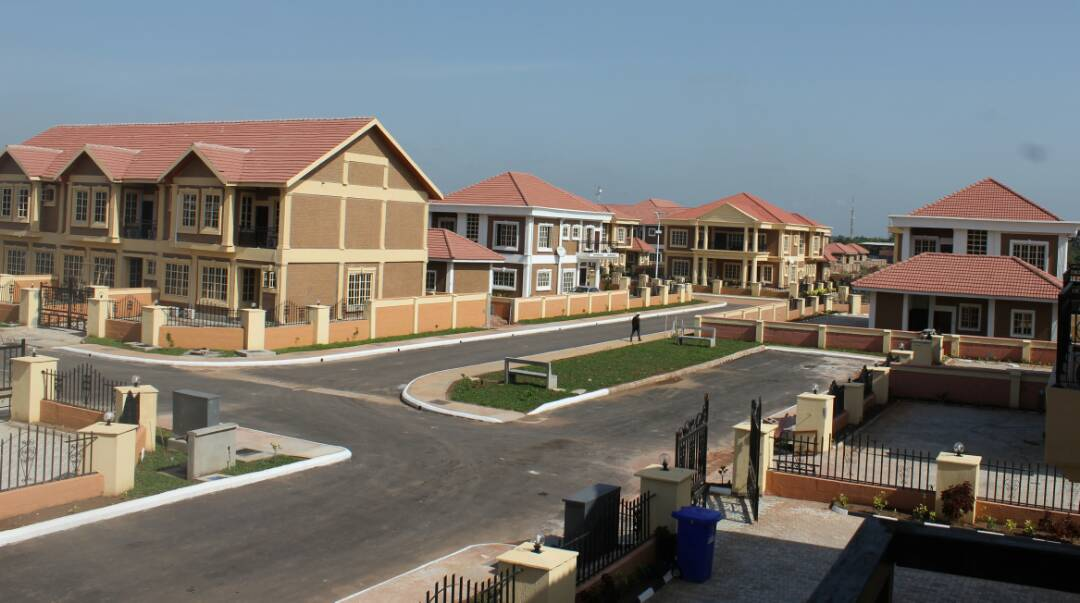
MHP will deliver up to 300,000 homes every year. Young professionals and artisans will organise themselves into small and medium scale co-operative businesses within the construction industry to develop these houses, which will be based on a set of standardized designs. This programme will also prioritize the use of local labour and materials. Doors, windows and other materials will be produced, finished or assembled at mass housing construction sites.

c. INSTALLATION OF SOLAR HOME SYSTEM (SHS)
This targets 5 million households, serving about 25 million individual Nigerians who are currently not connected to the National Grid. Solar equipment manufacturers will be required to set up production facilities in Nigeria, to provide the materials required.

d. INVESTMENT IN HEALTHCARE INFRASTRUCTURE
This will be done through a special intervention fund, as well as by tapping into an existing World Bank facility (REDISSE Programme), to support COVID-19 interventions in the States.

3. INFORMAL SECTOR SUPPORT
This will take the form of low-interest loans, and the easing of procedures for registration, licensing, obtaining permits, etc. Mechanics, tailors, artisans, petty traders and all other informal business people will be supported to grow their businesses.

4. BUSINESS SUPPORT FOR MSMEs
This will take the form of payroll support to designated sectors so that they can keep their employees and help maintain jobs; and also loan restructuring and moratorium for existing debt. Also, low-interest loans to boost local manufacturing and production across critical sectors, including but not limited to the pharmaceutical, aviation, hotels and the hospitality industry, private schools, road transportation, technology companies, and the creative industry, amongst others. A Guaranteed Offtake Scheme for MSMEs will function by making government a key purchaser of specific priority products made by MSMEs, like PPE, face masks, face-shields, processed food, pharmaceuticals, etc.

5. TECHNOLOGY
Underpinning the implementation of the NESP will be a focus on digital identification of every Nigerian. It is imperative that every Nigerian has a unique digital identity. The Public Works Programmes for example will, apart from the focus on providing employment, also help advance the financial inclusion and digital identification agenda. Broadband connectivity will also receive a boost, helping to create jobs and opportunities especially for young people. Also, a national programme will be launched to identify and create job opportunities in digital outsourcing.

6. EXPANSION OF THE NATIONAL SOCIAL INVESTMENT PROGRAMMES
The implementation of the NESP will see an increase in the number of cash transfer beneficiaries, N-Power volunteers and sundry traders enjoying small and micro loans through the MarketMoni and TraderMoni schemes. The pre-existing conditional cash transfer will also be extended to cover a larger number of extremely poor and vulnerable Nigerians.

7. CUT NON-ESSENTIAL SPENDING
The President has approved the implementation of the Report on the Rationalization of government agencies. The NESP will also target a reduction in average production costs of crude oil. Also, the Integrated Personnel and Payment Information System (IPPIS) will be expanded to cover all Federal Government MDAs. Non-critical and administrative capital spending will be eliminated, including purchase of vehicles (except for ambulances, fire-fighting vehicles and other essentials).

8. SUPPORT FOR STATE GOVERNMENTS
The NESP offers opportunities for State Governments to collaborate with the Federal Government on Affordable Mass Housing, Agriculture, Off-Grid Power Projects and other projects in the Plan. It also provides for the negotiation of suspension of ISPO payments by States, moratorium on deductions in respect of bailout loans, and encourages States to attain the conditions outlined by SIFTAS and other World Bank programmes, in order to access external support.

The ESC will also monitor implementation of the Plan while the Vice President will regularly brief the President on progress made.

Fixing Nigeria’s Traffic Congestion with Covid-19 WFH Tax Policy

1

It is simple: if your Lagos, Port Harcourt or Kano company has approved remote work (yes, work from home, WFH), you may need to be considering a very nice community in Nigeria. It has broadband internet. It has good security. It offers 24/7 electricity. There are good primary and secondary schools nearby. And it has NO traffic. But the location is also “remote”!

Yes, if this WFH takes off, I do expect some progressive cities to offer some deals to Lagos, Kano and PHC residents to relocate. I do think if the Federal Government puts a tax muscle to it, we can solve our traffic congestion in Nigeria.

The tax model will reward the employers by encouraging companies to have WFH and get some incentives on PAYE and employee-related taxes: the more the workers are on WFH, the more progressive the tax benefits would be. The tax model must be weighted by looking at population density.

Covid-19 might have given Nigeria a roadmap to deal with its traffic congestion. Can we explore a new paradigm that deviates from building more roads to using tax policy to shape employer-employee decision making, at least temporarily, since we do not have the resources to fund the road networks? Add the largely unattainable situation of building new train stations and waterways in a time the nation does not have the resources, you will agree that WFH could offer value.

Some U.S. cities are getting creative.

As tech giants adapt and embrace working remotely, smaller U.S. cities are offering cash incentives for workers to move there. One program called Tulsa Remote offers a $10,000 grant and co-working space to remote workers interested in moving to Oklahoma. Another, Savannah Economic Development Authority, provides $2,000 grants to cover tech workers’ moving expenses to Georgia. Similar programs are available in Vermont, northwestern Alabama, and Topeka, Kansas, offering $5,000 to $15,000

Liverpool Is Champion of England

0

In the 1989/90 season, the Reds finished the league nine points clear of Aston Villa under the tutorship of Kenny Dalglish, losing only one match throughout the season.

That was a historic season for the Merseyside and it marked the last time they would lift the league ware in a long time.

The 30 years barren run ended on Thursday in a style a bit similar to the 1989/90 season. Liverpool were crowned English champions after a spectacular season that has seen them record just one loss after 31 games. Thanks to Jurgen Klopp’s genius, the Reds have finally found their place at home.

When Liverpool reached 61 points from their first 21 games, they became the first team in Europe’s top five leagues to set that record. They went on to extend the record, wining their next six matches to keep the points at 79 from 27 games, until the underdog Watford ended their unbeaten run dream.

It was part of last season’s consistency that saw them clinched the champions League against all odds, making an unbelievable comeback against the Spanish side Barcelona, in an Anfield thriller that saw the English side overturn a 3 0 first leg loss.

Liverpool has been consistent in their quest to fulfill the dream of fans who have waited for years to celebrate a domestic trophy. Though the Mersey side has had a glorious outing in Europe, the joy was incomplete without a domestic ware to brag about. Trolls hold that against them.

The sky turned red in England on Thursday night as expected, as the premiership trophy went to a new ground. Manchester United, Arsenal, Chelsea, Manchester City and Leicester City have all been on the list of winners over this period that Liverpool was playing a spectator.

Man City’s dominance in England has ended, putting Pep Guardiola’s tactics in check and ushering in a new era of rivalry and reign. Liverpool are champions, and the fans have set the sky of Anfield red with fireworks. Though the moment has been anticipated, it has come through parches and thorns, making it more glamorous.

Season after season since 1990, that Liverpool has come close to winning the league, a mishap, players injury, referees decision etc. ended it abruptly. Liverpool is the only team to lose just one game in a season and yet failed to win the league.

Thus, not even COVID-19 could stop the celebration. Joyous fans troop en masse to Anfield, defying social distancing and coronavirus to sing their You Will Never Walk Alone anthem. You can’t blame them, they waited 30 years for it, and thus, it’s a lifetime experience. Coronavirus had denied them the chance to watch the league winning match in the stadium; it wouldn’t deny them the chance to celebrate it.

It has been a moment defined by a collection of moments filled with disappointments and painful memories, not one defined by Man City’s 1-2 defeat to Chelsea. So the Reds have decades of events, defined by moments still fresh in their memories to celebrate in one defining moment.

An emotional Kenny Dalglish, while relishing the joys of the moment said it has been a long painful wait.

“I think back then if you’d have said it would take 30 years you’d have been arrested and sectioned, but sometimes things happen.”

He didn’t fail to acknowledge the genius of Klopp, the German import who came in 2015 to change the 30 years history.

“The last two years since Jurgen Klopp came in, it has been very positive all the way. He’s been fantastic and he epitomizes everything that Liverpool stands for. He respects everyone at the club.

“it’s not just a one-off as last year they came within a point of it and won the European Cup and a World Club Cup too, so onwards and upwards and I think there will be plenty more days to look to as Jurgen is there.

“It takes a fantastic dressing room to win things. You don’t win anything with division, it takes solidarity, and Liverpool from top to bottom have been together,” he said.

Klopp couldn’t hold his tears as he expresses that this moment has been all he wanted all along. Not even winning the Champions League matters more than breaking the jinx.

“It’s the best thing I can imagine and more than I could have ever dreamed. I have no words, it’s unbelievable. It’s much more than I ever thought would be possible, becoming champion with this club is absolutely incredible,” he said.

He thanked the fans and acknowledged their tenacious spirit which has spurred the entire team to their best.

Tekedia Mini-MBA: Community Moderators, Do Not Forget to Share in Class Boards

0

Dear Moderators and Community leaders on WhatsApp, Slacks on Tekedia Institute Mini-MBA independent class discussions, please do the Institute a favour: share your updates in the Digital Board also. My team is having many emails with members asking questions on time, dates, etc. Also, the WhatsApp group is already full at 256 in two days, and they are confused; you need to be planing of thousands as we have numbers.

Many of the community members are not on LinkedIn. So, if you put updates here, they do not get them. You need to share in the Board so that everyone knows the time for your meetups, etc.

I also confirm that our Faculty members – Jude Ayoka [MBA, PMP, TOGAF] and Aderinola Oloruntoye – Jude Ayoka and – Aderinola Oloruntoye are available if you need them.  We have added an additional Written Material on Innovation Lessons, developed by Mr.  Oloruntoye.

Arinze Onyeasigbulem,  please assist and thanks.


Tekedia Mini-MBA continues to welcome students.

https://www.tekedia.com/mini-mba-2/

Nigeria Should FOLD All Polytechnics Into Universities

3

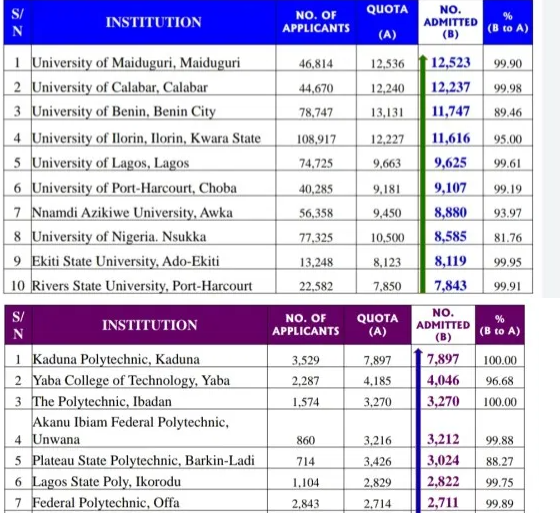
In 2019, the University of Maiduguri admitted the highest number of students in the Nigerian university system. It was followed by UNICAL, UNIBEN, UNILORIN, UNILAG, UNIPORT, NAU, UNN, EKSU and RSU. These ten universities account for one-sixth of all admissions in 2019. In the conventional university system, UNILORIN has emerged as a very top university; more than 108,000 students applied to study there; it admitted about 12,000.

More so, Nigeria admits less than 33% of all students who apply to attend  colleges; only 600,000 out of the 2 million that took the exams.  From the data, it is evident that Polytechnics have lost many things; Yabatech had less than 2,500 applying but somehow it admitted excess of 4,000. The Akanu Ibiam FEDPoly, extremely respected in the Southeast received only 860 applications. Why not make it a Faculty in the Alex Ekwueme Federal University and reduce the bureaucracy? Why run Rector, Bursary, etc for the small numbers? I do think Nigeria can improve our efficiency on how we spend the little education budget we have by collapsing polytechnics into universities?

This is the summary: Nigeria needs to close all polytechnics and convert them into schools/faculties of nearby universities. Data shows that Nigerian young people do not see them as part of the future.

All data from Premium Times.

Premium Times data


(This post was not written out of elitism. Yes, he attended a university and now asking for the collapse of polytechnics. This is a pure economic & budgetary efficiency matter)