DD
MM
YYYY

PAGES

DD
MM
YYYY

spot_img

PAGES

Home Blog Page 6281

Nearer but still distant: Exploring Oladotun Olagbaju’s 2-year stay in the Gambia

0

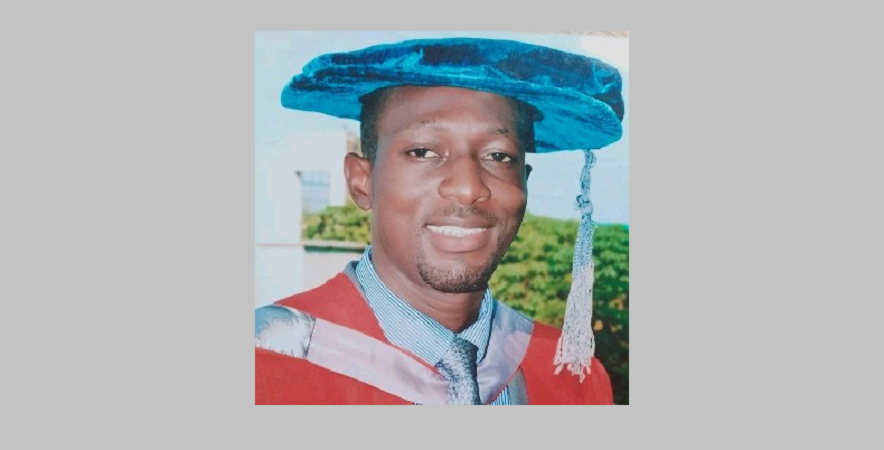
Oladotun Opeoluwa  Olagbaju is a Nigerian who is in the tertiary teaching industry. His career movement is a bit unique. Unlike many Nigerians in Diaspora who choose to seek their own greener pasture in the West, he decides to pitch his career tent with a university in a neighbouring African country in the West African region. Of course, if it is tempting to say if that is not Ghana, it would be Togo, Côte d’Ivoire or Senegal. However, this Nigerian PhD holder decides to work in the country popularly referred to as the Smiling Coast- The Gambia. Olagbaju holds a PhD in Language Education from the University of Ibadan, Nigeria. He has worked in different universities in the country before he decided to head for the Gambia where he is the Provost of the College of Education and Social Sciences of Legacy University and an adjunct lecturer with the University of the Gambia. I had a chat with him on his 2 year sojourn in the West African country. Here is how our chat plays out.

So, one is bound to ask him what took him to the Gambia? He answers in an unassuming tone – “ I moved to the Gambia because I secured an employment. This is my second year in the country.” Having spent two years working for a university located in the capital city of the country-Banjul- one wants to know how it feels operating  with fellow West Africans. Oladotun says “Gambians are very hospitable and accommodating but they feast on visitors as they have an economy that is  tourist-driven.” This answer makes me more curious. And then I hit the internet to know more about this West African nation. I saw a lot about the Gambia. From River Gambia National Park, Bijilo Forest Park, Katchikally Crocodile Pool to Kotu Beach, the country is a destination for tourists from far and near. These and many more that dotted the country are sources of foreign exchange.

In a country with different languages such as Mandika, Wolof, Pulaar, Serer, Diola and Arabic spoken, I seek to know how the Nigerian researcher copes with language and other cultural issues. Oladotun says he has encountered little or no problem as the official language is English and with many of his kith and kin in the country, he has no problem. He posits “ There are a lot of Nigerians and Nigerian communities in the Gambia. Besides, the official language is English and the culture is African. So there has been no problem relating with the people. Food is not a big problem because rice and bread are staple foods. It is only the stew that they use to differentiate the rice. Also, they eat crumbled rice but there are markets that sell the Nigerian brand of rice.”

Curious to know how he sees the management of the Coronavirus by the two countries, Oladotun is of the opinion that “the management of Coronavirus is better coordinated here but corruption of the immigration officers from Gambia has been the problem because people keep coming in from Senegal You can go online to read a research paper I co-authored with some colleagues on covid-19. For example, the palliatives are actually distributed to people and not based on party affiliations.”

As small as the country is, I want to find out if there is anything in the country of Dauda Jawarah that he would like to see in Nigeria. To this, he responds ” Transparency in governance. Also, security and calmness. There are trees here and the ecosystem is a lot better than Nigeria. The Europeans come here to watch birds. We have no regard for our environment in Nigeria.” This is an indication that he is impressed by the management of the environment in the Gambia. He also alludes to general contentment among the Gambians. He says “Gambia is not as developed as Nigeria but they have contentment. A Gambian graduate cannot be without a job. There are grants and scholarships for indigent students that are brilliant on merit. There are no industries and they rely heavily on fairly used goods from Europe.” He concludes his view about his host country.

Despite the accolades he has poured on the non island nation, I query him further if he misses anything about Nigeria. To this question, he replies “I miss my contacts, relationships and the varieties of food available at home. However, Gambia is very peaceful. Electricity and water supply is very constant. Crime rates and accidents are low. And there are no commercial motorcycles in operation.”
Why Nigeria Must Not Be Celebrating Having Millions of Business Owners

3
Nigeria leaders

One of Nigeria’s core problems is that we have many “companies”. Of course, the smarter people in the developmental organizations flip everything as signs of vitality and economic progress, and governments push them as evidence of great policies generating the dividends of democracy. Unfortunately, for this village guy from Ovim (Abia State) whose finest leadership moment remains being elected President of his village age grade, it is an illusion: our weakest link is that we have many companies in Nigeria.

Extrapolating from government data, we may have close to 30 million formations of micro, small and medium scale enterprises in Nigeria.  We must not celebrate that despite effervescence of TraderMoni, World Bank praises and more.

“MSMEs are critical to Nigerian’s economic development. According to the National Bureau of Statistics, SMEs in Nigeria have contributed about 48% – on average – to the national GDP in the last five years. Totalling about 17.4 million enterprises, they account for about 50% of industrial jobs and nearly 90% of activities in the manufacturing sector, in terms of number of enterprises.” If you lump the “micro” to that 17.4 million SMEs, you may have 30 million enterprises.

No matter how you look at it, it is not a healthy ecosystem. Simply, these companies are not growing or expanding. Until we can reduce the paralysis for most to move from micro, small, and medium to large, we will continue to struggle with paucity of good jobs, development paralysis and stasis on the advancement of human welfare. 

Yes, it is like farming where we produce mass hunger with 65% of our working population when the U.S. uses less than 2% to feed itself, and enough to export to the world.

Nigeria needs to find a way to avoid celebrating what should not be celebrated. We need to get annoyed with them. Yes, unless we see them as problems, we will think those things are actually “progress”.  No way, Nigeria does not need everyone to be a business owner!

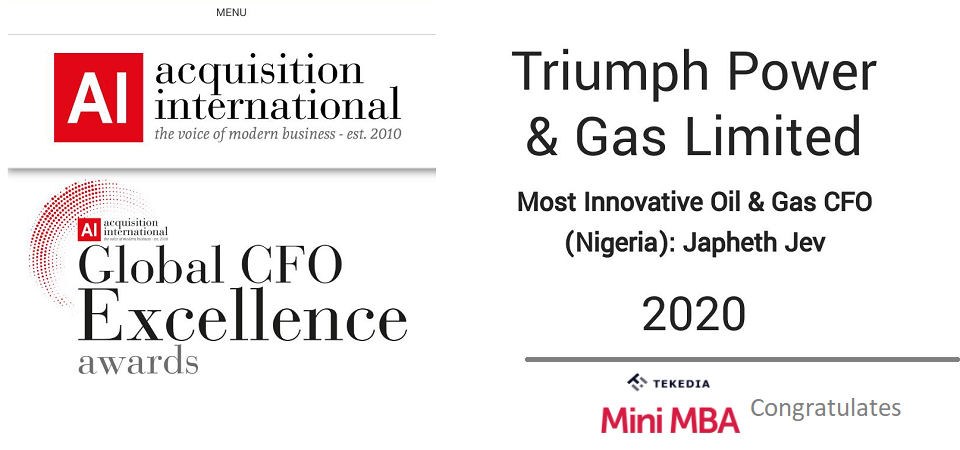
Tekedia Mini-MBA Congratulates Our Faculty Who Wins “Most Innovative CFO” Award

0

On behalf of our Tekedia community, I want to congratulate one of our Finance Faculty members, Japheth Jev, who has been recognized as the Most Innovative Oil & Gas CFO in the Nigerian Oil & Gas Sector by the Global CFO Excellence Awards. Well done Japheth – our members will be waiting for you in class from Monday.

I have been conferred the Global CFO Excellence Award 2020 as the most innovative CFO for oil and gas industry in Nigeria. This is the right inspiration for this global crisis even as CFOs have become fire fighters to ensure that their companies are not destroyed by the current crisis.


Obtaining Finance, Finding Customers, and Infrastructure Deficit Top Challenges of Nigerian MSMEs – PwC Survey

2

Small Businesses in Nigeria have listed the most pressing problems impacting their operations to include obtaining finance, finding customers and infrastructure deficits. These are some of the findings from a survey of Micro, Small and Medium scale Enterprises (MSMEs) in Nigeria conducted by PwC Nigeria.

The survey findings were revealed during a recent webinar hosted by the firm for MSMEs on Managing the Impact of COVID-19 and Repositioning Your Business for Growth. The report titled PwC’s MSME Survey 2020- Building to last is the first in a series of surveys that aim to provide insights into a range of issues concerning MSMEs in Nigeria, and the challenges impacting business growth, particularly financing, taxation issues; and other factors – through the eyes of their CEOs.

The survey which was conducted prior to the COVID-19 Pandemic (between August and December 2019) sought the opinion of 1629 key decision makers in the MSME sector surveyed with annual sales turnover ranging from N5 million and above. The businesses surveyed had a geographical spread covering 29 states and across the 6 geopolitical zones in the country.

Presenting results of the findings Esiri Agbeyi, Partner and Lead, Private Wealth Services, PwC Nigeria noted that Obtaining finance (22%), Finding customers (16%) and Infrastructure deficits (15%) were identified by respondents as their most pressing problems. When asked what the biggest cost to their business operation is, 21% identified Electricity as being responsible for the highest cost to their daily operations. This was followed by Rent (17%) and Cost of Capital and Employee cost at 15% and 14% respectively.

“Access to finance, in particular credit, is a critical enabler for the growth and development of small and medium enterprises. The SME credit market, however, is notoriously characterised by market failures and imperfections. We estimate the financing gap for Nigerian MSMEs to be about N617.3 billion annually (pre-COVID-19 pandemic). More so, based on our analysis of data from the CBN annual statistical bulletin, small businesses accounted for less than 1% of total commercial banking credit in 2018.

“We also see that Electricity accounts for the biggest costs to daily operations of MSMEs. Nigeria’s power sector is overwhelmed by a myriad of challenges that have culminated in inadequate electricity supply. This has an adverse impact on the business environment in Nigeria; consequently, contributing to significant economic costs to SME and economic growth. The International Monetary Fund (IMF) states that lack of access to reliable electricity costs the Nigerian economy an estimated USD29 billion a year,” Agbeyi said.

The survey also found that the foremost economic issue affecting small businesses is the pressure to reduce prices (22%). This is followed by rising inflation (19%) and low demand for products/services. (16%). The economic recovery in Nigeria has been tepid. Despite positive economic growth in the last 3 years, Nigeria’s GDP trajectory still falls short of the projections set in the Economic Recovery and Growth Plan (ERGP) of 4.5% and 7% for 2019 and 2020 respectively.

On tax matters, MSMEs find local government levies (28%) the most difficult tax to comply with. This is closely followed by Company Income Tax (CIT) at 26% and Value Added Tax (VAT) at 25%.

Reasons for the difficulty in compliance comprised: the multiplicity of taxies and levies; lack of coordination between federal & state tax agencies, absence of technology platform(s) for ease of payment of all taxes and levies, as well as lack of fully functional tax refunds schemes at the state & federal level. Others included the absence of comprehensive tax payment schedule notification or calendar, and physical harassment/intimidation by local tax collectors.

Highlights of some of the other findings made in the survey include that 22% of MSMEs rely on the internet, media and research publications for business insights (vs 16%who rely on professional service providers), 48% said family & friends are the most popular financing sources (vs 15% who obtained credit facilities), A higher percentage (46%) would prefer private equity over debt financing (33%), and only 10% of MSMEs believe Artificial Intelligence (AI) and the Internet of Things (IoT) will have the most impact on the growth of their businesses in the next 3 years.

One remarkable finding was how payment policies imposed by big corporates severely affected 33% of MSMEs whose payments were delayed for more than a month. The impact on cash flows is worse when you consider the double-digit interest rates or inflation. It does not come as a surprise then when about 50% of the SMEs surveyed did not record growths above 20% over the last 3 years.

The objective of the study according to PwC is to capture the challenges the MSME sector faces, identify opportunities to unlock growth and investment, provide solutions, mitigate risks and assess the outlook for MSMEs across industries. Findings covered the Nigerian business environment and market conditions, tax issues, access to finance, growth obstacles, payment policies, the role of technology and the impact of women on the MSME sector in Nigeria. The report also includes case studies with leading SME players across various sectors, as well as interviews with key stakeholders and experts on the sector.

Commenting on the report, Uyi Akpata, Country Senior Partner, PwC Nigeria in his foreword noted:

“Our MSME Survey 2020 is aimed at gauging experiences of sector players, assessing the underlying issues which MSMEs face and providing insights on this strategically important sector. You will find the survey headlines confirm some persistent problems and sheds light on those you never really considered to be issues such as payment policies.

“As part of our efforts in this national discourse, PwC Nigeria has established the SME Desk to support the growth, sustainability and development of the SME sector in Nigeria.

The SME Desk is our social impact initiative to support small businesses by providing insights, advice and support on a range of areas including Finance and Accounting, Tax and Audit. It is one of the ways we are helping to build a stronger economy by giving small businesses a greater chance to succeed in an often-difficult environment.”

MSMEs are critical to Nigerian’s economic development. According to the National Bureau of Statistics, SMEs in Nigeria have contributed about 48% – on average – to the national GDP in the last five years. Totalling about 17.4 million enterprises, they account for about 50% of industrial jobs and nearly 90% of activities in the manufacturing sector, in terms of number of enterprises. Despite the significant contribution of SMEs to the Nigerian economy, challenges still persist that hinder the growth and development of the sector. Challenges encountered by the sector include lack of skilled manpower, multiplicity of taxes, high cost of doing business, among others.

PwC’s 2020 SME survey report is the first of its kind in this sector. The firm hopes the findings will be useful to both policy makers and stakeholders in the sector and help to kickstart new solutions for this critical sector.

Challenges with the Implementation of COVID-19 Preventive Measures in Government Schools

0

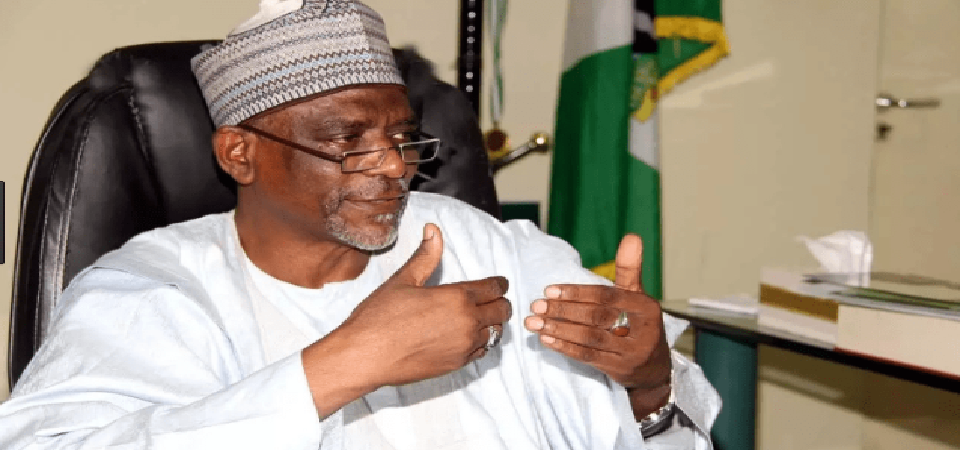
Tertiary institutions in Nigeria have been given the conditions they will meet before schools are reopened. These conditions were given in a speech presented by the Minister of State for Education, Emeka Nwajiuba, while representing the Minister for Education, Adamu Adamu, at the virtual policy meeting of the Joint Admissions and Matriculation Board (JAMB) held on Tuesday 16 June, 2020.

The minister said that all tertiary institutions within the country must have “hand washing facilities, body temperature checks, body disinfectants at all entry points to major facilities including the gates, hostels, classes and offices.” He further insisted that for tertiary institutions to reopen, “the whole premises of each institution must be decontaminated and all efforts must be geared toward the maintenance of the highest level of hygiene.” Schools were also given the condition to “ensure physical and social distancing in class sizes and eating spaces.”

The first time I read the news article that bore this piece of information, I asked myself, “Are these conditions for private schools alone? Or, are the state and federal government owned schools also part of this?”

It is not as if it is not certain that the guidelines set up by NCDC and WHO for preventing the spread of COVID-19 would not be enforced in schools, but, somehow, a lot of people were expecting miracles to happen. These measures can easily be put in place by private owned schools for reasons that government owned schools could not meet. Maybe, I will table out these challenges that government schools will encounter by indirectly comparing and contrasting them with their private-owned counterparts.

Factors that will Challenge the FG Conditions for School Reopening

a. Population
We all know that the population of state and federal government-owned institutions are almost at the level of explosion. In just a department you might see a stream with about 300 or more students. When you compare this number to that of private universities, where you might likely see 30 students or less in a class, you will understand why they can easily observe the physical and social distancing guidelines. The greater population of students in higher institutions will also make it more difficult for other measures, such as body temperature checks and hand washing, to be effective. Imagine the machine for checking body temperature being used for thousands of students in a day; it will definitely spoil within weeks. It will also be uneasy for the persons that will stand at strategic places to do the checking. It is possible that they will not do the work well.

b. Finance
It will be easier for private schools to raise funds than for government-owned ones to do so. This is to say that procurement of the needed facilities by government-owned schools may not be as fast as that of their private-owned counterparts. It is also possible that government schools may not be able to provide enough materials needed for this exercise.

c. Landmass
Government-owned institutions have greater landmass than the private-owned ones. For this, there are so many offices, laboratories, lecture halls, auditoriums, canteens, and what have you in government-owned higher institutions. Considering the landmass of these schools makes one wonder how they will decontaminate the area effectively and how they can procure the chemicals needed for it. This also raises concern about mounting of body disinfectants at the entrance of many facilities. It will, therefore, be proper for me to ask where these schools will start this decontamination exercise and where they will end.

d. Maintenance
It might be easier to start the precautionary measures against the spread of COVID-19 but continuing it might be a different story altogether. The major setback here, especially for government-owned institutions, is supervision and replacement of damaged gadgets. Like I stated earlier, the large population of students and staff in government-owned schools will over-work the temperature checking devices. It might be difficult for these schools to replace damaged ones on time because of the bottleneck that comes with bureaucracy. Unless plans for maintenance and replacements are put in place, imbibing the measures against COVID-19 will definitely be a waste of time.

There is another heavy question that the FG is yet to address. We know that private-owned tertiary institutions will tax their students to raise funds for putting these measures in place. But then, we also know that government-owned schools cannot just ask students to pay for anything that isn’t in their schedule of school fees. Even if they could, many students in government-owned institutions are from working class families; so they might not afford the extra expenses. So the big question is, “Whose responsibility is it to bear the cost of procurement and maintenance of equipments that will be used in preventing COVID-19 in all government-owned schools?”