DD
MM
YYYY

PAGES

DD
MM
YYYY

spot_img

PAGES

Home Blog Page 6334

The “Bill Gates of Africa” – Herman Chinery-Hesse – Endorses Tekedia Mini-MBA [Video]

0

 Amzill, a management consulting company, managed by Fadilah Tchoumba, is Tekedia Country Partner for Ghana and Cameroon. Registrations for Tekedia Mini-MBA (edition 2) from governments, alumni associations, business clubs, companies and individuals should go through Amzil in these countries.

Contacts are provided below to reach the Amzil team. You can learn more here on Amzil Tekedia Mini-MBA web page.

And one of Africa’s greatest – Herman Chinery-Hesse – who at the early stage of the web economy came home to begin the digitization of our economy. He has great words via video on Tekedia Mini-MBA: “wonderful”, “fantastic”, “affordable”.

Why Work from Home (WFH) Could Be Bad for Your Young Career

3

Some young Africans have reached out to me, asking if they could take an option which is emerging in their respective companies on Work from Home (WFH). Largely, the companies would make it possible for people to work from home if they desire, for a very long time.

I am not a HR director or an employee counselor. Like I do most times, I will tell the person: “I will blog it on Tekedia”. There is a reason for that, using anything on Tekedia is simply following my opinion at your risk. But I do try to be balanced. That said, if I am in a position where I am offered an option to come to work, or work from home, in Africa or outside Africa, I will choose to come to work.

Yes, it seems crazy but let me assure you – if you are early in your career, WFH may not be evidently good for you. Sure, there are many personal benefits to it – no traffic to deal with, no stress to wake up early, potential saving from fuel, etc. But there is a huge risk: you can be isolated by your supervisors and relegated to filler-assignments. Because you do not provide immediacy, you become a mere backup to those they can see.

“Zoom fatigue” — a form of exhaustion from excessive video chatting — has swept the world as the technology has quickly gained widespread adoption for work, education and personal connection during the pandemic. Social scientists tell The Wall Street Journal that a number of factors are at play as the format disrupts “normal, instinctual” forms of human communication. Among the sources of stress: constantly seeing an image of yourself, an inability to read body language, a lack of real-time feedback and seeing giant faces on the scree.

Those days in banking, everyone wanted to be in the Head Office because the decision makers see you daily in the headquarters. The HR guys are eating with you in the canteen. You think most care for that guy in Umuahia when there is one who gave him a ride last night. Throughout my time in then-Diamond Bank, I delivered all good news to the Head of HR (Reginald) in person. Most were that The Guardian published my articles; he would say, “make a copy and give my staff for your file”. And when I received Cisco and Microsoft Certifications, I took the originals to show my Executive Director in person. They knew me – my name and my records, first hand. If I was in a branch, that connection would not have been possible! Then extrapolate to WFH in perpetuity – it may not help you.

Practically, unless your supervisor is working from home, do not attempt to work from home. Yes, if the immediate boss is coming to work, you must also report to work. He/she wants someone not distracted, and very visible to handle important assignments which can get feedback live in the conference room. Coming to office helps you build new relationships to advance with colleagues. You meet people who can help you in canteens, lobbies, etc. WFH makes such nearly impossible. And most importantly, WFH robs you of one of the most important things we get in companies: culture and how firms do things. You may think you can get those on your pajamas but I do tell you, you are mistaken.

Get your shirts, blouses, trousers, blazers and suits ready – and show up at work. No excuses, WFH option or not.

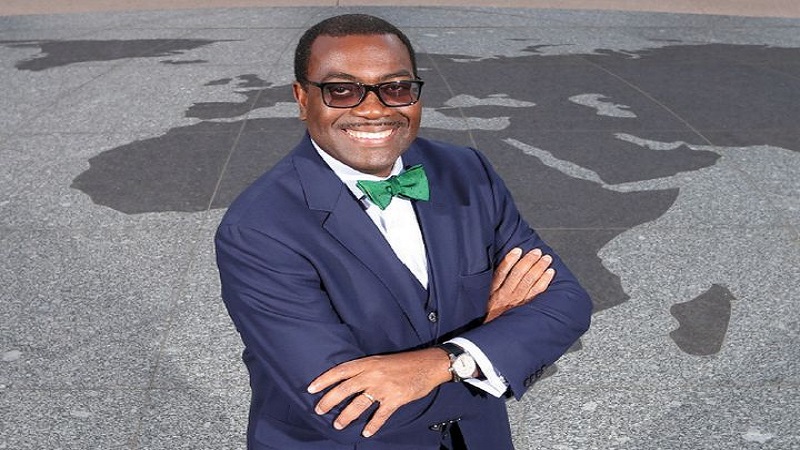
The U.S. Power Play In African Development Bank (AfDB)

5

So many questions from the community on the issue of the United States rejecting the conclusion of the Ethics Committee on allegations against the President of the African Development Bank (AfDB), Akinwumi Adesina.  Samples:  “Why is the United States interested in what is happening in African Development Bank?”, “Wetin concern Trump in Africa’s Bank”, “Can you explain why they should even listen to the United States – this is our bank”.

My general response to save time: The African Development Bank is not just owned by Africans and African countries. We should not be confused because the name has “Africa”. The U.S. became a member of the African Development Fund in 1976 and that of the African Development Bank in 1983. If you go to AfDB, they have nationals from Japan, Europe, etc and most are watching their investments; they call them representatives from their countries. 

More so, what the U.S. is doing is simple: fiduciary responsibility of the American taxpayers money. If they invested in this AfDB, they should pay attention to what goes in there. 

In 2009, I attended the African Union Congress. There were some activists protesting that Africa should buy out the UK, Japan and U.S. so that the bank could be wholly-African. That time the UK was holding around 14%, Japan 5.4% and U.S. 6.5%. I do expect the shareholding to have changed; Nigeria holds about 9% – the largest of any African country. In that Congress, one man asked the activists to come back with cash to pay off the Europeans, Japanese and Americans!

The United States is one of the Group of seven nations holding 28 per cent investment grade equity in AfDB.

The others include Germany and Japan. About 41 per cent of their Group’s shareholding is held by non-regionals and multilateral development finance institutions.

The AfDB Group comprises three entities: the African Development Bank (AfDB), the African Development Fund (ADF) and the Nigeria Trust Fund (NTF).

Largely, this matter is very complicated. Even though the U.S. has a right to protect its investments and asks questions, the issues are very trivial that the basis of U.S. strategic interests cannot be those allegations (read U.S. letter); you can read Adesina’s responses here. These allegations are mundane; the Board can handle them, and communicate to its shareholders. They are not things, in my opinion, for an external counsel to investigate. President Trump does what Mr. Adesina is accused daily in Washington DC! Adesina does not have his daughter and son-in-law working in his office or vacationing in his hotels! 

This is my conclusion: the U.S. is asking for a change of leadership in AfDB. It is as simple as that. Unfortunately, Adesina has arrived at the same conclusion himself. And that is the real problem: if the U.S. concludes that a bank is corrupt, it can fine or at extreme cut it out of the financial system until it cleans itself. That is why what the U.S.is saying is more important than what the African leaders (about 50 of them) have to say. Call it an asymmetric power play.

Akinwumi Adesina, AfDB President, Responds To The Allegations

Negative Effects of Reality Comedy Skits

0

We call them Reality TV Shows because they are nonfictional, even though some of them are staged. But in reality, the shows are there to provide real life situations as they are – no doctoring, no scripts, and no guard. The shows expose people’s actions and reactions when they have their guards down. It brings out people in their most vulnerable state.

The type of reality shows this piece is interested in is the reality comedy skits that are fast gaining traction today. These skits capture people when they least suspect that they are actors in a drama. It creates humour by exposing people’s ignorance, greed, sexual orientation, pains, and what have you. We all see these videos and laugh at the “stupidity” of the “actors”, especially because we know they are real life situations. We relate more with this type of humour because we can see ourselves or people close to us in the depicted action.

The purpose of reality comedy skits ranges from entertainment to research. Some of the videos we see are there to expose societal challenges and problems. Some are satires that are used to correct societal ills. Then we have the ones that are recorded and posted by individuals that want to use them to amass social media followers. Of course, social scientists sometimes make use of candid cameras and hidden audio recorders to gather data. But no matter what its purpose is, reality comedy skits are taking its toll on the “actors”.

The reality comedy skits may entertain us and pass on some lessons to us, but have we ever sat back to ask ourselves the effects they have on the unsuspecting “actors”? Note that this type of shows is different from that of Big Brother Naija (BBN), where the participants in the shows are quite aware of the fact that their privacy is at stake all through their “acting” period. They know that spy cameras are mounted in strategic places and that they are being monitored. But in the case of the reality comedy skits that I’m talking about here, these people’s privacy is intruded without their permission. Unlike those in BBN, these people are not on guard; they never envisaged themselves going into the internet or being aired on TV at their most uncomfortable state. The worst is that the majority of the actors trusted the people that caused them this unplanned negative fame.

Studies on effects of reality TV shows have been undertaken by different scholars. It is found that both the “actors” and the audience have been affected positively and negatively. In relation to reality comedy skits, some of the effects mentioned include:

  • Withdrawal from the Public

Some people have been embarrassed to the extent that they shy away from the public. Thanks to mobile phones, someone’s mistakes could be the next viral video. By the time this person (or his relatives) sees his face flying all over town, he will withdraw from the society until he feels it is safe for him to come out again.

  • Injury

There are certain comedy skits that warrant that the actors are simulated to run for their lives. Some of these “actors” have to scale fences or run across busy roads in their attempts to move away from their threats. Most times they sustain different degrees of injuries during the act. In this case, the proposed comedy turns into tragedy.

  • Loss of Lives

Some time ago, someone that wanted to play the bomb scare skits in France was shot dead by the police, who mistook him for a terrorist. I also watched a video, where a man scared his partner while she let herself into their apartment. Unfortunately for him, the woman ran out of the house and into an oncoming vehicle. These are just a few of such cases, where comedy turned tragic.

  • Opportunity for Defamation

The coming of mobile phones has turned every Tom, Dick and Harry into cameramen. This makes it easier for malicious people to hurt others. Even though some people record these videos without the intention of hurting their actors, there still exist those that do them deliberately with the sole intention of defamation. Some go as far as setting their victims up in order to get them when they are most vulnerable. They do not mind the damages they will cause when they post these videos. The worst problem here is that the affected persons will be judged and mocked by everyone that watches the video. This is actually inhumane.

  • Trauma

Maybe if those that play these pranks on others realise that most of their “actors” will become traumatised they will stop. Reports on suicides connected to “acting” in this type of reality show have been recorded (though they are not on comedy skits). I don’t believe anyone that finds himself in this situation will just laugh it off and take it as one those things. At least I know I wouldn’t find it funny if I were ever to find myself in that situation.

We all enjoy comedy when it is about someone else, but we would never want to see ourselves in such situations. For that we need to stand together to discourage this type of play/prank. If it must happen, then the actors’ reputation should be considered. In this case, some measures should be put in place.

The safest way to release these videos (if at all it should be released) is to blur the faces of the actors so as to give them some privacy. Even if their voices give them away, it is still better than having their faces exposed. However, it is advisable to the general public to request the ban of risky reality comedy skits because they have caused more tragedy than comedy.