DD
MM
YYYY

PAGES

DD
MM
YYYY

spot_img

PAGES

Home Blog Page 6336

The Need to Reintroduce History into Nigerian Curriculum

1

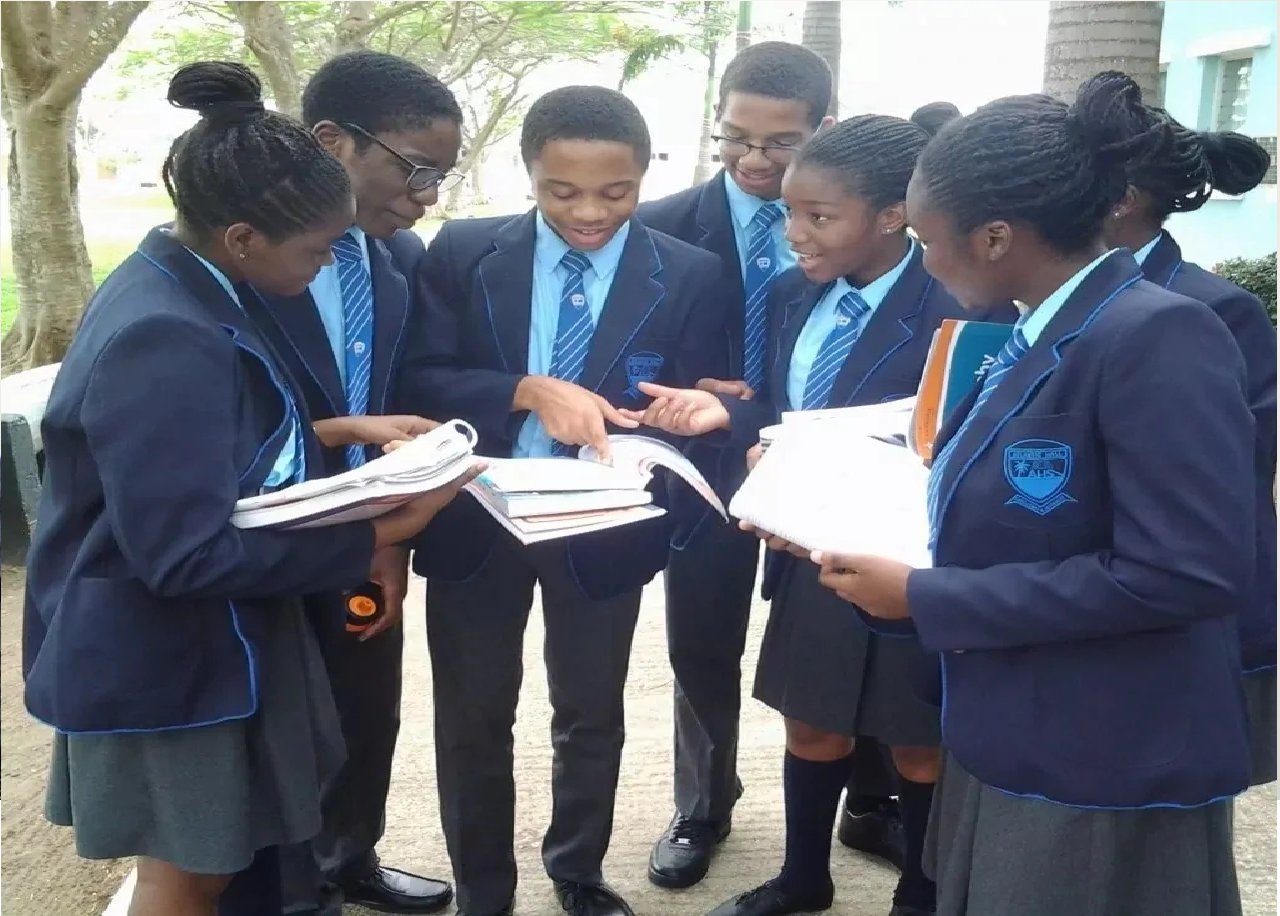
When I was in primary school I could remember History was a subject of study in senior secondary school. I knew this because sometimes I go to the school where my mom worked and I see students receiving their History lessons. I didn’t know what the subject was called then but I never liked the fact that someone had to memorise dates and names. It was until my second year in secondary school that I understood what History stood for and why there is a need to learn names and dates alongside the stories. But I was happy that the subject is optional, even for arts students like me. By the time I was in SS 1, History no longer existed in my school. The reason for this is unknown to me as of date. But was I happy that I didn’t meet the subject? The answer is a capital YES.

Well, that happiness has turned sour because I have realised what I’d lost. The first time I missed not studying History was when I saw a book on Nigerian historical happenings (such as the Oyo Empire and their wars) during my pre-NYSC days. I devoured the contents of the book (even though I avoided names and dates) and kept looking for more. I became interested in knowing who I really am as a Nigerian and where I stood in the historical development of the country, and the world at large. Well, let’s just say that everything I could gather since then comes in bits and pieces, some of which I couldn’t vouch for because I don’t know how objective the contents are.

As mentioned earlier, no one can truly tell why History was scrapped off Nigerian school curriculum. We only hear of reasons such as that History adds no value to economic and technological developments or that those that scrapped it off have things to hide. But, as we will find out later, History is one subject that will ensure the growth and development of any society; so it is wrong if it was truly trashed for that reason.

While I was searching for articles that will explain why History was removed from the school curriculum, I came across a news article in Vanguard Newspaper dated March 27, 2018, which reports that History has been reintroduced into the school curriculum. This report states that History is “buried under Social Studies curriculum”. This is a welcomed idea even though the curriculum review is yet to be put into effect. Alternatively, it could be that the inclusion is too insignificant for it to be noticed. But then, why should History be “buried” under Social Studies when it can stand as a subject of its own or be placed as one of the subjects under Religious and National Value (RNV)?

The fact that History is being hidden in Social Studies shows that its importance isn’t known. To start with, the existence of that subject gives people the opportunity of learning from the mistakes of others. By so doing, certain mistakes will be avoided in the present and in the future. This is one way History helps nations and individuals to grow and develop. But as we can see, the absence of History is taking its toll on Nigerian’s economy.

History helps people to understand the cycle of life. For instance, a little peek into the past reveals that things, such as fashion, reappear after some times. Another good example here is the present pandemic. History shows that coronavirus and other plagues have been attacking the world. The most important thing that would have been learnt concerning these ailments is that lack of vaccine, modern medicines and health inventions (such as ventilators and medical diagnosis) led to the death of many in the past. But here we are, hearing different forms of conspiracy theories surrounding COVID-19 and its vaccine all because we didn’t learn from the past.

History encourages patriotism. Sometimes what we know about our country are things we heard from unverifiable quarters. But then knowing the true history of Nigeria will make you want to protect the country. It will be hard for someone that knows what it took some Nigerian elites to secure Nigerian independence to do things that will jeopardise the country’s reputation or cause its disintegration. But we hear a lot of varying accounts from different quarters and we get more confused than we were supposed to. Believe me, if History is not reintroduced in full force in the nearest future, the present younger generation will grow up to hate this country.

As I implied earlier, History can help people to find their identity. Of course there are several myths and legends surrounding the origin of communities and tribes, but most of them are not recorded. However, the ones that were recorded are there to help with providing answers to certain questions concerning the origin of towns, villages and communities. A good example is the presence of two or more different communities or tribes that bear the same name and speak almost the same dialect or language, even though they are located in different parts of the country. The reason for this could be migration in the past, but most of these stories are lost because the people that knew them have died off or are dying off with their secrets.

We cannot continue mentioning the importance of History as a subject of study because they are too numerous to be recounted. The only thing that needs to be done right now is that the people concerned should reintroduce the subject into the system as soon as possible. If memorising dates and names will be the issue (as it is for people like me), I will suggest that the curriculum concentrate more on the stories and then give reasons why they happened and their effects. As for the classes that should be taught History, I will suggest that it starts from Primary 1 (that is Lower Basic 1). That way, people will know every important thing that has happened in the past before they finish secondary school.

Switzerland Launches First Google/Apple-Based Contact-tracing App

0

Switzerland has become the first country to develop contact-tracing app using Google and Apple’s Application Programming Interface (API). The EPFL institute helped to develop the contact-tracing app called the SwissCovid app.

Apple and Google teamed up to create the API to enable countries and cities to key into it and develop contact-tracing apps using Bluetooth, and collect only necessary information from users.

The API gives special access to some features of their iOS and AOS mobile operating systems. However, it came with many restrictions that many governments have criticized. Among others, it forbids gathering location information, access to collected data, unless it is needed by health authorities.

“The use of digital technologies must be designed in such a way that we, as democratically elected governments, evaluate it and judge it acceptable to our citizens and in accordance with our European values,” wrote digital affairs ministers from German, French, Italian, Spanish and Portuguese governments in a joint letter published in the press.

“We believe that challenging this right by imposing technical standards represents a misstep and a missed opportunity for open collaboration between governments and the private sector.”

France was at the forefront of the push for Apple and Google to relax the restrictions. But the crux of the matter is that, collection of more than the needed data will scare users, who are expected to download the apps voluntarily.

Despite the concerns, the API and the contact-tracing apps that will be developed through it have been seen as a milestone in the fight against COVID-19 pandemic. Marcel Salathé, an epidemiologist at the Swiss research institute EPFL said the API will provide a watershed moment for contact-tracing app.

“The release of these APIs along with the operating system updates will be a watershed moment for the development and adoption of proximity-tracing apps,” he said.

Salathé added that the protocol should be made interoperable, which means it should be used to contact-traced citizens when they move to other regions. He believes it will help to reduce travel restrictions imposed due to the fear of the spread of the virus.

However, there is concern that Bluetooth enabled proximity-tracing will fall short in efficiency due to its short range transmitting capacity.

“Bluetooth was not developed for this kind of large-scale distance measurement,” said prof. Srdjan Capkun from the ETH institute. “Making sure that we can use it this way requires a lot of engineering skill and collaboration, including collaboration with Apple and Google.”

Despite the seeming challenge, Apple and Google said that public health agencies from 22 countries and some US states had already asked to test the system.

Switzerland hopes to release the app to the general public by mid-June, but it must be debated first by MPs. Swiss government spokeswoman told the BBC that the app has been approved by Apple to appear on its App Store, but Google is yet to give developers the permission to list it on its Play Store.

“Of course we would be very happy to be the first [national launch], but the most important thing is to help our inhabitants fight the virus,” she added.

One of the major issues involving the contact-tracing app has been government’s approval. The app has sparked debates in parliaments around the world. In April, France postponed its debate on the use of the app in the fight against coronavirus to focus on more critical aspects of the crisis. While the decision was based on priorities at that time, other countries continued their debate focused on the implications.

Netherlands was leading the quest to be the first national launch until the debate on privacy, security and technicalities got in the way. From Cyprus to India, the debate crosses many parliaments as each country seeks to work out what is best for them. Using the API was the larger part of it.

While they tackle privacy related issues, how citizens would be made to use the app became the bone of contention. Some countries are considering a legislative law that will compel everyone to download and use the app, for others, it will be based on well publicized need.

The debate hurdle appears to have been scaled by many countries, as the roll out of the contact-tracing app keeps increasing, even in countries using the API. Latvia said it’s coming after Switzerland, as the race to contain the coronavirus outbreak continues.

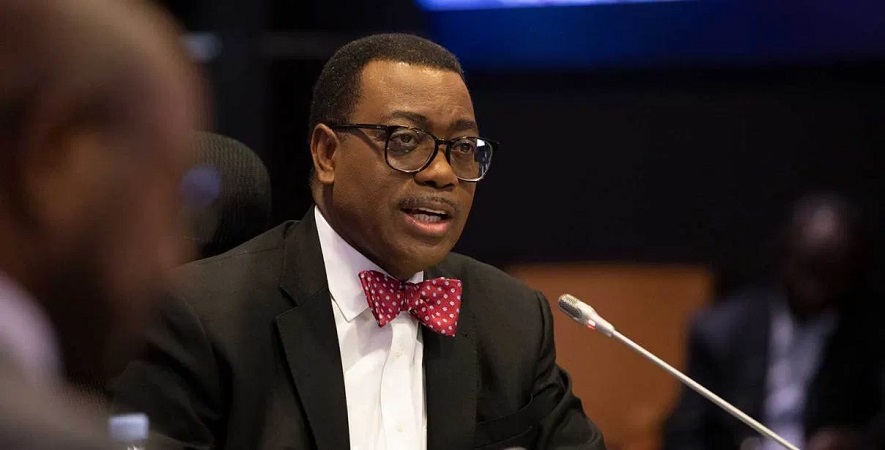
Akinwumi Adesina, AfDB President, Responds To The Allegations

19

Akinwumi Adesina, the President of the African Development Bank (AfDB), has responded (dated April 8, 2020) to the allegations against him courtesy of Premium Times. Read below…

Allegation No. 1

Not provided

Allegation No. 2: Appointment of Mrs Chinelo ANOHU-AMAZU

ADESINA: Ms Chinelo Anohu-AMAZU was recruited through a globally advertised, open and competitive recruitment process. The search process was carried out by a top notch external recruitment firm, Russell Reynolds of the UK. She was one of two top candidates (both women) recommended to me as President to consider for appointment by the panel. But, I can state categorically that the allegations made against her are untrue and defamatory.

Allegation No 3: Appointment and promotions of Martin FREGENE

ADESINA: Mr Fregene is NOT my brother-in-law. There is no evidence he is. Second, Mr Fregene is a world-class geneticist, internationally renowned for his work on plant genetics of cassava, and who worked earlier at CIAT, Colombia, one of the CGIAR centres, and subsequently as Director at the Danforth Plant Science Centre (probably the second largest private agricultural research centres in the United States).

He returned from the diaspora to Nigeria to work as Chief Technical Advisor when I was Minister of Agriculture in Nigeria. He was hired as a consultant by the Bank Vice President for Agriculture, Human and Social Development, Jennifer Blake, to support her in the development of the Bank’s Feed Africa strategy. I approved the recommended hire which was entirely within my power to do.

Allegation No. 4: Mismanagement of the TAAT programme

ADESINA: Allegations against me concerning the TAAT are belied by objective and solid facts demonstrating no violation by me of the Code of Conduct.

TAAT is an initiative of the Bank developed to help take agricultural technologies to the scale of millions of farmers across Africa.

Although some staff made some mistakes in the procurement process, this is being investigated by the Bank and no findings have been made yet. There was no impropriety.

The president does not get involved in contractual issues in the Bank, except in cases involving matters that may affect the image, reputation and interests of the Bank.

Allegation No. 5: Appointments and promotions of Mrs Maria MULUNDI

ADESINA: Ms Maria Mulindi worked with me prior to joining the Bank. She was part of my transition management team as I prepared to take office at the Bank following my election as President, and she very ably led all engagements with the Bank with my transition team. All Presidents of the Bank are allowed to bring in and appoint their own Chief of Staff and advisers, to help them to implement their mandate.

Allegation No 6: Direct contracting and appointment of Victor OLADOKUN

ADESINA: We went to the university together and have been very close friends since then. There is nothing in the Bank rules that says that being a friend of anyone in the Bank who gets recruited at the Bank is against Bank rules.

Allegation No. 7: Contracting of Kapil KAPOOR

ADESINA: The African Development Bank, under my chairmanship of the Multilateral Development Banks (MDBs) Heads, was tasked to help further develop my proposal to the group on how we can work collectively to leverage global institutional investors to invest in infrastructure and other sectors.

Kapil Kapoor, who was previously the Director of Strategy and Policies of the Bank, prior to his appointment as the Director General for Southern Africa, had been leading this work working closely with all other MDBs.

Kapil was essentially doing this work on top of his regular work as Director General. He retired from the Bank at the end of August 2019.

Allegation No. 8: Appointment of Emmanuel EZINWA:

ADESINA: The allegation that “A Nigerian, Mr EZINWA was found guilty of sexually harassing a colleague during his probation period; and despite his misconduct, (I) requested that Mr. EZINWA’s contract be confirmed, thus forcing the HR Director, Mrs Frauke HARNISCHFEGER resign is false.

The truth is that I do not know Mr EZINWA and have never met him in the Bank. The President does not get involved in any staff appraisals except for Vice Presidents and direct reports.

The then HR Director, Mr. David Ssegawa, evaluated the staff and there was nothing about sexual harassment.

Mrs Frauke HARNISCHFEGER was not the HR Director in 2018. The HR Director in 2018 was Mr David Ssegawa, who evaluated the staff and recommended the staff, as per the standard procedures of the Bank, to the President. Ms HARNISCHFEGER joined the Bank in 2019, one year after a confirmation recommendation made by the predecessor HR Director.

Allegation No 9: Preferential treatment for Nigeria and Nigerians

ADESINA: I did not introduce an organisational chart with a Nigeria Country Directorate. The decision to open a Nigeria Country Directorate was taken by the Board of Directors under my predecessor, the former President of the Bank, Donald Kaberuka.

Allegation No 10: Awards received by the President and costs borne by the Bank

ADESINA: I received the World Food Prize ($250,000) and the Sunhak Peace Prize ($500,000) in recognition of a life of accomplishments in the field of agriculture. Although they were individual prizes, they brought great credit and prestige to the AfDB.

I brought further credit to myself and the Bank by donating these two cash awards for the establishment of the World Hunger Fighters Foundation, a foundation that has garnered contributions from others and now funds the Borlaug Adesina Fellows Fellowship for young African Agribusiness Innovators.

The expenses of the World Food Prize event, including musical entertainment (musical groups from Nigeria and the Glee Club from Purdue University (my alma mater) were defrayed by the World Food Prize Foundation.

Allegation 11: Settlements for staff separations

ADESINA: The allegation that somehow the former Chief Economist, Mr Celestine Monga, departed the Bank with improper payments is false. The Chief Economist was not dismissed. Contract non-renewal is not dismissal of staff.

Allegation 12: Resignation of Mr David SSEGAWA

ADESINA: Mr Ssegawa was the HR Director. It is not true that I, as President, allowed him to resign when there was an investigation. There was absolutely no investigation of David Ssegawa when he resigned, nor was one contemplated.

Allegation No 13: Resignation of Mr Michel-Cyr DJIENA-WEMBOU

ADESINA: The allegation that I allowed the country manager to resign when he was under investigation for corruption is false. The President does not run country offices. They are under a Director General and overall oversight of a Vice President.

Allegation No. 14: Appointment of Mr Charles LUFUMPA as acting VP and Chief Economist

ADESINA: The allegations against me over the appointment of Charles Lufumpa as Acting Vice President and Chief Economist are patently false. My conclusion after careful review of the case of Charles Lufumpa is that the investigations conducted were very faulty and cannot prove the allegations made against him. My review also showed a well-orchestrated effort to make Mr Lufumpa a scapegoat for failures of others to do their job.

Allegation No. 15: Disregard of rules concerning leave of absence of VPs or travel of management.

ADESINA: The President does not monitor or manage time off for staff as that’s done by the Human Resources. The truth is the Vice President had personal medical issues that he had to get attended to (his private life must be respected) that required him to be away for extended periods, as needed, and he travelled with full knowledge of the department of health of the Bank which was monitoring him while away on medical reasons.

Allegation No 16: Political lobbying of Heads of State

ADESINA: It is alleged that as President I basically bribed and corrupted the 16 African Heads of State and governments in the ECOWAS region to support my candidacy for re-election.

The allegation essentially impugns the integrity, leadership and honesty of 16 African presidents and ECOWAS. This is a fanciful and baseless allegation.

Summary

In summary, every single one of the 16 allegations against me in the Disclosure remains unsubstantiated. I have not violated the Code of Conduct. The Ethics Committee should so find and dismiss the matter.

To Prevent COVID-19 And Other Related Diseases, Market Men and Women Need To Be Enlightened On Food Safety Practices – Tomisin Adefare

0

Tomisin Adefare is a young lady who is passionate about development. She has a first degree in Agricultural Economics and Extension from the Osun State University, Osogbo. She is currently on a Master’s programme in Agricultural Extension and Rural Development at the University of Ibadan. She recently organized a sensitization programme for market men and women in two selected markets in Ibadan on COVID 19  preventive measures, food security and safety practices. She had a chat with Rasheed Adebiyi on her passion for development, food security and hygiene. The excerpts are here.

Tekedia: What informed your recent effort at engaging issues around COVID 19 and food security?

Tomisin Adefare: I believe an individual can make a difference. Our collective effort can make an immeasurable impact in the lives of many people. It is everybody’s social responsibility to ensure the virus doesn’t spread among the people and that food security is not affected.

Tekedia: How do you feel being part of those engaging the Pandemic in a productive manner?

Tomisin Adefare : I feel fulfilled making an impact in my community. It makes me want to do more. As a student of Development, I cannot resist the urge to contribute my own quota in the fight against the Coronavirus which is threatening an area I have huge interest in- food security. Health is important to ensuring food security. When the farmers are healthy, they would be able to farm and supply the markets with the needed food items. The market users too need to be healthy to ensure the chain of distribution does not break. This is why I embarked on the sensitization on the preventive measures of the virus and at the same time also enlighten the market users on the need to maintain food safety practices.

Tekedia: Tell us more on these programmes?

Tomisin Adefare : The sensitization was done on food safety and preventive measures of COVID 19. Sometimes ago, I was at the market for a market survey and part of my survey was to see how food is being packaged, processed and sold. I discovered the way the food was being handled wasn’t hygienic enough. I discovered some food items were exposed to flies and to some animals like goats and sheep. I remembered vividly about the time the goat and sheep were busy eating the cassava flakes that were put outside by a seller, it was a passerby that called her attention to it that she had to chase the animals away. After which she removed a small portion from the side the animals were eating from, poured it away and then continued selling to the customers that came after then. I was so sad and as a Development Practitioner, that triggered me to make plans towards sensitizing them on food safety.Bodija and Sango Oju Irin Markets were chosen for the sensitization because this is where the bulk of the food people in Ibadan metropolis eat comes from. Also, due to the outbreak of COVD 19, there was a need to sensitize them on preventive measures to prevent transmission of the virus in the market place. Because this will have a negative impact on food security in the society and this could lead to hunger, starvation to death and malnutrition.

Tekedia: What was your experience like talking to people at the grassroots?

Tomisin Adefare : I discovered that the majority of the market users didn’t believe COVID 19 exists and they were of the opinion that it could only affect the rich people. We made them understand that the virus is not a respecter of any person as it affects the children, the old, the rich and the poor. We discovered a minority of them had heard about Covid 19 from friends but still aren’t taking it serious.  After the sensitization, the market users understood how to wash hands properly, the importance of social distancing. They even demonstrated social distancing before we left the markets. We saw them maintaining some distance from their co-sellers at the market.  They had a change of mindset about it as they were a bit scared of the consequences if someone that contracted the disease is not properly taken care of.

Tekedia: As a result of your being on the street, what advice do you have for government on the fight against COVID 19

Tomisin Adefare: Sensitization is never enough and as they keep hearing the importance and purpose, they will begin to stick to it and act properly. Lockdowns may be the best solution to curtail the spread but it pays for most developed countries where about 80 percent of the population is in the formal sector and they could work from home. But in a country like Nigeria where about 65 percent of the people especially in the rural areas are in the informal sector, lockdown without adequate support or a relief fund can as well lead to casualties. As non-governmental organizations and the private institutions are doing their best in creating awareness and sensitizing people on the need to take preventive measures, government shouldn’t relent by creating more awareness for people especially those living in the rural areas, they should provide more protective materials for the people or by subsidizing the amount they purchase it. The  National Agency for Food and Drug Control should enforce food safety among the market users so as to prevent eating contaminated food to prevent diseases such as Lassa fever as the number of people dying from it keeps increasing day by day.

Ndubuisi Ekekwe To Speak in Standard Bank’s Event Tomorrow

0

Lord Polonius: “What do you read, my lord?”. 

Hamlet: “Words, words, words”.

Today, Hamlet would have answered “Data, data, data’ in business.

From Samuel Taylor Coleridge’s “The Rime of the Ancient Mariner”, we got this line: “Water, water everywhere, Nor any drop to drink”. Tomorrow, I will discuss data, going back to the ancient Greek philosophers on the purpose, and meaning of natural philosophy, and how data offers a new dawn in the financial sector. 

Chinua Achebe would write, “An adult does not sit and watch while the she-goat suffers the pain of childbirth tied to a post”, the key is executing on data, not just having data.

This is a non public event by Standard Bank Group, South Africa.