In a world increasingly complex and interconnected, changes in the future will occur faster than ever before. These changes will be accompanied by drastic adjustments to the lifestyle of so many people and how life is organised. The unprecedented event of the Covid-19 has brought with it a combination of incidences as it ravages the world. The synchronous asphyxiation of the economy and the associated decline of carbon dioxide and other greenhouse gas emissions is a testament to the ambivalence of our time.
The Covid-19 which is believed to have started in a seafood market of Wuhan city, Hubei province of China (Yadav, Maheshwari, & Chandra, 2020), entrenched itself as the biggest problem of the year 2020 and foisted a truce on the environment and climate action fight while opening up a conversation around local and global health systems, wildlife and associated trade of endangered species. Economically, this is accompanied by a decline in the global tourism ecosystem, global economic downturns such as a drop in oil consumption, and oil price that culminated to below zero dollars. Environmentally, the pandemic has sparked off a rise in medical waste, waste of farm produce and socially, has imposed changes in people’s habits such as working from home, closing schools and prohibiting public gatherings to isolating sick people in hospitals or encouraging them to stay home.
In the recent past, our ability to prepare for the future has been dependent on our capacity to model and predict how the future might turn out, based on past and present occurrences. This is further complicated today by oversimplified understanding and linear thinking asserted from either simplistic causal relationships or forward planning offering deceptive certainty and predictability – quick-fix solutions.
In another context, the pandemic has exposed the present broken systems which have consequently taken a toll on international relations which are rapidly changing with nationalistic views pitted against globalist views that are thought of as mutually exclusive. This leads to failure in global cooperation, coordination, and fragmented policies that move problems in time and space, rather than solve them. While some governments in Rwanda and New Zealand have implemented high precision policies to contain the pandemic, others have struggled due to policy incoherence, phlegmatic and presumably laissez-faire disposition. It is also important to mention that this is an unprecedented problem, therefore there it is unlikely there are tested and proven policies to manage such circumstantial crises.
Source: Unsplash- kouji-tsuru
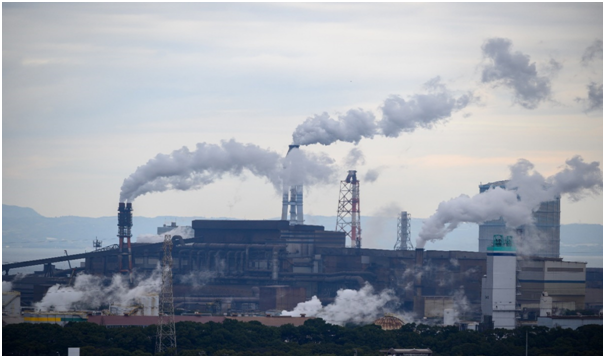
“The Carbon Holiday”: According to the International Energy Agency (IEA) forecast, the world’s CO2 emissions are now expected to fall by 8%. There has been a significant reduction in road traffic CO2 which is the principal driver of global temperature rise due to travel restrictions in many parts of the world. In China the world’s largest emitter, carbon emissions were down an estimated 25% over four weeks (of lockdown) which is equivalent to around 200m tonnes of CO2 (MtCO2). Carbon Brief states that the Covid-19 pandemic has reduced CO2 from Europe’s electricity system by 39% and projected to cause the largest ever annual fall in CO2 emissions at least in the last decade. It is clear that the decline of CO2 and other global warming gases is temporary due to a decline in manufacturing and transportation, however, atmospheric carbon levels are expected to increase again when normalcy returns.
In the area of climate action, one thing we can learn from the ‘carbon holiday’ created by the COVID-19 pandemic is that the Paris Agreement is achievable, but the struggle is to be achieved through radical reforms and actions and not through natural disasters. In the words of the UN Secretary-General Anthonio Guterres on March 13. “We will not fight climate change with a virus.”
Source: Pexel-Pixaboy
Oil economy and industry
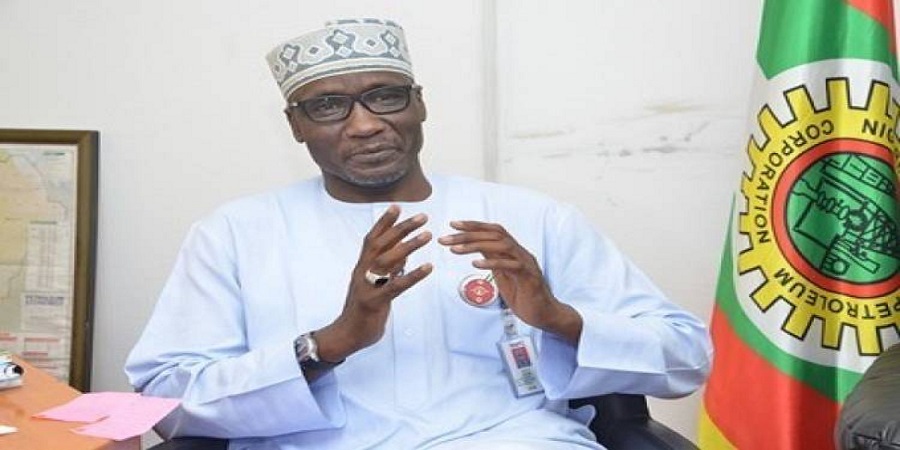
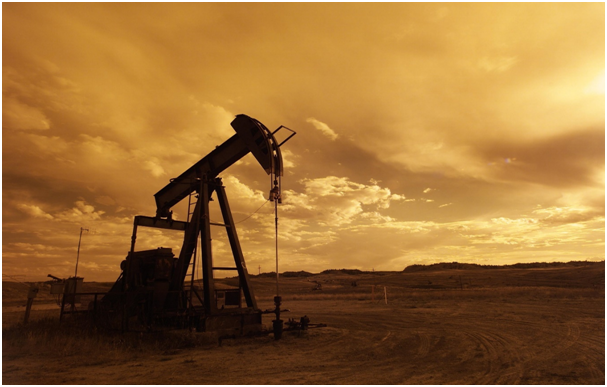
The tide turned for the oil and gas industry and shattered it posing a significant risk for those involved in oil and gas extraction. China accounts for an estimated 80 percent of global oil demand. With the outbreak in China and precedent lockdown policy, oil consumption in China contracted which created a collapse in global oil demand of 1.1 million bpd compared to 2019 records. Although the industry is phenomenally described by the boom and bursts syndrome, however, the year 2020 has been unusually historic with prices plummeting below the zero-dollar mark. This occasioned economic disequilibrium on major oil producers and or dependent economies. Iraq is struggling to pay millions of workers; Mexico’s development plans are blighted, Ecuador is pruning government salaries, Venezuela is on a ventilator while Nigeria is desperately seeking billions of dollars of an emergency loan of which it recently secured a sum of $3.4 billion from the International Monetary Fund. Although the fallen oil prices are biting hard on oil economies, the big players – Saudi Arabia, Russia, and the United States have the resources to buffer its effect on their economies. The bottom line – the actions taken are an excellent barometer of our priorities. The idea of oil economy is becoming anachronistic, that however, does not negate its need as it would be with us at least for the next decade or two.

Source: Haley Black (Pexel)
Tourism industry
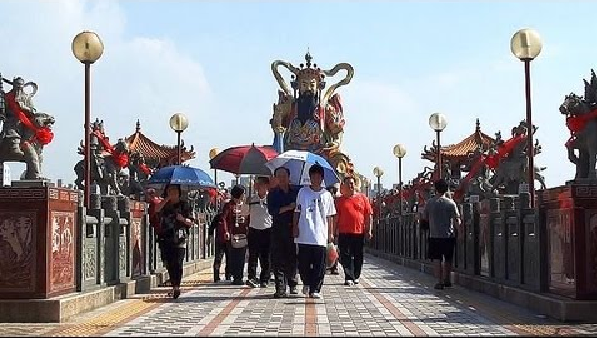
The global tourism industry as at the year 2010 was responsible for about 1.12 Gt CO2 (Gössling & Peeters, 2015). Although the carbon and general environmental footprint of global tourism would have reduced in the period of the Covid-19 pandemic and most likely would leave trails, the bulldozing effect on the economic sector has been severe. The industry accounts for 7% of global exports and contributing substantially to global gross domestic product (Lenzen et al., 2018). The tourism industry is a potent contributor to climate change through transport, accommodation, shopping, and others. The decline in international travel due to travel restrictions would have a negative economic impact on airline and tourism revenues. For example, the tourism industry directly or indirectly employs about 27 million people in the European Union (EU) and is worth a loss of €1 billion in revenue per month. What this means is that while thousands of people are battling with Covid-19 associated health problems, millions of people are at risk of losing their means of livelihoods. Also, another question to cogitate is, how might Covid-19 change or affect medical tourism?
Source: Hobi industri: Unsplash
Waste production
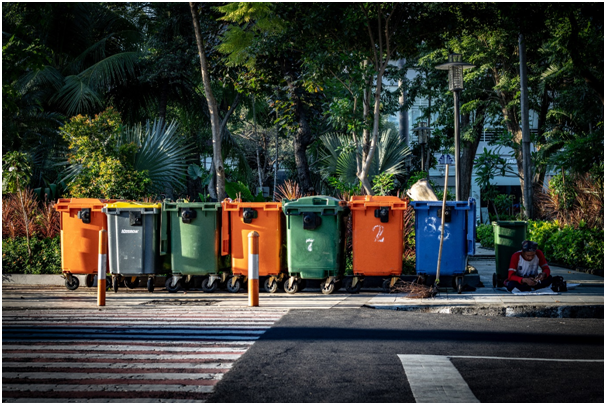
The dynamics of waste generation has been significantly impacted. While we are likely to see increased waste generation at the household level, it has reduced at the small and medium-scale business levels. Aside from these, massive agricultural waste has ensued. Medical waste produced by hospitals including face masks, disposable personal protective equipment and single-use tissues has increased. Waste facilities in China and the US has seen a record increase. For example, in the city of Wuhan, the volume of medical waste is reported to have quadrupled to more than 240 tons a day. The UK government through the Environment Agency has updated regulation on Covid-19 related waste and its management and this is currently reflected in the NHS guideline for waste management protocols. With the changing circumstances, the UN Environment Programme issued a guideline on the management of Covid-19 associated waste to avoid secondary impacts upon health and the environment. The guideline should be within the purview of the Basel Convention on the Control of Transboundary Movements of Hazardous Wastes. One thing we must acknowledge is that for countries with poor waste management capacity, the avalanche of waste produced within this period presents a serious risk to human and ecosystem health and therefore calls for technical support.

Wendy Wei (Pexel)
Health Care
The Covid-19 pandemic overwhelmed many healthcare systems. While countries like Italy and Spain were hard hit (Tanne et al., 2020); South Korea, Germany and New Zealand have been commended for their agility and management approach. To deal with the crises the UK issued an appeal for retired health workers to come back and join the NHS workforce.
The Italian health system is a test case of the consequences of underfunding and how devolution might have constrained effective national coordination (Armocida, Formenti, Ussai, Palestra, & Missoni, 2020). Although there has been a victory in many places, we hope it is not a short-lived victory. There has been a contrasting experience for different societies both developed and developing. Broadly speaking many developing countries although has yet to record alarming death rates, lack the resilience required for a good health system. India has not had many fatalities but it has been reported that people have been escaping from isolation centres (Chetterje, 2020). It is noteworthy that there is a lack of faith in many public health systems. According to Chetterje, the public health-care system in India is underfunded, inopportunely, they are the approved Covid-19 treatment centres. A similar situation is found in Nigeria, a country with an estimated population of 200 million people with a deficient health system and budgetary allocation of less than 5% on the health sector whilst medical tourism is commonplace. Some countries like South Korea and Singapore employed technology-based approaches underpinned by contact tracing and extensive testing. Germany has excelled at this too, employing testing at large scale to identify and isolate infected persons. It is expedient that the Covid-19 crises do not go to waste but catalyse a reform of national ailing health systems. There are no doubts that post Covid-19 would see a rise in innovation in areas like telemedicine, health informatics, artificial intelligence (AI) in medical diagnosis, and alternative medical therapies.
Finally, a question to ask: Are we ready for the future we are preparing for? As the models used to forecast the future get increasingly viewed with scepticism because of its opacity coupled with unanticipated events such as the Covid-19, we must learn to prepare for a world we cannot predict. Now, there is an overarching need for retrospective understanding, scenario analyses, and futures thinking to understand what has been done, what is being done and what should be done to craft the future we desire. I foresee, a call to challenge the implicit acceptance and lack of criticality in testing many of the assumptions surrounding ideas like globalisation and supply chain underpinned by outsourcing critical materials needed for national/domestic security. It is an error for any serious nation to outsource the manufacture of its armouries in the hands of another nation. It does not make sense to sacrifice essential medical supplies such as test kits, personal protective equipment (PPE) and others at the altar of cheap labour and cost differentials.
In conclusion, many environmental impacts of the coronavirus pandemic will be temporary retrogression and short-term gains. Prima-facia, there is an assumption that the climate issues are on the decline but it is only on ‘holiday’. Although climate-friendly trends such as business travel could decline with the increasing uptake in video conferences, however, with many people avoiding public transport for private transportation, the environmental gains achieved in the past months could be lost quickly.
In a dynamic, intricate, immensely complex and continuously evolving world, solving complex national and global problems should base on holistic approaches. This is the time to think differently and to operationalise the constructs of sustainability into tools for management that will enable us cope with some of the known restraints of our future. In the end, we shall either look at the Covid-19 as the emissary of a coming apocalypse or a clarion call to challenge and change the ingrained economic and socio-political paradigms which have historically dominated our policies and business models.
“Those who have the privilege to know, have the duty to act” – Albert Einstein
Corresponding Author: Alaoma Alozie, PhD, Researcher Associate, Stockholm Environment Institute Department of Environment and Geography, University of York, United Kingdom. (aloziealaoma@gmail.com).
References:
- Armocida, B., Formenti, B., Ussai, S., Palestra, F., & Missoni, E. (2020). The Italian health system and the COVID-19 challenge. The Lancet Public Health, 5(5), e253. https://doi.org/10.1016/S2468-2667(20)30074-8
- Chetterje, P. (2020). Gaps in India’s preparedness for COVID-19 control. The Lancet Infectious Diseases, 20(5), 544. https://doi.org/10.1016/s1473-3099(20)30300-5
- Gössling, S., & Peeters, P. (2015). Assessing tourism’s global environmental impact 1900–2050. Journal of Sustainable Tourism, 23(5), 639–659. https://doi.org/10.1080/09669582.2015.1008500
- Lenzen, M., Sun, Y. Y., Faturay, F., Ting, Y. P., Geschke, A., & Malik, A. (2018). The carbon footprint of global tourism. Nature Climate Change, 8(6), 522–528. https://doi.org/10.1038/s41558-018-0141-x
- Tanne, J. H., Hayasaki, E., Zastrow, M., Pulla, P., Smith, P., & Rada, A. G. (2020). Covid-19: How doctors and healthcare systems are tackling coronavirus worldwide. The BMJ, 368(March), 1–5. https://doi.org/10.1136/bmj.m1090
- Yadav, D., Maheshwari, H., & Chandra, U. (2020). Outbreak prediction of covid-19 in most susceptible countries. Global Journal of Environmental Science and Management, 6(May). https://doi.org/10.22034/gjesm.2020.04.0
Like this:
Like Loading...