DD
MM
YYYY

PAGES

DD
MM
YYYY

spot_img

PAGES

Home Blog Page 6351

Observations from Nigeria’s Lockdown School Feeding Programme

0
school kids feeding

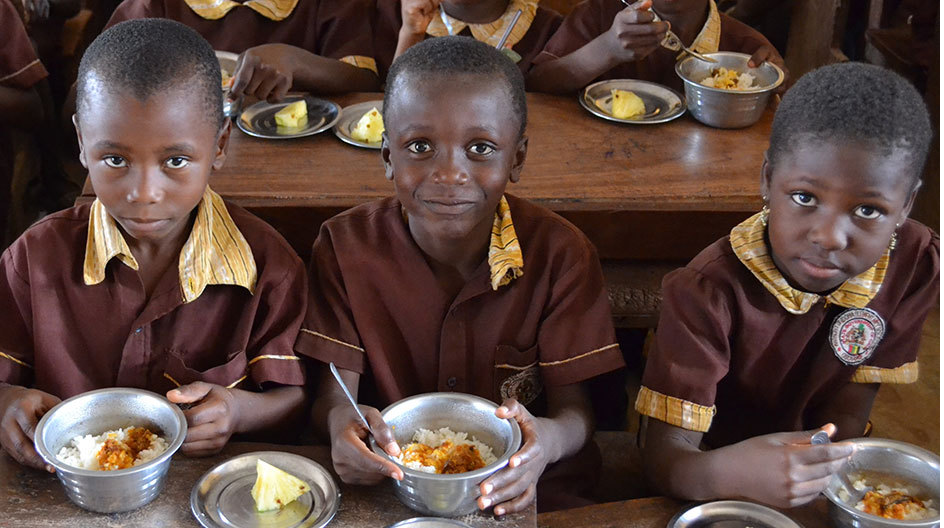
Nigerians kicked against President Muhammadu Buhari’s idea about the continuation of the feeding of the school children during the pandemic. They raised their voices to disapprove of the intention because they saw that as unwise. Some questioned why the government should expose school children to the risk of contracting the virus by bringing them to school in order to feed them. Some went as far as calling the programme a scam because they believed that it is set up by the government officials to siphon public funds. All in all, the general public were not in support of the programme. But what could be seen during the flag-off, this initiative is one of the best ways of providing palliatives to these masses, if it is well monitored.

The agitation of Nigerians against this programme may seem too harsh but it helped to shape the way the Federal Ministry of Humanitarian Affairs, Disaster Management and Social Development (FMHDSD) is implementing the programme right now. On Thursday, 14 May, 2020, FMHDSD, in collaboration with the World Food Programme (WFP), flagged off the National Home Grown School Feeding Programme (NHGSFP) at Kuje Central Primary School, Kuje Abuja. At this event, the Minister of FMHDSD, Sadiya Umar-Farouq, explained that the programme targets children in Primary 1 – 3 in public primary schools. She explained that they will work hand in hand with participating states, whereby they will adhere to the structures and data provided by the state for the distribution of food.

The flag-off of this programme annoyed more Nigerians because they didn’t see how food could possibly be distributed to millions of children that fall within this category. Some went as far as accusing the government of going against the demands of the masses, which they saw as dictatorial. But from what happened in Kuje Central Primary School Abuja, it will be noticed that the lockdown feeding of school children is an initiative that alleviate the sufferings of many Nigerians, at least to some extent.

From the video clip of the flag-off shared in FMHDSD Twitter page, @FMHDSD, the following observations were made:

Absence of Children

Contrary to what Nigerians thought, the food was not distributed to children. Their parents were the ones that came in their place.

Distribution of Uncooked Food

One of the worries many Nigerians expressed in social media was the hazards surrounding sharing cooked foods to children. But, as mentioned earlier, the FG listened to the voices of the citizens and made necessary adjustments.

The Use of Vouchers

The FG, or the FCT council I guess, first distributed vouchers with barcodes to affected parents. These parents came with their vouchers, submitted them for verification and went to the food collection centre when the authenticity of their vouchers had been ascertained. This ensures that dubious activities were reduced to the barest minimum.

Observation of NCDC Guidelines on COVID-19

Of course guests to the occasion, including the parents, were made to wash their hands, use their face masks properly, and observe the social distancing guide.

It will be good to commend the Minister of FMHDSD and the WFP for their good works. The distribution of food at the flag-off was a success. However, more concerns are raised regarding this NHGSFP. Some of these concerns are briefly discussed below:

  • Verification of Provided Data

According to the Minister of FMHDSD, the programme is for children in Primary 1 – 3 in public schools. In other words only parents of such children will receive these gifts. But knowing the high rate of corruption in Nigeria, it is pertinent to ask who verifies whether the people that receive these palliatives are those for which it is meant for. From what sources are these data compiled from? Is it from school registers or from the local government’s chairmen offices? Or from the ward leaders’ sitting rooms? Or maybe it’s from the commissioner for education’s PA’s office? Verifying the provided data will go a long way in ensuring that the concerned individuals are not denied this palliative.

  • Supervision of Voucher and Food Distribution

It is obvious that the food distribution at Kuje Central Primary School, Abuja was orderly because the minister and other top officials were there with their maximum security details. However, there is no way the minister can supervise the distribution of these food items to parents in different states. This now makes one wonder who will supervise the distribution of the vouchers and its accompanying distribution of food. Who knows whether those that collected vouchers will even smell the food? Attention is greatly needed here too.

  • Children in Non-Participating States

As the Minister noted at the flag-off, only children in participating states will benefit from the programme. This makes one worry about children in non-participating states losing out in this. It is quite unfair if these children and their parents lose something as important as this because their state government isn’t up and doing. It is, therefore, necessary that FMHDSD find ways to reach out to them before the programme ends.

  • Time-Table/Schedule of Distribution

It is worrisome that there is no time table to show how and when different schools, states, local governments or parents will pick up their palliative. As it is right now, no one is sure of how these distributions are made and when expectant parents will receive theirs. The ministry needs to be clearer on this.

We, as Nigerians, need to support initiatives provided by our public officials to make life easier for us. However, we should not hesitate to point out areas that need reconsideration and amendment, though this should be done politely. In other words, we should give FMHDSD our maximum support as it implements the NHGSFP, but we should help the ministry to ensure that the programme is a success. Right now, our focus should be on our state and local governments. They are the ones that might deny us and our children this palliative.

Uber: From Blitzscaling to Descaling

2

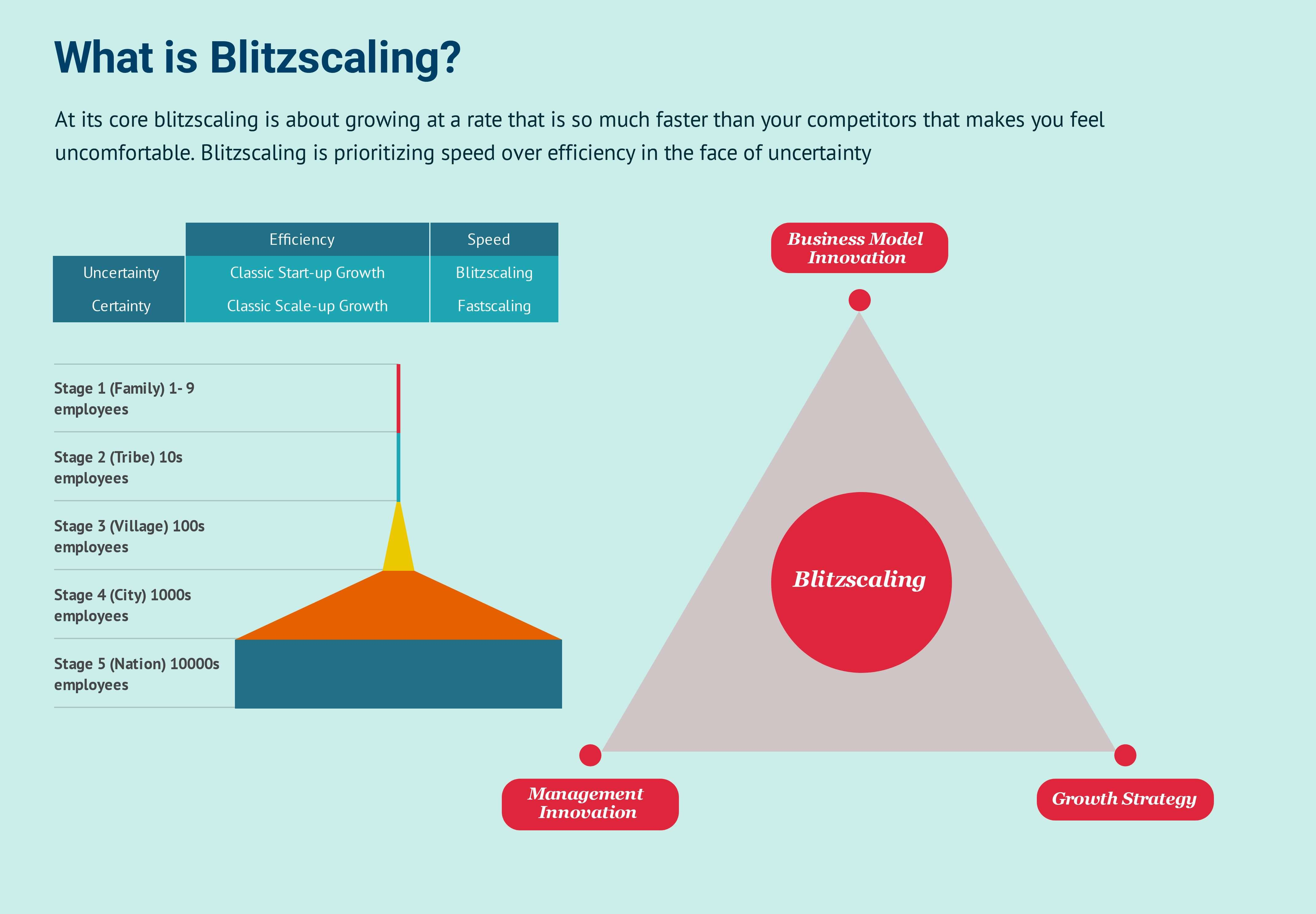
One of the most challenging elements in blitzscaling (rapidly growing a startup, unconstrained and unbounded by geography by nearly all means possible) is that early investors typically smile to banks while workers are usually losers. Yes, Uber is firing another 3,000 workers. For blitzscaling to work, everything must be in perfect equilibrium. If the economy tanks, workers are used to re-calibrate. That is unfortunate.

Uber is closing 45 offices and cutting another 3,000 jobs in a second round of layoffs, just weeks after slashing 3,700 positions. The new cuts mean the ride-hail giant will have eliminated about a quarter of its staff in less than a month, as the pandemic slams its core business, The Wall Street Journal reports. Uber’s bookings have plunged 80% from a year ago. The company said it will shrink investments in noncore projects and plans to reassess cash-burning operations, including autonomous driving and freight. Uber’s acquisition target in its thriving food-delivery business, GrubHub, signaled the ride-hail giant’s offer is still too low, The Wall Street Journal said, citing anonymous sources.

While we hail the very few successful debt-ridden blitzscaled species, the fact remains that most times, when the shape of the marginal cost begins to look like an average fixed cost curve, families bear the burdens. Simply, you are losing more money than you are making as you further scale. Any tripping from the economy, everything falls apart because the leverage is so much and out of order. At the end, within weeks, all the gains of years are wiped out because the model was recklessly overly optimistic. 

As Uber struggles, the destination is clear: Uber will merge with Lyft very soon.

In this piece, I explain why Uber and Lyft will merge. The trajectories both are following show that they will have challenges with Lyft gaining on Uber, but the overall industry cooling. As soon as that happens, their margins, if they have any, will collapse. Once that happens, they will begin to talk of merger, with each other. Government will see their struggles, and will dismiss any anti-trust concern gone. The result: it will bless their union. Uber is today’s Category-King, but its  past behaviors have slowed it down, offering a window for Lyft to catch-up. As they become peer-competitors and rivalries, they will destroy the sector. Similar rivalries have ended together: Elance/Odesk (now UpWork),  Groupon / LivingSocial,  Sirius / XM and  Rover / DogVacay. Please add DraftKings and FanDuel in the list; I predict they will merge also despite any FCC ruling, at the moment. They will struggle, owing to wounds they inflict on each other, in coming years, and will be saved via merger.

Uber continues to serve the world but it needs to look at its growth philosophy, pandemic or not! The same applies to WeWork which has been tripped by a pandemic also.

WeWork can’t seem to catch a break. The office space giant is stuck fighting a losing battle over rent and is asking its landlords for a break on rent bills, yet can’t afford to let its own members skip out on theirs, says The New York Times. The contradictory measures aren’t sitting well with tenants, thwarting the company’s reputation while the pandemic undermines its business model. WeWork paid rent for 80% of its locations in April and May and plans to “make whole on our entire obligation,” said the company’s chief.

The Wisdom of Emperor Shin Huang Ti

0

The world is, and is becoming more interesting. And the panicking caused by COVID-19 is on the increase. Everyone has to protect themselves. BUT, do it in WISDOM!

To some, building a fortress seems the safest. But isolation exposes you to more dangers than it protects you from – it cuts you off from valuable information, it makes you conspicuous and an easy target. Instead of being safer, you cut yourself off from the kind of knowledge on which your life depends.

Shin Huang Ti, started off as the King of Ch’in, a fearless warrior of unbridled ambition. He is the first emperor of China (221-210 BC), and the mightiest man of his days. His empire was vaster and more powerful than that of Alexander the Great. He’d be merciful sometimes, but more often he “swallowed men up without a scruple.” But in the last year of his life, few, if anyone, saw him …

As part of his process of unification, however, he outlawed the writings and teachings of Confucius, the philosopher whose ideas on the moral life had already become virtually a religion in Chinese culture.

This made many enemies for the emperor, and he grew constantly afraid, lived in constant terror and apprehension of destruction, even paranoid. Which led the emperor to withdraw deeper and deeper into the palace to protect himself. As a result of this, he slowly lost control of the realm.

Eunuchs and ministers enacted political policies without his approval or even his knowledge; they also plotted against him. By the end, he was emperor in name only, and was so isolated that barely anyone knew he had died.

He had probably been poisoned by the same scheming ministers who encouraged his isolation.

That is what isolation brings: you lose your ear for what is happening around you, as well as a sense of proportion.

Uchechukwu J. David (2020), commented: “Solitude is dangerous to reason, when not favourable to virtue …” – double-read that statement in order to grasp, because that is the whole essence of this article.

Since humans are social creatures by nature, it follows that the social art that makes them pleasant to be around can only be practiced by constant meaningful exposure, social interaction and circulation.

The danger for most people comes when they feel threatened. In such times they tend to retreat and close ranks, to find security in a kind of fortress. In doing so, they engender an awkwardness in their gestures, leading to further isolation and; lose perspective on events around them.

Nevertheless, in moments of uncertainty and danger, you need to fight this desire to turn inward. Instead, make yourself more accessible to information – read books, online lectures; seek out old social formation and make new ones – from a vantage position and; force yourself into more and more different circles of relevance.

Finally, never enclose yourself so far from the streets that you cannot hear what is happening around you, including the plot against you – just like Ch’in Shin Huang Ti.

Japan Falls Into Recession – And Who’s Next?

0

For the first time since 2015, Japan announced it has fallen into recession. The world’s third biggest economy recorded two consecutive negative quarters that ended in March. Japan’s economy dropped by 3.4 percent in the first three quarters of the year according to the government’s statement.

In the wake of coronavirus pandemic, many economies are struggling to stay up as the strains continue to bite every means of revenue generation. Germany and France are already in the arms of recession.

Japan has become the latest economic power to fall into recession as a result of COVID-19 impacts and the typhoon that had previously devastated the country. It is feared that the economic situation of the Asian giant may get worse as the fight against COVID-19 pandemic is still far from being over.

“The economy entered the coronavirus shock in a very weak position. But the real big ugly stuff is going to happen in the April, June print. It’s going to be three quarters of very negative growth. It is not a very encouraging picture,” said Izumi Devalier, chief Japan economist at Bank of America Merrill Lynch.

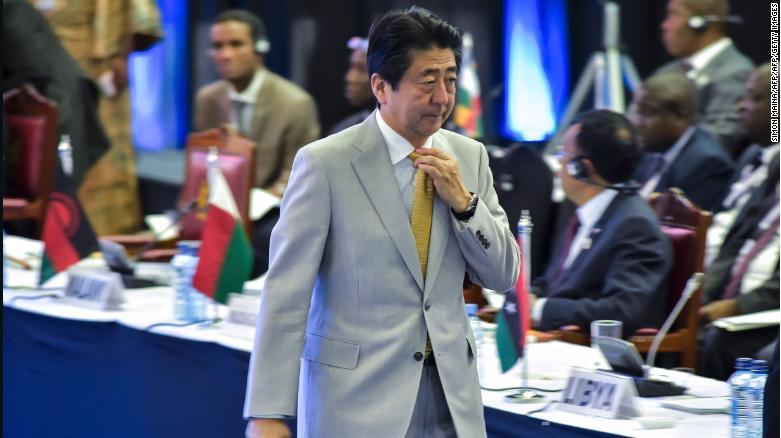
The likelihood of a third consecutive quarter of negative growth is ripe as shocks from the pandemic are still hitting every sector of the economy. The trouble could be traced back in October last year, when the country increased a tax on consumption from 8 to 10 percent. Prime Minister Shinzo Abe said it’s in order to reduce the country’s debt that is rated the highest among developed nations and to increase provision for social services as workers age.

The tax increase has resulted in decline in consumer spending, compounding the effects of the typhoon on economic activities. The Japanese economy has been on a dwindling rail even before the outbreak of coronavirus. Following the U.S., China trade war and receding global commodity demand, the country’s export has been dropping slowly.

Given the current realities of economic downturns stemming from coronavirus pandemic, Japan’s prospects for recovery have been further shattered.

With most of businesses shut down, the country sealed itself off from the rest of the world, and the Olympic postponed; Japan was on for a nerving economic crisis it didn’t see coming. Though there was a measure of success scored from the decisions, like the drop in the number of coronavirus cases, it grounded commercial activities to over 70 percent.

The Japanese news outlet NHK reported a drastic fall in commercial activities across the cities. From train stations to tourist parks, the desertion tells of a bleak economic future. Private consumption contributes to the larger part of the economy, but it fell 0.7 percent. Exports which make up 16 percent of the economy shrank 6%. Japan’s economist for Capital Economics Tom Learmouth echoed that it could get much worse.

“The Sharp fall in output in the first quarter suggests the spread of the virus had already dealt a significant blow to economic activity in March,” he said, adding that there would be 12 percent quarter-on-quarter plunge.

Tourism took a major hit, dropping 93 percent year-on-year to 190,000 visitors in March, according to the Japan National Tourism Organization. While there is hope that every sector of the economy would be reopened soon, there is just little hope that it would save the situation.

“The emergency declaration stopped people from going out, leading to a substantial decline in consumption. It is going to be impossible to avoid an impact on the scale of the global financial crisis or even worse,” said Kentaro Arita, a senior economist at the Mizuho Research Institute.

In a bid to save the country from a total collapse, the government has doled out a $1.1 trillion stimulus package. Prime Minister Shinzo Abe said on Thursday that the government is planning to inject more funds.

Experts believe that the government needs to continue to inject more funds into the economy in order to sustain growth or any progress made.

“Depending on the sectors that were generating economic growth before COVID-19 will not be possible in the coming years. For many years, I think private sector activity will be very weak. That means the government will have to continue to support economic activity,” said Sayri Shirai, a professor of economics at Keio University in Tokyo.

She added that the government needs to strategize new means to generate revenue. Abe said on Friday that there is a plan to open every sector of the economy, lifting the state of emergency.

The situation sheds further light on the weight of economic crises standing in the way of many countries. Economic experts believe there will be a wave of recession around the world that will require critical thinking to overcome. As countries, especially in Africa, make the hard choice between life and economy, recession has become a “who is next” question.

Accelerate your Leadership & Management Ascent!

1

On behalf of our GloCal Faculty, I invite you to Register for Tekedia Mini-MBA, and elevate your career, startup or business. Four months, online, and costs $140 or N50,000. Accelerate your Leadership & Management Ascent. Innovate, execute and grow. Join us here – https://lnkd.in/eHdE9iw .

Class begins June 22.

-Ndubuisi Ekekwe, PhD
Tekedia Institute