DD
MM
YYYY

PAGES

DD
MM
YYYY

spot_img

PAGES

Home Blog Page 6355

PwC Nigeria Redeems N100 Million COVID-19 Pledge

0

The PricewaterhouseCoopers (PwC) Nigeria has executed her one hundred million-naira (N100m) intervention to support individuals, businesses and government in responding to the impact of the COVID-19 pandemic in Nigeria.

According to a statement by the firm, the COVID-19 intervention fund tagged “PwC Cares” is in line with the firm’s purpose of building trust in society and solving important problems and consists of a number of initiatives targeted at various sections of society including vulnerable households, health workers and small businesses. The firm is also leveraging her depth of knowledge and resources especially around business and the economy to support governments both at the federal and states level in their economic response to the challenges posed by the Corona Virus situation.

Providing details on the various aspects of the PwC Cares initiative, Uyi Akpata, Country and Regional Senior Partner for PwC in West Africa noted:

“As well as having serious implications for people’s health and the healthcare services, COVID-19 is having a significant impact on businesses and the economy particularly for Nigeria at this time given our dwindling resources and high level of poverty.

“As a firm, we are supporting a number of initiatives aimed at addressing the health and economic challenges in Nigeria. Notably we are supporting the CBN led Coalition Against COVID-19 by the setup of a Project Management Office and providing project monitoring and evaluation support valued at about 50 Million in the first instance.

“We are also providing food items to at least 5,500 vulnerable households, as well as personal protective equipment (PPEs) for frontline healthcare workers in the following states; Lagos, Ogun, Imo, Edo, Kaduna, Akwa Ibom, Kano and the FCT.”

The firm noted that the donations of food items and medical materials which is valued at 50 million was made possible through voluntary donations from her Partners, staff and alumni community who have risen to the occasion in line with the firm’s value of Care and her agenda of having greater societal purpose.

This is in addition to pro bono complementary business continuity support services to small businesses employing between 5 to 50 employees who undertake to retain all their staff during this period.

Part of the provisions made by the professional service firm include; N50m food items to vulnerable households and hospital supplies, funds polled from donations from Partners, staff and alumni, N50 million worth of project monitoring and evaluation support to the private sector led Coalition Against COVID-19 (CACOVID).

It also set up a Knowledge Centre to support Federal and State governments in their economic responses to the pandemic.

Commenting further on the firm’s plans, Akpata added:

“It is clear that we still have a long way to go and we continue to learn to deal with the challenges. Therefore, now more than ever before, we see that partnerships between stakeholders especially between public and private sector, is key to success.

“This is why in addition to the 100 million fund, we have also set up a Covid-19 Knowledge Centre accessible via our website to support Federal and State governments in their economic responses to the pandemic.”

The firm has demonstrated her clear intentions and resolve to help organizations and government respond to the pandemic and has hosted a series of free webinars on the economic implications and policy responses to COVID-19 during which it shares key insights on the situation, providing various response scenarios and generally engaging the business community on how to remain resilient through the crisis.

This gesture has inspired calls for other corporate organizations to do more to help in the fight against the virus. Small businesses are an integral part of any strong economy and deserve special attention in times of economic downturns like this.

The Nigerian government has doled out N50 billion intervention fund under the Targeted Credit Facility, but it is apparently not enough to assist the number of small businesses that have been put in financial strain by COVID-19.

Household needs have also risen to all time high as government palliatives are failing to measure up. The situation has so far created two areas of need that calls for support from individuals, public and the private sector. The PwC’s initiative offers employment support for firms struggling to avoid layoffs, offering a lifeline to individuals who may have been affected by the pandemic.

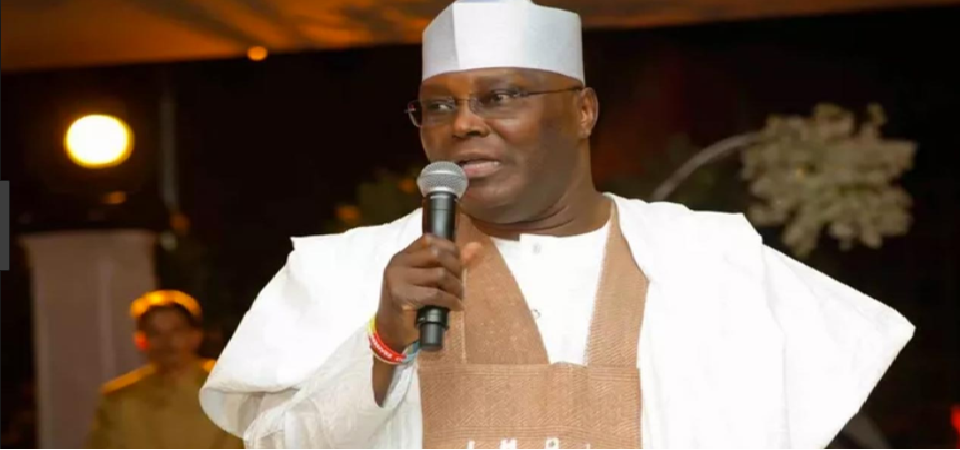
I Recommend Atiku Abubakar for Dean, UNIABUJA Business School

2

Good People, Nigeria’s former Vice President, Atiku Abubakar, is getting more exciting. He has been churning out economic articles with ease these days. Whether you like him or not, the former #2 is serving his nation. He is among the few in the opposition who are providing constructive criticisms to help reshape the government. 

Sure, some will say this guy named “Ndubuisi” must be supporting PDP and Atiku. But note one thing: where I come from in Abia state (Ovim) remains the most politically independent village in Nigeria. When the communities concluded that Nigeria was failing their sons and daughters, they decided that all ruling parties must be voted out of office. Yes, Ovim voted against PDP (Governorship), APC (President), PDP (Senate), and House (PDP). In these four cases, they voted against the ruling parties.

So, when I “praise” Atiku, see me from that angle. I don’t really care about the party, I want Nigeria to move forward. APC represents me in the Senate and House today, from the depth of the Igbo Nation. Of course, the village was cornered as one of the politicians switched parties, to get the same job from another party!

On the strength of his economic/business thesis, usually on Facebook, I recommend for the University of Abuja to offer Atiku Abubakar the Dean of the Business School. He has many things he can share with our students.

The latest piece from Atiku…below

Nigeria Cannot Afford Luxuries During an Austerity.

It is to my consternation that despite the crash in the price of oil, and the inability of Nigeria to expand our revenue base through the non-oil sector, the Federal Government of Nigeria has only seen fit to slash our budget by a mere 0.6%, from ?10.594 trillion to ? 10.523 trillion. This represents a reduction of only ?71 billion.

Putting politics aside, this is grossly insufficient and betrays the fact we have lost touch with the current realities in the global political economy.

For the avoidance of doubt, when this budget was presented to the National Assembly on Tuesday, October 8, 2019, it was predicated on a projection that our nation would generate crude oil production of 2.18 million barrels a day, at an expected oil price of $57 per barrel.

Today that is no longer the case. Both our production, and the price of oil have been severely affected by the coronavirus pandemic, to the extent that we have unsold vessels, and our income has tanked by more than 50%.

Given that this is the case, how can anyone justify a reduction in expenditure of just 0.6%? We cannot be the only nation bucking the trend?

Saudi Arabia, a nation with a much stronger production capacity than ours and with a larger global market share, as well as a foreign reserve that is 12 times ours, has slashed her budget by almost 30%. Ditto for other oil economies.

Nigeria cannot make up for the loss of expected revenue by taking out more loans and issuing out more bonds. Debt will be the death of our economy, and bonds will put our people in bondage.

The best way out of this economic quagmire is to reduce our expenditure. And a 0.6% reduction is no reduction. It is only window dressing.

My counsel to the Federal Government of Nigeria is this: put Nigerians first and cut your coat, not according to your size, but according to your cloth.

Realistically slash the budget. Every pork barrel has to go. The billions budgeted for the travels and feeding of the President and Vice President has to be reduced. The ?27 billion budget for the renovation of the National Assembly has to go. The massive budgets to run both the Presidency and the Legislature has to be downsized. The budget for purchasing luxury cars for the President, his vice, and other political office holders must be abandoned. Leave the salaries of civil servants alone, but reduce the salaries of political appointees. Sell 8 or 9 of the jets in the Presidential Air Fleet.

Any budget slash that is less than 25% will not be in the interest of Nigeria. And beyond a budget slash, Nigeria needs a budget realignment, to redirect expenditure away from running a massive bureaucracy, into social development sectors like education, infrastructure, and above all, healthcare. We must invest in the goose that lays the golden egg – the Nigerian people.

These are the types of sacrifices that we need in a time of crisis. We do not need empty gestures that will lead to empty treasuries.

In times of austerity, no nation, not the least a mono-product economy, such as ours, should be living in luxury at a leadership level.

Covid-19 Outbreak and the Transportation Industry – Effects, Challenges and Prospects

0

From time immemorial, transportation services have been an absolute necessity for businesses and governments to operate successfully. Businesses rely on transport systems to fulfill purchase orders, likewise people who need to move from one place to another in a timely fashion. Consisting of several sectors, from airlines, to marine and logistics, the industry is ultimately the backbone of any economy. 

On the 27th of February 2020, Nigeria’s first Covid-19 case came into the country through the Murtala Muhammed International Airport. This is not surprising considering how the airport is a foremost transport hub in the country. 

Since that first case, the country has witnessed a surge in Covid-19 cases, two phases of lockdown in metropolitan areas like Lagos State, Ogun State and the Federal Capital Territory, Abuja which spanned five weeks. Railway services have also been suspended and major international airports in Kano, Enugu, Port-Harcourt, Abuja and Lagos were closed to international flights.

On the 4th of May 2020, the lockdown was eased on the condition that Nigerians adhere strictly to social distancing guidelines and mandatorily use face-masks in public spaces. The ban on interstate travel placed by the Federal Government remained.

The pandemic and lockdowns have disrupted the economy as a whole and strained the operations of every sector in the country and the transportation industry is sadly not left out. All modes of transport have experienced a drastic drop in patronage in the five weeks of lockdown and restriction on movement. The nation has witnessed a decline in road, rail and flight activities occasioning huge revenue plunge.

According to Biodun Otunola, the Managing Director and Chief Executive of Planet Project Limited, in his interview with THISDAY, Nigeria has over 80 million people utilizing public transport daily. He explained that if the impact of the lockdown is assessed on the average national fare of N150 per day, it amounts to a total of N3 trillion for the period of five weeks. He stressed that the public transport sector and supply chains linked to transportation have been the most affected by the pandemic and the lockdown. 

For aviation, there is the nose dive of revenue and grounding of about 120 domestic aircraft nationwide. Nigeria’s Aviation Minister, Hadi Sirika, said the sector has been losing N21 Billion monthly since the outbreak of Covid-19. He attributed the huge loss to the lack of activities in the sector which solely depends on flight operations for revenue. Similarly, Bankole Bernard, the former President, National Associations of Nigerian Travel Agencies (NANTA) reports that in the first two months of the global lockdown, the Nigerian travel industry lost more than N180 billion and thousands of jobs.

Even ride-hailing services have taken a hit. Bolt halted ride-hailing activities during the period of the lockdown and turned to deliveries while Uber suspended its operations entirely following the restriction order.

Although intrastate movement has been lifted by the government, interstate travel remains closed and there is no gain saying the loss both interstate and intrastate workers have incurred from the periods of lockdown and thanks to the continued ban on interstate travel. As a result, some transport companies have turned to staff retrenchment and pay cuts as a means of staying afloat during these times. 

What are the challenges to getting back on track?

Covid-19 pandemic has thrown nations, Nigeria inclusive, and their entire transport systems into what is perhaps the worst situation ever experienced by mankind. Perhaps even worse than the 1918 Spanish influenza pandemic with which it shares similarities.

That pandemic spanned two years and witnessed the crippling of economies. Interestingly, modern transportation helped the Spanish Flu spread quickly and extensively. The virus was spread around the world by infected crews and passengers of ships and trains and severe epidemics occurred in shipyards and railway personnel. As William Osler was credited with observing, the flu never traveled faster than modern transportation, confirming that it was human bodies and not some ethereal atmospheric force that spread it. In like terms, if we are to go by the emergence of the first recorded Covid-19 case in Nigeria, we will acknowledge the role of modern transportation in the spread of the virus.

Modern transportation, be it road, rail or ubiquitous air travel is a great enabler of the spread of a pandemic. By itself, it will also challenge the economy’s ability to rise out of the debris of Covid-19. Thanks mostly to lack of solid public health strategies for dealing with infectious diseases as soon as they are first detected and how they can be managed without disrupting transport activities. 

With the easing of lockdowns, will people put their lives at risk and jump into cramped buses or opt for private taxis and driving their own cars? Wealth disparity in society will rear up as a challenge for those who are unable to afford private transport and do not own cars. Thus, with citizens unwilling to put their lives at risk, the transport industry faces the challenge of ensuring safe means of commuting for the masses.

The transport industry will no doubt continue to feel the financial impact of the crisis as there will be a decline in passenger volume on public transit causing reduced revenue for transport operators.

The pandemic has also accelerated activities that will have a lasting effect on transport systems long after the pandemic is over. Activities such as working remotely, on-line and distance learning, home delivery of goods and services and electronic commerce will continue to alter the course of transport systems and the challenge will be how transport systems can leverage these disruptions.

Since it is unlikely that mass transportation can operate full carrying capacity while still adhering to social distancing, providers will need to restore trust by putting health and safety measures in place, like changing the layout of buses, trains and other conveying apparatus to reflect social distancing. These will have to be done despite declining revenues.

The fate of the transport industry lies on how we can rise out of these challenges.

Are there any prospects for the transport industry?

In spite of it all, the industry is presented with certain opportunities that can help to make a positive shift in its broader business approach.

First, because people are likely to go out less, considering the emphasis on social distancing, remote work and flexible work conditions, stay-ins will put less pressure and strain on transport networks and the government can take this time out to develop transportation infrastructure that will improve mobility, supply chain, and distribution of goods and services. The window can hasten road and rail projects across the country to ensure better intra city and interstate movement. This will no doubt reduce the congestion, traffic situation and strain on road travel.

Secondly, an opportunity presents itself for the industry to focus on other areas of revenue generation asides those obtained from flight operations and transport fares. The industry can strengthen, facilitate and grow intra-Africa trade, regional traffic, commerce and tourism with other African counterparts.

Thirdly, the industry needs to be proactive and bridge the gap that the Covid-19 pandemic has opened by ensuring adequate professionalism in the industry and putting in place modern transport policies and facilities that will reflect health and safety guidelines on every transport network. These health guidelines will ensure passengers trust in the public transport system. It can leverage on technology by incorporating touch-less facilities into the transport system especially at airports. Because if we have less physical contact with surfaces and people, the less the spread of infections. In view of this, because transportation and mobility are important for sustainable growth, a review of the nation’s National Transport Policy is imperative to achieve a better economy whilst putting health and the environment into consideration.

Ultimately, although the transport sector has been hit hard by the pandemic, it also presents the window for the right structures to be put in place, so that post-Covid-19, Nigerians can enjoy a better and safer transport system.


References

  • Akinsanmi, H. (2020, May 10) Public Transport Sector Lost #3tn to 5-Weeks Lockdown, Planet Protect reveals. THISDAY. Retrieved from https://www.thisdaylive.com/index.php/category/politic/
  • Annie Browne, MPH, (2016) The roles of transportation and transportation hubs in the propagation of influenza and coronaviruses: A systematic review. Journal of Travel Medicine 23 (1). Retrieved from https://doi.org/10.1093/jtm/tav002
  • Luke, T.C. and J-P Rodrigue (2008) “Protecting Public Health and Global Freight Transportation Systems during an Influenza Pandemic”, American Journal of Disaster Medicine, Vol. 3, No. 2., pp. 99-107. Retrieved from https://transportgeography.org/xmlrpc.php
  • Okafor, E. (2020, May 12) Tackling impacts of Covid-19 on Nigeria’s Aviation Sector. VoiceOfNigeria. Retrieved from https://www.von.gov.ng/tackling-impacts-of-covid-19-on-nigerrias-aviation-sectors-2/
  • Olurounbi, R. (2020, April 23) Coronavirus: Nigeria’s travel industry shaky after #180 billion loss from pandemic. Theafricareport. Retrieved from http://www.theafricareport.com/26578/coronavirus-nigerias-travel-industry-shaky-after-n180-billion-loss-from-pandemic/amp/

Production of Certificates Begins for Tekedia Mini-MBA Participants

0
Our sample certificate which will be awarded to participants

My team has started working on the certificates for the first edition of Tekedia Mini-MBA as we begin to round up the first edition. As I have already noted, next week will be a LIVE session, to review our more than 12 weeks of co-learning, from innovation to growth, great impacts at work to huge profits, and more. Have a great weekend ahead.

We are entering the concluding phase of the first edition of Tekedia Mini-MBA.  Next week will be a revision week. We will use it to trial Tekedia Live which we are exploring for the future. So, next week, we will review everything we have discussed since Feb 10, 2020 to date.

This was not part of the original plan and you do not need to attend. We are adding it to ensure those used to live learning are supported. The sessions will be recorded for replay later. Beginning Monday through Friday, we will be live at 11am-11. 30am Lagos time, daily, reviewing more than 12 weeks of study. If you have questions you want us to address, in generic formats, email Admin.

The second edition registration is ongoing at the moment; connect here.

Our sample certificate which will be awarded to participants

https://www.tekedia.com/mini-mba-2/


WFH Is A Policy Which Nigeria Can Use to Decongest Its Big Cities

4
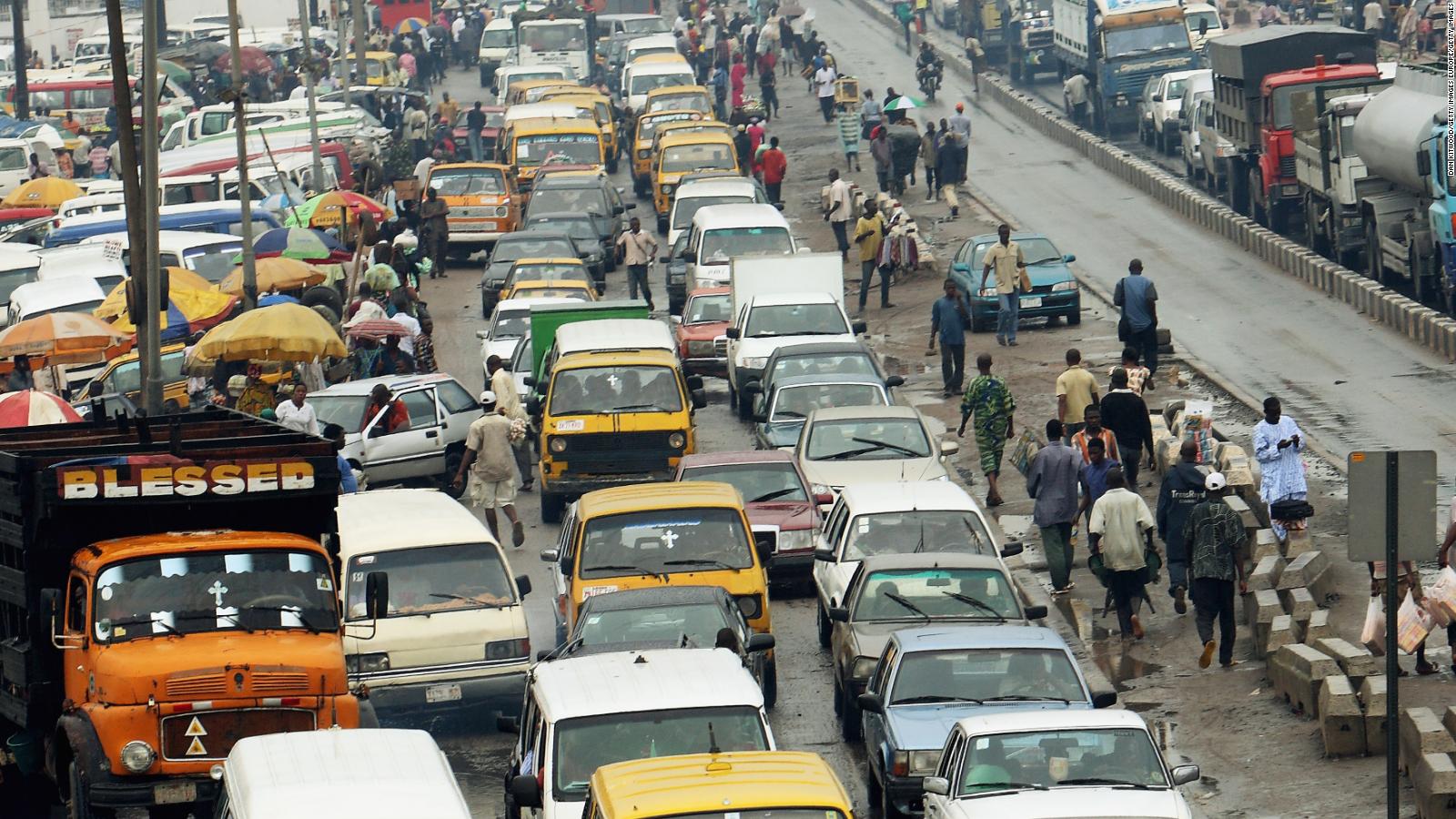
LAGOS, NIGERIA - JULY 15: A general view of congested traffic in central Lagos on July 15, 2008 in Lagos, Nigeria. (Photo by Dan Kitwood/Getty Images)

Major real estate players have a new challenge in their hands: exodus of citizens from big and expensive cities. Why live in expensive cities if your company permits remote work? Yes, one can live in Auburn (Alabama) and work remotely in San Francisco. And even in Nigeria, Andela now makes it possible that you can live in Owerri and be in its team, without the old requirement of relocating to Lagos. That move is huge. A one-bedroom apartment in Ikeja can get you a nice 3-bedroom one in a good location in Owerri. Post Covid-19, commerce will not be the same.

There is a policy opportunity here: With incentives to get companies to go WFH (work from home) in Lagos and our big cities, the government can magically solve our traffic paralysis! If that policy happens, people can move into second and third tier cities, reducing traffic congestion in big ones like Lagos, Kano and Port Harcourt. But for that to happen, incentives must be offered by governments at both federal and local levels.

Silicon Valley workers are rethinking their sky-high rents and considering moving now that major tech companies won’t reopen their office this year. Facebook and Google won’t bring back employees until 2021, while Twitter has given workers the option to work from home permanently. The looming exodus isn’t just happening in San Francisco — many people in crowded cities are eyeing moves to less densely populated areas amid the pandemic. A new Zillow-Harris Poll survey found 66% of people teleworking would consider moving if work-from-home flexibility continues.