DD
MM
YYYY

PAGES

DD
MM
YYYY

spot_img

PAGES

Home Blog Page 6379

Bitcoin Surges, Giving Hope and Fears to Investors

0

On Thursday, Bitcoin price leaped 18.57% to stay at $9,388.30, signaling hope in the wake of COVID-19 pandemic that has plunged the gains of the cryptocurrency giant. The entire market capitalization rose to $35.3 billion in the last 24 hours, the highest since March 7.

Cryptocurrency has followed other markets to succumb to the oppression of the global health crisis, disappointing investors who counted on it to save them from the economic trouble.

In March, over $26 billion was wiped off the cryptocurrency market in 24 hours, and Bitcoin lost 10% at the same time following the 30% plunge of international oil benchmark Brent crude futures to $31.02 per barrel.

The crash in cryptocurrency prices in March dashed the hope of rebound that many investors had entertained. But market players believed that although the market indicators were pointing downwards, it offered the opportunity to purchase more coins.

Jehan Chu, co-founder of Kenetic Capital, an investor in blockchain startups told CNBC that the digital currency has become known for its volatility but it presents an opportunity to long term investors.

“For those who have long term investment horizons, bitcoin is absolutely a buy during these dips. We can expect more of this volatility sparked by macro health and financial shocks, but ultimately long term investments in the digital future and its key asset bitcoin will be a winning strategy,” he said.

Thursday’s price rise in the digital currency market sprang a surprise that has been attributed to central bank monetary policy and bitcoin halving. Almost every central bank in the world has introduced a stimulus package in an effort to boost economic stability against the shocks emanating from the outbreak of coronavirus.

There is also an intervention fund for businesses as countries push to avoid massive layoffs. These are believed to be the stimulation of the sudden turn around. Vijay Ayyar, head of business development at crypto exchange Luno said it’s as a result of the US central bank pledge to keep interest rate at zero until the economy bounces back.

“My sense is that overall markets are not reflecting reality on the ground though, but this is also the result of Fed in the U.S. being extremely clear that they will do anything to make sure there is economic stability. We could be seeing a lot of money flowing into equities and crypto as well, as a result of the new money printing,” he said.

On the other hand, bitcoin halving, where the rewards for bitcoin miners are cut in half has been instrumental to the Thursday growth according to experts. Currently, the reward of bitcoin miners stands at 12.5, but as a procedure, the rewards are halved every few years to help cut inflation and keep the market performance stable. The reward is expected to be halved once again to 6.25 by May, which will reduce the current inflation from 3.76% to 1.8%.

Mathew Dibb, cofounder of Stack, a bitcoin index fund provider said the upcoming halving event has contributed to the rebound of cryptocurrency.

“While part of this rebound may be explained by a renewed ‘risk-on’ attitude of global investors, it is also clear that bulls have been triggered by the upcoming halving event and the anticipated appreciation in value in the wake of it. For those buying into bitcoin now, many see this as an opportunity to buy BTC at bargain basement rates before a price pop post halving,” he said.

One clear message from the fluctuating performance of bitcoin is that digital currency is functioning dependently on the world basic economy, and cannot operate independently.

Crypto analyst Josh Rager warns that bitcoin is tightly correlated to the stock market and could retreat if equities suffer another pull back.

“Bitcoin will continue to follow along the stock market S&P 500 mini-futures. BTC will continue to go strong as long as stocks continue to push to 3,000 and above. The $8.600 level broke with ease but do want to see how the daily closes, if this area holds with $9,000 in sight,” he said.

The concern for investors who are throwing money into bitcoin is whether it is going to fall below the current price following the market trends. With many governments running out of bailout funds for businesses, and the oil market still on its knees as a result of closed businesses, if the COVID-19 pandemic is not contained soon, it will mean that businesses will have nothing to fall back on – and cryptocurrency will lose the gains it has made as a result of government intervention funds.

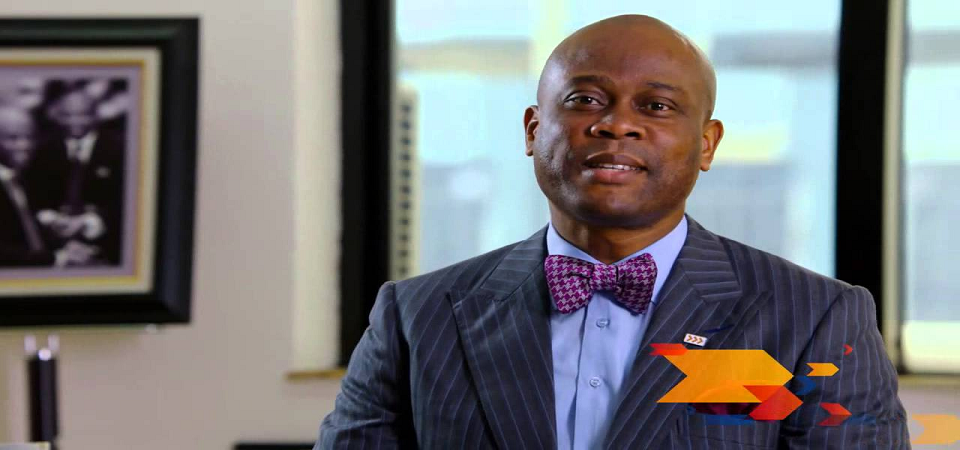
The Herbert Wigwe’s Video: Access Bank Breaks Hearts [Video]

3

It is a new redesign: coronavirus has enabled companies to pilot and test business models towards optimization of costs. The learning was live in all absolute forms during this pandemic, exposing inefficiencies, non-leverageable assets and redundant resources.  As offices begin to reopen, new playbooks are emerging.

Case in point: Access Bank Nigeria Plc is cutting a huge percentage of its workforce. That has been my fear since early March when I warmed our community to prepare because an experiment was going on in Nigeria,  and by the time the results are out, CEOs will adopt new models at scale. Why do you need a branch when Nigerians have demonstrated they can do banking without a physical location? Why do you need physical guards when the bulk of the money is electronic? Why do you need drivers when Zoom can take you anywhere? For the fact that people did not break without many departments, banks and companies have data points to redesign their businesses.

Access Bank Plc CEO, Herbert Wigwe, my Businessperson of the Year 2018, would now struggle to win a major election in Nigeria. Of course that may not be his priorities. He has fired at scale, drawing the first blood in a labour ring battle we expect to be brutal. By the time, the process is over, the Nigerian banking workforce will shrink by at least 40%. Access Bank is looking at cutting  WITHIN 75% of its workforce! Those remaining will see reduced salaries.(Update – the video does not mean all the noted 75% could be cut. Access could cut 1% or 74.99% but no one knows. So, I have updated that Access will cut within 75% of its workforce after watching the video again)

“We probably don’t need as many security men as usual, even as we are not going to have all our branches open between now and December. We certainly don’t need all the security men; we don’t need the tea girls; we don’t need all the cleaners; we don’t need all the tellers etc, etc.

“That number of staff which represents 75 per cent of our staff strength is the one we need to speak to their employers, to rationalize, to basically sustain a lean but actually customer-service oriented institution.”

Yet, nothing is new here if you have been following what has been happening in South Africa for quarters. In short, every quarter, there has been mass sacks in the banking sector as the industry automates and digitizes. Covid-19 simply accelerated what I have expected to take four years to happen in 6 months. As many have written, Nigeria must plan for the future of work because we can be in a nation of depression-level unemployment.


LinkedIn Comment on Feed

Question: Prof, thanks for sharing, indeed capitalism is about make or break. Some are made, others broken. But I have to then ask, if institutions like banks share Wigwe’s mindset ‘we need to protect our institution, even if people get hurt’ (paraphrasing), what about the other side of the coin? Should banks be shielded from technology themselves, even as they use tech to protect themselves and hurt others? What about unleashing the East African mobile money revolution in Nigeria? What about micro-insurance, micro-mortgages, which allow people that earn daily, to save daily and break free of unaffordable interest rates, set by the Central Bank?
Prof, is there no other side to the coin? What then is the hope of the ordinary Nigerian, in this winner takes all economy?
Will the Wigwe philosophy not lead to greater inequality, greater instability and ultimately, chaos?
Please, lend us your wisdom…

My Response: Today is Labour Day. The world does not have a Capital Day because everyday is a Capital Day. In 1979, GM employed close to one million to serve less than 500k customers. In 2020, Facebook uses about 50k to serve more than 2.5 billion customers. A big branch in Nigeria in 1990 might have required dozens of workers. Today, 7 staff can do with machines around. What is happening is not Wigwe’s fault – the problem is the leadership in Nigeria.

Starbucks could not find people to hire in U.S. because everyone had a job, it then offered free university scholarship to attract workers. No one noticed that American banks were closing or shrinking in workforce because other sectors were expanding as tech was opening new domains. If the Nigerian real estate, agriculture, transportation etc are growing, all the people in banking would not be enough for them.

Nigeria has 200 million for an economy of $500b; America has 320 million for one close to $20 trillion! Despite all, the bank CEO is a victim because Nigeria kills banks also! So, those men (usually) are aware of the strike rate.

Access Bank’s Herbert Wigwe, Chris Ngige and Nigerian Labour Congress

Beyond Covid-19 And The Bazaar of Corporate Cash – Agenda for Corporate Nigeria

0

As the pandemic spreads over the world like wildfire, the effect continues to paralyze activities across our country Nigeria through its mass adoption of imported solutions – lockdown, border closures. Efforts are ongoing from all facets of humanity to curtail the scourge of the pandemic. How well our fragile economy will respond to the twin bombs of Covid-19 and the apocalypse of oil price is unimaginable. The response of governments has been fairly commendable, but the effort of the organized private sector is overwhelming. In Nigeria, as of April 1st (not an April fool joke), the newly birthed Coalition against Covid -19(CACOVID) has realized the sum of N19B (about $47.5m) – confirmed redeemed pledges. Superlative response!

Recently, the Minister of Finance put forward a proposal of a N500 billion intervention fund for the upgrade of medical facilities across the country. One can only imagine the fate of all the CAPEX that has been budgeted/allocated to this critical sector over the years. A quick review shows the Federal Government Nigeria CAPEX budgetary provision over the last 3 years – 2018(N71B),2019(50.15B), and N46 in 2020. Unfortunately, the country has budgeted below the WHO benchmark – 13% of the annual budget to be allocated to healthcare. It has also budgeted far below the Abuja Declaration of 2001 under which African leaders agreed to commit 15% of their annual budget to improve the healthcare sector. The same situations abound in the sub-national governments with over 70% of the sector budget expended on recurrent expenditure.

Whilst the sector has suffered massive underbudgeting of resources, the amounts allocated have not been prudently utilized as exemplified by the abysmal quality of our healthcare infrastructure. Little wonder a notable “His Excellency” in one of the states commissioned with pomp and pageantry a world-class, first of its kind state-of-the-art hospital in his state but unfortunately, upon a minor accident was flown abroad for treatment. What happened to the state-of-the-art hospital? Nevertheless, George Orwell remarked that some animals are more equal than others. One of my good friends’ critique of my last article was my inability to rebuke the government in strong terms, I had retorted, “I write about the living and not the dead”

Evidently, the government has relegated this sector through under provision of resources, massive corruption, politicization of healthcare, mediocre policies, poorly built and maintained infrastructure, and the dearth of modern equipment. The resultant effect has been the massive brain drain of our medical personnel. According to them it is perpetually frustrating to practice the profession in Nigeria where you witness children and adults die daily due to lack of ordinary oxygen or patients are compelled to purchase medical disposables for their examination and treatment. Doctor to patient ratio is still around 2500:1. The scale of this problem has unfortunately become too gargantuan and a Sisyphean task for the government to resolve. An African proverb says, ‘one person does not hear the sound of the gun’. We are therefore condemned to seek the intervention of the private sector. But these corporates pay their statutory taxes and levies to the various tiers of government in addition to the obnoxious operating environment. Hence, they have no obligation to further take up these existential roles of government. Incidentally, recent events have reaffirmed the old labor slogan “an injury to one is an injury to all”. Our government has failed and whereas we continue to demand accountability from them, we need to pick up the gauntlet and make hay while the sun shines. We can no longer stand and gaze or sit and look.

The private sector has not only shown expertise in the management of their various firms but has demonstrated elegant competence in rescuing the government in its core and critical functions – Education, Security, Public Infrastructure, etc. Several corporates have provided operational equipment to the security agencies, built a couple of facilities/research centers for various educational institutions, and even rehabilitated roads and other public amenities. But the question beckons, what has been the fate of these facilities weeks/months after handover to the authorities. Is there a mechanism for a post-handover review of these projects to ensure the retention of standards? How well have they met the objective over time? We can wildly conclude that most of them have been well mismanaged shortly after handover. The corporates need to review their existing model of Corporate Social Responsibility (CSR) to build sustainable institutions. My call is for business leaders to press the reset button and review their fanfare, advert based, “photo/social media charity” CSR models/programs. Several examples abound of where corporates have adopted a self-sustaining approach to build, operate, and manage (BOM). This model has been adopted by the International Oil Companies (IOC’s) to bring relative peace in the Niger Delta region. They (IOC’s) have succeeded in building several facilities (health, etc) jointly owned and managed with the host community with economic and social benefits. Available data also shows that the Dangote Foundation has constructed faculty buildings across several universities in the country amongst other projects. The current road reconstruction undertaken by Access bank around the Oniru axis, the Zenith bank reconstruction, and maintenance of the Ajose Adeogun road all in the Victoria Island of Lagos are handy examples amongst others. Little wonder the Ajose Adeogun road with an adornment of the spectacular Christmas decoration has become one of our foremost tourist destinations. Even the popular American rapper Belcalis Marlenis Almanzar professionally known as Cardi B took a tour of the road during her maiden concert in the country last December. These private sector-led projects have obviously been outstanding.

The corporates led by the banks need to mine the pool of data wasting in their bases. As banks begin to append their signatures to UN sustainable banking principles, they need to thoroughly review their portfolio. In line with the WHO & UNO guidelines for countries to provide a certain minimum percentage of their budget to the critical sectors – Education, Health, etc, banks should ensure that a reasonable portion of their loan books is available to the healthcare sector. They should not only provide funding but ensure that those firms survive through healthy business partnerships and fair pricing. I can vividly remember a top executive that frowns at any request to support local pharmaceutical companies. The claim is that they produce poisons (technically drugs are poisons), how many of us can afford the imported brands?

The banks also need to fortify their risk management with experienced healthcare professionals to guide them on financing for the healthcare sector. It cannot be guessed work or general knowledge as the partnership is expected to be long term and not solely profit first. As expected, every business should have public health professionals in their human resource management for prompt advisory services.

According to the Federal Ministry of Health, our annual expense on medical tourism is in excess of $1B. I am also aware that a bulk of the “China tents/kits” being purchased by the private sector intervention is imported. This further strains the epileptic foreign exchange (FX) reserve of the country. The corporates should extend this coalition post-COVID towards the development of smart “health/medical cities” to curb medical tourism and conserve our scarce foreign exchange. These medical hubs will have at least one standard (world-class) tertiary and secondary healthcare facility with the attendant ancillary services. The abrupt shut down of several private hospitals upon the visit of Covid patients reinforces the poor state of facilities and the begging need for massive investment in the sector. This shows that our existing health facilities lack adequately trained manpower and capacity to manage an epidemic.

Whilst it is contestable that the continuous lockdown is more hurtful than the virus, the new normal may include the continuation of the existing hygiene rules.  As medical supplies in the international market is now highly prioritized according to the severity of the pandemic – no. of deaths etc, local production of materials – hand glove, mask, sanitizers, etc and other minor medical supplies/equipment need to be invented and upscaled. The creation of these “medical cities” funded by the corporates will not only generate thousands of jobs – MSME’s SMEs, mid-large size organizations but will provide the needed support – trained manpower, etc for the creation of a holistic medical ecosystem of global standard. FX will be conserved, trusted, and sustainable SME’s cultured.

I can only imagine a standard hospital across the country with First, GTB, Access, UBA, BUA, FAMFA, and Zenith logo. These hospitals can boast of any world-class equipment with the capacity not only to carry out several advanced medical procedures but updated medical research and training. These facilities will without doubt possess the wizardry of these great institutions – it will be centers of healthcare excellence. They have a mechanism to create special purpose vehicles(SPV) to manage these institutions without losing focus on their core competence.

Partnership with public health institutions (like the National Centre Disease Control (NCDC), Nigeria Institute Of Medical Research (NIMR), Health Ministries/Agencies) should be strengthened for effective disease surveillance. Prevention they say is better(cheaper) than cure. Such partnerships should be extended to the army of indigenous innovative healthcare start-ups.

The health insurance sector of the economy will require fresh investment. As of 2017, only 3% of healthcare expenditure in Nigeria was paid for using health insurance. This provides an opportunity to explore the untapped potential of the sector.

According to UNICEF, one in four Nigerians (47 million) practice open defecation and the country loses about 1.35% of GDP(N455B) due to poor sanitation with its attendant social, economic, and health impact on national development. In line with the “Clean Nigeria: Use the toilet” initiative to end open defecation in 2025 in the country, the corporates(corporate Nigeria) should explore options of building public toilets across the major markets smartly data-driven and operate with their banks/loyalty cards similar to our friends in Vietnam. That is the right promotion that they need to acquire customers, not our current knee-jerk approach. Expectedly due to the high standards of these facilities, the patronage generated can almost sustain their maintenance – revenue generated can self-sustain some of these facilities without compromising standards.

As it is stated in marketing, ‘put the right incentive on the promotion and the fish will bite the bait’. These sustainable structures are what the corporations require, not the ubiquitous and obscene images of “kalokalo(gambling)”, and lotteries they are wearily using to lure customers. Machine learning, Artificial intelligence, and “thick data” should be applied to build smart health centers. Today in Ho Chi Minh City, Vietnam, citizens can swipe a card on a 24/7 automatic rice dispensing machine and get a measure of the needed essentials. These cards can give a rebate/discount and other entitlements to the existing clients of the host organization upon the patronage of these facilities. I can not only imagine the mass of customers these corporates will unsolicitedly garner but the everlasting public allegiance to the brand – shortest and inexpensive route to brand advocacy and public appeal as against the millions of dollars expended in adverts(especially in international media).

There is an urgent need to look beyond the current management of the galvanized resources. We need home-grown solutions to address these challenges beyond the Covid era. The current make-shift response strategy though commendable and suited for the pandemic is not an ingenious and enduring solution. Unfortunately, the current solutions(donations) will have to rely on the existing poor demographic data in the country to be allocated. The coalition should look towards mutating into a trust, partner, public policy pressure group, and investor in the reform and revolutionization of the healthcare sector.

A stitch in time saves nine! Stay safe and observe all the guidelines as we assiduously wait and work to overcome this challenge. 

Chijioke is an experienced Banker, Financial Services Consultant, and Social Commentator. He shares his thoughts from Lagos, Nigeria.

MTN Nigeria Records 59% Increase in Internet Data Revenue in Q1

1

Internet services in Nigeria saw an increase following over a month lockdown that confined businesses to virtual space. The development resulted in a revenue surge for telcos and internet data service providers, as many companies went digital to stay in business.

MTN Nigeria is among the top gainers with a double-digit surge in data revenue in the first quarter of 2020.

Nigeria recorded its first case of novel coronavirus in February, and in March, the federal government put the Federal Capital Territory (FCT), Lagos and Ogun States on lockdown to prevent further spread of the outbreak. Many companies resorted to remote work as a result, depending on virtual platforms to perform day-to-day tasks.

With a staggering 68.5 million subscribers, MTN took the lion share in revenue generated through data services. Data revenue makes up 22.6% of service revenue (N328.5bn), growing 59.2% year-on-year in the quarter, and 12.3% from Q4 2019. The growth in data traffic was spurred by 1.7 million active data users and increased 4G users to stand at +130.4% year-on-year in the first quarter of 2020. Additional 4.2 million subscribers were added within the period to up the voice revenue by 7.4%.

There was a notable increase in digital revenue as well as fintech. Services like MoMo recorded significant increases as the number of its network agents jumped from 108,000 to 178,000 nationwide.

Airtime vending yielded 80% of over 5.6 million transactions processed by MoMo agents.

EBITDA grew 15.3% to N173.5bn with EBITDA margin moderating by 0.6% points to 52.7%.

Profit before tax rose 8.9% to N76.3 billion and profit for the Q1 has an increase of 5.6% to stand at N51.146bn.

Year on year, fintech recorded an increase up to 36.1% due to Xtratime, its airtime lending service.

MTN Nigeria’s CEO, Ferdi Moolman, said the gains had scaled some hurdles which included the VAT increase from 5% to 7.5%, and exchange rate adjustments that resulted in increase in the cost and charges for services. The lockdown also disrupted supply chain and affected the operational services, and induced extra cost to service delivery.

The telco giant noted that while there is growth in data services, there has been a significant drop in voice calls due to the number of businesses affected by COVID-19 lockdown; that has drastically reduced the purchase power of many subscribers.

Government imposed restrictions especially on movement has apparently immobilized business growth in the telecommunication sector, affecting the growth projection of every player in the sector. But MTN said it is strategizing to beat the challenges by rolling out measures to minimize the impact of the disruption. The telco said it is upgrading the capacity of its network to have a wider coverage and also diversifying funding strategies to have a free flow of cash and approved loan facility to meet its financial obligations.

It is expected that after May 4 there will be an increase in voice communication following the ease of the lockdown. Many businesses will resume and commercial activities will return to spur patronage for airtime and voice calls. However, the number of people who will continue to work remotely will remain high as companies aim to cut costs, and that will require efficient data service from telcos.

The Chief Executive Officer, Internet Exchange Point of Nigeria (IXPN), a center point for local traffic exchange between network operators and Internet Protocol Providers, Muhammadu Rudman, said there has been a significant surge in internet usage recently, which requires upgrade of capacity by the service providers.

“We noticed an increase in traffic and we are trying to encourage our members to upgrade their ports. For Lagos in particular, we have seen an increase today. We started noticing an increase like a week ago, about 10 percent increase in traffic. As more people start learning online, we expect the traffic to be much higher,” he said.

The federal government has approved e-learning platforms for primary and secondary learning as schools remain under lock, despite the ease of the lockdown. Tertiary institutions are working to resume school activities online too, meaning there will be further increase in internet usage.

Given that subscribers will go with the telcom with better service, MTN Nigeria stands a chance to further increase its revenue if it upgrades its capacity to accommodate the anticipated surge.

How To Pull Nigeria from The Brink – Atiku Abubakar

6

How to Pull Nigeria From The Brink

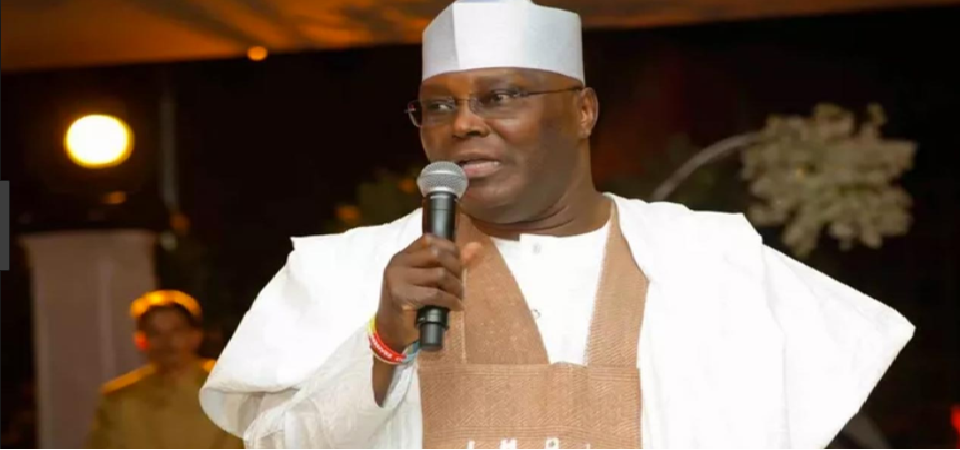
By Atiku Abubakar

On Monday, April 27, 2020, British oil and gas giant, BP, became the latest in a growing number of energy firms to declare a massive quarterly loss. Their loss was in the region of $4.4 billion dollars. Bear in mind that this was a conglomerate that posted a $2.6 billion profit in the corresponding quarter of 2019.

The challenges that are already engulfing the oil and gas sector will continue to plague that industry for at least the rest of the year, and may reach apocalyptic levels sooner than we expect.

As I write this, there are hundreds of crude oil laden ships, all filled up, with nowhere to berth, and accruing daily charges of an average of $30,000.

We have also seen crude oil prices plunge to record lows, to the extent that some variants of the product have been given out for free, or worse still, producers have paid storage facilities to take their products.

As at today, Nigeria is pricing its very low sulphur sweet crude at $10 per barrel, yet buyers are balking. Our sweet crude is becoming a little bitter.

I had earlier warned that Nigeria needs a Strategic Reserve to store unsold crude. Now, we have so much crude and no one to buy it, nowhere to store it, and little idea what to do with it.

Barely three years ago, I had also alerted that the “crude thinking” promoted by our dependence on crude oil will lead to a rude shock.

“If you are still talking about oil, you are in the past. As far as I am concerned, the era of oil is gone. If you want to believe it, believe it. If you do not want to believe it, you will see it. It is crude thinking to continue to talk and base development projections on crude oil”, I had said at a public event in the nation’s capital.

We must face the fact that reliance on crude oil is failing Nigeria and other mono product economy crude oil exporters. Now is the time for Nigeria and her contemporaries to cure their addiction to sweet crude. For far too long we have grown high on our own supply, to the extent that we have neglected almost every other sector of our economy.

This present rude awakening should be seen as a blessing in disguise — a blessing that compels us to take those drastic actions that will free us from the crude oil trap.

We need to diversify our economy, and yes, it is easier said than done, but that does not mean it is an impossible task.
Prior to Nigeria’s October 1, 1960 independence from Great Britain, not only were we a nation self reliant in food production, but we also exported food to other countries, earning precious foreign exchange in the process. Who can forget the great groundnut pyramids in Northern Nigeria?

For example, in 1957, agriculture formed a whopping 86% of our export revenue. By 1977, agricultural exports had dwindled to 6%, and today, the figure is less than 3%.
How did our country go from being a net exporter of agricultural products to a net importer of food products?

How did we go from a country that could feed itself to one that desperately depends on foreign imports for survival?

The answer to these questions is leadership focus.

During elections, Nigerian politicians spend a significant amount of their campaign time discussing how they will manage the nation’s resources. However, the fundamental difference between a leader and a manager is that while a manager focuses on managing existing resources, a leader sets out a creative vision which the country must follow to chart a course to political and socio-economic greatness.

Certainly, what is abundantly clear is that Nigeria is never going to become an industrialized nation by selling more oil, even if the oil market recovers. The lessons from Venezuela’s current predicament come to mind. If oil and gas could have saved any nation, that nation would be Venezuela. Unfortunately, Venezuela is bankrupt and insolvent.

Saudi Arabia, despite its huge reserves and a highly publicized listing of Saudi Aramco, is feeling the pinch and working rapidly towards its Vision 2030, which requires Saudi Arabia to diversify from its dependence on Oil. Other prudent countries facing the same predicament are doing the same.

Oil economies need to learn a thing or two about economic diversification from the United Arab Emirates. Despite being a young nation, the leadership of the UAE has managed to diversify the economy of this country from an almost complete reliance on oil in the 1970s, to a country where 72% of the GDP comes from the non oil sectors of the economy such as aviation, tourism and services sectors.

In Nigeria, our diversification should embrace agriculture as the primary sector earmarked for development, because agriculture is a low hanging fruit, is key to ensuring food subsistence, and with the recent signing of the African Continental Free Trade Area agreement (AFCTA), which favors Nigeria’s economy greatly, Nigeria can take advantage of this to become an agricultural powerhouse in Africa.

For example, Africa has the lowest intra regional trade amongst the seven continents. Indeed, 68% of Europe’s trade is within the continent. However, Africa does more trade with non African nations than we do amongst each other. Our intra-continental trade is an abysmal 18%. This must change and Nigeria is key to altering this sad state of affairs.

Within the Agricultural sector, the African continent in 2014, earned $2.4 billion from the export of coffee to Europe. That sounds impressive. However, one country alone, Germany, made $3.8 billion from re-exporting Africa’s coffee in 2014. This trend continued into 2015, 2016 and has not changed to date. What is it that Germany does to add value to the coffee, cocoa, and other produce that they buy from Africa that we cannot do in Nigeria? Nigeria can easily become a value-added re-exporter of African coffee to the world.

Ditto for tea, cocoa, wheat, sugar cane, and other cash crops. There are none of these products that I have mentioned that Nigeria cannot either grow in commercial quantities or add value to, in the same way other industrialized economies are doing.
I should know because I am already practicing what I am advocating. I have multiple profitable farms and other businesses in the agricultural value chain.

With about 60% of its land assessed as arable, I truly believe that Nigeria is capable of becoming the food basket of the rest of Africa, and in the process, it can capture a sizable portion of the $48 billion that goes towards food imports in Africa. That money should be circulating within Africa, strengthening our currencies, growing our GDPs, and enriching our people.

I was in Benin Republic recently and I was informed by one of the most successful industrialists in the country that Benin buys its cement from China. Why should a country that shares land borders with Nigeria have to import cement from China 7000 miles away, when Dangote cement is perfectly able, and I am sure willing, to provide the same product at a competitive price?

Is this not what the AFCTA agreement is meant to promote? Why would Nigeria maintain an insane policy of border closures at a time it desperately needs them open to promote trade?

Now is the time for Nigeria to make those hard decisions it has postponed for far too long otherwise the alternative is an apocalyptic scenario we would rather not entertain.

We must, as nation, begin to invest our resources wisely in order to maximize dividends. We must liberalize our land tenure system to make it possible and easy for some of the 27 million unemployed Nigerians to become farmers, even as sharecroppers.

Last year, Ethiopia mobilized its 100 million strong population to plant 350 million trees in 12 hours (a world record). Nigeria can similarly mobilize its population of twice that number to plant billions of cash crops through the planting season. It is possible. I have repeatedly charged my farm associates to sow seeds and they have done so successfully.

When the huge opportunities of agriculture are combined with a rejuvenated manufacturing and MSMEs sectors, then a new era of sustainability and prosperity beckons for Africa.
Nigeria is at the lowest point we have ever been as a nation. We have over indulged on seemingly cheap loans and have quadrupled our foreign debt in just four years. Taking more of such loans will just sink our country deeper and deeper into a quagmire. What is certain is that we can not continue with things the way they are now, except we want to ensure an implosion of our dearly beloved nation.

We must cut our coat, not according to our size, but according to our cloth. Our Presidential Air Fleet of almost 10 planes should go. Our jumbo budgets for our legislature must go. The planned $100 million renovation of our Parliament must be cancelled. We cannot be funding non necessities with debt and not expect our economy to collapse. Our civil servants must come to the realization that Nigeria cannot sustain its size and profligacy. The same cost saving measures must be adopted by the states and councils government.

From henceforth, our energies, resources and focus, must be on how we can diversify our economy, not on how we can increase our expenditure.