DD
MM
YYYY

PAGES

DD
MM
YYYY

spot_img

PAGES

Home Blog Page 638

Google Arms Translate with AI Lessons, Setting Up a Showdown with Duolingo in Language Learning

0

Google is taking a major step to make its Translate app more than just a quick word-conversion tool. The company has begun rolling out AI-powered language learning features, turning Translate into something closer to a full-fledged tutoring service.

The new feature, now in beta, creates personalized lessons that adapt to a user’s skill level and goals. For example, someone preparing for a holiday abroad could receive different lesson plans than a student gearing up to live with a host family. The app draws on Google’s Gemini AI models to craft exercises that range from practicing everyday phrases to handling professional or family conversations.

At launch, the service is limited: English speakers can practice Spanish and French, while Spanish, French, and Portuguese speakers can work on their English. Once users tap the new Practice button in the app, they can select their skill level and either describe their goal or choose a preset scenario. Translate then generates interactive lessons that can involve both speaking and listening.

Matt Sheets, a Google product manager, said the exercises are designed to track daily progress and help users “build the skills you need to communicate in another language with confidence.” The approach mirrors some of what popular apps like Duolingo offer, but with Translate’s real-time AI capabilities woven in.

Google is also pushing further into real-time communication. A newly launched live translation feature now allows two people to converse naturally, even without sharing a common language. The tool captures speech, produces an AI-generated transcription, and plays back an audio translation in the listener’s language. It works in more than 70 languages—including Arabic, French, Hindi, Korean, Spanish, and Tamil—and is already available to users in the US, India, and Mexico.

Unlike the live translation feature on the Pixel 10, which mimics the speaker’s voice, the Translate app uses a generic AI-generated voice. Sheets noted, however, that Google is “experimenting with different options” for more natural-sounding results in the future.

This update marks one of Google’s boldest moves yet into language education technology, positioning Translate not just as a travel aid but as a direct competitor in the global AI-driven language learning market.

This expansion positions Google Translate in direct competition with Duolingo, the Pittsburgh-based company that has become a global leader in app-based language learning. Since its launch in 2011, Duolingo has grown to more than 100 million monthly active users across over 40 languages, combining gamification, AI-driven personalization, and daily practice streaks to dominate the language learning app space. It has also expanded into literacy and mathematics, but language remains its core strength, cementing its reputation as the world’s most downloaded education app.

Duolingo’s success has been built on its ability to adapt lessons to a user’s progress while keeping engagement high through rewards, streaks, and competitive leaderboards. Its gamified approach has made it particularly popular among younger learners and casual users who may not otherwise stick with traditional study methods. In 2021, the company went public on Nasdaq, underscoring its status as a rare success story in the edtech sector.

Google is effectively challenging Duolingo on its home turf by adding AI-driven lessons directly into Translate. Unlike Duolingo, which requires downloading a separate app, Google is leveraging the popularity of Translate—already installed on billions of Android and iOS devices worldwide—as a built-in gateway to learning. The integration with Google’s Gemini AI could also give Translate an edge in producing highly contextual, real-world scenarios that mirror the kinds of conversations people actually have.

The move sets the stage for a showdown between Duolingo and Google. While Duolingo’s gamification and brand recognition are unmatched, Google’s sheer reach, AI muscle, and integration into existing services could tilt the balance in its favor. The battle could redefine how people around the world approach language learning, shifting from playful apps to fully AI-assisted, real-time learning and translation ecosystems.


Bitcoin Slides as Investors Hope For Bullish Price Action

0
CREATOR: gd-jpeg v1.0 (using IJG JPEG v80), quality = 82

Bitcoin has continued to extend its losing streak on Tuesday. According to CoinDesk data, the world’s largest digital asset dropped 2.6% in the past 24 hours to trade at $109,628.

The decline leaves Bitcoin 11% below the record high it set earlier this month and has sparked fresh debate over whether the bull run has already peaked in 2025.

The latest sell-off is being attributed to a “whale,” a large Bitcoin holder offloading assets that pushed the market below critical technical levels. Bitcoin’s price briefly dipped below its previous all-time high of $109,300, first reached in January 2025, raising concerns that the token could be headed for deeper losses.

Technical Warning Signs

Analysts highlight that Bitcoin has broken below the 100-day exponential moving average (EMA), a level that has historically signaled further near-term weakness. “BTC has broken below the 100 EMA on the daily chart. That’s not a good sign and could open the door for a deeper correction toward $103K,” trader Cryptorphic cautioned in a post on X.

Other traders are watching whether the $100,000 level will be retested, or if Bitcoin could even slip back into five-figure territory. Weakening on-chain metrics, including lower trade volumes and bearish divergences in the relative strength index (RSI), are reinforcing bearish sentiment.

Liquidations Mount

Bitcoin’s sharp pullback has triggered nearly $500 million in long liquidations since Sunday, according to CoinGlass data. Many of the newest investors, those holding BTC for less than a month are now sitting on unrealized losses of around -3.5% and have begun selling, analyst CrazzyBlockk noted.

However, some traders see signs of a possible rebound. “BTC downside liquidity has been hunted. And now, it seems like shorts will be liquidated next,” trader BitBull suggested.

Despite the fear, some analysts argue the correction fits within Bitcoin’s broader bull market structure. Since early 2023, the cryptocurrency has posted several drawdowns of 20–30% before resuming its uptrend. Merlijn The Trader, for instance, dismissed the idea that Bitcoin has already topped at $124,000, calling it “noise” rather than a cycle peak.

Ethereum Steals Some Spotlight

While Bitcoin struggles, Ethereum has attracted growing interest. Digital asset investors have recently rotated into ETH, which hit a new high on Sunday after Federal Reserve Chair Jerome Powell signaled potential interest rate cuts.

Data from Blockchain.com highlighted a major whale offloading 24,000 BTC ($2.7 billion) into the decentralized platform Hyperliquid over the past nine days. Of that, 18,142 BTC worth $2 billion was already sold and rotated into 416,598 ETH, according to analyst MLM.

Another whale sold 670 BTC ($76 million) to open a leveraged long ETH position last Thursday, reinforcing a growing trend of whales swapping Bitcoin for Ether. ETH has rallied 220% since bottoming at $1,471 in April, narrowing the gap with Bitcoin and Solana (SOL), which led earlier phases of the bull cycle.

Though Ethereum has since cooled on profit-taking, analysts at Kaiko noted that “liquidity and volumes remain supportive.”

Looking Ahead

For now, traders and investors are waiting for a fresh catalyst to drive Bitcoin’s next move. The cryptocurrency failed to rally past its previous high of $124k, after Powell’s Jackson Hole speech even as stocks surged on the prospect of lower borrowing costs.

With risk assets typically benefiting from falling interest rates, Bitcoin’s muted reaction has left bulls hoping the next wave of momentum is just around the corner.

MEA Smartphone Market Sees Steady Growth in Q2 2025, Driven by Premium Demand And Affordable 5G

0

The Middle East and Africa (MEA) smartphone market showed resilience in the second quarter (Q2) of 2025, recording a 3% year-on-year (YoY) growth, according to Counterpoint’s Market Monitor service.

This marks the region’s second consecutive quarter of expansion, bolstered by stronger local currencies and improving economic conditions.

Senior Analyst Yang Wang noted, “The MEA smartphone market entered 2025 with a strong recovery and is now steadying, with ASPs rising 7% YoY as consumers shift toward higher-end models.”

He added that the sector is undergoing consolidation, with smaller brands struggling to stay competitive while leading players strengthen their positions through differentiated products, partnerships, and expanded offline networks. Chinese brands collectively commanded 59% of the Q2 2025 market, while global leaders such as Samsung and Apple maintained dominance in the premium segment.

The market showed a clear tilt toward premium models, reflecting demand for AI-powered features, 5G connectivity, and high-refresh-rate AMOLED displays. Yet, the budget segment (under $100) remained the largest, driven by migration from feature phones and the rise of financing options.

Mid-range devices priced between $200–$299 lost share, with consumers either moving down to ultra-affordable models or upgrading to higher-end categories, which saw the fastest growth.

Brand Leadership in Q2 2025

South Korean company Samsung, retained its lead with 1% YoY growth, driven by its streamlined portfolio (reduced from 105 to 73 models) and strong mid-range A-series lineup. Trade-in programmes, flexible payments, and AI-focused marketing further reinforced its position.

Transsion Group (TECNO, Infinix, itel) secured 26% of shipments. TECNO led with a 17% share, fueled by a wide distribution network and locally tailored marketing. Infinix posted 14% YoY growth, focusing on youth-oriented campaigns and dual-SIM devices. Meanwhile, itel struggled due to weak positioning and supply disruptions but continued to serve the ultra-low-cost segment under $100.

Xiaomi achieved a 9% YoY increase, though its gains were modest compared to rivals. The brand reduced its portfolio to focus on “hero” models but saw its average selling price fall 8% YoY, signaling overreliance on the $50–$99 range.

Apple stood out with a 28% YoY shipment surge, buoyed by stronger channel penetration and anticipation for the iPhone 17. The iPhone 16e recorded triple-digit quarterly growth, with GCC markets driving premium demand.

5G Adoption Accelerates

5G adoption in Africa is progressing but remains limited compared to global trends, with significant potential to transform economies and societies despite numerous challenges.

Affordable 5G devices were a key growth driver, with adoption reaching 37% in Q2 2025. Brands like TECNO, OPPO, and itel introduced sub-$100 5G smartphones, expanding access.

South Africa benefited from MTN and Vodacom’s 5G investments, aided by favorable tax reforms.

Egypt saw gains from IMEI whitelisting and domestic production.

Kenya’s mobile-first ecosystem, boosted by M-Pesa and microlending, drove strong uptake.

As of 2025, around 30 African countries have launched commercial 5G services, with notable progress in nations like South Africa, Nigeria, Kenya, Botswana, Seychelles, Zimbabwe, and Namibia.

The GSMA forecasts that 5G will contribute $11 billion to Sub-Saharan Africa’s economy by 2030, with manufacturing (32%) and services (29%) as primary beneficiaries. Analysts estimate 5G could add $2.2 trillion to Africa’s economy by 2034.

Looking Ahead

The MEA market continues to balance demand for both low-cost and premium smartphones. Budget models dominate due to affordability and financing options, while premium devices are increasingly favored by consumers seeking cutting-edge features.

The second quarter of 2025 highlights a market in transition, as budget-friendly entry points remain crucial, but the fastest momentum is in the premium space, positioning MEA as a uniquely dynamic smartphone battleground.

The Social Side of Gambling: How Streaming and TikTok Changed the Scene

0

Not that long ago, gambling online was a pretty solitary thing. You’d log in, spin a few reels, maybe play cards for an hour, and that was it. No one knew about your big win unless you texted a friend or bragged at work the next day. Now it’s different. Streaming platforms and TikTok clips have turned gambling into something people watch, share, and talk about. In a weird way, it’s become entertainment for the crowd, not just for the person spinning.

From Quiet Spins to Viral Clips

Take something like an online game Book of RA. When it first showed up back in 2005, it was just another title in a long list. Ancient Egypt theme, expanding symbols, a free spins feature. But it hit a nerve with players and didn’t fade away. Over the years, it became more than just a title you played — it became one you’d see in streams, YouTube compilations, and even memes. There are videos with reactions to the expanding wilds, streamers yelling when they land three books, whole communities built around the vibe of the title. What started as a machine you’d play alone is now something thousands of people can watch together, reacting in real time to the exact same spin. That shift says a lot about how gambling has gone social.

Why People Watch Others Play

The question always comes up: why watch someone else spin instead of just playing yourself? It sounds silly until you’ve actually tuned into a stream. The reality is, it’s not just about watching numbers roll. It’s about the suspense, the shared reactions, and the personalities behind the streams.

A few reasons stand out:

  • Shared thrill – wins feel bigger when a crowd reacts.
  • Entertainment value – streamers crack jokes, tell stories, build tension.
  • Community chat – people bond in the comments, swapping tips or just hyping each other up.
  • Learning – new players see how features work before they try.

It’s similar to why people watch poker tournaments or esports. You’re not only watching the mechanics; you’re watching the drama.

TikTok’s Influence

TikTok added another twist. Instead of long streams, you get short bursts — 30 seconds of pure reaction. Maybe it’s a massive win, maybe it’s the streamer’s ridiculous over-the-top celebration, or sometimes just a funny fail. These quick clips spread like wildfire. People who’ve never touched an online platform end up seeing them in their feed. Suddenly, gambling isn’t just in a lobby — it’s in the middle of pop culture.

The short format has changed the way developers think too. Titles with dramatic features or big visual payoffs naturally fit TikTok better than slow burners. If a clip looks good in ten seconds, it’s more likely to trend.

What Streaming Did for Certain Titles

Streaming didn’t just change how people watch; it actually influenced what stays popular. Some titles exploded because of visibility on Twitch and TikTok. Big Bass Bonanza, for example, turned into a meme because of streamers shouting about “the fisherman.” Gonzo’s Quest kept its relevance long after release because people loved watching Gonzo dance after a win.

Here’s a quick look at how streaming boosted some well-known names:

Title Why It Clicked Online Social Legacy
Book of Ra Suspense of expanding symbols Still streamed, meme-worthy reactions
Gonzo’s Quest Character-driven, avalanche mechanics Gonzo became a mascot, gifs everywhere
Big Bass Bonanza Simple fishing theme + meme potential Viral streamer clips, TikTok dances
Dead or Alive High volatility, huge win potential “Big win” compilations across YouTube

These weren’t just titles people played in silence. They became part of internet culture.

The Double-Edged Sword

Of course, not everything about streaming is positive. The social side can sometimes blur lines between entertainment and risky behavior. Clips don’t always show the losses, just the highs. Someone watching might think it’s always exciting, always big wins. That’s not the reality.

This is why more responsible features are being added. Some streamers are upfront about losses. Platforms have rules about showing balance or promoting responsibly. Viewers are getting smarter too, realizing not every spin is a highlight reel.

Community Over Isolation

The biggest change might simply be that gambling feels less isolated now. A decade ago, if you had a crazy win, maybe a couple of friends knew. Now, thousands of strangers can cheer with you, laugh at your near-miss, or argue about strategies in a chat room.

Streaming created communities where none existed before. Some are casual, just people looking to hang out. Others are intense, analyzing volatility, RTP, and win patterns like it’s sports stats. Either way, the point is the same: you’re not alone anymore.

Where It’s Heading

Looking at trends, the social side is only going to get bigger. A few possibilities:

  • More interactive streams – viewers choosing features, voting on spins.
  • Crossovers with influencers – gambling clips sliding into lifestyle or comedy content.
  • Short-form dominance – TikTok and YouTube Shorts making viral hits faster than ever.
  • VR communities – players hanging out in virtual rooms, watching live dealers together.

Technology and social media don’t just change the mechanics; they change the culture around gambling itself.

Final Thoughts

The shift from solitary play to shared experience is one of the biggest changes in online gambling over the past decade. Titles like Book of Ra, Gonzo’s Quest, and Big Bass didn’t just survive because they were fun to spin — they survived because people loved watching them, reacting to them, and turning them into internet moments.

Streaming and TikTok gave gambling a stage, and suddenly players weren’t just players anymore. They were performers, audiences, communities. The social side made the whole scene louder, messier, more connected. And love it or hate it, that’s probably the way it’s going to stay.

Cold Wallet’s Live USDT Cashback Steals the Spotlight, Leaving XRP and AVAX in a Tug-of-War

0

Clarity is hard to come by in an industry where speculation often drowns out substance. XRP continues to wrestle with adoption challenges despite flashes of technical resilience, while Avalanche is building a credible case with its bullish chart structure and surging on-chain activity. Both provide useful markers for how the market interprets value today.

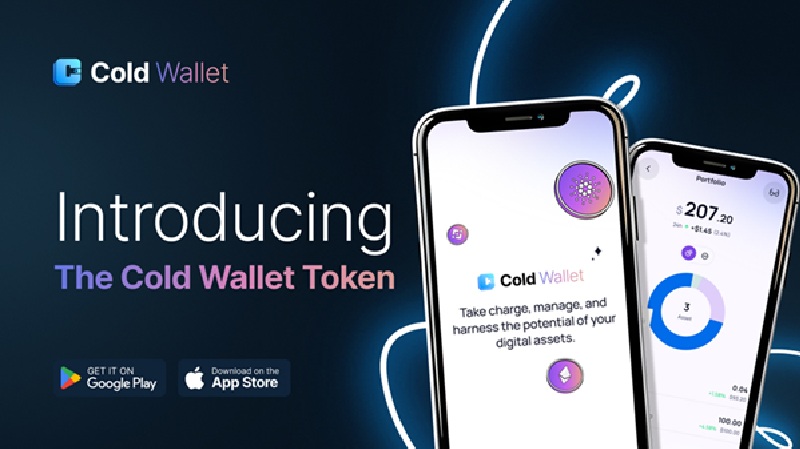
Cold Wallet, however, has stepped into the conversation in a different way: not through projections or headlines, but through actual results. It is already distributing USDT rewards through a live application while simultaneously advancing a structured CWT presale. For those asking which crypto to invest in, Cold Wallet makes a case that blends immediate utility with long-term appreciation potential; a rare combination in a market dominated by speculation.

Cold Wallet Redefines the Question: Which Crypto to Invest In With Working Utility

Cold Wallet is changing expectations around what a presale-backed project can deliver. Rather than promising future breakthroughs, it is paying participants today. Through its functioning self-custody app, users earn USDT cashback instantly on swaps, referrals, and other transactions. Unlike most presales locked behind whitepapers, this project has an ecosystem already in motion.

Its utility-first model is built around rewarding everyday activity. Cashback is active now, while its presale connects present engagement to future benefits. Those who join during Stage 17, where pricing is set at $0.00998, are not simply speculating on an idea; they are linking real-time USDT rewards to upcoming CWT incentives that vest alongside ongoing usage. This dual structure ties the present and the future in a way very few projects have managed.

Momentum is accelerating. Over $6.4 million has already been raised, with more than 754 million units sold to date. The confirmed listing price of $0.3517 translates to a built-in ROI above 3,400%, compressing years of potential growth into a matter of months. By also securing Plus Wallet in a $270 million acquisition, Cold Wallet instantly onboarded 2 million users, showing scale before listing even begins.

For those evaluating which crypto to invest in now, Cold Wallet stands out because it answers the question with immediate results. It doesn’t rely on forecasts or vague roadmaps; it pays in stablecoins today while locking in growth upside tomorrow. This mix of adoption, structure, and real-time performance makes it one of the most compelling cases in the current market.

XRP Market Outlook: Real Numbers Over Optimism

XRP is once again testing its ability to maintain momentum under pressure. Following hotter-than-expected U.S. inflation data, the asset slid nearly 5%, moving closer to the $3.00 support region. A wave of liquidations highlighted the fragile balance between optimism and caution in this market.

Technically, the Relative Strength Index sits near neutral while the MACD continues to reflect a bearish tone. Still, the $3.00 support line has proven durable, giving short-term traders a clear level to monitor. A sustained hold here could provide the foundation for relief rallies, although breaking higher will likely depend on fresh catalysts beyond technical patterns.

For those weighing which crypto to invest in, XRP’s setup is both an opportunity and a warning. Its short-term support levels provide structure, but its longer-term growth still depends on translating regulatory clarity into deeper adoption. Until that materializes, XRP may remain a cautious hold rather than a confident buy.

Avalanche (AVAX) Price Target: Building From Technical Stability

Avalanche is quietly shaping a bullish case that combines structural resilience with real adoption. A W-bottom pattern has formed between $14 and $18, pointing to strong buyer support in that range. Currently priced near $24, it faces a crucial resistance between $25 and $30, where both the 50- and 100-day EMAs converge. A decisive breakout here could clear the path toward $45–$50 initially, with upside targets between $60 and $75 if momentum continues.

What makes Avalanche’s setup compelling is not just the chart, it’s the activity behind it. Stablecoin movement on the network has surged 715% in the past month, showing that actual usage is growing in parallel with its technical formation. That alignment between on-chain data and chart structure strengthens the argument that AVAX could sustain higher levels once resistance is cleared.

This puts Avalanche on the shortlist for anyone asking which crypto to invest in during the next leg of the market. Unlike projects that lean solely on hype cycles, AVAX is layering technical progress with measurable growth in ecosystem activity. If resistance gives way, its targets may not just be technical possibilities but supported outcomes.

Beyond Forecasts: Why Cold Wallet Could Be the Smartest Choice

XRP is working to hold its ground at key support, and Avalanche is building momentum toward critical breakout levels. Both offer structure, but both also require favorable external conditions to push forward. Cold Wallet, by contrast, is rewarding participants immediately with USDT while its presale secures long-term upside at a fixed entry point.

For those scanning the market and asking which best crypto presale to buy in, Cold Wallet represents a rare balance: it combines present-day results with a presale design that scales future rewards. It avoids the pitfalls of overpromising by delivering cashback now, while still offering significant appreciation potential through its confirmed listing structure.

At a time when most projects are defined by speculation and uncertain roadmaps, Cold Wallet is proving that utility, adoption, and growth can exist together. For many, that’s not just an attractive option; it’s the most logical answer to the question of which crypto to invest in before the market catches on.


Explore Cold Wallet Now:

Presale: https://purchase.coldwallet.com/

Website: https://coldwallet.com/

X: https://x.com/coldwalletapp

Telegram: https://t.me/ColdWalletAppOfficia