DD
MM
YYYY

PAGES

DD
MM
YYYY

spot_img

PAGES

Home Blog Page 6381

Tekedia Mini-MBA Registration: Please Email My Team After Payment

0

Very challenging – running a digital business and asking people to pay via bank transfer in Nigeria. You have cases where people pay and never email you. Yes, even in our Edition 1 of Tekedia mini-MBA, we have paid participants who did not send emails. Please if you paid, you still have to email my team to create an account for you. Right now, they have to be googling people, looking for their emails and contacts.

—-
Sir,
We received a bank transfer payment in “your name” and no one has written us after the payment. We did a Google & Linkedin search with the name and got this email.

Could you confirm you made this payment? If so, just send a receipt (teller or online) or the date/approximate time of payment with amount. Do not feel bad on this as we need to reconcile or possibly continue searching.

Regards,

Tekedia Team

The Zoom’s Envy: Google and Facebook Trying to Catch up on Video Success

0

As COVID-19 limits humans’ interaction to nearly virtual space, spiking the use of teleconferencing and putting Zoom on the spot for larger audience; Facebook has been stirred by envy of the surge and it is getting ready to mimic the video technology that has placed Zoom in the forefront of virtual activities in the face of coronavirus pandemic.

Last week, Facebook introduced one of its biggest expansions into videoconferencing, unveiling several new video chat features and services. The changes include video group chats for up to 50 people in Facebook Messenger, Whatsapp video calls for up to eight people and video services for Facebook dating.

Mark Zuckerberg has earlier ordered Facebook employees to focus on video chat projects as the number of Zoom users increase daily.

It has become a race to beat Zoom as many of the Silicon Valley giants are introducing one video service after the other. Google has announced that it is making its video services (Meet) free, following the recent success of Zoom. Everyone appears to want a page of the story that has seen Zoom record over 300 million participants daily, a milestone from the 10 million before the outbreak of coronavirus.

The development has followed a trend of financial bullying by the tech giants, which many smaller companies had had to deal with recently. Tiktok and Snapchat have all had to ward off Facebook acquisition interest or attempt to outmuscle them with financial power.

Zoom appears to be the next target as COVID-19 pandemic has spurred a surge in the number of its users. Mark Zuckerberg said video has come to trend in the wake of the outbreak as people try to stay connected to each other virtually.

“The world was already trending in this direction before COVID-19. This is the trend in general – the ability to feel more present, even when you’re not physically together,” he said.

The push to get a taste of the success that Zoom is enjoying appears to be high among tech companies. But Zoom CEO Eric Yuan said in an interview that he is not bothered, that his company is focused on improving users’ experience and it is not thinking about competition. He said COVID-19 is a “once in a probably 100 years crisis” that shouldn’t stir competition.

Zoom success has been attributed to the simplicity of its use, from installation to setting up a videoconference, which compared to others, has given people a flexible alternative.

Google has made its video services free via Gmail and said it has witnessed an increase in number of users and hopes there will be more people signing up as the days go by.

But Facebook has been attuned to Zoom’s rise more than any other company, as it has been the case with other companies offering video services. Zuckerberg has tasked Facebook’s teams to accelerate their video chat product releases, which includes a desktop app for Facebook Messenger that has a video chat feature in April.

Zuckerberg said the new features have enticed many new users – more than 700 million people now use Facebook Messenger and Whatsapp for calls. He said that more changes will come to the apps as soon as possible. They may include messenger rooms, a quick way to create video chat rooms using Facebook Messenger that will accommodate dozens of users simultaneously. As part of its expansion, Facebook is introducing video chat rooms to its dating site and has a plan to do the same with Whatsapp and Instagram soon.

Zuckerberg wants the video chat experience to be serendipitous unlike the Zoom’s that’s “casual and more scheduled.”

“I don’t really think there’s anything today that you can display on an ad hoc basis that you’re hanging out and have whoever wants to join you over video. Sometimes people compare what we do to other companies, like you did earlier with Zoom. I think the main thrust of how people are going to experience Rooms will be very different,” he said.

While Facebook has all these video plans lined up, it is reportedly working with Zoom on a partnership to expand the use of its augmented and virtual reality division since January. The idea is to allow people to make video calls through Zoom using its device called portal. The plan has been to release it in May while Facebook continues partnership negotiation with other companies for its video chat, but Zoom’s decision to freeze all new feature development in order to fix its security concerns has put it on hold.

Google’s Meet and Facebook’s video platforms are watching Zoom’s success with such envy, and it keeps baffling them that their existence before Zoom has failed to make them people’s choice.

Localizing Sustainable Development – What It Means For African Businesses

0

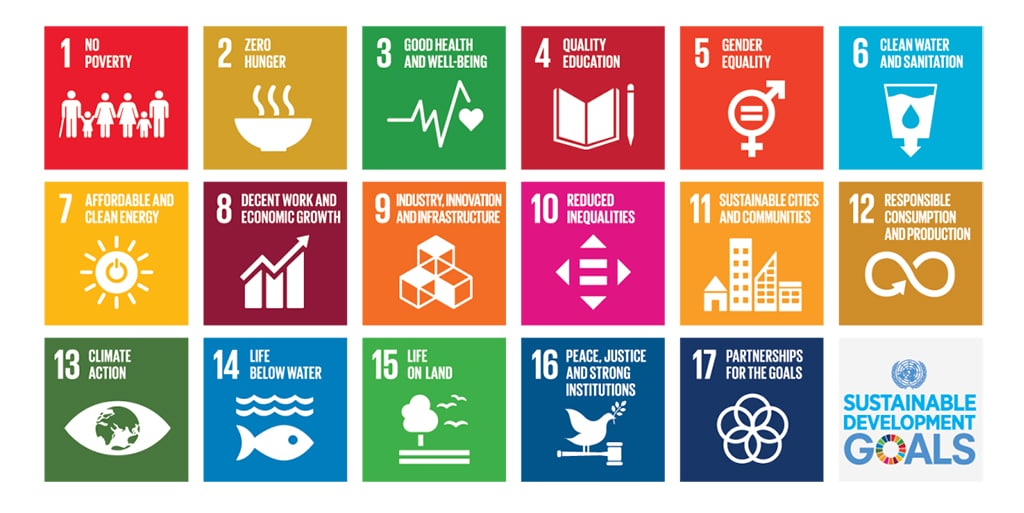
In recent times, a number of articles have been written to explain what localizing the Sustainable Development Goals (SDGs) mean. Billed to be achieved by 2030, the 17 SDGs were launched by the United Nations in 2015 as a roadmap for global development at all levels of government and governance. Going by this understanding of the SDGs, a number of experts have stated that localizing the goals is about ensuring Local Governments’ effective involvement in the implementation of the goals. This makes logical sense, considering that Local Governments are fundamentally the closest to the affairs of the everyday common man, who make up the largest cluster of stakeholders facing most of the challenges the SDGs were set up to address.

My submission however is that this thinking only addresses the aspect of government without paying attention to governance from a more holistic context. A major group of key players required for the achievement of the SDGs are not in Government. They are in business and according to the United Nations, and other global commissions and institutions set up to support the UN’s 2030 sustainable development mission, the private sector has a central role to play in this mix. In fact, it has been established that without the leadership, skills and resources of its private sector, no nation can successfully achieve sustainable development. 

Looking more closely, a number of the SDGs are addressed largely, if not solely by the private sector, with the government only serving as umpires or enablers as the case may be. Take Goal One, No Poverty or Goal Eight, Decent Work and Economic Growth as examples. It is a known fact that businesses are the key drivers of wealth and job creation. When you visit regions without thriving businesses, the direct result you notice is poverty, unemployment and high levels of underdevelopment.

How then can the private sector effectively contribute to sustainable development? The hallmark of the private sector is entrepreneurship. The private sector is made up of people who have identified specific problems, which they are either solving directly, or through investing their resources into powering other people’s solutions. Whichever route they choose, the focus is on the return on investment. 

By it’s natural make-up, the private sector cannot actively contribute to sustainable development except there is a compelling business reason to do so. It is very easy to talk about doing things because it is the right thing to do, which of course is right. However, without the business mindset, the sustainability matrix is incomplete. There is indeed a reason the three Ps of sustainable development are People, Profit and Planet. The economic aspect of sustainability cannot be neglected and this is largely a burden shouldered by the private sector.

Thus, considering the need for increased focus on the role of the private sector in sustainable development as it relates to governance, we need to ask an important question: what does localizing the SDGs or sustainable development mean for business? 

It means adapting global best practices to our local nuances. In practice, what this means is that in a country like Nigeria, diversity in the workplace, for instance, will have little to do with reporting the variety of nationalities working within an organisation, except of course the organisation is an MNC. Even then, why would it matter to Nigerians that a multinational company has Indians working for them in Nigeria? 

Amongst other issues that diversity addresses, it will be more about tribal diversity. Is your bank tilted towards a certain tribe, employing based on favoritism without recourse to merit? Are you running your organisation based on man-know-man, focusing only on short-term face saving? In effect, localizing the goals will be about transposing sustainability issues to our local and cultural context at a relatable level for our market in a way that creates sustained value and ensures long-term business success.

The private sector is skilled with making money. In fact, they excel at identifying opportunities and monetizing solutions. The challenge is that the way business has been run over the years has been unsustainable. We see it in the level of economic disparity between the rich and the poor, in the level of global environmental degradation, in the restlessness of our youth and the warming up of our climate. While this is not primarily an African problem, our vulnerability heightens the negative impact of the consequences on the continent. 

The COVID-19 pandemic has further exposed what we have always known, often admitted but not done enough about: most African nations have unbelievably weak economic systems, fuelled by many factors including corruption. In spite of our natural and human resources, and the number of businesses on the continent, there’s a huge infrastructural deficit and high levels of household poverty. Most African countries have not been able to effectively implement lockdown measures, even though survival depends on it, because the economies are not structurally resilient enough to withstand such pressure. 

Entrepreneurship provides the building blocks for economic progress and has indeed been applauded as the messiah of most developed countries’ financial prowess. However, without building businesses that can effectively localize a well thought through sustainability framework like the SDGs, Africa will continue to grapple in the darkness of poverty under the weight of underdevelopment. 

Our local African businesses need to understand that times are different today and there is a better way to do business in a manner that creates shared value. This is not about sharing part of the profit made in charitable contributions or philanthropic feats but about how it was made in the first place. Organisations must fully appreciate their roles as sustainability drivers who meet the needs of the present without compromising the ability of future generations to meet their own needs. 

While making this transition to a new way of doing business might seem challenging, it is not impossible. It requires innovation and a new level of thinking that goes beyond profit to incorporate considerations for the people and the planet. When done right, the trade offs will also be minimal with the gains enormous. In fact, according to the commission on business and sustainability, there is 12 Trillion Dollars worth of economic value to be unlocked within the SDGs by 2030. Businesses that make the switch to sustainable models now will be those that will lead the future, both on the continent and on the global scene.

As much as sustainability makes business and economic sense, while driving innovation and differentiation, the goal is not to have business leaders just jumping on board to be a part of the bandwagon. It is about a more holistic value: sustainable businesses make sustainable economies. Without a thriving private sector, a nation will only continue to strive, making marginal progress, if any. It is therefore in the best interest of everyone, that we not only have more businesses spring up on the continent to create more jobs for our ever growing youth population, but that new and existing businesses entrench sustainable business strategies into their models. Verily verily I say unto you, Africa cannot rise above its present misery if its private sector does not work, and sustainably so.

The Expulsion and Ban of Almajiri System in Northern Nigeria: Matters Arising

0

Recently, states in Northern parts of Nigeria began the expulsion and ban of the Almajiri System of Education. This is a welcome idea considering the fact that the almajiris have truly become threats and menace to the society. However, one couldn’t help but wonder why the governors had to wait so long to abolish this unsuitable and harmful education system.

When COVID-19 found its way into Nigeria, one of the issues raised by people was the disaster that will befall the country if the virus finds its way to Northern Nigeria. The reason behind their concern was that the almajiris are exposed and will definitely pick up the infection. If this happens, it will be hard to track down their contacts since they roam around freely. The worst is that no one may even know when they are sick or what they are suffering from. For this, COVID-19 will definitely find fertile ground in the almajiris and in Northern Nigeria as a whole.

But the Northern Governors’ Forum saw the risk posed by this group of young children that were victims of an outdated tradition and decided to act immediately. They began the ‘repatriation’ of these adult-children to their various countries, states and local governments. News has it that the numbers ‘arrested’ and ‘deported’ run in thousands but that is not surprising considering that a lot of almajiris roam the streets of the Northern states in Nigeria.

The evacuation of the almajiris has, however, exposed some hidden issues.

  1. The Almajiris have Identity: The way these almajiris behave in the North will make you think they have no identity. They are treated like animals and they treat others like one too. They manage to go scot free when they perpetuate evil and the law enforcers look the other way telling you they can’t do anything because almajiris are difficult to trace. From what I gathered while in the North, these boys have no identity because no one knows where they come from. But with the directives from the state governors, miraculously these boys have states of origin, local governments of origin and known PARENTS. Are these law enforcement authorities lying to us before or did they develop fictitious identities for the almajiris?
  2. Some Almajiris are Non-Nigerians: It is a common knowledge that Nigerian borders are porous but it is shocking to hear that parents move their children across the border to become an almajiri. From the report given by Guardian Nigeria of 23 April, 2020, the almajiris are evacuated to Katsina, Kaduna, Jigawa, Yobe, Bauchi, Zamfara, Gombe, Nasarawa states and then, the Niger Republic. This calls attention to the fact that the so-called border closure exercise to fight smuggling and COVID-19 may not be effective after all.
  3. Who Received Them: These almajiris were moved in their numbers and dumped at the mercy of the state governments. This, like my people will say about a public goat starving to death, shows that these boys were dumped to molest the inhabitants of the areas where they are stationed because no one will take care of them. The reason this is insinuated is that most of these people left their states of origin and wandered into places where they are not known. This means that it will be very difficult to trace their parents, who obviously live in the very interior parts of the states (that is if those boys know their states of origin). In other words, until the parents of these boys are located and they are claimed, if at all that will happen, they are on their own.
  4. Plan to Discourage a Comeback: Of course the Northern Governors’ Forum decided that the Almajiri Education System has been outlawed, but they didn’t state how they will follow that up. They made mention of engaging the Minister of Agriculture so that farmers in the country could benefit from COVID-19 palliatives. But that will not provide the solution to the almajiri menace considering that outdated religious practice, and not poverty, is the chief cause of the problem. Until measures are taken to completely eradicate this human abuse in the name of the education system, almajiris are going to refill the streets of Kano and other Northern states in no time.
  5. Almajiri could be Handled: The way every concerned authority ignored calls to abolish Almajiri System made it look like it is not abolishable. The first thing people are told when they ask why those children have not been sent to their parents is that if you touch them, they will start an uncontrollable riot and destroy lives and properties. But when COVID-19 that knows no one came, these authorities realised that these boys will be their undoing and immediately sent them packing. Funny enough, they didn’t start an uncontrollable riot. This brings back my first question, “What were the Northern governors waiting for all these while to abolish the Almajiri System?”

Whatever their reasons are, they should be applauded for the efforts they made towards sanitising their states. However, they need to supervise the return of those boys to their and ensure that they (the parents) didn’t release them back into the system again. If so isn’t done, I fear to say that all the efforts of the Northern governors towards eradicating Almajiri System will be a waste.

I Expect Uber and Lyft to Merge in 2021

3

In July 2017, I wrote why Uber and Lyft will merge. I had put the date as 2022. On LinkedIn, the call was challenged: many believed that antitrust/competition regulators would not allow that. Of course, I gave a reason: these pairs battled until they went to parties – Elance/Odesk (now UpWork),  Groupon / LivingSocial,  Sirius / XM, Rover / DogVacay, and DraftKings/FanDuel. I did not see any core strategic advantage in Uber and Lyft that would keep them profitably sustainable, as they battled each other, destroying value in the process.

In this piece, I explain why Uber and Lyft will merge. The trajectories both are following show that they will have challenges with Lyft gaining on Uber, but the overall industry cooling. As soon as that happens, their margins, if they have any, will collapse. Once that happens, they will begin to talk of merger, with each other. Government will see their struggles, and will dismiss any anti-trust concern gone. The result: it will bless their union. Uber is today’s Category-King, but its  past behaviors have slowed it down, offering a window for Lyft to catch-up. As they become peer-competitors and rivalries, they will destroy the sector. Similar rivalries have ended together: Elance/Odesk (now UpWork),  Groupon / LivingSocial,  Sirius / XM and  Rover / DogVacay. Please add DraftKings and FanDuel in the list; I predict they will merge also despite any FCC ruling, at the moment. They will struggle, owing to wounds they inflict on each other, in coming years, and will be saved via merger.

But while I was waiting for 2022, Covid-19 will bring that merger forward. Uber is about firing 20% of its staff (about 5,400) after Lyft cut 17% (about 1,000 jobs). Unfortunately, the job cuts do nothing to the core problem: the construct of sharing economy was built on saving money, and improving flexibility, but owning assets now is a safety & security matter. 

Imagine not having a car to take a  family member to a clinic when the police are busy, and no Uber is available. That day, you will look stupid because in life, you do not just buy only things you need, you also build redundancies for safety, just as they do in electronics design.

Ladies and gentlemen, Uber and Lyft will merge before 2021 ends.

The coronavirus pandemic has brought many an industry to its knees, one of them being the “sharing economy.” The likes of Uber and Lyft have taken a massive hit as Americans hunker down without a need for ride-hailing services. Lyft, per CNBC, is cutting roughly 1,000 jobs, or 17% of its total workforce, while Uber is considering similar action. In addition, Airbnb hosts lost $1.5 billion in bookings in mid-March, per recent market data, and Axios argues the pandemic will require the big players in the shared economy to “recalibrate” how they envision the future.