DD
MM
YYYY

PAGES

DD
MM
YYYY

spot_img

PAGES

Home Blog Page 6393

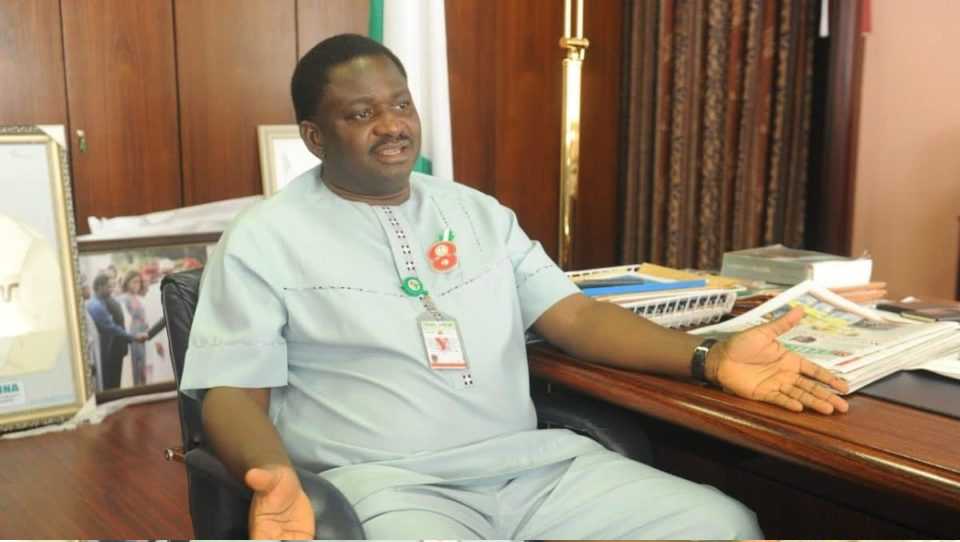
Averting The Road to Venezuela By Femi Adesina

0

Let’s tell the story of Venezuela, because it bears striking similitude with that of Nigeria.

Just like us, Venezuela is rich in oil, very rich. At a time, the county’s problem was not money, but how to spend it. Just like Nigeria.

And quite like us again, the South American country did not look inwards. It planted nothing, did not invest in agriculture, since there was an endless flow of oil wealth. Life was one long Christmas, and it was jingle bells all the way.

But the rainy days came, as they would always come. And the bells stopped jingling. Rain began to beat Venezuela badly. Nowhere to take refuge. It did not buy umbrellas in the time of affluence, so no shelter from the rains.

From the days of the immediate past President, Hugo Chavez, to the current Nicolas Maduro, the country has seen that life is not one long honeymoon. The egungun festival would always end, no matter how fun and pleasurable it has been.

From a land flowing with milk and honey, what are the characteristics of Venezuelan life today? Hyperinflation. Starvation. Diseases. Crime and high mortality rates. Massive emigration, the worst in the history of the country.

And the half has never yet been told. By 2017, over 75% of the population had reportedly lost 8 kg (19 lbs) due to hunger. There are interminable food queues, and people even cross the borders, looking for sustenance. At least 94% live in grinding poverty, more than 10% (3.4 million) have left the country, and 25% needed one form of humanitarian assistance or the other.

How did a country that was once an oasis of pleasure get to this sorry pass? Simple. Economic mismanagement, sole dependence on oil. More than 70% of food needs were being imported, and why not, since petroleum-dollars were flowing. Then, the crunch came. Oil prices crashed, and Venezuela crashed with it. Just like it almost happened to Nigeria. Almost. If not for a simple man from Daura called Muhammadu Buhari.

Imagine pediatric wards in hospitals filled with underweight babies, who still continue to suck the shriveled breasts of equally emaciated mothers. Close your eyes and try to envision hitherto middle class adults now rummaging through rubbish heaps for scraps, with the remainder of what used to be neckties now hanging limply over threadbare shirts and suits that have turned to ‘coats,’ looking more like parachutes on thin shoulders .

That was what Nigeria almost became. Almost. And by today, with COVID-19 ravaging the world, all international borders closed, oil prices crashed and external reserves dwindling, that is where we would have been. If God had not brought Muhammadu Buhari our way in 2015.

When he got to office as President, oil prices had crashed from an Olympian height of 100 dollars per barrel (it even went as high as 143 dollars), and then dropped to less than 30 dollars. Where were the savings during the boom years? None. Where were the foreign reserves? Mere pittance. Empty national treasury. Excess crude oil account, depleted. Nothing in reserve, local or foreign. The Venezuelan situation was at the very doors. But how did we avert it? How did we avoid the journey to Caracas, the capital of Venezuela?

President Buhari knew that we had to stave off the evil day by getting to work immediately. Whatever money we had left must be put where our mouth was, otherwise danger loomed.

With a rallying cry, the President urged Nigerians to return to the land. They obeyed. God also showed mercy by giving consistently good rainy seasons back to back. And today, we can count our blessings.

In late 2015, the Buhari Administration came with the Anchor Borrowers Program, championed by the central bank. It was launched in Kebbi, and the vision was to grant farmers access to finance, so that they could grow rice, wheat, ginger, maize, soybeans, and many other products.

And what a revolution has been sparked off. When we launched in Kebbi in 2015, it was in a vast open land. When we went back to same state earlier this year for the Argungu International Fishing Festival, the heap of rice was almost touching the sky. We once had groundnut pyramids in this country. Now, they have been succeeded by rice pyramids. Just because a President came, and had a dream. He then turned the dream to reality.

I once visited one vast farm in Nasarawa State run by Nigeria Farmers Group and Cooperative Society. It is promoted by a man named Retson Tedheke, started in 2017, and there you have professionals from different disciplines, engaged in farming. Very impressive. I was told Vice President Yemi Osinbajo had also been there. The place sure is dreamland, and who would have thought a prophet could come from a small town like Nazareth? But it’s happening, right before our eyes. Thanks to the man from Daura.

Each time, as I see palliative materials being handed out at this time of health and economic emergency, and I behold heaps and heaps of bags of rice, all locally grown, I imagine what else could have happened. What if we had needed to import, and there was no foreign currency, and all international borders were closed? Hunger ooo. Starvation ooo. Weeping and gnashing of teeth. But we averted the journey to Venezuela. We avoided the trip to Caracas, because a man called Muhammadu Buhari came.

There was a time we imported beans even from Burkina Faso. Rice from Thailand, and from everywhere under the sun. Milk, tomato paste, palm oil, vegetable oil, even toothpick. Everything was imported. Today, we rank highest in Africa in rice cultivation and milling, with over seven million tonnes yearly. Jobs have been created in millions, and food sufficiency has almost been achieved.

Cotton farmers were funded last year to start production. It means a rebound for the textiles sector soon, and jobs and jobs.

Fertilizer that used to be imported at hundreds of millions of dollars, with the attendant sleaze that attended it, is now done locally. Nigeria and Morocco are in alliance, and the project is driven right from the Presidency. Not less than 11 moribund blending plants have been resuscitated, and we now produce about 1.3 million tonnes . Prices of fertilizer have crashed from N15,000 to N5,500 per bag. And set to crash further. Farmers now have direct access to the product, and at affordable prices. Just because a man from Daura had a dream, and turned it to reality.

Agriculture has contributed a great deal to our Gross Domestic Product in the past four years. The private sector has equally keyed in. Dangote Group is already test running a two billion dollars fertilizer plant, which will see us become a net exporter of the product. And many others.

A presidential aspirant recently described the closure of our land borders as an ‘insane’ policy. May we have many more positive insanities. If President Buhari was not proactive, even prescient, to have closed our borders, where would local farmers be today? Every food product was being smuggled into the country, thus discouraging local initiatives. And when borders were closed, apart from the security benefits, local production of food items thrived-rice, poultry, vegetables , tomatoes, other food products boomed. Yet, somebody says it’s ‘insanity,’ because the selfish interests of buccaneers were affected. More of such insanities, please.

The Coronavirus pandemic is severely testing our capacities to feed ourselves. And we are making a good showing, acquitting ourselves creditably.

Despite the crash in the global economy, we are continuing with key infrastructure projects, not borrowing to pay salaries as we did in the height of the 2014 oil boom. An army of entrepreneurs is being created in different spheres. All because a man from Daura had a dream, and turned it to reality. May God bless this man. Amen, somebody!

Harry Belafonte, King of Calypso music, sang the hit track, Matilda.

“Hey! Matilda, Matilda, Matilda, she take me money and run Venezuela.

Five hundred dollars, friends, I lost

Woman even sell me cart and horse!

Heya! Matilda, she take me money and run Venezuela.”

But now that Venezuela is the way it is, with President Maduro striving day and night to turn things round, where will Matilda run to? Nigeria, I guess.

*Adesina is Special Adviser on Media and Publicity to President Buhari

Facebook Inaugurates Content Board

0

Against the backdrop of hate crimes, racial prejudice and cyber-bullying, Facebook is stepping up its game to curb the trend across its platforms and eliminate claims that it is choosing one group over the other.

On Wednesday, the Silicon Valley giant announced the inauguration of the first 20 members of its Oversight Board. The independent body is empowered to overturn Facebook’s content moderation decisions as they deem fit.

The board will receive cases through a content management system that is linked to Facebook’s platforms. They will deliberate on the report received and decide whether the responsible content will be allowed to stay up on each of Facebook’s sites or not.

The 20 member board will oversee appeals from Facebook and Instagram.

Facebook has said in November 2018, that it’s working to establish a board like that to sanitize its platforms from propaganda, fake news and political misinformation. The company was aiming to avoid further controversies like the one that followed the 2016 American presidential election. Russia’s interference in the U.S. election was at the center of the discussion and Facebook was blamed for giving them the platform.

Post 2016 presidential election, the social media giant started to remove posts deemed politically and socially unacceptable, and that didn’t go well with many. Some conservatives groups and lawmakers accused Facebook of censoring politically conservative points of view. Though Facebook denied it, the challenge of instituting a neutral body that will make the decision on what stays up or down was born.

“I have come to believe that we shouldn’t be making so many important decisions on free expression and safety on our own,” Mark Zuckerberg said in 2018.

The goal was to inaugurate an independent body that will lift the burden of content decision making off the shoulders of Facebook’s team.

There were reports then that some Facebook executives had tried to downplay and spin bad news. Coupled with the allegations of some U.S. political groups, the journey of an independent board of decision makers started.

Across the diverse members of the board are lawyers, journalists, human right activists and professionals in digital rights, religious freedom, internet censorship and civil rights. Other members range from former heads of state to Nobel Prize winners to members of Facebook’s team.

Last year, Facebook said it’s giving the board $130 million to cover its operational costs for six years. But there was no detail of how much the board members would be paid.

Among its notable members are Aln Rusbridger, former editor in Chief of the Guardian Newspaper, and Andras Sajo, a former judge and VP of the European Court of Human Rights.

Members of the board believe there is a serious challenge when it comes to content decision making, and Facebook undoubtedly needs help now more than ever.

Helle Thorning-Schmidt, a former Prime Minister of Denmark, and a member of the board’s four co-chairs said Facebook has had to make the most difficult decisions. “Up until now some of the most difficult decisions about contents have been made by Facebook and you could say Mark Zuckerberg,” she said.

Another co-chair of the board, Jamal Greene said it’s time to do something about the challenges of content moderation and Facebook’s approach is novel.

“It’s one thing to complain about content moderation and challenges involved, it’s another thing to actually do something about it. These problems of content moderation really have been with us since the dawn of social media, and this really is a novel approach,” he said.

Michael McConnell, another co-chair of the board said the goal is to make Facebook a neutral platform where everyone could air his view in all fairness.

“It is our ambition and goal that Facebook not decide elections, not be a force for one point of view over another, but the same rules will apply to people of left, right and center,” he said.

The board is expected to begin hearing in coming months and help Facebook avoid accusations of bias by removing controversial contents from the platform.

Post COVID-19: Nigeria’s Inevitable Season of Compulsory Adjustment on Total Reliance on Oil is Here – Hon. Tunde Olatunji

0

Hon. Tunde Olatunji is a lawmaker representing Ife North Local Government Area Osun State, South West, Nigeria. He is passionate about the country and believes the future of the country beongs to young demography. He sponsors an essay competition which calls for entries on the Post COVID 19 economy in Osun State, Nigeria. In an interview with Rasheed Adebiyi, he shared his mind on many issues of global and national importance. Here are the excerpts:

Tekedia:  Tell us about yourself.

Olatunji:I am Babatunde ‘lekan Olatunji, a Legislator, a Teacher and a development economics Expert, with cognate experience in banking, finance, economy and business development. I am a professional in Politics and the Chief Whip of Osun State House of Assembly, Nigeria. I am a native of Edunabon in Ife North Local Government area of Osun State. I hold a Bachelor’s Degree in Computer Science and Masters Degree in Business Administration. My conviction in the capacity of the state to harmonise human and material resources for the wellbeing and security of all propelled my adventure in politics and the people of my constituency (Ife North) found me worthy and elected me as their common voice in the Parliament for the second term.

Tekedia: People have said a lot about the preventive measure many African countries, including Nigeria, are applying to the COVID 19 pandemic as being “cut and paste” which could not work in the context of our country. What do you say to this?

Olatunji: If I understand the question, you mean in terms of the preventive measure against COVID-19. Is there anything wrong with cut and paste approach to stop the spread of the virus here? Let’s first understand the universality of the human phenomenon as again proved by the scourge. Against the erroneous conception of some of our people around January and February that Corona virus was a white man thing, and that it could not survive in a temperate clime like ours, but with almost 3000 cases and about a 100 deaths in Nigeria, its crystal clear that this particular disease is a respecter of no colour, language or geography. It is trite that a universal problem also requires universal approach before you start domesticating such solutions as the situation demands. Let’s explore this universality further. From where it originated in China, social distancing, hand washing, staying indoors etc were some of the drastic measures adopted to curtail the spread and these have been adopted as global protocol by the WHO. Coming home, there is sufficient empirical accounts that these protocols imposed by the Nigeria government had curtailed community transmission. In our state here, all the 35 cases recorded so far were imported, first by a UK returnee, second by Abidjan returnees, again by returnees from Benin Republic, Lagos and Ibadan. Again, significant success has been recorded in the clinical management of those who tested positive to the virus. As we speak, over 400 patients have been treated nationwide. Here in Osun, 30 of the 35 patients have been certified well and ok, while 3 are recuperating with only 2 fatalities. So it’s derogatory to describe the current approach at managing this gobal emergency as cut and paste.

Tekedia: You are already looking beyond this pandemic judging by your recent sponsorship of an essay competition looking at Osun Post COVID 19 Economic Recovery. What gives you the confidence? Why the essay now that the curve is refusing to flatten?

Olatunji: You mean confidence that we shall recover from this? I’m incurably optimistic that mankind will come out of this victorious. Has there been any problem that consumed mankind? None so far and definitely not Corona Virus. Recall, part of the global community was faced with similar challenge in 1918, those places are still around today. Malaria, Tuberculosis etc had previously threatened human existence, despite the fact that they are still with us, they are no more threat to mankind today, even in our clime with relative low medical technical capacity. Mankind survived world war one and two with their attendant health emergencies. The current incident will sure become history. Every problem offers its own solution. If there is no problem, there will never be solution.

Why the essay when the curve has not flattened? We are facing a dual socio economic challenge, while the curative measure is already being worked on, measures to address the economy must also be invented pari pasu. I hold a strong belief that both solutions can come within. I’m equally sure that among our young scholars can evolve the postulations to address the post COVID-19 economic challenge, but if we fail to coordinate these efforts, we may be throwing the solutions into the wind. The current drug, ‘Remidev’ that just got approved to fight COVID-19 in US was developed in part by a Nigerian from my constituency – Dr. Babalola Taiwo. So I am convinced that such capacity lay within us. This is the driving force of this Essay Competition that will also assist the Governor Gboyega Oyetola led administration in Osun State to deepen its leverage on the creative capacity of the youths. I’m careful with the participating demography, limiting it to Osun indigenes or residents in tertiary institutions.

Tekedia : What is your assessment of governmental response to the pandemic at both the national and sub national levels?

Olatunji: Both the Federal and State governments have responded impressively well, most especially the South West governments. Immediately the index case of the Italian man was reported in Lagos, Osun state government put up a high powered inter ministerial committee to monitor the development. This was the similar response of governments across the South West States. This proactive measure resulted in the control of community transmission so far, save in Lagos that is the epicenter, understandably for his population and being a gate way city, both in terms of land, sea and air. The Federal Government too responded swiftly like a big brother, though it’s been argued in some quarters that closure of the borders was a bit delayed degenerating in increased internationally imported cases.

Tekedia:As a political office holder, what lessons do you think the Nigerian political leadership should learn from this pandemic?

Olatunji: Not only Nigerian political leadership, but the citizens as well. We have erroneously extricated the citizens from some fundamental responsibilities, placing them in a situation of entitlement always. The media must help perpetuate a new culture of responsible citizenship/followership as panacea to quality leadership. That said. The major lessons learnt are as follows. The preservation of life is fundamental, hence, a functional economy and healthcare system are sine qua non to attaining this status. We must improve our funding to the health sector via the immediate enforcement of the National Health Act, 2015. This legislation addresses holistically the key issues in achieving a Medicare that truly support preservation of life. More importantly, the crusade for diversification of our economy should transcend rhetorics. Can you imagine if we still import rice, beans and some consumables now when all international borders are shut? The consequence would be worse than Tsunami. So the closure of borders by the Federal government prior this period to stimulate local production has proved a right policy with the ravaging noble COVID-19. All those who hitherto shouted hoax that they would die if borders were not open, where are they now? So government must take decisive and tough decisions to improve our local productive capacity. The critical infrastructure must be sincerely and incorrigibly upgraded now, most importantly power and roads. Our budgets must now be designed that capital expenditure will outweigh recurrent expenditure. Government size must be modest, ditto cost of running it. The Oransaye report must be implemented now without much ado.

Olatunji: One constituency you seem to be at home with is the youth and young demographics. Post COVID 19, what is your advice for this set of people in the times ahead?

I’m an unrepentant advocate that the transformation of any society lays with the youth of such society. History has convincingly demonstrated that this demography that occupies no less than 65% of our total population holds the ace to any serious change. Across the globe, every invention and innovation recorded in human history was pioneered by young people between 18-45. Examples abound in this contemporary period. Post COVID-19 era, I charge the Nigerian youth to provide informed leadership in all sectors, they must display capacity for innovations to solve problems. The world needs problems solvers. I must acknowledge that some of our young people are doing impressively well, but much needs to be done. The challenge of our present youthful generation are false consciousness, docility, complacency and despondency. Let them be the solutions they crave for, a solution substantive for foreign exchange.

Tekedia: The price of crude oil has been on its way down since the global outbreak of COVID 19. What does the future hold for Nigeria and the alternatives to the country whose economic mainstay is oil?

Olatunji: Remove COVID-19, imminently, oil price will not eternally remain high. Oil itself will someday soon lose its value as a major product governing world economy. The signs are already manifesting. The global community is agitating for an alternative to petroleum as a major source of energy for its obvious threat to the eco system. Cars and machines are running on solar and other renewable energy are being developed, other forms of potable energy are emerging everywhere, so our failure to judiciously utilise our oil proceeds since 1957, as done by our middle East counterparts is indeed a time bomb.  Alternatives are already available, the indolence pervading our system is the limiting factor, apart from Congo in Africa, I doubt if there is any nation as endowed as we are. My state alone is sitting atop billions of dollars worth of raw Gold, but we still suffer because of the constitutional bottle neck against full realisation of mining potentials in Nigeria. Our land is also 100% arable. Well, the inevitable season of our compulsory adjustment is here, I hope we won’t wait till the time we hit zero allocation on oil, before all of us get to think or do the right thing. In conclusion, the future is bright for Nigeria, because God has already taken care of us, we only need to take painful decisions. Let me end this with the analogy of an intelligent student, he already has a bright future, but without thorough planning and hard work, such future can become dead on arrival.

Tekedia: Thank you for your time.

Olatunji :  I thank you too.

The Brookfield’s $5 Billion Retail Bailout

1

How do you become a legend? You do uncommon things. Yes, a Canadian fund has a $5 billion war chest to help struggling retailers (there are many of them, and most are filing bankruptcy – J.Crew, Neiman Marcus, etc).  You can call it UnGovernment Retail Bailout. Money men and women in Africa should study that playbook – there are many companies they can help, and in the process, they will build a superb asset base that appears in the radar once in decades.

Cash is going to  remain king because even the U.S. government which showed signs that it could convert paycheck loans into grants has made it clear that all loans must be repaid. And with the available government loans  prioritizing agriculture, retailers cannot thank Brookfield enough.

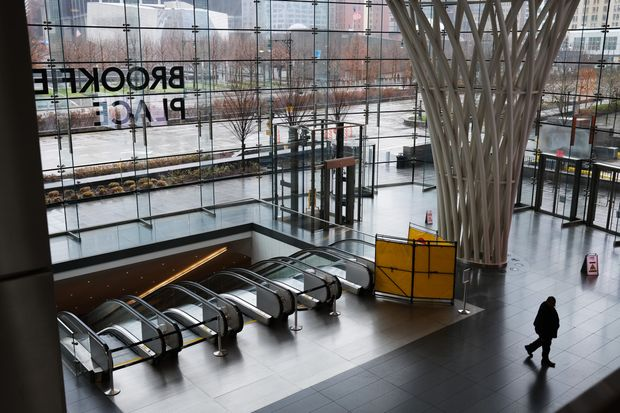
Canadian investment group Brookfield Asset Management, one of the largest operators of U.S. shopping malls, is launching a $5 billion rescue fund for retailers that need extra capital to weather the coronavirus pandemic. Thousands of stores have been shut since mid-March, with two major retailers — J.Crew and Neiman Marcus — filing for Chapter 11 bankruptcy protection this week. Brookfield said its retail revitalization program will focus on taking non controlling stakes in retailers. The capital will be sourced from Brookfield’s balance sheet and investment strategies.

Time for Africa’s Private Equity firms to rise – and save severely wounded companies.

Why Herbal Remedies for COVID-19 are on Trials

0

In the previous analysis, we noted that beyond the business leaders and social supports from the non-governmental organisations and individuals, drug manufactures have also swung into action, researching and producing drugs that would cure the virus. Medicago, Airway Therapeutics, Tiziana Life Sciences, OyaGen, BeyondSpring, Altimmune, Inovio Pharmaceuticals and Beijing Advaccine Biotechnology Company, Algernon Pharmaceuticals, University of British Columbia and APEIRON Biologics, Moderna and Vaccine Research Center, MIGAL Research Institute, Tonix Pharmaceuticals, Innovation Pharmaceuticals, Clover Biopharmaceuticals, Vaxart, Applied DNA Sciences and Takis Biotech are some of the companies at forefront of this initiative.

Meanwhile, the current piece intends to examine some issues around the production and use of herbs for the treatment of the virus.  It is a known fact that Africans and other people in developing continents usually apply herbs for the treatment of various diseases when modern medicines or medical attentions are not readily available. This has been further verified by a recent study which indicates that 80% of Africans use some form of traditional herbal medicines. This use has never been peculiar to pandemic period alone. Africans and others in low income countries have always had the course to use varied plants (prepared as concoction) in their domain for health purposes despite warning from medical experts.

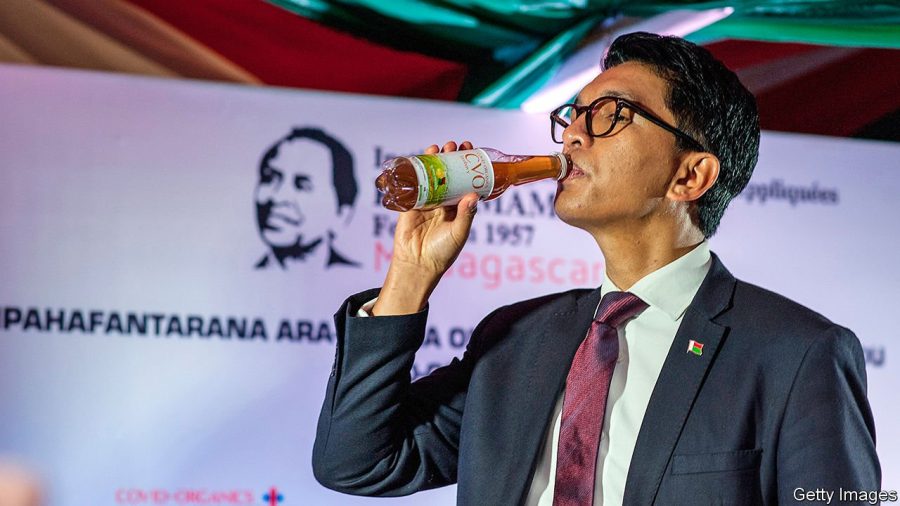
The argument has been that the herbs (or concoctions) are not proven scientifically. The recent announcement of Covid-Organics by Madagascar, a southern African country, and significant interest shown in the herb by a number of countries in Africa ignites the debate on the efficacy of herbs. According to a source, “Covid-Organics is produced from artemisia, a plant with proven efficacy against malaria, and other indigenous herbs.”

A check shows that the plant being used by Madagascar was imported into the country in the 1970s from China to treat malaria. Though, the Covid-Organics is being consumed by people in the country, President Rajoelina said “clinical trials are under way in Madagascar to produce a form that can be injected into the body.”

Apart from Madagascar, a report indicates that a traditional ruler in south-west Nigeria, in partnership with a local traditional medicine company, is working towards a herbal remedy for the treatment of the virus that has infected million and killed thousands of people. The report further indicates that the proposed remedy “is based on a mix of bitter leaves, neem leaves and seeds, sulphur, black pepper and cloves that are traditionally used in Yorùbáland as powerful antioxidants to flush the system of harmful viruses.”

In spite of the believe that herbal medicine has played a substantial role in combating infectious diseases in Africa for years, there are fears that African leaders could spread the virus through quackery, especially with the promotion of unverified drugs or medicines. To further understand public position on the issue, Knowcovid-19 Nigeria recently analysed the views of Nigerians on social media and discovered that 80% of 501 sampled citizens were not happy. This does not mean that people should use any suggested herbal remedy that has not been proved scientifically.

Our analyst observes that governments and individuals with the intent of producing or already manufacturing possible herb-driven drugs should be open for scientific screening and trials. This is imperative considering the fact that a number of herbal remedies for disease treatment, lack measurements among other issues that could result in severe damage of users’ body or leading additional health issues.