DD
MM
YYYY

PAGES

DD
MM
YYYY

spot_img

PAGES

Home Blog Page 6410

Economy, Finance And Business News Headlines: 7th April 2020

0
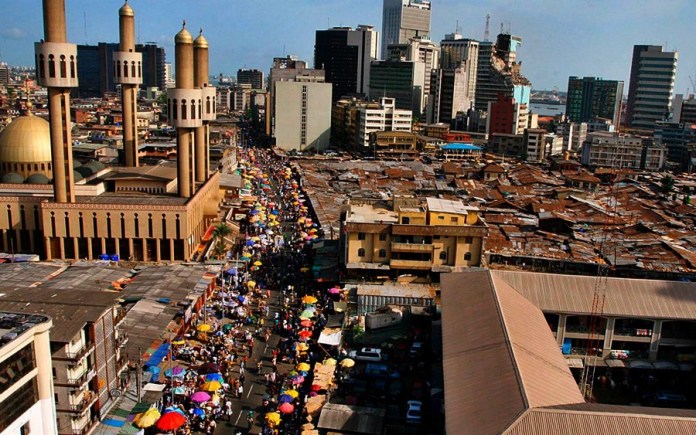
Lagos Island (source: Guardian)
We may have fought this pandemic to a slowdown, now is the time to start talks about economic recovery. The number of cases in Nigeria is ‘trickling in’ so also is discharge, China has added more infections but there is a feeling that they can handle themselves and the slowdown in US shows glimmers of progress in the global battle against coronavirus.
The slowdown mode in numbers, between 2nd and 3rd April – deaths recorded globally grew by 13% compared to 7% growth it recorded between yesterday and this morning. Same trend with the U.S, death rates averaged over 20% throughout last week but has now waned to 13.51% as at this morning.


Oil Market Update:

In Nigeria, over N21 billion has now been raised by the private sector in less than a month to fight it, a stadium was converted into an isolation centre in ‘world record’ time to fight it, subsidy has now been removed all in efforts to fight it – ‘ode to COVID-19’.

Petrol subsidy gone forever, says NNPC

The era of subsidy on petrol is gone forever, the Group Managing Director, Nigerian National Petroleum Corporation, Mele Kyari, said on Monday. Kyari, who spoke during a live programme on African Independent Television, stated that with the current fluctuations in global crude oil prices, the cost of refined products would be determined by market forces going forward. Read more

Stock Market Update:
FBN Holdings Plc has proposed to pay a final dividend of 38 kobo. The qualification date for the dividend is 20th April, 2020 and register of shareholders will be closed from Tuesday, 21st April to Wednesday, 22nd April 2020.

Nigeria’s equity market is currently up by 0.50%, FTSE (UK) – up by 2.26%, DAX (Germany) – up by 2.85% and CAC of France up by 3.04%. We expect this trend to be sustained on the back of a slow down in the COVID-19 pandemic.

Click on the link https://bit.ly/2XrvIf9 to open a stockbroking/share purchase account and trade within 24 hours.

Money Market Update:

Our money market fund is still open and yield is currently over 11.5%, reach out to our team to grow your cash. We are digital, we are working from home, we are online and we are active. You can also do deposits with us at a starting rate of 10%.

See below for more news headlines.

Headlines:


BREAKING: NCDC Confirms Six New COVID-19 Infections, Nigeria’s Total Cases Now 238
The Nigeria Centre for Disease Control (NCDC) has confirmed six new cases of coronavirus (COVID-19) in the country. In a tweet, the health agency says the total number of cases in Nigeria is 238 as of 9:30pm on Monday. It revealed that Kwara and Edo recorded two cases respectively while Rivers and the Federal Capital Territory (FCT) confirmed a case each. Read more
Nigeria to borrow $6.9bn from World Bank, IMF, AfDB
The Federal Government is to raise the sum of $6.9bn through external borrowing from the World Bank, the International Monetary Fund and the African Development Bank. The Minister of Finance, Budget and National Planning, Mrs Zainab Ahmed, disclosed this on Monday in Abuja during a media briefing on the fiscal policy measures to tackle the impact of the coronavirus pandemic on the economy. Read more
No buyer has rejected Nigeria’s crude, says NNPC
No buyer of Nigerian crude oil has returned or rejected it despite the glut in global crude oil market, the Group Managing Director, Nigerian National Petroleum Corporation, Mele Kyari, stated on Monday. Kyari explained that although some vessels carrying Nigerian crude were stranded recently, the commodity was not rejected, adding that the number of stranded vessels had reduced considerably. Read more
UN calls for debt alleviation, interest waivers
The United Nations has said debt alleviation must be a priority, including immediate waivers on interest payments for 2020 due to the coronavirus pandemic. The UN said nations must respond decisively, innovatively and together to suppress the spread of the virus and address the socioeconomic devastation that COVID-19 was causing in the world today. Read more
Oil rises 3% on hopes for output cut as coronavirus ravages demand
Oil prices gained on Tuesday as hopes rose that the world’s biggest producers of crude will agree to cut output as the coronavirus pandemic crushes demand, even as analysts warn a global recession may be deeper than expected. Brent crude LCOc1 was up by 93 cents, or 2.8%, at $33.98 a barrel by 0431 GMT after falling more than 3% on Monday. U.S. crude CLc1 was up by 79 cents, or 3.03%, at $26.87 a barrel, having dropped nearly 8% in the previous session. Read more
Stocks – Europe Seen Higher; More Stimulus Expected
Investing.com – European stock markets are set to push higher Tuesday, following on from Monday’s strong gains, as investors look for more financial aid to help bolster the region’s battered economies. At 2:25 AM ET (0625 GMT), the DAX futures contract in Germany traded up 1.1%. France’s CAC 40 futures were up 1.9%, while the FTSE 100 futures contract in the U.K. rose 1.4%. Read more
Asian shares cautiously gain on virus hopes, dollar slips
Asian stock markets rallied for a second day on Tuesday, and riskier currencies rose, buoyed by tentative signs the coronavirus crisis may be levelling off in New York and receding in Europe. Gains lacked Monday’s momentum, but were broad, even though global coronavirus cases kept rising and an economic crash on a scale not seen for generations looms large. Read more
Stocks – Dow Racks up 1,600 Point Gain on Signs of Covid-19 Slowdown
Investing.com – The Dow made a bold start to the week on Monday, racking up a more than a 1,600 point gain as traders cheered signs that measures to curb the Covid-19 pandemic in hard-hit areas like New York and New Jersey were taking shape. The Dow rose 7.73%, or 1,627.46 points. The S&P 500 gained 7.03% and the Nasdaq Composite surged 7.33%.
Pound Swings into Red Vs Dollar as PM Johnson’s Health Condition ‘Worsens’
The pound swung into the red against the dollar Monday on concerns about the health of U.K. Prime Minister Boris Johnson after he was moved into intensive care as his battle against Covid-19 intensified. GBP/USD fell 0.31% to $1.223. Just a day after being amitted into a hospital with what was reported as “persistent symptoms,” Johnson was moved into intensive care as his condition worsened, according to U.K media reports
Outbreak shows signs of leveling off in New York, New Jersey, but vigilance urged
The governors of New York, New Jersey and Louisiana pointed to tentative signs on Monday that the coronavirus outbreak may be starting to plateau in their states but warned against complacency as the death toll nationwide approached 11,000. Although coronavirus cases and deaths continued to mount, the governors cited data suggesting the rates of growth and hospitalizations were slowing, possibly signaling a peak was at hand in three U.S. epicenters of the pandemic. Read more

Why Nigeria Health Workers Rejected the Help of their Chinese Counterparts

0

News filtered in that some Chinese health workers are coming to Nigeria to team up with their Nigerian counterparts in the battle against COVID-19. According to the Director General of National Orientation Agency (NOA), Garba Abari, the 18-man Chinese medical team is coming to Nigeria to share their experience with the Nigeria Centre for Disease Control (NCDC) on how China handled and subdued COVID-19 epidemics. According to him, these Chinese experts are not coming over to Nigeria to take over the jobs of Nigerian health workers.

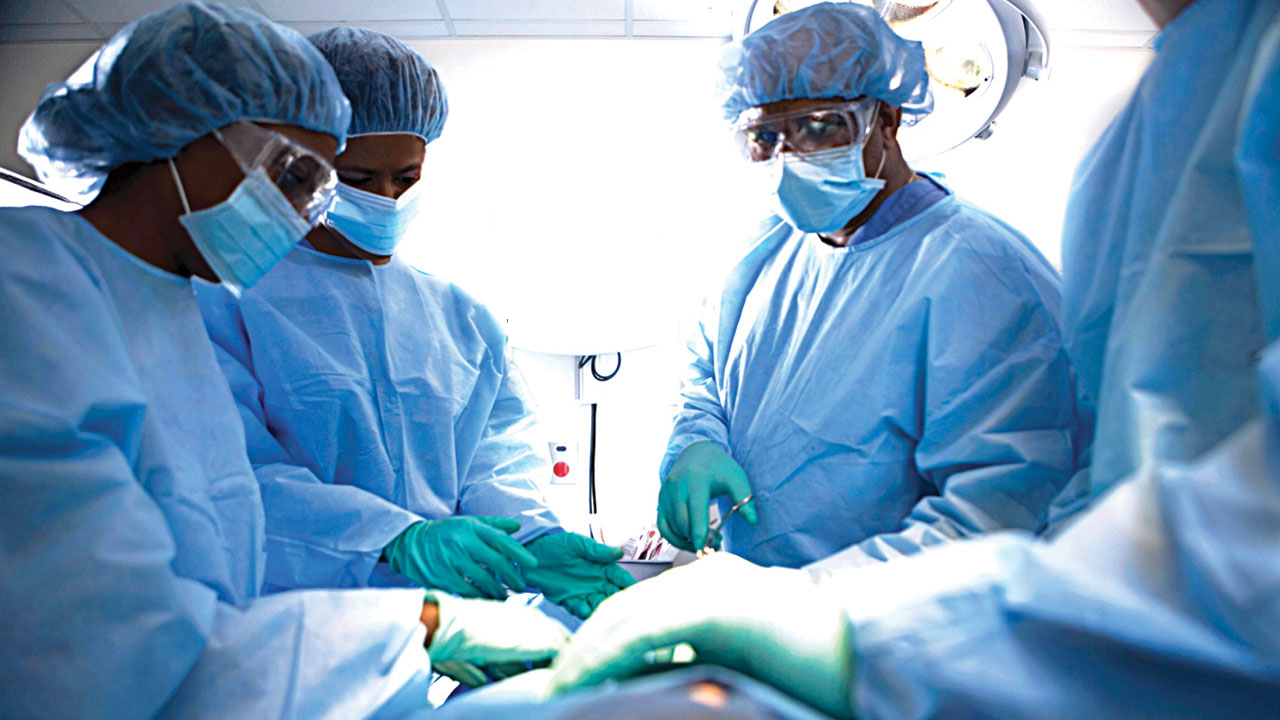
This announcement came as a shock to Nigerian health workers. It was instantly criticised and rejected by Nigerian Medical Association (NMA) and Nigerian Association of Resident Doctors (NARD). According to the NMA president, Dr. Francis Adedayo Faduyile, the intention of the federal government (FG) to invite Chinese medical officers is an embarrassment to NMA members and other health workers that are in the frontline of the battle against COVID-19.

Dr. Faduyile said that FG did not consult the association before taking that decision and as such, failed to take cognizance of the law regulating the practice of medicine in Nigerian as enshrined in the Medical and Dental Council Act. He also asserted that the members of the Chinese medical team, if at all they come into the country, will not be allowed to have access to any Nigerian patient unless they are certified and authorized by the Medical and Dental Council of Nigeria. Dr. Faduyile insists that either FG withdraw its invitation to the Chinese health workers or the NMA will review the participation of its members in the fight against COVID-19.

The stand of NMA may be seen as bordering on self-esteem and the desire to be acknowledged. It is quite unfair that the FG failed to notify the association of its intention to bring in foreigners to work side by side with the members. This is truly an oversight by the FG though it could be resolved immediately if necessary actions are taken. But then, the stand of NARD threw more light on why Nigerian medical workers are uncomfortable with working with the Chinese team.

According to Dr. Sokomba Aliyu, the NARD president, the following are cogent reasons why the NARD members stand against Chinese medical teams being allowed into the country:

  1. Health Hazard: According to Sokomba, it is suicidal for FG to open Nigeria’s international borders to Chinese nationals. He said that Italy made that mistake and it “proved socio-economically suicidal” for the country. He did not go further on how this could happen but further reasons given by him could give one a glimpse into what he meant.
  2. Unreliability: Sokomba said that the “crafty Chinese scientists” could not be trusted because they “unreliably and covertly” managed information around the disease from the onset. He said that the Chinese refused to release information on the origin, characteristics and other virulent features of the virus, which could have helped other nations to prepare themselves very well to battle the epidemics when it hits them. For this reason alone, Sokomba insists that Chinese scientists and medical professionals cannot be trusted to come near Nigerian patients.
  3. Conspiracy Theories: As Sokombo asserts, one of the conspiracy theories flying around holds that COVID-19 is “a tool for both socio-political and economic manipulation and dominance”. When one places this theory side-by-side with the Chinese refusal to release much needed information before this disease became pandemic, one could not but wonder if the Chinese health workers could be trusted truly.
  4. Unemployed Health Workers: Sokombo insisted that Nigeria has a lot of unemployed health workers that could be hastily employed by the FG so that there will be more professional hands in the battle against the ailment. He said that most countries battling this disease accelerated the graduation of their final year medical students and did not seek for help from the Chinese health workers. He said that it is insensitive for the FG to import health workers from China when there are Nigerians that could do the work perfectly well, if given the opportunity.
  5. Suspicion: Sokombo expressed his suspicion towards the intention of the FG in bringing in the Chinese when the Nigerian health sector has not yet been overwhelmed. He said that if the FG had recruited all available health workers and there is still need for more, bringing in Chinese to fill the gap wouldn’t have been suspicious.

Considering the arguments given by the FG, the NMA and the NARD may make it difficult for ordinary Nigerians to take a stand right now. Everyone knows that COVID-19 spreads like wildfire when it runs out of control. For that reason alone, Nigerians wouldn’t mind if their medical officers obtain professional advice from experienced medical officers that have combated the disease and won. But thinking about the arguments given by the NARD president is enough to send fear down our spines. The question that is hard to answer now is, “What if these Chinese professionals came and accelerated the spread of the disease?”

Of course it may just be fear from the conspiracy theories flying around that is making us hold back. Or it could be our suspicion because of how China denied the whole world information on the disease. Whatever the reason might be, there is nothing wrong with the medical practitioners in Nigeria being pensive about the coming of this Chinese medical team.

It will therefore be to the best interest of all if FG could find a common ground between their invited guests and Nigerian health workers so as to avoid a face-off between the FG and the Nigerian health workers or between the Nigerian and the Chinese health workers. The experiences of the Chinese health workers are needed but they mustn’t come to Nigeria to share it. They can do that through Global MediXchange for Combating COVID-19 (GMCC), a platform opened by Jack Ma for medical practitioners to compare notes and share knowledge about Coronavirus. Besides Nigeria does not have a severe case of COVID-19, and the Nigerian doctors are managing the existing cases very well. In other words, Nigeria is not yet in dire need of these Chinese professionals.

Nigerians React as Wole Soyinka, Garba Shehu lock horns over Buhari’s Lockdown Order

0

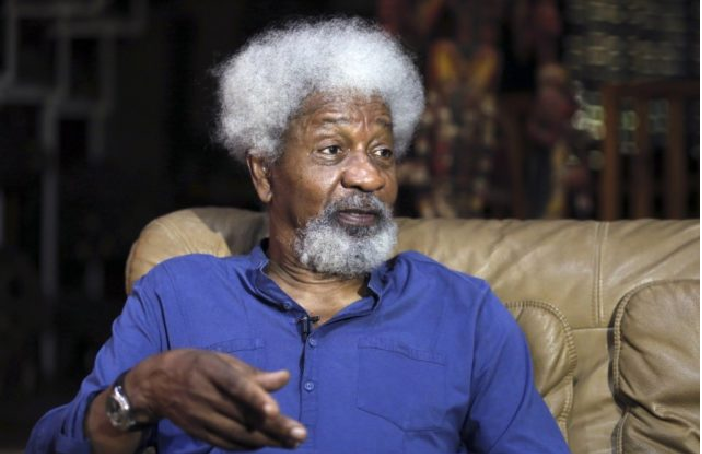
Nigerians have been sharply divided across camps in the recent spat between Nobel Laureate, Prof. Wole Soyinka and Senior Special Assistant to the President on Media, Mallam Garba Sheu. Prof. Soyinka had earlier condemned the presidential directive to Abuja, Lagos and Ogun States to totally restrict movement of people and business activities in order to curtail the spread of the novel virus. Soyinka in a statement had said the presidential directive is illegal and unconstitutional. He said “The worst development I can conceive is to have a situation where rational measures for the containment of the Corona pandemic are rejected on account of their questionable genesis. He further noted that “this is a time for Unity of Purpose, not nitpicking dissensions. So, before this becomes a habit, a question: does President Buhari have the powers to close down state borders? We want clear answers. We are not in a war emergency.”

In his reaction, the SSA to the President on Media and Publicity, Garba Shehu, has said “Yesterday, the esteemed Nobel Laureate, Prof. Wole Soyinka made comments on the legal status and description of 14-day lockdown announced by President Muhammadu Buhari. Professor Soyinka is not a medical professor. His qualifications are in English Literature, and his prizes are for writing books and plays for theatre. He is of course entitled to his opinions- but that is exactly all they are: semantics not science. They cannot- and should not- therefore be judged as professional expertise in this matter in any shape or form.”

In reacting to the spat between the Nobel Laureate and the SSA on Media to the President, Nigerians have been divided on whose side to stay. While many believed that Mallam Garba overstepped his boundaries, others were of the opinion that Soyinka should not have queried the government decision. In responses monitored on Facebook, Nigerians were neither here nor there. In a Facebook post by Dr. Abdulkadir Oba Laaro, a lecturer at the Department of Mass Communication, University of Ilorin, an attempt was made to mediate between Garba Shehu and Prof. Wole Soyinka. The don wrote :

Garba Shehu overreached himself. That release of Prof Wole Soyinka is over. Some language should be below presidential engagement. Though, Prof Wole Soyinka too needs some discretion in his intervention on national issues

Responding to Laaro’s assertion, one of the early commenters, Kunle Akogun, in support of Garba, wrote: “Some people should stop playing God even in matters about which they know nothing. Indeed, Coro is science not fiction! And fiction writers should stop politicising and trivialising the government’s effort to stem its spread! I’m with Garba Shehu on this.”

In a counter response on this and in an apparent support of Soyinka, another Nigerian, Naeem Balogun, opined “I believe Garba Sheu is not that knowledgeable to know and understand that those who write fiction really have to study the real knowledge before adding their actual expertise. He ought to have understood that, this is not journalism that “framing” is required to take people in another direction. Even though the fiction writers are not left out in that aspect. Knowledge, fiction and reality work hand in hand. My assertion.”

A counter narrative also emerged from another participant in the discourse. The commenter, Olatunde  Oketumbi who argued “ Let’s call a spade a spade. Soyinka goofed in his criticism of the government lockdown order when he, in his supposedly superior wisdom, did not suggest a more practical alternative action that the government could take to combat the Coronavirus pandemic in our collective interests. I’m therefore totally in support of Garba Shehu’s rejoinder to Wole Soyinka. After all, Shehu’s freedom of speech is no less guaranteed by the same constitution that guarantees Soyinka’s.”

In her own response, Chinedum Ikogwe faulted Garba for his comment. She said “Hahahahaha.he only displayed the arrogance that the APC Central Government is known for since 2015. So, please leave Mallam Shehu Garba alone. Joseph Kay, in a seemingly angry tone posited that Wole Soyinka got what he deserved. In his own post, he said “Wole Soyinka got what he deserves. He should know better with his exposure. Other countries are taking stringent measures. The French Parliament passed a law to enable the Prime Minister rule by decree for two months. In the Philippines, President Rodrigo Duterte ordered the security agents to shoot down anyone that defies the stay at home order. More and more countries are locking down cos that is working at the moment…”

Karounwi Adini agrees with the post but did not accept the fact that Soyinka should exercise discretion. He probed “ I agree with the post, except the side of Kongi having discretion on his statements. Which discretion exactly with this Government?

As the argument goes back and forth, with people taking sides, it is instructive to note that the president in his special broadcast to Nigerians earlier in the week has said “In Nigeria’s fight against COVID-19, there is no such thing as an overreaction or an under reaction. It is all about the right reaction by the right agencies and trained experts.” This should have been the bedrock of Garba Shehu’s response to the erudite professor’s concerns.

Nigeria Orders Customs to Release Seized Rice for Covid-19 Humanitarian Distribution

3

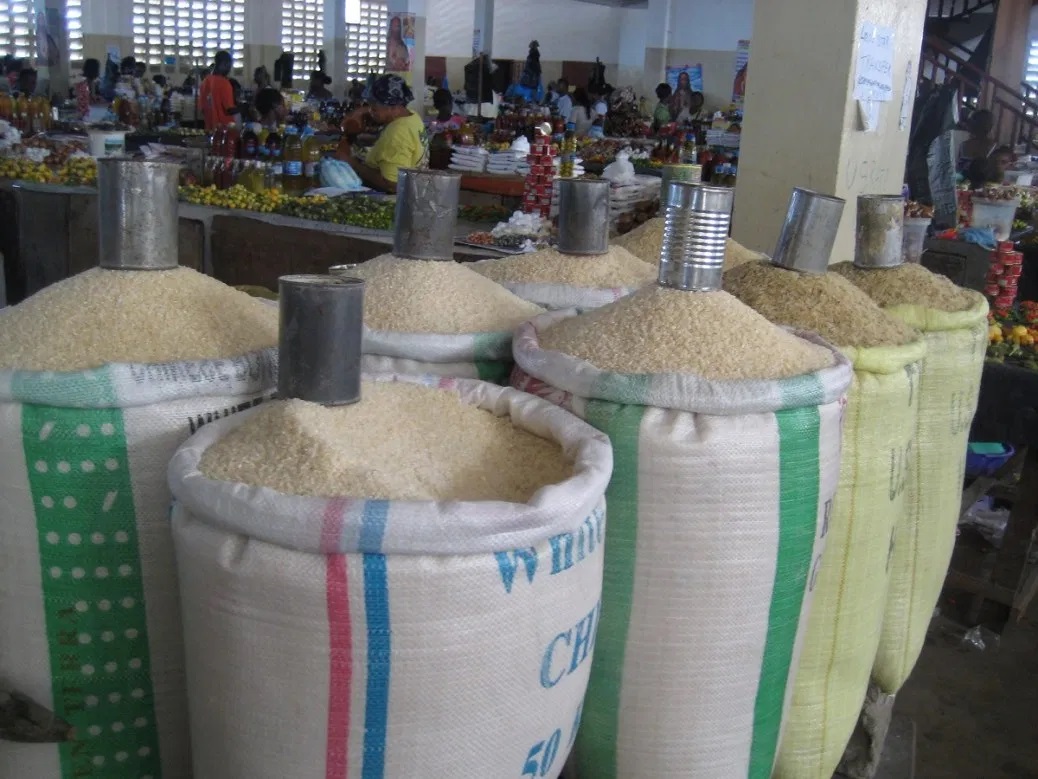
President Muhammadu Buhari has ordered the distribution of 150 truckloads of rice seized  by the Nigeria Customs Service. The Minister of Finance, Budget and National Planning, Mrs. Zainab Ahmed, disclosed this on Monday in Abuja, while talking to newsmen.

She said the rice will be distributed across the 36 states of the federation as part of the government’s social intervention programme aimed at cushioning the effects of coronavirus pandemic.

The Minister said that the 150 truckloads of rice have been handed over to the Ministry of Humanitarian Affairs for distribution. She added that the president has approved the distribution of grains from strategic grain reserves across the country.

The Federal Government of Nigeria has been seeking ways to alleviate the hardship emanating from the outbreak of coronavirus. Efforts to contain the virus have resulted in curfews, total lockdown of some states and other measures that have restricted the general freedom of Nigerians and keep many at home.

Before now, the Nigerian Customs Service was notorious for destroying rice seized from smugglers.

But as the situation is breeding hunger due to the inability of Nigerians to stock food, the government is desperately looking for ways to provide for the people before hunger forces them to defy the stay-at-home order. And the seized truckloads of rice have come handy, and at the same time, it is believed to have exposed how poor the decision to shut the borders, and to place a total ban on rice importation is.

In October 2019, when Nigerian government decided to shut its borders totally, it was in a bid to stop rice smuggling into the country. The initial ban on rice importation had limited the quantity of foreign made rice coming into the country, but didn’t stop it totally, especially from the borders.

The federal government was determined to take that bold step as it was seen as a way to boost local production of rice and the whole agricultural sector. Gradually, the tons of rice coming into Nigeria reduced to almost zero, rice became contraband, and the price skyrocketed. Nigerian rice farmers got the overwhelming burden of producing more than twice their farming capacity.

At that time, the Rice Farmers Association of Nigeria (RIFAN) could only boast of 3.7 million tons of rice annually, when the consumption demand is 7.9 million tons. There was a huge demand gap and a little infrastructure to fill it.

The United Nations’ Food and Agriculture Organization (FAO), had earlier pointed at some of the challenges facing Nigerian farmers that need to be addressed to ensure food security. They range from the outdated land tenure system that constrains access to land, a very low level of irrigation development, limited adoption of research findings and technologies, high cost of farm inputs, poor access to credit, inefficient fertilizer procurement and distribution, inadequate storage facilities and poor access to markets and post-harvest losses.

These challenges were not addressed before the ban took effect, leaving farmers with inadequate mechanisms that has hindered the chances of bridging the demand gap. Hunger ensued, as the reality of it all hit home.

However, Nigerians pushed through it and adapted through continuous murmuring of half-filled stomachs.

Though as time passed, there were indications of improvement in rice farming. In 2019, the production was said to have moved up to over 4 million metric tons, an addition that was barely felt by the people as demand also moved up along.

There have been governments’ initiatives aimed at augmenting farming through some schemes designed to help farmers in the country, such as the Anchor Borrowers Scheme, a Central Bank of Nigeria’s programme designed to provide financial help to farmers. This among others has boosted rice production in the country. A number of big companies in Nigeria like Coscharis and the Dangote Group have also joined farming.

Nigeria’s rice demand in 2019 was just over 7 million tons. According to RIFAN, Nigerian farmers are now producing 8 million tons of rice which is enough to feed the nation, except that the reality at homes is telling a different story.

A 50kg bag of rice costs about N23,000, which is unaffordable in a country where the majority live below $2 per day. The current coronavirus pandemic has exposed the depth of food insecurity in Nigeria. The government’s resort to use loads of rice seized by the Custom shows that Nigeria is still far from food sufficiency, and the production of rice, the country’s staple food is yet to meet the demand gap.

The Roles of the Media in Crisis Situations: Are Nigerian Journalists and their Platforms Rising to the Occasion?

1

The media in any society are expected to play fundamental roles of educating, informing, entertaining and providing warning as well as societal integration. This is why the media are considered as the fourth estate of the realm. In crisis situations, the media have more roles to play. They are as burdened as the society they seek to serve. The information needs of the people become high and the media are the major sources of fulfilling them. Therefore, the media assumes the mandate to fill the information gap that exists during such crises. They do this by providing relevant and accurate information in a timely manner.

In a developing democracy such as operated in Nigeria, and during the health crisis like the COVID 19 pandemic the world is currently experiencing, the media are expected to operate within the framework of educating, informing, helping to popularize coping strategies, warning and charting a course for relief and recovery. And importantly, the media set an agenda for the citizens. They provide direction for what people say about the pandemic. They throw in light where there is confusion. They manage the vehicle of discourse of the disease. The more the media focus attention, the more the citizens pay attention to the issue.

Within the context of the current global health situation, the Nigerian media are under trial for their roles in the reportage of the disease currently ravaging Nigeria and the rest of the world. Media researchers are already expressing fears on the direction of the reportage of the disease. They question the intent of the reportage prevalent in the Nigerian media landscape. Are they over-focusing on the disease? Are their platforms giving hope with the reports or are they over hyping the pessimism that such occurrence are likely to evoke?

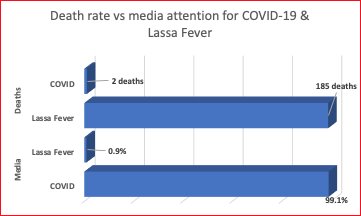
While querying the agenda that the media seem to be giving to the novel virus at the expense of Lassa Fever which preceded the Coronavirus, a professor of Development Communication at the University of Ibadan, Ayo Ojebode, asked a rhetorical question on his Facebook page – “Why are we talking much more about what is killing us much less… and talking much less about what is killing us much more?”  This all important question is accompanied with a chart displaying the irony that surrounds the reportage of the COVID 19 side by side with Lassa Fever. Since its outbreak again last quarter of 2019, the disease has claimed not less than 185 deaths as against the 2 deaths recorded through the novel virus at the time of the analysis. However, the COVID 19 has got 99.1% of the media attention while Lassa Fever had 0.9% of the reportage. Is this a pointer to the lopsidedness of the reportage in the Nigerian media landscape?  This is a question that needs further empirical investigations.

Source: Ojebode, 2020

Another pointer to the perceived worrying nature of the media  reportage of the virus is the outburst expressed by another university teacher, Dr. Obasanjo J. Oyedele, an environmental and risk communication expert who is a faculty at the Department of Mass Communication, Bowen  University, Iwo. He raised concerns through a post which did an evaluation of the media reportage of the virus so far. He posted:

This is not a good time to watch TV or listen to the radio. The mass media magnify existing narratives of fear, hopelessness, deaths and collapse of the health system worldwide, with negative psychological effects on people’s perception, behaviours and self-efficacy. Yesterday, during the media briefing organised by the Presidential Task Force on COVID 19, the NCDC Director tasked the media in Nigeria to reduce this heightened tension among Nigerians on COVID 19. Journalists can decide to set a new agenda of providing information on those who are recovering from the virus, the low-level of deaths from the virus, need for people to believe in prevention, and our collective resolve to overcome the virus in Nigeria. We have magnified COVID 19 and framed it as an absolute death sentence and this is not true. Even with those worrying statistics from America and the United Kingdom, there are positive stories on recovery and containment worldwide. It all depends on the story we want to give prominence and the factors behind our reportage. It is true that we are getting new cases (since contact tracing is ongoing and those who returned from foreign countries and their contacts are being monitored), it is also true that some people are recovering. As we cover COVID 19, let us balance our stories, report this other side and present facts capable of raising hope instead of despair. Thank you.

In the post are important questions on the roles of the mass media in crisis situations. According to the university teacher, the media have not done well with the early response coverage of the Coronavirus as the reports are inducing more fear than hope. The Nigerian media have been indicted for poor framing of the stories and giving attention to issues that raise tension than those that defuse it in the land.

In an earlier interview, Prof. Ojebode had pointed accusing fingers at the Nigerian media for pressing the panic button before settling down to education and information. In times like this, the media needs to do more and chart a recovery path for people out of the dust raised by the pandemic all over the world. In Nigeria as it is all over the world, the race out of the COVID 19 pandemic is a marathon. The Nigerian media landscape needs to pay more attention to education, information and analysis that give the citizenry the hope and the boost to survive. Or else, more people would die from fear rather than the actual disease which has been found not to be a death sentence.