DD
MM
YYYY

PAGES

DD
MM
YYYY

spot_img

PAGES

Home Blog Page 6451

Adedayo Oderinu on Radio as a Tool of Empowerment and Realisation of Food Security

0

Editor’s Note : Adedayo Oderinu is an indigenous language broadcaster who uses one of his programmes on Rave FM 97.1, KaraKata (buy n sell), to empower young graduates and petty traders with information on Employability, Career and Business Development. He has facilitated for not less than 100 petty traders between N5000 and N10,000 micro grants. With his programme in Yoruba, he has touched lives on the streets in lifting people out poverty and training people to secure decent living.  This is an interview with him.

Tell us about yourself.

I am Adedayo Oderinu, a Civil Engineer by formal education and a Broadcaster with specific interests in Human Capital Development, Employability Skills Development, Entrepreneurship and Micro-credit financing. I hail from Agurodo in Ejigbo Local Government of Osun State. I express my interests through broadcasting, writing (I have authored 4 E-Books and 1 print), teaching and advocacies

How did you end up in broadcasting when you studied Engineering in school?

That’s a really long story, but I’ll summarize. It was a mixture of deliberate confusion and providence.You know, I was brought up in a manner that made me greatly value a close-knit family unit. I always never wanted a family where I have to be away for long, then come home once a while and all that. But, I studied Civil Engineering and if I decided to practice it, there was no chance that I will remain within a single city without having to travel here and there. So, that profession did not exactly fit into my family ideals. That was the first issue.The second issue was that I am a content person. I love to write. I love to speak, I love to express myself in what you could decide to call literary ways. Civil Engineering does not follow that direction.The third issue was that I didn’t even want Civil Engineering in the first place. I went into the University to study it because my dad wanted me to go ahead with it. I studied to excel at it because I wanted to get done with it as fast as possible so I could go on with what I wanted to do. So, after the mandatory NYSC, I practiced for less than two years and decided to leave Civil Engineering altogether. Didn’t have a plan, didn’t know what was next, I just knew I had to get out and then decide. So I did.

Now, let us talk about your love for broadcasting. Why did you choose indigenous language broadcasting?

Let’s just say I didn’t choose it, it chose me. I grew up in Ejigbo, under a father who speaks impeccable Yoruba language. When you compare with my older siblings, I think I am the one who inherited his Yoruba speaking ability the most. My mum is also a Yoruba teacher and that rubbed off too. Let me tell you a little about how I met Mr. Bimbola Adewole so you understand how Yoruba broadcasting chose me. My dad met someone at a meeting and this man he met said he knew someone who could help my dad’s son get a job. At the time, my dad had not come to terms with my decision to quit Engineering. So he called me, sent me Bimbola Adewole’s number and asked me to go see him. I met this man and while we conversed, he asked me a defining question; “Dayo, are you really looking for a job? You don’t sound like you are”. I told him I was honestly not looking for a Civil Engineering job but was open to opportunities in the creative industry. He asked me to meet him in Ibadan the following week. We met at Fresh FM where he was to start a show the following week. He asked me, “can you write a Yoruba script?” and I told him I could try. Praise the Lord, I wrote a script he considered good enough and I started interpreting for him.When I left him and started my own radio show, I was running in three languages – English, Yoruba and pidgin – but I favoured English.However, when I wrote a proposal to Rave FM to start a radio programme with them, the Station Manager at the time, Kunle Balogun, told me he wanted my programme to run in Yoruba, not the English I proposed. No problem! I agreed and we started. And here we are now.

Tell us more about what you do on KaraKata. Let us know the impact you have made through the programme.

I’ll try to be as modest as possible. Karakata started in 2016 on Rave 91.7FM Osogbo. We started with giving important Employability and entrepreneurial tips and then added job vacancies and micro grants for petty traders to the mix. By the time we clocked a year, we had processed about 30 jobs in Osogbo. By process, I mean the people who got those jobs learned from the show, applied for vacancies through us, passed through our mock interviews and were eventually presented to employers. In January 2018, we decided to start a physical Employability class. We had to sessions of the class in 2018 before we stopped to focus more on online teaching. Employability 1.0 and 2.0 trained 65 young job seekers, giving them skills that they need to excel in the workplace. A good number of them have gone on to get great jobs. We started petty trader financing in December 2017. So far, we have provided grants ranging from 5,000-10,000 to 135 petty traders across the State. They learned from the programme first and then phoned in live on Karakata, pitched to us and if selected, received the grants. Aside all of that, we have received countless feedback even from roadside vendors on how our tips on the show have helped their little business grow. We have also had people calling to ask us for a compilation of all the tips that we have been sharing. We have made a lot of progress, to the glory of God. Aside these, on an average of 2 times a month, I get invited to speak at youth events, to enlighten young people on our areas of interest – Employability and Entrepreneurship.

How easy do you find it breaking down Employability and entrepreneurship concepts in Yoruba?

Let me quickly mention something. At first, I wasn’t convinced we should do Employability training in Yoruba language, because I believed as I still do, that if you do not understand English, you should not be looking for a white collar job in a country whose Lingua Franca is English. But, I realized that even blue collar jobs require Employability Skills. Then, there are uneducated people who have graduate children. The mother may listen and want to share the tips with the children later. So, Yoruba language proved appropriate.To the question you asked, presenting real life concepts in Yoruba is easy because the information is relatable and can be illustrated with proverbs and short stories. If we were translating theoretical concepts that cannot be illustrated, there could have been difficulties. This is also the reason I also keep learning. I lay hands on several things so I can understand the truth of the tips that I share. So basically, what I do is illustration, not translation and that makes the whole process more digestible for the audience.

Finally where do you see the future of indigenous language programming in Nigeria?

I think indigenous language will survive in the broadcast industry. I only fear that it will not survive in the real form that the great grandfathers handed it to us. Let me share this with you. On more than a hundred occasions, I have had people met me for the first time and insist that there was no way my young face will be the face of the voice they had been hearing on radio. Because of the manner I speak Yoruba, in the local, maybe crude form, people think I can’t be a young person. I honestly don’t blame the people who think in this manner. Most young persons who run programmes in indigenous languages today do so using the bastardized Lagos version of the real languages, especially Yoruba. So, my fear is not whether indigenous language will survive in programming, it will. I just fear that in some years to this time, most programmers would have over-diluted the raw essence of our languages that the ears of the progenitors will twitch in their graves.

How do you feel every time an entrepreneur wins your micro grant and even at the end of every programme?

I feel like a General winning a war. For every micro grants we have given out and every episode that we put out, I feel that we have touched a life that will never remain the same. I believe that before we solve problems of unemployment, we must solve unemployability. I believe that before solve poverty, we will have to make sure we have empowered the petty businesses that form the nucleus of our societies. Each episode, each grant, makes me feel we are doing something right to solve the problems of our society. And if we chose to get urbane, each episode feels like one more step towards the actualization of Goals 1 and 8 of the SDGs.
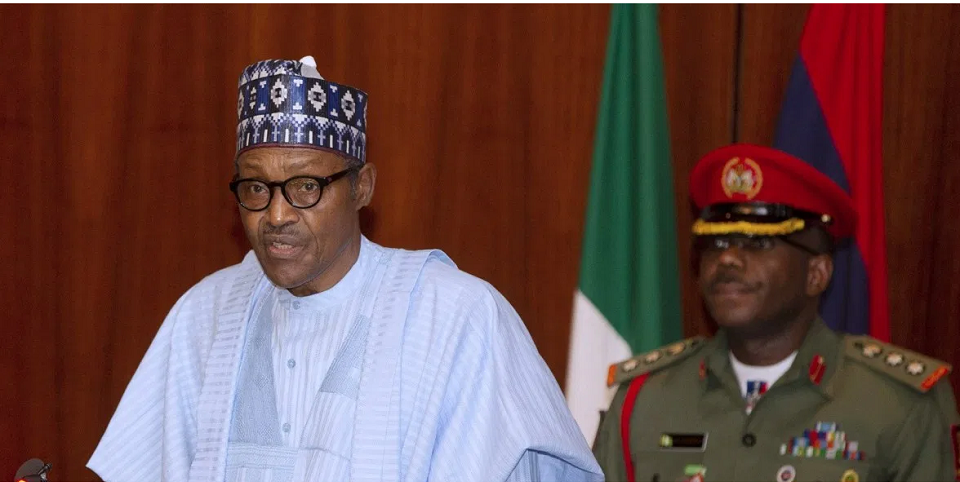
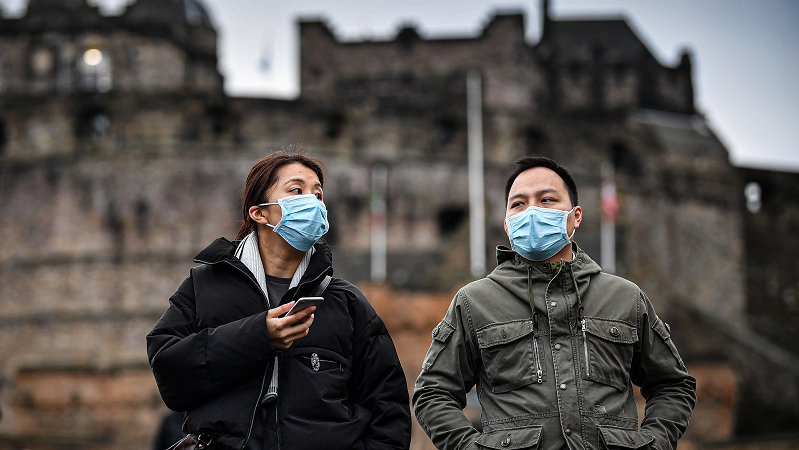
The Leadership Debate: Should Buhari Address Nigerians on Coronavirus?

0

On Wednesday, the Nigerian Senate, while deliberating on the issue of coronavirus in Nigeria, suggested that many measures should be taken by governments and health bodies in the country to reflect international best practices, in accordance with directives from the World Health Organization (WHO). Among the many suggestions given by the 9th Senate is that President Muhammadu Buhari needs to address the nation.

“Countries worldwide and big country like the United States of America is taking drastic measures to either contain or prevent coronavirus from entering their country. Even countries without incident are taking measures. Even African countries like Senegal, Rwanda, Ghana, South Africa and Kenya are taking serious measures to protect their countries.

“Even religious bodies are also taking steps. Countries like Saudi Arabia that has no single case of infection and even Kaaba which we all know as Muslims. Vatican has announced that we would celebrate Easter without a full congregation and I believe as a country, we should do something very drastic.

“This thing starts gradually. Like in the United States, it starts from one to two and as at this morning, it has extended to fifty states. Even though we think we don’t have the problem here, we have contacts in Lagos, it will not end there, it will go to Oyo, Sokoto, Borno, and other places.

“In view of this, Mr. President, I want this Chamber to urge President Muhammadu Buhari to address the nation on coronavirus. Other presidents have been doing that, even bigger countries like the United States of America,” remarked Senator Danjuma Goje.

Senate’s encouragement to the president to address the nation over coronavirus was received by Nigerians as slap in the face, not because the upper chamber of the National Assembly erred, but because it’s widely viewed as appalling that the president has to be urged to address the nation in time of global health crisis like this.

Worldwide, leaders have been on the podium week in week out, telling their citizens the plans and measures that the government has in store to remedy the situation, urging them to remain calm that the storm will surely pass.

Canadian Prime Minister Justin Trudeau unveiled the country’s austerity measures with a touching address.

“No matter whom you are or what you do, right now you should be focused on your health – and not about whether you will lose your job or run out of money for things like groceries or medicine. So today, we announced our plan that will help you and your family.

“As COVID-19 continues to spread, we are taking every precaution to minimize the health, economic, and social impacts of the virus in Canada. And today, we announced a billion-dollar COVID-19 Response Fund to address the impacts of the virus in our country and to keep you safe.

“This fund will provide money to the provinces and territories to support our health care system. That’s more money for surgical masks, face shields, testing, and equipment they need to address the outbreak. It will also help fund vaccine development and support clinical trials,” said Trudeau.

The clamor for Buhari to address the nation has been on high volume even before the Senate added their voice. His inability to do so has been described as utter disregard for people he swore to serve, especially in trying time of pestilence.

“I strongly believe we need a state of the nation address. We need detailed information from relevant authorities as to the level of preparedness for the days ahead,” said Actress kate Henshaw. “I just left a major supermarket in Lekki and the buying of stuff is astronomical. Nigerians are worried.”

With the news of school closure and limited religious gathering in many states, Nigerians have been thrown into panic and restlessness, amidst the worrisome silence from the authorities. The increasing number of confirmed cases has also added to the worry that needs assurance from the Nigerian authorities, especially the president to be calmed.

But in a surprising response on Thursday, the 36 state governors who made up the Nigerian Governors Forum (NGF), said on Thursday that Buhari does not need to address the nation on coronavirus outbreak. The governors said that the Presidential Taskforce and the updates from the Ministries of Health is enough.

“On the addressing of the nation on COVID-19, every day, I notice that we receive an address. There is a COVID-19 taskforce that has been put together by President Muhammadu Buhari, and the taskforce addresses the country on almost a daily basis.

“We see the honorable minister of health; we see the Secretary to the State Government of the Federation that briefs the nation. What the nation needs is information that is regularly delivered in order to keep the citizens well informed about steps to take,” the governors said.

The presidency also rebuked the Senate for calling on Buhari to address the nation. In a statement issued by presidential spokesman,  Garba Shehu, on Thursday, he described it as cheap politics.

“In this regard, populist advocacies such as the one accusing the President of ‘complacency’ simply because he has not made a television address by ranking members of our respected parliament are cheap and sensational. These are not the times for populism and cheap politics.”

These statements attracted unprecedented backlash from Nigerians, who say that other countries like Ghana, South Africa and Zimbabwe that their presidents have addressed put even more measures in place than Nigeria, and they also have kept their countries informed about every necessary step the governments are taking.

On Monday, Buhari set up a 12-man taskforce and saddle them with the responsibility to oversee and forestall modalities that will ensure that the outbreak is contained. Upon the inauguration of the taskforce, it is believed that Buhari has exempted himself from the task of oversight and decision making on matters of COVID-19, and that has become unacceptable to Nigerians.

Xenophobia, Discrimination and Stigmatisation as further Effects of COVID-19

0

The first time the Coronavirus alert came up, it was just given that name, “Coronavirus”. The only reference made to Wuhan was that it was first reported there. Days later, some people started referring to it as “Wuhan Virus”. But obviously that didn’t go down with the Chinese authority so that name died down shortly after it emerged. Or rather, it went into dormancy, waiting for the right time to resurrect. But all these were before the large exportation of this disease from its main domain.

As the death toll of this deadly ailment rises to above 1000, WHO decided to give it another name that will prevent its connection to any geographic location, animal or individual, as well as to differentiate the virus from other strands. For that, they gave it the name – COVID-19. This name is going to help to prevent any form of stigmatisation on any individual, race, animal or country. The WHO decision goes in line with what the organisation stated in 2015, where they declared that diseases should not be named according to their originating locations in order to avoid stigmatisation.

However, this change of name did not stop the spread of the disease, nor reduce its death rate. This means that the more people contracted this disease, the angrier they become. Truth is that people started asking questions concerning the origination of this disease and learnt that it came, one way or the other, through contact with wild animals. This seemed to anger them the more because they started accusing the Chinese of contracting the disease through their queer diets; in fact everyone was blaming China for COVID-19.

Just some days ago, Donald Trump, the United States President, made a public speech, where he referred to COVID-19 as “Chinese Virus”. This brought uproar from many people, who saw his comments and reference as prejudicial. They called him a racist and accused him of stigmatising the Chinese. Despite the uproar, Trump unapologetically used that term (Chinese Virus) severally in his Twitter posts within that day. He later said that he had to use the term so as to remind everyone of where the killer-disease came from since the Chinese government was already circulating false information, claiming that the virus was brought to Wuhan by the US military. So it looks like China threw the first stone without remembering how fragile its glass house was.

But Trump wasn’t the only one reminding the Chinese that they were to blame for COVID-19. A peep into Wikipedia on the discrimination of the Orients as a result of COVID-19 will show you that different parts of the world have been discriminating against these people since January. From the statistics Wikipedia gathered from several reports, the Chinese, South Korean, Japanese and even the Indian citizens face stigmatisation and xenophobic attacks in several countries of the world. Some Chinese businesses, especially restaurants, in these countries have shut down because of lower patronage. Some schools were reported to have evicted Asian students, even those that have not visited China for some years. There was the case of an Asian that collapsed in front of a restaurant and died of suspected cardiac arrest because none of the people standing by wanted to perform a CPR on him since they were afraid he might be infected with coronavirus.

So today, anyone with Orient features is at risk of being blamed by people for COVID-19, most especially as it is believed that they didn’t warn the world before the virus started spreading.

But then, these ugly monsters known as stigmatisation, discrimination and xenophobia are not only reserved for the Asians. Anyone that coughs, sneezes or clears his throat receives immediate queer look and distancing from the people around him. Just recently, a young man was beaten to death in Kenya because they suspected him of having the virus. This is to show how deep this illness has damaged the peace and tranquillity in our societies.

It will be hard to stop the natural reactions people have towards this disease because, as my people say, only a tree will hear that it will be killed the next day and still maintain its position. The fear caused by COVID-19 is affecting more than the economy; it’s affecting our social lives too. No one can socialise in peace these days. People are uncomfortable staying in the midst of others. So it is just natural for people to want to distance themselves from those suspected of being infected by the virus.

However, blaming and attacking people are way out of line. Yes, it is in human nature to be angry; but acting out of anger is what needs to be discouraged.

Branding COVID-19 as “Wuhan Virus” or as “Chinese Virus” should be discouraged too, because it will not end well. But then, the Chinese government should also stop their blame game because it will only increase aggravation against their people. Where the COVID-19 originated from shouldn’t be the concern of the leaders today, but how to curb it.

NB: Since WHO has declared that names of diseases should not refer to geographic location, individual or animal of origin, why do we still have “Lassa Fever” and “Ebola”? How come WHO has not given them other names just as it did COVID-19?

How the COVID-19 is Destroying Small Businesses

0

 Imagine you are fired from your job. That means your source of livelihood has come to an end. Imagine you don’t have demand from the market anymore. That means you will record no sales either personally or as a business.

 That is exactly what the Coronavirus pandemic is turning the world into. I analyzed the worth of the COVID -19 cure to be $4.3trn in this article.

 But when two elephants fight, it is the grass that suffers much pain. That is true for the small businesses. As we know that small businesses are the backbone of most economies.

It is small businesses that grow into unicorn and from unicorn into publicly traded companies. How will these small businesses grow at this time? Think about this for a while.

 The Impacts of COVID-19 on Small Businesses

The pain started in a small way, it has grown to become a very big pain to small businesses.

The covid-19 can be contracted through respiratory droplets. This has led to closure of businesses and other physical gathering centers. Here are some of the impacts to small businesses;

  •   Close Down of Businesses.

In some countries where the pandemic had spread widely, businesses have been closed down. Workers are no longer allowed to come to work instead they work remotely. The goal is to prevent physical contact between people. What this means is a decline in the revenue of the business due to cancellation of orders. A decline in productivity in such businesses.

  •  Lack of Credit Facilities

The blood of small businesses is finance. When there is no finance for the business to keep up operations that will be the death of the business. This moment when business activities are reduced, that means no bank will like to give credit facilities to businesses. This is such a grave problem!

  •   Fixed Cost Remain Fixed.

At this moment when all business variables need to decline, some are still fixed. Business cost items like rent, salaries, insurance etc will still remain fixed. The question is this; how will the business owners pay these bills? A time when there is no cash flow. A time when there is no revenue.

 What can we do at this critical point in the history of the world? The destiny of humanity rests on the shoulders of world leaders, you and I included. Here are the solutions that great people and organizations are already providing;

 What World Leaders Should do to Help Small Businesses.

 In my article on the global worth of Coronavirus, I made a call to entrepreneurs, philanthropists, donors agencies and organizations that we could together deal with this pandemic.

 Here are some of the solutions so far;

  •   The Facebook Solution:

Facebook has taken a lead in initiating measures that will help small businesses tackle the challenges they are facing at this critical stage.

 Few days ago Sheryl Sandberg posted on her page on Facebook that Facebook has come up with an initiative to help small businesses.  The initiative is to provide a grant of $100m in cash and advert to support small businesses. This will go a long way in solving the financial problems of the small businesses at this moment.

  • The Jack Ma Solution.

Jack Ma has also come up with a great initiative in order to contain the spread of this pandemic in African countries. Jack Ma is donating masks,test kits and protective suits to all countries in Africa to help the continent in its fight against the COVID-19.

 This approach is helping to curb the spread of the viruses in developing countries. This will impact small business operations too as the spread of the virus is still small compared to other countries.

  • The Progress Ibrahim Solution.

In periods of crises what we need is solutions and not complaints. So, in my own capacity I have decided to use the power of copy writing to influence great leaders, donor organizations, philanthropists and entrepreneurs to rise and support in whatever way so we could collectively tackle this pandemic.

 This approach could lead to donations of materials, provision of grants to support businesses and other help.

  •  Suggested Government Solution.

I must commend the government of many nations that are already being proactive about the containment of this pandemic. This is what I suggest every government should do through its Reserve Banks or Central Banks. Government should earmark special funds to support small businesses in their countries. This will help such businesses to stay alive at this period.

 We know how important these businesses are to unemployment reduction in every economy. If your government knows, then come up with this bailout measure to help them stay alive.

On an individual level what are you doing to help in the containment of COVID-19? Firstly, ensure you adhere to precautionary measures like hand washing with sanitisers, social distancing etc. Contribute whatever you can do to support humanity in time like this.

Insights and Foresights of Nigerian Media’s Roles on Coronavirus

0

In the earlier piece, our analyst noted that COVID-19 is a huge story for healthcare and media practitioners. These practitioners are playing two significant roles. Healthcare professionals are caring for the infected persons. At the same time, they are giving specific and strategic messages to people on how to avoid contracting and spreading the virus. Whenever they gave information, different platforms are being used. They either apply personal communication channels such as social media or contacting media practitioners, who use both the traditional and digital media for the dissemination of the messages to the public. Much has been said about how the media practitioners and their platforms (newspaper, radio and television) reported Coronavirus outbreak globally and after the confirmation of the first case in Nigeria on February 28, 2020 in Lagos.

When it was obvious that the Nigerian newspapers were paying much attention to the virus than other diseases ravaging the country, Mr Garba Shehu, the spokesperson to President Muhammadu Buhari said “This morning’s newspapers, all of them have Coronavirus as the lead, cover story. When will they bring the spotlight to bear on 822 who are killed by malaria everyday in Nigeria? This article is not intended to juxtapose the spokesperson’s views with what the citizens and other concerned stakeholders said about the coverage after the first case was reported.

It offers in-depth analysis of what transpired, in terms of coverage of the virus by the Nigerian media and others in the world (that found the incident in Nigeria worthy of reporting), in relation to the views of experts and academic researchers such as Professor Ayobami Ojebode, University of Ibadan. Over the years, the professor of Development Communication has been searching elusive voices for sustainable development in Nigeria and Africa.  Our analysis of 86 news stories between February 28 and March 13, 2020 reveals a number of significant insights with many implications for the media practitioners in Nigeria and the rest of the world.

Dominant Messages

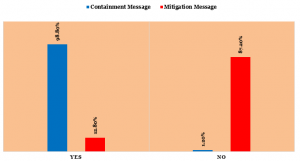
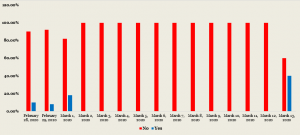
Our first data point for analysis is the dominant messages of the local and foreign media. As expected, the media performed their social responsibility roles through the news reports that established the treatment and control or containment of the virus [see Exhibit 1]. In this regard, the media exclusively discussed how the virus could be stopped from spreading and efforts made by Lagos state and federal governments towards its treatment, including level of its containment, signifying the media interest to free Nigeria of the outbreak. This performance earned the media commendation from the University of Ibadan’s Professor of Development Communication, Ayobami Ojebode. According to him, “They have done very well in encouraging preventive measures. Handwashing and so on. But no one is hammering on preparedness of government in other states beyond Lagos and Abuja.”

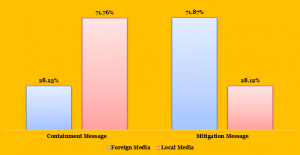
Looking at the coverage from media polarity view, analysis shows that foreign media reported more containment and mitigation messages than the local media [see Exhibit 2]. “Before the first case was discovered in Nigeria, there was little media attention. It ran as one-item news lines without analysis or commentary. This was understandable because (1) it seemed like a Chinese problem alone, and (2) little was known of it, so not much could have been said by the media. Social media was however already awash with all sorts of information and misinformation,” Professor Ojebode added.

Exhibit 1: Dominant Messages

Source: Google News, 2020; Newspapers and Televisions, 2020; Infoprations Analysis, 2020

Exhibit 2: Messages by Media Category

Source: Google News, 2020; Newspapers and Televisions, 2020; Infoprations Analysis, 2020

The Mood of the Media

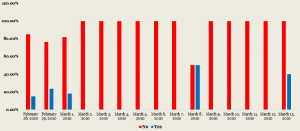
What was the mood of the media? Did the media see the past efforts of the governments on health sector as good omen for the containment of the virus? With these questions, our analyst wanted to know dispositions of the media towards the Nigerian healthcare system in relation with the recent position of the Joint External Evaluation (JEE) of the International Health Regulations, which placed Nigeria’s capacity to prevent, detect, and respond to public health threats at 46 per cent in 2019. Surprisingly, over 10% of the stories were positive to the health system out of 86 stories. More than 17% of the stories were negative to the health system, while 62 (72.1%) of the stories maintained neutral positions about the Nigerian health system [see Exhibit 3 and 4].

The low positive disposition has established the media pressing of the panic button as observed by Professor Ojebode. “After the first case was discovered, the media pressed the panic button – in my view. Before they would settle down to education and information, they first panicked in the news reports. That immediate phase was more like, “Breaking News: Corona is here and we cannot contain it.”

Exhibit 3: Positive Disposition of the Media to the Nigerian Health System

Source: Google News, 2020; Newspapers and Televisions, 2020; Infoprations Analysis, 2020

Exhibit 4: Negative Disposition of the Media to the Nigerian Health System

Source: Google News, 2020; Newspapers and Televisions, 2020; Infoprations Analysis, 2020

Who Played the Positivity or Negativity Mood Game the Most?

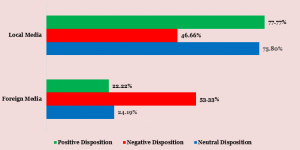
In our analysis, we understood that foreign media were more negative about the virus than local media. With this, we can say that Nigerian media dropped their hypertensive news angle about the healthcare system for social responsibility interest.

Exhibit 5: Disposition to the Nigerian Health System by Media Category

Source: Google News, 2020; Newspapers and Televisions, 2020; Infoprations Analysis, 2020

Foresights and Strategic Options

In order to suggest strategic tips for further coverage of the virus, it is imperative to understand the past within the context of Ebola Virus. Available evidence shows that government/institutional measures and response and cases of the virus were more reported by The Guardian, The Punch and Vanguard newspapers at the expense of views from healthcare professionals and other experts with the right knowledge on containment and mitigation of viral diseases. Beyond, the news as the dominant genre of reporting the virus (Coronavirus) and Ebola Virus, the media need to deploy their resources to features, editorials and interviews.

In the words of Professor Ojebode, “a lot is being done in the teaching hospitals and in the departments of Virology. However, both the researchers are not talking to each other. We are still having much more of news than commentaries and analysis. Radio stations are adding jingles. All these are good. But in-depth commentaries and analysis are needed. What are the research institutes doing? What does that mean? What should government do? For weeks, we have been told that Corona cannot affect a black person fatally. Now that we have the first black casualty from Italy, a Nigerian, one hopes that the media will begin to counter that unscientific declaration of black invincibility.”