DD
MM
YYYY

PAGES

DD
MM
YYYY

spot_img

PAGES

Home Blog Page 6480

The World Would Do With A 2020 Restart

2

Every new year all over the world is usually celebrated with pomp and pageantry.

It is always heralded with exuberance and optimism, not just in celebration of life, but also in celebration of hope – that whatever was wrong in the fading year can be corrected in the succeeding year and whatever was done right before can be made better.

It is mostly a celebration of new opportunities globally.

But what is it about this year 2020?

Barely 3 days into the new year, a United States drone strike near Baghdad International Airport targeted and killed Iranian major general Qasem Soleimani of Iran’s Islamic Revolutionary Guard Corps (IRGC).

Soleimani was considered the second most powerful figure in Iran after the Supreme Leader Ali Khamenei. Nine other high profile military figures were also killed in the strike.

Iranian leaders vowed revenge while the U.S. government vowed the harshest response in case of any Iranian attack.

The world was suddenly thrown into panic over the possibility of a global war.

Five days after the airstrike, Iran launched a series of missile attacks on U.S. forces based in Iraq. Thankfully, no American lives were lost.

But that was not going to be the end of it.

On the same 8th of January 2020, Boeing 737-800 – a Ukraine International Airline plane containing 176 passengers and crews on a scheduled International passenger flight from Tehran to Kiev was shot down shortly after take-off from Tehran Imam Khomeini International Airport by the Islamic Revolutionary Guard Corps. None of the precious souls on board the plane survived.

The world switched from panic to mourning. Innocent promising lives have been cut off unjustly.

On the 26th of January 2020, a Sikorsky S-76B helicopter crashed in Calabasas, California. It was carrying legendary NBA basketball player Kobe Bryant, his 13 year-old daughter Gianna, 6 other passengers and the pilot. All nine souls on board perished in the crash.

Kobe wasn’t just a great basketball player, he was a great father, a good husband and a decent human being.

Oh Lord! Why Kobe? Why Gianna? Why not some useless political leader or some fraudulent rich man or some high profile terrorist?

After air and water, food is the next most important substance to life. Now, that is also under threat.

In late January, swarms of desert Locusts invaded Ethiopia and from there spread into East Africa. As locusts devour crops in Ethiopia, Kenya and Somalia, the insects are breeding in Djibouti, Eritrea and Sudan. Swarms have arrived in Uganda and have also crossed into Tanzania.

The United Nations Food & Agriculture Organization (FAO) has warned of an unprecedented threat to global food supply. The organization further stated that the number of locusts in East Africa could expand 500 times by June.

Now the desert locust is by far the most dangerous of the locust species. If a single swarm comes into a farmer’s field in the morning, it would have eaten the entire field by midday.

That one field represents the entire livelihood of a farmer.

Now that smells like big trouble for global food supply.

It appears Boko Haram terrorists came into 2020 with a new year resolution to wreak havoc on innocent lives. Sometimes in January 2020, the chairman of the Christian Association of Nigeria (CAN) in Michika local government area of Adamawa state, Rev Lawan Andimi was beheaded. Another pastor was abducted and killed almost at the same time.

The terrorist group has been killing innocent lives, especially Christians, with restless frenzy ever since.

To add salt to an already excruciating open wound, some numskulls within the Nigerian political leadership are considering creating a bill to grants heartless murderous Boko Haram terrorists amnesty.

Excuse me! Who does that?

Now to the one that I have saved for the last – the dreaded coronavirus code named COVID-19.

The coronavirus outbreak started in December 2019 and became an issue of global concern beginning from January 2020. It was first identified in Wuhan, the capital of Hubei in China.

The coronavirus is highly contagious and spread between people via respiratory droplets. The incubation period is said to be usually between 2 to 14 days and symptoms include fever, cough and shortness of breath.

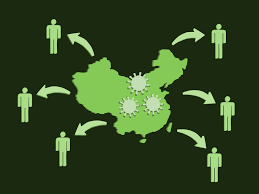
The virus was soon carried to other countries by international travelers and has currently touched every continent in the world except for Antarctica.

As of 24th of February 2020, about 79,364 cases have been confirmed, including in all provinces of China and more than 24 other countries. Of these, 11,569 cases were classified as serious, 2,619 deaths were attributed to the disease and 24,974 people have since recovered.

The virus outbreak. is having negative effects on global business markets and economies are spiraling down.

At first, the world thought the disease originated from some aquatic life at a Wuhan market, now there are hushed tones all over the world about the possibility that the disease was manufactured in a laboratory as a form of bio-weapon.

I hope too much knowledge will not wipe out the human race.

On the 26th of February 2020, an Italian citizen was tested positive for coronavirus in Nigeria.

In every country where a first victim was discovered, more follows. Considering that this Italian must have come in contact with some Nigerians before being tested positive, it is reasonable to assume that more cases are bound to follow.

What makes the coronavirus particularly deadly is that it is infectious even before the victim starts showing signs of infection.

Watching the interview of former Director of America’s Center for Disease Control and Prevention (CDC), Tom Friedman, on the Amanpour programme on CNN, this was his verdict concerning the virus spread – a pandemic is inevitable.

Two things scares me when I consider that the coronavirus is now in Lagos.

The first thing is that the Nigerian state has a poor healthcare system. Ordinary Lassa fever is still shaking the healthcare table. Countries like China, South Korea and Italy with far better healthcare systems are still struggling to contain the virus with new cases still being recorded.

The second scary factor is that Lagos is a heavily congested city with poor urban management. In such a climate, the virus could have free migration like no other.

I mean, have you considered what could happen if a coronavirus patient board a BRT bus or one of those yellow buses? Those heavily packed BRT and yellow buses!

And I hear that the virus finds it difficult to thrive under heat conditions. Well, after a long stretch of extreme heat, a mild rain fell on the 28th of February 2020.

I think the rain can hold on for now. We are just fine with the heat conditions right now.

So what is it about this new year? Why is it starting on such scary and negative notes globally?

I think the world wouldn’t mind a 2020 restart.

Tekedia Innovation Summit, Lagos Coming in Q4 2020

2

We’re planning for Tekedia Innovation Summit in Q4 2020 in Lagos for members of Tekedia mini-MBA, Tekedia General Management Program (GMP) and Tekedia Advanced Management Program (AMP). No extra cost to you provided you have participated in our programs in 2020. It is our plan to use that live innovation festival, supported with webcast for those outside Lagos, to deepen all we are learning in our programs. Please plan ahead; more details coming in days. We project 5,000 members to participate.

Our corporate clients in GMP and AMP,  this ecosystem will help you connect with members just as our mini-MBA members will tap into your innovation ecosystems. The goal is to prepare innovators to fix the frictions in our economies.

  • 1. Tekedia mini-MBA: Sector- and firm-agnostic open program comprising videos, flash cases, contents, pulses, challenge assignments, labs, written materials, webinars, etc delivered online. Options for grading labs available.(See structure of current one; registration still ongoing)
  • 2. Tekedia General Management Program (Tekedia GMP): The same as Tekedia mini-MBA but customized for a specific organization with flash cases, contents, pulses, challenge assignments, labs, etc developed around the firm and its sector. Challenge assignments and labs not graded. Accepting clients.
  • 3. Tekedia Advanced Management Program (Tekedia AMP). GMP with Challenge assignments and Labs graded. Accepting clients.

We will share more in days; plan ahead.

How to Combat the Corona Virus in Nigeria through the Incident Management Approach

2

Like a flash in the pan, the spread of the widely reported virus, Corona, has eventually got into Nigeria. The virus which originated from the Wuhan province in China is the latest monster threatening not only high ranging mortality, but also a disruption of socio-economic life and international trade on a global scale. From Australia to Estonia, Japan to India, the deadly virus seems to be on the race to infect the whole world.

So, on the midnight of Friday 27 February, 2020, an Italian who was on a brief business trip, came into Nigeria with the virus through the International Airport in Lagos. This made the case first of its kind in Sub Saharan African. For a country that has been battling with the Lassa Fever outbreak, it seems a double tragedy for the nation. This is within the background of the failing health infrastructure in Nigeria. However, this is not time to falter. Agencies of government responsible for disease and disaster control need to rise to the occasion to ensure the spread of the deadly virus is contained and managed with no or minimal fatality.  A review of a research article brings to the fore what the health authorities must take cognizance of as the nation battles to stop the virus on its track. Lessons learnt from curtailing the Ebola outbreak six years ago must be brought to bear this time around.

Initiating the Incident Management Approach. According to the research which examined the Incident Management Approach used to manage the Ebola outbreak then in the country, this approach involves initiating four public health protection strategies which could help in weakening the spread of the virus among the populace. These strategies are examined one after the other.

#Surveillance. At this level of the emergence of the virus, surveillance is the first strategy to be deployed. This is done by contact tracing.  By this, there is an urgent need to begin to trace people who might have had contact with the Italian victim of the virus. That the novel virus was brought into the country by a foreigner was cheery news. It made the discovery faster and also minimized the number of contacts he might have had access to. However, this little good piece of news could become awry if those who have had contact with him could not be traced and quarantined. The race to prevent further spread could only be won if only government agencies such as National Centre for Disease Control could step up their surveillance game.

#Incidence Prevention & Control. This is an epidemiological approach used to study the origin and causes of disease outbreak in any community. The incidence prevention and control is a tool deployed in understanding the dynamics of any epidemics. It was employed in the combat against Ebola. It categorised individuals into susceptible individuals, hospitalized individuals, exposed individuals, infectious symptomatic individuals and isolated individuals. In the case of the novel virus in Nigeria, it is still too early to determine what is going to happen. However, the NCDC should activate the approach that was successfully used to curtail in the days coming ahead. As of today, the Italy based Nigerian footballer, King Paul Akpan Udoh is the first and only Nigerian to have tested positive for the virus. Good enough, it is outside the shores of the country.

#Education. At this stage, Nigerians need education on the virus. This would involve deploying all available means to reach the people in the language they understand. The NCDC should liaise with the Federal and State Ministries of Health as well as the National Orientation Agency to come up with educational materials that explains what the novel virus is, how it is contacted and its prevention. Local languages should be used in audio-visual materials, infographics, flyers and handbills. Being ignorant in this case could be deadly.

#Communication. This is usually at the heart of any campaign. It is the pillar upon which the curtailment of any outbreak lies. In this case, it should be well coordinated, detailed and decentralized. As it was during the Ebola outbreak so should it be now in the days ahead. Responses across the country should be coordinated by the Ministry of Health through the National Disease Control Centre by the Minister of Health. This should go down to the local health authorities. If this bottom-up approach is adopted, it would make the reportage of any suspected case of the virus robust.

Epigraphy: Dilemmas in Curbing Police Brutality in Nigeria

0

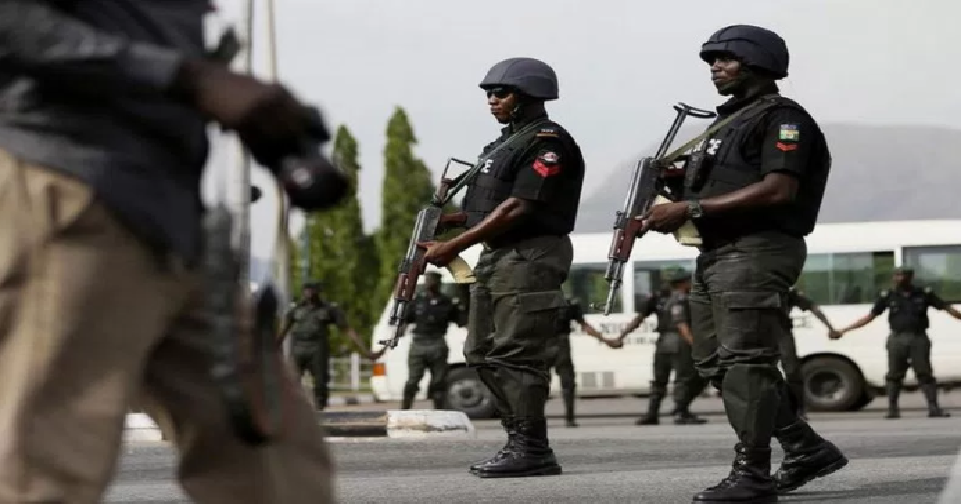
After the formation of the Nigeria Police Force in 1820, what could be termed as regional police sprung up in 1879 and 1896. Over 1,000 members armed paramilitary Hausa Constabulary was formed in 1979, while the Lagos Police, serving Lagos colony, was established in 1896.

Historical information indicates that the establishments of the units became necessary because of the need to protect ever expanding population and reduce crime rates in the hard to reach hinterlands.  The information further adds that members of the national and regional police departments were well coordinated towards solving various crime issues without harming non-criminals and committed to the protect and save life’s tasks.

However, the Nigeria Police known for approaching every security issue with the due diligence started derailing at the beginning of 20th and 21st centuries. The influx of personnel with bad antecedents, poor welfare programmes and the use of the Police to the individual’s advantage have been cited as the main factors by the concerned stakeholders, most especially the citizens and public affairs analysts.

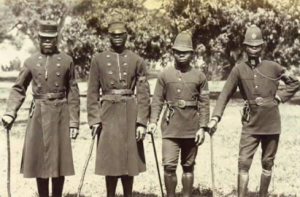
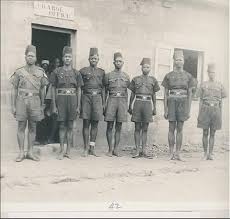
Nigeria Police Officers in 1820

The outcomes have largely been legitimacy crisis and the growing distrust for the police by the public. In these centuries, scholars and public affairs analysts have documented a number of reasons for the continuous police brutality. Undemocratic political structures, and the quest by rulers to suppress opposition to dictatorship, involve the use of police to coerce or repress citizens, lack of political accountability by the rulers, which encourage lawlessness by government agents, encourage police to act beyond the law, the inequitable economic system, the deployment of the police by economic and political power-holders for the suppression of some segments of society remain the key reasons.

These have largely encouraged the ‘kill and go’ syndrome among the personnel of Police Mobile Force established to cater for special crimes containment. The Special Anti-Robbery Squad is one of the special units and remains the unit Nigerians on several occasions have noted for dismantling by the Police authority and the Federal government. Anytime members of the unit brutalized citizens or involved in extrajudicial killing, people’s interest in ending the unit usually increases. In 2018, the public outcry in online and offline spheres promoted the Nigerian government to act.

Regional Nigeria Police Officers in 1948

Dilemmas in the face of the Staggering Statistics

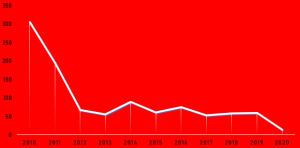
In their efforts of curbing crimes, the SARS has been reported on a number of times of carrying out ‘unauthorised’ inspection of young citizens and other nationals’ personal belongings. One of the affected persons says “It seems in the eyes of Nigeria’s police, any young man with a laptop, smartphone and an internet connection is likely a fraudster.” Our check shows that Nigerian media have significantly reported a series of police brutality between 2010 and 2020, which were equally sought by the citizens for better understanding of the reasons for the brutality and how it could be curbed [see Exhibit 1].

A recent study has also established that “between June 2006 and May 2014 the security forces caused fatalities in 59% of the lethal incidents where they intervened. Secondly, the more the security forces intervene, the more people are killed. This explains why from an annual average of 59% between June 2006 and May 2007, killings by the security forces peaked at 80% between June 2013 and May 2014. Thirdly, 58% of police interventions cause fatalities compared with 60% in the case of the army, an indication that killings by the police are more prevalent, while the army cause more fatalities per incident.”

Exhibit 1: Public Interest in Police Brutality 2010-2020

Source: Google Trends, 2020; Infoprations Analysis, 2020

In another study, a significant number of Nigerians interviewed revealed that police brutality on Nigerians is prevalent. Forty percent of the people interviewed have either been or know someone who has been brutalized by the Nigeria Police personnel. With the overwhelming statistics on the level of police brutality across the country, it seems that existing rules and laws are not enough to curb the act among the Police Officers. For instance, the newly passed Police Reform Bill “provides internal disciplinary mechanism for any police officer that maltreats or kills an innocent citizen.”

This has been predicated on the cases of policemen going out of control with their guns under the influence of alcohol. To address this, according to the bill, it is now criminal for a police officer to take alcohol while on duty, according to Clause 98. The punishment prescribed for such offence is a fine of ?20,000 or three-months imprisonment. Our analyst observes that the punishment is insipid when compare with what is stipulated for the citizen who assaults, obstructs or resists a police officer from performing his or her responsibility. According to clause 96, such person will pay a fine of ?100,000 or six months imprisonment. On several occasions, news reports and citizens engagement in online communities have shown that concerned police authorities and government have not done enough in punishing erring police officers.

Jumo Raises $55M and Lifestores Secures $1M Seed Fund

0

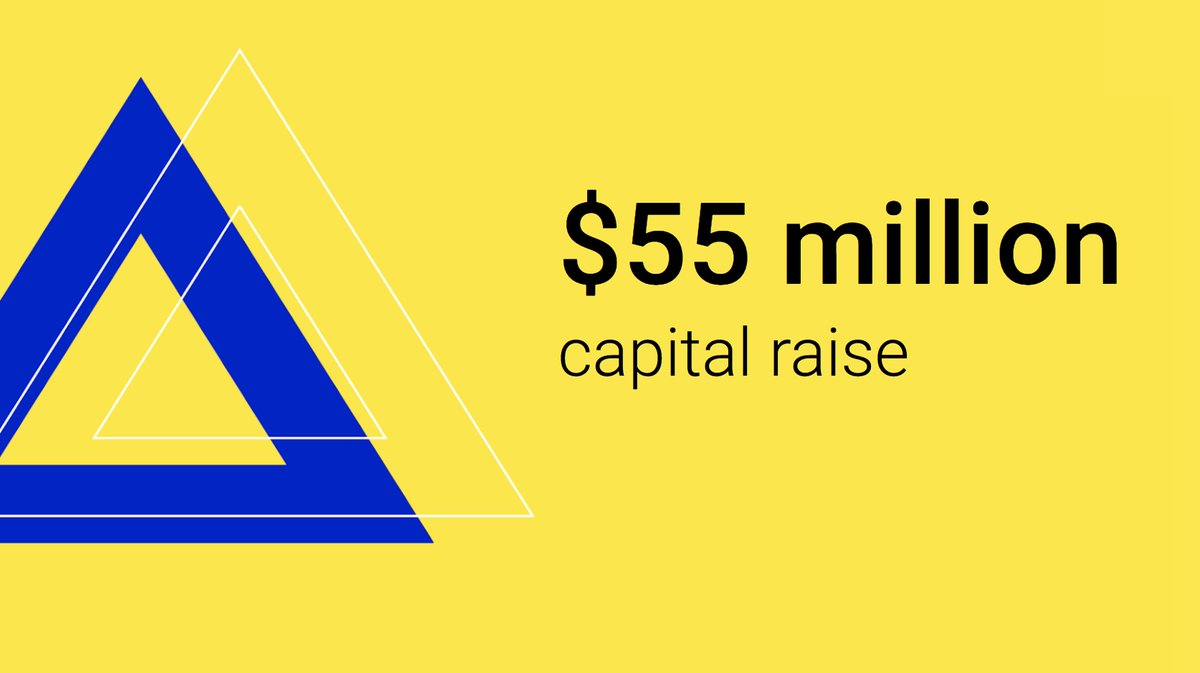
JUMO, a fintech providing loan services, has secured another round of funding in its push to extend its operation to the reach of many markets across Africa. The digital financial service company announced on Tuesday that it has raised $55 million for the expansion of its services.

“We are pleased to announce the closure of another successful funding round! We’ve secured US$55 million from a diverse group of investors to secure our expansion into new markets and the launch of new financial products,” JUMO tweeted on Tuesday.

The company had in 2018, raised $52 million, staying tops among Nigerian startups that got funding in the digital space. But this round of funding has toppled the previous record and put the Fintech’s total raised fund to $146.7 million if the $91.7m previously raised is added.

The latest round of funding has come from already existing investors, both old and new, mainly Goldman Sachs, Odey Asset Management and LeapFrog Investments. It has made JUMO the most funded startup in the African continent.

JUMO was founded in 2014 by Andrew Watkins-Ball as a digital finance platform offering mobile financial services. The platform provides loans and offers savings services to SMEs and the general public.

The platform uses algorithms to determine the credibility of its users and their credit worthiness. The higher a customer is scored the more money he will be qualified to access. The services are mainly mobile-based and are available across many mobile networks powered by USSD. It also has web and app options that offer accessibility choices to everyone.

The company partners with mobile telephone networks such as MTN, Telenor, Airtel and Tigo to power its mobile network functions while banks like Letshego Bank, Barclays Africa Group and Telenor Microfinance Bank provide the savings and loans services.

The startup said its loan services have attained the $1 billion mark across 10 countries in Africa and Asia. The CEO Andrew Watkins-Ball said the fresh funding will help JUMO to attain new heights in services by reaching more financial disadvantaged people in Africa and Asia. He said the plan is to introduce new products that will catch the attention of emerging markets.

“I’m excited for our next phase. This backing will help us build a better business and break new ground. The strong vote of confidence, along with the world-class tech talent we now have in business, means we can achieve exceptional outcomes for our partners and customers,” he said.

JUMO has about 10 million customers in Asia where it is aiming to reach more countries.

Meanwhile, another Lagos-based startup, Lifestores has raised $1 million (N365 million) in seed fund. Lifestores is a healthcare initiative led by Consonance Kuramo and other partners like Altadore Lionbear Capital, Greentree Syndicate, Startup and Health transformers Fund and Unseen Ventures.

Flying Doctors Nigeria Group, K50 ventures, Chinook Capital, Kepple Africa Ventures and some other companies were part of the fundraising. All the partners have healthcare background in common and appear to have come together to pursue a common goal, which is to facilitate easy distribution of drugs nationwide.

Founded in 2017 by Ken Ahaotu, Bryan Mezue and Andrew Garza, Lifestores is designed to disrupt the rigorous traditional system of drug distribution that enables peddling of fake drugs.

The Nigerian drug distribution system operates through a chain of tedious protocols that breeds unbalanced supply to pharmacies and many times, it keeps drugs out of the reach of those who need it.

Lifestores saw through the challenges and proffered solutions that will involve some changes in many areas of drug business in the country. It involves the acquisition of many pharmaceutical outlets in the country and establishing direct access to drug manufacturers which they have done in a space of three years.

The startup has anchored the entire supply chain of the pharmaceutical sector, and with the direct access it created to drug manufacturers, the menace of fake drugs is being minimized since it offers pharmacies the chance to buy quality drug stock at cheaper rate.

The N365 million fund became necessary because the startup developed a software that will enable it to execute its tasks. With the new software, the inclusion of new ideas into its system and managing the company’s operations will be easy as it plans to expand its reach by acquiring more pharmacy stores and going into further partnerships.

The software which was developed with the help of Andela was designed to keep track of Lifestore’s sales activities, inventory and keep patients’ record.