DD
MM
YYYY

PAGES

DD
MM
YYYY

spot_img

PAGES

Home Blog Page 6485

A Big Biological Virus Hits Big Tech

1
These firms on the radar

Like what happened a few months ago in Sudan when the former leader, Omar al-Bashir, was taken down because of bread. Yes, the good Sudanese people could not withstand messing up with their bread. This was a man IMF, World Bank, AU, U.S., EU and indeed the world could not normalize; BREAD did the job.

Sudan’s fallen ruler, Omar al-Bashir, won many fights for three decades. He mastered the politics of UN. He overcame America and South Sudan. He triumphed over IMF and World Bank. He fought rebels, friends and enemies – and won. But at the end, he fell because of BREAD. Yes, bread – so simple and harmless- brought down one of the last surviving yoyo men of Africa.

Take that to the big tech where nothing has seemed to slow down Microsoft, Amazon, Apple, Alphabet and Facebook as they break records over records. Writing the lecture notes for the ongoing Tekedia Mini-MBA over the weekend, I referred to Microsoft and its then-$1.36 trillion market cap. I was making a case that a new business model, under a new CEO, turned largely the same products into something that delivered 4X of market cap in 6 years! Yes, your business model is very important!

In 2018 a new word entered Silicon Valley’s lexicon: the “techlash”, or the risk of a consumer and regulatory revolt against big tech. Today that threat seems empty. Even as regulators discuss new rules and activists fret about the right to privacy, the shares of the five biggest American tech firms have been on a jaw-dropping bull run over the past 12 months, rising by 52%. The increase in the firms’ combined value, of almost $2trn, is hard to get your head round: it is roughly equivalent to Germany’s entire stockmarket. Four of the five—Alphabet, Amazon, Apple and Microsoft—are each now worth over $1trn. (Facebook is worth a mere $620bn.) For all the talk of a techlash, fund managers in Boston, London and Singapore have shrugged and moved on. Their calculus is that nothing can stop these firms, which are destined to earn untold riches.

This surge in tech giants’ share prices raises two worries. One is whether investors have stoked a speculative bubble. The five firms, worth $5.6trn, make up almost a fifth of the value of the s&p 500 index of American shares. The last time the market was so concentrated was 20 years ago, before a crash that triggered a widespread downturn. The other, opposite concern is that investors may be right. The big tech firms’ supersized valuations suggest their profits will double or so in the next decade, causing far greater economic tremors in rich countries and an alarming concentration of economic and political power

The public outcry did not stop the big tech. U.S.-China trade war had no meaningful impact. Regulation from Europe was nothing. Big fines were largely seen as the cost of doing business. But then came a virus – the coronavirus – and big tech lost balance. Yesterday, most lost at least 4% of their market values.

If you do not believe that coronavirus could be a back swan on this year’s economic output, now is the time to recalibrate. This a different type of virus, unique in many ways from the virus, made of 1s and 0s, big tech has mastered and figured out. This one has biological cells and  solutions are expected not from McAfee but likes of Pfizer, and Johnson & Johnson.

The world needs solutions on this virus – urgently.

Why Nigerian Top Public Officers Should Hire Better Personal Assistants

0

The viral video that captured where the acting chairman of Economic and Financial Crimes Commission (EFCC), Ibrahim Magu, said he “strongly” believes that coronavirus disease is caused by corruption has yet pointed out another problem with Nigeria – employment of unsmart personal assistants (PA’s) and special assistants (SA’s) by top public officers.

I know the word “unsmart” may not be found in English dictionaries but that is the only polite way I could describe this set of people. These are people who failed to understand what their jobs are and the implications of their mistakes. They are those who were put in office because of their political affiliations and not because they are experts. They are the ones who refuse to develop themselves professionally because, as my people say, “ncha gbo, ncha agboghi, a ga na-asa ahu” (literally means “whether the soap foams or not, we must take our bath” meaning that whether they do their jobs well or not, they will be paid).

I discussed that video with someone and she expressed her disappointment and shock towards Magu’s ignorance on coronavirus disease. She insisted that everybody in the world knows about COVID-19 and so no one has an excuse for not knowing that it’s an infectious disease. Despite her insistence on Magu being at fault, I see that grave and embarrassing blunder as the fault of his PA.

I wasn’t being petty by apportioning blames to both the EFCC acting chairman and his PA. I understand that Magu, being a public figure, is supposed to be well informed on the happenings around the world, but I also understand that he must have trusted his PA to prepare that speech expertly. By preparing that speech expertly, it is believed that the PA must have consulted authorities that would provide him with scholarly details on the causes of the virus. Well, let’s say he consulted those that told him the disease came because of corruption (remember there is a speculation related to that right now).

Don’t get me wrong, I’m not saying Magu is ignorant of the deadly disease (though he might be), I’m only trying to point out the fact that he didn’t prepare that speech by himself (obviously) and that he didn’t have time to examine it until the delivery period. I can never exonerate him from such a blunder but I’m trying to find out why it has to happen in the first place despite the fact that the country pays someone to make sure it never happened. In other words, the person that drafted, edited and handed over those sheets of papers to him should also be held responsible for this embarrassing video. That’s why I insist that Magu’s PA should be crucified alongside him.

The problem with our top government officials is that they do not hire their personal and special assistants from a pool of smart experts. They pick those presented to them by their godfathers, sponsors and political affiliates (according to speculations, anyway, since there’s no tangible evidence to prove this). The effect of this is outcomes such as the one seen in the video – public embarrassment.

Public office holders are not the only ones that need personal assistants. But fortunately, those in the private sector already know that and maintain good ones. However, the essence of directing this article to public office holders is because they are yet to learn how to utilise their employees very well.

Why Public Office Holders should Employ Smart PA’s

If these public officers remember that their PA’s are more like their shadows, they will always attune to the advice of Steve Jobs: we hire smart people so they can tell us what to do. These officers are busy people, who barely have time to rest. The least they can do to make life easier for themselves as they do their work is to surround themselves with intelligent people.

Should they imbibe this, they stand to enjoy the following advantages for having well-groomed PA’s:

  1. having their daily activities overseen by their PA’s; this ensures efficiency and effectiveness.
  2. their PA’s planning and organising their public appearances; this includes preparing their speeches and reports (of course the one that prepared this controversial speech is still a PA, but obviously not a smart one).
  3. enjoying the benefits of having extra eyes and heads; this means that the PA’s lookout for errors that their bosses might overlook (this is where I blame the PA of Magu mostly because he failed to find the errors his boss missed).
  4. enjoying easy access to feedback. I don’t know if the PA’s of Nigerian public office holders search for and present feedback to their bosses. Why I’m saying this is because I don’t see why there wouldn’t be changes in the way things are going around the country if these officers know how people lament about the policies they enacted.
  5. enjoying easy access to information. It is possible that these public office holders are too busy to read up every news article on things happening around the world. It is expected that a good PA supplies his boss with the information he needed to do his job very well. For instance, if Magu’s PA bothered giving him updates on COVID-19, we wouldn’t be discussing this video right now.

The consequences of hiring the wrong set of staff can never be overemphasised. Reminiscing on this, I remembered a popular quote attributed to Malcom Forbes, which says, “Never hire someone who knows less than you do about what he’s hired to do.” I believe this says it all. Employing unsmart PA’s can cost an employer a lot. Our top public figures should consider this when bringing in their next sets of PA’s and SA’s.

But then, a question was posed to me which I couldn’t honestly answer. That question is, “What if Magu wrote his speech and rejected any corrections made by his PA?” Well, my answer is, “I believe he now knows why he should surround himself with smart experts”.

Confronting Bullying as Children

0

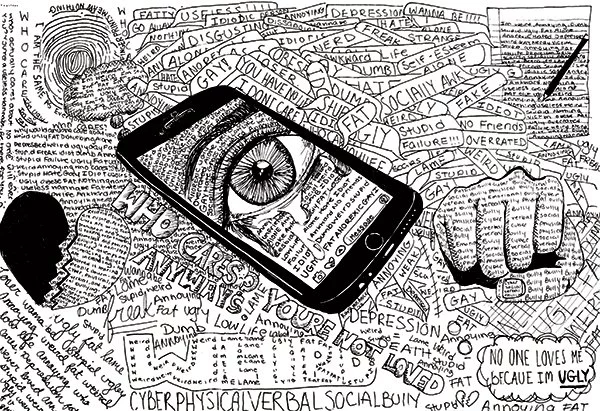
I have never really given the issues of bullying serious thoughts until the recent incident involving Quaden Bayles. The more I thought about it, the more I go back in time to my childhood remembering how we handled or were made to handle the monster called bullying.

According to Wikipedia bullying principally involves “the use of force, coercion, or threat, to abuse, aggressively dominates or intimidate”. It is an oft repeated behaviour drawing from a perceived or real power imbalance based on physical or social advantages. From the hindsight of my childhood experience, three approaches generally worked for us.

The first approach usually came in the form of our parents taking us to school headmasters, principals, and other school authorities or the bully’s parents to report such acts of bullying. The bully was often fetched out, scolded, warned or served some hot-tea of canes. Often, the fear that they had been reported or received some canes had a way to reset the brains and behaviour of those bullies. The best way to explain the second approach is to use a personal story.

Upon maybe, a one-off or repeated complaint about a bully at school or in the street, my mother would ask the description of the bully-boy just to establish his age or physical built; sometimes, she walked us to the home of the offending bully to make a report to the parents (and also size up the oppressor). Upon her judgment that such a boy did not have two heads (was within your age range and his height not always relevant), and that with determination you could holdout in a fight with him, she would sternly warn me that I would receive additional beating if I return home next time to complain of such a boy. You never know what magic happens when you are thrown between the devil and the deep blue sea! I still remember occasions where the bully was dazed by the sheer willpower and out-of-the-blues strength from the long perceived weakling! You are virtually fighting with your head, teeth, nails, feet and sand, because another report from you at home would be a double-jeopardy!

And it often worked – even where you received some drumming from the oppressor, somehow, he would not like to engage you again, as that had a way of emboldening others to challenge their reign. Interestingly, beyond what may be called native or street wisdom, even within the academics, some authorities have also argued that part of a child’s developmental life should be the freedom to fight his fights. This is what Dr Helene Guldberg, a developmental psychologist, espoused in her book “Reclaiming Childhood: Freedom and Play in an Age of Fear”. And with my childhood experience, I also hold that to a large extent this is true.

And the third approach was to confront the bully leveraging on the power of community. For us as children who grew up within a residential compound that was akin to a cantonment characteristically of the face-me-and-face-you mold with scores of resident children of varying school age, spread and attending school in good and often intimidating numbers within neighbouring schools, removing the mask of oppression from the bully was to tap from the cloud of this community.  All we needed to do was to call a senior schoolmate from the same residential compound, and of older age or better physical built to read the riot act to the bully. On extreme occasions, especially where the bully was recalcitrant, a beating from many hands did the magic. In all, what we enjoyed then was the manifested sense and shield from a community though of different designs.

Today, the internet as buoyed by the social media has been able to create communities not limited by borders and social strata. And these online communities have also been helpful with the fight against bullying, and rallying round victims in presenting a united front against the monster and also boosting the confidence of the victims. This is what little Quaden Bayles has benefited with his recent experience – and the internet of social media of course has a way of somehow turning some victims to celebrities.

I do not begrudge the little-man – he is enjoying the fruits of his internet era. Who said that without the internet or social media in those days we never were celebrities? We often were celebrities in our minds and in our streets for disgracing the oppressor – even if our celebrity status lasted for one only week or only within our street or school!

Unlocking Hidden Innovation Opportunities Through Design Thinking

0
Innovation lives in Africa

In today’s dynamic and complex business environment, staying relevant has never been this challenging. This challenge has been exacerbated by rapid and continual changes in technology and variegated customer choices. Companies seeking to achieve or sustain competitive advantage must not just innovate, but innovate right; create product/service that is user-focused (must meet the basic and excitement needs of customers).

Whether we like it or not, competition will continue to intensify and the only way to stay afloat is to continue to provide solutions through the lens of the user or from user perspective. Design Thinking in recent times, although not new, has been garnering traction amongst business leaders owing to its use in enhancing customer-centric innovation. Big and successful multinational companies like General Electric (GE), Procter & Gamble (P&G), Sony and Philips have been reported to use design thinking as a problem-solving apparatus across their respective companies.

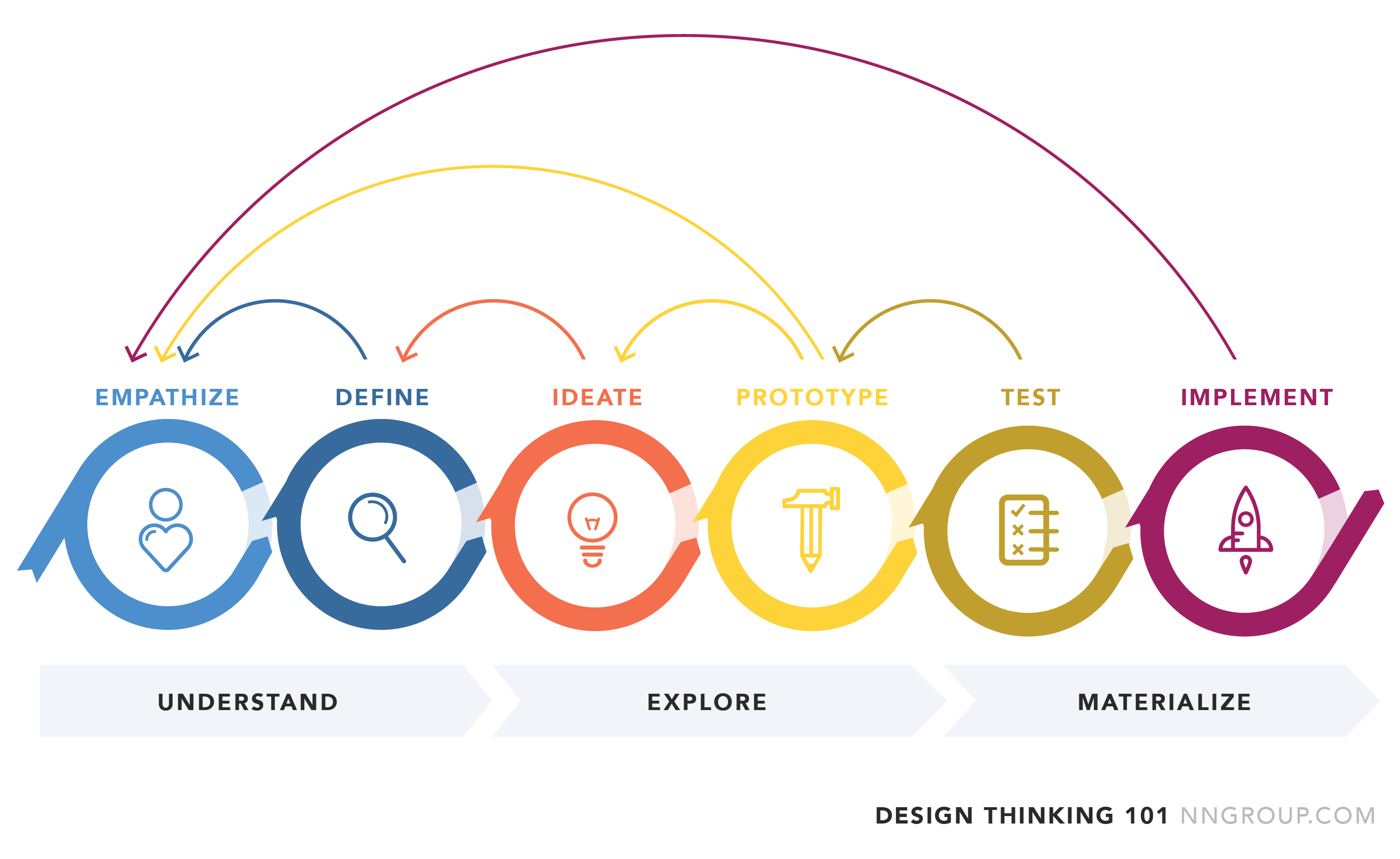
What then is Design Thinking? How can it be used in unlocking hidden business opportunities? According to Jeanne Liedtka, Design Thinking is best understood as a skill set, such as the ability to handle uncertainty, tolerate ambiguity, and maintain the big picture through systems thinking and systems design. In a nutshell, Design Thinking is a human-centered approach to solving real customer problems by making use of data from user research and feedback to design and build solutions that are both demand-driven and valuable. It therefore stands as a bridge between product success or failure in the marketplace.

It begins by first studying to understand customers, and identifying challenges the customers are facing; brainstorming new and possible solutions (product/services or business model); drawing key assumptions; and rapidly prototyping to validate assumptions before launch.

Design Thinking gives business practitioners the opportunity to clearly define, redefine and reframe the problem to so as to get a deeper and holistic understanding of customers pain points and even beyond, that is, problems companies don’t even know exist and customers don’t know they have. This facilitates deeper connection between the company and its customers, optimises the company chances of success, reduces unnecessary cost and wastage and enhances stakeholder value.

In conclusion, Design Thinking is a process that can prove invaluable to a company in addressing several innovation challenges like new product/service and new/alternative business model if incorporated into a company’s innovation strategy.

The Informal Saving Culture of ADAKO

0
Piggybank for saving has enslaved many to online lenders

ADAKO is literally translated to “Save and Pack”.

This illustrates a saving culture where savers (mostly women) are in a self-selected group. Each member of the group saves an agreed amount periodically based on agreement and the sum total of the savings is handed over to each member in turns to the last member.

The approach is simple and effective when every member of the group knows each other.

The selection of members is mostly single-handedly done by the initiator who also takes up the leadership role in the group. Some of his/her responsibilities are to ensure that every member pays their contribution timely, and the sum total is given to each member in turns promptly.

The leader (mostly semi-literate or literate) is usually at liberty to assign ‘collection numbers’ to the members in the first cycle of ADAKO, but members may demand an open and fair process in assigning ‘collection numbers’ in subsequent cycles.

Despite the advent of microfinancing institutions in Nigeria, ADAKO is still thriving and it is now common in small offices.

ADAKO does not involve paying of interest but the leader of the group may sometimes be compensated with a token by all members at different times as they collect the contribution in turns.

This system of saving culture is overdue for automation and probably be part of banks’ offerings to its customers.

Fintechs are encouraged to also look into this direction. The system architecture can be created and a solution developed to automate the processes involved.

Let us bring this category of people using ADAKO as a means of meeting their financial needs under the formal financial sector.

This is achievable.