DD
MM
YYYY

PAGES

DD
MM
YYYY

spot_img

PAGES

Home Blog Page 6487

How Nigerian Journalists Wired Newsmakers and Public Interest Towards Amotekun in 4 Days

2
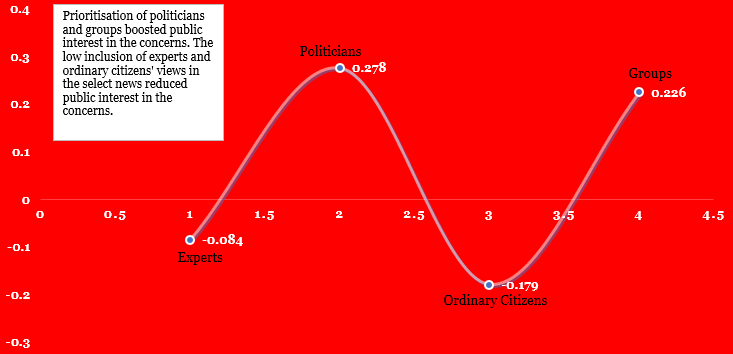
Source: Nigerian Newspapers, 2020; Google Trends, 2020; Infoprations Analysis, 2020

Security and insecurity remain two things that will continue to be the topics of discourse in Nigeria when speaking opportunity presents itself. Varied discussions have happened on the need and issue across the country and outside. When it is obvious that the federal government can no longer contain illegality and criminality in some parts of the country, interest groups that have regionalism as focus called for community and state policing. In the heat of the debates on the two policing systems, South West Regional Security Initiative emerged codenamed ‘Amotekun’.

In our previous analysis, we have shown the hindsight within the context of the Nigerian newspapers’ reportage of the issues that trailed the inauguration of the security outfit by governors in the south west region, most especially naming of the outfit as illegal by the Minister of Justice and Attorney General of the Federation. After series of meeting and enactment of law for making the outfit constitutional, report has it that the bill initiated has been signed into law by most state governments in the region and that one of the states has concluded its plan to translate the law into Yoruba language.

Like the previous analysis, this analysis leverages the news reports curated between January 19 to 22, 2020. We intend to understand the layers that exist among the reports and between the public. In Exhibit 1, we present headlines of the news, showing the engagement and impression scores.

By engagement score, our aim is to reveal the degree to which the newspapers’ headlining style facilitate people’s span of attention. Impression score focuses on knowing the extent to which the engagement could lead to reading of the content. We explored this further and our analysis indicates a strong negative link between engagement and impression scores. We found -52.5%, signifying that one percent increase in engagement reduces impression by 52.5%. What we could import from this result is that headlines of the news report ensured less than 50% reading intent. Despite this, we further discovered 41.5% connection between newsmakers and public concern for security, kidnapping and herdsmen.  This further establishes the reason we should care about the snippets from the headlines with the significant engagement and impression scores.

Issues in the Select News

Amotekun: Leopard on the spot. This is the headline with the highest engagement score (80). Despite having the highest score, the impression score is one of the lowest recorded scores reveals by our analysis. The report was written by a columnist and expects Nigerians and government officials to reason along the enactment of the Sharia law in Zamfara State in 2000. According to him, “nothing else has tested the sanctity of Nigeria’s practice of federalism like the launch of the Western Nigeria Security Network (WNSN), better known as Operation Amotekun (the Yoruba word for leopard), by the south-western states on January 9, 2020.”

Malami ordered police to stop Amotekun protest, Yoruba group alleges. This headline became necessary when the federal government felt that protesting against naming the security outfit illegal could lead to other criminal acts in the region. With the story, our analyst observes that the government through the Ministry of Justice was of the conviction that groups need not staging protests because of the description of the outfit as illegal by the government.

From group to the renowned Professor and public affairs analyst, The Punch reported Professor Wole Soyinka’s position on the issue. The newspaper says “Soyinka Attacks Balarabe Over Comment on Amotekun”.  Alhaji Balarabe Musa had earlier condemned the outfit on the basis that Operation Amotekun would lead to the declaration of Oduduwa Republic.

In what appears to be the needed voice to consolidate the region’s interest on the security outfit, The Guardian newspaper says “Tinubu Finally Reacts to Amotekun”. The report indicates that Senator Bola Ahmed Tinubu stressed the limitless, inoffensive addition of the security outfit to the country’s security apparatus.  Corroborating Tinubu’s position, Pastor Francis Wale Oke described the initiative as noble and expect the governors in the region to legalise it. This further emphasises the Minister of Justice’s earlier stance on the outfit.  Engineer Seyi Makinde, Oyo State’s governor also lent his voice to the issues on the creation of the outfit, saying the initiative has come to stay that police can’t be everywhere.

Understanding the Layers

Beyond the headline analysis and presentation of the issues from the headlines that have highest impression and engagement scores, we examined three categories of layers using neural network analysis. We studied input, hidden and output layers. With the input layer, we input attitudinal disposition of the newsmakers such as groups, public affairs analysts and politicians.

We specifically analysed illegal, legal and neutral positions of the newsmakers in the neuron. The hidden layer entails public interest within security, insecurity and herdsmen. Using Amotekun as the base word search, we have public interests in stakeholders within the law and government, executive branch, legislative branch, courts and judiciary, state and local government. In all, we examined the degree to which public had concern for security. From our analysis, public only had concern for security within law and government, courts and judiciary. With the result, our analyst observes that indeed Amotekun needs legalization.

The Layers Connectivity and Dysconnectivity

To establish the connectivity and dysconnectivity, we employed newsmakers’ attitudinal dispositions towards Amotekun and public interest in the concerns [security, kidnapping and herdsmen] within the context of issues around Amotekun. Our first analysis indicates that attitudinal disposition of the newsmakers connected with the public interest by 35.9%, while 12.9% of the dispositions could only be explained from the interest.

The second analysis reveals 54.5% linkage between the dispositions and categories of stakeholders in law and government and 57.7% for the courts and the judiciary, who supposed to intervene. Over 29% of the dispositions led to the public interest in law and government’s stakeholders, while 33.3% of the dispositions enhanced public interest in the courts and the judiciary.

Using regional approach, our analysis establishes striking results. When we examined the influence of dispositions by region on public interest in the concerns within the context of Amotekun, as expected, we found a positive connection of the north-legal disposition with the concerns (1.6%), while it is -8.1% connection for north-illegal disposition. We discovered 49.7% connection in south-legal disposition and public interest in the concerns. Like the north-illegal disposition, we also found a negative connection in south-illegal disposition and public interest. We specifically found -29.1%.

Analysis further north region maintained its negative layer towards Amotekun during the period we analysed. We discovered that the legal and illegal disposition of the region connected with the public interest in law and government’s stakeholders, who are expected to intervene by -23.6% (north-legal) and -4.5% (north-illegal). While it was negative in the north region, we found positive in the south-legal disposition (56.6%). We could not discover significant result from the south-illegal disposition towards public interest. This implies that the newsmakers’ positions from the south region and public interest in the concerns were wired along the same layers during the period that our analysis covers. Likewise, for the north region which further stresses our earlier hypothesis that the south region favours the security initiative more than the north region.

Week 3 is Live – The Great Modern Business Models

0

Week 3 is live on the Tekedia Mini-MBA. The session is titled “The Great Modern Business Models”. With all the cases and examples, it is a bit longer, at 52 pages. I am very confident that after this session, we will have clarity on all the most critical business models of the 21st century. Have a profitable week ahead.

We continue to welcome new members, register here and join us.

Week 3 Session

Week 3 Session

32

Notes We’re planning for Tekedia Innovation Summit in Q4 2020 in Lagos for members of Tekedia mini-MBA, Tekedia General Management Program (GMP) and Tekedia Advanced Management Program (AMP). No extra cost to you. It is our plan to use that live innovation festival, supported with webcast for those outside Lagos, to deepen all we are […]

This post is only available to members.

Eliminating Your Avoidable Miracles

3

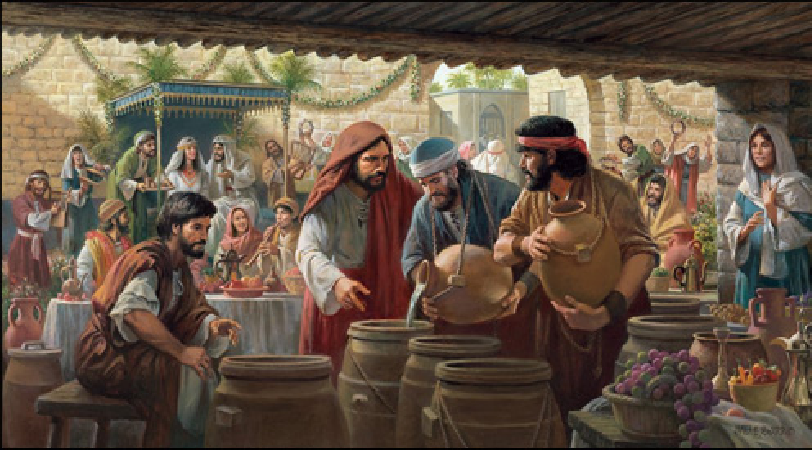
He ran out of wine and needed a miracle to entertain his guests. He was a very poor manager and operator. He was unprepared, not accounting that a special visitor was coming, and that visitor might be bringing more people to the party.

The couple who needed a miracle from Christ, turning water into wine, to keep the party going is an example of who we should not be. As business professionals, we must be prepared, modelling scenarios to ensure that we do not lack raw materials when production should be at peak. Yes, we cannot lack the wine of factors of production, expecting miracles from supply chain partners, to maintain our market share during our growth phase.

Simply, it is not every time in our life that we must expect unnecessary and avoidable miracles. Miracles that suppliers will cut mean time to delivery from 20 days to 2 days because without those supplies, we will have to shut down plants. 

As the new week begins, be prepared, and develop a protocol to be more organized. Never allow your life to be one where you are always expecting “miracles” from people. Sure, you will get them but most times, you pay an opportunity cost. 

Have you ever imagined the gift Christ would have given to that couple, if He had not spent His energies to turn water into wine, to help them entertain their guests? Yes, people can help you to deal with your external visible problems but leave you empty on things so personal to you. They help you because they do not want to be embarrassed while there, but quickly depart once everything is settled.

Avoid unnecessary miracles, and have more order in your life. Live that way,daily, and be positioned for the great miracles when you earnestly seek.

Reference: the Bible.

On the third day a wedding took place at Cana in Galilee. Jesus’ mother was there, and Jesus and his disciples had also been invited to the wedding. When the wine was gone, Jesus’ mother said to him, “They have no more wine.”

“Woman,[a] why do you involve me?” Jesus replied. “My hour has not yet come.”

His mother said to the servants, “Do whatever he tells you.”

Nearby stood six stone water jars, the kind used by the Jews for ceremonial washing, each holding from twenty to thirty gallons.[b]

Jesus said to the servants, “Fill the jars with water”; so they filled them to the brim.

Then he told them, “Now draw some out and take it to the master of the banquet.”

They did so, and the master of the banquet tasted the water that had been turned into wine. He did not realize where it had come from, though the servants who had drawn the water knew. Then he called the bridegroom aside 10 and said, “Everyone brings out the choice wine first and then the cheaper wine after the guests have had too much to drink; but you have saved the best till now.”

11 What Jesus did here in Cana of Galilee was the first of the signs through which he revealed his glory; and his disciples believed in him

Larry Tesler, the Father of “Cut, Copy and Paste,” Dies At 74

0

“The inventor of cut/copy & paste, find & replace, and more, was former Xerox researcher Larry Tesler. Your workday is easier thanks to his revolutionary ideas.”

This tweet of Xerox confirmed the death of Larry Tesler and sent the world into mourning. Tesler  helped the computer world to get better with many of his inventions.

His vision for a work life made easier through machines started in the 60s, and he made an impact every computer user is grateful for before he bade the world goodbye.

Here is how Gizmodo told his story.

The advent of the personal computer wasn’t just about making these powerful machines available to everyone, it was also about making them accessible and usable, even for those lacking a computer science degree. Larry Tesler, who passed away on Monday, might not be a household name like Steve Jobs or Bill Gates, but his contributions to making computers and mobile devices easier to use are the highlight of a long career influencing modern computing.

Born in 1945 in New York, Tesler went on to study computer science at Stanford University, and after graduation he dabbled in artificial intelligence research (long before it became a deeply concerning tool) and became involved in the anti-war and anti-corporate monopoly movements, with companies like IBM as one of his deserving targets. In 1973 Tesler took a job at the Xerox Palo Alto Research Center (PARC) where he worked until 1980. Xerox PARC is famously known for developing the mouse-driven graphical user interface we now all take for granted, and during his time at the lab Tesler worked with Tim Mott to create a word processor called Gypsy that is best known for coining the terms “cut,” “copy,” and “paste” when it comes to commands for removing, duplicating, or repositioning chunks of text.

Xerox PARC is also well known for not capitalizing on the groundbreaking research it did in terms of personal computing, so in 1980 Tesler transitioned to Apple Computer where he worked until 1997. Over the years he held countless positions at the company including Vice President of AppleNet (Apple’s in-house local area networking system that was eventually canceled), and even served as Apple’s Chief Scientist, a position that at one time was held by Steve Wozniak, before eventually leaving the company.

In addition to his contributions to some of Apple’s most famous hardware, Tesler was also known for his efforts to make software and user interfaces more accessible. In addition to the now ubiquitous “cut,” “copy,” and “paste” terminologies, Tesler was also an advocate for an approach to UI design known as modeless computing, which is reflected in his personal website. In essence, it ensures that user actions remain consistent throughout an operating system’s various functions and apps. When they’ve opened a word processor, for instance, users now just automatically assume that hitting any of the alphanumeric keys on their keyboard will result in that character showing up on-screen at the cursor’s insertion point. But there was a time when word processors could be switched between multiple modes where typing on the keyboard would either add characters to a document or alternately allow functional commands to be entered.

There are still plenty of software applications where tools and functionality change depending on the mode they’re in (complex apps like Photoshop, for example, where various tools behave differently and perform very distinct functions) but for the most part modern operating systems like Apple’s macOS and Microsoft’s Windows have embraced user-friendliness through a less complicated modeless approach.

After leaving Apple in 1997, Tesler co-founded a company called Stagecast Software which developed applications that made it easier and more accessible for children to learn programming concepts. In 2001 he joined Amazon and eventually became the VP of Shopping Experience there, in 2005 he switched to Yahoo where he headed up that company’s user experience and design group, and then in 2008 he became a product fellow at 23andMe. According to his CV, Tesler left 23andMe in 2009 and from then on mostly focused on consulting work.

While there are undoubtedly countless other contributions Tesler made to modern computing as part of his work on teams at Xerox and Apple that may never come to light, his known contributions are immense. Tesler is one of the major reasons computer moved out of research centers and into homes.